Showing posts with label Mohammad Reza Pahlavi. Show all posts

Wednesday, February 13, 2019

4 Decades after the Islamic Revolution: What are the reasons behind its Steadfastness?

By Sondoos Alasaad

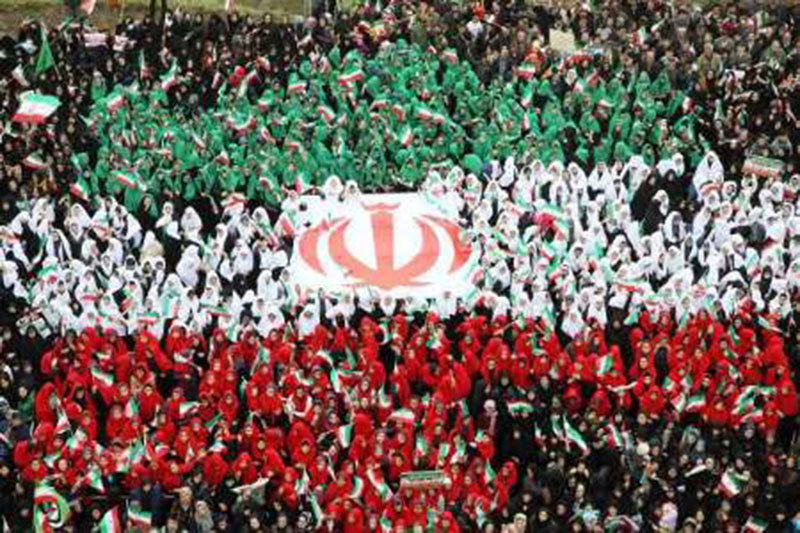
BEIRUT - Four decades ago, this month, the Iranian people changed the history of their homeland. They all stood firmly to smash the Imperialist hegemony and its Shah Puppet regime. Since then, Iran has witnessed a fundamental change in its diplomatic and political stance.
This article responds to some critics who have recently claimed that if the Supreme Leader Sayyed Ali Khamenei were not orienting the country's policy, Iran would have a leading role in the world and would have solid ties with the United States and other countries. However, it must be said that Iranian political behaviour is rooted in the depth of its ideology.
The ruling system in Iran is not based on a figure himself and what he says but rather on the ideology of the Velayat-e faqih. This ideology has been established by the later founder of the Islamic Revolution, Imam Khomeini, who had originally derived it from the authentic and moderate Islamic teachings. The teachings that guarantee justice and equality for all, despite their gender, race, religion, view, etc. Under this system, the political stance remains firm and those who constitute a threat and show a hostile position against the revolution would always be enemies.
This distinctive regime is feared by the imperialists for its independence and strength. If we draw on an analogy between this regime and the other regimes in the region, we would obviously notice how the U.S. backs them. One might ask why them and not Iran? Well, simply because, from the very beginning, and in its core ideology, Iran has settled to safeguard its sovereignty, wealth and natural resources. Another reason is that Iran is ruled democratically by those members who the public have already freely elected.
On the contrary, the rest of the region's regimes are ruled by families, who the U.S. and the U.K. immensely back, for such regimes lack their free-will and for they are subjects of the imperialist dirty propaganda. They would never reject the American policy as this would lead to their overthrow. Besides, to serve their interests, those colonial powers turn deaf ears and blind eyes to the inhumane human rights violations committed by those autocratic governments against their fellow citizens.
In Iran, the government and the parliament are established through free elections. Accordingly, people say their word and express their voices and concerns. In addition, the leader is appointed neither forcibly nor arbitrarily but by the council of elites, according to a specific and objective criterion. Therefore, one to lead the revolution and to maintain its principles and bodies must undoubtedly be shrewd and wise enough to manage the Iranian domestic and foreign policies.
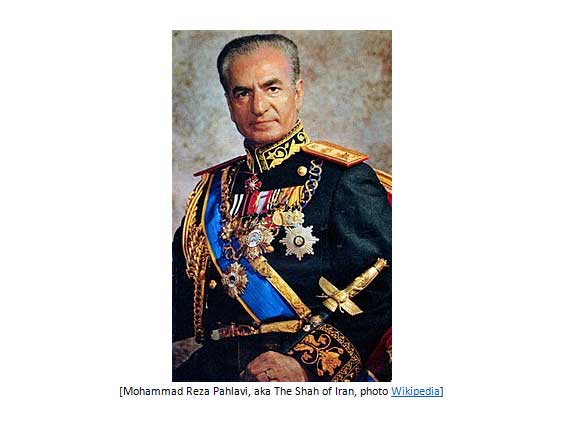
 Before 1979, Iran had social, cultural, political and economic affiliations with the U.S. and other European countries as Mohammad Reza Pahlavi, the former dictator, had been at their services. The Shah, then, made Iran the U.S.'s lactating cow in the Middle East. During his reign, the Iranians were governed by force and intimidation; their rights as humans were blatantly infringed. The majority were from the lower class and had been subjugated to preserve the interests of the powerful Bourgeoisie. They endured humiliation, oppression, and persecution.
Mohammad Reza Pahlavi had been the U.S. gendarme in the region and directed by the Zionist enemy against the resistance factions. Whatsoever, under his reign, the Iranian suffered from various and critical security, health, educational, civic, social and economic crisis. Class discrimination and injustice have been enough reasons to rebel and make an inevitable change.
The rise of the revolution in Iran caused a terrible shock to many regional, European and U.S. regimes. They had early perceived that this step would endanger their interests. Remarkably, none of them considers the Iranian people's interests and their hostility against the revolution has nothing to do with the mob's desires and aspirations.
 Frequently, the U.S. has tried to intervene to weaken the revolution, as what happened on the 20th of August 1953, 2009, December 2018. Nonetheless, the more the U.S. tries to shake the Islamic Republic, the latter stands firmly and ferociously. Further, the more the U.S. intensifies its inimical conspiracies against Iran, the more the Iranians show alertness and readiness to confront such unethical and imperialist practices. The U.S. still ignore that who safeguard this revolution are the people, their determination, their faith, and their resolution. Again, it is an ideological well-built regime, which no empirical might would be able to force it into surrender.
 The U.S. and other European governments' unfortunate support for the terrorist MKO, reflects the nature of this malicious conspiracy against Iran and those governments' dual-policy. They preach on democracy and claim that they are fighting terrorism, whilst it is vivid that they sponsor criminals and terrorists such as Mariam Rajavi and her followers, who have committed scores of atrocities against innocent people.
The world must remember that despite the prolonged arbitrary sanctions and the U.S. and some Arab countries' provoked war, the Baathist troops were humiliated, defeated and forced to retreat. The imposed economic sanctions turned out to be an opportunity for the Iranians to implement the golden rule: The necessity is the mother of innovation. Unequivocally, today Iran is among the world's top advanced countries at various industrial, scientific, technological, agricultural, medical and surgical, etc. levels.
 Military speaking, Iran is now able to defend itself through its mighty home-made ballistic missiles. In Syria and Iraq, Iran has shown unprecedented capabilities in the fight against the NATO-backed terrorists, along with the governmental and popular resistance movements there. So, while Iran defends the oppressed innocent civilians, other countries spend trillion dollars-worth of logistical and military to support radical and fanatic terrorist groups.
In a similar vein, the violation of Iran’s nuclear deal by the U.S. is yet another stance of aggression against Iran, despite the fact that it was ratified by five European countries and endorsed by the UN Security Council. Meanwhile, Trump is insistently and persistently trying unbridge the gap between the Iranians and the American people, who reject his and their consecutive administrations' colonial policies. The Americans are pretty much aware how, for at least 40 years, have been paying taxes to cover the wars' expenses led by Washington and its unlimited payment for those who plan to spread anarchy and commit suicidal attacks in Iran, and the entire world, such as the terrorist MKO.
MKO and some U.S. affiliated Iranian dissents are like a worm in its cocoon; literally captured in the world of wishes and dreams and rely on an illegitimate and aggressive agenda, which Tehran so far have been accommodated to and ready to smash at any time. Indeed, this self-proclaimed opposition, that the U.S. back by each and every means, is well-aware that the suspicious protests in Iran are to some extent held as a result of the U.S. economic pressure and sanctions. Those dissents, under the pretext of saving the mother, are obviously killing her instead.
The American politicians should have so far acknowledged that this spectrum in Iran is a complete failure and an unmatched dream. Their reputation in Iran is notorious, particularly after the recent abruptly detention of the US-Iranian Journalist Marzieh Hashemi and their predetermined involvement in the murder of the Saudi Journalist Jamal Khashoggi. The Iranians today, the revolutionaries and their sons, after 4 decades of the honourable revolution are stronger and steadily driving their homeland towards a prosperous and bright future.

Thursday, December 13, 2018

The US Wants to Bring Back the Shah of Iran

The US had a great deal going from 1953 to 1979 with the Shah of Iran.  For 25 years Iran was a cornerstone of the US usurping the British Empire in the Middle East, following World War Two.  Iran was a base for projecting US power in the region, and strategically it bordered the Soviet Union during the Cold War.
During the early 20th century the British Empire had full control of Iran’s oil industry, and was paying Iran a flat fee for every barrel of oil it extracted.  A rough calculation of Iran’s royalties is between 8% to 16% of the profits, but Iran was never allowed to look at the financial books.[*]
Prior to the CIA-led 1953 overthrow of the democratically elected Prime Minister Mohammed Mossadegh, Iran demanded 50% of the profits and control of their oil industry.  That was not unreasonable, but Iran was willing to negotiate.  At the time, the US oil companies had a 50/50 profit sharing agreement with Saudi Arabia.
The British refused any negotiated settlement.  It was then that the Iranian parliament led by Mossadegh voted to nationalized Iran’s oil industry.The British responded with a naval blockade, and began plotting to overthrow Mossadegh and the parliament.  As the Prime Minister, Mossadegh held the most political power in Iran because the people were behind him.  The Shah of Iran was mostly a figurehead, at the time.[*]
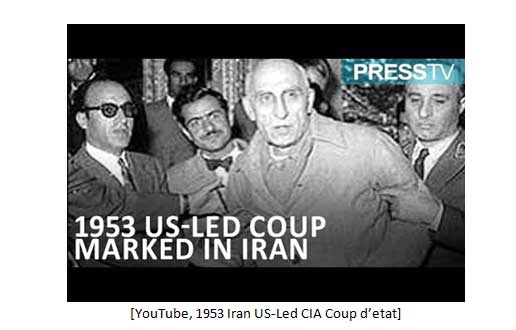
President Harry Truman was adamantly against colonialism and sided with Iran, which infuriated the British.  When President Dwight D. Eisenhower took office in 1953, he sided with the British.  Eisenhower and Churchill plotted a coup d’état to overthrow Mossadegh.  The frightened Shah, who was in on the plot, fled from Iran before the coup attempt just in case anything went wrong.  The first attempt did fail.  A second daring CIA-led coup succeeded and the US reinstalled Mohammad Reza Pahlavi as the Shah of Iran, with dictatorial power.
By its intervention, the US broke the British Empire’s monopoly on Iran’s oil.  That was part of the US’s calculus.  After the coup, US oil companies got 40% of Iran’s oil industry, 14% went to Royal Dutch-Shell, 6 % went to the French Petroleum Company, and the British oil company kept 40%.  In addition, Iran got its 50/50 share of the net profits that it wanted in the first place.  The US immediately sent financial aid to prop up the Shah, and to bolster Iran’s weakened economy from the British blockade.
If the British had initially been flexible,renegotiated a 50/50 oil deal with Prime Minister Mossadegh, then it would have made a coup less likely.  Iran was developing a secular democratic government.  It might have become a model for other post-colonial countries in the Middle East.  Democracy and self-determination are what the US said its world mission was going back to President Woodrow Wilson in 1918:
“….every peace-loving nation which, like our own, wishes to live its own life, determine its own institutions, be assured of justice and fair dealing by the other peoples of the world as against force and selfish aggression. All the peoples of the world are in effect partners in this interest, and for our own part we see very clearly that unless justice be done to others it will not be done to us.”[*]
Since Iran was a developing democracy, an excuse had to be found for a US intervention.Churchill accused Mossadegh of being a communist.  There was no evidence that he was.  Mossadegh was an anti-colonial nationalist who cared about the welfare of the Iranian people, and that was all the evidence that Eisenhower needed. Mossadegh had to be punished for standing up to the British and demanding Iran’s natural resources for the benefit of the Iranian people.
The winners from the coup were the US and the timid Shah who had ran from his own people.  The US would teach him how to have a backbone.  He turned out to be a good student, and with the support of the US he turned Iran into a totalitarian police state andhe ruled by terror.  The Shah got US protection from his own people and from foreign enemies.
The US looked the other way from the Shah’s corruption of conspicuous consumption, stuffing dollars in foreign bank accounts and lining his own pockets, and those of his cronies.  The US got a big piece of the Iran oil industry, and Iran gave the US a strategically important location for a military presence.As for the people of Iran, they continued to live in abject poverty and illiteracy.[*]
Now that the Shah is gone, the US propaganda machine and the mainstream media put out a flood of stories about how wonderful life was under the Shah.  The propagandists use economic indicators of inflation, employment, gross domestic product, oil exports and the upper-class standard of living.  Anybody who puts out those kinds of comparative economics deserves to flunk Economics 101.
Iran has been under sever US-imposed economic sanctions for 40 years.  The US has been threatening Iran with war and “all options are on the table” for decades.  The US has also instigated instability inside Iran and supported external attacks by terrorist groups such as Mujahideen-e-Khalq, or MEK.[*]
MEK was on the US State Department’s list of terrorist organization until it was removed by former Secretary of State Hillary Rodham Clinton in 2012.[]  The fact that MEK has killed US citizens in terrorist attacks did not hinder some US politicians from accepting large speaking fees at their conventions, even when MEK was still on the US terrorist list.[]
The US project to destroy Iran’s economy has had a devastating impact.  The husky Secretary of Defense Mike Pompeo said that it is up to Iranian’s leadership “if they want their people to eat”.[*]Because of the US, Iran lacks sufficient funds that it would like to invest in human resources and social programs.  Iran’s constitution guarantees healthcare and free education for all, as well as protections of civil rights.  As reflected in the drafting of the Constitution of the Islamic Republic, the vision of the economic order was:
“Social justice and economic independence were the main economic goals to be achieved, among other means, through the expansion of the welfare state, extension of public ownership, creation of an active cooperative sector, and strengthening the agricultural and industrial sectors for greater self-reliance.….the Constitution of the Islamic Republic bears great resemblance on economic issues to the charters and constitutions of Arab “socialist” states drafted during the 1960s and 1970s.”[*]
Constant US, Israeli and Saudi threats require Iran to divert its domestic budget more towards defense, instead of its desired economic goals.  Terrorist attacks and internal dissention stirred up by the US causes Iran to increase its internal security to the detriment of civil liberties.  The US and the mainstream media propaganda machines know what the deliberate effects of US aggressive actions cause, but they cruelly taunt Iran for its economic and social hardships by blaming the victim.
The US uses these same dirty tricks against Cuba, Venezuela, Nicaragua, North Korea, Russia and every other country that the US demonizes for not falling into line behind US domination in the neoliberal New World Order.The New World Order is the US foreign policy that it alone is unrestrained to “destabilize countries in order to integrate them militarily, politically and economically ….into US-style capitalism and culture”.[*]
The US is still fighting a cold war against socialism, the welfare state, and public ownership.A cold war against Iran is not about US national security.  Iran is not an existential threat to the US, or to Israel either.[*]It is about US corporations being thwarted from exploiting Iran’s natural resources, privatizing their state-owned enterprises, and “opening” Iran to unequal trade arrangements.  It is also about the US being the hegemon in the Middle East.
The US is still using the same gunboat diplomacy that it has been using since the 19th century to “open” Latin America, Japan, Korea, China and the Philippians to exploitation.  It is old fashioned imperialism dressed up in the jargon of “human rights, democracy, and US exceptionalism”.  It is what old-world colonialism called “civilizing the heathens”.
The US will never forgive the Islamic Republic of Iran for shutting down the US deal of exploitation.  With the Shah’s cut from oil companies, he was a very big customer for US weapons manufacturers, such as General Dynamics, Lockheed, and Northrop. He also aggressively bought into President Dwight D. Eisenhower’s Atoms for Peace program.  At the urging of the US, Iran began its nuclear program in 1957.[]
Selling weapons and nuclear technology was good business for weapons manufacturers and the nuclear industry.  US companies like General Electric and Westinghouse sold Iran the nuclear equipment and technology, as well as the enriched uranium fuel.  They even sold the Shah highly enriched weapons grade uranium, which is the most efficient for producing electricity, and making atomic bombs, too.[*]
As far as the US public knew the Shah was highly popular and loved by his people.  Imagine the surprise when the people of Iran overthrew him in 1979.  The mainstream media was shocked too, since they had swallowed their own propaganda.  The images of Iranians rioting, protesting,burning the US flag and shouting Death to America were frightening,it looked irrational, and it seemed to come out of nowhere.
The US public and press became outraged when the US Embassy in Tehran was stormed by revolutionary students who took 52 Americans hostage.The students renamed the US Embassy the “Den of Spies”.  The students had every reason for that name, given the cache of incriminating documents they discovered.[*]
In the US, every nightly TV news broadcast began with the number of days that had passed since the beginning of the Iran Hostage Crisis.  It lasted for 444 days, and resulted in President Carter losing his re-election bid to Ronald Reagan in 1980.
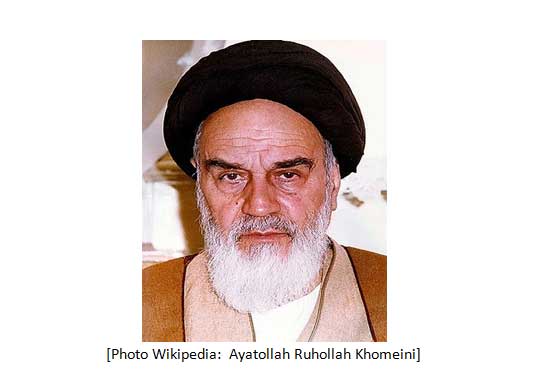
Instead of an imperial looking shah, the Iranian Revolution ushered in an Islamic leader to head the government.  The thought of Iran turning into a theocracy seemed antiquated to Americans.  They had not known that Ayatollah Khomeini was a national hero since the early 1960’s.  He had been arrested, tortured, imprisoned and then exiled to France for his outspoken opposition to the Shah.[*]  The unphotogenic image of a dour looking Ayatollah Khomeini was an easy target for Western racist and Islamophobic propaganda.
The US public could not understand why Iran became anti-US, anti-West, anti-modern, and appeared to be fanatical.The violent purging of the Shah’s cronies and of the opposition was shocking.  Iranian supporters of the Shah who fled to the US brought with them wild tales of people being hung from street lamps for having televisions and toilets in their homes.  They left out the part about how they lived in affluent luxury, while the vast majority of people lived in hovels.  The transition was violence, and it lasted for about 2 years.
The US public had no idea why the Iranian people hated the US so much.  The facts were kept secret from the public for years.  The State Department documents were finally made public in 2017. []For many decades the public did not know that it was the US, from President Eisenhower on down through the State Department and the CIA, which overthrew the popular democratically elected government of the charismatic Prime Minister Mohammad Mossadegh.[]But the Iranian people knew that It was the US that put the brutal regime of Mohammad Reza Pahlavi on the Peacock Throne.[*]
The US public was uninformed of the Shah’s repression, political prisoners, torture chambers, assassinations, disappearances and executions.  Not only did the US government turn a blind eye to the brutality, it was the CIA (and Israel’s Mossad) that was the overseer and mentor to the Shah’s secret police; the “Organization of National Intelligence and Security of the Nation”, known as SAVAK.[*]
[YouTube, 1953 Iran US-Led CIA Coup d’etat]
For an example of the Shah’s brutality, an Amnesty International assessment for 1974-1975 report stated:
“The shah of Iran retains his benevolent [world] image despite the highest rate of death penalties in the world, no valid system of civilian courts and a history of torture which is beyond belief.”[*]
Once when The Shah was confronted by a journalist for the French newspaper Le Monde about his brutal repression methods he responded:
“Why should we not employ the same methods as you Europeans.  We have learned sophisticated methods of torture from you. You use psychological methods to extract the truth; we do the same.”
In 1978 Amnesty International reported that nothing had changed for the better in Iran.  Even the mention of the word SAVAK was enough to send chills down the backs of Iranians.
The explosion of the Iranian Revolution of 1979, the Hostage Crisis and the animosity of the Iranian people towards the US government was the direct result and blow back from 25 years of the US coddling and sheltering its shah puppet.  As Kermit Roosevelt who was the CIA station chief in Tehran in 1953 said of the Shah: “He’s our boy”.  It was Roosevelt who engineered and implemented the coup that brought the Shaw to power.  The code name for the coup was Operation Ajax.[*]
Just as Trump is trying to cover up for MBS (as Thomas Friedman affectionately refers to the Crown Prince of Saudi Arabia), President Jimmy “Human Rights” Carter tried to cover up and sheltered Mohammad Reza Pahlavi after the Iranian Revolution.  The Iranian people wanted the Shah arrested by the US, where he had fled.  They wanted him extradited to Iran to face justice.
Henry Kissinger and David Rockefeller had appealed to Carter’s compassion to admit the Shah to the US for health reasons.  After much vacillation Carter agreed.[]Carter had had a friendly personal relationship with The Shah.  In 1977 Carter visited Iran and toasted the Shah for his “island of stability” and for “the admiration and love which your people give you”.[]
Carter admitted the Shah to the US on October 21, 1979.On November 4, 1979 revolutionary students took over the US Embassy in Tehran, and demanded the Shah in exchange for the US hostages.  Carter said he refused to give into “blackmail” to a group of “terrorists”.Still vacillating, Carter expelled the Shah from the US.  He died in Egypt in 1980. [*]
As a reaction to the Iran Hostage Crisis, the US imposed unilateral sanctions on Iran,cut off the sale of oil and froze their assets in the US.  The US put an embargo on Iran, including humanitarian supplies, and the US broke diplomatic relations.  Needless to say, the US stopped its “Atoms for Peace” program and cooperation with Iran in developing nuclear energy.[*]
Not coincidentally, Iran released the US hostages within hours of Ronald Reagan being sworn in as President in 1981.  The circumstances and timing of the hostage release is still controversial.[]  Most likely,Carter deserves the credit for successfully negotiating the release of the hostages.[] Why the Iranians released the hostages when they did is still a mystery.
In 1980 Iraq invaded Iran starting the Iran-Iraq war that lasted until 1988.Whether or not the US gave a “green light” to Saddam Hussein to invade Iran, the US did not try to prevent or stop Iraq’s aggression.  According to Dexter Filkins, writing in the New Yorker:
Iran’s leaders took two lessons from the Iran-Iraq War. The first was that Iran was surrounded by enemies, near and far. To the regime, the invasion was not so much an Iraqi plot as a Western one. American officials were aware of Saddam’s preparations to invade Iran in 1980, and they later provided him with targeting information used in chemical-weapons attacks; the weapons themselves were built with the help of Western European firms.
The other lesson drawn from the Iran-Iraq War was the futility of fighting a head-to-head confrontation.  ……Instead, they had to build the capacity to wage asymmetrical warfare—attacking stronger powers indirectly, outside of Iran.[*]
According to the New York Times, “the Reagan Administration secretly decided shortly after taking office in January 1981 to allow Israel to ship several billion dollars’ worth of American arms and spare parts to Iran”.[*] Cynically the US later said that it gave aid to both sides “to remain neutral”; and unsaid was to keep either side from winning.  Both Iran and Iraq suffered over 500,000 casualties each in the Iran-Iraq War.
If the US had hoped that the Iran-Iraq war would weaken Iran, then the unintended consequences were just the opposite, as often is the case with US duplicity.  Iraq’s invasion of Iran united the Iranian people strongly behind the Iran revolutionary government.  In 2003, President Bush’s invasion of Iraq would make Iran an even stronger regional power.
In 1982 Israel invaded Lebanon, and through a series of events Reagan sent US Marines to Lebanon.  He called them a “peacekeeping force” to avoid having to get Congressional approval under the 1973 War Powers Resolution.  In 1983 a truck bomb suicide attack on a Marine barracks in Lebanon killed 241 people, mostly US Marines.  The US blamed the attack on Iran and declared Iran a “terrorist state”.  More US sanctions were imposed on Iran even though there was only circumstantial evidence that Iran was the perpetrator.
In 1988 the US shot down an Iranian commercial airliner that was in Iranian airspace.  All 290 passengers and crew of the airliner died.[]  The US claimed that it mistook the plane for a threatening fighter jet.  Even though the US admitted that it had shot down the airliner, President George H. W.Bush refused to apologize, saying “I’m not an apologize-for-America kind of guy”.  []
Even with all the turmoil of the 1980’s, Iran continued to work on its nuclear program.  It had signed the Nuclear Non-Proliferation Treaty (NPT) in 1970.  Iran has every right under the treaty to a nuclear energy program.In fact, under the treaty the nuclear-weapons countries are obligated to cooperate with the non-nuclear-weapons countries in the peaceful development of atomic energy.
Instead of abiding by the NPT, the US used the red herring that Iran had a nuclear weapons program.  Without proof, the US slapped unilateral economic sanctions on Iran.  So, Iran turned to France, Russia and other countries to purchase material, equipment and technology for its nuclear energy program.
After the Iraq invasion of Kuwait in 1990, and the US war with Iraq, the US imposed sanctions on both Iraq and Iran.  While Iran had declared neutrality in the war, the US accused Iran of secretly aiding Iraq.  The real reason why the US imposed sanctions on Iran was that it was concerned that a weakened Iraq would strengthen Iran as a regional power, which is exactly what it did.[*]
Then in 1996 under President Bill Clinton, what was to become known as the Iran and Libya Sanctions Act was passed by Congress.l*]  This act penalized any US or foreign entities that invested in Iran’s oil and gas industry.  The supposed rational was that investing in Iran’s oil and gas industry would provide Iran with the funds to develop weapons of mass destruction.Since money is fungible, the same logic could be used about all trade with Iran, and eventually it was.  Still there is no proof, except circumstantial, that Iran has ever had a nuclear weapons program.
The real reason for economic sanctions is that the US is engaging in economic warfare against Iran.  It is angry because their puppet shah was overthrown.US economic sanctions are an attempt to destroy Iran’s economy.  As the most powerful and influential economic nation in the world the US can exert tremendous financial penalties, hardships and isolation on other countries.  Most of the suffering from sanctions are borne by civilians.
Does supporting the aggressor in a war,aiding the aggressor in the use of banned chemical weapons, giving both sides weapons to kill each other, and shooting down a civilian airliner qualify as “state sponsored terrorism”?  Since 1979 the US has killed millions of people is covert operations such as in Afghanistan, and in illegal wars of aggression in the Middle East, such as the 2003 invasion of Iraq.
Yet, Iran is condemned by the US as the world’s “leading state sponsor of terrorism”?  Such accusations by the US against Iran are hypocritical and politically motivated hyperbole.[]  The motive for US propaganda is to aid the cause of overthrowing, one way or another, the internationally recognized legal government of Iran.[]  The world’s leading sponsor of state terrorism is surely the US, and its partners in terrorism are the UK, Israel, and Saudi Arabia, and the other Gulf Cooperation Council countries.
The definition of terrorism according to Webster’s dictionary is “the unlawful use of violence and intimidation, especially against civilians, in the pursuit of political aims”.
The victims of US economic sanctions call it financial terrorism.  It is and it does hurt mostly civilians financially, and it causes them unnecessary suffering and deaths from the lack of nutrition and medicines for curable and preventable diseases.  There is also tremendous emotional distress on the civilian population caused by economic sanctions.  Alcoholism, drug addiction, divorce, crime and many other social conditions are exacerbated.
Economic sanctions meet the definition of terrorism, and that makes economic sanctions a crime against humanity.  Even UN authorized economic sanctions overstep the Geneva Conventions and are immoral and maybe unlawful.  The International Committee of the Red Cross has cautioned the United Nations Security Council that the “Security Council is bound to observe the principles of international humanitarian law when designing, monitoring and reviewing sanctions regimes.”[*]
The US wants to turn the clock back to 1953 and a return of the Shah of Iran.  Why not?  The US had a great deal going with the Shah of Iran for a quarter of a century, until the Iranian Revolution of 1979.  That is why the US hates the current government and wants to overthrow it.
The US is determined to undermine the government of Iran.  President Trump’s violation of the JCPOA, “Iran Deal”, has put “all options on the table” again:economic sanctions,terrorism, war and even the use of nuclear weapons.Iran is now in its 40th year of the Islamic Republic.[]Speaking to the terrorist group MEK in 2017, John Bolton said that President Trump’s policies should be that “Ayatollah Khomeini’s 1979 revolution will not last until its 40th birthday.”[]  The 40th anniversary of Iran’s Islamic Revolution will take place in a few months, on February 11, 2019. Obviously, Bolton is not invited.
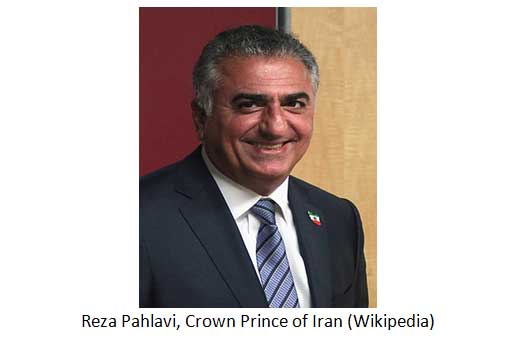
Trump says that the Iran Deal is the worst deal in history.  What the US wants is the old deal that it had with Iran from 1953 to 1979.  That was the “Greatest Iran Deal in History”.  The CIA already has their man ready.  They have been grooming him since he was 17 years old.  He lives not far from the CIA headquarters in Langley, Virginia.  He is Reza Pahlavi, the Crown Prince of Iran.  He is the last heir apparent to his father’s defunct Peacock Throne.  He is waiting in the wings for the job opening for a new Shah of Iran.

References
[*] Glide your mouse over the stars in the article for hyperlinks to supporting attributions.
“The Plot to Attack Iran: How the CIA and the Deep State Have Conspired to Vilify Iran”, by Dan Kovalik.
“Shah of Shahs”, by Ryszard Kapuscinski.
“All the Shah’s Men: An American Coup and the Roots of Middle East Terror”, by Stephen Kinzer.
 David William Pear is a columnist writing on U.S. foreign policy, economic and political issues, human rights and social issues. David is a Senior Contributing Editor of The Greanville Post (TGP) and a prior Senior Editor for OpEdNews (OEN). David has been writing for The Real News Network (TRNN) and other publications for over 10 years. 

Sunday, August 19, 2018

Dangerous Confrontation in The Middle East

The Zionist Khazarian mafia; the shadow government, has been gradually taking control of the American government system since the mid-1940s until it gained total control in our present day. Presidency has been a bought commodity granted to the presidential candidate, who would play as the complete puppet in their hands following their sinister agendas. President Donald Trump represents the ultimate Zionist Khazarian puppet. The ultimate Zionist goal is the establishment of the Greater Israel Project in the heart of the Middle East after destroying every possible rival state in the region.
To protect the Israeli colony, successive American administrations had adopted foreign policies of dividing the Arab World into smaller states, creating chaos and rivalries among them, creating religious and sectarian conflicts, and destroying some strong states while neutralizing and crippling others. One state in the region; Iran, was able to renew itself and stood strong as a major stumbling block to the Zionist project. Israel and the US have recently refocused their aggression on Iran again. Thus, we witness the recent escalating confrontation that could devastate the whole world, not just the region, if it develops into a military action.
The focus on Iran started with the discovery of its vast oil fields in 1908. During WWII an Anglo-Soviet invasion of Iran led to the installation of puppet Mohammad Reza Pahlavi as the shah and the Iranian oil was used to power the Allied forces. After the war, Soviet Union withdrew from Iran but British forces remained. In 1951 Mohammad Mosaddegh was elected as prime minister. He nationalized Iranian oil fields. This action led the US and Britain to orchestrate a coup (Operation Ajax) in 1953 to remove him from power and to reinstate the Shah, who brutally ruled the country for the next 25 years. In 1955 the US and Iran signed the Treaty of Amity to regulate the economic relations between the two countries. The US helped Iran build its first nuclear reactor and provided Iran with weapons grade enriched uranium as part of the Atom for Peace program.
In 1979 the Iranian revolution kicked the Shah out, closed the American embassy taking 53 Americans hostage, and regained control of oil fields. After the failure of Operation Eagle Claw to rescue the hostages the US and Iran signed the 1981 Accord in Algiers according to which Iran released the hostages and the US agreed not to intervene politically or militarily in Iranian affairs. The US, then, pushed Iraq’s Saddam Hussein into eight years war against Iran. Although the war devastated the country, the Iranians used the oil revenue to later rebuild and to modernize their country.
Iran continued to pursue its nuclear program with the help of the Soviet Union. The US then led a western economic sanction on Iran accusing the Iranian government of violating the NPT and demanding to open the nuclear facilities for inspection. After almost 13 years of negotiations the Joint Comprehensive Plan of Action (JCPOA) was signed in 2015 and the United Nations Security Council passed resolution 2231 approving the deal. The Iranian nuclear facilities were opened for IAEA inspectors, who verified 11 times so far that Iran has been complying with the nuclear deal.
Yet the Zionist Khazars were not satisfied with the deal and Israel never stopped lying about the alleged secret Iranian nuclear bomb program. Trump’s administration joined in expressing its dissatisfaction with the Iran nuclear deal stating that it was horrible, one sided and had failed to protect American national security, and eventually unilaterally withdrew from the deal in violation of the UNSC resolution.  Trump wanted to draft what he called a more comprehensive deal that would address the full range of Iran’s activities, including its ballistic missile program and its alleged destabilizing military interventions in the region especially in Syria threatening Israel’s security, and its alleged sponsor of terrorist groups; Lebanese Hezbollah, Palestinian Hamas and Yemeni Houthis; all labeled as terrorist groups by the US, Israel, Saudi Arabia and UAE. Claiming a policy to modify Iranian regime behavior, not a regime change, Trump’s administration demanded that Iran capitulate to a dozen tough demands otherwise suffer the “strongest sanctions in history” as emphatically stated by the Secretary of State Mike Pompeo.
Iran’s sin, as perceived by the American administrations, was its opposition to the Zionist Project of Greater Israel in support for the Arab resistance axis, and its help to Lebanese Hezbollah to liberate Lebanon from the 18 years Israeli occupation (1982-2000). Iran had again armed Hezbollah with weapons and missiles to inflict heavy casualties upon the Israeli army during the 2006 Israeli aggression against south Lebanon. The greatest Iranian sin was its help to Iraq and particularly to Syria to defeat the American/Israeli/Saudi/Qatari created and armed ISIS terrorists.  American Israeli need to curtail and contain Iran became critical especially after the Iran’s nuclear deal opening Iran to the global market.
We cannot stress the following facts enough times. Iran has never initiated a war of aggression against any other country during the last 400 years. The US on the other hand had initiated 222 wars of aggression (by 2017) all around the whole world throughout its 239 years of history or 93% of the time. The US had attacked many countries virtually on every continent using all types of weapons including chemical, biological and nuclear weapons. Since the end of WWII, the US had killed between 20 – 30 million people. American administrations had used lies, fake news, false flag attacks, and manufactured terrorist groups to justify its own many wars.
Israel had initiated 12 wars of aggression against its Arab neighbors throughout its short history of 70 years since its illegal occupation of Palestine, not mentioning its continuous sporadic aggressive bombings against its neighbors; Gaza Strip, Lebanon, Iraq, Yemen and Syria provoking further conflicts.
Iran does not have any military bases outside of its own borders. The US has approximately 800 formal military bases in 80 countries, many of which are surrounding and threatening Iran. Although Israel does not have any military base in other countries, yet its embassies act as its military bases, out of which Mossad’s assassins target whom they consider anti-Israel political and media activists. It is also an open secret exposed by Seymour Hersh’s book “The Samson Option”that these Israeli embassies store tactical nuclear bombs targeting capitals of states and threatening to take down the world if its policies are opposed.
Although Iran has harnessed nuclear energy for peaceful usage as verified many times by IAEA inspectors it does not have any nuclear bomb building program. Iran is a party in the NPT and had opened its nuclear facilities for IAEA inspectors. Although the US is a member in the NPT, yet IAEA inspectors have never published any report of their inspections of any American nuclear facility. It is well known that the US has the largest number of nuclear bombs and although US has committed to taking thousands of warheads offline since 2010 as part of the New START treaty the Trump administration plans to overhaul America’s nuclear bombs and develop new type of low-yield tactical nukes as proposed by Pentagon’s Nuclear Posture Review. Trump wants to update American nuclear weapons to become “… so strong and so powerful that it will deter any acts of aggression by any other nation or anyone else.”
General Jack Weinstein, deputy chief of staff of the US Air Force had announced that the US is in the final stages of a nuclear program of the production of 500 B61-12 tactical nuclear bombs for the cost of over $10 billion. Weinstein stated “we’ve already conducted 26 engineering, development and guided flight tests … the program’s doing extremely well.”
Trump signed Monday August 13th the John S. McCain National Defense Authorization Act with a record-setting $716 billion military spending bill that includes over $21 billion for nuclear weapons programs. Major news outlets neglected to mention nuclear weapons program, rather stressed the trivial fact that Trump did not mention Senator McCain in his speech.  The US allows itself to build nuclear bombs in violation of the NPT but sanctions other countries who allegedly do the same thing.
It is no secret that Israel is a nuclear country. The plight of the Israeli nuclear technician whistleblower; Mordechai Vanunu, is very well known.  Israel started its nuclear program in 1949 with the help of France building Dimona nuclear plant and with stolen American and Belgian nuclear material and technology. Israel had stolen uranium and nuclear technology from the US in what is known as NUMEC Affair (Nuclear Materials and Equipment Corporation in Pittsburgh, Pennsylvania) known also as Apollo Affair. In 1968 Israel had also illegally obtained and smuggled 200 tons of yellowcake from Belgian mining company Union Miniere, in what is known as Operation Plumbat.
It is Israel, not Iran, that has a secret nuclear weapons program as accused by courageous Jill Stein; the 2016 nominee for the American presidency. Israel seemed to have upgraded its nuclear arsenal with smaller tactical bombs and had used them at least twice to bomb its Arab neighbors; once in Yemen and another in Syria. In May 20th 2015 two Israeli F-15 fighter planes painted with Saudi insignia (Saudi Arabia does not have F-15 planes) dropped what is believed to be a neutron bomb on Yemen. It was revealed by Russians that analysis of videos taken of the attack revealed proton bombardment from a neutron bomb. Receiving no international condemnation of this crime, Israel was emboldened and dropped another tactical neutron bomb on Hama, Syria, on Saturday night of 28th April 2018, whose tremor recorded a magnitude of 2.6 earthquake on European seismic monitoring stations. Israel is a rogue nuclear state that is not a party in, and refuses to sign the NPT.
Iran has never created, trained, financed, or armed any terrorist groups to destroy its neighboring countries, but has been fighting them on its own borders with Pakistan, Afghanistan, Turkmenistan, and in Iraq and Syria.  Yet Trump’s administration is accusing Iran of terrorism. Trump accused “no matter where you go in the Middle East, you find the finger prints of Iran.” Actually, it is the Israeli/American terrorist finger prints that could be detected in every Middle Eastern country. The US created, trained, and armed terrorist groups such as ISIS and its sister shoots. When terrorists got defeated in Deir Ezzor American helicopters evacuated their leaders. US and UK had also helped terrorists move back to Europe as reported by BBC. After the liberation of terrorists controlled areas in Syria, such as Ghouta, the Syrian army found large underground storages of American and Israeli weapons, including chemical weapons and American equipment to manufacture chemical weapons (here, and here).
Israel has been supporting terrorist groups in Syria; providing them with weapons, intelligence and even treating injured terrorist fighters in Israeli hospitals. Watch Israeli Prime Minister Netanyahu visiting these terrorists and inciting against Iran. Even the Wall Street Journal has reported that Israel routinely gives secret aid to “Syrian rebels.” Many Israeli weapons were discovered in terrorist underground warehouses. Lately, Israel had rescued many members of the White Helmets terrorist group and their families, and shipped them to Jordan, from where they will be resettled in Europe and Canada as refugees.  The group was reportedly founded by former British army officer and military contractor James Le Mesurier in 2014.
The Zionist plan to destroy Arab states has met strong hurdles due to Russian and Iranian interference. Arab states such as Lebanon, Iraq and Syria entered into alliances with Iran and Russia to protect their citizens from terrorism. Iran’s security lies into the security of the whole region. Russia has military and economic interests in the region.
Since the American/Israeli military wars in the Middle East had failed to produce the sought for results, Trump’s administration is waging now economic wars to push the people to force regime change. The US has re-imposed sanctions against Iran, imposed unfair trade tariffs on China, Russia, Canada, Turkey, and European Union in the hope to impose American will. To protect their economies these countries had retaliated and imposed counter tariffs on the US. To protect its companies doing business with Iran the EU had updated its 1996 Blocking Statute forbidding its companies from complying with the American sanctions legislation unless authorized by the European Commission. China decided to drop the Dollar and use its Yuan in its trade with Iran, which will boost the global value of the Yuan. Germany promised to improve its economic trade with Turkey while Qatar’s prince Tamim bin Hamad promised to invest $15 billion in Turkey.
Iranian president; Hassan Rouhani, responded to Trump’s threat of sanctioning Iranian oil with a warning that also carries what could be a peace offering. “… America should know that peace with Iran is the mother of all peace, and war with Iran is the mother of all wars.” Rouhani stated.  War against Iran would involve at least all American military bases in the Gulf, all the Gulf states, Israel, Lebanon, Syria and Iraq. Turkey, Russia and China may somehow get involved. Iran threatened to close the Strait of Hormuz; the entrance to the Persian Gulf, against all oil exports. Yemeni Houthis also threatened to close Bab al-Mandab Strait; the entrance to the Red Sea, against all marine traffic. These closures would cause great economic impact on the whole world. In Trump’s trade war the US seems to stand alone and isolated. American economy, although the world’s largest, would suffer greatly.
Will Trump’s administration choose “the mother of all wars” or the “mother of all peace” is the question.
Dr. Elias Akleh is an Arab American from a Palestinian descent. His family was evicted from Haifa, Palestine, after the 1948 Nakba when the Zionists stole his family’s property. Then the family was evicted again from the West Bank during the 1967 Naksah, after the Zionist, again, occupied the rest of Palestine.

Saturday, August 19, 2017

Mosaddegh and the coup d'état of 1953

By Mohammad Homaeefar


TEHRAN – Sixty-four years ago, a foreign-backed coup d’état - known in Iran as the 28 Mordad coup - was staged in Iran which saw the overthrow of the democratically elected government of Prime Minister Mohammad Mosaddegh on 19 August 1953 in favor of strengthening the monarchical rule of Mohammad Reza Pahlavi.


Known as Operation Ajax, the coup was carried out after an earlier coup attempt failed to overthrow Mosaddegh and install General Fazlollah Zahedi, the shah’s reliable ally, as prime minister. As a result, Mohammad Reza Pahlavi, the shah of Iran, had fled to Baghdad.
Days before the first coup attempt, Mosaddegh had dissolved the parliament to get rid of the shah’s close allies, giving himself and his cabinet more power to rule, while effectively stripping the shah of his powers. 
With the success of the second coup, Zahedi was installed as prime minister, and the shah returned to Iran and continued to rule more firmly as monarch.
Mosaddegh was then arrested, tried and convicted of treason by the shah's military court. He was sentenced to death, but on the shah’s personal orders, his sentence was commuted to three years in solitary confinement in a military prison, followed by house arrest until his death.
Mosaddegh had also played a key role in the country’s 1951 movement that resulted in the nationalization of oil industry, which had been mainly controlled by the British-owned Anglo-Iranian Oil Company (AIOC), also known as BP.
Experts say the 1953 coup was aimed at securing the West’s oil interests in the country by restoring power to the Shah.
For years, the United States and Britain were blamed for the coup but both governments tried their best to sweep the story under the rug.
In 1989, the U.S. State Department first released coup-related documents, but edited out any reference to American or British involvement. Since then, the omission of CIA’s role has been widely criticized by historians.
Finally, in 2013, the CIA publicly admitted for the first time that it was behind the coup. It also released documents that showed how the British government tried to block the release of information about its own involvement in overthrow of Mosaddegh.
Again, the CIA failed to release all documents. According to Malcolm Byrne, who directs the U.S.-Iran Relations Project at the National Security Archive at George Washington University, the full installment of declassified material was scheduled to be released in 2013, but might have interfered with the Iran nuclear talks and were delayed again.
“This is going to be an important source for anyone interested in the tortured relationship between Washington and Tehran,” said Byrne. “But the fact that it has taken over six decades to declassify and release these records about such a pivotal historical event is mind-boggling.”
In June 2017, the CIA declassified more documents, shedding more light on the agency’s role in the coup, though numerous original CIA telegrams from that period are known to have disappeared or been destroyed long ago. 
The approximately 1,000 pages of documents revealed that the CIA, believing the coup to have failed, attempted to call it off.
“Operation has been tried and failed and we should not participate in any operation against Mosaddegh which could be traced back to US,” CIA headquarters wrote to its station chief in Iran on August 18, 1953. “Operations against Mosaddegh should be discontinued.”
According to Byrne, the message was purportedly and famously ignored by Kermit Roosevelt, top CIA officer in Iran. “One guy was in the room with Kermit Roosevelt when he got this cable. [Roosevelt] said no – we’re not done here.”