Showing posts with label Jimmy Carter. Show all posts

Saturday, November 02, 2019

Anti-U.S. Sentiments Run High After 40 Years

TEHRAN (Kayhan Intl.) — For those who were there, the memories are still fresh, 40 years after one of the defining events of Iran’s 1979 Islamic Revolution, when protesters seized the U.S. Embassy in Tehran and set off a 444-day crisis.

The consequences of that crisis reverberate to this day.
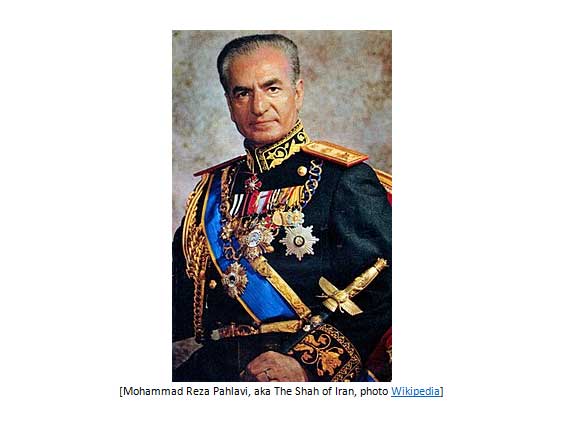
Veteran Iranian photographer Kaveh Kazemi recalled snapping away with his camera as he stood behind the gate where the Iranian students would usher blindfolded American workers to those gathered outside waving anti-American banners and calling for the extradition of the deposed Shah Muhammad Reza Pahlavi.
"Sometimes they would bring a U.S. flag and burn it, put it in flames and then throw it among the crowd,” said Kazemi, now 67, pointing to the spot. "They would come and chant ‘death to America,’ ‘death to the shah’ ... it changed the world as I knew it.”
Anger toward America had already been growing throughout 1979 as Iran’s revolutionary government took hold, but it boiled over in October when the United States took in the ailing shah for medical treatment.
After several protests, the students raided the embassy on Nov. 4 and took 98 workers captive.
What initially began as a sit-in devolved into 444 days of captivity for 52 Americans seized in the embassy. It prompted President Jimmy Carter to expel Iranian diplomats and launch a failed rescue mission before the Americans were eventually released on the last day of his presidency, setting off decades of hostility that turned the country from a former U.S. ally into perhaps its greatest adversary.
Many of those sentiments remain today amid the escalating tensions between Tehran and Washington, following the disintegration of Iran’s 2015 nuclear deal and the subsequent U.S. sanctions that have hit ordinary Iranians hard.
Outside the former embassy’s shaded red brick walls, which were in the process of being painted with anti-U.S. murals for the upcoming anniversary, former protester Hussein Kouhi said he turned out in 1979 to denounce what he called U.S. intervention in Iran’s internal affairs, something he says continues today.
"I had a good feeling then, but we have had a bad fate,” said Kouhi, now 76, as he blamed the U.S for shortages of medicines in Iran because of the sanctions. "Even today, if we allow, it (the U.S.) will come here to plunder Iran, just like it’s doing to other countries in the region. No foreigner is a friend of Iran. They all lie.”
Zahra Tashakori, a 41-year-old schoolteacher, agreed, saying she was glad the American presence was long gone.
"Look at their movies. They promote violence and other bad things in the societies,” she said. "They ruined wherever they intervened in the region. Just look at Iraq, Afghanistan and Syria.”
The Trump administration insists upon continuing its "maximum pressure” campaign against Iran.
As it does every anniversary, Iran plans to hold protests outside the former embassy —widely known as the "Den of Espionage”.

Wednesday, September 18, 2019

John Bolton was to Trump as Grigori Rasputin was to Tsar Nicholas

NEO Bolton 740 2
Will John Bolton be the downfall of Donald Trump? Is what is now in the news but a prelude to a greater story?
It all depends whether you want to accept the official story of why Trump dismissed his BIG MOUTH national security advisor, President Ousts Bolton Amid Rifts on Foreign Policy, (NYT, 9/11) and the proffered circumstances.
Could it be, as was alleged just over 100 years ago in the Russian Imperial Court, that Rasputin was more in control than the royal family, and in fact “Rasputin was acting as a puppet master over them”? Or is the story here that Donald Trump, supposedly such a great businessman, has just found this out, and does not want it tarnishing his brand?
Shock and Awe
John Bolton is a man with a history and many opinions. With him it is my way or the highway, which at first sight makes him a highly suitable member of Trump’s iconoclastic team.
Bolton is prepared to say, and act upon, what many of Trump’s base actually think about this country or that. These are often people who feel they have been marginalised, whose views are too politically incorrect to be heard. By putting Bolton so close to himself, Trump signalled to his supporters that they were the masters now, however much of an illusion that actually was.
Appointing this loud mouthed warmonger may also have been based on the need to distract attention from what the “real policy” makers in the shadows were doing. He succeeded in continually giving the press a proverbial bone to gnaw on, a colourful distraction from a range of rants and failed policy positions, especially relating to North Korea, Venezuela, Ukraine, Iran and Afghanistan.
Bolton might be described as a sinister counterpart to British music hall entertainer George Formby, whose cheeky grin and comic persona made everyone think his songs were just a bit naughty, rather than the dark shade of blue they really were, when the words were taken on their own; Or a more recent figure, Imelda Marcos, whose extravagance and hoarding of privilege enabled her husband to present his regime as a show rather than a crime
Bolton would have never made a good lecturer in conflict resolution or cross-cultural negotiations. But that was never the intention. He has served his purpose, the front man who makes what goes on behind seem reasonable by comparison.
Now we are led to believe that Trump understands that Bolton has become a liability. Maybe Trump actually found out that all Bolton wanted was war, and it annoyed him. Or did he know this all along, as his advisers and vetters doubtless did?

Your Problem, My Solution

Every US president wants to be remembered as a dealmaker and a peacemaker, regardless of what they actually do. Ronald Reagan presented himself as the tough guy who would stand up to the Soviets, in contrast to Jimmy “limp dick” Carter, but changed his tune radically by meeting Gorbachev and reversing his previous comments about the Evil Empire.
John Bolton not only said what many Trump supporters think, he took the credit for it. By implication, his views were also those of Trump himself, or he wouldn’t be part of the Administration. But if Bolton strayed too far from the official line Trump could always insulate himself from negative effects by saying that Bolton was an underling who was misbehaving, not a spokesperson Trump himself had appointed.
Trump is standing for re-election, despite dire polling numbers, much worse than those Lyndon Johnson was getting before he withdrew his own re-election bid. Having won against the odds in 2016 by appealing to a particular base, he knows that his best bet is to keep the same marginalised constituency onside, rather than try and appeal to previous opponents or don’t-knows, and whose opposition has only hardened since he took office.
Trump’s tenure has been plagued by witch hunts and lame attempts to start impeachment proceedings. These continue because they make the press and help the Democrats deflect blame for their own incompetence. But Trump’s response has been to take everyone on with an extraordinary string of allegations and smears, which are not designed to win over people who might agree with some of the views of those he attacks.
So if Trump is going to remain in office he will have to claim all the credit for the most outrageous acts of his Administration. It once suited him to be seen as more reasonable than John Bolton, and it wasn’t difficult. Now he can’t afford to do so, if he is going to lead people who feel put upon to the Promised Land where con triumphs over merit.
Trump has to have the biggest and loudest mouth of all, because that is all many of his voters are allowed to have. No one listens to their reasoning, their priorities or their problems. Consequently their only option is to make as much noise as possible, and accuse everyone who doesn’t like it of being corrupt – exactly what Trump himself will have to embody as a candidate.
Kissing Backsides

Trump has failed to Drain the Swamp or make American Great Again. Rather than making his lost constituency a found one, he has done what anyone who has seen his history should have expected – made sure that he, his buddies and a small minority of Americans have got richer, by any means possible, and are now laughing all the way to the bank.
If he wanted to turn statesman now, he couldn’t. The result of the flip flops and inconsistencies in US policy is that almost all countries know it’s foolish to trust the word of Washington. Trump will never be able to make any more big deals, unless they involve selling more weapons to Saudi princes to bomb civilians in Yemen.
It does not matter who he appoints to fill Bolton’s shoes. That person’s credibility will be suspect from the onset, because of all those who have come before. They will also be overshadowed by their boss, who needs exactly the opposite vector: the tough Commander-in-Chief being undermined by his pussy adviser, rather than the statesman being undermined by his hawkish loose cannon.
There is a need to address foreign policy with an open mind. This has not happened in recent years. Practically anyone who accepted any National Security position would be putting his head on the block. Their future career would be tainted by the legacy of the Trump Administration—and how the world became so destabilised on his watch, because he is Trump.
Trump is guilty of many things, but the greatest of all is being himself. The White House and the likes of Pompeo want to present the ousting of Bolton as humdrum and nothing out of the ordinary, as to be expected. However, there is too much of a pattern to both Bolton’s appointment and dismissal for this to wash, like that of the man who gets divorced too many times.
It is not as if Trump got a “pig in the poke” when he first brought Bolton on board. Trump knew that he wanted war with Iran, and supported tearing up nuclear deals and sanctions in the interim.
Trump actively sought a situation where he and his expendable adviser acted as if they were two madmen willing to outdo one another, and blow the world to kingdom come in the process.
Bolton knew what his part was. This is why he has cultivated a reversed image, like an even more notorious National Security Adviser, former Secretary of State Henry Kissinger. And now Bolton may even publish a book of his plight under the Trump administration.
Kissinger still maintains that he was always trying to restrain Nixon, a madman, rather than being corrupted by him as everyone else around him was. By this, he tries to claim credit for Nixon’s achievements, as the product of “sensible” influence, such as his, whilst implying his crimes were Nixon’s alone, good cop vs. bad cop.
This is exactly what Trump was trying to do to Bolton, so Bolton responded by presenting himself as the sensible part of the partnership. As we are dealing with Trump, this worked. The New York Times has even been moved to declare that “Mr. Bolton spent much of his tenure trying to restrain the president form making what he considered as unwise agreements (deals) with America’s enemies.”
Ultimately this is what has led to Bolton’s downfall – Trump can be as bad as him to pander to his audience, but still claim to be sensible, in his own estimation, because he is doing what Bolton did. Next we will be hearing that Trump wants to nuke his new friends in North Korea, but this must somehow be a gesture of peace and reconciliation on the Korean peninsula, because others want to negotiate the US position away, just as Trump himself has done.
Due Process

John Bolton has been sacrificed for the very reason he was appointed. But who can be an effective National Security Policy Advisor in these circumstances? Policy is being dictated by Trump’s attempts to appeal to a base which does not have to be responsible for the consequences, and therefore has no need to listen to advice.
Knowing who has been in policy positions before is an indication of what the President does not want at this time. The likes of Jim Mattis, Rex Tillerson, HR McMaster etc. Those with abilities will tell Trump and his team what they do not want to hear, and then, out of the job, have the audacity to proclaim publicly “I hate to tell you so but I told you so!” Those with no ability will be cowed into taking direction from Trump, which will be whatever he thinks makes him look good on a given campaign stop.
Obviously the US’s overseas partners need to be aware that an election is coming, and that this will colour what prospective presidents promise. But they have bigger problems of their own, which tend to go without sufficient US attention during election periods, unless the US candidates can make capital out of them for their own reasons, with a domestic audience.
Trump now says the US is “locked and loaded” to take on Iran over the Saudi Arabia oil fire. Iran being a longstanding perceived enemy, this may not be surprising. But the comment, which Trump claims is based on “intelligence” about who was behind the oil facility attack, tells us what is now likely to happen in the Middle East in particular, and also other parts of the world American voters have heard of.
John Bolton wanted to start wars all over the place because he identified certain countries and groups as “America’s enemies”. Trump is dispensing with the formality of working out whom, in the ever-complex Middle Eastern political world, is an enemy and who is not. With Israeli elections coming up it no longer matters who is the advisor and who is “friend or foe”, as the starting short has been fired.
Certain words, like “Iran” and “Muslim”, have existing bad connotations. Now no one is going to explain what certain countries are guilty of, what makes them America’s enemies. Bad word = retaliation, regardless of the issue, regardless of the cause, regardless of the evidence.
We will see fewer proxy interventions. Arming some combatant or other will not solve problems because each has a cause to fight for, which the US would be tacitly approving or condemning by the pattern of its arms sales. The US will threaten and act in its own name, and then ask other NATO countries to join in and pay more of the bill—and spill more of the blood. Then each conflict will be about the US being good, not the US supporting this or the other position or outcome.
Existing operations will no longer be based around fancy ideas like peace, reconstruction or R2P. If peaceful politicians happen to have a bad word associated with them, they will be removed in favour of warmongers who don’t have that word affixed to their names.
In Afghanistan the Taliban will be presented as unstoppable, although they were stopped before, while civilian governments will be called “Muslim”. In Iraq a witch hunt of “Saddamists” will be the solution to a non-existent problem, with anyone who opposes this being branded as “terrorist”.
Bolton has gone because Trump can no longer cope with anyone being worse than him. He made this rod for his own back, and now has to stand on the stump with it sticking out to show he deserves to be re-elected.
Now Bolton has shown him that war can be presented as peace to those who want to hear it, he doesn’t want anyone else getting the “credit” – particularly while Democrats try and present reasoned positions, and appeal to a Middle America which doesn’t want Trump, but isn’t listening to them either.

Henry Kamens, columnist, expert on Central Asia and Caucasus, exclusively for the online magazine “New Eastern Outlook”.

Saturday, April 13, 2019

So, a nation of 80 million is ‘terrorist?!’


By Seyyed Mohammad Sadeq Kharrazi
(Kharrazi is a former ambassador of Iran to France. His article “So, a nation of 80 million is ‘terrorist?!’” originally appears on IRNA and has been translated from Persian.)

Thirty nine years after former US President Jimmy Carter severed America’s political and trade relations with Iran, a Republican successor to him put Iran’s Islamic Revolution Guards Corps (IRGC) on a blacklist of so-called terrorist groups.
Carter lost the presidential election, and a second term in office, that same year because he couldn’t resolve the issue of the American hostages in Tehran. A quarter of a century later, that same Carter became an advocate of unconditional negotiations with Iran. Whereas he hosted Arab and Israeli officials at Camp David for an accord of the same name, a quarter of a century later, he not only opposed the designation of Hamas as “terrorist,” he also initiated negotiations with the Palestinian resistance group and acknowledged that it would be futile to try to leave out Hamas and Syria from Middle East peace talks.
This was the same Carter who, during the hostage crisis, had called Iran a terrorist country and to whom Imam Khomeini had addressed these remarks in a CBS interview, “Is a nation of 35 million terrorist?!... Is your discernment of political matters like that, too?! Rest assured that our nation is Muslim, and Muslim is not terrorist, and our nation will treat these [Americans at the US embassy] with the utmost mercy.”
What incumbent US President Donald Trump did with his decision... [about the IRGC the other day] is he repeated the allegations that all of Carter’s successors had made. This time, though, Trump was blacklisting an official and popular force of another country. It was the repetition of the mistake that the US made in 1997 with Lebanon’s Hezbollah, calling a popular resistance group working against Zionist occupation “terrorist,” the same force that is today well received by the majority of the Lebanese people and that has seats in the Lebanese parliament as an influential political force.
How can Lebanon’s Hezbollah be a terrorist group but Israel’s military, intelligence, and security organizations — which officially assassinate Palestinian activists, commit war crimes in their attacks, and have a long, bleak record of killing unguarded civilians — not be one?! What credibility does the US blacklist essentially have when both Daesh’s name and the name of the biggest force fighting it, namely the IRGC, appear on it?! What ridiculous list is this when it records al-Qaeda, the Taliban, and Daesh — groups that thrived because of the US’s own political, military, and logistical support...? What outrageous list is this when the advocates of the terrorist Mujahedin-e Khalq (MKO) outfit, who are honored to give speeches at the group’s gatherings, pick who should be on it and who should not?! Isn’t the increasing popularity of Hezbollah among the people of Lebanon and the region the best testament to the list’s invalidity? Isn’t the fact that even Carter refuses to view Hamas as “terrorist” a sign that US political groups, too, have disregard for such a mischievous play on the concept of “fighting terrorism?!”
When they blacklist the IRGC, the US’s current statesmen display their highest understanding of Iran! The IRGC was born with the Islamic Revolution and fought alongside the Islamic Republic’s Army to defend Iran’s territory and Iranian lives during the Iraqi war on Iran. In later years, it fought Saddam Hussein’s American-backed Ba’ath party, as well as the American-made al-Qaeda and Daesh. The IRGC has not a military but a popular nature.
Major General Qassem Soleimani is among the several most popular figures in Iran, as testified to by all methodical and even non-governmental opinion polls. That popularity has been acknowledged many times over by US officials and media.
Leader of the Islamic Revolution Ayatollah Seyyed Ali Khamenei awards Iran’s highest military order, the Order of Zulfaqar, to IRGC Quds Force Commander Major General Qassem Soleimani. (Photo by khamenei.ir)
Was it not the IRGC whom the Americans implored to set up Baghdad’s Green Zone? Was it not the IRGC that went to the Northern Alliance’s aid to capture Kabul after 9/11 and when US commanders were shivering [with powerlessness]?
History is repeating itself.
Saudi Arabia’s and the Emirates’ hired armies are shivering at the gates of Riyadh, Dubai, and Abu Dhabi, but Iran’s rapid action task force for peace is hard at excellent work in the region.
The White House’s move against the IRGC was not just against that force; it was against the entire Iranian nation. To borrow Imam Khomeini’s words, one can wonder, “Is a nation of 80 million terrorist?!”

Thursday, December 13, 2018

The US Wants to Bring Back the Shah of Iran

The US had a great deal going from 1953 to 1979 with the Shah of Iran.  For 25 years Iran was a cornerstone of the US usurping the British Empire in the Middle East, following World War Two.  Iran was a base for projecting US power in the region, and strategically it bordered the Soviet Union during the Cold War.
During the early 20th century the British Empire had full control of Iran’s oil industry, and was paying Iran a flat fee for every barrel of oil it extracted.  A rough calculation of Iran’s royalties is between 8% to 16% of the profits, but Iran was never allowed to look at the financial books.[*]
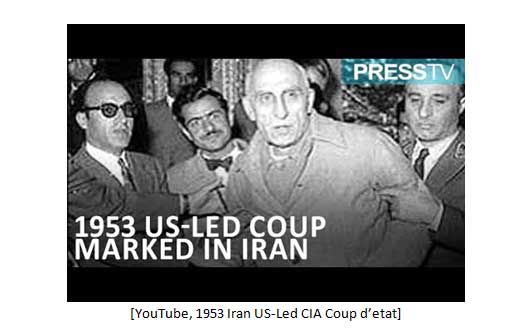
Prior to the CIA-led 1953 overthrow of the democratically elected Prime Minister Mohammed Mossadegh, Iran demanded 50% of the profits and control of their oil industry.  That was not unreasonable, but Iran was willing to negotiate.  At the time, the US oil companies had a 50/50 profit sharing agreement with Saudi Arabia.
The British refused any negotiated settlement.  It was then that the Iranian parliament led by Mossadegh voted to nationalized Iran’s oil industry.The British responded with a naval blockade, and began plotting to overthrow Mossadegh and the parliament.  As the Prime Minister, Mossadegh held the most political power in Iran because the people were behind him.  The Shah of Iran was mostly a figurehead, at the time.[*]
President Harry Truman was adamantly against colonialism and sided with Iran, which infuriated the British.  When President Dwight D. Eisenhower took office in 1953, he sided with the British.  Eisenhower and Churchill plotted a coup d’état to overthrow Mossadegh.  The frightened Shah, who was in on the plot, fled from Iran before the coup attempt just in case anything went wrong.  The first attempt did fail.  A second daring CIA-led coup succeeded and the US reinstalled Mohammad Reza Pahlavi as the Shah of Iran, with dictatorial power.
By its intervention, the US broke the British Empire’s monopoly on Iran’s oil.  That was part of the US’s calculus.  After the coup, US oil companies got 40% of Iran’s oil industry, 14% went to Royal Dutch-Shell, 6 % went to the French Petroleum Company, and the British oil company kept 40%.  In addition, Iran got its 50/50 share of the net profits that it wanted in the first place.  The US immediately sent financial aid to prop up the Shah, and to bolster Iran’s weakened economy from the British blockade.
If the British had initially been flexible,renegotiated a 50/50 oil deal with Prime Minister Mossadegh, then it would have made a coup less likely.  Iran was developing a secular democratic government.  It might have become a model for other post-colonial countries in the Middle East.  Democracy and self-determination are what the US said its world mission was going back to President Woodrow Wilson in 1918:
“….every peace-loving nation which, like our own, wishes to live its own life, determine its own institutions, be assured of justice and fair dealing by the other peoples of the world as against force and selfish aggression. All the peoples of the world are in effect partners in this interest, and for our own part we see very clearly that unless justice be done to others it will not be done to us.”[*]
Since Iran was a developing democracy, an excuse had to be found for a US intervention.Churchill accused Mossadegh of being a communist.  There was no evidence that he was.  Mossadegh was an anti-colonial nationalist who cared about the welfare of the Iranian people, and that was all the evidence that Eisenhower needed. Mossadegh had to be punished for standing up to the British and demanding Iran’s natural resources for the benefit of the Iranian people.
The winners from the coup were the US and the timid Shah who had ran from his own people.  The US would teach him how to have a backbone.  He turned out to be a good student, and with the support of the US he turned Iran into a totalitarian police state andhe ruled by terror.  The Shah got US protection from his own people and from foreign enemies.
The US looked the other way from the Shah’s corruption of conspicuous consumption, stuffing dollars in foreign bank accounts and lining his own pockets, and those of his cronies.  The US got a big piece of the Iran oil industry, and Iran gave the US a strategically important location for a military presence.As for the people of Iran, they continued to live in abject poverty and illiteracy.[*]
Now that the Shah is gone, the US propaganda machine and the mainstream media put out a flood of stories about how wonderful life was under the Shah.  The propagandists use economic indicators of inflation, employment, gross domestic product, oil exports and the upper-class standard of living.  Anybody who puts out those kinds of comparative economics deserves to flunk Economics 101.
Iran has been under sever US-imposed economic sanctions for 40 years.  The US has been threatening Iran with war and “all options are on the table” for decades.  The US has also instigated instability inside Iran and supported external attacks by terrorist groups such as Mujahideen-e-Khalq, or MEK.[*]
MEK was on the US State Department’s list of terrorist organization until it was removed by former Secretary of State Hillary Rodham Clinton in 2012.[]  The fact that MEK has killed US citizens in terrorist attacks did not hinder some US politicians from accepting large speaking fees at their conventions, even when MEK was still on the US terrorist list.[]
The US project to destroy Iran’s economy has had a devastating impact.  The husky Secretary of Defense Mike Pompeo said that it is up to Iranian’s leadership “if they want their people to eat”.[*]Because of the US, Iran lacks sufficient funds that it would like to invest in human resources and social programs.  Iran’s constitution guarantees healthcare and free education for all, as well as protections of civil rights.  As reflected in the drafting of the Constitution of the Islamic Republic, the vision of the economic order was:
“Social justice and economic independence were the main economic goals to be achieved, among other means, through the expansion of the welfare state, extension of public ownership, creation of an active cooperative sector, and strengthening the agricultural and industrial sectors for greater self-reliance.….the Constitution of the Islamic Republic bears great resemblance on economic issues to the charters and constitutions of Arab “socialist” states drafted during the 1960s and 1970s.”[*]
Constant US, Israeli and Saudi threats require Iran to divert its domestic budget more towards defense, instead of its desired economic goals.  Terrorist attacks and internal dissention stirred up by the US causes Iran to increase its internal security to the detriment of civil liberties.  The US and the mainstream media propaganda machines know what the deliberate effects of US aggressive actions cause, but they cruelly taunt Iran for its economic and social hardships by blaming the victim.
The US uses these same dirty tricks against Cuba, Venezuela, Nicaragua, North Korea, Russia and every other country that the US demonizes for not falling into line behind US domination in the neoliberal New World Order.The New World Order is the US foreign policy that it alone is unrestrained to “destabilize countries in order to integrate them militarily, politically and economically ….into US-style capitalism and culture”.[*]
The US is still fighting a cold war against socialism, the welfare state, and public ownership.A cold war against Iran is not about US national security.  Iran is not an existential threat to the US, or to Israel either.[*]It is about US corporations being thwarted from exploiting Iran’s natural resources, privatizing their state-owned enterprises, and “opening” Iran to unequal trade arrangements.  It is also about the US being the hegemon in the Middle East.
The US is still using the same gunboat diplomacy that it has been using since the 19th century to “open” Latin America, Japan, Korea, China and the Philippians to exploitation.  It is old fashioned imperialism dressed up in the jargon of “human rights, democracy, and US exceptionalism”.  It is what old-world colonialism called “civilizing the heathens”.
The US will never forgive the Islamic Republic of Iran for shutting down the US deal of exploitation.  With the Shah’s cut from oil companies, he was a very big customer for US weapons manufacturers, such as General Dynamics, Lockheed, and Northrop. He also aggressively bought into President Dwight D. Eisenhower’s Atoms for Peace program.  At the urging of the US, Iran began its nuclear program in 1957.[]
Selling weapons and nuclear technology was good business for weapons manufacturers and the nuclear industry.  US companies like General Electric and Westinghouse sold Iran the nuclear equipment and technology, as well as the enriched uranium fuel.  They even sold the Shah highly enriched weapons grade uranium, which is the most efficient for producing electricity, and making atomic bombs, too.[*]
As far as the US public knew the Shah was highly popular and loved by his people.  Imagine the surprise when the people of Iran overthrew him in 1979.  The mainstream media was shocked too, since they had swallowed their own propaganda.  The images of Iranians rioting, protesting,burning the US flag and shouting Death to America were frightening,it looked irrational, and it seemed to come out of nowhere.
The US public and press became outraged when the US Embassy in Tehran was stormed by revolutionary students who took 52 Americans hostage.The students renamed the US Embassy the “Den of Spies”.  The students had every reason for that name, given the cache of incriminating documents they discovered.[*]
In the US, every nightly TV news broadcast began with the number of days that had passed since the beginning of the Iran Hostage Crisis.  It lasted for 444 days, and resulted in President Carter losing his re-election bid to Ronald Reagan in 1980.
Instead of an imperial looking shah, the Iranian Revolution ushered in an Islamic leader to head the government.  The thought of Iran turning into a theocracy seemed antiquated to Americans.  They had not known that Ayatollah Khomeini was a national hero since the early 1960’s.  He had been arrested, tortured, imprisoned and then exiled to France for his outspoken opposition to the Shah.[*]  The unphotogenic image of a dour looking Ayatollah Khomeini was an easy target for Western racist and Islamophobic propaganda.
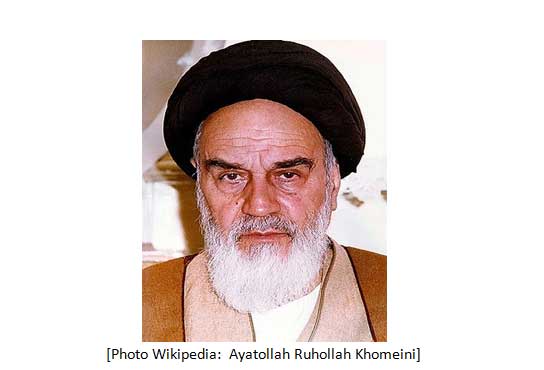
The US public could not understand why Iran became anti-US, anti-West, anti-modern, and appeared to be fanatical.The violent purging of the Shah’s cronies and of the opposition was shocking.  Iranian supporters of the Shah who fled to the US brought with them wild tales of people being hung from street lamps for having televisions and toilets in their homes.  They left out the part about how they lived in affluent luxury, while the vast majority of people lived in hovels.  The transition was violence, and it lasted for about 2 years.
The US public had no idea why the Iranian people hated the US so much.  The facts were kept secret from the public for years.  The State Department documents were finally made public in 2017. []For many decades the public did not know that it was the US, from President Eisenhower on down through the State Department and the CIA, which overthrew the popular democratically elected government of the charismatic Prime Minister Mohammad Mossadegh.[]But the Iranian people knew that It was the US that put the brutal regime of Mohammad Reza Pahlavi on the Peacock Throne.[*]
The US public was uninformed of the Shah’s repression, political prisoners, torture chambers, assassinations, disappearances and executions.  Not only did the US government turn a blind eye to the brutality, it was the CIA (and Israel’s Mossad) that was the overseer and mentor to the Shah’s secret police; the “Organization of National Intelligence and Security of the Nation”, known as SAVAK.[*]
[YouTube, 1953 Iran US-Led CIA Coup d’etat]
For an example of the Shah’s brutality, an Amnesty International assessment for 1974-1975 report stated:
“The shah of Iran retains his benevolent [world] image despite the highest rate of death penalties in the world, no valid system of civilian courts and a history of torture which is beyond belief.”[*]
Once when The Shah was confronted by a journalist for the French newspaper Le Monde about his brutal repression methods he responded:
“Why should we not employ the same methods as you Europeans.  We have learned sophisticated methods of torture from you. You use psychological methods to extract the truth; we do the same.”
In 1978 Amnesty International reported that nothing had changed for the better in Iran.  Even the mention of the word SAVAK was enough to send chills down the backs of Iranians.
The explosion of the Iranian Revolution of 1979, the Hostage Crisis and the animosity of the Iranian people towards the US government was the direct result and blow back from 25 years of the US coddling and sheltering its shah puppet.  As Kermit Roosevelt who was the CIA station chief in Tehran in 1953 said of the Shah: “He’s our boy”.  It was Roosevelt who engineered and implemented the coup that brought the Shaw to power.  The code name for the coup was Operation Ajax.[*]
Just as Trump is trying to cover up for MBS (as Thomas Friedman affectionately refers to the Crown Prince of Saudi Arabia), President Jimmy “Human Rights” Carter tried to cover up and sheltered Mohammad Reza Pahlavi after the Iranian Revolution.  The Iranian people wanted the Shah arrested by the US, where he had fled.  They wanted him extradited to Iran to face justice.
Henry Kissinger and David Rockefeller had appealed to Carter’s compassion to admit the Shah to the US for health reasons.  After much vacillation Carter agreed.[]Carter had had a friendly personal relationship with The Shah.  In 1977 Carter visited Iran and toasted the Shah for his “island of stability” and for “the admiration and love which your people give you”.[]
Carter admitted the Shah to the US on October 21, 1979.On November 4, 1979 revolutionary students took over the US Embassy in Tehran, and demanded the Shah in exchange for the US hostages.  Carter said he refused to give into “blackmail” to a group of “terrorists”.Still vacillating, Carter expelled the Shah from the US.  He died in Egypt in 1980. [*]
As a reaction to the Iran Hostage Crisis, the US imposed unilateral sanctions on Iran,cut off the sale of oil and froze their assets in the US.  The US put an embargo on Iran, including humanitarian supplies, and the US broke diplomatic relations.  Needless to say, the US stopped its “Atoms for Peace” program and cooperation with Iran in developing nuclear energy.[*]
Not coincidentally, Iran released the US hostages within hours of Ronald Reagan being sworn in as President in 1981.  The circumstances and timing of the hostage release is still controversial.[]  Most likely,Carter deserves the credit for successfully negotiating the release of the hostages.[] Why the Iranians released the hostages when they did is still a mystery.
In 1980 Iraq invaded Iran starting the Iran-Iraq war that lasted until 1988.Whether or not the US gave a “green light” to Saddam Hussein to invade Iran, the US did not try to prevent or stop Iraq’s aggression.  According to Dexter Filkins, writing in the New Yorker:
Iran’s leaders took two lessons from the Iran-Iraq War. The first was that Iran was surrounded by enemies, near and far. To the regime, the invasion was not so much an Iraqi plot as a Western one. American officials were aware of Saddam’s preparations to invade Iran in 1980, and they later provided him with targeting information used in chemical-weapons attacks; the weapons themselves were built with the help of Western European firms.
The other lesson drawn from the Iran-Iraq War was the futility of fighting a head-to-head confrontation.  ……Instead, they had to build the capacity to wage asymmetrical warfare—attacking stronger powers indirectly, outside of Iran.[*]
According to the New York Times, “the Reagan Administration secretly decided shortly after taking office in January 1981 to allow Israel to ship several billion dollars’ worth of American arms and spare parts to Iran”.[*] Cynically the US later said that it gave aid to both sides “to remain neutral”; and unsaid was to keep either side from winning.  Both Iran and Iraq suffered over 500,000 casualties each in the Iran-Iraq War.
If the US had hoped that the Iran-Iraq war would weaken Iran, then the unintended consequences were just the opposite, as often is the case with US duplicity.  Iraq’s invasion of Iran united the Iranian people strongly behind the Iran revolutionary government.  In 2003, President Bush’s invasion of Iraq would make Iran an even stronger regional power.
In 1982 Israel invaded Lebanon, and through a series of events Reagan sent US Marines to Lebanon.  He called them a “peacekeeping force” to avoid having to get Congressional approval under the 1973 War Powers Resolution.  In 1983 a truck bomb suicide attack on a Marine barracks in Lebanon killed 241 people, mostly US Marines.  The US blamed the attack on Iran and declared Iran a “terrorist state”.  More US sanctions were imposed on Iran even though there was only circumstantial evidence that Iran was the perpetrator.
In 1988 the US shot down an Iranian commercial airliner that was in Iranian airspace.  All 290 passengers and crew of the airliner died.[]  The US claimed that it mistook the plane for a threatening fighter jet.  Even though the US admitted that it had shot down the airliner, President George H. W.Bush refused to apologize, saying “I’m not an apologize-for-America kind of guy”.  []
Even with all the turmoil of the 1980’s, Iran continued to work on its nuclear program.  It had signed the Nuclear Non-Proliferation Treaty (NPT) in 1970.  Iran has every right under the treaty to a nuclear energy program.In fact, under the treaty the nuclear-weapons countries are obligated to cooperate with the non-nuclear-weapons countries in the peaceful development of atomic energy.
Instead of abiding by the NPT, the US used the red herring that Iran had a nuclear weapons program.  Without proof, the US slapped unilateral economic sanctions on Iran.  So, Iran turned to France, Russia and other countries to purchase material, equipment and technology for its nuclear energy program.
After the Iraq invasion of Kuwait in 1990, and the US war with Iraq, the US imposed sanctions on both Iraq and Iran.  While Iran had declared neutrality in the war, the US accused Iran of secretly aiding Iraq.  The real reason why the US imposed sanctions on Iran was that it was concerned that a weakened Iraq would strengthen Iran as a regional power, which is exactly what it did.[*]
Then in 1996 under President Bill Clinton, what was to become known as the Iran and Libya Sanctions Act was passed by Congress.l*]  This act penalized any US or foreign entities that invested in Iran’s oil and gas industry.  The supposed rational was that investing in Iran’s oil and gas industry would provide Iran with the funds to develop weapons of mass destruction.Since money is fungible, the same logic could be used about all trade with Iran, and eventually it was.  Still there is no proof, except circumstantial, that Iran has ever had a nuclear weapons program.
The real reason for economic sanctions is that the US is engaging in economic warfare against Iran.  It is angry because their puppet shah was overthrown.US economic sanctions are an attempt to destroy Iran’s economy.  As the most powerful and influential economic nation in the world the US can exert tremendous financial penalties, hardships and isolation on other countries.  Most of the suffering from sanctions are borne by civilians.
Does supporting the aggressor in a war,aiding the aggressor in the use of banned chemical weapons, giving both sides weapons to kill each other, and shooting down a civilian airliner qualify as “state sponsored terrorism”?  Since 1979 the US has killed millions of people is covert operations such as in Afghanistan, and in illegal wars of aggression in the Middle East, such as the 2003 invasion of Iraq.
Yet, Iran is condemned by the US as the world’s “leading state sponsor of terrorism”?  Such accusations by the US against Iran are hypocritical and politically motivated hyperbole.[]  The motive for US propaganda is to aid the cause of overthrowing, one way or another, the internationally recognized legal government of Iran.[]  The world’s leading sponsor of state terrorism is surely the US, and its partners in terrorism are the UK, Israel, and Saudi Arabia, and the other Gulf Cooperation Council countries.
The definition of terrorism according to Webster’s dictionary is “the unlawful use of violence and intimidation, especially against civilians, in the pursuit of political aims”.
The victims of US economic sanctions call it financial terrorism.  It is and it does hurt mostly civilians financially, and it causes them unnecessary suffering and deaths from the lack of nutrition and medicines for curable and preventable diseases.  There is also tremendous emotional distress on the civilian population caused by economic sanctions.  Alcoholism, drug addiction, divorce, crime and many other social conditions are exacerbated.
Economic sanctions meet the definition of terrorism, and that makes economic sanctions a crime against humanity.  Even UN authorized economic sanctions overstep the Geneva Conventions and are immoral and maybe unlawful.  The International Committee of the Red Cross has cautioned the United Nations Security Council that the “Security Council is bound to observe the principles of international humanitarian law when designing, monitoring and reviewing sanctions regimes.”[*]
The US wants to turn the clock back to 1953 and a return of the Shah of Iran.  Why not?  The US had a great deal going with the Shah of Iran for a quarter of a century, until the Iranian Revolution of 1979.  That is why the US hates the current government and wants to overthrow it.
The US is determined to undermine the government of Iran.  President Trump’s violation of the JCPOA, “Iran Deal”, has put “all options on the table” again:economic sanctions,terrorism, war and even the use of nuclear weapons.Iran is now in its 40th year of the Islamic Republic.[]Speaking to the terrorist group MEK in 2017, John Bolton said that President Trump’s policies should be that “Ayatollah Khomeini’s 1979 revolution will not last until its 40th birthday.”[]  The 40th anniversary of Iran’s Islamic Revolution will take place in a few months, on February 11, 2019. Obviously, Bolton is not invited.
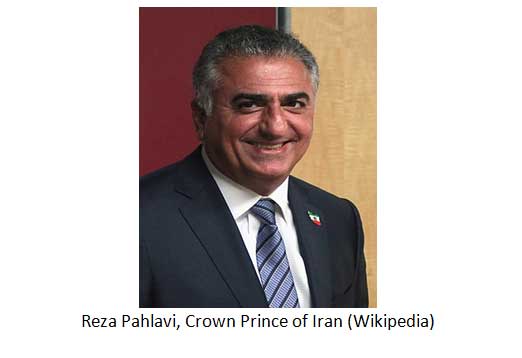
Trump says that the Iran Deal is the worst deal in history.  What the US wants is the old deal that it had with Iran from 1953 to 1979.  That was the “Greatest Iran Deal in History”.  The CIA already has their man ready.  They have been grooming him since he was 17 years old.  He lives not far from the CIA headquarters in Langley, Virginia.  He is Reza Pahlavi, the Crown Prince of Iran.  He is the last heir apparent to his father’s defunct Peacock Throne.  He is waiting in the wings for the job opening for a new Shah of Iran.

References
[*] Glide your mouse over the stars in the article for hyperlinks to supporting attributions.
“The Plot to Attack Iran: How the CIA and the Deep State Have Conspired to Vilify Iran”, by Dan Kovalik.
“Shah of Shahs”, by Ryszard Kapuscinski.
“All the Shah’s Men: An American Coup and the Roots of Middle East Terror”, by Stephen Kinzer.
 David William Pear is a columnist writing on U.S. foreign policy, economic and political issues, human rights and social issues. David is a Senior Contributing Editor of The Greanville Post (TGP) and a prior Senior Editor for OpEdNews (OEN). David has been writing for The Real News Network (TRNN) and other publications for over 10 years. 

Friday, September 21, 2018

Oslo, 25 years on: Peace in tatters!

Shalom, Salaam, peace: Twenty-five years ago, these words reverberated in the White House lawn and were flashed across the front pages of newspapers worldwide, as the adversaries became partners of peace to sign what was then hailed as the peace deal of the century.

On September 13, 1993, President Bill Clinton facilitated a handshake between Israel’s then Prime Minister Yitzhak Rabin and the Palestinian Liberation Organisation chairman Yasser Arafat after they placed their signatures on an agreement which was reached after painstaking secret talks facilitated by Norway.  Peace at last in the Middle East, thought the peace-loving people, heaving a sigh of relief. 

Blessed are the peacemakers, for they shall enter the Kingdom of God: The land that witnessed Jesus Christ proclaim these words would no longer see bloodshed, peace zealots thought and wondered whether the time had come to beat swords into ploughshares, and spears into pruninghooks and whether the era had dawned when a nation would not lift up sword against another nation.

Alas! A quarter century later, the Oslo deal exists largely on paper.  Even before the white paper on which the agreement was typed turned yellow, the agreement suffered blow after blow. Within years, the much hailed Oslo deal was dumped in the dustbin of history by hardliners opposed to peace; by the arms dealers who profit from wars, by the Zionists who dream of setting up an exclusively Jewish state in the whole of Palestine by expelling all the non-Jews; and by the American neoconservatives who are hand-in-glove with the Zionist lobby.

Jurists may insist that Pacta sunt servanda or agreements must be kept, but who cares when hardline and peace-allergic Israeli regimes are given protection by the world’s mightiest nation, the United States of America.  Encouraged by the continuous US support, the Zionist nation commits war crimes and walks free among the civilised nations.  Washington’s mollycoddling of Israel undermines the US Constitution which is nourished by the founders’ ideals of justice, peace and morality. The US action is tantamount to aiding and abetting Goliath to oppress a helpless people crying for freedom and condemned to statelessness.  

If Israel had adhered to the Oslo deal in spirit and letter, a Palestinian state would have been set up in five years.  In 1979, that is 14 years before the Oslo deal was signed, Israel and Egypt signed the Camp David agreement, in terms of which, Israel was expected to take measures to end its occupation of Palestine.  If Israel had not observed the Camp David agreement in the breach, a Palestinian state would have long become a reality, US President Jimmy Carter who facilitated the Camp David talks, later observed in his book, ‘Palestine: Peace Not Apartheid’. 

In terms of the Oslo deal, which gave the Nobel Peace Prize to Rabin, Shimon Peres who was the then Israeli foreign Minister, and Arafat, the occupied West Bank was to be divided into Zones A,B and C.  Israel was to pull out completely from the Gaza Strip and the Zone A. The security of the Zone B was to be the joint responsibility of both Israel and the Palestinian Authority to be set up, while Israel would be in charge of the security of the Zone C until a final agreement was reached.  In terms of the Oslo deal, the thorny issues such as the final status of Jerusalem, the Palestinian refugees’ right to return, the Israeli settlements in occupied Palestinian lands, and the borders of the two states were to be discussed within five years.  The arrangement gave Israel 80 percent of the control in the West Bank, while the Palestinian got a glorified local authority called the Palestinian Authority.  

The Oslo deal was conceived at a time when the Palestinians were at a point of despair. They were battered in whichever country they had found refuge –in Jordan, they were butchered and in Lebanon, they were massacred.  By 1987 Palestinian youths were sick and tired of being labelled as terrorists for launching a freedom struggle, just as many liberation movements had done during the fight against European colonialism. They began an uprising – called Intifada in Arabic – in December 1987. It lasted until the 1991 Madrid Conference, which, for the first time, brought a Palestinian delegation stuffed into a Jordanian delegation face to face with an Israeli delegation.  The Intifada -- during which 1,500 Palestinians, including some 300 children, died -- spurred the Oslo-mediated secret talks between Israeli and Palestinian negotiators, while adding pressure on world powers to intensify diplomatic efforts to find a solution. 

During this crucial period, Arafat and the PLO denounced terrorism and recognised Israel’s right to exist, key conditions Israel and the US had placed for direct talks.   
Rabin was a willing partner for peace and wanted to give peace a chance. Arafat appeared pragm
atic and agreed to a Palestinian state within the 1967 borders, as had been recognised by the United Nations Security Council resolutions 242 and 338. 
But the peace haters scuttled the deal.  Four months after the deal, a Zionist extremist massacred worshippers at the Hebron mosque which houses the grave of Abraham, the father of both the Arabs and the Jews.  Despite this blow, the peace process led to the September 28, 1995 Taba agreement, also known as Oslo II Accord.  Months later, the peace process suffered its biggest blow. On November 4, 1995, Rabin was assassinated by a Jewish hardliner.

His death only increased the resolve of the peace lovers to push the peace process forward.  President Clinton made hardline Israeli Prime Minister Benjamin Netanyahu to sit with Arafat and sign the Wye River Agreement in 1998. Clinton’s successor, George W. Bush set up the Middle East Peace Quartet comprising the US, Russia, the European Union and the UN to salvage the peace process.  In the meantime, Arafat died in November 2004, allegedly after he was exposed to radioactive polonium poisoning. 

President Barack Obama made valiant efforts to beat the odds and revive the peace process.  But Israel’s intransigence and the shrewdness of placing more conditions and pushing the goal post further each time the Palestinians reach it prevented any resurrection of the peace process.  

In the present US President Donald Trump, Israeli hardliners have found a willing peace killer. Trump has undone decades of hard work that went into the peace process. In May this year, he recognised Jerusalem as the undisputed capital of Israel in violation of international law and last month he stopped US humanitarian assistance to the Palestinian refugees.  Till Trump is ousted, the peace process will remain comatose.