Showing posts with label JCPOA Nuclear Deal. Show all posts

Friday, September 27, 2019

Pres. Rouhani urges governments to live up to JCPOA commitments

Pres. Rouhani urges governments to live up to JCPOA commitments

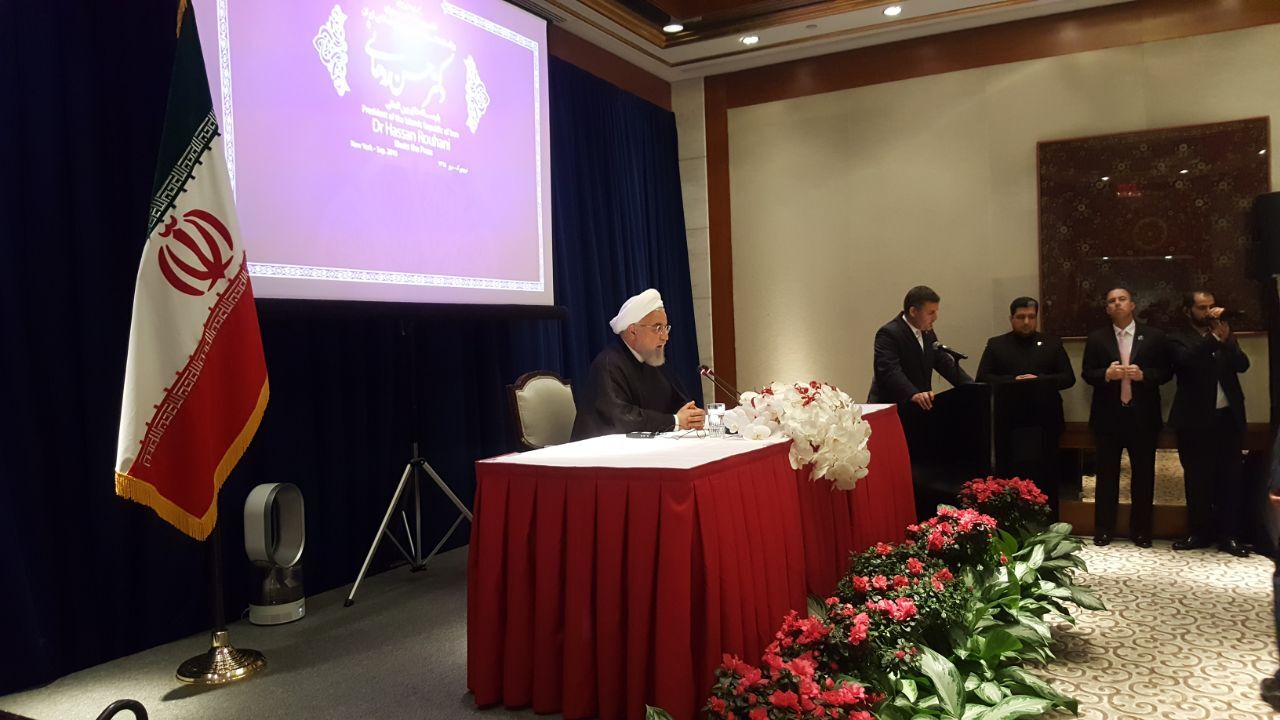
New York, Sept 27, IRNA – President Hassan Rouhani said in a press conference on the last day of his visit to New York that the governments should live up to their commitments under the JCPOA as the commitments are bilateral, not unilateral.
Full text of his statements during the news meeting is as follows:
Speaking in a press conference with representatives of international media in New York on Thursday evening, President of the Islamic Republic of Iran added, “This year, we had a very intensive schedule, mainly discussing the Joint Comprehensive Plan of Action (JCPOA) and how to implement nuclear agreements, as well as the stability and sensitivity and the need for peace and security in the region and the end of the bloodshed in Yemen."
The president continued, "At the 74th Session of the UN General Assembly, we presented the Hormuz Peace Endeavour (HOPE) initiative with the aim of emphasizing that vis-à-vis the Persian Gulf and the Strait of Hormuz and the Sea of Oman, the only way is have a constructive dialogue between countries in the region."
Dr. Rouhani pointed out, "In some cases, we have had some success in our negotiations and in some cases we still have to pursue the matter until our efforts have bear fruit."
Answering a question on the attack on the Saudi oil facilities, he said, “Why should we explain about Yemen and the attack on the Aramco oil facilities? What does it have to do with us?"
Dr. Rouhani continued, "Today, there is a bloody war in the region; a fruitless war against Yemen. The Yemeni people have the right to self-defense and they have to defend themselves, and the whole world knows that the Yemeni forces and the Yemeni army have both long-range missiles and drones."
The president emphasized, “Those who accuse others must present their evidence; if the invasion was not from the south and from the north, east or west, those who claim must make their claim clear."
"I asked some European leaders who had made false accusations about their evidence, and they said they had no evidence, but they thought the Yemeni forces were less capable than carrying out such an attack. In response, I asked them if their lack of knowledge about the Yemenis’ capabilities would lead to such conclusion and accusations,” added Rouhani.
The president added, "I even told them if you have any evidence, be sure to send them to me, and I would like to see what your evidence are, so let’s come together instead of leveling accusations, and put out the flames in the region."
"I urge the United States, France, Britain and Germany, who are constantly giving arms to Saudi Arabia and the Emirates to kill the Yemeni people, to stop sending weapons and to pressurize Saudi Arabia and the UAE for peace," Rouhani added.
"The Yemeni people and army announced a few days ago that they were ready for a complete ceasefire, and that all activities would be stopped if Saudi Arabia and the United Arab Emirates stop their attacks," the president said, adding, “Unfortunately, after this announcement, we are still seeing attacks on innocent Yemeni people."
Stating that, “Yemen has used its right to defend against the Saudi aggression, why should Iran be accused?” He also went on to say, “I asked European leaders what their evidence were about Iranian interference; they had no evidence."
“The JCPOA was the result of two years of seven-party negotiation and UN endorsement, but the US violated the UN Security Council resolution,” continued Rouhani.
“Our students were not given visas, but they entered contests online and won,” he said, adding, “Maximum pressure is the American precondition for negotiation, we will not accept that."
Saying that, “The P4+1 pledged to execute the JCPOA,” Dr Rouhani added, “Europe proposed many financial systems, but has proven to be incapable or unwilling to act”.
He also said, “It is not possible that Europe stays in the JCPOA Iran, but only Iran pays the price,” adding, “We will continue to negotiate with the JCPOA parties, if they do not fulfill their obligations, the reduction of the commitments will continue."
Dr. Rouhani also went on to say, “The French president is looking for a solution, but when we approached the Europeans, they said that they had to get America's approval as well!,” adding, “Other than France, other parties are working on a solution."
“The US wanted to separate the Iranian nation from the government by the use of sanctions, but it did not succeed,” said the President.
He added, “Trump himself has chosen a way which has resulted in increasing hatred with Iranian public opinion."
“We are OK with negotiations; if they prove their honesty and lift sanctions, conditions will be different,” continued Rouhani.
He also said, “We have spoken to the United States several times for the release of prisoners and sometimes succeed; we have released an American-Lebanese citizen but the US government has not fulfilled its obligation."
On the issue of exchange of prisoners, Dr. Hassan Rouhani said, “It is now the United States’ turn."
Our relations with Japan are very friendly, he said, adding, “Mr Abe is still trying to lift sanctions; hopefully the US will find out that it has taken the wrong path for the past 18 months."
“"Italy is one of the most important trading partners of Iran and we continue to have close bilateral and international relations with them," he said.
Dr. Rouhani continued, “The third step in reducing JCPOA commitments was to lift restrictions on nuclear research and development, with the IAEA's knowledge."
Stating that, “We have not restricts or limited IAEA’s monitoring,” the President said, “Our goal now is not the level of enrichment, but faster installation of advanced centrifuges for research and development."
He also said, “Europe's credit plan is still on the table, but Europe's problems are their own concern,” adding, “Our new offer in New York was the lift of all sanctions; it didn't work out here, but we'll continue it."
President Rouhani also said, “The only way the United States knows is to put more pressure for negotiation, which is what keeps them away from negotiation."
Stating that, “We are developing our relations with China in all aspects,” the President continued, “JCPOA commitments are bilateral, not unilateral."
He also went on to say, “If the other side reduces its commitment, we will also reduce our commitments accordingly."
The President of the Islamic Republic of Iran added, “If P4+1 now declares that it has fulfilled all its obligations, we will return to our obligations as well”, saying, “The goal of reducing Iran's JCPOA obligations is to implement it."
“Both the security of Turkey's borders and Syria's territorial integrity must be maintained,” he said, continuing, “Americans must get out of Syria, Idlib must be cleared of terrorists, and the Syrian army must take the security of its northern borders."
Dr Rouhani stated, “I advise the US not to engage in missile talk, or they will come out indebted,” adding, “US arms sales in the region have created imbalances in the region."
"Legal proceedings will continue and the Stena Impero will be released,” said President Rouhani.
He added, “Continuation of Yemen's war is not in anyone's interest; problems with Saudi Arabia will be settled more properly if a ceasefire is established."

Saturday, August 10, 2019

Trump’s Iran ‘diplomacy’ is a cynical farce

Vijay Prashad
The US president claims he is open to negotiations with the Islamic Republic but in practice he pursues a policy of economic terrorism and along with his flexing of military muscles, closes all doors to any diplomatic resolution of the 40-year long conflict.
Stay with us for an article that appeared on the ‘Globetrotter’ site in this regard, titled: “Trump’s Iran ‘diplomacy’ is a cynical farce”.
The writer is Vijay Prashad, an Indian historian and journalist, who is chief editor of LeftWord Books and the director of Tricontinental: Institute for Social Research. He has written several 20 books, including “The Darker Nations: A People’s History of the Third World”.
Word of US President Donald Trump’s decision to sanction Iranian Foreign Minister Javad Zarif did not seem to rattle the government in Tehran. Zarif’s own reaction, that the US is “isolating itself,” suggested that Iran would not be intimidated.
Various Iranian officials said the United States was afraid of Zarif’s eloquence. President Hassan Rouhani said the “White House is frightened by his diplomatic capabilities.” Majid Takht Ravanchi, Iran’s permanent representative to the United Nations, told the media that the US has sanctioned Zarif in order to “suppress his logic and his eloquent and persuasive language.” Former foreign minister Ali Akbar Velayati said the US does not have the ability to counter Zarif’s arguments.
There is merit to this view. The buzz in Washington suggests that both Trump and his Secretary of State Mike Pompeo were unhappy with Zarif’s interactions with the US media. Zarif, who studied in the United States, is comfortable with television cameras and has proven more than capable of making a rational case against the US unilateral withdrawal from the 2015 Iran nuclear deal (the Joint Comprehensive Plan of Action, or JCPOA).
Zarif is indeed urbane and eloquent, but those are not his only strengths. He has the additional advantage of having the facts on his side. United Nations agencies all say that Iran has confirmed that it will abide by the terms of the JCPOA, and that there is no reason for unilateral sanctions imposed by the US. This is a view accepted by the European Union. Trump’s main problem is that the United States does not have a legitimate case to make against Iran.
No one, neither the Europeans nor Russia and China nor indeed many of the Persian Gulf Arab states, wants an escalation of what is a nascent war against Iran. They know that if the US mounts an enormous assault on Iran, the war will widen from Lebanon to Afghanistan. No rational person would support this.
President Rouhani made it clear to the United States that he could not understand who, other than his Foreign Minister, could be expected to speak for his country on international matters. Part of Iran’s goal here is to maintain its sovereignty and dignity, and to select a new foreign minister would mean that Iran had buckled under US pressure. This is not going to happen. The Iranians are not going to replace Zarif.
But the Zarif issue is actually a red herring. Even before the sanctions on him personally, the United States showed no appetite for diplomacy. Iran spent several years negotiating with the five permanent members of the UN Security Council, as well as with Germany and the European Union, to produce the JCPOA, which was then ratified by the United Nations in 2015. After the US withdrew from the deal, Iran continued to indicate its desire for a diplomatic solution while Washington refused to come to the table.
The problem facing any negotiations is that the US position is untenable. The US wants to prevent Iran from exercising its right under the nuclear Non-Proliferation Treaty (of 1968) to enrich uranium even to low levels (4.5 %, which is far from the 90% enrichment needed for a nuclear weapon). It is this impossible position by Washington that stands in the way of a diplomatic solution. Until Washington accepts Iran’s right under international law to enrich uranium for energy-generating purposes, there will be no permanent deal.
By the way, the Leader of the Islamic Revolution, Ayatollah Seyyed Ali Khamenei, has long issued a fatwa (religious edict) saying Islam prohibits manufacture of any weapons of mass destruction.
The Europeans indicated quickly that they were unhappy with the sanctions on Zarif. Carlos Martin Ruíz de Gordejuela, a spokesman for the European Union’s foreign policy chief Federica Mogherini, said that they regretted the decision. The Europeans say that they will continue to work with Zarif to maintain open diplomatic channels.
Europe’s tolerance toward Trump’s shenanigans is being stretched, albeit to nowhere near its limits. The European Union, despite noises about its practical need for Iranian oil, has been unwilling to mobilize any political opinion on behalf of either the ailing JCPOA or against the wide unilateral US sanctions now on Iran.
Zarif has been working hard to build various coalitions around the world to prevent the United States from controlling the narrative. At the recently concluded Non-Aligned Movement (NAM) ministerial meeting in Caracas, Zarif held center stage.
NAM, whose 120 member countries make it the largest political bloc inside the United Nations, has long opposed American unilateralism. In Caracas, they welcomed Zarif’s declaration that unilateral sanctions by the US against Iran and Venezuela are a form of “economic terrorism.”
A subset of NAM members formed a group of 25 countries that have come together to oppose directly US unilateral sanctions, not only against Iran but also against Cuba, Venezuela, Russia, and elsewhere. This group has moved slowly to consolidate itself.
Zarif has also traveled to and made contact with countries along the Persian Gulf, on a mission to forge a non-aggression pact. Iraq and Oman have indicated that they would join such a pact, and Kuwait may also join. Furthermore, sources say that Qatar and the United Arab Emirates are contemplating entry into the pact. All of these countries will have a lot to lose if a war breaks out against Iran, but the surprise here is the UAE, which is a close ally of Saudi Arabia. Recently, the coast guards from Iran and the UAE held a joint meeting – the first in six years.
Zarif and the Iranians have been forging a formidable set of alliances designed to put a moat around the possibility of war against Iran. If close US allies such as Qatar and the UAE – both of whom host US military bases – have indicated a readiness to sign non-aggression agreements with Iran, then Washington faces a problem. The sanctions against Zarif are not merely due to his eloquence on US television. He is being sanctioned to send a message to those US allies who have become part of these new platforms.
The United States has walked itself into a corner. By sanctioning Iran, it suggests that it is not interested in diplomacy.

Sunday, August 04, 2019

The Tangled Mess In The Persian Gulf Echoes 1914

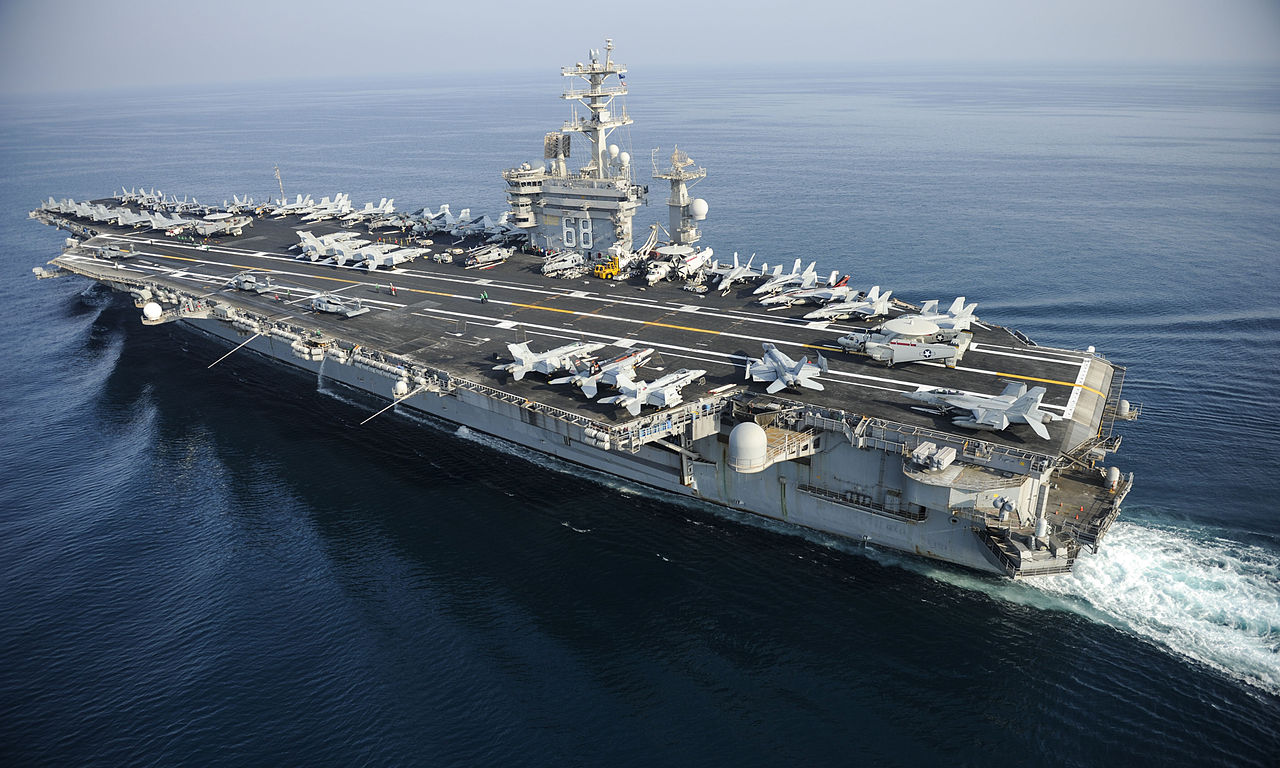
USS Nimitz in the Persian Gulf (U.S. Navy via Wikimedia Commons)
The current situation in the Persian Gulf is all too similar to Europe in 1914, according to a new report by the International Crisis Group (ICG). In “Averting the Middle East’s 1914 Moment,” the ICG makes the case that the situation in the Persian Gulf has gotten so complicated and volatile that, as ICG’s Iran Project Director, Ali Vaez. put it, “Just as in Europe in 1914, a single incident has the potential of sparking a military confrontation that could, in turn, engulf the entire region.”
The comparison to 1914 is obviously chilling, but the sheer number of actors connected to the U.S.-Iran standoff and the unmanageable array of potential trigger points in the region make it apt. Tightening U.S. sanctions, as part of the Trump administration’s so-called “maximum pressure campaign,” and the response they force from Iran means steadily rising tensions and raises the possibility that at some point, Iran could take a step to which the U.S. or Israel feels it must respond militarily.
Whether it is Israeli strikes in Syria, on the Lebanese border and—as we recently learned—Iraq, against Iranian and Hezbollah targets; the ongoing clash between Saudi Arabia and the Houthis in Yemen; the proximity of Iranian forces to U.S. troops in Afghanistan and northern Syria; and, of course, the standoff in the Persian Gulf itself, there are simply too many ways something can go wrong.
Reports this week of a plan, spearheaded by Senator Lindsey Graham (R-SC), to embolden Israel to strike Iran by guaranteeing U.S. support should Iran launch a full-scale response to an attack represent another way in which the situation is escalating.
Reasonable minds in the United States have every reason to avoid engaging with Iran. Admiral William McRaven (Ret.), who spoke along with Vaez, ICG president Rob Malley, and ICG senior analyst Elizabeth Dickinson, told a group of journalists and activists that “Anyone who believes that a strike will somehow cower [the Iranians] is just mistaken. A country like Iran is proud, it has thousands of years of pride as a nation. When you strike them, they will strike back, they will not just roll over. So we have to be very careful about miscalculations.”
Responding to uber-hawkish Senator Tom Cotton (R-AR), who said back in May that an attack on Iran would be quick and result in a decisive victory for the United States, McRaven said, “nothing is ever quick and easy.”
Malley relayed an idea from the report to defuse the immediate pressure. “There is a potential way out that both the U.S. and Iran could describe as win. Iran would enter an agreement to stop provocative actions in the Gulf. The United States would relieve some oil sanctions, which is Iran’s primary concern. And then talks [for a more lasting reduction of tensions] could resume. The U.S. could then say that it did not have to go back to JCPOA, but Iran is back at the table. Iran can say that because they held firm, they got relaxation of oil sanctions. This requires both sides to compromise, which neither side has shown a disposition to do, but given the possibility of war they might be willing.”
The report describes the proposal as the parties reverting to “an enhanced version of the pre-May 2019 status quo, with a commitment to resume broader negotiations in a format to be determined. Success would require the U.S. to moderate its ‘maximum pressure’ campaign against Iran in exchange for equally limited Iranian concessions.” 
To its credit, the ICG acknowledges that such a compromise would be a tough sell for both the U.S. and Iran. Many in Washington would certainly be reluctant to ease up on the “maximum pressure” strategy before it has won significant, lasting concessions from Iran. “By the same token, Iran might be only mildly interested in a deal that would allow it to increase its oil exports somewhat but not—due to banking sanctions—to repatriate the funds it would receive in exchange,” the ICG report says. “The Iranians are also unsure if Trump could wear down resistance to a tactical détente with Iran within his administration; and even if he could, whether a deal with him would last.”
ICG Gulf expert Beth Dickinson explained that it is a mistake to think of the Gulf states as one unified bloc. While there was a basic unity, and the various countries understand the need to take other states’ interests into consideration, their interests have diverged. She pointed out that the smaller Gulf states are on the front lines and would be the first to be affected by a clash. In many ways, she said, the smaller states have a more acute understanding of the risks as a result.
“Saudi Arabia also understands risks of hot war,” she added. “But [ongoing regional] tensions have made its position on regional conflicts more hawkish, so they are more concerned about Iranian influence in places like Yemen and Iraq.”
Although the United Arab Emirates is usually lumped into the Iran hawk camp, and they do often complain about Iran’s role in the region, they are, like other Gulf states, sensitive to being on the front lines and are very “interest-driven in finding an off ramp out of the tensions,” Dickinson said. The UAE sees Iran as a definite threat, but they want to defuse the situation.
Indeed, just this week, the UAE says they held talks with Iran, a very unusual occurrence these days. The Emiratis say the meeting was about routine maritime issues, but Dickinson stated that it was notable that the UAE even acknowledged that it happened. In her view, recent UAE actions are designed to send a message that they are completely uninterested in being part of a confrontation. She also considered it indicative that they had been reluctant to assign blame for recent attacks in the Gulf.
Dickinson also expressed concern that Saudi positions on regional conflicts have grown firmer. She noted that they were directly linking Houthi attacks to Iran more frequently, and explicitly saying that the Houthis are directed by Iran, something that is familiar to those in the U.S. but has been less common as a Saudi talking point. This, Dickinson said, is a signal of a dangerous course where the conflict in Yemen would “be sucked into broader tensions with Iran.”
Malley agreed with Dickinson’s analysis and added that he felt that the UAE was also concerned about their close association with the Saudis in the minds of those in the United States, and especially on Capitol Hill, where the image of Saudi Arabia has taken some severe hits in recent years. He added that the UAE is “also feeling some whiplash, from the Bush administration policies to Obama to Trump. I think they are trying to hedge their bets or at least have their own foreign policy that could survive the dramatic zigzags of U.S. policy toward Iran and I think this leads to a more centrist policy. But they don’t want to do anything that makes it seems like they are anything but loyal to the United States.”
The ICG report states in its conclusion that, “War is far from inevitable, not least because neither side wants it. But the absence of a meaningful channel between the U.S. and Iran, the two sides’ determination not to back down, and the multiplicity of potential flashpoints means that a clash—whether born of miscalculation or design—cannot be ruled out. Should it occur, it would be difficult to contain in duration or scope. It could also cause local conflicts to mutate and metastasize, dimming prospects for their resolution.”
The report’s recommendation to temper tensions would be welcome, but as ICG itself points out, its prospects for success are limited. Ultimately, there are few alternatives to either a conflict or the United States agreeing to either re-enter the JCPOA or forge a new agreement—which would, of necessity, be another example of Trump’s restoring the status quo ante and claiming to have achieved something. Third party mediation would be welcome, but with the United Kingdom’s position unclear with their new prime minister, and both the UK and EU struggling to deal with the economic fallout of Brexit, it is hard to see who could serve as a realistic broker for talks.
So the ICG aimed low, hoping to merely resolve the immediate crisis despite recognizing that the situation is so fraught that even that modest goal is difficult to achieve. With the United States now having pointlessly raised the stakes by imposing sanctions on Iranian Foreign Minister Mohammad Javad Zarif, it will be still more difficult.

Saturday, July 20, 2019

Trump’s Withdrawal From The JCPOA Could Boost China’s Support For It

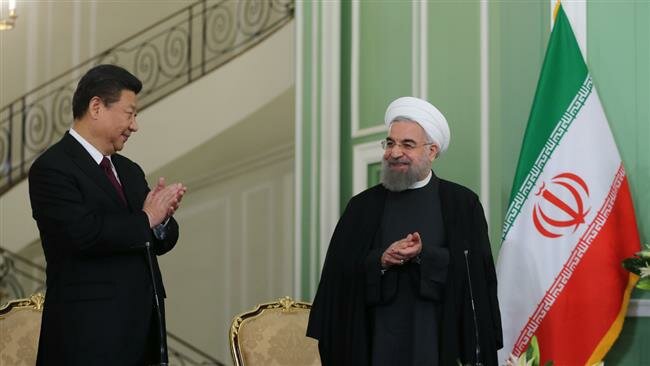
Xi Jinping and Hassan Rouhani
by Nicolai Due-Gundersen
Donald Trump’s withdrawal from the 2015 Iran nuclear deal (Joint Comprehensive Plan of Action or JCPOA in 2018 should come as no surprise. The abandonment of a framework years in the making fits Trump’s muddled modus operandi of winding down U.S. activity abroad (and then changing his mind). Several months later, he announced a U.S. withdrawal from Syria and implied that the Middle East was not an American problem. Using Twitter as his diplomatic channel, Trump rhetorically asked: “Does the USA want to be the Policeman of the Middle East, getting NOTHING [sic] but spending precious lives and trillions of dollars protecting others who, in almost all cases, do not appreciate what we are doing? Do we want to be there forever? Time for others to finally fight…”
Trump’s pattern of reversing traditional U.S. policies in the Middle East no doubt makes Iran question the wisdom of trusting the U.S. in the first place over an agreement that placed limits on Iran’s nuclear program in exchange for promises of economic recovery. Even conservative U.S. analysts are arguing that Trump’s hostility toward Iran means that traditional American allies should no longer place their faith in President Trump’s promises. For Iran, maintaining the JCPOA requires the deal’s other signatories to deepen their commitment. “Tehran is convinced that Europe could do more to boost trade, which has collapsed over the past year,” explains The Guardian’s Patrick Wintour. European Union members established a Europe-Iran payment mechanism (the Instrument in Support of Trade Exchanges or INSTEX) to circumvent U.S. penalties and allow trade. But being limited to humanitarian goods, INSTEX does little to deliver what Iran needs: to be a member of the world market and sell its oil freely.
In violating the JCPOA, Trump argued that Iran was destabilizing the region under the 2015 agreement. “The Iranian regime is the leading state sponsor of terror,” Trump insisted in his speech announcing his withdrawal from the deal. “It fuels conflict across the Middle East.” Trump continued that the U.S. was exiting the deal in order to start “working with our allies to find a real, comprehensive, and lasting solution to the nuclear threat.” Setting aside the terror fueled by the U.S. invasion of Iraq, U.S. arms deals for weapons used in Yemen, and the Brookings Institute asking if U.S. foreign policy is responsible for the Middle East’s instability, Trump seems to forget that America had already been working with Arab allies to facilitate a nuclear deal with Iran.
What became the Joint Comprehensive Plan of Action (JCPOA) began as an Omani initiative. “Although the JCPOA was formalized in 2015, much of the groundwork was laid in the years prior,” explains geopolitical analyst Edwin Tran. “[Oman] was on good terms with Iran in the years following the Iran-Iraq War (1980-1989) [and] in 2009, Sultan Qaboos was the first foreign leader to visit Iranian President Ahmadinejad following his reelection victory.” Oman’s excellent relations with Iran are counterbalanced by its relations with the U.S. , dating back to a treaty of friendship between Muscat and Washington in 1883. According to former U.S. Ambassador to Oman Richard Schmierer, Oman took initiative in 2009 and discreetly “began to explore the possibility of facilitating a dialogue between Iran and the West [on] the nuclear issue.” In 2012, Senator John Kerry was approached by Oman with the notion of “friendly relations between the United States and Iran” and throughout 2013 U.S. envoys met Iranian counterparts for secret meetings in Muscat. The result? Obama’s then-Secretary of State Kerry delivered an interim deal with Iran nine months into his new job.
Omani efforts successfully built trust between Iran and the U.S. With that trust shattered, Iran may look to a non-western JCPOA signatory that is also getting close to Oman: China. As Iran broke its uranium enrichment limit set by the 2015 deal, China (and Russia) condemned Trump’s withdrawal from JCPOA and subsequent sanctions threats. “The maximum pressure exerted by the U.S. on Iran is the root cause of the Iranian nuclear crisis,” explained Geng Shuang, spokesman for China’s foreign ministry. “The facts show that unilateral bullying has already become a worsening tumour [for Iran and the international community].” China has remained Iran’s biggest oil customer, receiving shipments of Iranian crude despite U.S. sanctions.
China has several advantages over EU signatories that allow it to bolster the Iran deal. China’s political and economic clout mean it is far less dependent on the U.S. than is the EU for trade and security. “[T]here are many ways in which Beijing could work around U.S. sanctions,” outlines Dr. Mahsa Rouhi, Nuclear Policy Research Fellow at the International Institute for Strategic Studies. Methods may include buying Iranian oil through Chinese businesses unconnected to U.S.-dominated financial networks and eroding “the dominance of the U.S. dollar” by expanding trade in the Gulf in its own currency, the Yuan. Such a long-term strategy would attack the petrodollar concept and slowly establish Chinese ‘petroyuan’ as a currency more and more linked to hydrocarbon sales. 
China is expanding its investment not only in Iran’s ally Oman but across the entire Gulf. In the long run, Gulf states may welcome Chinese cash-flow as they attempt to diversify their oil economies. China’s Belt and Road Initiative (BRI) builds upon the fact that China represents the Gulf Cooperation Council’s (GCC) largest trading partner. Significantly, traditional U.S. allies are only too happy to trade with Beijing. “Saudi Arabia is investing billions in refineries and petrochemical facilities in China as well as taking a larger role in the China-Pakistan Economic Corridor, which is one of BRI’s most important components,” says analyst Sabahat Khan at the Institute for Near East and Gulf Military Analysis. “The United Arab Emirates is China’s most important regional trading partner; Dubai acts as a key gateway for Chinese goods heading across [the MENA region]. Officials predict China-UAE bilateral trade will reach 70 billion USD by next year.”
China’s political clout, deepening relations with Iran’s neutral neighbor, increasing investments across the Gulf, and its ability to undermine petrodollars may come together to see it replace the U.S. as a patron in the Gulf. Should this happen, Oman may still serve as a cultural and political mediator, but Beijing could become a strong guarantor of the nuclear deal, increasing its already prosperous relations with Iran to provide the Islamic Republic with the financial rewards Tehran craves. In addition, China and Iran share a common trait: they are non-Western actors that have historically faced U.S. wrath as their governments embraced non-Western systems—witness, for example, the current trade war between Beijing and Washington. Further, China and the U.S. don’t share the same image in the Middle East. China does not have the baggage of past interference that the U.S. has, including the 1953 coup against Iran’s elected Prime Minister Mohammad Mosaddegh.
Finally, it is no secret that China’s international influence is increasing. At a time when Trump has withdrawn the U.S. from UNESCO and the United Nations Human Rights Council while cutting UN budget contributions, can he complain when China fills that vacuum? By 2018, China’s financial contribution to the UN peacekeeping budget had shot up from 3% to 10.25%. China has promised to provide a further one billion USD to that budget over the next few years and has trained its troops to assist UN peacekeeping operations. “In part China is filling a space created by the withdrawal of the U.S. from [the UN],” concludes The Guardian’s Patrick Wintour. “In a sense China, through its resourcing of the UN, has earned a right to be heard.”
As Trump continues threatening Iran even after inspectors verified Tehran’s previous compliance with the nuclear deal, it will be very interesting to hear what China has to say to the Gulf and the world.
Nicolai Due-Gundersen is a political commentator at Kingston University, London and author of The Privatization of Warfare (Cambridge: Intersentia). He is former adviser to the Arab Institute for Security Studies in Jordan.

Wednesday, July 03, 2019

Why Europe cannot use ‘snap back’ mechanism against Iran

Why Europe cannot use ‘snap back’ mechanism against IranTEHRAN, Jul. 02 (MNA) – Europe cannot use the so-called snapback mechanism stipulated in the 2015 nuclear deal to renew United Nations sanctions against Iran. An international lawyer, Reza Nasri, gives fives reasons why.

Western media are likely to jump on the ‘snapback mechanism’ wagon now that Iran has released details about the second stage of its reduction in commitments to the nuclear deal, also known as the Joint Comprehensive Plan of Action (JCPOA).
The snap back mechanism is a tool that allows the old United Nations sanctions to be reimposed on Iran without a vote on the Council, in the case of Tehran being found to be in serious violation of the terms of the nuclear agreement, under certain conditions and after following the predefined steps.
The other side wants to make it look as if the recent measures by Iran in reducing the level of its commitments to the JCPOA – which are in accordance with Article 26 and 36 of JCPOA – are a violation of the agreement in order to use the snap back mechanism against Iran.
But there are five reasons as to why the snap back mechanism cannot be used against Iran in this case.
One: The snap back mechanism has been designed to prevent Iran from violating the agreement. In other words, the mechanism has been set up in the case of Iran being the first party to withdraw from the nuclear deal. Of course, the first side to have left the agreement was the United States, and Iran’s compliance with its commitments have been confirmed time and again in all of the IAEA’s reports.
Two: According to the text of the JCPOA, the other side can use the snap back mechanism only when it “believes” that Iran’s performance is an instance of a major lack of compliance. According to a fundamental legal principle, this “belief” must be accompanied by “good faith”.  This is while none of the remaining parties to the JCPOA can actually claim with “good faith” that they “believe” in Iran’s major lack of compliance, since all of Iran’s measures have been legal, and are clearly taken so that all sides to the deal would fully implement their own commitments.
Three: Europe’s resorting to the snap back mechanism would be in fact a mockery of the international law, the UN Security Council and the UN’s collective security system. In other words, it would be the first time in history when the Security Council would be used to punish a country that only intends to use its legal tools to force others to implement a Security Council resolution (2231), and an agreement endorsed by the body.
Four: In order to accuse Iran of a violation, European powers first need to prove Iran’s ill intentions. This is while they all know that Iran’s only motivation and intention to reduce commitments is a way to actually revive the nuclear agreement.
Five: What European powers promised under the deal was never a “ceremonial” removal of sanctions. Article 3 of Appendix 2 of JCPOA clearly tasks Europe with removing the “impacts” of economic and financial sanctions. This means that the European sides are now clearly in violation of their commitments.