Showing posts with label Chinese leader Xi Jinping. Show all posts

Saturday, July 20, 2019

Trump’s Withdrawal From The JCPOA Could Boost China’s Support For It

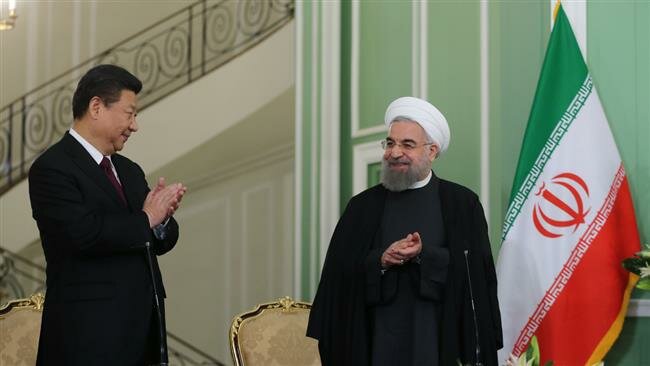
Xi Jinping and Hassan Rouhani
by Nicolai Due-Gundersen
Donald Trump’s withdrawal from the 2015 Iran nuclear deal (Joint Comprehensive Plan of Action or JCPOA in 2018 should come as no surprise. The abandonment of a framework years in the making fits Trump’s muddled modus operandi of winding down U.S. activity abroad (and then changing his mind). Several months later, he announced a U.S. withdrawal from Syria and implied that the Middle East was not an American problem. Using Twitter as his diplomatic channel, Trump rhetorically asked: “Does the USA want to be the Policeman of the Middle East, getting NOTHING [sic] but spending precious lives and trillions of dollars protecting others who, in almost all cases, do not appreciate what we are doing? Do we want to be there forever? Time for others to finally fight…”
Trump’s pattern of reversing traditional U.S. policies in the Middle East no doubt makes Iran question the wisdom of trusting the U.S. in the first place over an agreement that placed limits on Iran’s nuclear program in exchange for promises of economic recovery. Even conservative U.S. analysts are arguing that Trump’s hostility toward Iran means that traditional American allies should no longer place their faith in President Trump’s promises. For Iran, maintaining the JCPOA requires the deal’s other signatories to deepen their commitment. “Tehran is convinced that Europe could do more to boost trade, which has collapsed over the past year,” explains The Guardian’s Patrick Wintour. European Union members established a Europe-Iran payment mechanism (the Instrument in Support of Trade Exchanges or INSTEX) to circumvent U.S. penalties and allow trade. But being limited to humanitarian goods, INSTEX does little to deliver what Iran needs: to be a member of the world market and sell its oil freely.
In violating the JCPOA, Trump argued that Iran was destabilizing the region under the 2015 agreement. “The Iranian regime is the leading state sponsor of terror,” Trump insisted in his speech announcing his withdrawal from the deal. “It fuels conflict across the Middle East.” Trump continued that the U.S. was exiting the deal in order to start “working with our allies to find a real, comprehensive, and lasting solution to the nuclear threat.” Setting aside the terror fueled by the U.S. invasion of Iraq, U.S. arms deals for weapons used in Yemen, and the Brookings Institute asking if U.S. foreign policy is responsible for the Middle East’s instability, Trump seems to forget that America had already been working with Arab allies to facilitate a nuclear deal with Iran.
What became the Joint Comprehensive Plan of Action (JCPOA) began as an Omani initiative. “Although the JCPOA was formalized in 2015, much of the groundwork was laid in the years prior,” explains geopolitical analyst Edwin Tran. “[Oman] was on good terms with Iran in the years following the Iran-Iraq War (1980-1989) [and] in 2009, Sultan Qaboos was the first foreign leader to visit Iranian President Ahmadinejad following his reelection victory.” Oman’s excellent relations with Iran are counterbalanced by its relations with the U.S. , dating back to a treaty of friendship between Muscat and Washington in 1883. According to former U.S. Ambassador to Oman Richard Schmierer, Oman took initiative in 2009 and discreetly “began to explore the possibility of facilitating a dialogue between Iran and the West [on] the nuclear issue.” In 2012, Senator John Kerry was approached by Oman with the notion of “friendly relations between the United States and Iran” and throughout 2013 U.S. envoys met Iranian counterparts for secret meetings in Muscat. The result? Obama’s then-Secretary of State Kerry delivered an interim deal with Iran nine months into his new job.
Omani efforts successfully built trust between Iran and the U.S. With that trust shattered, Iran may look to a non-western JCPOA signatory that is also getting close to Oman: China. As Iran broke its uranium enrichment limit set by the 2015 deal, China (and Russia) condemned Trump’s withdrawal from JCPOA and subsequent sanctions threats. “The maximum pressure exerted by the U.S. on Iran is the root cause of the Iranian nuclear crisis,” explained Geng Shuang, spokesman for China’s foreign ministry. “The facts show that unilateral bullying has already become a worsening tumour [for Iran and the international community].” China has remained Iran’s biggest oil customer, receiving shipments of Iranian crude despite U.S. sanctions.
China has several advantages over EU signatories that allow it to bolster the Iran deal. China’s political and economic clout mean it is far less dependent on the U.S. than is the EU for trade and security. “[T]here are many ways in which Beijing could work around U.S. sanctions,” outlines Dr. Mahsa Rouhi, Nuclear Policy Research Fellow at the International Institute for Strategic Studies. Methods may include buying Iranian oil through Chinese businesses unconnected to U.S.-dominated financial networks and eroding “the dominance of the U.S. dollar” by expanding trade in the Gulf in its own currency, the Yuan. Such a long-term strategy would attack the petrodollar concept and slowly establish Chinese ‘petroyuan’ as a currency more and more linked to hydrocarbon sales. 
China is expanding its investment not only in Iran’s ally Oman but across the entire Gulf. In the long run, Gulf states may welcome Chinese cash-flow as they attempt to diversify their oil economies. China’s Belt and Road Initiative (BRI) builds upon the fact that China represents the Gulf Cooperation Council’s (GCC) largest trading partner. Significantly, traditional U.S. allies are only too happy to trade with Beijing. “Saudi Arabia is investing billions in refineries and petrochemical facilities in China as well as taking a larger role in the China-Pakistan Economic Corridor, which is one of BRI’s most important components,” says analyst Sabahat Khan at the Institute for Near East and Gulf Military Analysis. “The United Arab Emirates is China’s most important regional trading partner; Dubai acts as a key gateway for Chinese goods heading across [the MENA region]. Officials predict China-UAE bilateral trade will reach 70 billion USD by next year.”
China’s political clout, deepening relations with Iran’s neutral neighbor, increasing investments across the Gulf, and its ability to undermine petrodollars may come together to see it replace the U.S. as a patron in the Gulf. Should this happen, Oman may still serve as a cultural and political mediator, but Beijing could become a strong guarantor of the nuclear deal, increasing its already prosperous relations with Iran to provide the Islamic Republic with the financial rewards Tehran craves. In addition, China and Iran share a common trait: they are non-Western actors that have historically faced U.S. wrath as their governments embraced non-Western systems—witness, for example, the current trade war between Beijing and Washington. Further, China and the U.S. don’t share the same image in the Middle East. China does not have the baggage of past interference that the U.S. has, including the 1953 coup against Iran’s elected Prime Minister Mohammad Mosaddegh.
Finally, it is no secret that China’s international influence is increasing. At a time when Trump has withdrawn the U.S. from UNESCO and the United Nations Human Rights Council while cutting UN budget contributions, can he complain when China fills that vacuum? By 2018, China’s financial contribution to the UN peacekeeping budget had shot up from 3% to 10.25%. China has promised to provide a further one billion USD to that budget over the next few years and has trained its troops to assist UN peacekeeping operations. “In part China is filling a space created by the withdrawal of the U.S. from [the UN],” concludes The Guardian’s Patrick Wintour. “In a sense China, through its resourcing of the UN, has earned a right to be heard.”
As Trump continues threatening Iran even after inspectors verified Tehran’s previous compliance with the nuclear deal, it will be very interesting to hear what China has to say to the Gulf and the world.
Nicolai Due-Gundersen is a political commentator at Kingston University, London and author of The Privatization of Warfare (Cambridge: Intersentia). He is former adviser to the Arab Institute for Security Studies in Jordan.

Friday, January 04, 2019

The Uighur Question: A Civil Society Solution

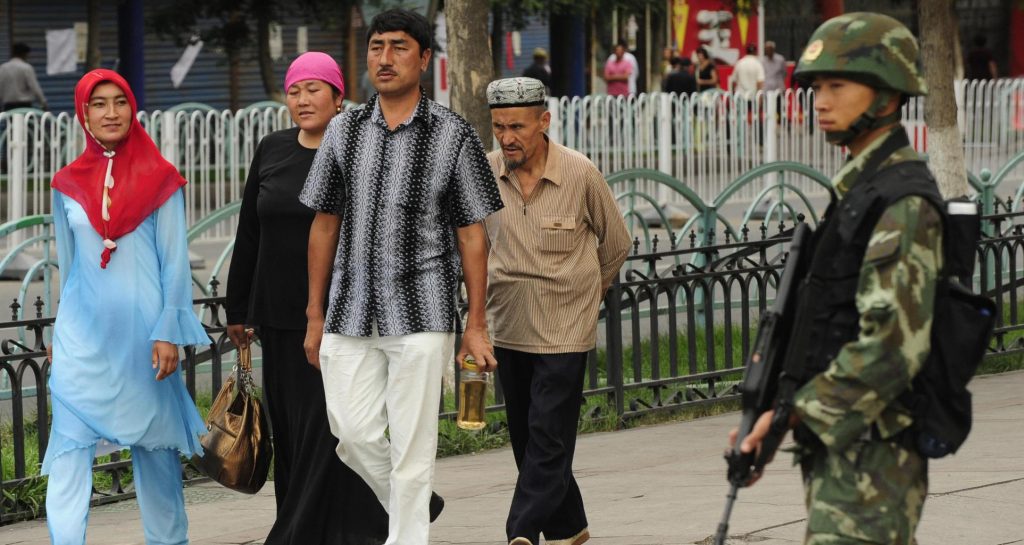
In the last few months, the International Movement for a Just World (JUST) like so many other civil society groups in various parts of the world has been inundated with videos and articles from different sources alleging  cruel persecution and harsh oppression of the Uighur Muslim minority in Xinjiang province in the Western part of China. It is alleged that the Chinese government views the Uighur and also some other Muslim groups such as the Kazakhs and Kyrgyzas as threats to national security given their purported links to terrorism and separatist insurgency. Even a UN human rights panel had issued a report in August 2018 that stated that in order to wean them away from terrorism “as many as 2 million people may have been forced into a vast network of detention camps” in Xinjiang.
In these camps, according to dissident Uighurs, there is a systematic effort to brainwash the detainees. The propaganda is not just about immunising them against militancy or separatist ideologies. They are required it is alleged to abdicate Islamic prohibitions and even to renounce their faith. Torture is apparently common in these camps and even deaths have occurred. Some critics have gone so far as to describe the targeting of the Uighurs as “the most brutal repression the regime has undertaken since the Cultural Revolution.”
The Chinese authorities have denied vehemently these allegations. They reject any suggestion that there has been forced renunciation of Islam in the camps. They admit though that there are re-education centres but focused entirely on combating terrorism, religious extremism and separatism.
These denials have not convinced the critics especially those from civil society in the West and the East. They persist with their allegations and are disappointed that governments as a whole have chosen to keep quiet about the atrocities supposedly committed by the Chinese authorities. They attribute their silence to the governments’ fear that China with its huge economic clout will make things difficult for countries that have become dependent upon Chinese investments and trade for their own economic well-being.
At the same time it is equally true that China is being attacked much more in the media and by civil society groups today than in the past because of its phenomenal rise as a global power. The forces that dominate the present global system resent this since they are hell-bent on perpetuating their hegemony. This is why they are using the media and civil society to expose flaws and foibles in Chinese governance. How Beijing treats the Uighurs and other minorities is perhaps one of those flaws that is susceptible to manipulation and distortion. And indeed, there has been a great deal of exaggeration and hyperbole in the media about the plight of the Uighurs. This does not mean however that the real challenges confronting the Uighurs and other minorities should be glossed over.
To convince everyone that the Chinese government is willing to address  genuine Uighur grievances it should invite representatives from civil society in a number of Muslim majority countries to undertake a fact-finding mission to Xinjiang  whose primary purpose would be to examine and analyse the actual situation on the ground facing the Uighur and other alleged victims of persecution. The mission should have maximum access to the Uighur community and to the authorities in the province. Members of the mission should have the full freedom to visit the re-education centres and conduct interviews with detainees past and present. The mission’s report should be submitted to not only the authorities in Xinjiang and to the leaders of the Uighur community but also to the government in Beijing. The countries from which the members of the mission are drawn and the world at large should also have full access to its findings.Most of all, one hopes that if the recommendations are feasible, Beijing and Xinjiang will try to implement them with sincere trust.If that is done, it is quite conceivable that the chapter on the Uighurs will be brought to a close.
It is in Beijing’s interest to resolve the Uighur issue in such a manner that the identity and dignity of the Uighurs and other minorities in Xinjiang are protected and enhanced. If injustices against Uighurs real or perceived are allowed to fester much longer, it may erode China’s standing among Muslim majority countries. This is especially so since the Hui, Muslims among the majority Han people, it is alleged, are also now being targeted by the authorities.
As negative perceptions of the Chinese government’s treatment of the Uighurs and other Muslims grow, there could be repercussions in the medium and long-term for China’s Belt Road Initiative (BRI) since it involves a large number of countries with substantial Muslim populations. China is also heavily dependent upon the import of oil from Muslim countries. There are already civil society groups in a couple of these countries which are unhappy about Beijing’s attitude towards the Uighurs and Muslims in general. They are demanding action against Beijing.
Viewed in this context, resolving Uighur challenges immediately may well secure China’s economic position and fortify its global role.
Dr Chandra Muzaffar is the President of the International Movement for a Just World (JUST) Malaysia.

Wednesday, July 25, 2018

Donald the Destroyer


The mainstream media is concerned with the politics, policies, and propaganda of President Donald Trump, but underplays the central question of his presidency: Is Donald Trump psychologically fit to be  president of the United States and commander-in-chief?  Over the past twelve months, psychiatrists and clinical psychologists have produced two books (“The Dangerous Case of Donald Trump” and “Rocket Man: Nuclear Madness and the Mind of Donald Trump”) to warn that our dangerously disordered president is a threat to domestic and international security.  According to an article in Newsweek in March 2018, most Americans agree that Donald Trump is unfit to be president.
The mental health experts who have produced these books have had to ignore the ethical principle of the American Psychiatric Association known as the “Goldwater Rule,” which prohibited psychiatrists from diagnosing a public figure they had not personally interviewed.  The erratic behavior of Donald Trump as a candidate in 2015-2016 and as president in 2017-2018 has led to a challenging ethical principle known as the “duty to warn” because of the danger he has created.  In every area of American policy, Trump’s actions and statements have created the highest level of domestic and international anxiety since the end of World War II.
For the past several years, we have witnessed what psychiatrists have referred to as Trump’s malignant narcissism, citing his claims that he knows more than anyone else and that only he can fix our problems.  His demonization of the press and his opponents as well as his treatment of minorities and his handling of immigration issues point to paranoia .  The separation of immigrant families demonstrated the lack of empathy that accompanies narcissism.
His claims about the size of his inauguration crowd and the weather conditions that day suggest that he is delusional. His lack of impulse control is particularly worrisome in a nuclear age that presents no real checks and balances on a commander-in-chief’s role in the use of nuclear weapons. Similarly, his inability to process information rapidly and dispassionately, and his unwillingness to accept information from experts, particularly in the intelligence community, are dangerous attributes.
The combination of paranoia and impulse control is most worrisome because it can lead to destructive acts.  According to White House sources, a series of Trump’s rants were followed by the declaration of a trade war that could hurt global economic output and would find the United States vulnerable to tariff retaliation from others.  The ugly exchanges between the United States and North Korea and once again the United States and Iran raises the potential for more unwinnable wars similar to our experience in Iraq and Afghanistan.  There are no limits to Trump’s bombast.
As a result, Trump has faced an unusual level of public criticism from his own appointees, including chief of staff John Kelly, former secretary of state Rex Tillerson, former national security adviser H.R. McMaster, and most recently Director of National Intelligence Dan Coats.  Since Kelly and McMaster were general officers, and the professional military is not permitted to criticize a sitting president, their views were particularly striking. The criticism by Tillerson and McMaster cost them their jobs, and they were replaced by loyalists, Mike Pompeo at the State Department and John Bolton at the National Security Council, who are far more supportive and even obsequious toward the president and less likely to moderate Trump’s impulsive behavior.
The mere thought of Trump and Bolton discussing national security policy and the use of force is particularly frightening.  Both men have impulsive and explosive natures, and are obsessively fixated on undoing the legacy of Barack Obama.  Trump’s biographers point to dangerous elements of irritability and aggressiveness as well as a pattern of deceitful behavior in his personal life.  Both men have engaged in irresponsible talk about nuclear weapons; Trump told interviewers that it was pointless to have nuclear weapons unless we were willing to use them.  Bolton has favored preemptive attacks against Iran and North Korea.  Trump ignores intelligence assessments, and Bolton has a record of misusing intelligence in past statements to the UN General Assembly and Security Council.
Long before his bizarre behavior in July at the NATO summit in Brussels, the state visit to the UK, and the horrendous Helsinki summit with Russian President Vladimir Putin, Trump has demonstrated an obsession with blowing up the Obama legacy and the dignity of his presidential opponent Hillary Clinton. He has walked away from the Iran nuclear accord and the Paris climate accord; challenged the resumption of relations with Cuba; and alienated long-time allies in the European Union and NATO. Trump has angered Canada and Mexico with calls to renegotiate NAFTA; initiated tit-for-tat measures with China; and infuriated the leaders of Britain, France, and Germany. Conversely, he seeks close relations with authoritarian figures, including Putin, Chinese leader Xi Jinping, and Turkish President Recep Tayyip Erdogan.
While the mainstream media continues to discuss Trump in terms of some doctrine or playbook, it has failed to speculate on the terrible consequences of a commander-in-chief who is a malignant narcissist without impulse control.  Trump’s instability and unpredictability were on display throughout the campaign and the first months of his presidency, but his “diplomatic” endeavors in June and July with regard to North Korea, NATO, the European Union, and Russia were erratic and impulsive.
His first public appearance as president at CIA headquarters in January 2017 provided ample evidence of his delusional and hyperbolic tendencies.  His senior staff, including cabinet members, have given off-the-record accounts of his tantrums and lies.  His public appearances have demonstrated incredible ignorance, on the one hand, or outright deceit, on the other.   It’s not a matter of Trump’s lack of a “moral compass,” but the absence of any compass whatsoever.  It begs the question of whether the President is even compos mentes.
The dizzying pace of policy reversals and the back-and-forth over Russian interference in the 2016 election in the wake of the Helsinki summit provided more evidence of a lack of psychological maturity and self-regulation.  Trump’s truckling toward Putin is inexplicable, and the confusion over his possible military and diplomatic commitments in their private talks have flummoxed his national security team.  At best, he is an erratic president; at worst, he is mentally ill.
These worrisome characteristics were in full view before the election.  At a campaign rally in Iowa in 2015, Trump declared that “I’ve had lots of wars of my own.  I’m really good at war.  I love war….”  When former secretary of state Tillerson referred to Trump as a “fucking moron,” it was in response to Trump’s case for expanded nuclear forces and the willingness to use such forces against non-nuclear states.  Since assuming the presidency, Trump has declared war on governance, intelligence, diplomacy, law enforcement, public service, and fact-finding, particularly in the scientific community. His loose language on expanding the nuclear arsenal and the usefulness of low-yield nuclear weapons has led to congressional discussion to check the president’s unilateral authority to launch nuclear weapons.
When Vice President Dick Cheney proposed radical changes to nuclear doctrine and use of force in the administration of George H.W. Bush, the National Security Council and the Pentagon pushed back and Bush’s national security team rejected such notions.  There is no evidence that Secretary of Defense James Mattis is pushing back.  Furthermore, Trump now has in place a virtual war cabinet that includes Bolton at the National Security Council; Pompeo, an uberhawk, at the Department of State; and Gina Haspel, the CIA’s advocate for torture and abuse as the director of the agency.
The mainstream media describe Secretary of Defense Mattis as the only moderating “adult in the room” in the Trump administration, but he has kept his head below his breast plate since the Helsinki summit and has made no public comments in the wake of the president’s unprecedented attack on NATO and his coziness toward Putin during the crucial period in July.  It is unlikely that Mattis will be able to successfully challenge, let alone moderate, the most bellicose cabinet in U.S. history.
Trump’s truckling to Putin has fed speculation that he has become a victim of Russian “kompromat” due to excessive money laundering or salacious conduct in Moscow during his business trips.  If Trump has indeed been compromised, then Robert Mueller’s will have evidence from numerous intercepted messages.  But even without evidence, it is noteworthy that Trump appears willing to use Putin’s talking points on such issues as Montenegro; NATO; and the European Union.
Trump’s very first encounter with Russian officials in 2017 presaged his awkward behavior toward Putin. In dealing with Russian Foreign Minister Sergei Lavrov and Ambassador Sergei Kislyak in the White House in May 2017, Trump boasted that he gets “great intel.  I have people brief me on great intel every day.”  Trump even shared sensitive intelligence obtained from Israel with the Russians, which angered the intelligence community as well as members of the National Security Council.  A year later, when faced with the differing opinions of his intelligence tsar, Dan Coats, and the Russian president, Trump sided with Putin.
Trump’s body language with Putin was particularly striking.  No macho handshakes as with French President Macron.  No shoving aside as with Montenegrin President Dukanovic.  No arrogance and bullying as with British President May and German Chancellor Merkel.  The visuals with Putin are remarkable.  We see a very nervous and withdrawn Trump; an obsequious Trump; a Trump who reifies the policy positions of Putin.  The only other head of state who gets such a submissive attitude is Israeli President Bibi Netanyahu.  And like Netanyahu, Putin displayed at the joint press conference a confident, even smirking, manner that pointed to success.  Yet, Trump cannot stop talking about how tough he is on Russia.
Some of Trump’s truckling speaks to ignorance.  Only a fool would describe Putin’s offer to allow U.S. questioning of indicted Russian military intelligence officials in exchange for Russian questioning of Americans suspected of illegal activity as “incredible.” Putin’s list of Americans included former ambassador to Moscow, Michael McFaul.  Indeed, the proposal was incredible…incredibly unacceptable.  But it took Trump and his national security team nearly four days (and a 98-0 vote in the Senate) to reject what press spokesman Sara Huckabee Sanders referred to as Putin’s “sincere” proposal.  A day earlier, Sanders referred to Putin’s proposal as “under consideration,” which prompted even Secretary of State Pompeo, a diplomatic neophyte, to preemptively reject Putin’s “incredible” offer.  Perhaps Trump has not been compromised by Russian intelligence, but he acts as if he were.
If Trump were not president of the United States, he would not be able to obtain a security clearance. (There has never been a White House staff, moreover, that has had greater difficulty in obtaining security clearances to see highly sensitive information.)  Bolton could never obtain Senate confirmation of a key national security position, which explains his posting as National Security Adviser that has no such requirement. Trump’s temperament and his “war cabinet” have jeopardized U.S. alliances and compromised international understandings on trade, migration, and climate change.  No president in U.S. history has done more harm to U.S. credibility and standing in the global community.  The twin dangers of war, even nuclear war, as well as climate catastrophe are on the horizon.
The assassination of President John F. Kennedy in 1963 and the fact the Vice President Lyndon B. Johnson had once suffered a heart attack as well as the advanced years of the Speaker of the House of Representatives and the President pro tempor of the Senate led to the passage of the 25th Amendment in 1967 to regulate the succession to a president who is deemed “unable to discharge the powers and duties of his office.”  Trump has demonstrated he is unfit to serve, but the amendment requires a vote of the majority of the Cabinet as well as two-thirds of the House and Senate to validate such a succession.  Like the possibility of impeachment or indictment, the invocation of the 25th Amendment is extremely unlikely.
It remains to be seen what the Mueller investigation and the possibility of “kompromat” stemming from money laundering or salacious behavior in Moscow will do to the Trump presidency.  Trump presumably believes that he won’t be impeached and that he can’t be indicted. Our limited experience with impeachment suggests it is unlikely that even real change in the Congress as a result of the November elections will lead to impeachment.  Andrew Johnson and Bill Clinton survived the impeachment vote in the House of Representatives in 1868 and 1998, respectively.  Only Richard Nixon voluntarily left the White House in 1974 to avoid an impeachment that the Senate probably would have validated.
In the meantime, these issues are distractions from the real threat to the United States and the American people, which is the irrational and impulsive nature of the president himself.  As a result, the American people and the entire international community are held hostage.  Two more years of Trump’s demagoguery and misogyny will do incalculable harm to American democracy.