Showing posts with label David Friedman. Show all posts

Saturday, June 29, 2019

The Day After: What if Israel Annexes the West Bank?


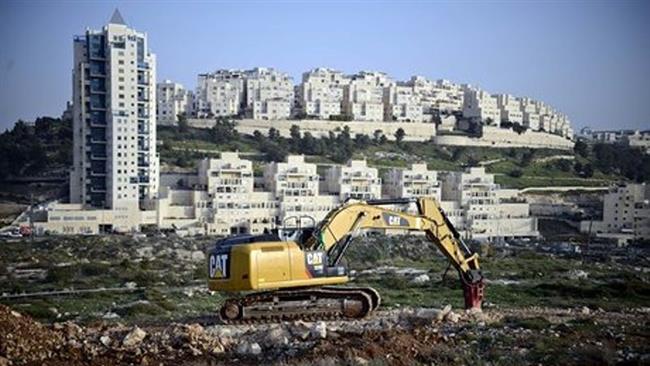
Photograph Source: Mr. Kate – CC BY-SA 3.0
Calls for the annexation of the Occupied West Bank are gaining momentum in both Tel Aviv and Washington. But Israel and its American allies should be careful what they wish for. Annexing the Occupied Palestinian Territories will only reinforce the current rethink of the Palestinian strategy, as opposed to solving Israel’s self-induced problems.
Encouraged by the Donald Trump administration’s decision to move the US Embassy from Tel Aviv to Jerusalem, Israeli government officials feel that the time for annexing the entirety of the West Bank is now.
In fact, “there is no better time than now” was the exact phrase used by former Israeli Justice Minister, Ayelet Shaked, as she promoted annexation at a recent New York conference.
Certainly, it is election season in Israel again, as Israeli Prime Minister, Benjamin Netanyahu, failed to form a government following the last elections in April. So much saber-rattling happens during such political campaigns, as candidates talk tough in the name of ‘security’, fighting terrorism, and so on.
But Shaked’s comments cannot be dismissed as fleeting election kerfuffle. They represent so much more, if understood within the larger political context.
Indeed, since Trump’s advent to the White House, Israel has never – and I mean, never – had it so easy. It is as if the rightwing government’s most radical agenda became a wish list for Israel’s allies in Washington. This list includes the US recognition of Israel’s illegal annexation of Occupied Palestinian East Jerusalem, of the Occupied Syrian Golan Heights, and the dismissal of the Palestinian refugees’ right of return altogether.
But that is not all. Statements made by influential US officials indicate initial interest in the outright annexation of the Occupied West Bank or, at least, large parts of it. The latest of such calls was made by US ambassador to Israel, David Friedman.
“Israel has the right to retain some … of the West Bank,” Friedman said in an interview, cited in the New York Times on June 8.
Friedman is deeply involved in the so-called ‘Deal of the Century’, a political gambit championed mostly by Trump’s top advisor and son-in-law, Jared Kushner. The apparent idea behind this ‘deal’ is to dismiss the core demands of the Palestinians, while reassuring Israel regarding its quest for demographic majority and ‘security’ concerns.
Other US officials behind Washington’s efforts on behalf of Israel include US Special Envoy to the Middle East, Jason Greenblatt, and former US Ambassador to the UN, Nicki Haley. In a recent interview with the Israeli rightwing newspaper, Israel Hayom, Haley said that the Israeli government “should not be worried” regarding the yet-to-be fully revealed details of the ‘Deal of the Century.’
Knowing Haley’s love-affair with – and brazen defense of – Israel at the United Nations, it should not be too difficult to fathom the subtle and obvious meaning of her words.
This is why Shaked’s call for the annexation of the West Bank cannot be dismissed as typical election season talk.
But can Israel annex the West Bank?
Practically speaking, yes, it can. True, it would be a flagrant violation of international law, but such a notion has never irked Israel, nor stopped it from annexing Palestinian or Arab territories. For example, it occupied East Jerusalem and the Golan Heights in 1980 and 1981 respectively.
Moreover, the political mood in Israel is increasingly receptive to such a step. A poll conducted by the Israeli newspaper, Haaretz, last March revealed that 42% of Israelis back West Bank annexation. This number is expected to rise in the following months as Israel continues to move to the right.
It is also important to note that several steps have already been taken in that direction, including the Israeli Knesset’s (parliament) decision to apply the same civil laws to illegal Jewish settlers in the West Bank as to those living in Israel.
But that is where Israel faces its greatest dilemma.
According to a joint poll conducted by Tel Aviv University and the Palestinian Center for Policy and Survey Research in August 2018, over 50% of Palestinians realize that a so-called two-state solution is no longer tenable. Moreover, a growing number of Palestinians also believe that co-existence in a single state, where Israeli Jews and Palestinian Arabs (Muslims and Christians, alike) live side by side, is the only possible formula for a better future.
The dichotomy for Israeli officials, who are keen on maintaining Jewish demographic majority and the marginalization of Palestinian rights, is that they no longer have good options.
First, they understand that the indefinite occupation of Palestinian territories cannot be sustained. Ongoing Palestinian resistance at home, and the rise of the Boycott, Divestment and Sanctions (BDS) Movement abroad is challenging Israel’s very political legitimacy across the world.
Second, they must also be aware of the fact that, from an Israeli Jewish leaders’ point of view, annexing the West Bank, along with millions of Palestinians, will multiply the very ‘demographic threat’ that they have been dreading for many years.
Third, the ethnic cleansing of whole Palestinian communities – the so-called ‘transfer’ option – as Israel has done upon its founding in 1948, and again, in 1967, is no longer possible. Neither will Arab countries open their borders for Israel’s convenient genocides, nor will Palestinians leave, however high the price. The fact that Gazans remained put, despite years of siege and brutal wars, is a case in point.
Political grandstanding aside, Israeli leaders understand that they are no longer in the driver’s seat and, despite their military and political advantage over Palestinians, it is becoming clear that firepower and Washington’s blind support are no longer enough to determine the future of the Palestinian people.
It is also clear that the Palestinian people are not, and never were, passive actors in their own fate. If Israel maintains its 52-year old Occupation, Palestinians will continue to resist. That resistance will not be weakened, or quelled, by any decision to annex the West Bank, in part or in full, the same way that Palestinian resistance in Jerusalem did not cease since its illegal annexation by Tel Aviv four decades ago.
Finally, the illegal annexation of the West Bank can only contribute to the irreversible awareness among Palestinians that their fight for freedom, human rights, justice and equality can be better served through a civil rights struggle within the borders of one single democratic state.
In her blind arrogance, Shaked and her rightwing ilk are only accelerating the demise of Israel as an ethnic, racist state, while opening up the stage for better possibilities than perpetual violence and apartheid.
Ramzy Baroud is a journalist, author and editor of Palestine Chronicle. His latest book is The Last Earth: A Palestinian Story (Pluto Press, London, 2018). He earned a Ph.D. in Palestine Studies from the University of Exeter and is a Non-Resident Scholar at Orfalea Center for Global and International Studies, UCSB.

Thursday, June 20, 2019

Forget Trump’s ‘deal of the century’. Israel was always on course to annexation

Nazareth: When Israeli prime ministers are in trouble, facing difficult elections or a corruption scandal, the temptation has typically been for them to unleash a military operation to bolster their standing. In recent years, Gaza has served as a favourite punching bag.
Benjamin Netanyahu is confronting both difficulties at once: a second round of elections in September that he may struggle to win; and an attorney general who is widely expected to indict him on corruption charges shortly afterwards.
Netanyahu is in an unusually tight spot, even by the standards of an often chaotic and fractious Israeli political system. After a decade in power, his electoral magic may be deserting him. There are already rumblings of discontent among his allies on the far right.
Given his desperate straits, some observers fear that he may need to pull a new kind of rabbit out of the hat.
In the past two elections, Netanyahu rode to success after issuing dramatic last-minute statements. In 2015, he agitated against the fifth of Israel’s citizens who are Palestinian asserting their democratic rights, warning that they were “coming out in droves to vote”.
Back in April, he declared his intention to annex large chunks of the occupied West Bank, in violation of international law, during the next parliament.
Amos Harel, a veteran military analyst with Haaretz newspaper, observed last week that Netanyahu may decide words are no longer enough to win. Action is needed, possibly in the form of an announcement on the eve of September’s ballot that as much as two-thirds of the West Bank is to be annexed.
Washington does not look like it will stand in his way.
Shortly before April’s election, the Trump administration offered Netanyahu a campaign fillip by recognising Israel’s illegal annexation of the Golan Heights, territory Israel seized from Syria in 1967.
This month David Friedman, US ambassador to Israel and one of the chief architects of Donald Trump’s long-delayed “deal of the century” peace plan, appeared to offer a similar, early election boost.
In interviews, he claimed Israel was “on the side of God” – unlike, or so it was implied, the Palestinians. He further argued that Israel had the “right to retain” much of the West Bank.
Both statements suggest that the Trump administration will not object to any Israeli moves towards annexation, especially if it ensures their favoured candidate returns to power.
Whatever Friedman suggests, it is not God who has intervened on Israel’s behalf. The hands that have carefully cleared a path over many decades to the West Bank’s annexation are all too human.
Israeli officials have been preparing for this moment for more than half a century, since the West Bank, East Jerusalem and Gaza were seized back in 1967.
That point is underscored by an innovative interactive map of the occupied territories. This valuable new resource is a joint project of the Israeli human rights group B’Tselem and Forensic Architecture, a London-based team that uses new technology to visualise and map political violence and environmental destruction.
Titled Conquer and Divide, it reveals in detail how Israel has “torn apart Palestinian space, divided the Palestinian population into dozens of disconnected enclaves and unravelled its social, cultural and economic fabric”.
The map proves beyond doubt that Israel’s colonisation of the West Bank was never accidental, defensive or reluctant. It was coldly calculated and intricately planned, with one goal in mind – and the moment to realise that goal is fast approaching.
Annexation is not a right-wing project that has hijacked the benign intentions of Israel’s founding generation. Annexation was on the cards from the occupation’s very beginnings in 1967, when the so-called centre-left – now presented as a peace-loving alternative to Netanyahu – ran the government.
The map shows how Israeli military planners created a complex web of pretexts to seize Palestinian land: closed military zones today cover a third of the West Bank; firing ranges impact 38 Palestinian communities; nature reserves are located on 6 per cent of the territory; nearly a quarter has been declared Israeli “state” land; some 250 settlements have been established; dozens of permanent checkpoints severely limit movement; and hundreds of kilometres of walls and fences have been completed.
These interlocking land seizures seamlessly carved up the territory, establishing the walls of dozens of tightly contained prisons for Palestinians in their own homeland.
Two Nasa satellite images of the region separated by 30 years – from 1987 and 2017 – reveal how Israel’s settlements and transport infrastructure have gradually scarred the West Bank’s landscape, clearing away natural vegetation and replacing it with concrete.
The land grabs were not simply about acquisition of territory. They were a weapon, along with increasingly draconian movement restrictions, to force the native Palestinian population to submit, to recognise its defeat, to give up hope.
In the immediate wake of the West Bank’s occupation, defence minister Moshe Dayan, Israel’s hero of the hour and one of the architects of the settlement project, observed that Palestinians should be made “to live like dogs, and whoever wants to can leave – and we shall see where this process leads”.
Although Israel has concentrated Palestinians in 165 disconnected areas across the West Bank, its actions effectively won the international community’s seal of approval in 1995. The Oslo accords cemented Israel’s absolute control over 62 per cent of the West Bank, containing the Palestinians’ key agricultural land and water sources, which was classified as Area C.
Occupations are intended to be temporary – and the Oslo accords promised the same. Gradually, the Palestinians would be allowed to take back more of their territory to build a state. But Israel made sure both the occupation and the land thefts sanctioned by Oslo continued.
The new map reveals more than just the methods Israel used to commandeer the West Bank. Decades of land seizures highlight a trajectory, plotting a course that indicates the project is still not complete.
If Netanyahu partially annexes the West Bank – Area C – it will be simply another stage in Israel’s tireless efforts to immiserate the Palestinian population and bully them into leaving. This is a war of attrition – what Israelis have long understood as “creeping annexation”, carried out by stealth to avoid a backlash from the international community.
Ultimately, Israel wants the Palestinians gone entirely, squeezed out into neighbouring Arab states, such as Egypt and Jordan. That next chapter is likely to begin in earnest if Trump ever gets the chance to unveil his “deal of the century”.
A version of this article first appeared in the National, Abu Dhabi.
Jonathan Cook won the Martha Gellhorn Special Prize for Journalism. His books include “Israel and the Clash of Civilisations: Iraq, Iran and the Plan to Remake the Middle East” (Pluto Press) and “Disappearing Palestine: Israel’s Experiments in Human Despair” (Zed Books).