Showing posts with label annexing the West Bank. Show all posts

Thursday, June 20, 2019

Forget Trump’s ‘deal of the century’. Israel was always on course to annexation

Nazareth: When Israeli prime ministers are in trouble, facing difficult elections or a corruption scandal, the temptation has typically been for them to unleash a military operation to bolster their standing. In recent years, Gaza has served as a favourite punching bag.
Benjamin Netanyahu is confronting both difficulties at once: a second round of elections in September that he may struggle to win; and an attorney general who is widely expected to indict him on corruption charges shortly afterwards.
Netanyahu is in an unusually tight spot, even by the standards of an often chaotic and fractious Israeli political system. After a decade in power, his electoral magic may be deserting him. There are already rumblings of discontent among his allies on the far right.
Given his desperate straits, some observers fear that he may need to pull a new kind of rabbit out of the hat.
In the past two elections, Netanyahu rode to success after issuing dramatic last-minute statements. In 2015, he agitated against the fifth of Israel’s citizens who are Palestinian asserting their democratic rights, warning that they were “coming out in droves to vote”.
Back in April, he declared his intention to annex large chunks of the occupied West Bank, in violation of international law, during the next parliament.
Amos Harel, a veteran military analyst with Haaretz newspaper, observed last week that Netanyahu may decide words are no longer enough to win. Action is needed, possibly in the form of an announcement on the eve of September’s ballot that as much as two-thirds of the West Bank is to be annexed.
Washington does not look like it will stand in his way.
Shortly before April’s election, the Trump administration offered Netanyahu a campaign fillip by recognising Israel’s illegal annexation of the Golan Heights, territory Israel seized from Syria in 1967.
This month David Friedman, US ambassador to Israel and one of the chief architects of Donald Trump’s long-delayed “deal of the century” peace plan, appeared to offer a similar, early election boost.
In interviews, he claimed Israel was “on the side of God” – unlike, or so it was implied, the Palestinians. He further argued that Israel had the “right to retain” much of the West Bank.
Both statements suggest that the Trump administration will not object to any Israeli moves towards annexation, especially if it ensures their favoured candidate returns to power.
Whatever Friedman suggests, it is not God who has intervened on Israel’s behalf. The hands that have carefully cleared a path over many decades to the West Bank’s annexation are all too human.
Israeli officials have been preparing for this moment for more than half a century, since the West Bank, East Jerusalem and Gaza were seized back in 1967.
That point is underscored by an innovative interactive map of the occupied territories. This valuable new resource is a joint project of the Israeli human rights group B’Tselem and Forensic Architecture, a London-based team that uses new technology to visualise and map political violence and environmental destruction.
Titled Conquer and Divide, it reveals in detail how Israel has “torn apart Palestinian space, divided the Palestinian population into dozens of disconnected enclaves and unravelled its social, cultural and economic fabric”.
The map proves beyond doubt that Israel’s colonisation of the West Bank was never accidental, defensive or reluctant. It was coldly calculated and intricately planned, with one goal in mind – and the moment to realise that goal is fast approaching.
Annexation is not a right-wing project that has hijacked the benign intentions of Israel’s founding generation. Annexation was on the cards from the occupation’s very beginnings in 1967, when the so-called centre-left – now presented as a peace-loving alternative to Netanyahu – ran the government.
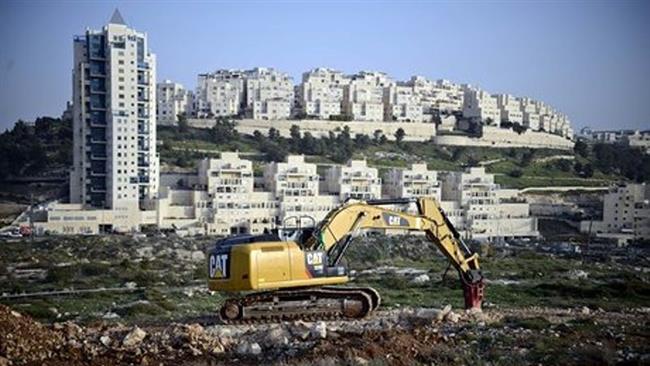
The map shows how Israeli military planners created a complex web of pretexts to seize Palestinian land: closed military zones today cover a third of the West Bank; firing ranges impact 38 Palestinian communities; nature reserves are located on 6 per cent of the territory; nearly a quarter has been declared Israeli “state” land; some 250 settlements have been established; dozens of permanent checkpoints severely limit movement; and hundreds of kilometres of walls and fences have been completed.
These interlocking land seizures seamlessly carved up the territory, establishing the walls of dozens of tightly contained prisons for Palestinians in their own homeland.
Two Nasa satellite images of the region separated by 30 years – from 1987 and 2017 – reveal how Israel’s settlements and transport infrastructure have gradually scarred the West Bank’s landscape, clearing away natural vegetation and replacing it with concrete.
The land grabs were not simply about acquisition of territory. They were a weapon, along with increasingly draconian movement restrictions, to force the native Palestinian population to submit, to recognise its defeat, to give up hope.
In the immediate wake of the West Bank’s occupation, defence minister Moshe Dayan, Israel’s hero of the hour and one of the architects of the settlement project, observed that Palestinians should be made “to live like dogs, and whoever wants to can leave – and we shall see where this process leads”.
Although Israel has concentrated Palestinians in 165 disconnected areas across the West Bank, its actions effectively won the international community’s seal of approval in 1995. The Oslo accords cemented Israel’s absolute control over 62 per cent of the West Bank, containing the Palestinians’ key agricultural land and water sources, which was classified as Area C.
Occupations are intended to be temporary – and the Oslo accords promised the same. Gradually, the Palestinians would be allowed to take back more of their territory to build a state. But Israel made sure both the occupation and the land thefts sanctioned by Oslo continued.
The new map reveals more than just the methods Israel used to commandeer the West Bank. Decades of land seizures highlight a trajectory, plotting a course that indicates the project is still not complete.
If Netanyahu partially annexes the West Bank – Area C – it will be simply another stage in Israel’s tireless efforts to immiserate the Palestinian population and bully them into leaving. This is a war of attrition – what Israelis have long understood as “creeping annexation”, carried out by stealth to avoid a backlash from the international community.
Ultimately, Israel wants the Palestinians gone entirely, squeezed out into neighbouring Arab states, such as Egypt and Jordan. That next chapter is likely to begin in earnest if Trump ever gets the chance to unveil his “deal of the century”.
A version of this article first appeared in the National, Abu Dhabi.
Jonathan Cook won the Martha Gellhorn Special Prize for Journalism. His books include “Israel and the Clash of Civilisations: Iraq, Iran and the Plan to Remake the Middle East” (Pluto Press) and “Disappearing Palestine: Israel’s Experiments in Human Despair” (Zed Books). 

Tuesday, April 16, 2019

Trump Deal Offers ‘Autonomy’, No Palestinian State

Washington Post Reveals: 

WASHINGTON -- Sources familiar with U.S. President Donald Trump’s "deal of the century” have warned that it will be void of any guarantees for a fully sovereign state of Palestine, the Washington Post reported Monday.

The unnamed sources told the paper that the proposal, which is expected to arrive soon, will only offer Palestinians some improvements in living conditions and nothing more.
The White House is poised to drop the much-anticipated package later this spring or by early summer, culminating over two years of efforts by Trump adviser and son-in-law Jared Kushner.
With officials on all sides tight-lipped about the terms of the offer, remarks from Kushner and other U.S. officials have suggested that it does away with Palestinian statehood as a per-requisite for any agreement.
Instead, Trump’s plan to purportedly end the decades-long conflict between Palestinians and Israelis more than anything focuses on the occupying regime’s security concerns, the report said.
"We believe we have a plan that is fair, realistic and implementable that will enable people to live better lives,” a senior White House official told the Post on Friday.
"We looked at past efforts and solicited ideas from both sides and partners in the region with the recognition that what has been tried in the past has not worked. Thus, we have taken an unconventional approach founded on not hiding from reality, but instead speaking truth,” added the official.
According to a new report by U.S. news and information website Axios, King Abdullah II of Jordan said in a closed-door meeting with American lawmakers last month that the White House had given him zero information on how it proposes to divide the Palestinian territory.
The paper said the American head of state has told friends he would change traditional assumptions about ways to resolve the conflict.
However, the outcome would look nothing like his unorthodox personal diplomacy with North Korea and would rather be the product of Kushner, who became Trump’s designated agent for all Middle East deals at the beginning of his presidency in 2017.
While with North Korean leader Kim Jong Uun, Trump has tried to make peace through vague promises of economic growth and sanctions removal, Arab officials familiar with Kushner’s sales pitches said he has offered no specific incentives to Palestinians.
What Kushner has offered are suggestions about economic opportunities for Palestinians in exchange for Israeli annexation of the West Bank and all other disputed territories.
Kushner and other U.S. officials have indicated that peace and economic development for Palestine are intertwined with the Arab world’s recognition of Israel and their acceptance of a Palestinian "autonomy” as opposed to a "sovereignty,” sources said.
"What we’ve tried to do is figure out what is a realistic and what is a fair solution to the issues here in 2019 that can enable people to live better lives,” Kushner said in an interview with Sky News Arabia as he sought Arab support on a visit to the region in February.
Zionist PM Benjamin Netanyahu gave away the most substantial hints at the deal’s contents when he promised on the eve of his re-election last week that he will annex some settlements in the West Bank.
The package, according to the sources, is expected to pledge tens of billions of dollars in aid and investment in the West Bank and the Gaza Strip, the two areas with the most Palestinians, and billions more to Egypt and Jordan, the two Arab nations that have made peace with Israel.
Kushner stands little chance of success, analysts say, as European and some Arab leaders have already lost faith in his attempts.
A series of actions that Trump has taken in favor of Israel, including moving the U.S. embassy from Tel Aviv to Jerusalem Al-Quds after recognizing it as the Zionist regime’s so-called capital, have killed any hopes of a breakthrough.
Trump has also stirred anger by cutting annual aid to Palestine and shuttering the offices of the Palestine Liberation Organization (PLO) in Washington.
Those actions have alienated the Palestinian Authority, which has boycotted all negotiations with Washington.
Ilan Goldenberg, the chief of staff to the lead U.S. negotiator in the last failed attempt under former president Barack Obama, said he still expects the package to be a nonstarter that would pave the way for annexation by forcing the Palestinians to reject the offer.

Monday, April 15, 2019

The Unfinished Gaza War: What Netanyahu Hopes to Gain from Attacking Palestinian Prisoners

By Ramzy Baroud 

The current violence targeting Palestinian prisoners in Israeli jails dates back to January 2. It was then that Israel’s Public Security Minister, Gilad Erdan declared that the “party is over.”
“Every so often, infuriating pictures appear of cooking in the terrorist wings. This party is coming to an end,” Erdan was quoted in the Jerusalem Post.
Then, the so-called Erdan’s Committee recommended various measures aimed at ending the alleged “party”, which included placing limits on prisoners’ use of water, banning food preparations in cells, and installing jamming devices to block the alleged use of smuggled cell phones.
The last measure, in particular caused outrage among prisoners, for such devices have been linked to severe headaches, fainting and other long-term ailments.
Erdan followed his decision with a promise of the “use of all means in (Israel’s) disposal” to control any prisoners’ protests in response to the new restrictions.
The Israel Prison Service (IPS) “will continue to act with full force” against prison “riots”, he said, as reported by the Times of Israel.
That “full force” was carried out on January 20 at the Ofer Military Prison near Ramallah, in the West Bank, where a series of Israeli raids resulted in the wounding of more than 100 prisoners, many of whom sustaining bullet wounds.
The Nafha and Gilboa prisons were also targeted with the same violent pattern.
The raids continued, leading to more violence in the Naqab Prison on March 24, this time conducted by the IPS force, known as the Metzada unit.
Metzada is IPS’ ‘hostage rescue special operation’ force and is known for its very violent tactics against prisoners. Its attack on Naqab resulted in the wounding of many prisoners, leaving two in critical condition. Palestinian prisoners fought back, reportedly stabbing two prison guards with sharp objects.
On March 25, more such raids were conducted, also by Metzada, which targeted Ramon, Gilboa, Nafha and Eshel prisons.
In response, the leadership of Palestinian prisoners adopted several measures including the dismantling of the regulatory committees and any other form of representation of prisoners inside Israeli jails.
The decentralization of Palestinian action inside Israeli prisons would make it much more difficult for Israel to control the situation and would allow prisoners to use whichever form of resistance they may deem fit.
But why is Israel provoking such confrontations when Palestinian prisoners are already subjected to a most horrid existence and numerous violations of international law?
Equally important, why now?
On December 24, embattled Prime Minister, Benjamin Netanyahu and other leaders of Israel’s right-wing government dissolved the Knesset (parliament) and declared early elections on April 9.
A most winning strategy for Israeli politicians during such times is usually increasing their hostility against Palestinians in the Occupied Territories, including the besieged Gaza Strip.
Indeed, a hate-fest, involving many of Israel’s top candidates kicked in, some calling for war on Gaza, others for teaching Palestinians a lesson, annexing the West Bank, and so on.
Merely a week after the election date announcement was made, raids of prisons began in earnest.
For Israel, it seemed like a fairly safe and controlled political experiment. Video footage of Israeli forces beating up hapless prisoners, accompanied by angry statements made by top Israeli officials captured the imaginations of a decidedly right-wing, militant society.
And that’s precisely what took place, at first. However, on March 25, a flare in violence in Gaza led to a limited, undeclared war.
A full-fledged Israeli war on Gaza would be a big gamble during an election season, especially as recent events suggest that the time of easy wars is over. While Netanyahu adopted the role of the decisive leader, so determined to crush the Gaza resistance, his options on the ground are actually quite limited.
Even after Israel accepted Egyptian-mediated ceasefire terms with the Gaza factions, Netanyahu continued to talk tough.
“I can tell you we are prepared to do a lot more,” Netanyahu said in reference to the Israeli attack on Gaza during a video speech beamed to his supporters in Washington on March 26.
But, for once, he couldn’t, and that failure, from an Israeli viewpoint, intensified verbal attacks by his political rivals.
Netanyahu has “lost his grip on security,” the Blue and White party leader, Benny Gantz proclaimed.
Gantz’s accusation was just another insult in an edifice of similar blistering attacks questioning Netanyahu’s ability to control Gaza.
In fact, a poll, conducted by the Israeli TV channel, Kan on March 27, found that 53% of Israelis believe that Netanyahu’s response to the Gaza resistance is “too weak.”
Unable to counter with more violence, at least for now, the Netanyahu government responded by opening another battlefront, this time in Israeli prisons.
By targeting prisoners, especially those affiliated with certain Gaza factions, Netanyahu is hoping to send a message of strength, and to assure his nervous constituency of his prowess.
Aware of the Israeli strategy, Hamas’ political leader, Ismail Haniyeh linked the ceasefire to the issue of prisoners.
We “are ready for all scenarios,” Haniyeh said in a statement.
In truth, the Netanyahu-Erdan war on Palestinian prisoners is foolish and unwinnable. It has been launched with the assumption that a war of this nature will have limited risks, since prisoners are, by definition, isolated and unable to fight back.
To the contrary, Palestinian prisoners have, without question, demonstrated their tenacity and ability to devise ways to resist the Israeli occupier throughout the years. But more importantly, these prisoners are far from being isolated.
In fact, the nearly 6,000 Palestinian prisoners in Israeli jails represent whatever semblance of unity among Palestinians that transcends factions, politics and ideology.
Considering the direct impact of the situation in Israeli prisons on the collective psyche of all Palestinians, any more reckless steps by Netanyahu, Erdan and their IPS goons will soon result in greater collective resistance, a struggle that Israel cannot easily suppress.