Showing posts with label Oslo accords. Show all posts

Sunday, December 15, 2019

Where is Hamas today, 32 years after it was founded

Motasem A Dalloul

Motasem A Dalloul

Hamas released its first statement on 14 December 1987, just five days after the start of the first intifada. The intifada was triggered when an Israeli lorry driver ran over a number of Palestinian labourers east of Gaza city while they were returning home after a long working day in Israel, killing four and wounding 10 others.
Hamas is a Palestinian movement with an Islamic ideology that has dedicated itself to fighting the Israeli occupation of the Palestinian territories. Its spiritual founder Sheikh Ahmed Yassin, who was a quadriplegic, was assassinated by an Israeli helicopter on 22 March 2004. His assassination was directly supervised by the late Israeli Prime Minister Ariel Sharon.
As soon as it was launched, Hamas ordered its members and supporters across the occupied territories to be extensively involved in the intifada. Hamas had deep roots among the Palestinians it made with two decades of organised charity work that included health and education services, as well as sports and cultural activities.
During that period, between 1967 and 1987, Hamas established a number of multi-branch social charities in Gaza and the West Bank that run schools. In addition, it established one major university in Gaza.
The PLO, which includes all the Palestinian factions except Hamas and Islamic Jihad, had been involved in secret peace talks with Israel dating back to 1972. According to what the current Fatah and PLO leader Mahmoud Abbas has said, Israel thought about terminating Hamas in order to stop the first intifada. It arrested all Hamas leaders, including Yassin, but it found that Hamas had alternative formations that led the movement and kept popular resistance active.
The Israeli occupation escalated its crackdown on popular resistance, pushing the Palestinians to escalate and use arms. Hamas established its military wing Al-Qassam Brigades, which started to target Palestinian collaborators and Israeli soldiers. With the Israeli escalation increasing, the Palestinian resistance widened its scale of targets until it started to carry out suicide attacks in the heart of Israeli cities.
In 1996, Hamas refused to take part in the first Palestinian parliamentary elections, arguing that the Palestinian Authority, which was established after the Oslo Peace Accords between the PLO and Israel, is absurd. Citing the Israeli failure to fulfil its pledges made through Oslo and the escalation of settlement building, Hamas believed that the peace process was only made to give Israel time to strengthen its occupation. So, it continued its resistance, making itself a target of the PA, which violently cracked down on its leaders, members and resistance infrastructure.
Israeli and PA actions on the ground reinforced Hamas’ belief that Oslo was not meant to make peace. On 25 February 1994, the Israeli settler Baruch Goldstein broke into Al-Ibrahimi Mosque and opened fire on Palestinian worshipers during Al-Fajr prayer, killing 29 and wounding over 1,245 others, triggering wide-scale counter resistance attacks by Hamas, which started to use suicide bombings in response to increasing Israeli violence and the silence of the PA.
Hamas' Khaled Meshaal with the Palestinian Authority/PLO's Mahmoud Abbas
Hamas’ Khaled Meshaal with the Palestinian Authority/PLO’s Mahmoud Abbas [file photo]
Meanwhile, on 19 November 1994, the PA security services stormed Felesteen Mosque in the centre of Gaza City and opened fire on worshippers during Friday prayers, killing more than a dozen and wounding over 100 others. The PA attack aimed at preventing Hamas from organising a popular funeral for its member Naser Sallouha, who had been killed by the PA the previous day. Hamas did not respond and stressed it would never aim its gun at any Palestinian whatever he does.
In 1996, Hamas was subject to the harshest crackdown in its history as the PA arrested hundreds of its leaders and members and destroyed all of its resistance infrastructure. I have heard confirmed reports stressing that American and Israeli intelligence officers investigated Hamas members and tortured them inside PA prisons. In fact, the PA succeeded in dismantling Hamas’ organisational structure, but in October 1997, Israel released Ahmed Yassin in return for the release of two Mossad agents who failed to assassinate the Chief of Hamas’ Political Bureau in Amman Khalid Mashal.
When the second intifada started, Hamas was heavily involved in the armed resistance and started to manufacture rockets and RPGs and recently drones, causing much damage to the Israeli occupation.
In a dramatic change in policy, Hamas agreed to take part in the parliamentary elections in 2006, accepting an implicit truce. Hamas won the elections and formed the government alone after the other Palestinian factions rejected joining a coalition government headed by the Islamic movement.
Fatah, Israel, the US and most of the Western and Arab countries rejected dealing with Hamas. Fatah and the PA caused security chaos, pushing Hamas to sweep them out of Gaza in June 2007, leading the PA to separate the Gaza Strip from the West Bank. The former has been controlled by Hamas since then and the latter controlled by the PA, which is dominated by Fatah and backed by Israel and the international community.
Since then, Israel has continued its violations against Palestinians. It carried out several offensives on Gaza, including three major ones, pushing Hamas to launch hundreds of rockets towards the Israeli settlements and cities near Gaza. Over these years, Gaza has been under a strict Israeli siege that rendered the coastal enclave to be, according to many international reports, uninhabitable by 2020 due to the lack of clean water, severe shortage of electricity, lack of medicine and medical equipment at hospitals and severe unrepairable damage of infrastructure due to the Israeli attacks.
Now there have been reports about Hamas’ indirect contact with Israel, either through Egypt or through the UN peace envoy in the region for the sake of reaching a settlement for the ongoing conflict on condition of the complete end of the Israeli siege on Gaza and lifting Israeli sanctions on movement of Gaza residents.
Critics see that Hamas has exceeded the concessions of principles made by Fatah and the other PLO factions, who conceded 78 per cent of the area of historical Palestine to the state of Israel, arguing that Hamas has ignored Jerusalem, the refugees and the borders, and is currently talking to Israel just to improve the life of a portion of the Palestinians who live in Gaza.
On these claims, Hamas Spokesman Hazim Qasim said: “Hamas has been the protector of Palestinian principles and Palestinian rights. The news about a truce with Israel in return for a fraction of our rights is completely fake. Hamas is seeking a complete end to the Israeli siege and the improvement of the life of Palestinians in Gaza.”
Regarding a long-term truce or a deal with Israel, he said: “Hamas does not reject transitional solutions. This was proposed by Hamas founder Sheikh Ahmed Yassin, who said: ‘Hamas would accept a long-term solution in return for a full Israeli withdrawal from the Palestinian territories occupied in 1967’.”
He added: “Sheikh Yassin said: ‘The Palestinian freedom fighters [will] not lay down their arms before their aims are achieved.’ They are seeking solutions without conceding their rights,” he said.
“We hope that the Israeli occupation ends peacefully, but if not, we are still ready for it,” he concluded, stressing “this was the main Hamas principle laid down by Sheikh Yassin, who said: ‘We feel sorry for any bloodshed. We feel sorry for killing even a cat. We feel sorry for killing any human, whether he is a Jew, a Christian or a Muslim, but we do not feel sorry for killing the one who comes to kill us or displace us from our homes. This is the legitimate resistance which is guaranteed by international law.’”

Wednesday, August 21, 2019

Kushner’s Threat to Palestine: An Interview with Norman Finkelstein


Photograph Source: Max Goldberg/Iowa State Daily from USA – CC BY 2.0
Norman Finkelstein is a leading authority on the Israel-Palestine conflict. While most observers have proclaimed Jared Kushner’s ongoing ‘peace’ initiative to be dead in the water, Norman warns that it may pose a serious threat to the Palestinians. In part 1 of this interview, I spoke with him about what we can expect from the Kushner initiative going forward.
What is the end goal of the Kushner-led ‘peace’ process?
The Trump administration hasn’t demonstrated focus or consistency at the diplomatic level. But I don’t agree with all the talk that the Kushner plan is “dead on arrival”.
The prime mover behind the Kushner plan is neither Israel nor the US. It’s Saudi Arabia. Saudi covets an open alliance with the Israelis and the US. It fears the Iran axis. It’s a feudal despotism largely impotent on its own; it needs others to pull its chestnuts out of the fire. Witness the Saudi debacles in Yemen and Syria. On a more immediate level, there’s the Khashoggi affair—MBS (Muhammad Bin Salman) is desperate to be rehabilitated in Washington. If Saudi enters into an open alliance with Israel, even liberal members of Congress will forgive his “indiscretions.” So the Saudis harbor strong motives to push through the Kushner plan. The one and only obstacle to an open alliance with Israel is the Palestine Question. If they can resolve it, or appear to resolve it, then it’s clear sailing.
What do the Israelis get out of it? They’ve already gotten from Trump recognition of Jerusalem and the Golan as belonging to Israel. The Kushner plan’s political component will almost certainly include recognition of what’s called the “major settlement blocs” as belonging to Israel. That’s about 10 percent of the West Bank on the “Israeli” side of the wall. For now, Israel doesn’t want the rest of the territory because it doesn’t want all those Arabs. It will be said by Trump supporters, correctly, that the whole elite establishment in the US—liberal to conservative, Democrat to Republican—has always supported Israeli annexation of the settlement blocs.
However, recognition won’t be a huge victory for Netanyahu because the Trump regime is too eccentric. It’s possible that if Trump is defeated in 2020, the Democratic president will resume the status quo ante and pretend the Trump years never happened. Then we’d be back to Jerusalem, the Golan, and the settlement blocs having the same status as in prior US administrations.
What would be a huge victory for Netanyahu would be an open alliance with Saudi Arabia. It would spell the official end of the Arab League. One of the core unifying elements of the Arab League was opposition to Israel. The Gulf states will realign with Israel, alongside Egypt and Jordan. Israel’s biggest diplomatic victories in the Arab world were Camp David, 1978 (Egypt’s defection from the “Arab Front”), and Oslo, 1993 (the PLO’s de facto collaboration with the US and Israel). A Saudi-Gulf open realignment would be Israel’s third big diplomatic victory.
What does the United States stand to gain from this?
The US motive has actually not been disguised. You have to pay attention to the language; they call it the “Deal of the Century”. Trump, Jared and Ivanka are business people. They don’t really care about politics per se, except as a vehicle for personal enrichment. They just want to cut deals. Jared sees the Gulf as chock full of real estate deals. It could become his playground literally for life as MBS, Saudi’s ruler for life, would be indebted to Jared for life.
The Palestinians don’t have many options. In the case of Gaza, the leadership has to show something for all the suffering in the Great March of Return. The Saudis will be able to offer them, alongside desperately needed funds, a partial lifting of the blockade. Israel would probably go along with it.
The Palestinian leadership has only ever cared about squirreling away money in their private bank accounts and paying the P.A.’s employees. It’s always been a corrupt patronage system. (The likes of pathetic Saeb Erekat also enjoy the pretenses and pageantry of power.) There was a very calculated policy by the US over the past couple of years to bankrupt the PA in order to soften it for the “Deal of the Century”. The Palestinian Authority is now broke, and desperate. Abbas is just bargaining as he says “No, No, No”; he wants to see how much money he can wring out of Washington and Riyadh. PLO hack Hanan Ashrawi says that the Palestinians can’t be bought for a “fistful of dollars.” True enough; they demand two fistfuls.
None of what I’ve suggested is set in stone. Consider the precursors–Carter and Clinton. Carter’s tenacity and grasp of micro-detail during the Camp David talks in 1978 was terrifying. It was said of Clinton that he knew every street in Jerusalem by the end of the 2000 (abortive) negotiations. To seal a deal does require that kind of laser-like focus.
Is Trump or anyone around him capable of that focus? At some level Saudi-US dollars can’t on their own set all the pieces in place. You need people who are equipped to do the tough negotiating.
That’s the level where things might not fall into place. But at the level of generality, all this talk about “it’s dead” and “Kushner is an idiot”– well, he is an idiot but it’s beside the point because if you look at the balance of political forces and the converging political agendas of the main players, it’s possible.
If the Trump administration is successful will the international consensus on the two-state settlement erode?
It will erode: once the dollars start rolling in, the Palestinians will do whatever suits their bankrollers. But at some point a new generation will undoubtedly emerge that demands the dignity of equality before the law.
The two-state settlement will then be over. If there is a resolution along the Trump-Saudi-Israeli lines, at least one generation will have to pass before a new leadership arises with a new vision, which will probably be one state. I won’t be around to see it. John Brown didn’t live to see the abolition of slavery. I will have been one link in the chain, one rung on Jacob’s Ladder.
***
What can we expect to come out of the State of Palestine’s case against Israel at the ICC?
The ICC is a very corrupt place. The former chief prosecutor, Luis Moreno-Ocampo, has been steeped in personal (sexual assault), political, and financial corruption. The iniquity of the current chief prosecutor, Fatou Bensouda, reaches back to her judicial role during the Gambian military junta. Of late, she has been fighting tooth and nail not to investigate Israeli criminality.
My guess is, initially, she feared being Goldstoned.[1] She knew the Mossad would track down the 10,000 skeletons in her closet and she would end up like Richard Goldstone. So she had a strong personal motive to quash the complaints lodged against Israel in the ICC.
Then, an institutional motive emerged as US Secretary of State Pompeo and National Security Advisor Bolton publicly declared that if the ICC investigated the US or Israel, the Trump administration would destroy the ICC. They were very blunt about it. And they’ve already set about it. When Bensouda attempted to launch a preliminary examination of US crimes in Afghanistan, she was immediately stripped of her US visa. Every ICC member has a t-shirt that says, “I LOVE NEW YORK”. The US message was clear: “Investigate Israel and you’ll never see Times Square again.” It worked like a charm. The pre-trial chamber overruled Bensouda and dropped the case.
On the other hand, a civil war has erupted in the ICC. There are forces within it that have been pushing back as they demand that Bensouda investigate Israeli crimes.
There are two referrals before the ICC now. One relates to the “Flotilla Incident” (Mavi Marmara) in 2010, and the second is the State of Palestine complaint relating mostly to the illegal Israeli settlements, Operation Protective Edge (2014) and the Great March of Return (ongoing). Bensouda has spent the past six years trying to bury the Mavi Marmara case. She keeps declaring the case closed but forces in the ICC keep replying “No, you have to investigate Israel.”
The stakes are very high. If Bensouda closes both complaints without even launching an investigation, its transparent that she’s completely corrupt. But if she indicts on any complaint, the US will set about destroying the ICC. The book I’ve written demonstrates beyond reasonable doubt that Bensouda has been whitewashing Israel. It poses two choices to Bensouda: indict Israel or step down. There is no third option.
But even if the ICC chooses to indict there is no chance that any Israeli general is ever going to stand trial.
Absolutely.
So, many would say, What’s the point?
It’s like the International Court of Justice (ICJ) advisory opinion in 2004, which declared the wall Israel has been building in the West Bank illegal. It’s another weapon in the arsenal of the Palestinians in the battle for public opinion. It would place on the public record that the two leading judicial bodies in the world, the ICJ and ICC, have both found Israel guilty of egregious international crimes. This is a powerful weapon to persuade public opinion if and when a Palestinian mass movement emerges that is truly committed to fighting the occupation.
Notes
1. After a UN Fact-Finding Mission led by the esteemed South African judge Richard Goldstone concluded that the goal of Israel’s 2008-2009 Operation Cast Lead had been to “punish, humiliate and terrorize a civilian population” in Gaza, Israel responded with a torrent of personal attacks until Goldstone (but not his coauthors) recanted the report, effectively destroying his career. ↑

Friday, July 26, 2019

US BLOCKS UN STATEMENT TO CONDEMN DEMOLITION OF PALESTINIAN HOMES

By َQudsN

New York (QNN) – The United States has blocked an attempt to get the United Nations Security Council issue a formal statement condemning Israel’s demolitions of Palestinian homes in the occupied Jerusalem neighborhood of Sur Baher, earlier this week.
The draft statement, circulated by Kuwait, Indonesia and South Africa to the 15-member council, expressed “grave concern” and warned that the demolition “undermines the viability of the two-state solution and the prospect for just and lasting peace,” as quoted in a Reuters report.
According to Reuters, diplomats said that the US told its counterparts in the UNSC that it could not support the draft text. A revised three-paragraph draft statement was circulated, but was rejected again by the US.
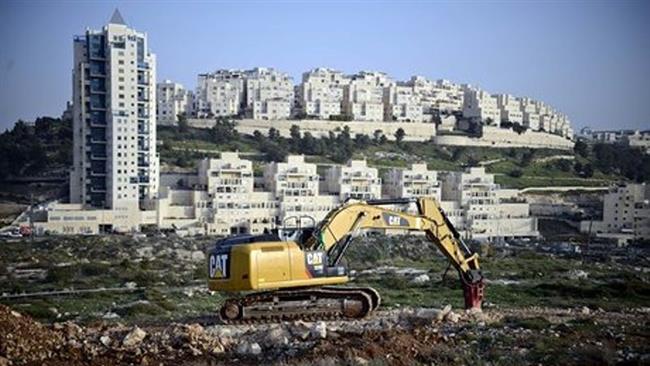
Israel recently demolished 16 buildings, which comprise of 100 apartments, in Wadi al-Hummus area in Sur Baher.
The Israeli high court has approved the demolition of the buildings, thus upholding military allegations that the buildings are “close to the Annexation Wall” and “pose a security threat” due to their proximity to the illegal wall.
Palestinian appeals to demolition orders are frequently dismissed by Israeli courts, which are in fact complicit in perpetuating the Israeli policies of forcible transfer and ethnic cleansing of Palestinians.
The buildings are located in Area A, supposedly under the full jurisdiction of the Palestinian Authority as per the Oslo Accords.
The demolition is expected to have a disastrous effect on all other areas of the West Bank adjacent to Israel’s wall, putting these areas at a high risk of mass demolitions under security pretenses and putting the lives of Palestinians living in such areas at the risk of imminent forcible transfer.

Thursday, June 20, 2019

Forget Trump’s ‘deal of the century’. Israel was always on course to annexation

Nazareth: When Israeli prime ministers are in trouble, facing difficult elections or a corruption scandal, the temptation has typically been for them to unleash a military operation to bolster their standing. In recent years, Gaza has served as a favourite punching bag.
Benjamin Netanyahu is confronting both difficulties at once: a second round of elections in September that he may struggle to win; and an attorney general who is widely expected to indict him on corruption charges shortly afterwards.
Netanyahu is in an unusually tight spot, even by the standards of an often chaotic and fractious Israeli political system. After a decade in power, his electoral magic may be deserting him. There are already rumblings of discontent among his allies on the far right.
Given his desperate straits, some observers fear that he may need to pull a new kind of rabbit out of the hat.
In the past two elections, Netanyahu rode to success after issuing dramatic last-minute statements. In 2015, he agitated against the fifth of Israel’s citizens who are Palestinian asserting their democratic rights, warning that they were “coming out in droves to vote”.
Back in April, he declared his intention to annex large chunks of the occupied West Bank, in violation of international law, during the next parliament.
Amos Harel, a veteran military analyst with Haaretz newspaper, observed last week that Netanyahu may decide words are no longer enough to win. Action is needed, possibly in the form of an announcement on the eve of September’s ballot that as much as two-thirds of the West Bank is to be annexed.
Washington does not look like it will stand in his way.
Shortly before April’s election, the Trump administration offered Netanyahu a campaign fillip by recognising Israel’s illegal annexation of the Golan Heights, territory Israel seized from Syria in 1967.
This month David Friedman, US ambassador to Israel and one of the chief architects of Donald Trump’s long-delayed “deal of the century” peace plan, appeared to offer a similar, early election boost.
In interviews, he claimed Israel was “on the side of God” – unlike, or so it was implied, the Palestinians. He further argued that Israel had the “right to retain” much of the West Bank.
Both statements suggest that the Trump administration will not object to any Israeli moves towards annexation, especially if it ensures their favoured candidate returns to power.
Whatever Friedman suggests, it is not God who has intervened on Israel’s behalf. The hands that have carefully cleared a path over many decades to the West Bank’s annexation are all too human.
Israeli officials have been preparing for this moment for more than half a century, since the West Bank, East Jerusalem and Gaza were seized back in 1967.
That point is underscored by an innovative interactive map of the occupied territories. This valuable new resource is a joint project of the Israeli human rights group B’Tselem and Forensic Architecture, a London-based team that uses new technology to visualise and map political violence and environmental destruction.
Titled Conquer and Divide, it reveals in detail how Israel has “torn apart Palestinian space, divided the Palestinian population into dozens of disconnected enclaves and unravelled its social, cultural and economic fabric”.
The map proves beyond doubt that Israel’s colonisation of the West Bank was never accidental, defensive or reluctant. It was coldly calculated and intricately planned, with one goal in mind – and the moment to realise that goal is fast approaching.
Annexation is not a right-wing project that has hijacked the benign intentions of Israel’s founding generation. Annexation was on the cards from the occupation’s very beginnings in 1967, when the so-called centre-left – now presented as a peace-loving alternative to Netanyahu – ran the government.
The map shows how Israeli military planners created a complex web of pretexts to seize Palestinian land: closed military zones today cover a third of the West Bank; firing ranges impact 38 Palestinian communities; nature reserves are located on 6 per cent of the territory; nearly a quarter has been declared Israeli “state” land; some 250 settlements have been established; dozens of permanent checkpoints severely limit movement; and hundreds of kilometres of walls and fences have been completed.
These interlocking land seizures seamlessly carved up the territory, establishing the walls of dozens of tightly contained prisons for Palestinians in their own homeland.
Two Nasa satellite images of the region separated by 30 years – from 1987 and 2017 – reveal how Israel’s settlements and transport infrastructure have gradually scarred the West Bank’s landscape, clearing away natural vegetation and replacing it with concrete.
The land grabs were not simply about acquisition of territory. They were a weapon, along with increasingly draconian movement restrictions, to force the native Palestinian population to submit, to recognise its defeat, to give up hope.
In the immediate wake of the West Bank’s occupation, defence minister Moshe Dayan, Israel’s hero of the hour and one of the architects of the settlement project, observed that Palestinians should be made “to live like dogs, and whoever wants to can leave – and we shall see where this process leads”.
Although Israel has concentrated Palestinians in 165 disconnected areas across the West Bank, its actions effectively won the international community’s seal of approval in 1995. The Oslo accords cemented Israel’s absolute control over 62 per cent of the West Bank, containing the Palestinians’ key agricultural land and water sources, which was classified as Area C.
Occupations are intended to be temporary – and the Oslo accords promised the same. Gradually, the Palestinians would be allowed to take back more of their territory to build a state. But Israel made sure both the occupation and the land thefts sanctioned by Oslo continued.
The new map reveals more than just the methods Israel used to commandeer the West Bank. Decades of land seizures highlight a trajectory, plotting a course that indicates the project is still not complete.
If Netanyahu partially annexes the West Bank – Area C – it will be simply another stage in Israel’s tireless efforts to immiserate the Palestinian population and bully them into leaving. This is a war of attrition – what Israelis have long understood as “creeping annexation”, carried out by stealth to avoid a backlash from the international community.
Ultimately, Israel wants the Palestinians gone entirely, squeezed out into neighbouring Arab states, such as Egypt and Jordan. That next chapter is likely to begin in earnest if Trump ever gets the chance to unveil his “deal of the century”.
A version of this article first appeared in the National, Abu Dhabi.
Jonathan Cook won the Martha Gellhorn Special Prize for Journalism. His books include “Israel and the Clash of Civilisations: Iraq, Iran and the Plan to Remake the Middle East” (Pluto Press) and “Disappearing Palestine: Israel’s Experiments in Human Despair” (Zed Books).