Showing posts with label Divestment and Sanctions (BDS) movement. Show all posts

Friday, April 26, 2019

War Versus Peace: Israel Has Decided and So Should We

By Ramzy Baroud

Prime Minister of Israel Benjamin Netanyahu
Israelis are divided on some issues, but resolutely unified around the continued subjugation of the Palestinian people.

So, what have we learned from the Israeli legislative elections on April 9?


A whole lot.
To start with, don’t let such references as the “tight race” between Israeli Prime Minister Benjamin Netanyahu, and his main rival, Benny Gantz, fool you.
Yes, Israelis are divided on some issues that are particular to their social and economic makeup. But they are also resolutely unified around the issue that should concern us most: the continued subjugation of the Palestinian people.
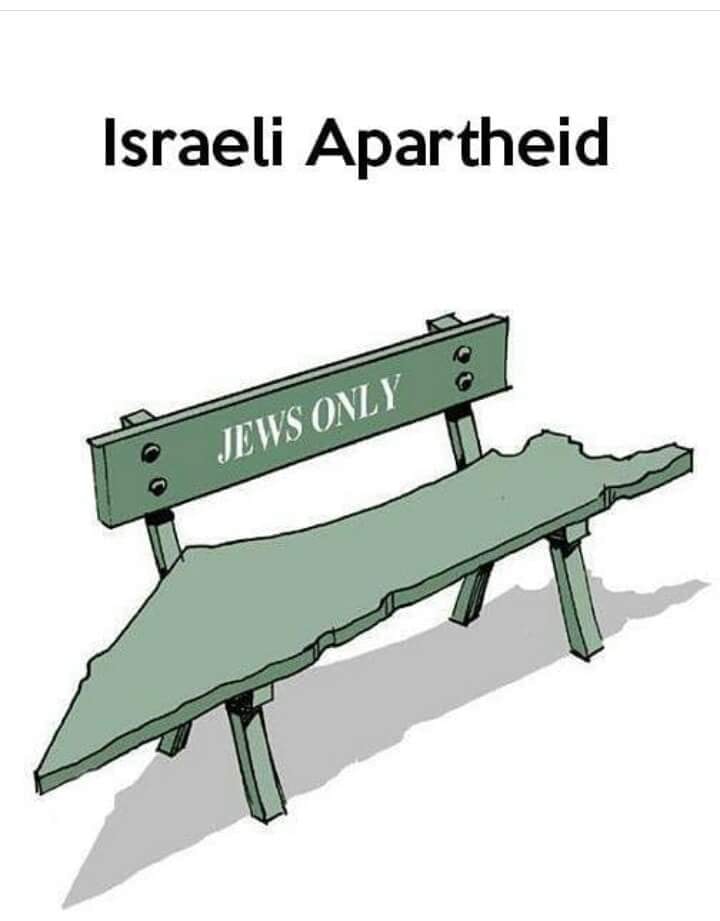
Indeed, ‘tight race’, or not, Israel has voted to cement Apartheid, support the ongoing annexation of the Occupied West Bank, and carry on with the Gaza siege.
In the aftermath of the elections, Netanyahu emerged even more powerful; his Likud party has won the elections with 36 seats, followed by Gantz’s Kahol Lavan (Blue and White) with 35 seats.
Gantz, the rising star in Israeli politics was branded throughout the campaign as a centrist politician, a designation that tossed a lifeline to the vanquished Israeli ‘left’—of which not much is left anyway.
This branding helped sustain a short-lived illusion that there is an Israeli alternative to Netanyahu’s extremist right-wing camp.
But there was never any evidence to suggest that Gantz would have been any better as far as ending the Israeli occupation, dismantling the Apartheid regime and parting ways with the country’s predominantly racist discourse.
In fact, the opposite is true.
Gantz has repeatedly criticized Netanyahu for supposedly being too soft on Gaza, promising to rain yet more death and destruction on a region that, according to the United Nations, will be unlivable by 2020.
A series of videos, dubbed “Only the Strong Survives”, were issued by the Gantz campaign in the run up to the elections. In the footage, Gantz was portrayed as the national savior, who had killed many Palestinians while serving as the army’s chief of staff between 2011 and 2015.
Gantz is particularly proud of being partly responsible for bombing Gaza “back to the stone age.”
It apparently mattered little to Israeli centrists and the remnants of the left that in the 2014 Israeli war on Gaza, dubbed Operation “Protective Edge”, over 2,200 Palestinians were killed and over 11,000 were injured. In that most tragic war, over 500 Palestinian children were killed, and much of Gaza’s already ailing infrastructure was destroyed.
But then again, why vote for Gantz when Netanyahu and his right-wing extremist camp are getting the job done?
Sadly, Netanyahu’s future coalition is likely to be even more extreme than the previous one.
Moreover, thanks to new possible alliances, Netanyahu will most likely free himself of burdensome allies, the likes of former Israeli Defense Minister, Avigdor Lieberman.
One significant change in the likely makeup of the Israeli right is the absence of such domineering figures, who, aside from Lieberman also include former Education Minister, Naftali Bennett and former Justice Minister Ayelet Shaked.
All the grandstanding from Bennett and Shaked, who had recently established a new party called “The New Right”, didn’t even garner them enough votes to reach the threshold required to win a single seat in the Israeli Parliament, the Knesset. They needed 3.25 percent of the vote, but only achieved 3.22 percent. They are both out.
The defeat of the infamous duo is quite revealing: the symbols of Israel’s extreme right no longer meet the expectations of Israel’s extremist constituencies.
Now the stage is wide open for the ultra-orthodox parties, Shas, which now has eight seats, and United Torah Judaism, with seven seats to help define the new normal in Israel.
The Israeli left—if it was ever deserving of the name—received a final blow; the once prominent Labor Party, won merely six seats.
On the other hand, Arab parties that ran in the 2015 elections under the united banner of the “Joint List”, fragmented once more, to collectively achieve only 10 seats.
Their loss of three seats, compared to the previous elections, can be partly blamed on factional and personal agendas. But, that is hardly enough to explain the massive drop in Arab voter participation in the elections: 48 percent compared to 68 percent in 2015.
This record low participation can only be explained through the racist ‘Nation State Law”, which was passed by the right wing-dominated Knesset on July 19, 2018. The new Basic Law, declaredIsrael as the “nation state of the Jewish people” everywhere, relegating the rights of the Palestinian people, their history, culture and language, while elevating everything Jewish, making self-determination in the state an exclusive right for Jews only.
This trend is likely to continue, as Israel’s political institutions no longer offer even a symbolic margin for true democracy and fair representation.
But perhaps the most important lesson that we can learn in the aftermath of these elections is that in today’s Israel, military occupation and apartheid have been internalized and normalized as uncontested realities, unworthy of national debate. This in particular should summon our immediate attention.
During election campaigns, no major party spoke about peace, let alone provided a comprehensive vision for achieving it. No leading politician called for the dismantling of the illegal Jewish settlements that have been erected on Palestinian land in violation of international law.
More importantly and tellingly, no one spoke of a two-state solution.
As far as Israelis are concerned, the two-state solution is dead. While this is also true for many Palestinians, the Israeli alternative is hardly co-existence in one democratic secular state. The Israeli alternative is Apartheid.
Netanyahu and his future government coalition of like-minded extremists are now armed with an unmistakably popular mandate to fulfill all of their electoral promises, including the annexation of the West Bank.
Moreover, with an emboldened and empowered right-wing coalition, we are also likely to witness a major escalation in violence against Gaza this coming summer.
Considering all of this, we must understand that Israel’s illegal policies in Palestine cannot and will not be challenged from within Israeli society.
Challenging and ending the Israeli occupation and dismantling Apartheid can only happen through internal Palestinian resistance and external pressure that is centered around the strategy of Boycott, Divestment and Sanctions (BDS).
It is now incumbent on the international community to break this vicious Israeli cycle and support the Palestinian people in their ongoing struggle against Israeli occupation, racism and apartheid.

Ramzy Baroud

Ramzy Baroud is a journalist, author and editor of Palestine Chronicle. His latest book is The Last Earth: A Palestinian Story (Pluto Press, 2018). His latest book is The Last Earth: A Palestinian Story (Pluto Press, 2018). He earned a Ph.D. in Palestine Studies from the University of Exeter, and is a former Non-Resident Scholar at Orfalea Center for Global and International Studies, UCSB.

Tuesday, January 01, 2019

A Question Every American Must Confront: Apartheid Israel or US Democracy?

Bahia Amawai is a US citizen and Texas-based language specialist who helps autistic and speech-impaired children overcome their impairment.

Despite the essential and noble nature of her work, she was fired by the Pflugerville Independent School District, which serves the Austin area.
Every year, Amawai signs an annual contract that allows her to carry on with her tasks uninterrupted. This year however, something changed.
Shockingly, the school district has decided to add a clause to the contract that requires teachers and other employees to pledge not to boycott Israel ‘during the term of their contract.’
The ‘oath’ is now part of Section 2270.001 of the Texas Government Code, and it is stated in the contract with obvious elaboration so as those wishing to work, or keep their jobs with the Texan government find no loophole to avoid its penalties:
“‘Boycott Israel’ means refusing to deal with, terminating business activities with, or otherwise taking any action that is intended to penalize, inflict economic harm on, or limit commercial relations specifically with Israel, or with a person or entity doing business in Israel or in Israeli-controlled territory ..”
The fact that Texas considers unacceptable even the boycott of businesses operating in the illegal Jewish settlements in the Occupied West Bank puts it at odds with international law, and, subsequently with the vast majority of the international community.
But don’t rush to judgement yet, condemning Texas for being the infamous and stereotypical ‘wild west’, as portrayed even in the United States’ own media. Indeed, Texas is but a small facet in a massive American government campaign aimed at stifling freedom of speech as enshrined in its country’s own constitution.
25 US states have already passed anti-boycott of Israel legislation, or have issued executive orders targeting the boycott support networks, while other states are in the process of following suit.
At a federal government level, the Congressional Israel Anti-boycott Act, which is being received with enthusiasm among US legislators, vows to fine and imprison those who boycott Israel.
While there is strong civil society opposition to such obvious violations of the basic tenets of freedom of speech, the pro-Israel campaigners are unhinged.
Texas – which has passed and enacted laws criminalizing support for the boycott of Israel, as championed by the Palestinian Civil Society Boycott, Divestment and Sanctions movement (BDS) – continues to lead the way for other states.
In the Texan town of Dickinson, which was devastated by hurricane Harvey last year, hurricane victims were asked to sign a pledge not to boycott Israel in exchange for life-saving humanitarian aid.
It must have been a complete shock for displaced residents of the town to learn that the meager supplies they were about to receive hinged on their support of the far-right government of Israeli Prime Minister Benjamin Netanyahu.
But this is the sad state of democracy in the US at the moment, where the interests of a relatively small, distant country are made the centerpiece of US government policies, at home or abroad.
Israel’s wealthy supporters are working hand in hand with Israel’s influential lobby groups in Washington DC, but also at state, and even city levels to make the boycott of Israel punishable by law.
Many US politicians are answering the unreasonable lobby call of criminalizing political dissent throughout the country. While in reality many of them could care less or even truly understand the nature of the debate concerning BDS, they are willing to go the extra mile (as in violating the sanctity of their own democratic system) to win lobby favors, or to, at least avoid their wrath.
The anti-BDS campaign started in the US in earnest a few years ago, and, unlike BDS’ own tactics, it avoided grassroot efforts, focusing instead on quickly creating an official body of legal work that places boycotters of Israel in the dock.
Although the hastily composed legal language has been bravely challenged, and, at times, reversedaltogether by civil society lawyers and organizations, the Israeli strategy has managed to place BDS supporters on the defensive.
That limited success can be accredited to powerful friends of Israel who have generously and forcefully responded to Tel Aviv’s war drums.
Las Vegas gambling mogul, Sheldon Adelson, took the helm of leadership. He moved into action, establishing the “Maccabee Task Force”, which raised millions of dollars to fight against what Israeli officials define as an existential threat to Israel and the delegitimization of the country as a “Jewish state.”
A major strategy that the Israeli camp has advanced in the discussion is the misleading notion that BDS calls for the boycott of Jews, as opposed to the boycott of Israel as a state that violates international law and numerous United Nations resolutions.
A country that practices racism as a matter of course, defends racial segregation and builds Apartheid walls deserves nothing but complete boycott. That is the minimal degree of moral, political and legal accountability considering that the US, as other countries are obligated to honor and respect international law in that regard.
The US however, encouraged by the lack of accountability, continues to behave in the same manner as countries that Washington relentlessly attacks for their undemocratic behavior and violation of human rights.
If such bizarre happenings – firing teachers and conditioning aid on taking a political stance – took place in China, for example, Washington would have lead an international campaign condemning Beijing’s intransigence and violation of human rights.

Many Americans are yet to fathom how the United States’ submission to Israel’s political will is affecting their everyday life. But with more and more such legal restrictions, even ordinary Americans will soon find themselves fighting for basic political rights that, like Bahia Amawai, they have always taken for granted.
Sure, Israel may have succeeded in coercing some people not to openly vow support of BDS, but it will eventually lose this battle as well.
Muffling the voices of civil society rarely works over long periods of time, and the anti-BDS campaign, now penetrating the very heart of US government, is bound to eventually resurrect a nationwide conversation.
Is protecting Israeli Apartheid more important to Americans than preserving the fundamental nature of their own democracy?
That is a question that every American, regardless how they feel about a supposedly distant Middle Eastern conflict, must answer, and urgently so.
– Ramzy Baroud is a journalist, author and editor of Palestine Chronicle. His latest book is The Last Earth: A Palestinian Story (Pluto Press, London, 2018). He earned a Ph.D. in Palestine Studies from the University of Exeter and is a Non-Resident Scholar at Orfalea Center for Global and International Studies.

Friday, November 02, 2018

It Is a New Era, But China’s Balancing Act Will Fail in the Middle East

Although ties between Washington and Tel Aviv are stronger than ever, Israeli leaders are aware of a vastly changing political landscape. The US’ own political turmoil and the global power realignment – which is on full display in the Middle East – indicate that a new era is, indeed, in the making.
Unsurprisingly, this new era involves China.
China’s Vice President, Wang Qishan, arrived in Israel on October 22 on a four-day visit to head the fourth China-Israel Innovation Committee. He is the highest-ranking Chinese official to visit Israel in nearly two decades.
In April 2000, the former president of China, Jiang Zemin, was the first Chinese leader to ever visit Israel, touring the Yad Vashem Holocaust Museum and paying diplomatic dues to his Israeli counterparts. At the time, he spoke of China’s intentions to cement the bond between the two countries.
Wang Qishan’s visit, however, is different. The “bond” between Beijing and Tel Aviv is much stronger now than it was then, as expressed in sheer numbers. Soon after the two countries exchanged diplomatic missions in 1992, trade figures soared. The size of Chinese investments in Israel also grew exponentially, from $50m in the early 1990s to a whopping $16.5bn according to 2016 estimates.
China’s growing investments and strategic ties to Israel are predicated on both countries’ keen interest in technological innovation, as well as on the so-called “Red-Med” Railway, a regional network of sea and rail infrastructure aimed at connecting China with Europe via Asia and the Middle East. Additionally, the railway would also link the two Israeli ports of Eilat and Ashdod.
News of China’s plan to manage the Israeli port of Haifa has already raised the ire of the US and its European allies.
Times have changed, indeed. Whereas in the past, Washington ordered Tel Aviv to immediately cease exchanging American military technology with China, forcing it to cancel the sale of the Phalcon airborne early-warning system, it is now watching as Israeli and Chinese leaders are managing the dawn of a new political era that – for the first time – does not include Washington.
For China, the newfound love for Israel is part of a larger global strategy that can be considered the jewel of China’s revitalized foreign policy.
Qishan’s visit to Israel comes on the heels of accelerated efforts by Beijing to promote its mammoth trillion-dollar economic project,the Belt and Road Initiative (BRI).
China hopes that its grand plan will help it open massive new opportunities across the world and eventually guarantee its dominance in various regions that rotated, since World War II, within an American sphere of influence. BRI aims to connect Asia, Africa, and Europe through a “belt” of overland routes and a maritime “road” of sea lanes.
The China-US competition is heating up. Washington wants to hold on to its global dominance for as long as possible while Beijing is eagerly working to supplant the US’ superpower status, first in Asia, then in Africa and the Middle East. The Chinese strategy in achieving its objectives is quite clear: unlike the US’ disproportionate investments in military power, China is keen on winning its coveted status, at least for the time being, using soft power only.
The Middle East, however, is richer and, thus, more strategic and contested than any other region in the world. Rife with conflicts and distinct political camps, it is likely to derail China’s soft power strategy sooner rather than later. While Chinese foreign policy managed to survive the polarizing war in Syria through engaging all sides and playing second to Russia’s leading role at the UN Security Council, the Israeli Occupation of Palestine is a whole different political challenge.
For years, China has maintained a consistent position in support of the Palestinian people, calling for an end to the Israeli Occupation and for the establishment of an independent Palestinian state. However, Beijing’s firm position regarding the rights of Palestinians, seems of little consequence to its relationship with Israel, as joint technological ventures, trade and investments continue to grow unhindered.
China’s foreign policymakers operate with the mistaken assumption that their country can be pro-Palestine and pro-Israel at once, criticizing the Occupation, yet sustaining it; calling on Israel to respect international law while at the same time empowering Israel, however unwittingly, in its ongoing violations of Palestinian human rights.
Israeli hasbara has perfected the art of political acrobats, and finding the balance between US-western discourse and a Chinese one should not be too arduous a task.
Indeed, it seems that the oft-repeated cliché of Israel being “the only democracy in the Middle East”, is being slightly adjusted to meet the expectations of a fledgling superpower, which is merely interested in technology, trade and investments. Israeli leaders want China and its investors to think of Israel as the only stable economy in the Middle East.
Expectedly, Palestinian priorities are wholly different.
With the Palestinian struggle for freedom and human rights capturing international attention through the rise of the Boycott, Divestment and Sanctions (BDS) movement, more and more countries are under pressure to articulate a clear stance on the Israeli Occupation and apartheid.
For China to enter the fray with an indecisive and self-serving strategy is not just morally objectionable, but strategically unsustainable as well. The Palestinian and Arab peoples are hardly interested in swapping American military dominance with Chinese economic hegemony that does little to change or, at least challenge, the prevailing status quo.
Sadly, while Beijing and Tel Aviv labor to strike the needed balance between foreign policies and economic interests, China finds itself under no particular obligation to side with a well-defined Arab position on Palestine, simply because the latter does not exist. The political division of Arab countries, the wars in Syria and elsewhere have pushed Palestine down from being a top Arab priority into some strange bargain involving “regional peace” as part of Trump’s so-called “Deal of the Century”.
This painful reality has weakened Palestine’s position in China, which, at least for now, values its relationship with Israel at a higher level than its historical bond with Palestine and the Arab people.
Ramzy Baroud is a journalist, author and editor of Palestine Chronicle. His latest book is The Last Earth: A Palestinian Story (Pluto Press, London, 2018). He earned a Ph.D. in Palestine Studies from the University of Exeter and is a Non-Resident Scholar at Orfalea Center for Global and International Studies, UCSB.