Showing posts with label Dr James M Dorsey. Show all posts

Monday, December 09, 2019

Ending the Gulf crisis: Natural gas frames future Gulf relations

 Natural gas could well emerge as the litmus test of how relations among the Gulf’s energy-rich monarchies evolve if and when a Saudi-United Arab Emirates-led alliance and Qatar bury their hatchet.
It could also position Gulf states as key players in shaping the future of the energy architecture of Eurasia.
This week’s summit in Riyadh of the Gulf Cooperation Council (GCC) that groups Saudi Arabia, the UAE, Qatar, Kuwait, Oman and Bahrain is likely to determine how close the kingdom and its allies are to lifting a 2.5-year-old diplomatic and economic boycott of Qatar.
Qatari foreign minister Sheikh Mohammed bin Abdulrahman al-Thani suggested that secret Saudi-Qatari talks in recent weeks had “moved from a deadlock in the Gulf crisis to talks about a future vision regarding ties.” It was not immediately clear whether the UAE was equally willing to find a way out of the Gulf crisis.
The bellwether of how much progress has been made will be the level of Qatari representation at the Riyadh summit. Qatar emir Tamim bin Hamad Al Thani has refrained from attending GCC summits since the boycott was imposed in June 2017 in a bid to force Qatar to fall in line with Saudi and UAE regional policies and effectively accept the two Gulf states’ tutelage.
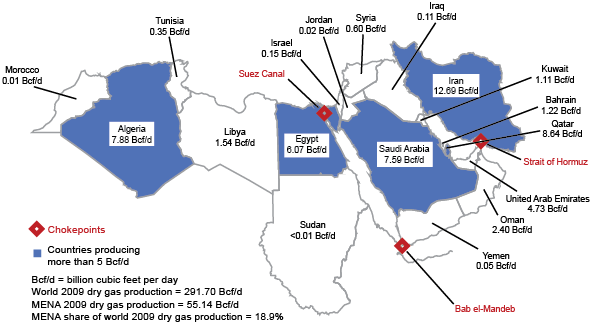
An end to the boycott potentially could open the door to the creation of a regional gas network at a time that Qatar plans to increase its annual Liquid Natural Gas (LNG) production by a whopping 64 percent to 126 million tons by 2027 and Saudi Arabia is investing up to USD$ 150 billion in becoming a major gas player.
The network would facilitate Saudi crown prince Mohammed bin Salman’s plans to streamline and diversify the kingdom’s economy. It would further enable Saudi Arabia to capitalize on the fact that Iran is hobbled by crippling US sanctions in its efforts to maintain its status as a key swing producer serving Eurasian markets.
Building a regional network may be easier said than done even if the Gulf states succeed in putting their debilitating dispute behind them. Healing the scars of the dispute that impacted people’s lives on both sides of the divide to the point where countries like Saudi Arabia and Qatar would be willing to become dependent on one another is likely to take time.
That kind of trust didn’t exist even before the Gulf crisis. Saudi Arabia initially opposed the construction of the Dolphin gas pipeline, the region’s first cross-border gas project that links Qatar to the UAE and Oman.
Qatar continued to supply the UAE with two billion cubic feet of gas a day despite the boycott, which the Emirates would have found difficult to fully replace.
An end to the boycott would significantly enhance Saudi plans announced in early 2019 to establish a natural gas network with the UAE and Oman that eventually would extend to Kuwait, Bahrain Iraq, Jordan, Egypt and possibly Palestine.
Potential moves to enhance gas cooperation in the Gulf come as the eastern Mediterranean emerges as a potential competitor, particularly in future exports to Europe, Asia and China.
Huge gas finds in Israeli, Cypriot and Egyptian waters have seen industry eyes swivel to the Levant Basin, which, according to a 2010 estimate by the US Geological Survey, could hold as much as 122 trillion cubic feet of natural gas, the equivalent of Iraq’s reserves.
Energy experts argue that Qatari gas could significantly help Prince Mohammed rationalize Saudi Arabia’s energy market at a time that climate change is casting doubts on the sustainability of oil.
The King Abdullah Petroleum Studies and Research Center estimated that Saudi Arabia burned some 900,000 barrels per day of liquid fuels for industrial use and power generation in 2017.
“Replacing this oil with natural gas could generate more than U$10 billion of additional export revenue at current market prices… Qatar is one of the cheapest ways for the kingdom to remove oil entirely from power generation,” said Andy Critchlow, head of Europe, the Middle East and Africa at S&P Global Platts.
While Qatar may be willing to assist Saudi Arabia once the boycott is lifted, its is certain to ensure that it does not become dependent on gas exports to the kingdom.
Diversification of its gas exports is a pillar of Qatar’s soft power strategy that helped shield it from the effects of the boycott.
Some Qatari officials have long believed that gaining control of Qatari gas reserves was a main objective of the Saudi-UAE boycott.
As a result, Qatar is likely to be weary of plans by Saudi Arabia to become a global gas player. The kingdom holds the world’s fourth largest gas reserves that it so far has been unable to develop.
Amin H. Nasser, CEO of Aramco, the Saudi national oil company, said earlier this year that he expected the kingdom to massively invest in the Saudi gas sector over the next ten years. Mr. Nasser envisioned gas production increasing from 14 billion standard cubic feet to 23 billion by 2030.
“We are looking to shift from only satisfying our utility industry in the kingdom, which will happen especially with the increase in renewable and nuclear to be an exporter of gas and gas products,” Mr. Nasser said.
Qatar laid down its marker a year ago when it decided to leave OPEC, the cartel of oil exporting countries, to focus on its gas exports.
Speaking at the time, Qatari energy minister Saad Sherida al-Kaabi, articulated what is likely to shape the Gulf state’s policy even if the boycott is lifted.
“We are not saying we are going to get out of the oil business, but it is controlled by an organization managed by a country,” Mr. Al-Kaabi said.
Qatar, he said, was unwilling “to put efforts and resources and time in an organization that we are a very small player in, and I don’t have a say in what happens.”
Dr. James M. Dorsey is a senior fellow at Nanyang Technological University’s S. Rajaratnam School of International Studies, an adjunct senior research fellow at the National University of Singapore’s Middle East Institute and co-director of the University of Wuerzburg’s Institute of Fan Culture

Sunday, November 24, 2019

Mending Gulf fences could weaken support for US sanctions against Iran

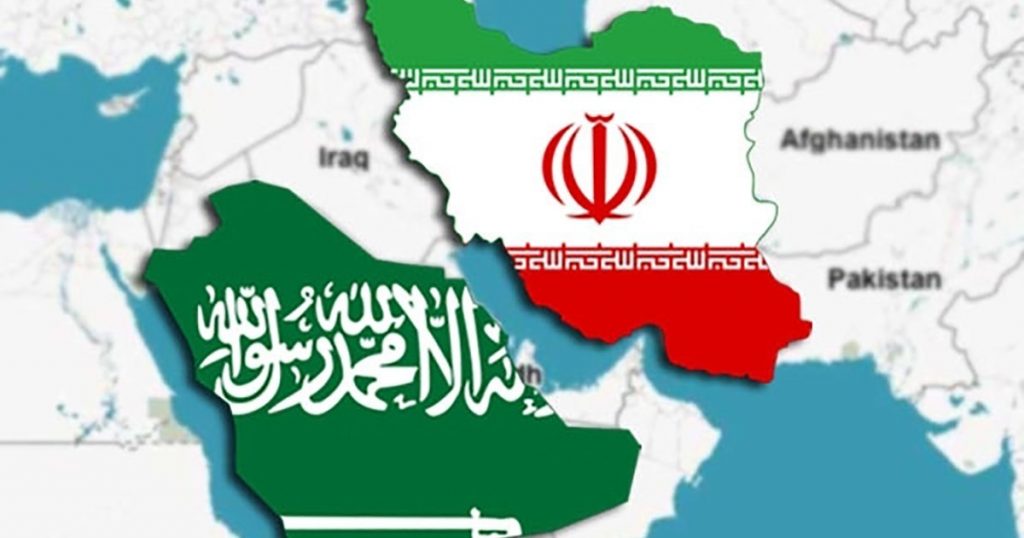
Saudi efforts to negotiate an end to the Yemen war in a bid to open a dialogue with Iran could call into question continued Gulf support for US President Donald J. Trump’s maximum pressure campaign against the Islamic republic.
Saudi officials hope that talks mediated by Oman and Britain between the kingdom and Houthi rebels will lead to a revival of stalled talks between the Yemeni insurgents and the Saudi-backed, internationally recognized government of Abed Rabbo Mansour Hadi.
Saudi crown prince Mohammed bin Salman has tasked his younger brother and Saudi deputy defense minister, Khalid bin Salman, with engineering an end to the Yemeni war as part of a broader revamp of Saudi foreign policy.
The revamp involves a return to a more cautious foreign and defense policy that embraces multilateralism after several years in which the kingdom adopted an assertive and robust go-it alone approach that produced several fiascos, including the Saudi-led intervention in Yemen 4.5 years ago.
The kingdom’s return to a more cautious approach is also intended to allow Saudi Arabia to project itself in 2020 as president of the Group of 20 (G20) and repair its image tarnished by the Yemen War, the killing last year of journalist Jamal Khashoggi, and a domestic crackdown on dissent. The G20 groups the world’s twenty largest economies.
Mr. Trump’s response to the September drone and missile attacks for which the Houthis claimed responsibility was the latest, and in some ways clearest indication, that Gulf states may not be able to count on the United States in times of crisis even though the Trump administration insisted that Iran rather than the rebels was to blame for the incident.
“That was an attack on Saudi Arabia, and that wasn’t an attack on us. But we would certainly help them. If we decide to do something, they’ll be very much involved, and that includes payment. And they understand that fully,” Mr. Trump said at the time, adopting a transactional attitude towards Gulf security.
A US official involved in Gulf policy said more recently that “the attacks made the Saudis and other Gulf states realize that escalation of US-Iranian tensions would make them targets in an environment in which the United States may not wholeheartedly come to their rescue.”
Another US official suggested that the Saudis’ “prime objective now is to lessen their involvement in Yemen, to get the Houthis to stop being some version of a proxy, so they (the Saudis) can deal directly with Iran.”
United Nations Yemen envoy Martin Griffiths told the UN Security Council this week that the number of air attacks by the Saudi-led coalition had dropped by nearly 80 percent in the last two weeks.
“We call this de-escalation, a reduction in the tempo of the war, and perhaps a move towards an overall ceasefire in Yemen,” Mr. Griffiths said. He held out the hope that a negotiated end to the war could be achieved early next year.
Saudi efforts to end the war as well as gestures towards Iran in recent months by the United Arab Emirates did not stop senior Saudi and UAE officials from adopting a hard line at this week’s Manama Dialogue.
“Appeasement simply cannot work with Iran. We hold Iran responsible for the attack on Abqaiq. We do not want war, but Iran needs to be held accountable. The question is whether Iran can abandon its ambition to propagate the revolution and respect sovereignty,” Saudi minister of state for foreign affairs Adel al-Jubeir told the Bahrain gathering. By mentioning Abqaiq, Mr. Al-Jubeir was referring to one of the two Saudi oil facilities targeted in September.
Mr. Al-Jubeir’s UAE counterpart, Anwar Gargash, added: “Germany under Hitler, the Soviet Union, Iran today: revisionist states threaten international order. The key to stability is deterrence, and steadfast resolve by the international community that Iran must change. If not, sanctions must be increased, not loosened.”
The US Treasury, expanding harsh sanctions that aim to force Iran to re-negotiate on American terms the 2015 international agreement that curbed the Islamic republic’s nuclear program, sanctioned this week Iranian communications minister Mohammad Javad Azari-Jahromi for blocking access to the Internet as part of a bid to squash anti-government protests.
The blockage made it difficult for protesters to post videos on social media, generate support for their rejection of recent fuel price hikes, and obtain reliable reports on the extent of the unrest. Amnesty International said more than 100 protesters had so far been killed by security forces.
Mr. Al-Jubeir and Mr. Gargash’s tough remarks notwithstanding, winds in the Gulf appear to be blowing in the direction of reduced tension on all fronts, including the 2.5-year old Saudi-UAE-led boycott of Qatar.
Inevitably, reducing tension will only prove sustainable if US-Iranian friction is dialled back.
Sustainability moreover will depend on some sort of regional understanding on non-aggression that would involve Iran and create the basis for a more multilateral security architecture that would embed rather than replace the regional US defence umbrella.
Bahraini foreign minister Khalid bin Ahmed Al Khalifa appeared to anticipate a more multilateral approach in his remarks at the Manama Dialogue. Rejecting an Iranian call for a security architecture that would exclusively involve regional states, Mr. Al Khalifa asserted that “Iran’s regional security proposals are fundamentally flawed, especially because they do not include external powers.”
A series of Saudi and UAE gestures in recent months, beyond the Saudi-Houthi talks, signal moves towards reducing tensions not only on the Yemeni but also the Iranian and Qatari fronts.
In the latest indication, Khaled Al Jarallah, deputy foreign minister of Kuwait, the official mediator in the dispute with Qatar, said a decision this month by the Saudi, Emirati and Bahraini national soccer teams to compete in the Gulf Cup in Qatar, despite their boycott of the Gulf state, “provides a clear indication that a breakthrough has taken place.”
Similarly, a Saudi official, in a rare gesture, told reporters in Washington earlier this month that Qatar had taken a step towards resolving the crisis by passing an anti-terrorism funding law, a key demand of the boycotting countries.
Besides withdrawing forces from Yemen, the UAE refrained from blaming Iran for the attacks on the Saudi installations and earlier explosions on vessels off the Emirati coast and sent officials to Iran to discuss maritime security.
Saudi and UAE support for the US’ maximum pressure campaign is certain to weaken if Gulf efforts to reduce tensions progress, particularly with regards to Iran. A peace process in Yemen and a Gulf dialogue with Iran would be significant steps in that direction.
Dr. James M. Dorsey is a senior fellow at Nanyang Technological University’s S. Rajaratnam School of International Studies, an adjunct senior research fellow at the National University of Singapore’s Middle East Institute and co-director of the University of Wuerzburg’s Institute of Fan Culture
Saturday, October 05, 2019

Hints Of Gulf Rapprochement: Iranian Tactics May Be Paying Off

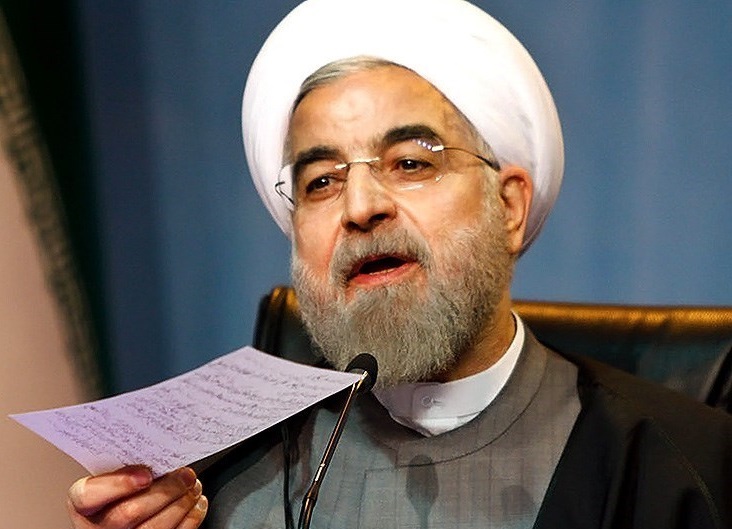
Hassan Rouhani (Wikimedia Commons)
by James M. Dorsey
Fears of a potential military conflict with Iran may have opened the door to a Saudi-Iranian dialogue against the backdrop of a rethink of US military logistics, involving at least a gradual partial relocation to the United States of command and control operations based in the Gulf for almost four decades.
The relocation does not necessarily signal a reduced US commitment to the defense of the strategic energy-rich region even if it comes amid Gulf suspicions that the United States is gradually withdrawing from the Middle East.
Nonetheless, the move, officially intended to reduce the vulnerability of US military assets to a potential Iranian strike without decreasing the United States’ operational capability, is bolstering a rethink in capitals across Eurasia, including Moscow, Beijing, Tokyo, New Delhi, Abu Dhabi and Riyadh about possible alternative, more collective and multilateral security arrangements in the Gulf.
The arrangements would involve the Gulf states, Russia, China, the US, the European Union and India as well as other stakeholders, a likely reference to Iran. By necessity, it would require a lowering of tension in the region and a degree of accommodation between Saudi Arabia and Iran.
Chinese foreign minister Wang Yi urged Gulf states “to establish a platform for dialogue and consultation” in which countries from outside the region would play a role in maintaining security in the region.”
Mr. Wang was speaking days after Iranian president Hassan Rouhani proposed a security arrangement that would be limited to countries in the region.
In a variation on the theme, Narayanappa Janardhan, a prominent Indian Gulf researcher at the United Arab Emirates’ Emirates Diplomatic Academy, suggested that a new regional security architecture should be Asian-led.
US President Donald J. Trump’s transactional approach towards foreign and defence policies in which countries are expected to shoulder their fair burden and pay for US defense services coupled with the president’s long-standing assertion that China and others dependent on energy supplies from the Gulf are free-riding beneficiaries of the US defence umbrella and his withdrawal early in his presidency from the Trans-Pacific Partnership, a regional trade pact, has sparked doubts across Asia about the wisdom of depending on the United States for energy security.
In a sense, the Gulf states and Asian nations are in a bind. The United States may no longer be reliable but despite the various calls for a new security arrangement few realistically see an alternative.
“Having just spent three days in Moscow, I’m convinced the Russians haven’t the faintest clue how to operate any architecture in the Gulf...let alone a security architecture,” tweeted Gulf scholar Michael Stephens.
Concern that military retaliation for last month’s attacks on two key Saudi oil facilities would spark a regional war have sparked a flurry of diplomatic activity and a search for non-military responses as the United States and Saudi Arabia point the finger of responsibility at Iran.
Iran has warned that military retaliation by the United States and/or the kingdom would spark a war that would spread to the Gulf, including Iranian targeting of installations in the region.
Mr.. Trump’s cautious reaction to the attacks coupled with Saudi Crown Prince Mohammed bin Salman’s stated preference for a non-military response constitute the latest developments in recent months that have opened the door to the Chinese-backed Russian proposal for a collective security arrangement that would reduce US influence in the region.
Saudi and Iranian leaders, in a gleam of hope that the two countries may be inching towards one another, expressed an interest in resolving issues politically rather than militarily.
“The political and peaceful solution is much better than the military one,” Prince Mohammed told CBS News when asked about a possible military response to the attacks on the kingdom’s oil assets.
Iranian parliament speaker Ali Larijani responded saying: “The doors of Iran are open. A Saudi-Iranian dialogue can solve many of the region’s security and political problems.”
In a further hopeful development, Saudi Arabia was reported to be considering a partial ceasefire in Yemen. Earlier, the Houthis declared a unilateral halt to the fighting. Mr. Larijani said Iran was advising the Houthis to accept whatever ceasefire was on offer.
“The Saudis have conditions before the negotiations process starts and the same with Iranians. We have liaised these conditions to each side. It is not an easy task to get together two opposite sides in terms of their ideology, sect and their alliances in the region,” said Abbas al-Hasnawi, an official in the office of Iraqi prime minister Adel Abdul Mahdi.
“Saudi Arabia’s conditions are that Iran minimise its role in Yemen and Syria and stop supporting armed groups such as the Houthis. It also asks the Syrian regime to solve its problems with the Syrian opposition groups, and to write a constitution for Syria with all parties agreeing on it,” the official said.
“If there will be a potential deal in the region that includes Yemen, Syria and Iraq, the Americans have no problem with that,” Mr. Hasnawi added.
While there is every reason to be sceptical despite the noise that Saudi Arabia and Iran are anywhere near resolving their differences, talk of dialogue and calls for a Yemen ceasefire suggest that Iran’s strategy of strategic escalation may be producing results.
Iran moved earlier this year away from its initial strategic patience response to the US withdrawal from the 2015 international agreement curbing the Islamic republic’s nuclear program to a strategy of gradual escalation.
Escalation tactics include a step-by-step breaching of the agreement and a more aggressive asymmetric military posture involving the seizing of a British vessel that was released last week, alleged attacks on tankers off the coast of the UAE, and allegedly the attacks on the Saudi oil facilities.
Said Eldar Mamedov, an advisor to the social-democrats in the European parliament’s Foreign Affairs Committee: The “sequence of events shows that, thus far, the Iranian strategy of calculated counter-escalation is working… By escalating on its own, Iran forced a number of key players to change their cost-benefit calculus.”

Friday, September 27, 2019

Saudi policy shift: A rare Trump foreign policy success

By the law of unintended consequences, US President Donald J. Trump’s mix of uncritical and cynical embrace of Saudi Arabia and transactional approach towards relations with the kingdom may be producing results.
Saudi Arabia appears to be backing away from its largely disastrous assertive and robust go-it alone foreign and defense policy posture and reverting to a more cautious approach that embraces multilateralism, seeks international backing before acting and emphasizes traditional and public diplomacy.
The kingdom’s shift towards a less reckless, more coordinated and deliberate foreign and defense policy does not necessarily mean a change in rhetoric or a greater willingness to seek negotiated solutions.
It entails a change in tone and strategy rather than a backing away from key foreign or domestic policy positions, including Saudi Arabia’s deep-seated animosity towards Iran.
Saudi state minister for foreign affairs Adel al-Jubeir made that clear, saying that Saudi Arabia had not ruled out a military response to drone and missile attacks that severely damaged two if its key oil installations.
Mr. Al-Jubeir reiterated conditions for any successful negotiation that include tough restrictions on and oversight of Iran’s nuclear program and limits to its development of ballistic missile. He further demanded fundamental changes to Iran’s foreign and defense policy.
“No nukes, no missiles and no terrorism,” Mr. Al-Jubeir said in language that was likely to appeal to a broad audience but masked the two countries’ core differences.
Nicolas Dunais, an economic advisor to Gulf governments who last year was helping Saudi Arabia establish a national risk and resilience unit, got a glimpse of Saudi Arabia’s fundamental attitude before the kingdom’s recent repackaging.
Mr. Dunais was taken aback when he suggested opening a backchannel to Yemen’s Iranian-backed Houthi rebels.
“Not only was the suggestion ignored, but it also led to questions as to my motivations and interests—as if trying to solve a national risk through dialogue was anathema, given the confidence that military might alone would be enough to crush an army of ragtag rebels fighting with AK47s,” Mr. Dunais recalls.
King Salman signalled the policy shift when he told a Cabinet meeting, days after the attacks believed to have at least been enabled by Iran, that they were “not aimed at the vital facilities of Saudi Arabia only, but also threaten the global economy.”
King Salman’s statement was as much an effort to capitalize on the attacks to garner international support and step up pressure on Iran as it was the setting of a different foreign policy tone.
Unlike the United States that put responsibility for the attacks squarely on the shoulders of Iran, Saudi spokesmen were careful to stop short of holding Iran directly responsible for the attacks. Instead, they asserted that the weapons used in the attacks were Iranian made and therefore bore some degree of responsibility.
Similarly, in sharp contrast to the kingdom’s rejection of an international investigation into last year’s killing of journalist Jamal Khashoggi and its tight control of access to war-torn Yemen, Saudi Arabia followed up on King Salman’s statement by inviting the United Nations and others to participate in a forensic investigation of the attacks that would focus on the origin of the weapons employed, and the launching spot of the drones and missiles.
Speaking to the New York-based Council of Foreign Relations, Mr. Al-Jubeir said foreign experts had already arrived in the kingdom.
Driving the point home, Mr. Al al-Jubeir said earlier that Saudi Arabia was consulting “with friends and allies about the next steps to take.”
In a further embrace of multilateralism, Saudi Arabia, days after the attacks, joined a US-led coalition to secure the Middle East’s waterways. Earlier, Britain, Bahrain and Australia pledged to participate in the coalition.
The Saudi moves were buffeted by a concerted reaching out to the media rather than relying primarily on expensive public relations and lobbying agencies to ensure that the kingdom’s voice and more cautious approach was heard and noted.
The attacks drove home the vulnerability of the kingdom’s oil assets that account for the bulk of its revenues and its international standing and a realization that Saudi Arabia could not count on unquestioned support of the international community and particularly the United States, its long-standing guardian angel.
That realization came as Saudi Arabia was working to repair damage to its image as a result of its conduct of the Yemen war; the killing of Mr. Khashoggi; the massive crackdown on activists, critics and businessmen; and its abrupt and undiplomatic response to countries like Sweden and Canada that voiced public criticism of the kingdom’s policies.
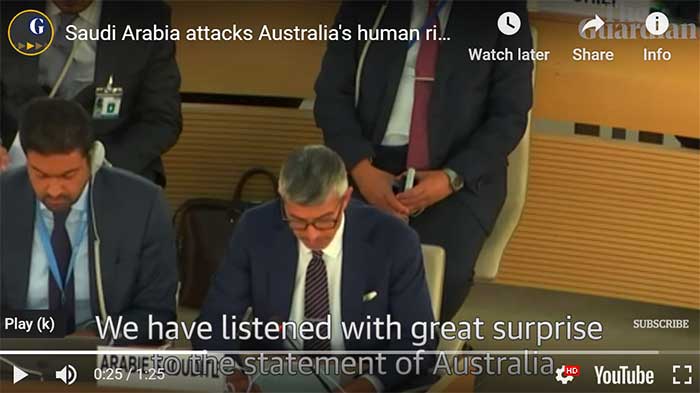
This week, Saudi ambassador to the UN Abdulaziz Alwasil didn’t mince his words, responding to Australia’s leadership of 24 Western nations in issuing a statement condemning the kingdom for a raft of human rights abuses.
Yet, in a sign of the times and in contrast to earlier incidents involving Sweden and Canada, Mr. Alwasil did not threaten disruption of trade and other forms of cooperation with Australia nor did he indicate that the kingdom may expel Australian diplomats.
Saudi Arabia’s efforts to come to grips with new realities came as the kingdom was preparing for an initial public offering by its national oil company, Aramco, that has been struggling to ensure that it meets Crown Prince Mohammed bin Salman’s target valuation of US$2 trillion.
The precarity of the kingdom’s situation was obvious for all to see when Mr. Trump made clear that his inclination was not to launch a risky retaliatory strike against Iran in response to the attacks but to tighten economic sanctions and to continue exploring a possible dialogue with the Islamic republic,
Adding insult to injury, Mr. Trump emphasized the fact that the attacks were against Saudi Arabia and not against the United States and that his administration would support a Saudi response or potentially act on its behalf against payment.
As a result, Saudi Arabia has been manoeuvring to ensure that the situation does not get out of control and that it is not put in a position in which it risks an all-out war that could prove to be devastating.
Saudi Arabia’s shift in policy approach follows in the footsteps of the United Arab Emirates that has in recent months sought to de-escalate tensions in the Gulf by distancing itself from Saudi positions.
The UAE has partially withdrawn its forces from Yemen in an effort to prevent further reputational damage, a move that sparked fighting between UAE and Saudi-backed forces in the country. It was careful not to blame Iran for attacks on tankers off the coast of the UAE believed to have been launched by Iran and reached out to the Islamic republic by sending a coast guard delegation to Tehran.
Said Rebecca Wasser, a senior policy analyst at RAND Corp., noting that the attacks had made the kingdom realize that it may be playing for stakes that are too high: “I think there has a been a calculation that the costs might be too high.”
Mr. Trump can claim some credit for Saudi Arabia’s emerging adoption of a more cautious approach. Higher costs and greater risk perceptions were likely one consequence of his transactional approach towards the kingdom.
Dr. James M. Dorsey is a senior fellow at Nanyang Technological University’s S. Rajaratnam School of International Studies, an adjunct senior research fellow at the National University of Singapore’s Middle East Institute and co-director of the University of Wuerzburg’s Institute of Fan Culture
Thursday, September 19, 2019

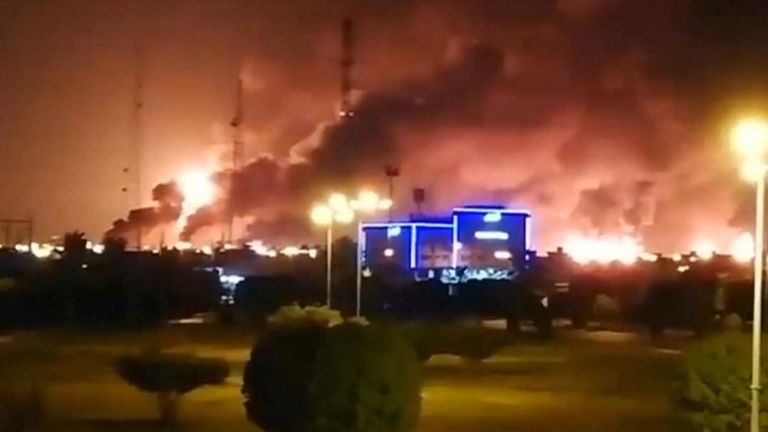
Saudi oil attacks put US commitments to the test

Neither Saudi Arabia nor the United States is rushing to retaliate for a brazen, allegedly Iranian attack that severely damaged two of the kingdom’s key oil facilities.
That is not to say that Saudi Arabia and/or the United States will not retaliate in what could prove to be a game changer in the geopolitics of the Middle East.
Yet, reading the tea leaves of various US and Saudi statements lifts the veil on the constituent elements that could change the region’s dynamics.
They also shine a spotlight on the pressures on both countries and shifts in the US-Saudi relationship that could have long lasting consequences.
With US Secretary of State Mike Pompeo visiting the kingdom to coordinate what his office described as efforts to combat “Iranian aggression in the region,” Saudi Arabia and the United States will be seeking to resolve multiple issues.
These include collecting sufficient evidence to convincingly apportion blame; calibrating a response that would be appropriate but not drag the United States and the Middle East into a war that few want; deciding who takes the lead in any military response and managing the long-term impact of that  decision on Saudi-US relations and the US commitment to the region.
A careful reading of Saudi and US responses to the attacks so far suggests subtle differences between the two. They mask fundamental issues that have emerged in the aftermath of the attacks.
The discrepancy in the initial apportioning of blame raises the question whether Saudi Arabia is seeking to avoid being manoeuvred into a situation in which it would be forced to take the lead in retaliating against the Islamic republic with strikes against targets in Iran rather than Yemen.
Political scientist Austin Carson suggests that Saudi Arabia may have an interest in at least partially playing along with Iranian insistence that it was not responsible. “Allowing Iran’s role to remain ambiguous could reduce Saudi leaders’ need to appear strong… The Saudis are reportedly unconvinced by shared US intelligence that attempts to link the attacks to Iran’s territory. Some experts suggest this may reflect a more cautious approach to escalation,” Mr. Carson wrote in The Washington Post.
Saudi Arabia’s initial reluctance to unambiguously blame Iran may have a lot to do with Mr. Trump’s America First-driven response to the attacks that appeared to contradict the Carter Doctrine proclaimed in 1980 by President Jimmy Carter.
The doctrine, a cornerstone of the Saudi-US relationship, stated that the United States would use military force, if necessary, to defend its national interests in the Gulf.
Mr. Trump’s apparent weakening of the United States’ commitment to the defense of the kingdom, encapsuled in the doctrine, risks fundamentally altering the relationship, already troubled by Saudi conduct of the more than four-year long war in Yemen and last year’s killing of journalist Jamal Khashoggi in the Saudi consulate in Istanbul.
Signalling a break with the Carter doctrine, Mr. Trump was quick to point out that the attacks were on Saudi Arabia, not on the United States, and suggested that it was for the Saudis to respond.
“I haven’t promised Saudis that. We have to sit down with the Saudis and work something out. That was an attack on Saudi Arabia, and that wasn’t an attack on us. But we would certainly help them,” Mr. Trump said without identifying what kind of support the US would be willing to provide.
Despite blustering that the United States was “locked and loaded,” Mr. Trump insisted that “we have a lot of options but I’m not looking at options right now.”
Mr. Trump’s response to a tweet by US Senator Lindsey Graham, a friend of the president who favours a US military strike against Iran, that “the measured response by President @realDonaldTrump…was clearly seen by the Iranian regime as a sign of weakness” was equally telling.
“No Lindsey, it was a sign of strength that some people just don’t understand.” Mr. Trump said.
Mr. Trump further called into question the nature of the US-Saudi defense relationship by declaring that “If we decide to do something, they’ll be very much involved, and that includes payment. And they understand that fully.”
The Saudi foreign ministry maintained, with the attacks casting doubt on the Saudi military’s ability to defend the kingdom’s oil assets and Mr. Trump seemingly putting the onus of a response on Saudi Arabia, that “the kingdom is capable of defending its land and people and responding forcefully to those attacks.”
Only indisputable evidence that the drones were launched from Iranian territory would incontrovertibly point the finger at Iran.
So far, the Saudis have stopped short of that while US officials have suggested that the drones were launched either from Iran or by pro-Iranian militias in southern Iraq.
Holding Iran responsible for the actions of a militia, whether in Iraq or Yemen, could prove more tricky given long-standing questions about the degree of control that Iran has over various groups that it supports, and particularly regarding the Houthis.
The argument could turn out to be a slippery slope given that by the same logic, the United States would be responsible for massive human casualties in the Yemen war resulting from Saudi use of American weaponry.
Military retaliation may not be immediate even if the United States and Saudi Arabia can produce convincing evidence that Iran was directly responsible.
“No knee jerk reactions to this – it’s very systematic – what happens with patience is it prevents stupid moves,” a US official said.
The United States is likely to attempt to first leverage that evidence in meetings on the sidelines of next week’s United Nations General Assembly to convince the international community, and particularly the Europeans, to drop opposition to last year’s US withdrawal from the international nuclear accord with Iran and the harsh economic sanctions that the Trump administration has since imposed on Iran.
Both the United States and Saudi Arabia will also want to use the opportunity of the UN gathering to try to ensure that the fallout of any military response is limited and does not escalate into a full-fledged war that could change the geopolitical map of the Middle East.
Said foreign policy analyst Steven A. Cook: “How the Trump administration responds will indicate whether U.S. elites still consider energy resources a core national interest and whether the United States truly is on its way out of the Middle East entirely, as so many in the region suspect.”
Dr. James M. Dorsey is a senior fellow at Nanyang Technological University’s S. Rajaratnam School of International Studies, an adjunct senior research fellow at the National University of Singapore’s Middle East Institute and co-director of the University of Wuerzburg’s Institute of Fan Culture
Thursday, August 08, 2019

Security architecture in the Gulf: Troubled prospects

Russia, backed by China, hoping to exploit mounting doubts in the Gulf about the reliability of the United States as the region’s sole security guarantor, is proposing a radical overhaul of the security architecture in an area that is home to massive oil and gas reserves and some of the world’s most strategic waterways.
Chinese backing for Russia’s proposed collective security concept that would replace the Gulf’s US defense umbrella and position Russia as a power broker alongside the United States comes amid heightened tension as a result of-tit for-tat tanker seizures and a beefed up US and British military presence in Gulf waters.
Iranian revolutionary guards this weekend seized an alleged Iraqi tanker in the Gulf of Hormuz.
Iran said the vessel was smuggling oil to an unidentified Arab country. The taking of the Iraqi ship followed last month’s Iranian seizure of the British-flagged tanker Stena Impero.
The Russian proposal entails creation of a “counter-terrorism coalition (of) all stakeholders” that would be the motor for resolution of conflicts across the region and promote mutual security guarantees. It would involve the removal of the “permanent deployment of troops of extra-regional states in the territories of states of the Gulf,” a reference to US, British and French forces and bases.
The proposal called for a “universal and comprehensive” security system that would take into account “the interests of all regional and other parties involved, in all spheres of security, including its military, economic and energy dimensions.”
The coalition, to include the Gulf states, Russia, China, the US, the European Union and India as well as other stakeholders, a likely reference to Iran, would be launched at an international conference on security and cooperation in the Gulf.
It was not clear how feuding Gulf states like Qatar, Saudi Arabia, the United Arb Emirates and Iran would be persuaded to sit at one table. The proposal suggested that Russia’s advantage was that it maintained good relations with all parties.
Chinese backing of the Russian proposal takes on added significance with some analysts suggesting that the United States, no longer dependent on Gulf oil imports, is gradually reducing its commitment despite a temporary spike in the number of US troops dispatched to the region as a result of the tension with Iran.
They suggest that the US response to Iranian racking up of tension has been primarily theatrics and hand wringing despite the Trump administration’s bellicose rhetoric. Warnings of “severe consequences” have proven to be little more than verbal threats.
“The United States is leaving the Persian Gulf. Not this year or next, but there is no doubt that the United States is on its way out… Leaders in Riyadh, Abu Dhabi, Doha, Manama, and Muscat understand what is happening…and have been hedging against an American departure in a variety of ways, including by making overtures to China, Russia, Iran, and Turkey,” said Steven A. Cooke, a scholar at the New York-based Council on Foreign Relations.
Recent tanker statistics suggest that Saudi Arabia is sending an ever-larger portion of its crude to China. On a visit to Beijing last month, UAE crown prince Mohammed bin Zayed and Chinese president Xi Jinping elevated their two countries’ relationship to that of a strategic partnership.
Perceptions of a reduced US commitment may make the Russian proposal of a multilateral approach more attractive in the short term. However, longer term banking on a continued Russian Chinese alliance could be tricky. The alliance could prove to be opportunistic rather than strategic.
That could force Gulf states to accelerate taking charge of their own security. So far, greater Gulf assertiveness has proven to be a mixed bag.
Fuelled by uncertainty about US reliability, perceived regional Iranian expansionism, and persistent popular discontent across the Middle East and North Africa, produced the debilitating Saudi-UAE intervention in Yemen, a failed Saudi effort to force Lebanon’s prime minister to accept the kingdom’s dictate, and Saudi and UAE projection of military force and commercial clout in the Horn of Africa.
A recent meeting between UAE and Emirati maritime security officials, the first in six years, as well as a partial UAE withdrawal from Yemen could, however, signal an emerging, more constructive approach.
If adopted, the Russian proposal could, however, suck China and Russia, despite having been able so far to maintain close ties to all sides of regional divides, into the Middle East’s multiple conflicts, particularly the Saudi Iranian rivalry. A multilateral approach could also bring latent Chinese Russian differences to the fore.
Dubbing the Russian Chinese alliance ‘Dragonbear,’ geo-strategist Velina Tchakarova cautions that it is s “neither an alliance nor a marriage of convenience, but rather a temporary asymmetric relationship, in which China is predominantly the agenda-maker, while Russia is mostly the agenda-taker.”
The Russian Chinese rapprochement operates in Ms. Tchakarova’s words on “the maxim ‘Keep your friends close and your enemies closer.’ A status quo relationship would remain acceptable and be further developed so long as China’s rise is not a direct threat to Russia’s strategic interests of self-determination and security along its peripheries,” including the Middle East.
The question is less whether and more when Russia starts perceiving Chinese interests as a threat to its own. One divergence could be energy given that Russia is one of the world’s major oil suppliers while China is its top importer.
By the same token, China may longer term not want to be dependent on Russia for both its imports and the arrangements that would secure them.
Said Russia and Eurasia scholar Paul Stronski referring to the sustainability of the Russian Chinese alliance: “With China now recognising it may need to strengthen its security posture…, it is unclear how long that stability will last.”
Dr. James M. Dorsey is a senior fellow at Nanyang Technological University’s S. Rajaratnam School of International Studies, an adjunct senior research fellow at the National University of Singapore’s Middle East Institute and co-director of the University of Wuerzburg’s Institute of Fan Culture