Showing posts with label Iranian port of Chabahar. Show all posts

Friday, August 16, 2019

How Tehran fits into Russia-China strategy

Iran continues to sell oil, mostly to China

By Pepe Escobar

"Information Clearing House" -  Complex doesn’t even begin to describe the positioning of Iran-Russia in the geopolitical chessboard. What’s clear in our current, volatile moment is that they’re partners, as I previously reported. Although not strategic partners, as in the Russia-China tie-up, Russia-China-Iran remain the crucial triad in the ongoing, multi-layered, long-term Eurasia integration process.
A few days after our Asia Times report, an article – based on “senior sources close to the Iranian regime” and crammed with fear-mongering, baseless accusations of corruption and outright ignorance about key military issues – claimed that Russia would turn the Iranian ports of Bandar Abbas and Chabahar into forward military bases complete with submarines, Spetsnaz special forces and Su-57 fighter jets, thus applying a “stranglehold” to the Persian Gulf.
For starters, “senior sources close to the Iranian regime” would never reveal such sensitive national-security details, much less to Anglo-American foreign media. In my own case, even though I have made several visits to Iran while consistently reporting on Iran for Asia Times, and even though authorities at myriad levels know where I’m coming from, I have not managed to get answers from Islamic Revolutionary Guard Corps generals to 16 detailed questions I sent nearly a month ago. According to my interlocutors, these are deemed “too sensitive” and, yes, a matter of national security.
Predictably, the report was fully debunked. One of my top Tehran sources, asked about its veracity, was blunt: “Absolutely not.” After all, Iran’s constitution decisively forbids foreign troops stationed on national soil. The Majlis – Iranian parliament – would never approve such a move barring an extreme case, as in the follow-up to a US military attack.

As for Russia-Iran military cooperation, the upcoming joint military exercises in the “northern part of the Indian Ocean,” including the Strait of Hormuz, are a first-ever such occasion, made possible only by a special agreement.
Analyst Gennady Nechaev is closer to reality when he notes that in the event of growing Russia-Iran cooperation, the possibility would be open for “permanent basing of the Russian Navy in one of the Iranian ports with the provision of an airfield nearby – the same type of arrangement as Tartus and Hmeimim on the Mediterranean coast of Syria.”  To get there, though, would be a long and winding road.
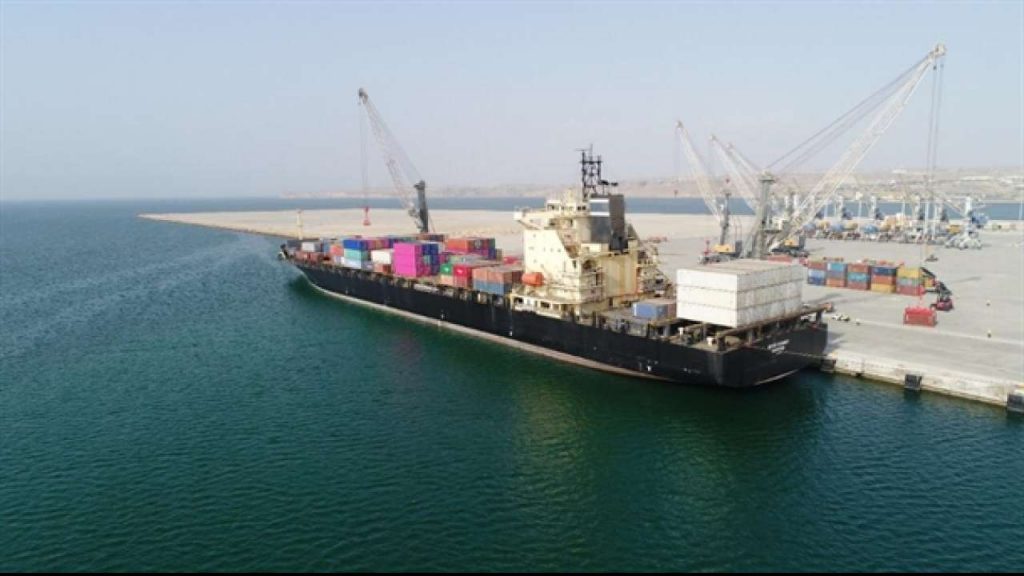
And that brings us to Chabahar, which poses an interesting question. Chabahar is a deep sea port, on the Gulf of Oman and the key plank in India’s mini-Silk Road vision. India invested a lot in Chabahar, to have it connected by highway to Afghanistan and Central Asia and in the future by rail to the Caucasus. All that so India may bypass Pakistan as far as trade routes are concerned.
Chabahar, though, may also become an important node of the New Silk Roads, or Belt and Road Initiative. India and China – as well as Russia – are members of the Shanghai Cooperation Organization. Iran, sooner or later, will also become a full SCO member. Only then the possibility “might” – and the emphasis is on “might” – open for the Russian or Chinese navy occasionally to dock at Chabahar, but still not to use it as a forward military base.

Got oil, will travel

On Iran, the Russia-China strategic partnership is working in parallel. China’s priority is energy supplies – and Beijing works the chessboard accordingly. The Chinese ambassador to the United Arab Emirates just issued a trial balloon, mentioning that Beijing might consider escorting oil tankers across the Persian Gulf and the Strait of Hormuz. That could happen independently or – the dangling carrot – as part of Washington’s Operation Sentinel, which for the moment has managed to find only one “coalition of the willing” member: the UK.
What’s actually happening right now in the Persian Gulf is way more entertaining. As I confirmed with energy traders in Doha late last month, demand for oil right now is higher than in 2018. And in consequence Iran continues to sell most of its oil.
A tanker leaves Iran with transponder off; the oil is transferred to another tanker on the high seas; and then it is relabeled. According to a trader, “If you take two to three million barrels a day off the market by sanctions on Venezuela and Iran, plus the OPEC cutbacks, you would have to see a higher price.”
There is no higher price. Brent crude remains near a seven-month low, around US$60 a barrel. This means that Iran continues to sell, mostly to China. That trial balloon floated in the UAE might well be China camouflaging its continued purchase of Iranian oil.
Iranian Foreign Minister Javad Zarif has been proving again and again his diplomatic mastery, running rings around the Donald Trump administration. But all major decisions in Iran come from Supreme Leader Ayatollah Khamenei. That also applies to Tehran’s position in relation to multi-level forms of support from the Russia-China strategic partnership.

What the past few months have made crystal clear is how Russia-China’s magnetic pull is attracting key Eurasia players Iran, Turkey and Pakistan. And make no mistake: As much as Tehran may be extremely proud of its political independence, it is reassuring to know that Iran is, and will continue to be, a definitive red line for Russia-China.

Thursday, May 23, 2019

US geopolitical interests offer Iran sanctions loophole amid mounting tension

The Indian-backed Iranian port of Chabahar has emerged as a major loophole in a tightening military and economic noose and ever harsher US sanctions that President Donald J. Trump, reluctant to be sucked into yet another war, sees as the best way to either force Tehran to its knees or achieve regime change.
Alice Wells, the State Department’s assistant secretary for South and Central Asia, said during a meeting with Afghan foreign minister Salahuddin Rabbani that Chabahar had been exempted at Afghanistan’s request.
The State Department said earlier that the exemption was granted because it was related to “reconstruction assistance and economic development for Afghanistan, which includes the development and operation of Chabahar Port.”
US officials said privately that the exemption was also a nod to India that sees Chabahar as vital for the expansion of its trade with Afghanistan and Central Asian republics.
They said it was moreover an anti-dote to the Chinese backed port of Gwadar just 70 kilometres down the Arabian Sea coast in the troubled neighbouring Pakistani province of Balochistan.
That may be a long shot, certainly as long as India like much of the rest of the world is restricted by the US sanctions in its economic and commercial dealings with Iran.
The exemption comes however as Chinese security concerns in Balochistan as well as Pakistan at large are mounting.
China’s massive US$45 billion plus Belt and Road-related infrastructure investment in Pakistan with Gwadar and Balochistan at its core has become a prime target for nationalist insurgents that has officials in Beijing worried. It has also reinforced long-standing doubts in some circles in Beijing about the viability of the project.
Dubbed the China Pakistan Economic Corridor or CPEC, China sees the project, involving a network of roads, railways and pipelines that would link Gwadar to China’s troubled north-western province of Xinjiang as a key economic component of its brutal effort to Sincize the strategic region’s Turkic Muslim population.
“China, you came here (Balochistan) without our consent, supported our enemies, helped the Pakistani military in wiping our villages. But now it’s our time… Baloch Liberation Army (BLA) guarantees you that CPEC will fail miserably on the Baloch land. Balochistan will be a graveyard for your expansionist motives,” a commander of the BLA’s Majeed Brigade said in a video message released a week after militants stormed a hilltop, highly secured luxury hotel in Gwadar, killing five people.
The BLA claimed a month earlier responsibility for an attack on a convoy on a highway leading out of Gwadar in which 14 Pakistani military personnel died and an assault last year on the Chinese consulate in Karachi.
The attacks and threats have prompted Chinese sceptics of China’s massive investment in Pakistan to express their doubts more publicly.
“Gwadar wants to be in the shipping business, but it has failed to do so. Pakistan’s economy is not very good, and this port has become very wasteful … under these circumstances, including with the hotel attack, how can China conduct its business? The roads and traffic cannot even be maintained,” said Beijing-based military analyst Zhou Chenming.
While many in Pakistan believe that the BLA enjoys Iranian support and Iranians are convinced that Pakistan enables shadowy Islamic militants who have claimed responsibility for a rare suicide bombing in December in Chabahar and attacks on Revolutionary Guards elsewhere in the Iranian province of Sistan and Balochistan, fact of the matter is that both countries are vulnerable to Baloch insurgents.
The situation on both sides of the Iranian-Pakistani border is complicated by suspicions that the violence also has links to the rivalry between Iran and Saudi Arabia and that the Baloch provinces of Pakistan and Iran could become a stage for a proxy war.
Amid reports that China has reached out to Baloch nationalist leaders in exile, Pakistani security analyst Muhammad Amir Rana cautioned that the exiles may no longer be in control.
“The new leadership of the Baloch insurgency largely hails from the educated middle class with urban backgrounds and is not hiding in Europe; therefore, it does not face the sort of constraints that exiled Baloch leaders do vis-à-vis Iran,” Mr. Rana said.
Mr. Rana noted that Iran’s influence in Pakistani Balochistan was visible in oil smuggled across the border, Iranian products in grocery shops and the supply of electricity to the coastal strip of Makran that includes Gwadar.
“For Pakistan, the security cost of CPEC is increasing which could frustrate the Chinese as well as foreign and local investors,” Mr. Rana warned.
For now, China confronts a more serious challenge in Gwadar, Balochistan as well as other parts of Pakistan that are struggling with un-related incidents of political violence compared to India and Chabahar.
That could change if the Saudi Iranian component of the low level Baloch insurgency spins out of control with the escalating stand-off between the United States and Iran.
Iran appears to have pinned its hopes that Chabahar will be shielded from the impact of regional tensions on the perceived US geopolitical need to protect India’s interest in Afghanistan and Central Asia.
Said Pir Mohammad Mollazeh, an Iranian Afghanistan and Central Asia scholar: “US long-term geopolitical interests, due to the lack of relations with Iran, require India to maintain its position in the region and protect India as a partner in Central Asia… Chabahar port is considered to be a very important and strategic which is an opportunity for our country to enable Iran to reduce its sanctions by means of economic exchanges in Chabahar.”
Dr. James M. Dorsey is a senior fellow at Nanyang Technological University’s S. Rajaratnam School of International Studies, an adjunct senior research fellow at the National University of Singapore’s Middle East Institute and co-director of the University of Wuerzburg’s Institute of Fan Culture.