Showing posts with label Malaysia. Show all posts

Thursday, December 19, 2019

Kuala Lumpur summit points to split in Muslim world

Hasan Alhasan
By HASAN ALHASAN


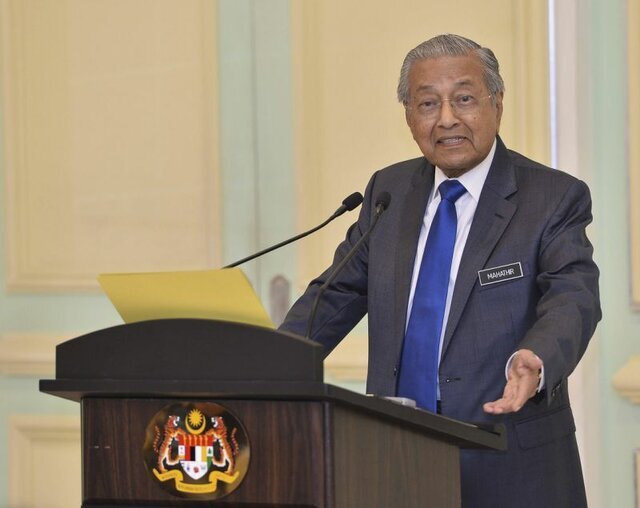
The Kuala Lumpur Summit beginning on Wednesday will bring together the leaders of Malaysia, Indonesia, Pakistan, Turkey, Iran and Qatar with 450 Muslim intellectuals from around the world. It will also raise eyebrows. An initiative of Malaysia’s outspoken prime minister, Mahathir Mohamad, the summit’s guest list indicates a clear preference for Muslim states of a certain type: supporters of political Islam who portray themselves as champions of global Muslim causes.
Yet the attempt to consolidate such a group will face stiff resistance from a deeply divided Muslim world. And its credibility as a champion of global Muslim causes ranging from Kashmir in India to Xinjiang in China, especially those that clash with members’ national interests, will be put to the test.
Conceived on the sidelines of the United Nations General Assembly in New York this year, the summit emerged out of frustration with the underwhelming response to India’s clampdown in Kashmir. When India announced its revocation of Jammu and Kashmir’s special status and placed the region under lockdown, the Organization of Islamic Cooperation deplored the move and echoed Pakistan’s call for a UN-supervised plebiscite.
However, the OIC’s criticism was hollowed out by a lack of consensus among its members on how best to deal with the issue. So while Pakistan, Turkey and Malaysia locked horns with India over Kashmir at the UN, Indian Prime Minister Narendra Modi toured Bahrain and the United Arab Emirates, where he was feted. Despite being a core member of the OIC’s contact group on Kashmir, Saudi Arabia took a subdued approach to the issue outside the organization, calling on India and Pakistan to resolve their disputes peacefully. To Pakistan’s dismay, so did the majority of Muslim states.
Beyond the issue of Kashmir, however, the summit also reflects the violent split between supporters and opponents of political Islam across the Muslim world. Muslim-majority states have backed rival sides in civil conflicts that have often pitted Islamists against secular nationalist forces in the Middle East.
In Egypt, the UAE and Saudi Arabia backed the military’s move in 2013 to oust president Mohamed Morsi, a Muslim Brotherhood leader whose government enjoyed Qatar’s and Turkey’s patronage. In Libya, both Egypt and the UAE have lent support to Khalifa Haftar and his Libyan National Army in the onslaught against Qatari/Turkish-backed Islamist groups. Iran has long thrown its weight behind Hezbollah in Lebanon, Hamas in Gaza and more recently the Houthis in Yemen, while recruiting thousands of young men into Shiite religious militias to wage war on its behalf in Syria and Iraq.
Amid such differences, then, Malaysia’s attempt at rallying the global patrons of political Islam faces a host of challenges.
The gathering cannot claim to be representative of the wider Muslim world. The six states invited to the summit make up a fraction of the 49 states represented at the OIC. They include not a single African or Arab state apart from Qatar
For starters, the gathering cannot claim to be representative of the wider Muslim world. The six states invited to the summit make up a fraction of the 49 states represented at the OIC. They include not a single African or Arab state apart from Qatar. Indonesia, the world’s largest Muslim nation, was initially put forward as one of the summit’s key sponsors. However, its name has disappeared from recent press statements, casting doubt on its participation.
In addition, key Muslim countries, including Saudi Arabia – which considers itself a natural leader of the Muslim world – Egypt, and others will also view the summit with suspicion. The divisive nature of the summit may eventually temper the enthusiasm of Pakistan, Indonesia and Qatar. All three are likely to want to avoid antagonizing Saudi Arabia.
According to a former senior Pakistani official to whom I spoke, Pakistan felt obliged to honor Malaysia’s invitation after the latter’s vocal stand on Kashmir. Pakistan’s participation, he insisted, is not meant as a challenge to Riyadh, which Islamabad considers a strategic partner. In February, Saudi Crown Prince Mohammad bin Salman visited Islamabad, where he pledged US$20 billion in investments.
Indonesia also is keen on attracting investments from Saudi Arabia. Riyadh has announced plans to invest $6.7 billion, a figure that Jakarta would like to see increase. In a signal of closer ties, the two sides signed in 2014 their first ever defense cooperation agreement. Saudi King Salman bin Abdulaziz led a delegation of 800 people on a visit in 2017, injecting further momentum into the relationship.
Saudi Arabia and Qatar have also made progress toward mending ties in recent weeks. Although diplomatic relations remain severed, Qatar’s foreign minister made an unannounced visit to Riyadh in November. Saudi Arabia, the UAE and Bahrain have also dispatched teams to the Arabian Gulf Cup soccer tournament in Doha, although a complete resolution to the dispute still seems elusive.
Finally, the summit’s sponsors face a significant test of their credibility. In contrast to its stand on Kashmir, Malaysia has tiptoed around China’s treatment of Uighur Muslims out of fear of drawing Beijing’s ire. During a trip to Xinjiang in July, Malaysia’s Islamic affairs minister, Mujahid Yusuf Rawa, drew criticism for describing China’s controversial re-education facilities as “training centers.” In September, Mahathir admitted that Malaysia could not afford to antagonize China over the Uighurs.
Likewise, Turkey has dialed down its criticism of China after a visit by Prime Minister Recep Tayyip Erdogan to Beijing this year. Meanwhile, Pakistani Prime Minister Imran Khan went so far as to deny knowledge of the Xinjiang issue in an interview with the Financial Times in March. Iran has also taken a soft line on both India and China, on which it relies to weather US sanctions.
Geopolitical realities impose considerable costs on would-be champions of global Muslim causes. The Muslim world is split, often violently, on the question of political Islam. The exclusion of Muslim heavyweights such as Saudi Arabia will inevitably dampen the summit group’s leadership claims, while Muslim-majority states keen on standing up to India over Kashmir, or China over Uighur Muslims, face the prospect of serious repercussions.

Sunday, December 15, 2019

Malaysian PM calls U.S. sanctions on Iran a ‘form of dictatorship’

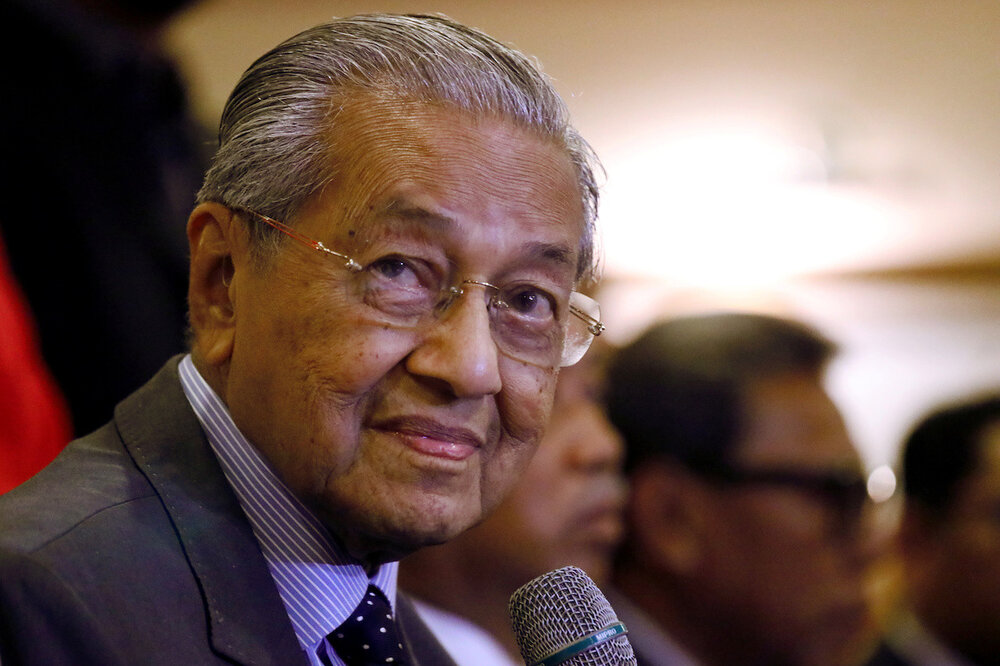
Malaysian Prime Minister Mahathir Mohamad has said that Washington’s sanctions against Iran are a “form of dictatorship”.
“We don’t believe in applying sanctions to force countries to accept certain ideologies and to change governments. It is not only the particular country that will suffer, but all the trading partners also will suffer economically. In a way, it is a form of dictatorship. A dictatorship that is worse than that in a country, it is international,” he told Aljazeera in an interview published on Sunday.
He added that Malaysia lost out on a big market when the U.S. applied sanctions against Iran.
He also discussed the state of the global economy and its interconnectedness. He argued the U.S. is leading the world in the wrong direction when it comes to multilateralism.
“Becoming very nationalist is good. But not at the expense of other people. Every country should care about itself but that needing to be protective or secure doesn’t mean confronting others. It’s better if we learn to work together,” he said. 
“We were going a long way towards multilateralism. But now nationalism seems to affect many countries,” he added.
According to Reuters, Mahathir said during a speech at the Doha Forum on Saturday that the U.S. sanctions on Iran violate the United Nations charter and international law.
“Malaysia does not support the reimposition of the unilateral sanctions by the U.S. against Iran,” he said.
“Such sanctions clearly violate the United Nations charter and international law; sanctions can only be applied by the United Nations in accordance with the charter,” he added.
U.S. President Donald Trump quit the 2015 nuclear deal in May 2018 and introduced the harshest ever sanctions on Iran as part of the “maximum pressure” campaign against Iran.

Monday, November 04, 2019

Malaysia says U.S. sanctions against Iran are against law

Malaysian Prime Minister Mahathir Mohamad said on Sunday that the United States’ sanctions against Iran are unlawful.
“There is no provision in the United Nations that a country which is dissatisfied with another country can impose sanctions on that country and other countries trading with that nation,” Free Malaysia Today quoted the prime minister as saying in a press conference on the sidelines of the 35th ASEAN Summit and Related Summits.
“When you apply sanctions, it is against the law,” he noted.
He said, “The sanctions don’t apply to one country alone,” he said, adding that Malaysia is now being sanctioned.
Reuters reported on Wednesday that banks in Malaysia were closing the accounts of Iranian individuals and companies because of U.S. sanctions.
According to the news agency, some Iranians and one embassy official said that there were “mass closure” of Iranians’ bank accounts in the Southeast Asian country in recent months.
The Malaysia’s prime minister told reporters on Wednesday his nation was being forced to “make it difficult” for Iranians to live normal lives in the country.
“Our ties are very good with Tehran, but we face some very strong pressures from certain quarters, which you may guess,” Mohamad said, without naming where the pressure was coming from.
“We are forced to do this because if we don’t, they will close our banks abroad. It’s a kind of bullying by very powerful people,” he said.
Foreign Ministry spokesman Abbas Mousavi said on Thursday, “Sadly, a number of Malaysian banks have placed a series of restrictions on opening accounts and offering banking services for Iranians, under the influence of the United States’ economic terrorism.”
“In this regard, our country’s embassy in Malaysia has put the issue on the agenda in constant and intensive arrangements with Malaysia’s government bodies and banking officials, and multiple negotiations have been held with the relevant authorities, and figuring out a solution and resolving the problem is still on the agenda,” he added.
Mousavi also said the banking restrictions have created problems for the presence and activities of Iranians in Malaysia, particularly the participation of Iranian elites and university students in Malaysia’s scientific and academic sphere as well as those involved in the trade and business sector.
“We hope that the friendly state of Malaysia would work out solutions to settle the problem, considering the Malaysian government’s goodwill and clear and recognized stances on the unilateral (U.S.) sanctions, and that the problems that have arisen in Iranians’ bank accesses would be resolved with consultation and on the basis of the legal frameworks available for the issue,” he added.

Friday, October 11, 2019

Hamas considers Malaysia its gateway to Asia

Dr Adnan Abu Amer
Senior Hamas official Khaled Meshaal [File photo]
In recent months, Malaysia has witnessed a series of successive visits by high-ranking delegations from Hamas, indicating the growing ties between these two parties at a time when the movement is facing a tight political siege by many Arab countries.
Hamas’ most recent visit to Malaysia late last month came under the chairmanship of its former head of office, Khaled Meshaal. The program was crowded with meetings between Hamas’ leaders, the Malaysian government and opposition political leaders, in a rare scene among the movement’s visits to various countries.
Hamas started its visit to Malaysian capital Kuala Lumpur by meeting with Prime Minister Mahathir Bin Mohamad, as well as then Interior Minister and Head of the Malaysian United Indigenous Party (Bersatu Party), Muhyiddin Yassin, and Defense Minister Mohamad Bin Sabu.
The group also met with Head of the People’s Justice Party, Anwar Ibrahim, Head of the opposition United Malays National Organisation (UMNO) Party, Ahmad Zahid Hamidi, Leader of the Malaysian Islamic Party Abdul HadiAwang, Minister of Federal Territories Khalid Abdul Samad, and Deputy Minister of Foreign Affairs Marzuki Yahya.
In his highly-publicised meetings, Meshaal discussed the challenges the Palestinian people are currently facing, among which are Israeli violations against Jerusalem, the expansion of illegal settlements in the occupied West Bank, and the Gaza Strip’s ongoing siege.
Hamas’ delegation also discussed with its Malaysian hosts the “deal of the century”, considering it a plan to undermine the Palestinian cause. The visit resulted in positive outcomes, the most important of which was Malaysia’s offering of 140 scholarships for Palestinian students to attend 13 Malaysian universities, at a cost of $3 million.
A long history of relations
Prior to Meshaal’s visit, Head of Hamas’ Political Bureau Ismail Haniyeh contacted Prime Minister Bin Mohamad in January to emphasise the importance of the bilateral relationship between Malaysia and Palestine in general and Hamas in particular. He praised Malaysia’s support for the Gaza Strip and pointed to Mahathir’s speech at the United Nations – which held Israel responsible for the problems in the Middle East – as well as commended the prime minister’s commitment to the Palestinian cause and Malaysia’s rejection of normalisation with Israel.
Chairman of the political bureau of Hamas, Ismail Haniyeh speaks during the funeral of Palestinian teenagers Louay Kahil and Amir Al-Namara, who were killed in an Israeli air strike at a mosque during their funeral in Gaza City on 15 July, 2018 [Ashraf Amra/Apaimages]
In July 2017, a delegation of Hamas leaders concluded a series of meetings with Malaysian government officials and party leaders. The delegation was headed by senior representative of Hamas in Lebanon, Osama Hamdan, who met Malaysian Deputy Prime Minister Ahmad Zahid Hamidi. Both discussed the developments of the Palestinian cause and Malaysia’s support for the Palestinian people.
The delegation also held a meeting with the Secretary General of the ruling UMNO party, Minister Tengku Adnan Mansor, as well as a meeting with Head of the Malaysian Islamic Party and Vice President of the International Union of Muslim Scholars, Sheikh Abdul HadiAwang. In addition, another meeting was held with the leadership of the National Mandate Party and representatives of Malaysian civil society and NGOs.
Hamas’ delegation also participated in the closing ceremony of the Fourth World Assembly of the Unity of the Nation, organised by the Malaysian Islamic Party in the city of Kota Bharu in the north-eastern state of Kelantan. Hamdan delivered a public speech attended by tens of thousands of people.
In December 2016, Hamas leaders participated in UMNO’s annual general conference. There they met with government and local officials, as well as representatives of civil society organisations. The Malaysian officials were briefed on the latest developments in Palestine, discussing ways to support the Palestinian people and praising the bilateral relationship between the movement and the party.
In December 2015, Meshaal arrived in Kuala Lumpur heading a delegation of the movement’s leadership, at the official invitation of the Malaysian ruling party to attend its annual conference. The delegation’s program included official and popular visits and a speech by Meshaal.
Hamas’ first visit to Malaysia was in December 2013, during which a senior Hamas delegation led by Meshaal held official meetings with the Malaysian Prime Minister and the foreign affairs and interior ministries. The delegation also participated in a key speech at the International Forum of the ruling party, as well as another speech at the International Islamic University in Malaysia, in the presence of a large number of academics and members of the Arab and Islamic communities.
Popular support for Palestine
Muslim Imran, a well-known Palestinian figure living in Malaysia for 15 years, runs a Palestinian organisation in the country and is one of the key figures behind Malaysia’s relationship with the Palestinians. Malaysia’s support for Palestine has been strong historically, with thousands of Malaysians demonstrating throughout the country condemning any Israeli aggression against Palestinians.
During the 2014 Israeli assault on Gaza, one Malaysian village named its bridge after Gaza; the Palestinian flag has been raised in the village since 2008. The Malaysian Youth and Sports Minister, Khairy Jamaluddin, changed the program of his official visit to the UK during the 2014 war, instead taking part in a march through UK capital London to condemn the assault.
Rescue workers search for victims after air strikes hit Gaza during the 2014 Israeli offensive against Gaza [Ashraf Amra/Apaimages]
Then Prime Minister of Malaysia, Mohammad Najib Razak, arrived in Gaza in January 2013, shortly after the 2012 war Israel waged on the already-besieged Strip. He expressed regret over the assassination of Hamas military commander Ahmed Jabari during the war and laid the foundation stone for one of the buildings bombed by the Israeli army, which was at that time being reconstructed.
Malaysian Minister of Domestic Trade and Consumer Affairs, Ismail Sabri, announced the closure of his account at HSBC and shared footage of him cutting up his bank card, in a move to denounce the bank’s closure of accounts belonging to advocates of the Palestinian cause. Malaysian delegations also continued participating in the convoys aimed at breaking the siege on Gaza, as well as contributing to a number of reconstruction projects in Gaza such as the Indonesian hospital, mosques and others.
Former Malaysian Deputy Prime Minister, Ahmad Zahid Hamidi, inaugurated the “Save Jerusalem” campaign at the largest mosque in Putrajaya – Malaysia’s federal administrative centre – with the participation of 27 representatives belonging to Islamic and human rights organisations.
The Malaysians’ support and advocacy campaigns ranged between demonstrations, lectures, conferences and fundraising for Palestinians. In 2014, Mahathir Mohamad – who was outside the government at that time – launched an international tribunal in Kuala Lumpur to try Israeli war criminals for their crimes in Palestine and Lebanon.
Looking forward
Relations between Hamas and Malaysia have accelerated in recent years in an unmistakable way, given that the Malaysian government’s hosting of delegations of the Resistance Movement repeatedly reflects a clear recognition of its role and activities as a legitimate resistance group.
Hamas considers these official communications with Kuala Lumpur an opportunity to encourage Malaysia’s role at the regional, Islamic and international levels in supporting the Palestinian cause, lifting the siege on Gaza and ending Israeli violations in Jerusalem and the West Bank.
All this means that there are close, strong ties that link Malaysia to the Palestinian issue in general and Hamas in particular. This prompted Mahmoud Al-Habbash, the Palestinian justice judge who is close to Palestinian President Mahmoud Abbas, to invite Malaysia, during his visit in late May, to support reconciliation with Hamas and use its influence in the movement to put an end to division between the Palestinian factions.
On the other hand, Israel is not satisfied with the thriving relations between Malaysia and Hamas. This sense of discontent was manifested in the assassination of Engineer Fadi Al-Batsh, a Hamas military leader in Kuala Lumpur in April 2018, on charges of manufacturing rockets.
Israel used the assassination of Al-Batsh to create an atmosphere of anxiety among Hamas cadres in Malaysia. It regularly refers to what it calls the Malaysia-Turkey-Hamas axis which, Israel claims, recruits Palestinian academics from the movement to study and receive training, before going back to the occupied Palestinian territories to build military infrastructure and sleeper cells which can be summoned when needed.
The Malaysian government denies these Israeli accusations and confirms that its assistance to the Palestinians is limited to political and humanitarian needs, through the Zakat committees and financial aid provided to the Palestinians.
Finally, it can be concluded that this series of visits by Hamas leaders to Malaysia, and the presence of clear Malaysian imprints in the field of humanitarian assistance in the Gaza Strip, clearly indicate the desire of the two sides to strengthen their bilateral relations.
The thriving relations between Hamas and Malaysia raise Israeli objections and uneasiness towards some countries in the region, which want to continue to besiege Hamas politically. This is especially relevant in view of the fact that Malaysia’s positions are consistent with influential countries in the region, leading to the establishment of a growing axis that consists of Qatar, Turkey and Iran. All these countries share strong and close relations with Hamas.

Monday, September 30, 2019

Malaysian PM: Israel is the origin of modern terrorism

‘Israel can break all the international laws and norms of the world and it will continue to be supported and defended…There is no justice in the world,’ he said.
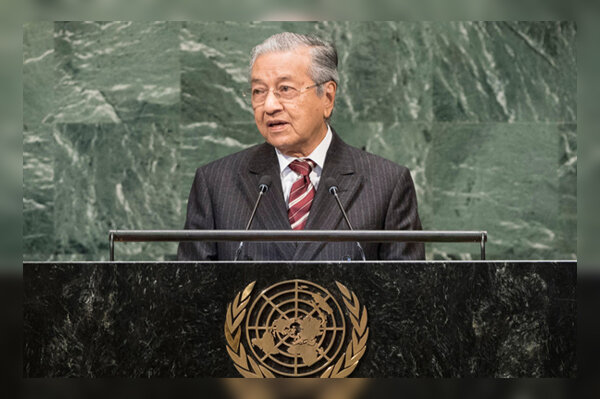
The creation of Israel by seizing Palestinian land and expelling its 90 per cent Arab population is the root cause of terrorism, the Prime Minister of Malaysia Dr Mahathir Mohamad said in his speech at the UN, reports Malay Mail.
The Malaysian PM stated that since the creation of Israel “…wars have been fought in many countries, many related to the creation of Israel. And now we have terrorism when there was none before, or at least none on the present scale.”
Making his comments at the General Debate of the 74th UN General Assembly in New York, he added: “Military action against acts of terrorism will not succeed. We need to identify the cause and remove it. But the great powers refuse to deal with the root cause.”
General view of the 74th session of UN General Assembly at UN Headquarters in New York, United States on September 24, 2019 [Erçin Top / Anadolu Agency]
The prime minister added that Malaysia accepts the state of Israel “as a fait accompli”, adding:
…Malaysia cannot accept the blatant seizure of Palestine land by Israel for their settlements as well as the occupation of Jerusalem by Israel. 
The Palestinians cannot even enter the
 settlements built on their land….
He went on to add: “Because of the creation of Israel, 
there is now enmity towards the Muslims and Islam. 
Muslims are accused of terrorism even if they did 
nothing. Muslim countries have been destabilised 
through the campaign for democracy and regime 
change. Muslims everywhere have been oppressed, 
expelled from their countries and refused asylum.”
“Thousands have died at sea and in the severe winters. One cannot deny that in the past there were no massive migration. Now the wars and instability due to regime change have forced them to run away from their countries,” he added.
Dr Mahathir also said that the application of the rule of law has been selective.
He said: “Friends may break any law and get away scot-free. Thus, Israel can break all the international laws and norms of the world and it will continue to be supported and defended. The unfriendly countries can do nothing right. There is no justice in the world.”

Sunday, September 29, 2019

Malaysian PM slams U.S. unilateral sanctions as ‘privilege of the rich and powerful’

“The world is helpless,” Mahathir says

TEHRAN – Malaysia’s Prime Minister Mahathir Bin Mohamad has criticized the United States for trying to force all countries to stop doing business with Iran.
“We do not know under what laws sanctions are applied. It appears to be the privilege of the rich and the powerful,” Mahathir said, addressing the 74th session of the United Nations General Assembly in New York on Friday.
According to the AFP, the outspoken 94-year-old leader urged greater international control of sanctions, saying, “If you want to have sanctions, let us have a law to govern them.”
“The fact is that when sanctions are applied to a country, other countries get sanctioned as well. Malaysia and many others lost a big market when sanctions were applied on Iran.”
U.S. President Donald Trump pulled out of the Iran nuclear deal, formally known as the Joint Comprehensive Plan of Action (JCPOA), in May 2018. He has since imposed more than 1,000 individual sanctions on Tehran, which culminated with an oil embargo this May. Zarif himself is also sanctioned.
Earlier this month, the U.S. Department of the Treasury slapped sanctions on the Central Bank of Iran and the country’s sovereign wealth fund, a move Trump described as the “highest level of sanctions”.
Speaking to reporters after his address, Mahathir acknowledged that Malaysian firms had little choice but to comply for fear of being hit by U.S. sanctions.
“Generally, the world is helpless,” he said.
Mahathir also renewed his criticism of the Trans-Pacific Partnership, an 11-nation trade pact that includes Malaysia but from which Trump pulled the United States.
“Rich companies had given themselves the power to sue governments. The terms of the agreement were drawn up by them -- and they are not all like Bill Gates, who spends some money on charity,” he said.
“Most are bent on exploiting the power money gives them,” he said.

Wednesday, July 17, 2019

Muslim Unity Seminar in Malaysia Cancelled After Bomb Threat!

Crescent International


Extremism seems to have afflicted the gentle society of Malaysia as well.
A seminar slated for July 13 to promote Muslim unity had to be cancelled due to ‘security reasons’, according to the organizers.
The popular Malaysian web portal, First Malaysia Today broke the news on July 10.
To be hosted by the International Institute of Advanced Islamic Studies (IAIS), the seminar’s theme was the Amman Message.
The other organizers of the seminar were the International Movement For A Just World (JUST) and the consultancy firm Zubedy.
The organizers put out the following message on their website announcing the cancellation:
“CANCELLATION OF THE AMMAN MESSAGE SEMINAR
We regret to inform you that the “Amman Message Seminar” which was scheduled on 13 July 2019 has been cancelled due to unforeseen circumstances.
We sincerely apologise for any inconvenience caused and we thank you for your understanding.
Best Regards,
International Institute of Advanced Islamic Studies (IAIS) Malaysia”
Signed by more than 200 leading Islamic scholars of the Muslim world in 2004, the Amman Message affirmed the validity of eight Schools of Thought in Islam including Shias, Salafis and the followers of mysticism. It also called for Muslim unity.
Muslim unity, however, is something the hardcore Wahhabis do not want. They denounce anyone that does not follow their obscurantist views as ‘deviants’ or even ‘kafirs’ and feel justified in killing them.
The Malaysian seminar was cancelled due to bomb threats made on Facebook.
The police in Kuala Lumpur said a person named Amirol Md Zain made the threat on Facebook on July 6.
The message said: “We are bombing this place.”
What action the police have taken against such blatant threat to public safety is not clear yet. What is known is that anti-Shia sentiment has risen alarmingly in Malaysia in recent years.
The former Malaysian government under Najib Razak that was ousted from power in 2018 actively promoted anti-Shi‘ism.
Najib was very close to the Saudis and received hundreds of millions of dollars that he pocketed.
He is facing a raft of corruption charges including pilfering more than $1 billion through the 1 MDB scheme. His trial is set to begin on August 19.
Speakers at the Seminar included Muslim scholar Hashim Kamali, who is also the CEO of IAIS, academics Osman Bakar and Kamar Oniah Kamaruzaman, and prominent thinker Chandra Muzaffar.
The seminar was to have been officiated by Minister in the Prime Minister’s Department Dr. Mujahid Yusof Rawa.
Its aim was to promote and spread the message of the 2004 declaration and to “develop practical and implementable action plans to realize its core principles”, the organizers said.
Among the signatories of the Amman Message was Jordan’s King Abdullah II, whose government hosted the seminar 15 years ago.
Malaysian personalities who signed the message included former Prime Minister Abdullah Ahmad Badawi, PKR president Anwar Ibrahim as well as former ministers Khairy Jamaluddin and Shahidan Kassim.
Will these personalities in Malaysia also now face threats from the extremists?

Monday, February 18, 2019

Mahathir Confirms Malaysia’s Commitment to Belt and Road

Written by Adam Garrie 


Veteran Malaysian Prime Minister Mahathir Mohamad has confirmed that he shall lead his country’s delegation at April’s Belt and Road Summit in China. When commenting no the inaccurate claims that he is pivoting Malaysia away from its Chinese partner, Mahathir stated:
“We find that China is now the biggest trading partner for Malaysia. It is also a big investor in Malaysia. Our policy is of course to retain and improve the relationship between Malaysia and China”.
This further affirms the deep and broad relationship between Malaysia and China, one which has both a modern and ancient foundation.

Long before the Federation of Malaya gained independence from the British Empire in 1957, the territories comprising modern Malaysia had a long, fruitful and peaceful relationship with multiple Chinese states. In keeping with China’s friendly trading ties with the majority of south east Asian sovereign entities throughout the centuries, Malaysia’s predecessor states enjoyed cordial relations with China on the basis of mutually beneficial trade.In the early 15th century, the Malacca Sultanate which included Peninsular Malaysia, Singapore and a portion of Sumatra in modern Indonesia, signed an important security pact with China’s Ming Dynasty. According to the protection agreement, the Ming provided full military protection to the Malacca Sultanate. During Portugal’s invasion of Malacca in the early 16th century, it was Ming forces that fought against the European colonial power and for a time succeeded in holding off the first of many European subjugations of the territories that would become Malaysia.
Earlier this year, Malaysia’s veteran Prime Minister, the 93 year old Mahathir Mohamad spoke of this long history of friendship with China and explained how this forms the basis of warm relations in 2019. Mahathir stated:
“They asked me, how do you feel about China? I told them Malaysia has been maintaining ties with China. We have bilateral trade and we have been friendly to China”.
He continued,
“There are many Chinese in our country, but China has never colonised us. Who should we be fearful of? China or Europe?
Many Chinese nationals know me. They see me as China’s good friend”.
The Malaysian Prime Minister then turned to an issue of contemporary China-Malaysia cooperation that has been widely misrepresented ever since Mahathir returned to a leadership position in 2018. About these matters, he stated:
“Just because the Malaysian government asked to review the East Coast Rail Link (ECRL) and cancel the Sabah and Malacca natural gas pipe project, then I am seen as unfriendly?
The Chinese government is aware that we are facing serious financial issues. I told them that we can’t afford (those projects). This is not whether we want it or not. These are bad projects in the first place and we can’t afford them”.
It is well known that the ECRL  (which is set to go forward but on a smaller and more manageable scale) was one of the many bloated vanity projects instigated by Mahathir’s notoriously corrupt predecessor Najib Razak. In cancelling the ECRL as initially conceived along with the gas projects in Sabah and Malacca, Mahathir was showing no malice towards China, but was instead trying to reign in the fiscally irresponsible policies of Najib. This became especially important as global financial trends exerted pressure on many emerging markets throughout 2018.
While projects in which China participates are always aimed at creating win-win outcomes for all partners, it is also true that China approaches its partners not with a patronising colonial style suspicion, but from a businesslike position of mutual respect. Therefore, if a partner nation of China seeks to use Chinese expertise to build something extravagant, it is not China’s duty to meddle in the sovereign decision making processes of another nation. It is likewise not China’s business to police corruption outside of China’s borders. That is of course the job of individual nations and this is what Mahathir’s coalition was elected to do for Malaysia.
Beyond this is the dangerous and defamatory “debt trap” myth regarding Belt and Road connectivity projects. Mahathir’s statement likewise dispels this myth by explaining that the decisions his government took in respect of ECRL and the gas projects were internal responses to the poor foresight of the previous government, as well as being more holistic responses to overall geo-economic trends.
The “debt-trap” myth is flawed not only in terms of the fact that it is based on exceptions which prove the rule that most Chinese projects throughout Asia and Africa result in win-win outcomes for both parties, but the myth is also flawed in the sense that it fails to grasp real world realities beyond the ideological and purely theoretical. In life like in geopolitics there is no such thing as a free lunch. While China is more generous in terms of loans, investments and cash injections than most other wealthy nations, it is not in any nation’s interest to rebuild entire continents without getting anything in return.
In this sense, China is engaging in normal business practices that are international standards when it comes to expecting to be paid back on loans that it readily gives to nations aspiring to further develop their economies and infrastructure and does so at levels that are history making in terms of their forward thinking generosity. Of course, instead of offering loans and other investment schemes or otherwise giving away money for free, China could simply come to a foreign state, build infrastructure and keep 100% of the profits from such projects forever more. This however would totally exclude China’s partner nations from the project and would amount to little more than soft imperialism.
Instead, China seeks to cultivate win-win partnerships by including the partner nation in question at all stages of a joint project. In this sense, China is willing to share the benefits and the responsibilities as is normal in a genuine partnership of any kind. Implicit in such relationships is the reality that every now and then one side will negate some of its responsibilities. In the over-hyped case of Sri Lanka, the government simply bit off more than it could chew and in agreeing to take over Hambantota port, Beijing actually saved Colombo both money and grief.
While Sri Lanka clearly did not think ahead before signing the final agreements regarding Hambantota, the fact is that the port is there and being run by Chinese operations means that it is nevertheless still bringing added value to the Sri Lankan economy. Even if for example China took operational control/ownership of Zambia’s international airport (as totally false rumours claimed in 2018), China would still be working towards making Zambia’s airport more functional and attractive. It goes without saying that having a functional and attractive airport brings added value to any economy irrespective of who owns the airport. This is for example true of England’s Heathrow airport which is operated by a company originating in Spain.
The fact of the matter is whether a Chinese project in a foreign nation goes well (as such things typically do) or whether they require some sort of reassessment as many kinds of projects throughout the world do, China is always blamed by those sowing Sinophobic narratives when in reality China is engaging in normal business practices yet tends to be hated by those infected with a zero-sum mentality because China tends to have a larger success record in foreign infrastructure projects than do rivals including the US and India.
Another problem that arises is that when nations take a step back from deals with China to reconsider – something Sri Lanka clearly did not do though it very well could have done – China absolutely gets the blame here too from those who see the world through a zero-sum prism. When  Mahathir Mohamad looked to suspend some of the vanity projects that his corrupt predecessor Najib Razak agreed to begin building with Chinese companies, he was, according to some hyper-Sinophobic media outlets “Standing up to China”. In reality he was simply revising business deals the way the new head of a private company would do so with a partner company after taking over from a failed predecessor. There was no anti-China malice in Mahathir’s revisions of deals – just normal business practices. This has now been explicitly clarified by Mahathir.
When understood holistically, it becomes clear that Sinophobic governments and media outlets tend to blame China no matter what it does, even when Beijing works to secure bespoke deals on a win-win model with any willing and able partner. The fact that China requires partners to exercise joint responsibility in exchange for sharing in the joint success of a project is in fact the opposite of exploitation – it is geo-economic empowerment. Ironically, those who criticise China the most are those whose records of partnerships with developing nations have been the most historically scandalous.
Of course, Malaysia still has many internal issues to address in respect of affirmative action policies which discriminate against the country’s Han Chinese minority, but this issue which is central to the internal development of Malaysia must not be conflated with Malaysia’s trading relations with the People’s Republic of China.
In this sense, Mahathir has offered an unequivocal reassurance that healthy trading relations between the people of Malaysia and China will continue, just as they had done for centuries prior to the reckless imperialist conquests of Malaysia by Portugal, The Netherlands and finally the Britain.
Mahathir’s attendance of this year’s Belt and Road Summit will add to the deep and historically routed ties between the two countries on a win-win basis.