

News And Views
Showing posts with label multilateralism. Show all posts
Showing posts with label multilateralism. Show all posts
Sunday, September 01, 2019

Friday, May 03, 2019
Iran will always be steadfast partner for multilateralism: FM Zarif
Zarif addressing Asia Cooperation Dialogue:

Tehran (ISNA) – Iranian Foreign Minister, Mohammad Javad Zarif stressed, Asia in general and West Asia and the Persian Gulf region in particular are undergoing crises caused primarily by the lack of inclusive regional dialogue coupled with short-sighted adventures and the aggressive unilateralism of the current U.S. administration.
Mr. Zarif arrived in Doha, Qatar, Tuesday night and attended a luncheon hosted by Qatari Emir Sheikh Tamim bin Hamad Al Thani.
He made the remarks on Wednesday during a speech at the 16th ministerial meeting of the Asia Cooperation Dialogue (ACD).
Here is the full text of Mr. Zarif’s statement:
In the name of God, the Compassionate, the Merciful
Mr. Chairman,
It is a great privilege to participate in this important forum of our Dialogue. Allow me to take this opportunity to first express my appreciation to the government and people of the State of Qatar for organizing this event in their marvelous capital of Doha, and for their gracious hospitality.
Distinguished Friends;
Since 2002, we have worked together as the community of Asian Cooperation Dialogue and have exhibited the spirit of amity in pursuit of a prosperous, functional and inclusive multilateral framework. The Islamic Republic of Iran views the Dialogue as a significant achievement of our continent, and is determined to promote its lofty values and develop its practical agendas envisioned in the ACD Vision for Asian Cooperation 2030, the ACD Blueprint for 2017 -2021, and the ACD Summit Declarations.
Embracing the aspirations of our peoples for a peaceful and prosperous region, my country has utilized all its capacities and advantages in national, regional and international arenas to move towards Pan-Asian Cooperation 2030 and building the Asian Community. In this regard and as the “Prime Mover of Culture and Tourism”, we have initiated and implemented various programs, events and projects to foster mutual understanding among our nations and to make Asia a prime, sustainable tourist destination: They include organizing a grand festival celebrating Hamadan as Asian Capital of Tourism (ACT), and conducting various cultural activities through the ACD Cultural Center in Tehran.
The position of the Islamic Republic of Iran on the North-South and East-West transit corridors—along with a well-developed transportation infrastructure—plays a crucial role in connecting members of our community to other regions and contributing to the “Pillar of Connectivity” of our forum. Conclusion of various transit agreements, including the Agreement on International North- South Transit Corridor, Ashkhabad International Transit Agreement and Chabahar Trilateral Agreement, along with bilateral arrangements, is all among the instruments that are promoting our shared target of connectivity.
Moreover, building upon our experience of hosting the Asian Clearing Union, a similar financial mechanism will become operational within the D-8 Organization to facilitate financial transactions between member states utilizing national currencies. We believe that the same arrangement can be adopted by the ACD in order to create institutional connectivity for an enabling business environment, and to reduce administrative and regulatory business roadblocks.
Asian culture is imbued with noble values such as moderation, wisdom, inclusiveness, and peaceful co-existence. Our cooperation for the promotion of human prosperity and dignity affects not only Asian politics but reverberates in global politics through various multilateral arrangements.
For example, multilateral mechanisms such as ECO, D-8, IORA, ASEAN, Shanghai Cooperation Organization, and SAARC can help promote the ACD’s objectives; individually or in an inter-agency context.
For ACD to play its constructive role and materialize its objectives, a functional, professional and well-represented Secretariat is of vital importance. As such, a working group of interested member states should be established to discuss ways and means of strengthening ACD through reform or restructuring.
Ladies and Gentlemen,
Our continent in general and West Asia and the Persian Gulf region in particular are undergoing crises caused primarily by the lack of inclusive regional dialogue coupled with short-sighted adventures and the aggressive unilateralism of the current U.S. administration.
To address dialogue deficiency, I have for some time proposed the establishment of a Regional Dialogue Forum in the Persian Gulf. Every player in our region should understand that we are neighbors forever, and that the only way to secure peace and prosperity is through the recognition of a common destiny. And an acceptance that inclusive multilateral dialogue is the only way out of the current multidimensional crises facing us all.
We also need to collectively address the alarming unilateralism of the current U.S. administration. The imposition of the will of a single power over all other nations is an existential threat—sooner or later—for everyone. Unless we align our capabilities to secure multilateralism, a rising and aggressive unilateralist wave can cover the entire world, quickly replacing the rule of law with the rule of the jungle.
Distinguished friends;
Let me assure you that in the relentless pursuit of dialogue and multilateralism, Iran will always be a steadfast partner.
Thank you for your attention.
Friday, January 11, 2019
Raisina Dialogue: 'Ensuring zero tolerance towards terrorism need of hour'
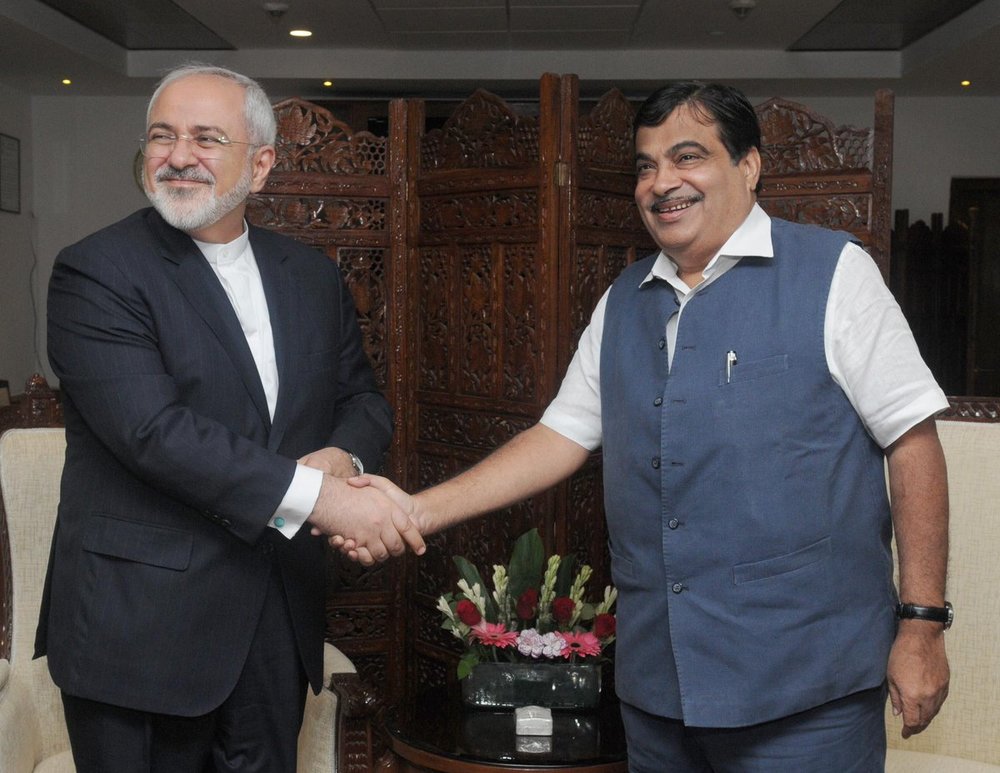
TEHRAN - Asserting that no country is immune to the “existential threat” of terrorism, India's External Affairs Minister Sushma Swaraj on Wednesday said the need of hour is to ensure zero tolerance towards terrorism and those using it as an “instrument of convenience”.
Swaraj made these remarks while speaking at the Raisina Dialogue organized by India's leading think tank Observer Research Foundation in collaboration with India's Ministry of External Affairs in New Delhi.
She said that with unwavering belief in multilateralism, India speaks not just for itself but also for the cause of justice, opportunity and prosperity around the world.
“For us, transformation is not just a domestic agenda but a global vision,” she said, while maintaining that terrorism was first among the “critical challenges” confronting the world.
“There was a time when India would talk about terrorism and it would be treated as a law and order issue at many global platforms. Today, no country, big or small, is immune to the existential threat, particularly terrorism actively supported and sponsored by states,” Swaraj said.
“There was a time when India would talk about terrorism and it would be treated as a law and order issue at many global platforms. Today, no country, big or small, is immune to the existential threat, particularly terrorism actively supported and sponsored by states,” Swaraj said.
Indian army chief General Bipin Rawat, while participating in a panel discussion at the Raisina Dialogue, said talks with Taliban are in the interest of stability in Afghanistan as long as there are no preconditions attached to the talks.
Noting that Pakistan treated Afghanistan as its backyard, Gen. Rawat said Islamabad wants a situation in the war-ravaged country that is favorable to it.
“Yes, there should be talks with Taliban as long as they do not come out with any preconditions and so long as they are looking at lasting peace in Afghanistan and bring stability in that country. It is in our interest, in the regions interest and in Pakistan’s interest,” he stressed.
Gen Rawat said preconditions in a dialogue process gives undue advantage to one of the parties. “When you start attaching preconditions, it gives a sense of a notional victory that one or the other side is taking from a position of strength,” he noted.
There have been several rounds of talks in recent months between Taliban and U.S, besides some regional countries including Iran, Russia, UAE and China.
While the talks between Taliban and U.S. have failed to produce a breakthrough, as Taliban has listed withdrawal of all foreign forces from Afghanistan as their main demand, the talks hosted by Moscow and Tehran have been purposeful, according to sources.
Responding to questions on the phenomenon of radicalization globally and the trend in India, General Rawat said it has taken a different form in India as seen in Jammu and Kashmir.
“We see a different form of radicalization in Jammu and Kashmir. Youth are being radicalized due to lot of misinformation,” he said.
Gen Rawat also added that terror group ISIS has not been able to gain foothold in the manner “it has in some other countries, despite large number of Muslims (in India).”
“Radicalization is happening through the media,” he stated and added that so long as media keeps giving coverage and focus to terrorist activities it is there to stay.
Earlier, on Tuesday, inaugurating the fourth Raisina Dialogue 2019, Norway’s Prime Minister Erna Solberg cautioned that the economic rivalry between nations cannot be “allowed” to dominate world order.
“We cannot afford to let protectionism, economic rivalry take a dominant role. Free trade creates winners, protectionism does not,” she said.
Solberg, who delivered the inaugural address, stressed on the need for global cooperation in solving international problems, and pushed for all countries to work towards meeting the Sustainable Development Goals, even though it is “tough”.
Speakers from over 92 countries, including Iranian Foreign Minister Javad Zarif, former Afghanistan President Hamid Karzai, former UK Prime Minister Tony Blair are participating in the fourth edition of the high-profile dialogue hosted by Indian government.
This year, discussions at the dialogue, which has the theme of ‘A World Reorder: New Geometries; Fluid Partnerships; Uncertain Outcomes’, will seek to address issues arising from ongoing global transitions and changes to the world order, triggered by unique leaders, innovative partnerships and new technologies.
Thursday, December 06, 2018
The G20 fruitless summit
By Hanif Ghafari

TEHRAN - The 2018 G20 summit in Buenos Aires, was the thirteenth meeting of Group of Twenty (G20), which was held on 30 November and 1 December 2018 in the city of Buenos Aires, Argentina.
Incidents such as Angela Merkel's airplane technical failure, Mohammed bin Salman wandering in Buenos Aires and his compulsory stay at the Residence of the Saudi Embassy in Argentina, Trump's cold behavior with the President of Argentina, mistaking the Chinese President with another by the President of Argentina and the minor 3.5-magnitude earthquake in Buenos Aires, taking place less than one day before the summit, were among the sidelines of this summit. However, the main question about the "philosophy of holding the G20 Summit" and the "outcome of this meeting" remains unanswered!
The fact is that the G20 members have been meeting several times during the Obama presidency and after the economic crisis in the West. Even at that time (during which there was no barrier called "Trump" at the White House), the top 20 world leaders could not come to a collective and credible solution to solve the existing economic crises.
More than ten years have passed since the beginning of the economic crisis in the United States and Europe, and European officials continue to call for the adoption of austerity policies as the only way to keep the status quo. This is in spite of the fact that many of the economists and politicians in the West are pessimistic about the transition from this economic crisis which is ruling over the international system.
At the moment, in addition to the underlying crisis affecting the G20, we are witnessing another crisis called "the presence of Trump in the White House"! The U.S. President explicitly rejects the multilateralism considered by the G20 member states and violates international trade law by unilateralism. Currently, the main concern of G20 members is how to confront Trump's protectionist policies and orders.
In the meantime, there is essentially no opportunity for convergence among G20 members to face the current economic crisis in the international system. Numerous problems and damages had hardly hit the G20 member states' infrastructure as well as their superstructure, and it should be acknowledged that the top 20 economic powers in the world have not yet decided how to deal with these two types of problems.
Finally, it should be concluded that the recent G20 summit has become a symbol of the lack of cooperation between the participating members in the international system, rather than a symbol of convergence of the world's most powerful economic players.
The next point to be noted here is that the secret security and political equations among some of the G20 players (including the membership of some of these countries in NATO) has severely shadowed their economic relations. This has led many of the G20 member states' decisions to be influenced by other factors and relations.
At any rate, it was quite clear that this costly summit was of no significant role in solving the economic crisis of the world today, and except for some news stories which we heard about the G20 summit in Buenos Aires, there was no remarkable outcome. Without a doubt, unless the tensions between the Group 20 member states are resolved, this failure will remain strong, even if Trump leaves the White House forever!
Thursday, November 29, 2018
Multilateralism Undermined by America’s Unilateralism, Isolationism

TEHRAN (FNA)- The United Nations, the world’s most inclusive multilateral institution, is still unable to hammer the brakes on America’s illegal wars in the Middle East.
The multilateral institution also had been unable to “save succeeding generations from the scourge of war, … reaffirm faith in fundamental human rights, … establish conditions under which justice and respect for the obligations arising from treaties and other sources of international law can be maintained, and promote social progress and better standards of life in larger freedom.”
One major purpose of the UN is to end wars, foster international cooperation to resolve the region’s socio-economic problems, and to promote human rights and fundamental freedoms. All this and more are yet to be the case for the long-suffering people of Iraq, Afghanistan, Syria and Yemen, where America’s endless wars and occupations continue apace - despite UN calls for an end.
Just like any other UN member state, the US is obliged to “refrain in their international relations from the threat or use of force against the territorial integrity or political independence of any state” (Article 1.4), and to give the UN “every assistance in any action it takes in accordance with its Charter” (Article 1.5). This includes ending the illegal war and occupation of Syria. This also includes at least a temporary ceasefire in Yemen so that international humanitarian aid can be delivered to the besieged port city of Hodeida and other areas.
Sadly, the United States and its regional allies Saudi Arabia and Israel are increasingly at odds with the ideals of the UN Charter. Their support for terrorism and sectarian conflicts are causing unprecedented humanitarian crises in the region, worsened by rising threats to start new wars with Iran, Russia and China. To that end, important international organizations and treaties are being threatened as well, by unilateral withdrawals, illegal blockades and sanctions, trade wars, virtual vetoes and threats of worse.
As a consequence, multilateralism - international law - is under attack from many different directions precisely when the volatile region needs it most. Ironically, the ongoing undermining of multilateralism and international law, especially with the rise of Trump’s ‘America first policy’ has gained new momentum as backlashes to globalization and its pitfalls have spread from developing countries to transition economies and declining industrial powers.
Which is to say, the US is paving the way for an uncertain future – and riskier environments around the region and the world. Little wonder no one cares for Palestinians in Gaza, or Yemenis, or Syrians. These humanitarian crises evoke only muted reaction from the world bodies: The motions for Gaza or Yemen at the UN were stifled by the US veto. The silence and complicity in the Arab world is deafening. The Istanbul meeting of the Organisation of Islamic Cooperation was more rhetoric than any real action on the ground.
At this point, Iran, Russia, China and many other countries are opposed to Washington’s unilateral policies, even many EU member states, which is good news. Even United Nations Secretary-General Antonio Guterres is on board.
Apart from the climate front and trade wars, these governments across the world have also been criticizing the Trump administration for withdrawing the US from the Iran nuclear deal and for threatening to punish foreign governments that don't cut trade ties with Iran. The US' major trade partners, such as China, the European Union, Japan and Canada, have been resisting Trump's tariff wars that are threatening the global trading system and global economic growth as well.
The list goes on, but it is never enough. Global resistance against Washington’s unilateralism will go nowhere without firm actions and policies. The world needs to stand up against Washington’s bullying tactics not in word but through action. In the end, the same rules at the UN must apply for the big, middle-sized and small countries.
Here, many member states feel that the biggest threat to the global order is not rogue states, but the dominance of America - hence the need to shackle it with treaties and multilateral organizations. With the United States intent on continuing with its destructive unilateralism and one-man foreign policy, the international civil society needs to strengthen multilateral cooperation at the UN - the highest-profile platform for dialogue between the continents.
The discussions should be focused on the theme of multilateralism and international law and how to strengthen them through all-inclusive policies and actions. The world community should look to work together to prevent the regional AND global peace and security from being undermined by the unruly actions of isolationist Washington and a handful of partners - based upon the principles of multilateralism and of international law. There is no other way to reinforce a badly bruised multilateralism.
Wednesday, September 26, 2018
Rouhani: Sanctions and extremism are the same
'Confronting multilateralism is not a sign of strength; rather it is a symptom of the weakness of intellect'
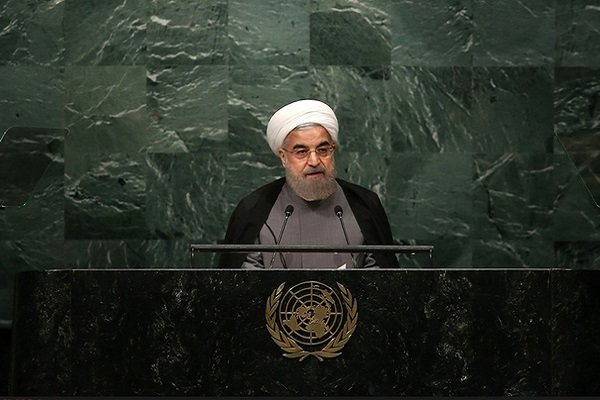
President Hassan Rouhani of Iran tells the United Nations General Assembly that “sanctions and extremism are two sides of the same coin”.
Following is the text of his speech:
In the name of God, the Merciful, the Compassionate
“Praise be to God, the Lord of the universe and Peace and Blessings be upon the Messenger of God and his Family and Companions”
Madam President,
I take this opportunity to felicitate your election to the presidency of the 73rd Session of the United Nations General Assembly.
We have assembled here today as the world is suffering from the recklessness and disregard of some states for international values and institutions. The message of our presence here is that the preservation of interests and security in the world in the least costly manner is solely possible through the cooperation of, and coordination among, countries. However, it is unfortunate that we are witnessing rulers in the world who think they can secure their interests better—or at least in the short-term ride public sentiments and gain popular support—through the fomenting of extremist nationalism and racism, and though xenophobic tendencies resembling a Nazi disposition, as well as through the trampling of global rules and undermining international institutions; even through preposterous and abnormal acts such as convening a high-level meeting of the Security Council.
This illusion should be cast away, once and for all, that one can aspire to securing more peace and security at the cost of denying others’ peace and security. We should not allow the breathing space for and growth of the line of thinking that holds others to ransom through the artificial creation of insecurity. Along this tack, confronting multilateralism is not a sign of strength; rather it is a symptom of the weakness of intellect—it betrays an inability in understanding a complex and interconnected world.
Under such circumstances, negligence or inefficacy of international institutions can endanger world peace. Those seeking dominance and hegemony are enemies of peace and the perpetrators of war.
The government of the United States—at least the current administration—seems determined to render all international institutions ineffectual. This government, having withdrawn from a multilateral agreement adopted by the Security Council, in contravention of the rules and norms of international law, invites the Islamic Republic of Iran to bilateral talks. An administration that is inviting Iran to engage in talks is not ready to consult its own experts nor willing to recognize the requirements of a modern state, including the paramount principle of continuity of state responsibility, and hence openly violates state obligations undertaken by its predecessor.
On what basis and criteria can we enter into an agreement with an administration misbehaving such as this? Any talks should be within the framework and in continuation of the JCPOA and Security Council resolution 2231, and not in a framework of breaching them and reverting to the past. It is ironic that the US government does not even conceal its plan for overthrowing the same government it invites to talks!
Distinguished Colleagues,
The approach of the Islamic Republic of Iran in the field of foreign policy has been based on multilateralism and compliance with the recognized principles of international law. Our respect for the Non-Proliferation Treaty and the long and difficult negotiations with the Group of 5+1, which led to the conclusion of the Joint Comprehensive Plan of Action—the JCPOA—illustrates a clear manifestation of this approach.
We are pleased that the international community did not acquiesce to the US government’s unilateral and illegal withdrawal from the JCPOA, and adopted a categorical position vis-à-vis that decision. The JCPOA is the outcome of more than a decade of diplomatic efforts and a period of intensive negotiations to resolve an artificial crisis. This document was unanimously approved by Security Council resolution 2231 and codified into an international obligation. According to this resolution, all countries and international and regional organizations were called upon to support the implementation of the JCPOA, and to refrain from any actions that undermine implementation of commitments under the JCPOA.
Confronting multilateralism is not a sign of strength; rather it is a symptom of the weakness of intellect—it betrays an inability in understanding a complex and interconnected world.Based on 12 consecutive reports of the International Atomic Energy Agency – the IAEA – Iran has thus far complied with all of its commitments. However, the United States, from the very beginning, never remained faithful to its obligations. Later, the current administration, resorting to flimsy excuses and in open violation of its commitments, finally withdrew from the accord. The United Nations should not allow its decisions to fall victim to the domestic election and propaganda games of some of its members, and should not allow any Member State to dodge the execution of its international commitments.
Additionally, the United States also pressures other countries to violate the nuclear accord. And more dangerously, the United States is threatening all countries and international organizations with punishment if they comply with Security Council resolution 2231. It is the first time in the history of the United Nations that such ‘a general invitation to violation of law’ is coupled with ‘threatening law-abiders with punishment.’ This is not just peculiar to the JCPOA, but a pattern that even applies to the US approach to the International Criminal Court.
We appreciate the efforts of the international community, the European Union, Russia, and China in supporting the implementation of the JCPOA and consider the full realization of the commitments stipulated in it a precondition for the survival of this significant accomplishment of diplomacy.
Ladies and Gentlemen,
Unlawful unilateral sanctions in themselves constitute a form of economic terrorism and a breach of the ‘Right to Development.’ The economic war that the United States has initiated under the rubric of new sanctions not only targets the Iranian people but also entails harmful repercussions for the people of other countries, and that war has caused a disruption in the state of global trade.
The Iranian people have demonstrated their unwavering resilience during the past forty years despite the difficulties and constraints caused by sanctions, and have shown that they can overcome this difficult phase as well. The multi-millennial history of our country demonstrates that Iran and Iranians have never broken in the face of a storm of events—not even been bowed. I state here, in clear, unambiguous terms, that the United States policy vis-à-vis the Islamic Republic of Iran has been wrong from the beginning, and its approach of resisting the wishes of the Iranian people as manifested in numerous elections is doomed to failure. Iran, with its historical and civilizational longevity, rich cultural heritage, and foremost geopolitical position, is an undeniable reality. The policy of engagement and cooperation with Iran has produced positive outcomes for other nations, as best reflected in Iran’s cooperation with friendly countries in the fight against terrorism.
The United States’ understanding of international relations is authoritarian. In its estimation, might makes right. Its understanding of power, not of legal and legitimate authority, is reflected in bullying and imposition. No state and nation can be brought to the negotiating table by force, and if so, what follows is the accumulation in the ‘grapes of wrath’ of those nations, to be reaped later by the oppressors.
It is the first time in the history of the United Nations that such ‘a general invitation to violation of law’ is coupled with ‘threatening law-abiders with punishment.’We concur that, at the end of the day, there is no better way but dialogue. However, dialogue is two-way: it should be based on equality, justice, and human integrity and honor, and conducted in accordance with the rules and norms of international law. UN Security Council resolution 2231 is not a ‘piece of paper’. We invite you to return to that Council resolution. We invite you to come back to the negotiating table you left. If you dislike the JCPOA because it is the legacy of your domestic political rivals, then we invite you to come back to the Security Council resolution. We invite you to remain in the international institutions. Do not engage in imposing sanctions. Sanctions and extremism are two sides of the same coin: Extremism involves negating the thinking of others, and sanctions negate the life and prosperity of people.
For dialogue to take place, there is no need for a photo opportunity. The two sides can listen to each other right here in this Assembly. I am starting the dialogue right here, and state—in unequivocal terms—that the question of international security is not a toy in American domestic politics. The United Nations is not a part of the United States administration. Dialogue can resume in this Assembly from the same point and by the same person who left the dialogue table, and walked away from the accord. Beginning the dialogue starts with ending threats and unjust sanctions that negate the principles of ethics and international law.
Our proposal is clear: commitment for commitment; violation for violation; threat for threat; and step for step, instead of talk for talk.
What Iran says is clear: no war, no sanctions, no threats, no bullying; just acting according to the law and the fulfillment of obligations. We support peace and democracy in the entire Middle East. We consider nuclear knowledge an imperative and nuclear weapons prohibited.
It is ironic that the US government does not even conceal its plan for overthrowing the same government it invites to talks! As victims of terrorism in the past and today, we have always been and will always remain in the forefront of genuine confrontation with terrorism. Today, we mourn the martyrdom of tens of innocent people, who were recently murdered in cold blood by terrorists who shamelessly accepted responsibility from a number of Western capitals for their heinous crime in interviews with some Western-based broadcasting outfits that are financed by petrodollars. In Iran we have condemned all acts of terrorism without equivocation and will continue to do so. We welcome the strong statement from the Security Council on this issue. But why can the leaders of these terrorist operations – including the organization that has publicly claimed responsibility for Saturday’s crime—live and operate freely in Western countries, and even openly solicit funds? Are these activities not in violation of international counter-terrorism norms? Why have the official State-financiers of anti-Iranian terrorist organizations –with their record of financing Al-Qaeda, ISIS and al Nusrah—not only been spared any punishment but are supported and armed? If you want the world public to take your claim of fighting terrorism seriously, it is imperative to start a joint global campaign to fight this scourge, irrespective of the victims or culprits.
Distinguished Colleagues
In the same vein, from the very beginning of the crisis in Syria, we have warned against any foreign intervention in the internal affairs of this country and the use of unlawful means, including supporting extremist and terrorist groups in order to exert pressure on the government of Syria, and have consistently emphasized that the crisis can only be resolved through intra-Syrian dialogue. To this end, the presence of our military advisors in Syria has been at the request of the Syrian government and consistent with international law, and has aimed at assisting the Syrian government in combatting extremist terrorism. Iran, Russia, and Turkey, in cooperation with the government of Syria and other Syrian parties, have succeeded through the Astana Process, the third summit meeting of which took place in Tehran earlier this month, in playing a positive role in reducing tension in Syria, and in their last common effort have prevented escalation and bloodshed in the Idlib region.
We have witnessed a tragic humanitarian catastrophe in Yemen over the past three years which has caused the destruction of infrastructure, the killing and injury of hundreds of thousands, the displacement of millions of innocent people, and the occurrence of widespread famine and chronic diseases. These inhuman acts represent clear examples of crimes against humanity and war crimes. The crisis in Yemen can be resolved solely through intra-Yemeni talks and without foreign interference. And to this end, we are ready to assist in any possible way.
The most pressing crisis in the Middle East, however, is the question of Palestine. The passage of time cannot – and must not –justify occupation. The innumerable crimes of Israel against the Palestinians would not have been possible without the material and military assistance, and political and propaganda support of the United States. Israel, equipped with a nuclear arsenal and blatantly threatening others with nuclear annihilation, presents the most daunting threat to regional and global peace and stability.
The abhorrent U.S. decision to transfer its embassy in Israel to Jerusalem, and the recent enactment of the racist Jewish State law are violations of international law and norms, and unmistakable manifestations of apartheid.
Madam President,
The expansion of relations with neighbors and the creation of a more secure and more developed region are among the main priorities of Iran’s foreign policy. A few weeks ago Iran, along with the other four coastal states, signed the Convention on the Legal Status of the Caspian Sea, which will strengthen good-neighborliness and bring prosperity and progress for all of the coastal states. We also desire the same relations with our southern neighbors in the Persian Gulf. We believe in the formation of a collective mechanism for the Persian Gulf region with the presence and participation of all regional countries. The security of the Persian Gulf and the Strait of Hormuz has always been important for us, and just as we defended this security during the war imposed on us by Iraq, we will confront any and all disruptive efforts in this critical waterway in the future.
We espouse a peaceful view in political and international issues and have not sought, nor do we seek, war with any country. Iran does not need an empire. Iran is an empire in terms of its civilization and its culture; not through political domination.
Iran has served as the link between east and west and will continue to do so; remaining a meticulous guardian for a world free from violence.
The Islamic Republic of Iran is the same state that understood the fascistic nature of the Ba’athist regime in Iraq before anyone else in the world, and bravely resisted its aggression against us. We fought against the Ba’ath Party of Iraq beforeKuwait was occupied by it.
The Islamic Republic of Iran is the same state that was on the forefront of the struggle against Taliban terrorism, and gave up martyrs in that struggle. We fought against Al-Qaida and the Taliban before the attacks on New York and Washington.
The Islamic Republic of Iran is the same state that fought against Daesh – a fake, distorted representation of Islam. We were engaged in the fight against Daesh before their operations in Paris, London and Brussels.
Appreciate these historical realities about Iran. Quit imposing sanctions and end extremism. The world will not have a better friend than Iran, if peace is what you seek.
I thank you for your attention.
Monday, August 20, 2018
Trump's terrible mistake
By Hanif Ghafari
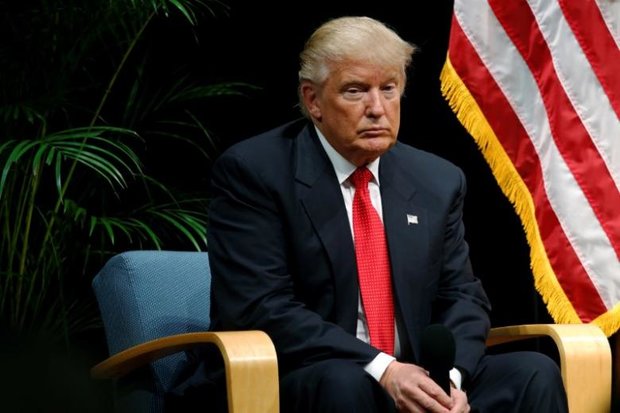
TEHRAN, Aug. 20 (MNA) – The strategic and unjustifiable mistake of the United States President, Donald Trump, in his withdrawal from the nuclear deal and imposing secondary sanctions against Iran, is now discussed in different circles. Many western media and news sources speak of Trump's terrible mistake in this regard.
They believe that by this decision, Trump was isolated in the international system, and failed to have other players' agreement in cooperating with him to put sanctions on Iran, and thus failed to achieve his economic goals against the Islamic Republic. In other words, Western media and analysts believe that, despite the fact that Trump's economic pressures on Iran are more severe than in the time of Obama, he will be less successful than his predecessor in pursuing his economic goals in confrontation with Tehran.
Recently, the Financial Times emphasized in a statement that "this newspaper supported the Iran nuclear deal and continues to believe that the Trump administration was wrong to abandon an agreement that halted Iran’s progress towards nuclear weapons."
Trump's mistake in pulling out of the nuclear deal and opposing Iran can be analyzed both politically and economically. Trump's European allies believe that by walking out of the nuclear deal, the US president, has actually put the principle of multilateralism in the international system under question.
Financial Times writes accordingly; "President Donald Trump’s offer to Tehran of unconditional talks suggests that the diplomatic path has not been totally cut off. Iran will be extremely reluctant to make further concessions on the nuclear issue and is unlikely to abandon its regional allies in Syria, Lebanon and Iraq."
The Financial Times then continues and emphasizes on the overall support of European countries for the continuation of the nuclear deal with Iran. This newspaper has written that Britain, along with France and Germany, promised to remain as part of the nuclear deal and to support companies that are investing in Iran.
The FT states that "The main weapon the EU has developed is an updated version of a “blocking statute” originally drawn up in the 1990s to counter US sanctions on Iran, Libya and Cuba. The law forbids European companies from complying with the US measures and allows them to recover damages arising from the sanctions “from the person causing them”.
The fact is that, according to the Financial Times and other western news sources, Donald Trump's decision to withdraw from the nuclear deal with Iran will have heavy expenses for the United States. The isolation of Washington in the international system has now reached its peak.
Trump's specific economic policies against European players, China, Russia and ... have also exacerbated this trend. So far, many American analysts have warned about Trump's deterrent policies in the US foreign policy and economics. However, by picking up people such as Bolton and Pompeo, Trump has shown that he isn't basically paying any attention to these warnings, and once he realizes that, there is no longer any opportunities to make up for his mistakes.
Subscribe to:
Posts (Atom)