Showing posts with label Jammu and Kashmir. Show all posts

Saturday, September 21, 2019

Why Should Kashmiris be Indian?

 
Many Muslims follow the traditional 40-day grieving period, but Kashmir has been grieving for decades. Now, 46 days later, even the grief is helpless, and soon the voices of outside support will fade. Today, too, Indian sympathy for the state is a quid pro quo. “They are one of us,” say the hashtag supporters, completely ghosting the plot. There is barely any acknowledgement of their right to be independent of the country. “I stand with Kashmir” is the slogan, not “I stand with Kashmir to be free”.
Are there headlines referring to the state as Indian Occupied Kashmir?
When the ruling Hindu nationalist Bharatiya Janata Party, in a most cowardly manner, got tourists and pilgrims out of the state before announcing that Article 370 granting Jammu and Kashmir special status was being revoked, when they put political leaders, activists, businessmen, civilians behind bars or under detention, when they shut down all internet and mobile services and put the state under curfew, when they took away the rights of 8 million people not only to have a flag and a say but to even conduct their daily lives with dignity, imprisoning them in their homes – no work, no schools, having to subsist on the food and medicines they could manage to procure, even then the liberals called it a mere “lockdown” and not the colonisation it was. When the National Security Advisor (NSA) Ajit Doval was shown sharing a meal with a group of Kashmiris, downed shutters in the background, the Indian media lapped it up as “confidence building”.
The saddest part of this shameless display of opportunism is that you don’t get to hear the voices of Kashmiris living in Kashmir. Those who try, suffer. The supposedly sympathetic section of the Indian media that projects itself as honorary Kashmiris retains a proprietorial tone replete with ridiculous equivalences. “If international headlines report the death of a 17-year-old, they should also tell us the story of the 5-year-old battling for her life after a militant attack.” A senior journalist cannot tell the difference between how terrorists and the state ought to behave.
***
Kashmiris will lose their identity, an identity they have held on to assiduously ever since the Partition of India left them with a piece of paper that would ensure a plebiscite to decide their own fate.
The nationalism narrative is not only politically fascist but also dehumanising. UK-based Kashmiri writer Mirza Waheed in this wrenching piece talks about wanting to hear his mother’s voice, to know if his ailing father is well, “You want to ask if they’ve got enough medicines, if they’ve been allowed to go for their weekly or fortnightly consult with the good doctor—if they’re alright, damn it. But you can’t pick up the phone and ask. You simply can’t call anyone. The world is made soundless when you can’t hear your beloveds.”
The NSA’s response after accepting the hardships caused was: “People were not born with Internet. For us, it is more important to protect the right of life of the people and keep them safe.”
Safe from whom? If protecting people against terrorist infiltration from Pakistan was the issue, why could the army not control it? Kashmir is the most militarised region, and yet the government felt it necessary to deploy 35,000 more forces for the safety of a people under curfew. An administration spokesperson reportedly said, “We decided to protect lives, some liberties may have to be compromised.”
The first casualty of this protection occurred on Day One of the incursion when a 17-year-old fell into a river trying to escape the police that cornered him. There have been many instances of pellets being fired to blind civilians and of torture after this ‘safety’ initiative. A young villager was one such victim: “Once they realised I was innocent, they wanted me to name a stone-pelter. I told them, I don’t know anyone. So, they continued beating and electrocuting me. They wanted all of us to give the names of stone-pelters…They began pulling my beard and even tried to put it on fire. Then, someone hit me on the head and I fainted. It is then they, perhaps, realised that I might die. So, they asked my friend to take me home. I regained consciousness after two days and it’s been 20 days and I still can’t walk properly.”
***
What sort of assimilation is the government speaking about when it excludes the people?
“What integration? We Kashmiris have been working and living in other cities as have people from other states in Kashmir.” I met Bilal six years ago. He was hesitant to admit he was Kashmiri at first. “I am from the other side, far from the trouble,” he had said. He was happy in Mumbai and earned enough to be able to send his kids to English-medium schools back home. He visited every year.
He remained steadfastly against separatists, but whenever the news flashed incidents of brutalities and deaths, he’d say, with remorse rather than rage, “When young boys see their fathers and brothers suffer and die before their eyes, will they not want revenge?” Yet, within minutes he would wonder if there was any alternative, and go back to the room he shared with four others, a room with mattresses on the floor and a stove on a stool to cook their meals. A room where family was a WhatsApp video call away.
That stopped on August 5.
The inclusiveness that the government speaks about is a lie. This lie has been repeated over the years by successive governments. They dangle the development carrot without any attempt to assuage the disaffection of the people. Rahul Gandhi had some years ago taken big corporate magnates to recce the state; Modi will not need to – it is a given now. On October 31, the Centre will divide Jammu and Kashmir and officially claim the Valley as its prized catch.
***
In the latest bit of news, 81-year-old former chief minister and leader of the National Conference Farooq Abdullah has been detained under the Public Safety Act (PSA), ironically the handiwork of his father Sheikh Abdullah. All the rooms in his house have been sealed, his staff fired, and he is confined to one room with an attached bath and toilet for 12 days. Tragic as it is, under the PSA that allows for arrest without trial and detention for upto two years, Kashmiris, including children, have been languishing in prison for years.
Local leaders and former chief ministers like Omar Abdullah and Mehbooba Mufti have aligned with the BJP, despite the party carrying its Hindu Rashtra dream and ambition to infiltrate Kashmir on its sleeve, only so that they could save their seats. Worse, they did not emphatically raise their voices over the disappearances and random killings of civilians in the state for all these years.
What happened on August 5 has to an extent been facilitated by such vacillation. Mehbooba Mufti’s first tweet on that day was, “Today marks the darkest day in Indian democracy. Decision of J&K leadership to reject 2 nation theory in 1947 & align with India has backfired.”
It raises the moot point: Are Kashmiris Indian? Do these leaders represent their struggle?
Kashmiris are taunted that they are not grateful to the army that helped them during the floods. They are taunted about living and earning “from us”.
They live in India because their home has been converted into a disputed territory that they have to reclaim. They have lives to live, families to feed. They take up jobs available to them and to all those in the much-touted ‘globalised’ India. Even if Kashmir were free, they could still work in India but as citizens of an independent state and not as residents of an occupied state they are ideologically fighting.
Kashmir has always been in a state of insurgency, but unlike in the Middle East the protests did not lead to overthrowing any regime, simply because there wasn’t any leader to overthrow. The anger on the streets, the “Go back, Indian dogs” graffiti on walls, the stone pelting were reactions to the daily harassment – being stopped in the streets and made to identify themselves, the disappearance of many, unmarked graves of “unidentified militants”, and war crimes like mass rape and third-degree torture.
These were crimes by the authorities, not terrorists. The authorities target the young because that is one way to wipe out a people and not just their protests. Each day is a struggle to hope, to live. But, as Mirza Waheed put it, the children “must grow, and try not to die”.

Wednesday, August 28, 2019

Stratfor: Kashmir may provide spark for Pakistan-India nuclear war

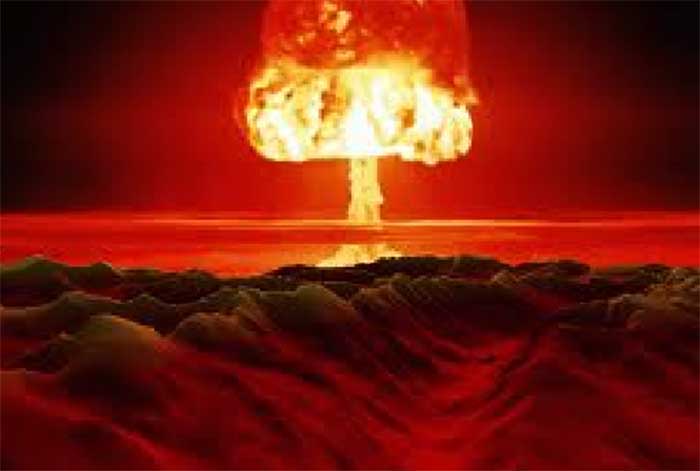
The specter of nuclear war haunts tensions between India and Pakistan, and the disputed territory of Kashmir could provide the spark that lights South Asia’s nuclear fuse, warns Strafor, a geopolitical intelligence think tank that provides strategic analysis and forecasting to individuals and organizations around the world.
With passions again running high in Kashmir, the stakes for the region and the world could not be higher, it said adding: “Decades ago, the people of Kashmir were promised a plebiscite that never took place. Will they ever be asked what they want?”
The Strafor report is written by Charles Glass from its Board of Contributors. The report recalled that in 1998, the CIA subjected India to strict surveillance to ensure it was complying with its commitment not to test nuclear weapons. Washington went into shock on May 11, 1998, when Indian Prime Minister Atal Bihari Vajpayee announced that his country had just detonated not one, but five nuclear warheads at Pokhran.
Pakistan responded by testing five of its nuclear bombs on May 28. Pandora’s box was wide open, threatening mass destruction to the Asian subcontinent if the Pakistani and Indian armies squared off along the Line of Control that separated their forces in the disputed region of Jammu and Kashmir.
If the CIA is watching India and Pakistan now, it will have to do better than it did in 1998, the Strafor report said adding: “In 2019, with passions high over India’s abrogation of Kashmir’s legal, if fictitious, autonomy, the outcome would not be waking up to discover one side or the other had tested weapons. It would be the sight of nuclear war taking millions of lives. Although the stakes in Kashmir could not be higher, the United States and much of the international community call the dispute India’s “internal affair” or a “bilateral” issue between India and Pakistan. It isn’t. A potential nuclear conflagration cannot be anything other than a matter of international peace and security.”
The Indian and Pakistani armed forces possess both strategic and tactical nuclear weapons, which local commanders could use on the battlefield in populated areas. This would be the first use in war of atomic weapons since the U.S. destruction of Hiroshima and Nagasaki in 1945, according to Strafor which is sometimes referred to as ‘The Shadow CIA.’
The possibility of the conflict going nuclear may have increased on Aug. 16 when Indian Defense Minister Rajnath Singh seemed to abandon India’s “no first use” doctrine when he tweeted that “India has strictly adhered to this doctrine. What happens in the future depends on the circumstances,” the Strafor report pointed out.
If the decades long armed rebellion in Kashmir grows more intense in response to India’s revocation of the region’s autonomy and its imposition of a total security lockdown, India will blame Pakistan, which in years past supported Kashmiri insurgents, Strafor said adding:
India and Pakistan came to blows last February, following an insurgent attack on Indian troops in Kashmir. The Pakistanis downed an Indian fighter jet and captured its pilot, Abhinandan Varthaman. When (Prime Minister Imran) Khan returned the Indian pilot on March 1, Modi did not acknowledge his conciliatory gesture. Nor has his government been willing to discuss Kashmir, whose people were promised a plebiscite on their future by India’s first prime minister, Jawaharlal Nehru, in 1947. The vote never took place, but several wars have.
“The question is, what do the people of Kashmir — those in the Indian-held two-thirds of the region, the Pakistani-held western third and the Hindu Kashmiris who were expelled from their homes in 1947 and are still officially displaced — want? No one is asking them, but that may be the only way to save them, and the world, from nuclear war,” Strafor report concluded.
Abdus Sattar Ghazali is the Chief Editor of the Journal of America (www.journalofamerica.net)

Sunday, August 25, 2019

Kashmir: World watches, cautiously

JOHN CHERIAN

Pakistan comes up with a strong reaction, but the rest of the world has been cautious and muted in its response.
As expected, the international community has not reacted favourably to the government’s decision to unilaterally revoke the “special status” that was accorded to the State of Jammu and Kashmir in the Indian Constitution. The Kashmir dispute is incidentally the oldest unresolved international dispute pending before the United Nations. The international community has so far refused to recognise India’s sovereignty over Jammu and Kashmir or, for that matter, Pakistan’s claim to the part of Kashmir under its control.
But the immediate reactions from the international community were comparatively muted, with calls for restraint in the region. The United States State Department spokesperson, speaking on August 5, only urged India to engage in discussions with those affected by the decision. She went out of her way to emphasise that New Delhi considered its actions relating to Kashmir an internal issue, though she also added: “We are concerned about reports of detentions and urge respect for individual rights and discussions with those in affected communities.” President Donald Trump, who had recently offered once again to mediate in the dispute, has not yet spoken on the issue.
Pakistan’s reaction was the strongest. It wasted no time in reiterating that India’s “unilateral step” would alter the “disputed status as enshrined in U.N. [United Nations] Security Council resolutions” and that as “a party to the international dispute”, it would exercise “all possible options to counter [India’s] illegal steps”. The Pakistani government downgraded diplomatic ties, expelled the Indian High Commissioner, and stopped bilateral trade. It has indicated that it will once again close its air space for Indian aircraft and suspended the Samjhauta Express train.
On a railway platform in Lahore on August 8, watching an 
Indian relative leave by the Samjhauta Express.

Prime Minister Imran Khan warned of possible war. He told a special session of the National Assembly on August 6: “With an approach of this nature, incidents like Pulwama are bound to happen.” He cautioned that a war in the region between the two nuclear armed states would have devastating consequences for the world. “This is not nuclear blackmail—this is what will happen if you logically follow the chain of events that have been triggered,” he said. He also said that he had asked President Trump to get involved in the Kashmir dispute because of the Indian government’s failure to respond to his repeated attempts to resume bilateral talks.
China’s reaction
The Chinese Foreign Ministry objected to the decision to make Ladakh a Union Territory and said that this undermined China’s territorial sovereignty. The disputed area of Aksai Chin lies partly within the Ladakh administrative area. “China is always opposed to the inclusion of the Chinese territory in the western sector of the China-India border into its administrative jurisdiction,” the Chinese Foreign Ministry spokesperson said. She said that India “was continuing to undermine China’s territorial sovereignty by unilaterally changing its domestic law”. The spokesperson stressed that India’s actions were “unacceptable” and that China was “seriously concerned about the current situation”. She said that China’s position on the Kashmir issue had been “clear and consistent” and it had stuck to the international consensus that “it is an issue left from the past” that should be peacefully resolved through dialogue and consultation. “The relevant sides need to exercise restraint and act prudently. In particular, they should refrain from actions that will unilaterally change the status quo and escalate tensions.”
But if there was any solace for Pakistan in China’s stance, the leader of the opposition, Shahbaz Sharif, pointed out that Pakistan’s close friends, including China, had not openly backed the country after India’s move, which has drastically altered the ground realities in South Asia. Sharif advised the government “not to exhaust all its resources” in trying to establish peace in Afghanistan. He described President Trump’s offer to mediate on Kashmir a “trap card” and not a “trump card” as the Pakistan government has been claiming. Reza Rabbani, the Chairman of the Senate and a senior opposition leader, urged the government to move away from the U.S. and said there was a “nexus” between Washington, Tel Aviv and New Delhi. The opposition has also been critical of Imran Khan’s statement ahead of the general election in India that a Modi victory could turn out to be beneficial for bilateral relations.
Pakistan has announced that it will raise the Kashmir autonomy issue in the Security Council. In 1948, the Security Council called for a plebiscite in Kashmir, and Prime Minister Jawaharlal Nehru also promised to hold one. The promise was not kept, and Kashmir became a flashpoint. Despite the U.S. being a staunch military ally of Pakistan at the time, the Indian state brazened it out in international fora with the Soviet Union’s invaluable support.
India and Pakistan have fought four wars and the mood in Pakistan is now angry. The country’s Science and Technology Minister, Fawad Chaudhry, described India as a “fascist” country and said that Islamabad was not ruling out another war over the disputed territory. “Pakistan should not let Kashmir become another Palestine,” he said. “We have to choose between dishonour and war. However, very few Pakistanis actually want another war. With both the countries now having nuclear weapons, a full-blown war is unthinkable despite the rhetoric from both sides of the border. On August 8, Foreign Minister Shah Mehmood Qureshi said in a statement that Islamabad “was not looking at a military option”. But he also said that the country reserved the right to respond in case of any aggression.

Vested interests

U.S. commentators and reports in the media have not failed to notice that India’s sudden move came immediately after President Trump’s offer to mediate and the partial resumption of U.S. military aid to Pakistan. The Trump administration has denied reports appearing in the Indian media that External Affairs Minister S. Jaishankar had alerted his U.S. counterpart, Mike Pompeo, about the decision to revoke Kashmir’s special status. In a later statement, the U.S. State Department said that India’s decision on Kashmir could increase instability in the region.
The Indian government seems to be quite confident that the Trump administration will not openly criticise the move. The right-wing government in New Delhi has signed up to be a military ally of Washington and play the role of a strategic counterweight to Beijing. New Delhi is on the verge of signing the third and last “foundational” defence agreement with the U.S., which will provide the framework for joint India-U.S. military operations. India has already agreed to allow the U.S. to use military bases in the country.
The U.S. is emerging as India’s biggest arms supplier. The Trump administration now calls the Asia Pacific region “Indo-Pacific”. India’s tilt to the West will be even more evident if it does not allow the Chinese telecom giant Huawei to bid for 5G contracts in the country. And as the world knows, the Trump administration (and earlier U.S. regimes for that matter) cares little for human rights. The U.S., for instance, had opposed a U.N. inquiry into the war crimes committed by Israel in Gaza during its brutal 2014 bombing of Gaza, in which 2,100 Palestinians, most of them children, were killed. India, along with West European countries, abstained in the vote on the inquiry. As in the case of Israel and other U.S. allies such as Saudi Arabia, a different yardstick is applied to India nowadays when it comes to issues of self-determination and human rights.
India seems to be taking a page out of Israeli’s book. What Israel has done in the West Bank and Gaza is being replicated in the Kashmir Valley. The next logical step will be to implement “settler-colonial” projects on the lines of what Israelis have done in the occupied territories. Many observers of the region predict that it is only a matter of time before “Hindu only” enclaves are set up in the Valley, closely mimicking Jewish colonies on the occupied West Bank. Indian security forces have been receiving training from Israel in “anti-terror” operations. Israel and India would like the world to believe that the struggle for statehood in Palestine and self-determination in Kashmir is part of the global scourge of “Islamic terrorism”.

Muslim countries quiet


Imran Khan has made personal appeals to Islamic countries for support. He personally talked to the Turkish President, Recep Erdogan, and the Malaysian Prime Minister, Mahathir Mohammed. Both of them are known to be outspoken in their views but have so far not made any statement on Kashmir, though their governments have expressed concern. Pakistan’s Arab allies like Saudi Arabia and the United Arab Emirates (UAE) have not reacted officially, so far. The UAE’s ambassador to India, Ahmad al Banna, has said that the decision on Kashmir is an “internal matter”. The Saudi Crown Prince, Muhammad bin Salman, has an excellent relationship with Prime Minister Narendra Modi, whom he calls “a brother”. The Saudis and the Emiratis have already dumped the Palestinian cause. Kashmir, too, receded from their radar quite some time ago.
Iran, which shares a border with Pakistan, has also been quiet, preoccupied as it is with its ongoing confrontation with the Americans. However, the Supreme Leader, Ayatollah Ali Khamenei, has in the past compared the situation in Kashmir with that in Yemen and Bahrain. He said in 2017 that Kashmiris required the “support of all Muslim nations”. The Organisation of Islamic Cooperation (OIC) Contact Group on Kashmir, which was formed in 1994 to coordinate the OIC’s policy on Kashmir, has condemned the decision on Article 370. Azerbaijan, Saudi Arabia, Niger, Pakistan and Turkey are its members. The OIC, a grouping of 57 Islamic countries, is expected to take a strong stance against India on the issue, but the Indian government considers it a toothless and ineffective grouping.
The Arab response to Kashmir has been muted
The International Commission of Jurists (ICJ), an international human rights NGO headed by 60 prominent jurists and lawyers, issued a statement saying that the revocation of the autonomy and special status of the State of Jammu and Kashmir “violates the right of the representation and participation guaranteed to the people” under the Indian Constitution and international law. The ICJ said that the Indian government’s move also was a “blow to the rule of law and human rights in the State and India”. The ICJ statement accused the Indian government of pushing through the new changes “in contravention of domestic and international standards”. The ICJ, however, expressed the hope that the Indian judiciary would closely look into the government’s bid “to eviscerate Article 370 of the Indian Constitution”.
The ICJ noted that the Indian government had rushed through with the amendments at a time when the State of Jammu and Kashmir was under the direct rule of the Central government. The statement also referred to the two reports by the United Nations Commissioner for Human Rights (UNHCR) highlighting grave violations of human rights by security forces in the Valley: “The ICJ condemns the legislative steps taken with respect to Jammu and Kashmir, and calls on the Indian government to implement in full the U.N. High Commissioner’s recommendations.” The UNHCR’s report had urged the Indian government to “fully respect the right of self-determination of the people of Kashmir as protected under international law”.
In a statement on August 8, U.N. Secretary General Antonio Guterres called on all parties to the dispute to refrain from taking steps “that could affect the status of Jammu and Kashmir”. The statement clarified that the U.N.’s position on Kashmir was based on its Charter and the relevant Security Council resolutions on the issue. Guterres also appealed to India and Pakistan to “show maximum restraint” while looking for means to resolve the 70-year-old dispute.

Saturday, August 17, 2019

Punjab of 1984 and Present Kashmir Bears Similarities

Pellet gun victim
The manner and intent of Indian Establishment in sending of the Indian army to the Golden Temple in Amritsar on 3 June 1984 and degradation in special constitutional status of Jammu and Kashmir on 5 August (2019) bear a lot of similarities. Both actions were sudden and unexpected carried with excessive use of the armed forces. These two events were concerted swoops intended to shock and bamboozle the targeted people of Punjab and Kashmir, thereby, rendering them numb and reactionless.
As a journalist reporting for a ‘national news agency’ from Amritsar, the epicenter of the troubled in Punjab during the 1980s, I witnessed that feverish attempts were made to create a public opinion for justifying the sending heavy forces to a religious place. For that purpose, the government hyped and propagated some flimsy grounds through docile domestic mainstream media. Spreading disinformation was the main strategy as the manufactured and fake news invariably made headlines in the newspapers black painting the then ‘dharamyudh morcha’ (agitation) launched by the Akalis from Golden Temple in pursuance of their demands. The morcha was projected as a ‘Pakistan-inspired separatist agitation’…. ‘a ruse for housing criminals in the religious place’… ‘the morcha posed a palpable threat to the country’s unity and integrity’. Even the isolated killings in Punjab were portrayed as “Sikhs are killing Hindus”. All routine crimes and violent incidents were bundled up into one head: “Sikh terrorists killed … (so many) … attempted to looted, hijack ….so on”. Such an impression was also dispersed through frequent bulletins relayed by the government-controlled All India Radio and Doordarshan. Official intelligence agencies worked overtime to polarise and divide the Punjab society pitting Hindus against Sikhs. No doubt, some violent incident did take place because of the surcharged atmosphere during nearly two-year-long Akali agitation when two lakh Sikhs courted arrests. The Hindi press played a dirty role in painting the Golden Temple Complex as the fountainhead of “Sikh terrorism” dismissing its 100-year long history of 18th century when the shrine had been a rallying point of the Sikh warriors in their fight against Iranian and Afghan invaders out to make Punjab a part of Afghanistan.
Even my colleague journalists reporting for ‘national newspapers’ from Amritsar never bothered to highlight the latest history and Sikh traditions when the Akalis was the lone political party to launch a ‘morcha’ (agitation) from Golden Temple against the 1975 Emergency clamped by Indira Gandhi which was participated by BPJ leaders like L K Advani.
Now in Jammu and Kashmir the same strategy was adopted by New Delhi establishment for whipping up intended propaganda prior to the 5 August action. The television and electronic media outlets took up a leading role and invariably, quoted intelligence agencies’ sources for projecting the jihadi threat in the Kashmir valley. “Fear from Pakistan and Pak sponsored terrorists’ splashed the mainstream media space with added impact from stage-managed high-pitch discussions. Rarely, the media dispatches referred to the fact Jammu and Kashmir was given the ‘special status’ in the constitution because it joined the Indian Union later on and on its own volition and under some conditions. And the sovereign princely state spurned all attempts of Pakistan to forcibly occupy the territory through blackmailing tactics. The governments used the media to the hilt to deliberately suppress and disconnect closely related past in the cases of the Sikh agitation of the 1980s and Kashmiris’ stand on article 370. All that was intended to raise the ‘nationalistic fervor’ among the large Indian population that their ‘Punya Bhoomi’ (sacred motherland) was being “vivisected and defiled by anti-national’ elements”. Isolating from the proper perspective, the government intentionally propagated J&K as if it is mere ‘real estate’ by repeating endlessly that ‘Kashmir is an integral part of India’.
Just before launching the army action on the Golden Temple, an unprecedented curfew was imposed on entire Punjab and with excessive use of armed forces the state was completely cut it off from the outside world. Similarly, J and K, particularly the Kashmir valley was virtually caged by the gun-toting soldiers before initiating process of lowering the ‘special status’ of the state.
During the early 1980s the media and official communique propagated for the general public that the army operation was confined to the Golden Temple and meant to eject and finish off Jarnail Singh Bhindranwale and his armed men “holed up” there. But the fact was rarely known outside Punjab four dozen other Sikh shrines located at other places were too simultaneously attacked by the army to flush out “potential Sikh terrorists” from there. To crush the Sikh dissent for all the time to come, a larger number of armed soldiers conducted night raids on Sikh villages to pick up and eliminate Sikh youths who could be ‘potential threat’ to the officially envisaged “peace and normalcy” after the army swoop on the Golden Temple. That army operation in rural areas made the Sikh youths to flee homes for safety and it was given a fanciful codename, ’Woodrose Operation’.
As the follow-up to both of the army actions in Punjab and J&K, a barrage of manufactured and fake reports were circulated and stage-managed inspired visuals and spectacles to occupy larger space on electronic and social media sites. This exercise was aimed at inculcating a sense of “bigger achievement” in the client section of the majority community.
I have recorded in my published book on media coverage (‘June Chaurasi Di Patarkari’ in Punjabi language—Media Coverage of 1984) that strict censorship was imposed on the press in Punjab two days prior to the army action and lasted for several weeks later on besides the government used several underhand tactics to get a favorable flow of news-items. For example, my rival news agency put out a “social survey” of the Amritsar city just a fortnight after completion of army action (10 June 1984) which said the city people and the Sikhs “are feeling relieved after the army restored ‘Maryada’ (religious code of conduct) in the Golden Temple following its clearance of the gun-toting criminals”. That a widely circulated story in newspapers was missing in my dispatches which perturbed my Editor-in-Chief in New Delhi who pulled me for “not writing positive stories that could help in fast normalizing the situation in Punjab”.
To my utter surprise, the same type news-items are seen splashed in the media that “Kashmiris are feeling relieved after the withdrawal of article 370 …. there is no terrorist activity in the valley….. people celebrated Eid with gusto….. some reasonable restrictions there to be removed gradually”. The mainstream media rarely refer to “complete lockdown of the valley’’, snapping all communication network like telephone and internment and imposing a “comprehensive information blackout” there.
As the flow of factual news has been blocked and the so-called national media, practically that exists outside the valley is free to carry news that strengthens the official jargon about J &K.
The same official strategy was at work in Punjab during the army action that the sizeable local press in Amritsar was not allowed to attend the press briefings held by army officials just after the operation on the Golden Temple ended. Rather, chosen media persons from Delhi and Chandigarh were flown to Amritsar and briefed by an army general to get publicity for “successful army action conducted with precision”. Thus, an attempt was made to blackout killings of hundreds of innocent Sikhs including women, children and old who got trapped in the shrine on the auspicious occasion of observing the martyrdom day of Guru Arjun Dev.
Even though the two actions were separated by a time gap of 35 years, the same political expediency necessitated them to happen. Such strike-downs were meant to kick up a Brahmanical Hindu nationalism that facilitated the consolidating of the majority community to be translated into a ‘vote-bank’ politics. The concomitant bashing up minorities and projecting them as ‘anti-nationals’ and a threat to India’s unity and security have been the palatable feed of the rabid Hindu nationalism.
Tracking the history, the above said practice had a begun much earlier at the outset of 20th century when the Hindutva began taking a shape which surfaced and retreated as required by the Congress during the Indian freedom movement. But Congress leaders strategically chiseled the Hindu religion and culture towards the building a Nation-State based on the Hindu identity in the highly diverse Indian sub-continent. During the 1930s the Hindu brand of nationalism rather got overwhelmingly hegemonic within the Congress which had a larger base among the Hindus with a negligible presence of Muslims. This dispensation, later on, obstructed the Congress’s political settlement with the Muslim League during pre-independence days. Rather it led to the drawing of battle-lines between the two contending parties—the Congress and Muslim League, ultimately bringing about a bloody Partition in its wake and diminishing of possibilities of setting up a federal type of governance in the sub-continent.
On transfer of power from the outgoing British in 1947, the Congress inherited a centralized strong power center at New Delhi. Obsessed with achieving a territorial unity and retaining of socio-religious affairs within the Brahmanical framework of the caste-ridden Indian society, the Congress rulers further centralized the powers which entailed snubbing of all sort of dissent of the minorities and their aspirations. The process got peaked up during Indira Gandhi regime in the early 1980s.
In the case of Sikhs who too projected themselves as a ‘nation’ got pitchforked in the centralized power structure. They were denied all solemn promises the Congress made them in pre-Independence days like allowing them (Sikhs) to “experience a glow of freedom’’ in Punjab having sizeable Sikh population there. But Instead of accommodating the Sikhs politically, Congress chose to snub them by refusing them their separate identity and describing them as part of the larger Hindu society. That is why Sikhs remained on war-path with New Delhi since the 1950s. And their several agitation programs for a due share in power were viewed as secessionist to be culminated into the launching of a ‘dharamyudh morcha’ (an agitation) from Golden Temple in August 1982 for more autonomy to the state.
The June 1984 army action in Punjab and suppressing of Akalis with a heavy hand gave instant political dividends to the Congress with the majority Hindus rallying around the party. After her assassination, her son Rajiv Gandhi heading the Congress emerged as ‘savior of India’s unity and security’ and won a record number of 404 seats in December 1984 Lok Sabha polls. But the political process of instilling insecurity among the majority and hate against the Sikh minority resulted in the massacre of the Sikhs in November 1984 and metamorphosing the Indian democracy into a ‘majoritarian dispensation’.
A fertile ground, thus, got prepared for the Hindutva politics which strengthened the Hindu nationalists and their political outfit the Bharatiya Janata Party (BJP). The majoritarian polity which largely thrives on the minority bashing has now come to stay in India and well-entrenched Hindutva is fast paving way for setting up ‘Hindu Rashtra’, a version of Islamic Republic of Pakistan.
Jaspal Singh Sidhu retired as Special Correspondent with United News of India, New Delhi 

Monday, July 01, 2019

Kashmiris Victims of Indian State Terrorism

Despite Indian nationalist claims, Kashmir has never been part of India

Ibrahim Vawda

Palestinians are being killed in the hundreds by the militarized terrorists of the Zionist Israeli regime and the illegal Egyptian regime that has ensconced itself in power in Cairo. Palestinian properties and land worth billions of dollars are confiscated for future illegal Zionist settlement construction.
On the other hand, India kills Kashmiris as part of its sadistic strategy to silence them for seeking independence from Indian colonization. India invaded and annexed Kashmir in October 1947. The Indian Colonial forces have killed more than one million Kashmiris since. The occupation army’s thirst for Kashmiri blood remains unquenched.
China is the third nuclear power that controls a part of Kashmir. Having veto power in the UN Security Council and having done very little to secure peace in the region, makes China complicit in the human rights violations in Jammu and Kashmir. Pakistan, having given partial sovereignty to Azad (free) Kashmir, insists on a plebiscite (referendum), as promised by India’s first Prime Minister Jawaharlal Nehru, to determine the future of Jammu and Kashmir. There are at least 18 UN Security Council resolutions calling for a referendum that India had agreed to in the beginning but has since reneged on its pledge.
Indian rulers insist that Kashmir is part of India although in its constitution, Kashmir is accorded special status (Articles 135 and 370). The current Hindu fascist regime led by Narendra Modi has vowed to remove these articles from the constitution to prepare the way for total annexation of Kashmir into India. Kashmir was never a part of India. It was an independent state for 5,000 years.
India uses “terrorism” as a pretext to terrorize the Kashmiris. In fact much of the firing across the Line of Control (LoC) is used solely for this purpose.
India refuses to admit that Kashmir was invaded and annexed with the help of the then Hindu ruler of Kashmir, Maharaja Hari Singh. He had already fled the state capital Srinagar because of a popular mass uprising against his oppressive rule and dithering over not joining Pakistan as the people demanded. India touts the “Instrument of Accession” that the fleeing ruler allegedly signed with India as justification for its troops to invade and colonize Kashmir. India has never produced that “Instrument of Accession’.” Instead, Indian rulers in the past admitted that it was a provisional arrangement and once calm was restored, India would respect the wishes of the Kashmiri people.
Nehru made this pledge publicly on several occasions starting in October 1947 and repeated in telegrams to Pakistani Prime Minister Liaquat Ali Khan as well as broadcast on Indian radio. The same pledge was made to the United Nations Security Council. In fact, when war broke out between India and Pakistan, it was India that took the matter to the UN Security Council in January 1948 to secure a ceasefire. It again pledged that once calm was restored, India would hold a referendum under international supervision such as the UN to determine the wishes of the people.
Nehru and his cohorts were clearly playing for time. They got that once both countries — India and Pakistan — agreed to a ceasefire. The Security Council resolution also called for the withdrawal of the bulk of both countries’ forces to be followed by a referendum. While the ceasefire went into effect and that is where the current Line of Control in Kashmir is, India deliberately ignored and sabotaged the other two provisions of the resolution.
Acknowledging a problem is the first step to solving it. Even many Indians would agree.
In its efforts to change the demographic composition of Kashmir, India continues on its genocidal path of simply killing the indigenous population of Kashmir, calling them “terrorists” and “insurgents.”
Several secret mass-graves have been uncovered in Kashmir. Obviously these contain the remains of Kashmiris who protested India’s human rights violations. They were kidnapped, tortured, and murdered by the Indian colonial army.
Like Israel on the Palestine freedom issue, Delhi has taken it for granted that Kashmir should not be resolved so as to keep it an unsettled problem. In fact, India would like to project the notion that Kashmiris are happy under India’s murderous occupation and there is no need for any settlement beyond maintaining the status quo.
India refuses to discuss the Kashmir question with a third party or intermediary. It demands it will only talk to Pakistan if the latter admits to harboring “terrorists” and “facilitating the infiltration of insurgents” into Kashmir from Pakistan.
India remains in perpetual denial and claims the status of “terror victim,” like the apartheid regime of Israel. India has joined the US and Israel as part of the new axis of evil. It hopes to ride out any criticism, like the Zionist regime, of its murderous policy against the Kashmiris.
Virtuous talk of unity in diversity and secularism have been replaced by bareknuckled Hindu nationalism. The state, colonized by a fascist ideological movement, is emerging triumphant over the civilian population. It has assumed vast powers of control — telling people what they should eat at home and how they should behave in public, and whom to lynch.
There is no doubt that the Kashmiris have suffered immensely for more than seven decades. They are being tortured not merely to obtain false confessions but to break their self-esteem, dignity and self-image. The Indian military and intelligence services continue to indulge in terror to create mayhem in Kashmiri communities. India has turned on the civilians with a vengeance and harsh malevolent behavior. Rape is used as an instrument of war. More than 11,000 Kashmiri women and girls have been raped since 1989. These are well documented and were even reported in the UN Human Rights Commission of June 14, 2018. To India’s lasting shame, not one person has been arrested much less prosecuted for such heinous crimes.
This hardline approach embraced by Hindu religious fanatics confirms that the world as we have known it, molded by the heirs of both Western imperialism and anti-imperialist nationalism, is crumbling. Countries and people that genuinely believe in human dignity and honor should take the lead in helping the colonised nations to gain freedom from the clutches of foreign occupation.
Ibrahim Vawda works for the Johannesburg-based Media Review Network.

Friday, January 11, 2019

Raisina Dialogue: 'Ensuring zero tolerance towards terrorism need of hour'

TEHRAN - Asserting that no country is immune to the “existential threat” of terrorism, India's External Affairs Minister Sushma Swaraj on Wednesday said the need of hour is to ensure zero tolerance towards terrorism and those using it as an “instrument of convenience”.
Swaraj made these remarks while speaking at the Raisina Dialogue organized by India's leading think tank Observer Research Foundation in collaboration with India's Ministry of External Affairs in New Delhi.
She said that with unwavering belief in multilateralism, India speaks not just for itself but also for the cause of justice, opportunity and prosperity around the world.
“For us, transformation is not just a domestic agenda but a global vision,” she said, while maintaining that terrorism was first among the “critical challenges” confronting the world.
“There was a time when India would talk about terrorism and it would be treated as a law and order issue at many global platforms. Today, no country, big or small, is immune to the existential threat, particularly terrorism actively supported and sponsored by states,” Swaraj said.
Indian army chief General Bipin Rawat, while participating in a panel discussion at the Raisina Dialogue, said talks with Taliban are in the interest of stability in Afghanistan as long as there are no preconditions attached to the talks.
Noting that Pakistan treated Afghanistan as its backyard, Gen. Rawat said Islamabad wants a situation in the war-ravaged country that is favorable to it.
“Yes, there should be talks with Taliban as long as they do not come out with any preconditions and so long as they are looking at lasting peace in Afghanistan and bring stability in that country. It is in our interest, in the regions interest and in Pakistan’s interest,” he stressed.
Gen Rawat said preconditions in a dialogue process gives undue advantage to one of the parties. “When you start attaching preconditions, it gives a sense of a notional victory that one or the other side is taking from a position of strength,” he noted.
There have been several rounds of talks in recent months between Taliban and U.S, besides some regional countries including Iran, Russia, UAE and China.
While the talks between Taliban and U.S. have failed to produce a breakthrough, as Taliban has listed withdrawal of all foreign forces from Afghanistan as their main demand, the talks hosted by Moscow and Tehran have been purposeful, according to sources.
Responding to questions on the phenomenon of radicalization globally and the trend in India, General Rawat said it has taken a different form in India as seen in Jammu and Kashmir.
“We see a different form of radicalization in Jammu and Kashmir. Youth are being radicalized due to lot of misinformation,” he said.
Gen Rawat also added that terror group ISIS has not been able to gain foothold in the manner “it has in some other countries, despite large number of Muslims (in India).”
“Radicalization is happening through the media,” he stated and added that so long as media keeps giving coverage and focus to terrorist activities it is there to stay.
Earlier, on Tuesday, inaugurating the fourth Raisina Dialogue 2019, Norway’s Prime Minister Erna Solberg cautioned that the economic rivalry between nations cannot be “allowed” to dominate world order.
“We cannot afford to let protectionism, economic rivalry take a dominant role. Free trade creates winners, protectionism does not,” she said.
Solberg, who delivered the inaugural address, stressed on the need for global cooperation in solving international problems, and pushed for all countries to work towards meeting the Sustainable Development Goals, even though it is “tough”.
Speakers from over 92 countries, including Iranian Foreign Minister Javad Zarif, former Afghanistan President Hamid Karzai, former UK Prime Minister Tony Blair are participating in the fourth edition of the high-profile dialogue hosted by Indian government.
This year, discussions at the dialogue, which has the theme of ‘A World Reorder: New Geometries; Fluid Partnerships; Uncertain Outcomes’, will seek to address issues arising from ongoing global transitions and changes to the world order, triggered by unique leaders, innovative partnerships and new technologies.