Counting on foreign aid to reduce corruption is like expecting whiskey to cure alcoholism. After closed House of Representatives impeachment hearings heard testimony on President Trump’s role in delaying U.S. aid to Ukraine, Senate Majority Leader Chuck Schumer declared:
“Numbers don’t lie. It’s even more clear now that President Trump is not the anti-corruption crusader he claims to be.”
Most of the press coverage has tacitly assumed that American assistance is vital to fighting corruption in Ukraine. But that ignores foreign aid’s toxic record and Ukraine’s post-Soviet history.
A 2002 American Economic Review analysis concluded that “increases in [foreign] aid are associated with contemporaneous increases in corruption,” and that “corruption is positively correlated with aid received from the United States.”
That was the year President George W. Bush launched a new foreign aid program, the Millennium Challenge Account (MCA). Bush declared, “I think it makes no sense to give aid, money, to countries that are corrupt.” But the Bush administration continued delivering billions of dollars in handouts to many of the world’s most corrupt regimes. By 2004, the State Department had codified what amounted to backtracking: “The MCA is an incentive-based supplement to other U.S. aid programs.” The Bush team found excuses to give MCA aid to some of the world’s most corrupt governments as well, including Georgia.
In 2010, President Barack Obama proclaimed at the United Nations that America was “leading a global effort to combat corruption.” Obama’s “aides said the United States in the past has often seemed to just throw money at problems,” the Los Angeles Times reported. But the reform charade was exposed the following year when the Obama administration fiercely resisted congressional efforts to curb wasteful aid. Secretary of State Hillary Clinton warned that restricting handouts to nations that fail anti-corruption tests “has the potential to affect a staggering number of needy aid recipients.”
The Obama administration continued pouring tens of billions of American tax dollars into sinkholes such as Afghanistan, which even its president, Ashraf Ghani, admitted in 2016 was “one of the most corrupt countries on earth.” And the deluge of aid the Afghan government received only worsened the corruption. As John Sopko, the heroic Special Inspector General for Afghan Reconstruction (SIGAR), observed, “We need to understand how US policies and practices unintentionally aided and abetted corruption. We must recognize the danger of dealing with characters or networks of unsavory repute, tolerating contracting abuses, accepting shoddy performance and delivering unsustainable projects.”
The closed House impeachment hearings last week heard from acting U.S. ambassador to the Ukraine William B. Taylor Jr., who testified that he “had authority over the bulk of the U.S. effort to support Ukraine against the Russian invasion and to help it defeat corruption.” The Washington Post lauded Taylor as someone who “spent much of the 1990s telling Ukrainian politicians that nothing was more critical to their long-term prosperity than rooting out corruption and bolstering the rule of law, in his role as the head of U.S. development assistance for post-Soviet countries.”
Transparency International, which publishes an annual Corruption Perceptions Index, shows that corruption surged in Ukraine during the late 1990s and remains at obscene levels (though recent years have shown slight improvements). Taylor was ambassador to Ukraine from 2006 to 2009, when corruption sharply worsened despite hundreds of millions of dollars in U.S. aid. Ukraine is now ranked as the 120th least corrupt nation in the world—lower than Egypt and Pakistan, two other major U.S. aid recipients. What Washington Redskins owner Dan Snyder is to the NFL, Taylor appears to be to the anti-corruption cause.
Bribing foreign politicians to encourage honest government makes as much sense as distributing free condoms to encourage abstinence. Rather than encouraging good governance practices, foreign aid is more likely to produce kleptocracies, or governments of thieves. As a Brookings Institution analysis observed, “The history of U.S. assistance is littered with tales of corrupt foreign officials using aid to line their own pockets, support military buildups, and pursue vanity projects.” And both American politicians and bureaucrats are want to continue the aid gravy train, regardless of how foreign regimes waste the money or use it to repress their own citizens.
If U.S. aid was effective, Ukraine would have become a rule of law paradise long ago. The country’s new president, Volodymyr Zelensky, may be sincere in his efforts to root out corruption. But it is an insult to both him and his nation to pretend that Ukraine cannot clean up its act without help from Donald Trump. The surest way to reduce foreign corruption is to end foreign aid.
If Trump survives an impeachment vote because his backers in the Senate refuse to abandon him, he may go on to lose at the pollsbecauseof the impeachment process.
by
Sonali Kolhatkar
If any president is deserving of impeachment, it is Trump. (Photo: YouTube screen shot)
The impeachment inquiry aimed at Donald Trump has elicited a near-palpable sigh of relief among many Americans deeply anxious about the damage he has done to the presidency and country. Each new poll suggests rising support among the electorate to terminate Trump’s presidency. Given how Trump has devastated constitutional protections, human rights and ethical boundaries over the past two and a half years, causing untold damage to the nation, impeachment ought to be welcome news across the political spectrum. But many on both the right and the left are calling the process into question—for different reasons, of course.
House Speaker Nancy Pelosi’s decision to launch an impeachment inquiry into Trump over a whistleblower complaint against how he seemingly used his office for personal gain has been met with predictable backlash from the president’s most ardent supporters. Right-leaning media outlets, which have provided oxygen to Trump’s base, have doubled down on the ongoing theme of “fake news” to explain away the pesky facts. “Everything you’re seeing is deception,” says rabid right-wing shock jock Rush Limbaugh, echoing what Trump has told his supporters in the past.
Meanwhile, those Republicans who continue to tie their political fortunes to Trump’s have fixated on how his shenanigans came to light rather than the content of the whistleblower’s complaint—an echo of Trump’s own approach. They have vainly attempted to refocus attention onto former Vice President Joe Biden and the supposed corruption around his son Hunter that Trump was seemingly asking Volodymyr Zelensky, Ukraine’s new president, to investigate. But they have refused to address the illicit way Trump went about with his “investigation” into Biden.
‘Exhibit A’ is Chris Wallace’s recent interview with White House adviser Stephen Miller on Fox News. Wallace had revealed that Trump had engaged two private lawyers in addition to his personal attorney, Rudy Giuliani, to dig up dirt on Biden and demanded to know why Trump didn’t use the American intelligence agencies at his disposal instead of private lawyers. Miller repeatedly obfuscated; ultimately, he had no answer. Indeed, none of Trump’s backers has a valid answer to his abuse of power.
Republican lawmakers, in attempting to avoid facing the clearly documented misconduct of their president, claimed they had not yet had time to read the whistleblower’s report. Democratic Congresswoman Alexandria Ocasio-Cortez rightly lambasted her colleagues on Twitter, saying, “There is almost no excuse for a member of Congress to have not read the whistleblower report by now. It’s a few pages. This is literally our jobs. If you don’t have the commitment to be here and do the work, cut your fancy fundraisers & make the time, or quit.” Ocasio-Cortez had earlier admonished her own party over its inaction. As the Ukraine story was breaking, she tweeted: “At this point, the bigger national scandal isn’t the president’s lawbreaking behavior—it is the Democratic Party’s refusal to impeach him for it.”
Some have dismissed the pursuit of impeachment as folly, arguing that it distracts from the much-needed legislative work for which Americans elected their representatives. In fact, Trump’s press secretary, Stephanie Grisham, trotted out this argument after Pelosi’s impeachment announcement, saying it “destroyed any chances of legislative progress for the people of this country by continuing to focus all their energy on partisan political attacks.”
Pursuing impeachment does not prevent the practice of left-wing politics. On the contrary, it furthers it by helping to expose and publicize the illegitimacy of a rabidly right-wing president and his tactics, which so many of the nation’s conservatives have bought into since 2015.
Grisham failed to mention that House Democrats have passed a number of bills addressing corruption, gun control and many other critical issues. However, that legislative agenda has been entirely stymied by one of Trump’s most effective allies, Senate Majority Leader Mitch McConnell, who has singlehandedly imposed a bottleneck on bills in the Senate. In fact, Democrats have pursued impeachment-related investigations through at least half a dozen committees while also debating and passing bills in the House, proving that it is possible to walk and chew gum at the same time.
Some have suggested that backing impeachment based on special counsel Robert Mueller’s report or the Ukraine whistleblower complaint legitimizes intelligence agencies like the FBI and the CIA, whose pasts are replete with repressive tactics. It is absolutely true that both agencies are known for spying on progressive movements, overthrowing democratic governments and generally obstructing freedom, democracy and progress. There is also a legitimate critique of how the CIA whistleblower in the Ukraine story is being lionized versus how whistleblowers like Chelsea Manning or Edward Snowden, who exposed the mass crimes of the U.S. government, have been demonized. Still, none of that negates the whistleblower’s documentation of Trump’s abuse of power.
There are those who suggest it is better to beat Trump at the polls than through impeachment, as though the two are mutually exclusive. Jacobin’s Bhaskar Sunkara last week tweeted an article he had written in The Guardian in April titled, “Impeachment is the wrong way to beat Trump.” In it, he argued that “The way to defeat a rightwing political coalition is through leftwing politics, not political theater.” But one can argue that using the levers of government and exercising the congressional check on the president is a legitimate use of existing political power. Indeed, it is the most principled path for elected representatives during a time when a single individual—Trump—has laid waste to laws and ethics.
Pursuing impeachment does not prevent the practice of left-wing politics. On the contrary, it furthers it by helping to expose and publicize the illegitimacy of a rabidly right-wing president and his tactics, which so many of the nation’s conservatives have bought into since 2015.
Some on the left have also argued that an impeachment vote will strengthen Trump’s hand, enabling him to play the martyr, survive a Senate vote (which is likely but not guaranteed), and go on to win reelection because of impeachment, not in spite of it. However, if history is any indicator, an impeachment process will shine greater light on Trump’s misdeeds.
Just as support for President Richard Nixon’s impeachment started at a meager level and grew as the process played itself out, if Trump survives an impeachment vote because his backers in the Senate refuse to abandon him, he may go on to lose at the polls because of the impeachment process.
It took Democrats more than two years to begin an impeachment inquiry, holding back because they were terrified of losing House seats in swing districts. Democrats had put their party’s political power over their duty to uphold the Constitution and check a rogue president. Still, their move is better late than never, and if impeachment is to mean anything it ought to apply to a president like Trump for any one of hundreds of offenses, from brutal violations of the rights of immigrant children to blatant profiteering off the presidency.
If any president is deserving of impeachment, it is Trump.
Sonali Kolhatkar is a columnist for Truthdig. She also is the founder, host and executive producer of "Rising Up With Sonali," a television and radio show that airs on Free Speech TV (Dish Network, DirecTV, Roku) and Pacifica stations KPFK, KPFA, and affiliates. She is the former founder, host and producer of KPFK Pacifica’s popular morning drive-time program “Uprising." She is also the co-director of the Afghan Women's Mission, a U.S.-based non-profit solidarity organization that funds the social, political, and humanitarian projects of RAWA. She is the author, with James Ingalls, of "Bleeding Afghanistan: Washington, Warlords, and the Propaganda of Silence" (2006).
Trump has been accused of rape, sexual assault and sexual harassment by at least 24 women. (Photo: Jim Watson/AFP/Getty Images)
House Speaker Nancy Pelosi has launched an impeachment inquiry against President Donald Trump. “The president must be held accountable,” she announced Tuesday. Pelosi has been pressured for months on impeachment, from congressional and grassroots progressives. An intelligence community whistleblower raised concerns over a phone call last July that Trump held with Ukraine’s new president, Volodymyr Zelenskiy, pushing more moderate Democrats to support an impeachment inquiry. Trump admitted that he asked Ukraine to investigate his political rival, former Vice President Joe Biden, and his son Hunter Biden, and ordered withholding of Ukrainian aid. Such behavior may rise to the “high crimes and misdemeanors” standard for impeachment. But isn’t Trump already deserving of an impeachment inquiry, many times over?
The policy agenda that Donald Trump is pursuing based on climate science denial amounts to an impeachable offense.
On May 17, 2017, less than three months into Trump’s presidency, Democratic Congressmember Al Green of Houston was the first to take to the House floor calling for Trump’s impeachment. Within days, Green, who is African American, was receiving death threats. One voicemail threatened: “You ain’t gonna impeach nobody, you [bleep]. Try it, and we’ll lynch all you [bleep]. You’ll be hanging from a tree.”
On Wednesday, the day after Pelosi announced the impeachment inquiry, Green, appearing on the “Democracy Now!” news hour, agreed that the Ukrainian issue was an impeachable offense. “I would also mention the emoluments clause,” he added, “with the president benefiting from persons who are staying in his hotels. … I would also never forget the racism, the bigotry, the xenophobia, the homophobia, the Islamophobia.”
The case for an emoluments impeachment is ever-growing, it seems. Foreign delegations and lobbyists regularly stay at Trump International Hotel in Washington, D.C., and spend lavishly there. Ukrainian President Zelenskiy, according to the declassified transcript released by the White House Wednesday, let Trump know that he stayed at Trump Tower in New York’s Central Park.
Trump has been accused of rape, sexual assault and sexual harassment by at least 24 women. These accusations alone certainly provide cause for an impeachment inquiry. Trump has retaliated against many of these women, threatening to sue them or crassly insulting them as not his “type.” Trump himself has admitted, on the notorious “Access Hollywood” tape, that he forces himself on women. “When you’re a star … you can do anything,” Trump said.
The authority to wage war, to direct the U.S. military to kill people, is the presidential power that demands the most intense oversight, by Congress and by the public.
The policy agenda that Donald Trump is pursuing based on climate science denial amounts to an impeachable offense. He is accelerating environmental destruction, leading to irreversible, catastrophic climate change. The Trump administration pulled out of the Paris climate agreement, and tirelessly rolls back environmental regulations while boosting the extraction and sale of fossil fuels. “We are in the beginning of a mass extinction, and all you can talk about is money and fairy tales of eternal economic growth. How dare you,” 16-year-old Swedish climate activist Greta Thunberg said, ferociously reprimanding the adults gathered at the United Nations Climate Action Summit Monday. Showing up at the summit for 14 minutes, Trump mocked Thunberg on Twitter, saying she looked like “a very happy young girl looking forward to a bright and wonderful future.”
The authority to wage war, to direct the U.S. military to kill people, is the presidential power that demands the most intense oversight, by Congress and by the public. Trump ran for president promising to withdraw from foreign wars, but has delivered the opposite. Recently in Afghanistan, the U.S. launched a drone strike that killed 30 civilians—pine nut farmers resting in the shade—and participated in a nighttime raid that killed an estimated 40 civilians, prolonging the longest war in U.S. history.
Trump continues to support Saudi Arabia’s devastating bombing of Yemen that has killed thousands of civilians. A recent Saudi bombing of a community college killed at least 109 people there. Millions of Yemenis are at risk of starvation in what is described as the world’s worst humanitarian crisis. Congress has twice passed bipartisan legislation to block arms sales to the Saudis, which Trump has vetoed. He has also ordered more troops to Saudi Arabia to protect its oil facilities and lavishes praise on Saudi Crown Prince Mohammed bin Salman. Oct. 2 marks the first anniversary of the brutal murder and dismemberment of Washington Post columnist Jamal Khashoggi in a Saudi Consulate in Turkey, which the CIA concluded was ordered by bin Salman. Trump’s warmongering is an impeachable offense in itself.
Trump’s refusal to support gun control legislation, mass shooting after mass shooting; his prolific lying; his relentless attacks on the press; his elimination of critical programs in our social safety net; his discrimination against trans people in the military and in schools; his Muslim ban, his separation of families and caging of children—all are worthy of an impeachment inquiry. As Congressmember Al Green said, “At some point, we have to stand up to him and let him know that the line has been drawn, and you will go no further.”
Allegations of misconduct at UNRWA are being trumped up to justify cutting its funding [Getty]
Since Donald Trump entered the Oval Office, UNRWA has made headlines on several occasions as Washington moved to cut its funding and undermine its work, but recent allegations of sexual misconduct and alleged misuse of the agency’s funds by the organisation’s top personnel could be just as damaging as the US assault on the organization.
UNRWA is the United Nations Relief and Works Agency for Palestine Refugees. In truth, other UN-affiliated organisations have been accused of similar aberrations, but the international community's response to these has been more subdued.
In January 2019, for example, the World Health Organisation (WHO) was under investigation following allegations of corruption and racism. Comment: Without waiting for outcome of investigations into alleged misconduct at Palestine's refugee agency, the international community moved to cut its funding, risking further marginalisation of Palestinians, writes Ramona Wadi
Staff from the United Nations High Commissioner for Refugees (UNHCR), the International Organisation for Migration (IOM), the World Food Programme (WPF) and the United Nations International Children’s Emergency Fund (UNICEF) have also been investigated for rape, sexual misconduct and exploitation in recent times.
Yet when it comes to the same kind of violations allegedly perpetrated by the top echelons at UNRWA, the international community has decided to mount a completely different kind of response with unmatched furore.
Without waiting for the outcome of any investigation, Switzerland, the Netherlands and Belgium immediately suspended funding to the organisation, despite the fact that hundreds of thousands of Palestinian refugees rely on UNRWA for employment and education.
Going further, the US administration, which has persistently lobbied for dismantling UNRWA to eliminate the Palestinian refugee question on behalf of Israel, engaged in outright revisionism, altering its own original hyperbole about the reason for withdrawing funding from the organisation to claim.
According to former US Ambassador to the UN Nikki Haley, these allegations are "exactly why we stopped their funding".
US Special Representative Jason Greenblatt also took to Twitter to express feigned concern over the allegations.
"Palestinians residing in refugee camps deserve much better," he claimed, weeks after the conclusion of the US "peace to prosperity" summit in Bahrain, which sought to lay down the groundwork for holding Palestinians perpetually hostage to humanitarian endeavours.
The UN and its agencies, as representatives of the international community, have often played a duplicitous role that replicates the corrupt dynamics inherent to world politics, business and power
International hypocrisy
These UNRWA allegations have exposed the international community's true dynamics when it comes to UNRWA and Palestinian refugees.
UNRWA donors have often exalted the agency and the larger entity it belongs to, the UN. Yet the UN and its agencies, as representatives of the international community, have often played a duplicitous role that replicates the corrupt dynamics inherent to world politics, business and power.
In other words, the international community has always been aware of flawed organisation and corruption in international organisations, but this was largely ignored. That is, until it became expedient to use misconduct allegations as a premise to drag Palestinian rights into a new cycle of exploitation.
UNRWA's particular mandate – to provide humanitarian aid for Palestinian refugees and their descendants – has been routinely portrayed as apolitical. Yet the organisation's structure mirrors that of political entities.
Indeed, it employs politics when it comes to hierarchy and funding, but when it comes to Palestinian rights, these are treated as a purely humanitarian endeavour, in line with what the UN envisaged throughout the decades since Israel established its colonial presence in Palestine.
Moreover, the UN's failure to enforce the Palestinian right of return as per its own resolutions has facilitated the international exploitation of Palestinians, including by its own organisations such as UNRWA.
Today, the Palestinian right of return is rarely brought up as an international concern. Rather, the international community and the UN have prioritised is safeguarding the bureaucracy that creates careers built upon the deprivation of rights.
Hence we have a situation where Palestinians speak of returning, while the UN and UNRWA speak of funding structures that are complicit in preventing Palestinian autonomy.
UNRWA provides necessary basic services which Palestinian refugees would otherwise be deprived of
Cutting off UNRWA punishes Palestinians
Nevertheless, UNRWA provides necessary basic services which Palestinian refugees would otherwise be deprived of.
Withholding funding from the organisation does not put UN bureaucrats in any economic peril. It will mean a capitulation to US and Israeli demands that Palestinian refugees are stripped of their identity and left with even less access to services than they have now.
Instead of punishing Palestinians this way, this recent spotlight on UN agencies must be used to highlight the widespread complicity in ensuring that Palestinians are burdened with the ramifications of power abuse by officials who have given measures of humanitarian aid that do not promote a unified, collective voice for Palestinian refugees.
While there may be slight divergences, Palestinian refugees have, through no will of their own, been forced to remain on the sidelines of organisations and resolutions purporting to protect their rights. In reality, decades of pretence at an international level have resulted in gross abuse of power which is now being exploited by the US and Israel to accelerate their plans to reinvent their definition of who qualifies as a Palestinian refugee.
Unfortunately, the current debate on UNRWA is not serving the purpose to highlight what is at stake. The media focus is repeating the same mistakes which the UN has made ever since it enabled Israel's colonisation of Palestine. It is encouraging the perception of Palestinians as a voiceless appendage to the news, thus further divesting them of their rights.
As a result, the debate on whether or not to fund UNRWA is discussed as an organisational dilemma, which is what Israel and the US are relishing. Less focus on Palestinians – that is, to picture UNRWA in a corrupt vacuum rather than another international hierarchy tarnished by corruption – will consolidate the US-Israeli propaganda aimed at dismantling UNRWA.
Without funding, the organisation’s collapse may be seen as imminent. It is imperative, however, to look beyond and shift focus on the Palestinian refugees. With or without UNRWA, Palestinian refugees have been used by the international community. They have been degraded in an inhumane experiment that pretends to uphold their rights while divesting them of political action.
Depoliticising UNRWA and the current investigations will not help Palestinians
UNRWA and its deficiencies are an international responsibility which must be addressed with one sole aim – that of ensuring Palestinians receive rights beyond basic necessities in order to make the transition from humanitarian recipients to political actors.
Depoliticising UNRWA and the current investigations will not help Palestinians. On the contrary, the politics that present a neutral façade must be called out. Likewise, funding UNRWA must become both a political statement and an obligation.
The US and Israel have been able to campaign for UNRWA’s demise and influence decision-making as regards withholding funding due to an absence of international political commitment towards Palestinian refugees.
By all means, individual and organisational accountability must be established while reflecting on the fact that the allegations point towards rampant and complicit abuse within human rights echelons.
Still, UNRWA must not be painted as the victim. Unlike the Palestinian refugees, UNRWA has a platform from which it can influence public opinion to maintain its structure.
Palestinian refugees, on the other hand, have remained incarcerated by a flawed international system that prioritised colonialism over their political rights. If, in its haste to defund UNRWA, the international community loses sight of this fact, as it probably already has, it is important to state that the manipulation of human rights mandates go far beyond visible or alleged misconduct.
Fixing the problem with UNRWA starts there.
Ramona Wadi is an independent researcher, freelance journalist, book reviewer and blogger specialising in the struggle for memory in Chile and Palestine, colonial violence and the manipulation of international law.
Israeli Prime Minister Benjamin Netanyahu has elevated himself to dictator in part to immunize himself from prosecution.
We hear every day that “Israel is the only democracy in the Middle East,” but is Israel a democracy or a dictatorship?
In a democracy even the highest members of the government are accountable to law, but this isn’t the case with Netanyahu. After a two-year investigation the Israeli attorney general announced his intention to indict Prime Minister Netanyahu on charges of bribery, fraud, and breach of trust.
This is like Mueller indicting President Trump for colluding with Putin to steal the US presidential election. All would be over for Trump, but not for Netanyahu. Netanyahu simply removed the Israeli justice minister, Avichai Mandelblit, and appointed himself to the post, thus immunizing himself from prosecution.
As prime minister, Netanyahu had already assigned himself the ministries of Defense, Health, and Education. Now he is Justice minister as well. How much of a government can be in the hands of one person before that person becomes a dictator? Think about it this way: If President Trump were also Secretary of Defense, Attorney General, Secretary of the Treasury, and Secretary of Homeland Security, would he be a president or a dictator?
Trump has none of these posts, but some Democrats accuse him of being a dictator. What then does that make Netanyahu?
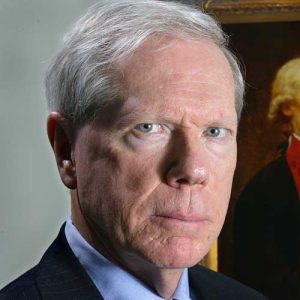
Dr. Paul Craig Roberts attended four of the finest universities, studied under two Nobel Prize-winners in economics, authored 20 peer-reviewed articles in journals of scholarship, and published four academic press peer-reviewed books, including Harvard and Oxford Universities, and seven commercially published books. His most recent book is The Neoconservative Threat to World Order: Washington's Perilous War for Hegemony.
TEHRAN - The recently-elected government in Pakistan, which has inherited flailing economy, rampant corruption, poor security, and rising unemployment, wants to tackle all these issues this year.
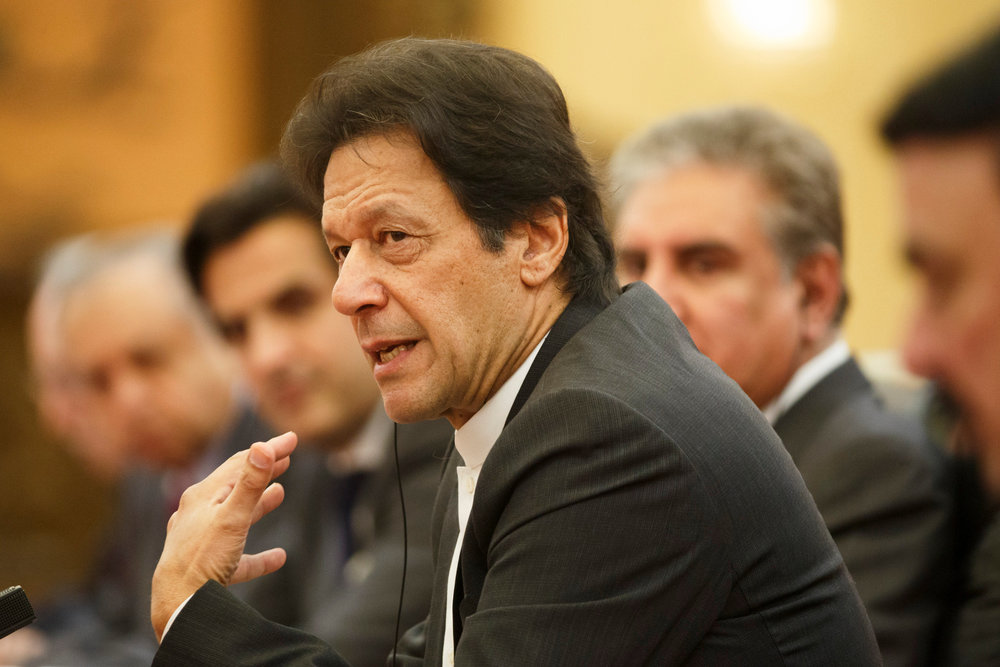
Prime Minister Imran Khan said on Tuesday that his government’s resolution for New Year is to wage ‘jihad’ against the country’s four ills: poverty, illiteracy, injustice and corruption.
“Our New Year resolution is to wage jihad against the 4 ills of our country: poverty, illiteracy, injustice and corruption. InshaAllah 2019 is the beginning of Pakistan’s golden era,” PM Khan said tweeted – his first in 2019.
Pakistan’s Director General of the Inter-Services Public Relations Maj. Gen. Asif Ghafoor also declared 2019 as the “year of progress” in a message tweeted on New Year's eve.
“In our national pursuit for a peaceful, prosperous and vibrant Pakistan, 2019 is year of progress," he said, adding: “united we shall consolidate our successes”.
The speaker of National Assembly Asad Qaiser also expressed hope that the year 2019 would bring sustained economic growth and uplift people and consolidate democracy.
He underlined the need for promoting religious harmony and interfaith dialogue to pursue the ideals of equal development and mutual coexistence as central element for a pluralistic Pakistani state.
Imran Khan led his party Pakistan Tehreek e Insaaf to a landslide victory in Pakistan general elections last year, defeating Nawaz Sharif’s Pakistan Muslim League (PML-N).
Khan has vowed to rebuild institutions of governance and fight corruption in Pakistan. He has also extended hand of friendship towards neighbors including India and Afghanistan.
Anti-corruption and social welfare become the core issues
Perwez Shafi
The victory of Pakistan Tehreek-e-Insaf (PTI or Pakistan Movement for Justice) in the July 25 general elections has led to euphoria and aroused great hopes among the people. Led by the cricket-star-turned-politician Imran Khan, the PTI emerged as the largest party with 116 out of 270 contested seats when the official results were released on July 28 (total contested seats in the National Assembly are 272 but one candidate was killed and another constituency’s election was postponed).
The losing parties and their leaders immediately cried foul and demanded re-election. Indian and Western governments, think tanks, and media outlets deeply disappointed at the outcome as usual blamed military interference for tilting toward the winner.
The magnitude of change brought about by the people can be appreciated from the historical context that Pakistan has lived through for the last five decades. The corrupt, feudal two-party duopoly took turns to plunder state resources. They had a stranglehold on the political system interspersed by military dictatorships. Under the two parties, Pakistan gained notoriety as one of the most corrupt countries in the world.
It was a historic win for Imran Khan and his party. The PTI ended dominance of the center-right Pakistan Muslim League (PML-N) headed by Nawaz Sharif since the early-1980s, and center-left Pakistan Peoples Party (PPP) formed in the late-1960s and now headed by Asif Zardari and his son Bilawal Zardari.
Nawaz Sharif and the Zardaris lead feudalistic, hereditary, and corrupt parties. Their sons and daughters become head of parties, then prime minister or president. They have always preferred personal interest over that of the country’s. In fact, politics is big business for them. They spend money to acquire political power and then abuse it to entrench themselves and to make more money. Thus the cycle continues endlessly.
They looted the national treasury and stashed away billions of dollars in foreign accounts and bought prime real estate in Dubai and London. They have traditionally opposed such basic services as education, health care, and clean water for the people. Being feudal, they think that people will escape their control if these services are provided, hence undermining their “right to rule.” With their immense wealth, they not only bought voters but also judges, corporate heads, and heads of governmental organizations. They would mobilize their cronies and government machinery to steal elections.
Their massive theft and corruption drove the economy into the ground. The acquisition of foreign loans to meet routine government expenses had led to an economic meltdown. Such loans are difficult to repay now.
They have openly supported Indian and Western agendas at the expense of Pakistan’s vital interests. On numerous occasions, their cronies were caught red-handed with such anti-state activities but went scot-free for “lack of evidence” in court. This was because the military supported them from behind the scenes. Since the military is the only organized institution and has a relatively loose check on politicians, these “civilian” rulers (Sharif/Zardari) es-caped this oversight on their activities by cooperating with India and Western regimes. Hence they served as proxies for Pakistan’s enemies. The masses found no respite from them as they openly spent money to buy votes and loyalties in elections. Due to their opulent lifestyle — looting of the country’s wealth and building vast palatial homes and buying properties inside and outside the country — they remained totally indifferent to the masses’ suffering. Over the last 50 years people became cynical and despondent and lost all hope for change in government affairs.
In the first weeks of 2018, then PTI Chairman Imran Khan predicted that if the first-ever civilian transition of power in Pakistan is allowed to happen, then PTI will win a majority in the general election later in the year and that, if elected prime minister, he will hold money launderers who looted the country of its assets account-able for their crimes. After winning the election, as he envisioned he would, his most immediate priority appears to be balance of payments solvency, a crisis that largely emerged over time due to the corrupt practices of career politicians who were burnishing their overseas bank accounts with kickbacks from foreign loans as well as “service fees” from the US War of Terror.
Imran Khan’s win must be viewed against the above nightmarish background and the stranglehold of the two corrupt parties to thwart any change. Khan is charismatic, honest, goal-oriented, self-confident and free from an inferiority complex vis-à-vis the West — a disease that afflicts almost all other Pakistani politicians. He has seen how governments can be run efficiently and honestly for the benefit of the people.
He realized Pakistan’s potential early on but knew it was held back by corruption. So from day one of his political career in 1996, when he formed the Pakistan Tehreek-e-Insaf, he concentrated on two issues: ending corruption and providing social justice. He advocated a system based on meritocracy. For the first time in Pakistan’s history, he has awakened the middle class and women. Thus, against the backdrop of corruption, and the feudal political system, Khan’s call was like a breath of fresh air.
He already enjoyed face-recognition because of his days as captain of the Pakistan cricket team, which won the World Cup in 1992. Soon afterwards his mother died of cancer; it shook him immensely. So he decided to build a world-class cancer hospital asking for no government funding. He visited almost every city and village asking for donations from ordinary people. They reposed their trust in him and donated generously. Building the hospital also raised his reputation as an honest and clean person.
Gradually and painstakingly, he gathered a good and educated team around him. The PTI nearly won the 2013 election but he had to wait for another five years. This turned out to be a blessing in disguise as Nawaz Sharif’s name surfaced in the infamous Panama Papers in early-2017. They revealed he owned expensive real estate in London through offshore companies owned by his sons. For years Sharif and his family kept denying they had any property outside Pakistan.
Khan petitioned the Supreme Court. After three months’ hearings where the Sharif family admitted the properties belonged to them, the apex court disqualified Sharif. He failed to divulge where he got the money from to purchase properties in the most expensive part of London or how the money was sent there. Sharif was accused under section 9(a)(iv) of the National Accountability Ordinance 1999 that relates to corrupt practices while section 9(a)(v) is about owning assets disproportionate to known sources of income.
The court declared that the prosecution had shifted the burden of proof onto the accused. Similar legislation has been promulgated in a number of other countries.
Instead of providing evidence of the money trail, they kept politicizing the hearings by attacking Imran Khan’s persona, the higher judiciary, and military for their predicament. If they had provided evidence of the money trail, they would have been convicted of looting national assets and money laundering. So they adopted a strategy to cry foul and claim “political victimization” by the judiciary and military to gain people’s sympathy.
They used other disruptive tactics: deliberately delaying the National Accountability Bureau (NAB) court proceedings. The hope was that they would be elected again in 2018. Soon the army chief and chief justice would also have completed their tenures and they would replace them with new and more pliant individuals. Further, new legislation would be enacted to overturn the judicial disqualification. They thought the crisis would be over and soon the luxurious lifestyle and absolute power would resume.
However, unlike the Shah of Iran or Marcos of the Philippines, the Supreme Court judgement was an official stamp of certification of their corruption. Two weeks before the election, on July 7, Sharif, his daughter Maryam and son-in-law Safdar were convicted and sentenced to jail terms of 10 years, seven, and one year respectively. They are now lodged in the notorious Rawalpindi Adiala jail. The judge also ordered forfeiture of their property in the Avenfield Apartments, Park Lane, London and imposed £8 million fine on Nawaz Sharif and £2 million on daughter Maryam.
In his first address to the nation, 8-19-2018, PM Imran Khan spent some moments describing the luxuries enjoyed by the prime minister at the people’s expense. Of the 80 vehicles at the behest of the previous prime minister, Imran Khan indicated that he will auction off all but two and put the proceeds into the national exchequer. In addition, he pledged to convert the Prime Minister House in Islamabad into a world-class university.
Khan’s announcement at rallies to hold the rich and powerful political rulers accountable bore fruit even before he came to power. Thus, the whole political discourse was changed from traditional (business as usual) to one of “rise up and clean house” by throwing the corrupt rulers out. The masses’ consciousness and awareness was raised to a new level where they were looking for an honest and clean leader, who sacrificed personal interest for the country and who would provide basic amenities and better opportunities for people.
PTI won the election and has formed a coalition government. People have high hopes of positive change primarily because PTI leaders have set a high bar for performance. The immediate crisis for Khan’s new government is resuscitation of the economy because it needs an immediate injection of $12–20 billion. Some critical decisions have to be made: whether go to the IMF or find alternate sources of funds through creative financing including motivating overseas Pakistanis?
The first issue is the balance-of-payments crisis, which threatens stability of the currency and the government’s ability to repay debts or pay for imports. The budget deficit has grown steadily over the past five years, from 4% to 10% of GDP due to skyrocketing imports, especially rising oil prices. As a result, foreign currency reserves have declined to under $10 billion, barely enough for two months’ imports while export earnings dropped from $25 billion in 2013 to $22 billion in 2017, according to the State Bank of Pakistan. Meanwhile Pakistan’s currency, the rupee has devalued four times since December depreciating from Rs.105 to Rs.125 to the US dollar in August.
One of the main reasons the US is objecting to Pakistan’s application for an IMF loan is that it is opposed to Pakistan paying Chinese creditors first who have loaned $62 billion for the China-Pakistan Economic Corridor (CPEC) infra-structure projects of highways, railways, bridges, and power plants across the country. The just-ousted PML-N government’s secrecy surrounding the CPEC agreement has raised eyebrows in international markets as well as in Pakistan. Though Khan supported CPEC, he has insisted that agreements will be made public when he assumes office. That would also show the loan amount, interest rates, and the magnitude of annual debt-servicing burden on Pakistan.
Total debt-servicing projections including CPEC projects stand at $31.3 billion until 2022–2023, which far exceed export earnings. These will increase when other sources of income or loans are taken to service earlier loans. Chinese loans and debt servicing have saddled Pakistan with unsustainable growth. If CPEC is in Pakistan’s interest why does Islamabad need to incur additional loans when it serves China’s empire-building projects? This is because Pakistan’s location saves considerable cost compared to the long and vulnerable sea routes. In addition, the previous PML-N government obtained total foreign loans of Rs1.2 trillion, exceeding its original target of Rs810 billion for the outgoing fiscal year by around 48% to finance its kickbacks and corruption. As a result, foreign loans have exploded in the last 10 years and with it the ability to service debt have also reached critical proportions.
After reviving the economy, Imran Khan said he will hold all those responsible for corruption and white collar crimes, looting and plundering the country, accountable. After exposing Nawaz Sharif, he needs to go after Asif Zardari and his PPP cronies who openly indulged in money laundering schemes, siphoning away hundreds of billions if not trillions of dollars. This was Imran’s main slogan over the last 20 years and people voted for this very reason.
Another problem is severe shortage of water: for drinking, agriculture and industrial usage. While India kept building large dams on rivers in Kashmir that flow into Pakistan thus diverting water away, Pakistan did not complain to the World Bank. This is in violation of the Indus Water Treaty brokered by the World Bank in 1960. Further, Pakistan did not build its own dams; the last big one was constructed in the 1960s.
This is dereliction of duty. People expect that Musharraf, Sharif and Zardari, who ruled for the last 18 years, should not only be held accountable but also prosecuted for criminal negligence. Building dams, however, requires huge sums of money that will put further strain on the economy.
Another important issue is to restore mutual trust between civil-military relations. There is no doubt that the military is the most organized and powerful institution, which dominates all other institutions of state and society. As the veteran politician Shaikh Rashid said, all politicians have been reared in the nursery run by the military. The problem arises when these politicians grow up and gain some self-confidence and they bgin to think they can either dictate or pursue their own interests without regard to military interests.
Sometimes the military has to clean up its own mess decades later. During General Zia al-Haq’s time (1979–1988), the military created the Muhajir Qaumi Movement (MQM) led by Altaf Hussain. After gaining some experience, the MQM created its armed terrorist gangs that held Karachi hostage for almost four decades. The MQM had government support during General Musharraf’s rule. Finally in 2013, after changes in the military and because of changed circumstances, cleanup operations began breaking up MQM’s armed and terrorist wings altogether.
Similarly, alarmed by the growth of goodwill for the Islamic Revolution in Iran, at the behest of the US, General Zia created Lashkar-e-Jhangvi whose sole mission was to brand the Shi‘is as kafirs and legitimate targets for killing. They were given support and an environment was created in which Shi‘is could be harassed and killed openly with no questions asked. Now the military has started cleanup operations and the fight continues to this day. The LJ terrorists first fled to the tribal areas of Waziristan but under continued pressure, they shifted to Afghanistan. From there they occasionally attack military and soft civilian targets including non-Muslim minorities that result in Pakistan’s name being tarnished.
In the recent elections, the military again appeared to be supporting right-wing extremists, the Tehrik-e Labbayk Pakistan (TLP), but they were unable to win despite garnering appreciable number of votes. It would serve Pakistan well if the military were to cease experiments in social engineering. Such activity only creates more divisions in society. Let the natural process evolve whereby morally upright, self-confident, and patriotic politicians would be able to grow.
At the same time, instead of focusing on the army’s power, authority, and funds, politicians should build their own stature intellectually, morally, and ethically such that they are able to analyze social and political problems, conceive solutions, and convince the masses of their efficacy. This will help build their own independent base of support among the people. After all in 2016 when Turkish Prime Minister Recep Tayyip Erdogan was confronted by a Western-backed military coup, it was the masses that stood against the military to defend freedom and civilian rule.
So politicians have to be realistic. When politicians and the military gradually reach a meeting of minds, the latter may then cede some of its powers and authority — anathema now — to other institutions of state. All countries that have adopted this natural process have reaped the benefits of unity and social cohesion and become stronger. Turkey and China are good examples.
Imran Khan is making all the right moves and has the support of the people. His ascent to power is similar to the rise in the early-1950s of Mohammad Mossadeq in Iran through elections. Both came to power despite the depressing political background and circumstances. Mossadeq nationalized British Petroleum and took steps to uplift the population from poverty and illiteracy. Time will tell whether like Mossadeq, Imran Khan and his team would be able to take bold steps to resuscitate the economy, hold corrupt politicians accountable, build dams, and then turn attention to the equally urgent task of human development and education.


 Ⓧ
Ⓧ