Showing posts with label blockade of Qatar. Show all posts

Tuesday, December 11, 2018

Shifting Middle Eastern sands spotlight diverging US-Saudi interests

by Dr James M Dorsey
A series of Gulf and Middle East-related developments suggest that resolving some of the Middle East’s most debilitating and devastating crises while ensuring that efforts to pressure Iran do not perpetuate the mayhem may be easier said than done. They also suggest that the same is true for keeping US and Saudi interests aligned.
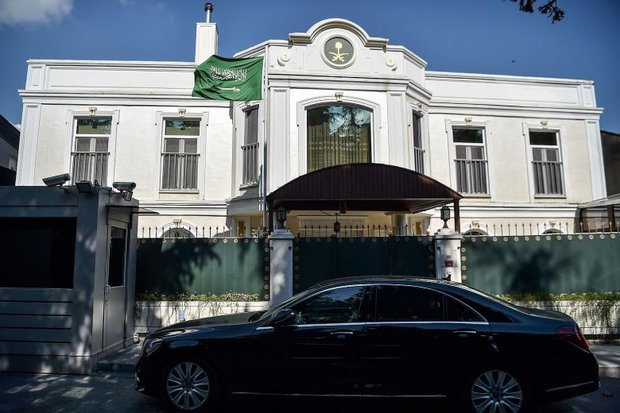
Optimists garner hope from the fact that the US Senate may censor Saudi crown prince Mohammed bin Salman for the October 2 killing of journalist Jamal Khashoggi in Istanbul; the positive start of Yemeni peace talks in Sweden with an agreement to exchange prisoners, Saudi Arabia’s invitation to Qatar to attend an October 9 Gulf Cooperation Council (GCC) summit in Riyadh, and a decision by the Organization of Oil Exporting Countries (OPEC) to cut production.
That optimism, however, may not be borne out by facts on the ground and analysis of developments that are likely to produce at best motion rather than movement. In fact, more fundamentally, what many of the developments suggest is an unacknowledged progressive shift in the region’s alliances stemming in part from the fact that the bandwidth of shared US-Saudi interests is narrowing.
There is no indication that, even if Qatari emir Sheikh Tamim bin Hamad Al Thani decides to accept an invitation by Saudi king Salman to attend the GCC summit rather than send a lower level delegation or not attend at all, either the kingdom or the United Arab Emirates, the main drivers behind the 17-month old economic and diplomatic boycott of the Gulf state, are open to a face-saving solution despite US pressure to end to the rift.
Signalling that the invitation and an earlier comment by Prince Mohammed that “despite the differences we have, (Qatar) has a great economy and will be doing a lot in the next five years” do not indicate a potential policy shift, UAE Minister of State for Foreign Affairs Anwar Gargash insisted that the GCC remained strong despite the rift. “The political crisis will end when the cause behind it ends and that is Qatar’s support of extremism and its interference in the stability of the region.,” Mr. Gargash said, reiterating long-standing Saudi-UAE allegations.
Similarly, United Nations-sponsored peace talks in Sweden convened with the help of the United States may at best result in alleviating the suffering of millions as a result of the almost four-year old Saudi-UAE military intervention in Yemen but are unlikely to ensure that a stable resolution of the conflict is achievable without a lowering of tension between Saudi Arabia and Iran. Even humanitarian relief remains in question with the parties in Sweden unable to agree on a reopening of Sana’a airport to facilitate the flow of aid.
More realistically, with the Trump administration, backed by Saudi Arabia and Israel, determined to cripple Iran economically in a bid to force it to alter its regional policies, if not change the regime in Tehran, chances are the Yemeni conflict will be perpetuated rather than resolved.
To Yemen’s detriment, Iran is emerging as one of the foremost remaining shared US-Saudi interests as the two countries struggle to manage their relationship in the wake of Mr. Khashoggi’s killing. That struggle is evident with the kingdom’s Washington backers divided between erstwhile backers-turned-vehement critics like Republican senator Graham Lindsey and hardline supporters such as national security advisor John Bolton. The jury is out on who will emerge on top in the Washington debate.
The risks of the Saud-Iranian rivalry spinning out of control possibly with the support of hardliners like Mr. Bolton were evident in this week’s suicide bombing in the Iranian port of Chabahar, an Indian-backed project granted a waiver from US sanctions against the Islamic republic to counter influence of China that support the nearby Pakistani port of Gwadar.
Iranian officials, including Foreign Minister Mohammad Javad Zarif and Revolutionary Guards spokesman Brigadier General Ramadan Sharif suggested without providing evidence that Saudi Arabia was complicit in the attack that targeted the city’s police headquarters, killing two people and wounding 40 others.
Iran’s semi-official Tasnim news agency, believed to be close to the Guards, said the attack was the work of Ansar al-Furqan, an Iranian Sunni jihadi group that Iran claims enjoys Saudi backing.
Iran’s allegation of Saudi complicity is partly grounded in the fact that a Saudi thinktank linked to Prince Mohammed last year advocated fuelling an insurgency in the Iranian province of Sistan and Baluchistan that incudes Chabahar in a bid to thwart the port development while Mr. Bolton before becoming US President Donald J. Trump’s advisor called for US support of ethnic minorities in Iran.
In a bid to create building blocks for the fuelling of ethnic insurgencies in Iran, Pakistani militants have said that Saudi Arabia had in recent years poured money into militant anti-Iranian, anti-Shiite madrassas or religious seminaries in the Pakistani province of Balochistan that borders on Sistan and Baluchistan.
The divergence of US-Saudi interests, agreement on Iran notwithstanding, was on display in this week’s defeat of a US effort to get the UN General Assembly to condemn Hamas, the Islamist group that controls the Gaza Strip. Saudi Arabia, despite the kingdom’s denunciation of Hamas as a terrorist organization and its demand that Qatar halt support of it, voted against the resolution.
The vote suggested that Mr. Trump may be hoping in vain for Saudi backing of his as yet undisclosed plan to resolve the Israeli-Palestinian dispute that is believed to be slanted towards Israel’s position.
Saudi ambassador to the UN Abdallah Al-Mouallimi said the defeated UN resolution would “undermine the two-state solution which we aspire to” and divert attention from Israel’s occupation, settlement activities and “blockade” of territories occupied during the 1967 Middle East war.
Saudi Arabia’s changing status and the divergence of longer-term US-Saudi interests was also evident in this week’s OPEC meeting in Vienna.
To get an OPEC deal on production levels, the kingdom, once the oil market’s dominant swing producer, needed an agreement with non-OPEC member Russia on production levels as well as Russian assistance in managing Iranian resistance, suggesting
The agreement, moreover, had to balance Mr. Trump’s frequently tweeted demand for lower prices, and the kingdom’s need for higher ones to fund its budgetary requirements and Prince Mohammed’s ambitious economic reforms and demonstrate that the Khashoggi affair had not made it more vulnerable to US pressure.
With some of Mr. Trump’s ambassadorial political appointees expressing support for populist, nationalist and authoritarian leaders and political groups, the fact that some of the president’s closest Congressional allies back the anti-Saudi resolution illustrates that there are red lines that a significant number of the president’s supporters are not willing to cross.
All told, recent developments in the Middle East put a spotlight on the changing nature of a key US relationship in the Middle East that could have far-reaching consequences over the middle and long-term. It is a change that is part of a larger, global shift in US priorities and alliances that is likely to outlive Mr. Trump’s term(s) in office.
Dr. James M. Dorsey is a senior fellow at the S. Rajaratnam School of International Studies, co-director of the University of Würzburg’s Institute for Fan Culture, and co-host of the New Books in Middle Eastern Studies podcast. James is the author of The Turbulent World of Middle East Soccer blog, a book with the same title and a co-authored volume, Comparative Political Transitions between Southeast Asia and the Middle East and North Africa as well as Shifting Sands, Essays on Sports and Politics in the Middle East and North Africa and just published China and the Middle East: Venturing into the Maelstrom

Tuesday, October 23, 2018

So many questions, so few answers so far

By: Martin Love

So many questions, so few answers so far
NORTH CAROLINA, Oct. 23 (MNA) – It’s a bit of an imaginative stretch, if not a preposterous one, but there may be some reason to think that the murder of Jamal Khashoggi might set the stage for positive changes.
No question, for example, that there have been significant decisions made by some power brokers not to attend the so-called “Davos in the Desert” conclave in Saudi Arabia,  and some of Washington’s warmongers seem to be turning against Muhammad bin Salman somewhat.
Whether the outrage against the current “leader” in Arabia is fake remains to be seen, because the Saudis do have the capacity to make life difficult for the West, if not the entire world, even by cutting down marginal oil sales to fill the presumed gap that may be coming if the US is successful in halting the sales of Iranian oil into the markets after sanctions against Iran are ratcheted up on November 4th.
Much higher prices for oil could threaten an economic recession, particularly in the US, which is the sole economy at the moment that’s at least claimed to be performing quite well. If the US were to fall in to recession, and if the equity market were to tank, Trump and the GOP would be in huge trouble politically since he’s owned the markets, claiming they have performed well since he became POTUS because of his tax cuts (primarily benefitting the already wealthy) and deregulation moves.
 The US middle class continues to be eviscerated by high debt levels, stagnant wages and GOP threats to cut cherished and long-established social programs like Social Security and Medicare to staunch the coming budget deficits which are headed well over a trillion dollars annually over the next decade at least.
 In fact, cutting the budget for the US military, a budget which is extremely wasteful, would be by far the best course of action ahead. Consider, for example, that Russia alone, with a defense budget less than a tenth of that of the US has the military capacity and armaments to lay waste to the US if, as Putin recently said at Valdai, Russia were ever directly attacked by the US.
At any rate, the perception is growing that MBS has gone too far too many times, that he is little but a thug, and some of his moves before the Khashoggi murder did not have US approval. The blockade of Qatar was a case in point. Trump and son in law Jared Kushner and the Neocons around Trump have been trying to enhance the alliances with the Saudis and the Israelis, which allegedly languished under Obama.
Trump has enjoyed some victories. Brett Kavanaugh was confirmed for the US Supreme Court. The Mueller investigations over Russian political collusion appears to have turned up almost nothing of substance. And Trump could well come out of the mid-term Congressional elections smelling like a stinking, hybrid rose whose odor is so strong, even as a rose, that it’s repellent.
 If the Democrats don’t win a majority in the House of Representatives come November 6th, it is possible Trump on his crew of GOP aligned gangsters will have little to no opposition to do whatever they want. I reckon the question is whether Trump will be forced turn his back on MBS. It’s likely, because Trump’s supporters don’t seem to have much affection for MBS, and anything that staunches Saudi influence in the US media and over US foreign policies is not a bad development.
 MBS does not fact have many friends now, not even within the Saud family, since he imprisoned a number of them in the Ritz Carlton in Riyadh for a time and also stripped some of them of a portion of their assets as he consolidated his power. It’s possible the Saudi regime cannot survive, but who can replace them one has to also wonder. But here methinks are the real questions:
Might Trump at least moderate his attempts to take down Iran’s Islamic Republic if he moves away from the Saudis and MBS? Was the resignation of toxic and ignorant Nikki Haley from the U.N. post somehow pushed by Trump himself, or was it because Haley realized she had compromised herself by taking liberties with her expense account and enjoying some excessive personal advantages given her position?
 And what about Defense Secretary James Mattis being called by Trump a “Democrat” of sorts recently? Mattis has been supporting the US presence in countries like Syria and Afghanistan. Might Trump be thinking of changing his Cabinet and augmenting his control of foreign policy away from Zionist influence and the Neocons like John Bolton? Who knows, but it’s possible that when Trump catered to Neocons and Zionists he did so with some reluctance, realizing that he needed their support at a time when many GOP members in Congress did not offer him much support and considered him unfit for high office.
 Consider that if the House of Representatives manages to retain a GOP majority next month, Trump’s power and control of the GOP and future policies will be mightily strengthened. He may feel freer to chart an independent course, especially with respect to foreign policy. It’s important to remember that when he was campaigning in 2016 he was talking about reducing US military adventurism overseas, and I know for a fact that many who voted for him in opposition to bellicose Hillary Clinton did so because they were sick and tired of the US bullying its way around the planet and all the insane spending on the military rather than on domestic needs.
Of course, all this may be wishful thinking on steroids by those in and outside the US who strongly lament what’s become of the US since the invasion of Iraq in 2003, if not well before. Like the Israelis and the Saudis, the US really has few friends now, even in Europe, and what country or individual can long manage, or even want to, without friends? Islam, in any event, has been sullied by the Saudis and their control of Makkah and Medina, and one heartening suggestion recently was that both these Muslim holy cities be reconstituted as something like the Vatican for Muslims worldwide.

Sunday, October 14, 2018

Khashoggi murdered, dismembered, taken out of Turkey: Askari

Khashoggi murdered, dismembered, taken out of Turkey: Askari

TEHRAN, Oct. 14 (MNA) – Professor Hossein Askari, an expert on Saudi Arabia who also teaches international business at the George Washington University, believes that Jamal Khashoggi was murdered, dismembered and taken out of Turkey.
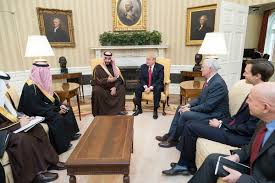
“Mohammad bin Salman has promised Kushner his financial support for the Trump-Kushner business empire now and especially in the future. In return MBS wants US support for his domestic policies and for all his foreign adventures and conflicts—Yemen War, operations in Syria, preoccupation and hatred for Iran, blockade of Qatar, hatred for the Muslim Brotherhood and now assassination in a foreign country,” Hossein Askari, who served as special advisor to Saudi finance minister, tells the Tehran Times.
Following is the text of the interview:
Do you now believe that Jamal Khashoggi was murdered, dismembered and taken out of Turkey?
Yes, absolutely.
Why do you think Mohammad bin Salman took such an outrageous approach to counter a critique?
MBS is a young man with little experience. He is on a high. He thinks he can do anything he wants. Sky is the limit. Overnight, he has risen from nowhere to rule Saudi Arabia. And he appears to have the unquestioned backing of the United States. The Trump administration, with Jared Kushner as the point man, has embraced MBS. As I have said for over a year, I believe that MBS has promised Kushner his financial support for the Trump-Kushner business empire now and especially in the future. In return MBS wants US support for his domestic policies and for all his foreign adventures and conflicts—Yemen War, operations in Syria, preoccupation and hatred for Iran, blockade of Qatar, hatred for the Muslim Brotherhood and now assassination in a foreign country. I think he ordered this assassination because he thought Trump would talk but do nothing. After all, Trump hates reporters! And Kushner is behind him. In the end, he did so because he could. I think all of this was cooking in his head.” 
Why hasn’t the Trump Administration acknowledged this and taken some appropriate action?
Business interests. Trump and Kushner are first and foremost concerned about the health of their own business empires. Saudi Arabia could be their guardian angel. America’s standing in the world is their major concern.
What could Trump do?
I will give you a long list but let me say up front that I don’t think Trump will do much of anything. He could terminate US support for his war in Yemen, Oppose the blockade on Qatar. Pull all US military advisors out of Saudi Arabia and put sharing of military intelligence on hold. Freeze all military sales to Saudi Arabia. Recall the US ambassador from Saudi Arabia and expel a number of Saudi diplomats from the US. Impose economic sanctions. Make it clear to MBS that the US will not support him if he starts a conflict with Iran. There are lots that he could do but he won’t unless MBS is overthrown internally. The overthrow of MBS is now much more likely. There was already resentment towards what he had done to senior members of the family, taking them hostage and demanding money but now there may be real danger for the survival of Saudi family rule. So things could turn from bad to worse for MBS.
What will this signal to the rest of the world? Can any country now send assassins around the world to kill?  
Let me first say that if the US knew about the planned murder of Khassoghi and as we have seen did nothing, then the US is complicit to a murder.  The whole affair is shocking. To think that Saudi Arabia or any government could do this is absolutely unthinkable. You are judged by the friends you keep. If the US is unwilling to take any meaningful action against MBS and Saudi Arabia, signaling that as a close friend and ally Saudi Arabia can do no wrong, then US pretensions to democratic values and the rule of law will be damaged for years to come. The UK and Europe took swift action against Russia’s assassination attempts on their soil and they received belated support from the US. What will the US say to the world if it does nothing? Our favorite dictators can do anything and we will look the other way. Just think the message that this sends to the rest of the world and what this will do for democratic values around the world? Moreover, any terrorist organization can now do the same with impunity. If America’s allies can send killers around the world to assassinate those that oppose them, why shouldn’t they? The US will also become more vulnerable. We will open an arena of conflict that we will regret.
Interview by Javad Heirannia