Showing posts with label Jamal Khashoggi’s brutal murder. Show all posts

Thursday, October 03, 2019

Nobody Buys MbS’s Whitewashing of Murder

By: Madawi al-Rasheed*

The brutal murder of journalist Jamal Khashoggi at the Saudi consulate in Istanbul on October 2, 2018 shattered the myth of the benevolent monarchy and set Riyadh on a charm offensive.

While the murderers are yet to be convicted in Saudi courts, Crown Prince Muhammad bin Salman (MbS) has come close to admitting responsibility. His recent PBS interview included a statement that should have been made a year ago, as the prince admitted the crime happened under his watch - but he went on to say that there are three million Saudis working in the public sector, and officials among them were responsible for the crime.

A year after the murder, neither the perpetrators nor the boss who gave the orders have been convicted. A secretive trial of 11 operatives has yet to issue its verdict. And bin Salman’s key aide, Saud al-Qahtani, named as one of the suspects, has disappeared from the public eye, while the crown prince enjoys applause at carefully staged populist events, including the September 23 celebration of Saudi Arabia’s national day.

Yet, while the veneer of "life as normal” continues in the kingdom, the crime of the century changed many things. It was a catalyst that reminded the world of the treacherous nature of a regime long endeared to its Western allies. The U.S., UK and other partners were not going to change their intimate relations with Saudi Arabia simply for the sake of a slain journalist.

After all, thousands of Yemeni men, women and children have been bombed over the past five years, without shaking the conscience of those who arm Saudi Arabia and support its air strikes on the ground.

Realpolitik prevails against the uproar of global civil society and UN agencies who have conducted their own investigations of the Khashoggi murder and the war on Yemen. The Khashoggi case was not going to change the basic rules of the game.

But domestically, the trust between the Saudi leadership and the people has been permanently shattered. The murder exposed the deep state that Muhammad bin Salman inherited from his deposed cousin, Muhammad bin Nayef, who wired Saudi Arabia to control its citizens and widened the net to catch critics, dissidents and civil society founders, under the guise of fighting terrorism.
'Maybe He Did'

Unfortunately for bin Nayef, he became persona non grata despite him being the CIA’s preferred candidate to succeed King Salman. Bin Nayef was sacked as U.S. President Donald Trump clashed with his intelligence agencies and offered the crown prince cart blanche to rise to the top posts in the kingdom, amassing a half-dozen senior jobs.

Trump even refused to accept the verdict of his own intelligence services on the Khashoggi murder, shrugging off the evidence and the intercepted phone calls, and concluding that "maybe he did” have knowledge of the event "and maybe he didn’t”.

The Khashoggi murder was merely a symbol of the erratic, daring and brutal thinking of the crown prince, who proved capable of humiliating his own kin under the guise of anti-corruption.

His bullying of the wealthy elite to save the initial public offering of five percent of the state-owned Aramco oil company promised to safeguard his Vision 2030 and raise much-needed cash. The princes and business elite detained in the Ritz Carlton two years ago are terrified at the prospect of losing their own excessive wealth, but also their heads, should they attempt resistance. 

A Clear Message

Murdering Khashoggi sent a clear message to all citizens, including royalty. This regime is drawing the curtain on previous episodes of royal politics, namely the deployment of carrots and sticks, which to a certain extent succeeded in containing dissenting voices and earned the regime the title of benevolent dictatorship. But alas, the carrots have vanished, and the sticks have been replaced by sharp knives.

The rentier redistributive economy that ensured acquiescence is giving way to a new strategy of ultimatums. You either pay and keep silent, possibly while under a travel ban, or face a return to the Ritz or somewhere even worse. This is the new face of the kingdom, under the full control of the boy king.

Bin Salman’s treacherous nature is reminiscent of an earlier historical episode. It reminds us of that moment when his grandfather, Abdulaziz bin Saud, eliminated the very people who consolidated his kingdom, a consortium of zealot tribal leaders, as he killed them one after another when the job was finished. He sacked towns, killed people in mosques, and precipitated massacres in places such as Riyadh, Taif, Hayil and others.

While this history has yet to be written properly, the boy king promises to continue that tradition with impunity. The murder of Khashoggi, described by his Turkish fiancee Hatice Cengiz as a man "from the palace”, was perhaps just the beginning. Saudi jails are bulging with prisoners of conscience, and executions are on the rise.
Dishonoring the Dead

Bin Salman will not even honor the dead. Khashoggi’s corpse disappeared, and there are no signs that parts of it will be found or returned to his family to be buried properly.

According to Ali al-Dubaisi, director of European Saudi Organisation for Human Rights in Berlin, the regime is still holding 83 corpses of slain detainees, mostly Shia prisoners who were executed behind closed doors.

Khashoggi's murder alerted the world to how the boy king is determined to rule with an iron fist

The future of the kingdom under the crown prince looks bleak, despite all the hype about tourism, entertainment and other new opportunities on the horizon. Repression will continue hand-in-hand with so-called reform. Khashoggi’s murder alerted the world to how the boy king is determined to rule with an iron fist.

 *Madawi al-Rasheed is visiting professor at the Middle East Institute of the London School of Economics.
-Courtesy: Middle East Eye

Wednesday, October 02, 2019

Jamal Khashoggi's long shadow

David Hearst
Every time Mohammed bin Salman thought he had banished the murdered Saudi journalist's ghost, it has come back to haunt him
A portrait of Saudi crown prince and Jamal Khashoggi (Illustration by Mohamad Elaasar/MEE)
Ayear ago on Wednesday, Jamal Khashoggi stepped into the Saudi consulate in Istanbul to get a paper that would allow him to marry his fiancee Hatice Cengiz.
There was a spring in his step. The paper declaring his divorce was a formality. His closest Saudi friends had warned him the previous week not to step foot inside the consulate, but Jamal brushed them aside, relying instead on his inside knowledge of how Saudi embassies worked. 

A year on from Khashoggi’s murder, the Saudi crown prince finds himself in a very different place

His future in Turkey and Washington was ahead of him. After months of indecision, homesickness and loneliness, Jamal had made up his mind. He did not get back in touch with his friends when he returned to Istanbul from London. He went straight to the consulate.
Within seven minutes he was dead, the victim of a medieval act of butchery.
The death squad did not just answer the question of who would rid Mohammed bin Salman of a "troublesome priest" - words attributed to Henry II about the murder of Archbishop Thomas Becket. 
Khashoggi's murder changed the course of Mohammed bin Salman’s rule itself. A year on, the crown prince finds himself in a very different place.

In retreat on all fronts

The oil-for-security alliance with America is over. Two of Saudi Arabia’s biggest oil terminals were attacked in what Mike Pompeo, the US secretary of state, called an “act of war” by Iran, and US President Donald Trump walked away - for entirely realistic and pragmatic reasons.
Bin Salman's brutal campaign in Yemen is in tatters. His main ally, the Emiratis, have deserted him. They are content to divide Yemen in two and leave the Houthis where they were in the north. A few weeks ago, the Houthis launched a mass attack in which they claimed to have captured 2,000 pro-alliance soldiers, including Saudis.
Far from bringing the battle to the heart of Iran, as he had promised to do, the Saudi crown prince has wrought havoc in the heart of his kingdom. Iran's President Hassan Rouhani revealed that he had received a letter from Saudi Arabia, through an intermediary - the Iraqi Prime Minister Adel Abdul-Mahdi.
We do not know what the letter said, but one can surmise it was not a declaration of war.
A year on, the crown prince is in retreat on all fronts. Mohammed bin Salman still reigns at home with an iron hand. The continued prosecution of religious scholar Salman al-Odah, for charges that would lead to a death sentence, is testimony to that.
Hatice Cengiz, fiancee of Jamal Khashoggi sits next to her book on February 8, 2019 during a presentation press conference of a book named "Jamal Khashoggi" in Istanbul (AFP)
Hatice Cengiz, fiancee of Jamal Khashoggi, sits next to her book named Jamal Khashoggi in Istanbul on 8 February (AFP)
But his charm offensive in the West is over. Bin Salman is no longer courted as an extremely rich moderniser, the young prince in a hurry, the reformer who cuts corners, lauded by columnists such as the New York Times’ Thomas Friedman.
His name is toxic to US brands. Consultancies are deserting, not queueing up to join. No one is talking anymore about flying taxis, robots and cities rising in the desert.
For much of this, Khashoggi is personally responsible. He, by the way, initially supported Mohammed bin Salman’s reforms. He recognised that Saudi Arabia had to change radically. What he criticised was how those reforms were being done.

The opposite effect

Unhappily for his butchers and for the crown prince whose personal bodyguards supervised the operation, Khashoggi’s murder and dismemberment turned out to be one of the most recorded in history.
The Saudi crown prince ordered this assassination because he wanted to silence all whistleblowers. Khashoggi had been part of the establishment and the crown prince, an admirer of Russian President Vladimir Putin’s attempts to poison Russian dissidents in England, wanted to make the same point: no Saudi was beyond his reach.Saudi Arabia tried everything it could to efface that record. They invited the head of Turkish intelligence to Riyadh, claiming the whole affair could be dealt with "in an afternoon”. The offer was declined. They offered to bribe Turkey's President Recep Tayyip Erdogan. He refused. They destroyed the forensic evidence. That was to no avail. The CIA added their own records of telephone intercepts, concluding that Mohammed bin Salman ordered the assassination of Khashoggi.
Besides, Khashoggi was Saudi property. Khashoggi was bin Salman’s goods and chattel. He, the crown prince and future ruler, could do what he wanted with his subjects. That is what being an absolute ruler meant.
Khashoggi’s murder had the exact opposite effect. From that October day on, Mohammed bin Salman would never be able to crawl out from under Khashoggi’s shadow. When the CIA’s director, Gina Haspel, and Washington DC turned definitively against him, the crown prince went into crisis mode. He has been there ever since.
He set up an emergency committee whose task was to deal with the fallout from the murder. They came up with a series of bizarre ideas, one of which was for a “game-changing” Camp David style summit between the crown prince and the Israeli Prime Minister Benjamin Netanyahu.
That came to nothing. He tried courting China as a counterweight to the US. That did not help either. Every time Mohammed bin Salman thought he had banished Khashoggi’s ghost, it has come back to haunt him.
Nothing inside the kingdom has changed. Dissidents and business rivals are suffering horrendous conditions in Saudi prisons. The repression is as harsh as it ever was. Mohammed bin Salman himself has learned nothing from his serial policy failures.

New lease of life

But Khashoggi’s murder has given the role of the Saudi dissident - one that he never wanted for himself - a new lease of life. The impact of his death, which continues to this day, has given new hope to the Arab world in a way that goes far beyond one crime, one of many, which will go unpunished.
Egypt’s President Abdel Fattah el-Sisi literally had to lock down his major cities to prevent Egyptians taking to the streets at the weekend calling for his removal. Six years on, protesters have found a new voice and can affect political change. In Sudan and Algeria they already have.Khashoggi’s message to the Arab world is one of hope. If his life and work boiled down to one message as a Saudi journalist, it was this: the status quo in Saudi Arabia cannot continue. It is doomed to collapse. He was right. The mood of pessimism which settled on the Arab world after the crushing of the Arab Spring in Egypt in July 2013 has lifted.

Tide of history

The tide of history is once again turning and its absolute rulers and military dictators are on the wrong side of it. Khashoggi was not a revolutionary. He was an establishment figure. He was also a modest man. I do not think he would have remotely imagined his death would have had the effect it has had. 
Khashoggi will not fade away with time. If anything, the image of the man who campaigned for a modicum of freedom of speech in his country will grow with time. Khashoggi's final story - that of the slain journalist - has had a journalistic power unrivalled by any of his columns.
In sealing Khashoggi’s fate, Mohammed bin Salman sealed his own.

Saturday, April 27, 2019

Latest Mass Executions Vain Bid to Avert Inevitable End of Riyadh Regime

By: Kayhan Int’l 

A ghastly scene depicting a black-skinned henchman with face hidden by scarf and brutally brandishing a sword that has already chopped off the head of a hapless victim, soaked in fresh blood, was sadistically released by the Saudi media as it unashamedly announced the beheading and crucifixion of at least 37 citizens of Arabia – not for committing any crime or act of terrorism, but for protesting the continued trampling of human rights by a spurious regime, which Britain had created in 1932 and which survives precariously by clinging to the aprons of the US. 
Of those executed, 32 were from the Shi’a Muslim majority oil-rich Eastern Arabia whose wealth the Wahhabi minority cult loots day and night to bask in luxury, to squander in pursuit of pleasures of the flesh, to breed a variety of terrorist outfits from Nigeria to Afghanistan, and to buy state-of-the-art military technology from the godfather of all terrorism, the US, for slaughtering the people of Yemen.
The world is indeed in a state of shock for the past three days, but the UN, which claims to be a ‘world body’, and the self-styled champions of human rights that control it, have either turned a blind eye to his grotesque crime against humanity, or mere uttered a mild rebuke through some lower ranking official.
Why? The answer is obvious. The West, especially the US, needs the milk cow called Saudi Arabia to nourish it, and would prefer to annihilate all the people of Arabia, rather than allowing the people to overthrow this bloody regime and establish an independent state with full respects for the rights of all religious oppressed religious groups, particularly the Shi’a Muslims, who besides forming the overwhelming majority in the east have a sizeable population in Najran, and had traditionally dominated the Land of Revelation, Hijaz.
But it is not in the hands of Washington or its cohorts to avert the inevitable, which is lurking around the corner, and will sooner than later, will sweep the Aal-e Saud clan of Israelite origin into the dustbin of history.
The regime in Riyadh has one of the highest death penalty rates in the world. It previously carried out a mass execution of 47 people in January 2016, including the revered religious leader, Ayatollah Shekh Baqer Nimr an-Nimr, on the absurd charges of terrorsm.
The latest executions also included respected Shi’a Muslim religious leaders, and this is indicative of the deep hatred of Heir Apparent Mohamed bin Salman (MBS) who has overseen an intensified crackdown on the people since he first emerged on the political scene in 2015.
In recent years, he has also ordered the rounding up of high-profile businessmen and members of the ruling family, along with women’s rights defenders who were tortured and whom authorities accuse of "suspicious contact” with foreign entities. The government has repeatedly denied the torture claims.
He also was the prominent perpetrator of the gruesome murder of journalist Jamal Khashogchi at the Saudi consulate in Turkey last October. 
News of the mass executions came on the eve of a major business conference in Riyadh, but it didn’t stop some of the biggest names in banking and finance in the West from attending, which means, they are all accomplices-in-crimes against humanity. 
In view of these facts, the end of the spurious Saudi regime is nearer than it appears, as the wrath of God is all set to strike it and send it into oblivion.

Saturday, April 13, 2019

Yemen, the 5th year of fire and blood (2)

The Saudi Coalition war against Yemen entered its fifth year on March 26, 2019. What took place during the 4 years of the Saudi-led war were the most heinous war crimes. In the previous program we briefly reviewed the genocide unleashed by the Saudi regime and its comrades-in-crime against Yemen during the past four years.
This time we will talk about the inhumane dimensions of the Saudi crimes against Yemen and the reaction of international organs and human rights advocates against the crimes committed by the regime in Riyadh and its accomplices in the region and the world.
The Saudi coalition war against Yemen created not merely human tragedies including killing, injury, homelessness, famine and outbreak of diseases; it had other consequences including obliteration of livestock and infrastructures.
According to international organs, over 600,000 Yemenis have lost their jobs during the past four years. This comes as most of Yemeni people are engaged in agriculture and this sector has been destroyed. Hundreds of thousands of families are facing psychological crisis due to the killing of head of the family or one of their family members. This will have chronic repercussions for Yemenis.
In terms of infrastructure, over 1800 schools in various parts of Yemen have been demolished. As a result of destruction of schools or homelessness of people, over 2 million children have no access to school and education.
According to a report by the Legal Center of Rights and Development, 15 airports, 2,661 roads and bridges, 1,824 government organs, 14 ports, 193 power plants and generators, 434 communication networks, 341 health centers and hospitals, 945 mosques and 424,654 houses of Yemeni people have been destroyed or damaged as a result of the assaults of the criminal forces of the Saudi regime and accomplices.
Over half of Yemen's health centers have been shut down or limited their activities. Nearly 20% of regions lack any doctor because most doctors have left the country or they do not come to hospitals due to insecurity and fear of death.    
These crimes were repeated even on March 26, 2019 when the Yemeni war entered the fifth year. Just on March 26, 26 air strikes were carried out, in which 8 civilians were killed and 7 others were injured, and 11 houses and one hospital were damaged. The bombers of the coalition, by bombing a hospital in Sa'da province, killed at least 8 people 5 of whom were children including an 8-year old, 2 ten-year-old, a 12-year-old and a 14-year-old. 8 people were also injured. The UN Resident Coordinator in Yemen, Lise Grande, condemning air raids on hospitals and medical centers, called for preventing the Saudi invasion on Yemeni hospitals and medical centers but there is no global will to stop the Saudi crimes against Yemen. 
International bodies such as the Security Council, despite numerous war crimes against Yemeni civilians, stayed insouciant and refused to take action to stop this war and support the Yemeni people. Nonetheless, independent human rights bodies have drawn the attention of the world public opinion to the Saudi coalition crimes against the Yemeni people.
The Saudi coalition fighters, on August 9, 2018 targeted a school bus in Sa'da province martyring 50 people and injuring 79 others most of whom were children and students under 13. They were on a trip for a summer period in Dahyan city. The crime led to the release of several international reports on the Saudi coalition crimes against Yemen. The Children's Rescue Institution called the war on Yemen a "war on children". The Amnesty International, by releasing several reports on the Saudi coalition crimes in Yemen, called for the arms sanctions of the Saudi coalition members. Human Rights Watch has repeatedly released reports denoting that Saudi and the UAE regimes have committed war crimes in Yemen.
One of the bitter incidents in the Yemeni crisis is that human rights advocates have either directly supported the war or voiced their support through passivity against these crimes. The US daily New York Times, on May 3, 2018, exposed the stealthy collaboration of the US Special Forces known as green berets on Saudi border with Yemen. The report said "A group of green beret troops have been deployed on the Saudi border with Yemen to help identify and destroy the Houthi missiles in Yemen." The newspaper, confirming the West's increased support for the Saudi coalition against Yemen, pointed to the meeting of the American Senators with Pentagon officials and quoted the head of the US Central Command Joseph Votel as saying: "We are allowed to help the Saudis to defend their borders. We do this by sharing information and through logistics support as well as advising them."
Meanwhile, the US Senate and House of Representatives in March 2019 explicitly confessed the country's support for the Saudi coalition in their crimes against Yemen. Then the US Senate called for a halt of military support for the Saudi coalition in war on Yemen by 54 vs. 46 votes. In the meantime, the House of Representatives with 435 seats endorsed a resolution on ending support for the Saudi coalition with the positive votes of 248 MPs, but the US president Donald Trump vetoed the resolution to continue support for the Saudi coalition in its genocide of Yemeni people and devastation of the country.
Although some of the western governments have officially condemned the Saudi crimes against Yemen and announced that they will stop export of arms to the regime in Riyadh, in practice they took no action to stop the war against Yemen and have hindered any probe into the Saudi and UAE crimes in Yemen. This has proved once more that the so-called human rights advocates have selective glance at human rights and, wherever their interests require, they sacrifice human rights. The minimal pressures brought by the European countries and the US congress in recent months on the Saudi regime stemmed from a crime committed by the Saudi crown prince Mohammed bin Salman against Jamal Khashoggi, the Saudi journalist at the Turkish Consulate in Istanbul, who was gruesomely murdered and mutilated.
Although the war on Yemen costs $ 200 million daily for the Saudi regime so that regime has faced a growing budget deficit, it is unlikely that Al Saud and its partners-in-crime will end their crimes any soon. Furthermore, the US and some Arab regimes envision their own interests in the continuation of this war, rather than ending it.

Friday, December 28, 2018

2018 year of indifference to human suffering, but hope for 2019


Summit of the year: Trump meeting Kim Jong-un in Singapore


ith the controversial actions of the United States President Donald Trump giving rise to a tumultuous world order, the year that comes to an end in three more days can easily be labelled as a year of indifference to human suffering.

Tens of thousands of children die of starvations and disease in Yemen in scenes reminiscent of Somalia in the 1990s, but Trump has made little effort to stop the Saudi-Arabia-led war on the poorest Arab nation. Even after, the Senate, as a response to Saudi Arabia’s extrajudicial killing of dissident journalist Jamal Khashoggi, passed last month a resolution urging the US to stop its support for the Saudi-led war on Yemen, Trump puts business with Saudi Arabia before the urgent need to end the Yemeni people’s suffering which the World Food Programme has described as the world’s worst humanitarian crisis.

According to the international charity group, Save the Children, more than 85,000 children under five have died of extreme hunger in Yemen since the war began in 2015, while other aid agencies estimate that of two million Yemeni children, who are mere skins on bones, nearly one hundred die daily in Yemen. The indifference of the world community – or its complicity -- even after seeing the shocking images of dying children is as appalling as it is puzzling. 

Despite being beset by regular resignations of senior officials, the latest being Defence Secretary James Mattis, multiple scandals, investigations over collusion with
 Russia and a government shutdown, Trump is adamant and does what he wants in the way he wants.  In his bid to appease Saudi Arabia, Trump also disregards calls to take punitive measures against the Gulf nation for the gruesome killing of Khashoggi in Saudi Arabia’s consulate office in Istanbul on October 2.  Apart from Turkey, the rest of the world has not taken a moral stand on this issue and continues its relations with Saudi Arabia regardless, as though human rights are only a matter to be taken up when powerless states commit excesses. 

The year also underlined a depressing reality that the world failed miserably to deal with the life-and-death issue of climate change.  With 2018 being regarded as the fourth warmest year on record since 1880, the blow the Trump administration’s self-centred policy dealt to the climate change agreement by withdrawing from it last year had a cumulative effect.  With the US, one of the biggest polluters of the planet, not in the picture, the climate conference in the Polish coal town of Katowice this month became just another talk shop.

Trump’s make-America-great-again policy does not allow other nations to benefit at the expense of US sacrifices.  He has dismissed climate change warnings as a hoax perpetrated by China. 

The year also saw the United States launching a protracted trade war with China. The tit-for-tat trade sanctions had an adverse impact on the growth of the global economy, affecting largely developing nations.

If 2017 was a year of hope for migrants fleeing war and poverty, 2018 is a year of nightmare for migrants, especially those from Latin America. 

This week, a second migrant child died in US custody as the Trump administration, which is hell bent on building a border wall -- instead of bridges to bring people together -- persists with its tough stand on migrants coming from Latin American nations. Most of these nations, especially El Salvador, Guatemala and Nicaragua, have been pushed into poverty as a result of Washington’s interventionist foreign policy. 

Yet another Trump action that paid little or no attention to human suffering is the sanctions imposed on Iran. The Trump administration, in yet another controversial move, withdrew from the seven-nation Iran nuclear deal and slapped fresh sanctions on Iran, denying the oil-producing nation the opportunity to raise the living standards of its people suffering under decades of tough international sanctions. The move also shot up world oil prices deepening the economic crises many developing nations face. 

Talking of human suffering and global indifference, Palestine needs a special mention. This year also is yet another annus horribilis for the Palestinian people. The Trump administration’s recognition of the whole of Jerusalem as the undivided capital of Israel and the shifting of the US embassy from Tel Aviv to Jerusalem dashed the Palestinians’ hope for an independent state with East Jerusalem as their capital. The defiant Palestinians continue their peaceful struggle, with Palestinian refugees in Gaza launching a Great March to Return to draw the world’s attention to their plight, the injustice caused to them and the humiliation they undergo in the hands of Israeli occupation forces. Hundreds of Palestinians have been killed since the launch of the Great March in March this year.  Yet the international community’s contribution towards ending the Palestinian people’s suffering is distressingly nominal. 

The international community’s indifference to the suffering of the Syrian people continues this year, too. There was little progress on the Syrian front in terms of peace moves. With the Syrian troops now in control of much of the country, and the ISIS terrorists on the run, the war has reached a stalemate. But, it could escalate anytime, as Trump is calling back the US troops from Syria and giving regional power Turkey a freehand to deal with the Syrian Kurdish rebel group YPG which Ankara regards as an extension of the Turkish separatist group PKK. 

A woman holds her skin-on-bones son at a malnutrition treatment center in Sanaa, Yemen. Pic Reuters


The Trump administration in a rash decision is also planning to slash the US military strength in Afghanistan by half. Though a US withdrawal is welcome from Syria and Afghanistan, the move should have been accompanied by measures aimed at permanent peace.  
In terms of world peace, the biggest event this year was the summit between Trump and North Korean leader Kim Jong-un in Singapore in June. The meeting, however, was seen more as a cameo performance by the two maverick leaders than any genuine attempt to strike peace.  As the year began, the world was gripped by fears of a nuclear war between the US and North Korea over Pyongyang’s missile tests.  After the June talks, North Korea dismantled its nuclear weapon test sites, but is now complaining that the US has not kept to its part of the deal.

The year also saw a slowdown in China’s growth, but its push to expand the Belt-and-Road Initiative is making progress, nevertheless, amid criticism that the BRI was China’s neocolonial project driven by debt diplomacy. 
Russia, meanwhile, continues to assert itself in 2018, getting involved in a war of words with Britain following chemical poisoning attacks on Russian dissidents living in Britain. 

The year’s another big story is Britain’s struggle to get a Brexit deal approved in parliament to complete its divorce with the European Union in March next year. 
In South Asia, the setback the Narendra Modi government suffered in recent elections, the defeat of the Maldivian strongman Abdulla Yameen in the presidential election, cricket legend Imran Khan’s rise to prime ministerial seat and, of course, Sri Lanka’s constitutional coup, dominated world headlines.  Another significant development of the year was Malaysia’s general election which saw Mahathir Mohamed’s return to power on a platform of anti-corruption in May. 

On a positive note, though 2018 is a year of indifference, 2019 can be a year of hope, or at least let us hope it will be so, as we see a glimmer of peace hope in the distant horizon with regard to Yemen and Syria. Also 2019 could be an eventful year for the US, with the release of the report on the Robert Mueller investigation into the Trump camp’s alleged liaison with Russia likely any time. Will President Trump survive the probe’s outcome? This question may dominate the political discourse next year. 

Thursday, December 06, 2018

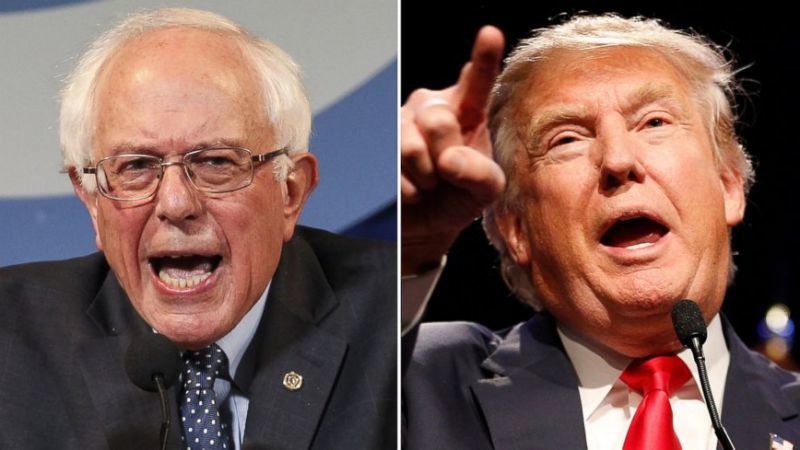
Bernie Sanders's hammer on the Trump's head

By Hanif Ghaffari
TEHRAN - Bernie Sanders, the old American senator, and one of Democratic nominees for the 2016 presidential election, continues to oppose U.S. President Donald Trump. This confrontation started at the time Trump entered the White House (by early 2017).
 Sanders, in one of his most recent positions against the White House, called for an end to Washington's support for Riyadh in the Yemeni war. Sanders also condemned Trump's stance on the murder of Jamal Khashoggi. At any rate, Sanders's recent position against Trump has led to the U.S. President's concerns.
Sen. Bernie Sanders says it would be an "impeachable offense" if President Trump were to fire Robert Mueller the special counsel leading the federal probe into ties between Trump campaign associates and Russia.
"I've been very reluctant to talk about impeachment until we have all the information coming in from the investigation. But that would be a major, major, major obstruction of justice. That would be an impeachable offense in my view," Sanders said in an interview for The Intercept's newly launched podcast "Deconstructed" released Friday.
In his tweet, Sanders was referring Jeff Sessions, Trump's Justice Minister, and his forced resignation. Trump fired Attorney General Jeff Sessions, replacing him with a loyalist who has echoed the president’s complaints about the special counsel investigation into Russia’s election interference and will now take charge of the inquiry.
Sessions delivered his resignation letter to the White House at the request of the Trump. As reported by the Hill, Trump has long voiced frustration with the investigation into possible collusion between the Trump campaign and Russia during the 2016 presidential race, a probe that has also looked at whether Trump tried to obstruct the investigation.
Anyway, Bernie Sanders does not intend to simply surrender to Donald Trump!
The fact is, according to polls conducted in 2016, Sanders had a much greater chance of winning the U.S. presidential elections. Many Democratic voters believed that Sanders could have an important role in regulating power in America as a symbol of change in the United States.
 Although such an idea was wrong due to the political structure in the U.S., it was, however, strongly accepted by some Democrat supporters. On the other hand, Hillary Clinton, the Democratic candidate who was supported by her husband, Bill Clinton, and many influential figures in the party, managed to defeat Sanders with her secret lobbies, and went to fight Trump as Democrats' final candidate.
 Anyhow, if Sanders were to reach the final round of the 2016 presidential competitions, he could have defeated Trump and enter the White House. Sanders, however, was the victim of Democrat leaders and Hillary Clinton's secret lobbies. It was not without a reason that many Sanders advocates voted for Hillary Clinton's rival, Donald Trump!
Sanders now considers himself the United States' potential president! Although apparently he's unwilling to speak about the 2020 presidential election and hasn't confirmed his presence in the competition, Bernie Sanders supporters are calling for him to nominate himself for this political competition.
 Some analysts in the United States note that Sanders's opposition to Donald Trump and the White House policies have paved the way for his re-appearance in the upcoming presidential election. However, it seems that the old Senator of the United States has not yet made his decision.
 Polls recently conducted in the United States indicate Sanders' proper position among Democratic voters. Accordingly, Joe Biden and Bernie Sanders have both a good position among Democrat supporters and they both have a good chance to reach the final round of the 2020 presidential elections.  However, it is not yet clear what would be Sanders ultimate decision on in the upcoming election: Will he nominate himself as the Democratic Party's candidate? Or will he support other figures such as Joe Biden?

Monday, December 03, 2018

How would US try to install next Saudi king?


How would US try to install next Saudi king?

By Hormoz Baradaran*

As the media maintain high pressure on Saudi Arabia and its backers to punish the killers of journalist Jamal Khashoggi, murdered in the Saudi Consulate in Istanbul on October 2, the US and Europeans are seemingly trying to consign the case to the dust bin of history.
It is anticipated that the Saudis will try “rogue operatives” involved in the killing of Khashoggi, and the US Congress will move to temporarily downgrade military ties with Saudi Arabia and restrict arms sales to the kingdom. But it appears unlikely that Washington would push to block Crown Prince Mohammed bin Salman from becoming the next king.
Saudi Foreign Minister Adel al-Jubeir dismissed calls for removal of bin Salman, labeling the leadership as a “red line.” This means that if the US dethrones bin Salman, a severe blow would be dealt to US-Saudi bilateral relations, which would eventually force Riyadh to turn to US rivals, China and Russia, upending the alliance with Washington that has lingered on for more than seven decades.
However, shifting alliances, though not impossible, is at least difficult. The Saudis’ weakness in security and military terms will force them to remain reliant on the West. Mutually, the West requires Saudi oil and partnership in its geopolitical rivalry with Iran.
While the US knows no reliable alternative to the Saudi family for ruling the country, any attempt to kneecap bin Salman would intensify a power struggle among a cluster of princes.
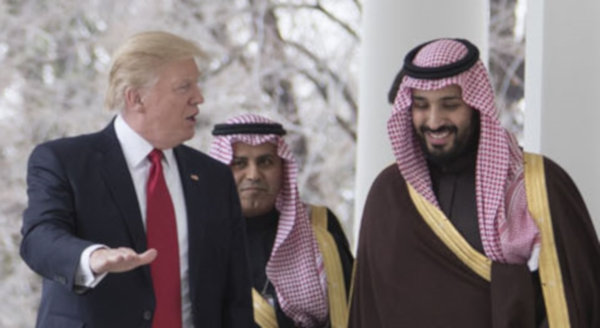
As US President Donald Trump has signaled time and again, he will use his capacity as commander in chief to do his utmost to save bin Salman, who has also forged a cozy relationship with Trump’s aide and son-in-law, Jared Kushner.
The Saudi prince was sidelined during the official “photo family” of world leaders and other dignitaries at the G20 summit in Buenos Aires, Argentina. However, French President Emmanuel Macron and British Prime Minister Theresa May have promised to approach bin Salman and broach the subject that has isolated him.
Given that the crown prince remains unmuzzled, another snake in the Middle East would scale the ladder for them and the region. The prospect of another Saddam Hussein ascending to power poses a potentially grave threat against both the Middle East and Europe.
The US Congress and European countries are using the Khashoggi case as leverage to draw concessions out of Saudi Arabia to make the country change course on the Yemen crisis and the inter-Arab quarrel with Qatar. If some kinds of deals are reached on these issues, the US and Europe would let bin Salman off the hook.

* Hormoz Baradaran is an Iranian journalist.

Tuesday, November 20, 2018

Complicity: US Must Stop Supporting Saudi Narrative on Khashoggi Murder

Complicity: US Must Stop Supporting Saudi Narrative on Khashoggi Murder


TEHRAN (FNA)- Facing pressure to act against the Saudis over the murder of journalist Jamal Khashoggi, but also clearly not wanting to imperil US arms sales to Saudi Arabia, the Trump administration has announced sanctions on 17 Saudis over the grisly murder.
It’s a way to keep everything in line with the oft-changing Saudi narratives, and their consistent theme that the crown prince MBS was wholly blameless.

Meaning, the US won’t sanction the despotic regime. Indeed, all 17 people they did sanction are people that the Saudis had already singled out as being targets of their own token investigation. The US used almost that entire Saudi investigation list, except for military generals, as their own list of sanctions targets.

Now US Treasury officials claim they did “achieve justice” for Khashoggi’s family, which is far from the truth. They just want to sell the idea that they did something, without doing anything at all that might risk juicy US arms sales to Saudi Arabia.

Here, the rules of Global Arms Trade Treaty (ATT) which became International Law in 2014 are simple: If a country knows that the arms about to be sold will be used for genocide, crimes against humanity, or war crimes, then they must stop the transfer.

The ATT also means that every state that has signed up must obey strict rules on international arms transfers. This will at least help to stem the flow of weapons that fuel bloody conflicts, atrocities and state repression around its own citizens and the world, particularly in the Middle East.

Unfortunately, by ignoring the grisly murder of Khashoggi by the Saudi regime, the United States “knowingly” and “deliberately” has refused to adhere to the Arms Trade Treaty, reflect the rules of the treaty, or implement those laws as regards its Saudi vassals.

So far, the policy has had terrible results. The regime had had a free hand to murder its own citizens and critics almost everywhere, while thousands of people have also been killed, injured or forced to flee their homes because of the US-backed, Saudi-led violence and atrocities in places like Syria and Yemen. The majority of casualties are civilians, mainly women and children. What's more, US-made weapons such as missiles and bombs continue to destroy vital civilian infrastructure, pushing survivors into absolute poverty and despair.

On that basis, the US government is in breach of the Arms Trade Treaty for allowing the export of American-made missiles and military equipment to Saudi Arabia that have been used to kill civilians. The accusation comes from international lawyers, human rights groups and the United Nations as well. They are all expressing concerns about Saudi-led coalition attacks, accusing the US government of failing in its legal duty to take steps to prevent and suppress violations of International Law and International Humanitarian Law. They further accuse Saudi Arabia of hiding the evidence and perverting the course of justice over Khashoggi’s murder at the Saudi consulate in Istanbul on October 2. 

By now it should readily be evident that it is American weapons and complicity that have been central to Saudi Arabia’s criminal behavior in the region. President Donald Trump  and his administration have been complicit in this criminality, by continuing to support the Saudis and endorse their fake investigation, despite international concerns as well as strong and increasing evidence that Khashoggi was killed under a direct order by Mohamed Bin Salman.

Under these circumstances, the US government will have to look elsewhere in legally justifying its arming of Saudi Arabia and its diplomatic support at the UN. Until that happens, as per the global Arms Trade Treaty, Washington must end its arms exports to the Saudis or further share responsibility for Saudi war crimes and the crime committed against Khashoggi.

Monday, November 19, 2018

Trump is defending Mohammed bin Salman’s lies.

Congress must insist on the truth.

SAUDI ARABIA’S crown prince, Mohammed bin Salman, is brazenly seeking to lie his way out of accountability for the murder of journalist Jamal Khashoggi — and the Trump administration is helping him do so.
On Thursday, a state prosecutor in Riyadh advanced an account of the killing blatantly at odds with established facts, excusing the crown prince from all blame. Rather than reject this contemptible coverup, President Trump, who had pledged to “get to the bottom” of the case, went along with it. The Treasury Department imposed sanctions on 17 mostly low-level suspects already implicated by the Saudis, while excusing both Mohammed bin Salman and top intelligence officials.
Now we learn that Mr. Trump backed the Saudi leader despite a conclusion by the CIA that the prince was, in fact, responsible for ordering Khashoggi’s assassination. The Post reports that intelligence officials have “high confidence” in their assessment and have briefed the president on their evidence, which includes an audio recording of the killing and phone calls by the leader of the kill team as well as the Saudi ambassador in Washington. Mr. Trump nevertheless has refused to accept Mohammed bin Salman’s responsibility, perhaps because that would mean acknowledging that the White House’s outsize bet on the 33-year-old prince as a strategic ally was badly mistaken.
As in the case of Russia’s interference in the 2016 presidential election, Mr. Trump is rejecting a firm conclusion by the U.S. intelligence community that he finds politically inconvenient. And as in that instance, Congress should move to base U.S. foreign policy on truth rather than lies.
A number of legislators from both parties have spoken up in rejection of the Saudi coverup and the administration’s pitiful response. Three Republican senators — Lindsay O. Graham (S.C.), Todd C. Young (Ind.) and Susan Collins (Maine) — have joined three Democrats, including Robert Menendez (N.J.), the ranking minority member of the Senate Foreign Relations Committee, to back legislation that would require the administration to sanction within 30 days “any official of the government of Saudi Arabia or member of the royal family” tied to the Khashoggi murder by “credible evidence.” Given the CIA conclusion, that would cover Mohammed bin Salman. The bill would also suspend most U.S. arms sales and deliveries to Saudi Arabia until it “honored a complete cessation of hostilities in the Yemen war” and stopped interfering with deliveries of humanitarian aid.
The senators are pressing for the legislation to be taken up by the Foreign Relations Committee in its working session after Thanksgiving so that it can move during the lame-duck session. When we asked committee Chairman Bob Corker (R-Tenn.) about that, he made no commitment. But he told us that Mohammed bin Salman “must be held accountable.” Mr. Corker said he has asked for “a high-level administration briefing for all senators on what more will be done so that we can appropriately coordinate any necessary legislative component of a government-wide response.”
Mr. Corker is giving Mr. Trump a chance to tell the truth about Mohammed bin Salman and adjust his policies accordingly, a correction that is essential to a rational and workable U.S. strategy in the Middle East. If the White House instead continues to abet the crown prince in his lies, Congress must act — swiftly and decisively.
(Source: Washington Post)

Sunday, November 18, 2018

Pakistan PM’s Saudi affair likely to backfire

By Syed Zafar Mehdi
TEHRAN - Pakistan’s relations with Saudi Arabia flourished during the previous government headed by Nawaz Sharif, primarily due to his personal business interests in the Kingdom and friendly association with members of the Saudi royal family. Despite the criticism at home, Sharif never missed an opportunity to eulogize the Saudi rulers and support their wrongs.
During Sharif’s tenure as Prime Minister, while Pakistan’s ‘love affair’ with Riyadh blossomed, relations with Tehran plummeted. When the ambitious gas pipeline project was shelved by the Sharif government in 2015 under the Saudi pressure, some experts couldn’t resist the temptation of reading obituary of Iran-Pakistan friendship. It seemed game over.
But the political transition in Islamabad this year rekindled hopes of a new foreign policy taking shape in Islamabad under the populist premier Imran Khan.  
In his victory speech, Khan made it categorically clear that he would like to strengthen ties with allies in the Middle East, including Iran and Saudi Arabia. During his first meeting with the Iranian envoy to Islamabad, Khan reiterated his desire to bolster ties with Tehran and revive important projects that had been put on the backburner by the previous political dispensation, including the gas pipeline.  
Experts termed it a “significant shift” in Pakistan’s foreign policy as his predecessor was seen overtly inclined towards stronger Pakistan-Saudi relations than Pakistan-Iran relations. Writing in The New Arab, Dr. Fazzur Rahman Siddiqui, a fellow at Indian Council of World Affairs, said with the exit of Nawaz Sharif, Saudi Arabia had lost a reliable ally who never concealed his affection for the Gulf states in general, and Saudi Arabia in particular “for both personal and strategic reasons.”
It was widely believed that Khan’s approach will be different from Sharif and he will not yield to covert pressures from Washington or Riyadh. At least that is what appeared.
When Khan embarked on his first foreign trip to Saudi Arabia, keeping alive the tradition set by his predecessors, he sought to underscore that Riyadh will remain a priority for Pakistan’s foreign policy. Pertinently, it was President Hasan Rouhani of Iran, not King Salman of Saudi Arabia, who first extended an invitation to him.
But the faith in his leadership or his vision for ‘Naya Pakistan’ (new Pakistan) was not yet dented. The massive army of his followers on Twitter ensured that the public opinion, or at least the opinion of netizens, was firmly in favor of his leadership and policies.
As the country’s fiscal deficit inflated to 6.6 percent of gross domestic product (GDP) in 2017-2018 financial year, Khan panicked. He boarded the plane to Riyadh again, this time to seek funds. To woo the Saudi rulers, Khan said Riyadh had “always stood with Pakistan in difficult times and the Pakistani government and its people highly acknowledge it.”
Speculation had been put to rest. Khan was walking on the footsteps of his predecessor.
Following his second visit to Riyadh, Saudi regime announced $6 billion in financial support to Islamabad. It corresponded with the international outrage over the cold-blooded murder of Saudi journalist Jamal Khashoggi. Even as many world leaders boycotted a Saudi investment conference, the so-called ‘Davos in the desert’, over Khashoggi's death, Khan attended the event.
On asked why he attended the conference when many other world leaders had turned down the invitation, Khan said Pakistan was “desperate” for Saudi loans to shore up the flailing economy.
“Unless we get loans from friendly countries or the IMF, we actually won't have in another two or three months enough foreign exchange to service our debts or to pay for our imports. So we're desperate at the moment,” he was quoted saying by the Middle East Eye.
Khan conceded that his immediate foreign policy priority was maintaining good relations with Saudi Arabia despite unprecedented outrage over Khashoggi’s murder by Saudi officials or the outcry over Saudi’s horrendous war crimes in Yemen.
Pakistan, which had previously maintained a neutral stance on Yemen war, might now be forced to support the Saudi onslaught there, some observers fear. If Khan can ignore a reprehensible crime like the killing of Khashoggi because of Saudi petrodollars, it can be expected that he will support the Saudi war crimes in Yemen also, although he has so far resisted doing that.
While Khan has adopted a strong and unwavering stance against the U.S., he seems to have succumbed to the temptation of being subservient to the Saudi kingdom, for funds. That is where he risks losing the goodwill he has earned back in Pakistan and in the international community.
At a time when the world is saying ‘no’ to Saudi Arabia, Khan is part of a tiny minority that is going against the tide. This approach will only isolate Pakistan and it has isolated Riyadh and Washington.
Being subservient to Saudi interests also means that Khan will be forced to toe his predecessor’s line on Iran. If that happens, Islamabad will again be forced to shelve the gas pipeline project, which is being described as critical to Pakistan’s energy requirements.
Khan is walking a tightrope. Wisdom lies in taking informed decisions in the best interests of Pakistan keeping in view long-terms goals. In the cricketing terminology, the cricketer-turned-prime minister could do well by playing the forward defensive shot rather than the mistimed stroke in the air.