Showing posts with label Qajar Era. Show all posts

Wednesday, July 14, 2021

Unmissable sites to visit in Tehran

TEHRAN, (MNA) – Considered as the best manifestation of Iranian art and architecture from the Qajar era (19th and 20th centuries), the incredibly lavish Golestan Palace is an intangible cultural heritage of the Iranian capital.
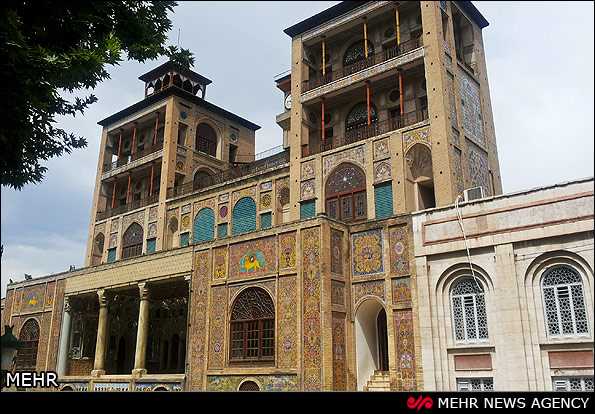
Golestan Palace:
Considered as the best manifestation of Iranian art and architecture from the Qajar era (19th and 20th centuries), the incredibly lavish Golestan Palace is an intangible cultural heritage of the Iranian capital.
The beautiful and colorful architecture is a UNESCO heritage site and is stretched over an area of 4.5 hectares, near Tehran’s traditional Grand Bazaar.
It is one of the oldest historic monuments in Tehran and a masterpiece of beautiful gardens and royal buildings full of Iranian craft collections, where the royal Qajar family used to live for quite some time.
The Golestan Palace is a group of royal buildings that were once enclosed within the walls of Tehran’s Historic Arg (citadel). Its architecture is a mixture of both Persian and European architectural styles, in particular, French.
The complex is made up of 17 buildings with eight key structures. The eye-catching architecture outside is only an introduction into what you will find inside.
It is now a grand complex full of charming Persian art, consisting of gardens, royal buildings, museums and collections of Iranian crafts and European presents.
Some of its most important buildings include: Takht-e Marmar (Marble Throne), Khalvat-e Karim Khani (Karim Khani Nook), Talar-e Brelian (Brilliant Hall), Talar-e Salam (Salam Hall), Talar-e Adj (Ivory Hall), Talar-e Zoruf (Containers Hall), Talar-e Ayeneh (Mirror Hall), Talar-e Almas (Diamond Hall), Emarat-e Badgir (Building of Windcatchers), Shams-ol-Emareh (Edifice of the Sun) and Howz Khaneh (Pond House).
The palace, with very nice and glamorous halls and rooms, each of which reminds the historical importance of the palace, is indeed a must-see place to visit when you are in Tehran. You will have a better experience if you study about Qajar dynasty before visiting the palace.
Sa’d Abad Complex:
Spread over a 180-hectare area, Sa’d Abad complex was built by the Qajars and the Pahlavies (20th century).
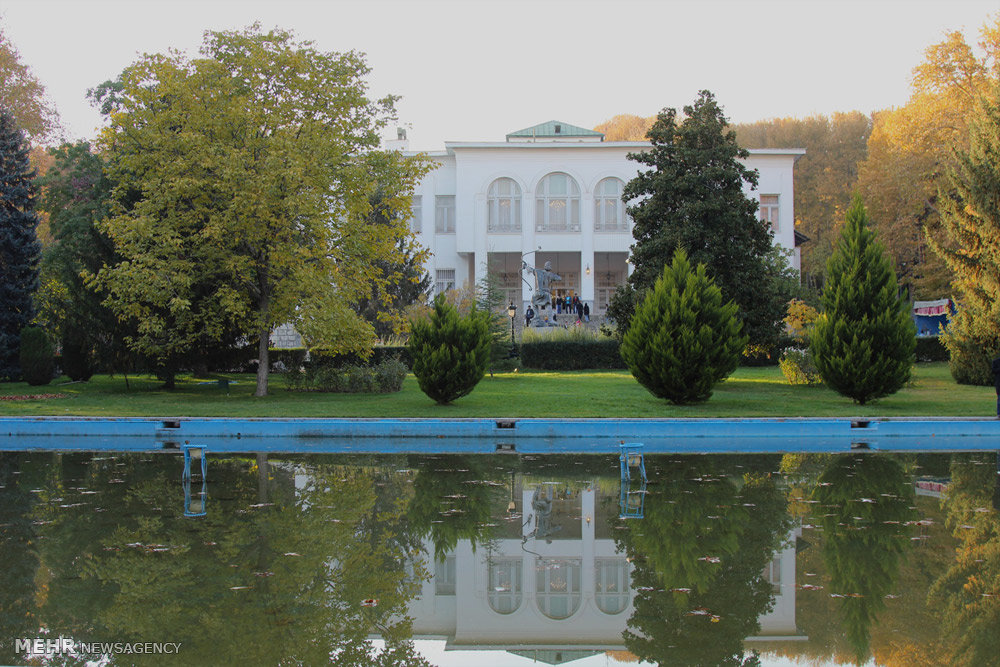
The complex includes a natural forest, several streets, qanats, galleries, mansions and museums. Currently, large parts of the complex are museums, which are accessible to visitors.
Some of buildings of the palace include: Ahmad Shah Qajar Palace, the Green Palace, the White Palace, Museum of Natural History, Museum of Fine Arts, Museum of Anthropology, Museum of Glassware and Handicrafts, the Military Museum, the Behzad Museum, Museum of Treasure, and Museum of Mir Emad Calligraphy.
The most famous palaces are the White palace and the Green Palace, which was the residential of Reza Shah Pahlavi, providing visitors with an insight about the lifestyle of the Iranian king as well as various kinds of 1970s' furniture and art crafts.
The complex’s garden is very nice to walk and it leaves you with a memorable day.
Compared to Golestan Palace, Sa’d Abad represents a more modern face of Iran.
Niavaran Complex:
One of the most beautiful Iran tourist attractions is the 9000-square meters Niavaran Complex. It was built in the scenic surroundings of northern part of Tehran and was used by the Qajar king Naser-e-din Shah (19th century) as a summer residence.
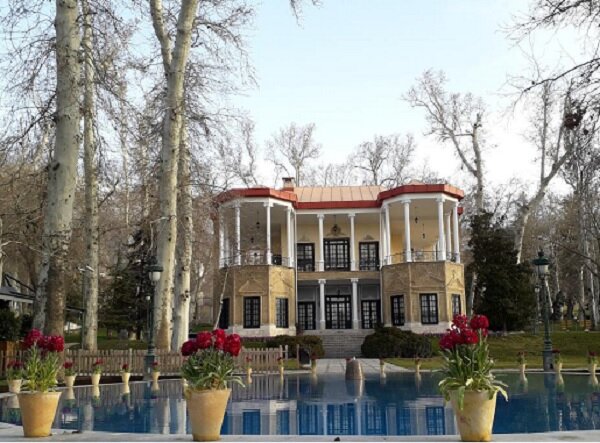
Five museums (Niavaran Palace Museum, Ahmad Shahi Pavilion, Sahebqaraniyeh Palace, Jahan Nama Museum and Private Library), and other cultural, historical and natural attractions such as the Blue Hall, Private Cinema, Jahan Nama Gallery and Niavaran Garden stand among the various parts of the complex.
The Niavaran Palace, completed in 1968, was also the main residence of the last Shah of Iran, Mohammed Reza Pahlavi, and the imperial family until the Islamic Revolution. It seems interesting to discover where the last king of Iran used to watch TV, his children used to play, etc.
The whole complex is inspired by Iranian archeology using modern technology. Like any other royal palaces in Iran, it has breathtaking architecture and decoration.
There are also some famous artworks from Salvador Dali and Picasso. The complex also includes a very big library.

Tuesday, August 20, 2019

Tehran's Moghadam Museum; a gate to luxury of Qajar era buildings


Tehran, IRNA – Moghadam Museum in Tehran has a reputation as one of the most valuable historical houses in the world.
The museum complex consists of the main building and a beautiful garden, safely hidden from street noise behind thick walls. The entrance of the museum is not easy to discover from the street, but it readily offers all its beauty to curious travelers who notice the modest door of the museum.
It is a luxurious example of the Qajar dynasty buildings. Originally, it belonged to one of the city authorities titled Ehtesab-ol-Molk.
Later on, his son, Mohsen Moghadam, inherited the house and owned it together with his companion Salma. Besides being an architectural and cultural monument itself, the house is an incredible collection of priceless objects. The house has passed to Tehran University that continued its supervision after Mohsen’s death. In 2009, the house was restored and opened for publicity as a museum.
The building of Moghadam Museum consists of two parts: interior and external wings. Decoration of the house is typical for that period style: colorful tiles, columns and arches create a unique authentic atmosphere.
The peaceful garden is full of blooming trees, flowers and bushes, decorated with turquoise fountains and sculptures. The garden is especially breathtaking during springtime when nature wakes up in gentle sunshine. One of the rooms of the house is decorated with precious and semi-precious stones and corals. Also, guests can admire unique golden tiles, decorating one of the walls.
All the surroundings and buildings around it have typical architecture and are relatively new, but as soon as you reach the entrance of the museum, everything changes. The first things that will catch your attention, are beautiful ponds, lots of magnificent geranium and the use of sharp Persian type colors like turquoise, blue and purple.
Iranian architectural principles of a Persian garden in this mansion is one of the kind. The residency used to be the house of Mohammad Taqi Khan Ehtesab-al Molk, one of the most famous members of the Qajar court.
Years later, Dr. Mohsen Moghaddam, a professor of archeology at Tehran University and his French wife Selma, bought the house. The couple who appreciated historical and artistic arts and crafts of Iran began collecting valuable artifacts from around the country and exhibited them in their property.
In the west part of the mansion, there is the main section (tower), which had been mastered by professor Moghaddam and one of his students at the Faculty of Fine Arts, doctor Abolqasemi, in 1966. The building is decorated with tiles from the Qajar era and parts of Iranian arts and crafts are being exhibited in it.
The building, nowadays known as Moghadam Museum, was one of the luxurious houses of the Qajar period. It has two sections called Birouni (public wing) and Andarouni (private wing), along with all the other splendid parts of this majestic house, visitors can also see beautiful golden tiles installed on the walls. Some of these tiles are unique in the world.
Moghadam’s textile collection is also among rare collections of the world. They are now kept frozen in the complex and only one is publicly displayed in a glass showcase.

Teh

Wednesday, July 17, 2019

Babol Jame' Mosque, North of Iran

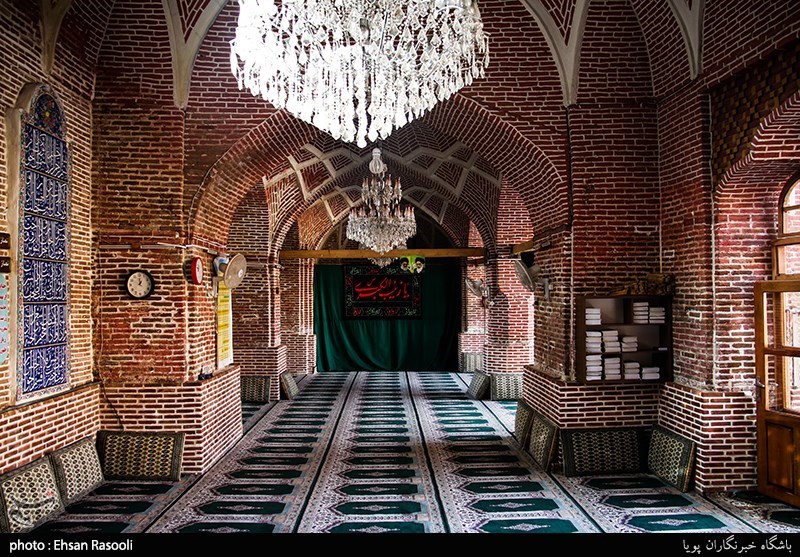
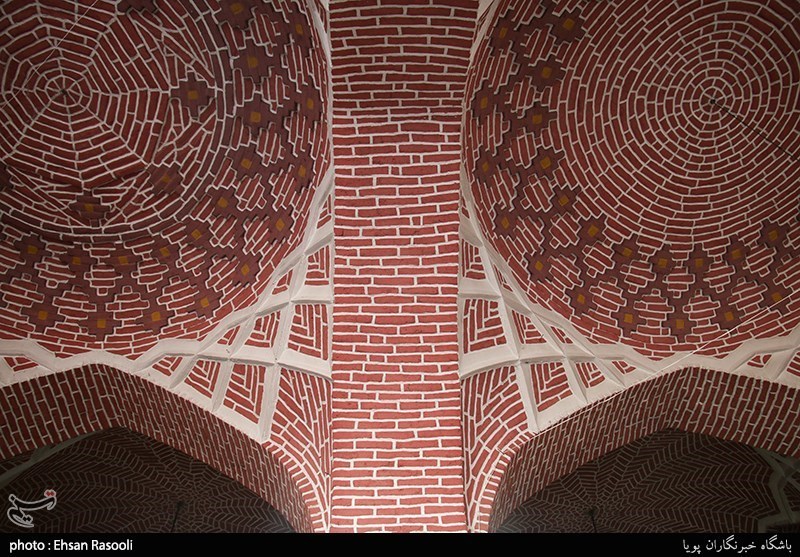
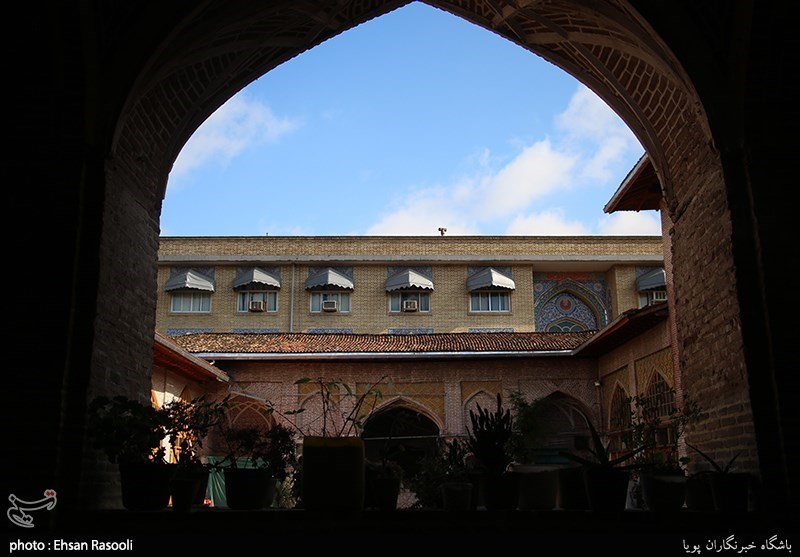
TEHRAN (Tasnim) - The primary structure of Babol Jame' Mosque (grand mosque) dates to the year 160 AH. And was constructed by Maziyar Ebne Qaran. The mosque has been repeatedly repaired during the Safavid reign.

The current structure remains from the Qajar era and has been repaired since then. The mosque has two portals, one to the east and the other to the west.
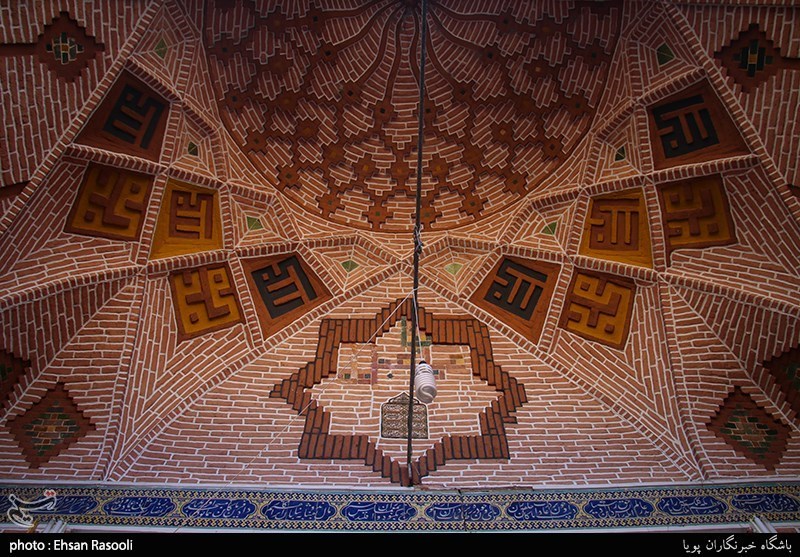
Each give way to an eight-sided vestibule. On top of the western doorway are holy verses embossed on tiles, and the year 1230 AH has been written on it. The main nocturnal area has large and small domes, in addition to columns.
There is an ancient altar in the western area, and two other newly constructed altars of tile work can be noted to the south.
In the porch are verses inscribed from the works of the great poet of the times, Fath Ali Khan Saba, the poet laureate, written in the year 1227 AH.
Source: Travital