Showing posts with label Sunni radicalism. Show all posts

Wednesday, October 16, 2019

Who Turned Syria Into Another Quagmire?

Who Turned Syria Into Another Quagmire?
TEHRAN (FNA)- Syrian ground troops are moving North to confront invading Turkish forces. The decision comes in the aftermath of a deal that was reached by the Kurds and the Syrian government after the former were left alone by their so-called American allies.
The deal sees the Kurds unilaterally handing over Kurdish-held territories, including two important cities, Ein Al-Arab (Kobani) and Manbij, both in Aleppo province, to the central government to rule. This means Turkey’s invasion of these regions would be a direct attack on the Syrian army. This would make any Turkish attack on such lands more controversial, and also raises the possibility of Russia intervening in support of the Damascus government.

At any rate, any move to destabilize these cities and other areas would lead to yet another humanitarian crisis in the Middle East. Syria has come a long way to be where it is now. There is no need for Turkey to change the rules of the game, at a time when the country needs humanitarian aid and reconstruction efforts, not another quagmire for foreign forces to roam. 

As Turkey's operation in North Syria wages on, Trump proclaims on Twitter that he wants to end "needless wars!" On the other hand, the broader American political system and foreign policy order continues to criticize him as the crisis in the country unfolds, with Ankara having already shelled US positions allegedly by accident, with civilians displaced and reports circulating concerning the attempted escape of the ISIL prisoners.
This builds into a wider point concerning American foreign policy that the Middle East is an endless quagmire and distraction to its broader agenda which drains its focus, resources and manpower. In some ways, it is self-defeating, because the aftermath of many US interventions have in fact merely laid the foundations for a new crisis.

Whilst Trump green lighted Turkey's invasion as a distraction from his own political struggles, in doing so, he has deliberated a death kneel to his own foreign policy agenda. Washington has fallen into the Middle East hole again. In the past 30 years alone, the US has undertaken the following pursuits in the Middle East:

In 1991, it joined a UN coalition of forces in the Persian Gulf War to liberate Kuwait from Saddam Hussein's annexation. Throughout the 1990s, it then sought to maintain a no-fly zone and maximum sanctions against Iraq which involved continuous air missions. Then in 2001, the war on terror became a new turning point laying the premise for a new war in Iraq whereby Saddam's regime was forcibly deposed.

This was where the real detrimental consequences began: 

The removal of Saddam's statist Arab nationalist regime unleashed an undercurrent of Sunni radicalism which led to the rise of Al-Qaeda in Iraq. This would not only ensure the US military presence in the country, but eventually such would evolve into the group ISIL, thriving from instability in neighboring Syria, where the US sought to support anti-government rebels. The result paved way for the illegal intervention of the US and its allies yet again, thus leading the US to where it is today.

The history is extensive. However, there is one clear message: that is, repeated military interventions have not been the antidote for infections within the Middle East. Instead they have been the virus and infection. Repeatedly and excessively, Washington has rendered itself incapable of understanding regional sensitivities, including complex ethnic and sectarian divisions within state structures, which have only been further empowered by chaos, instability and opting for conflict.

Which is why the Middle East vicious cycle of crisis and chaos induced at the hands of Washington continues to spin. It is not yet clear if Trump has sought to fully recalibrate US foreign policy or ordered the retreat to simply distract attention from his own impeachment at home in light of the Turkish invasion of Northern Syria. But if his claim about "ending needless wars" proves to be true, then he should be given credit for being smart and realistic since unlike the deep state, Trump has in effect come to vividly see and realize the increasing vulnerabilities and shrinking limits of the US power.

Saturday, August 31, 2019

The Saudi Axis and Israel’s Drone War on the Shiite Crescent

In the past week, Linah al-Saafin at Al Jazeera English points out, an Israeli drone hit a Hizbullah target in Lebanon, Israeli fighter jets bombed a base in Syria with Iranian personnel, and Israel somehow hit bases of a Shiite militia in Iraq, including one on the Syria-Iraq border, killing a militiaman.
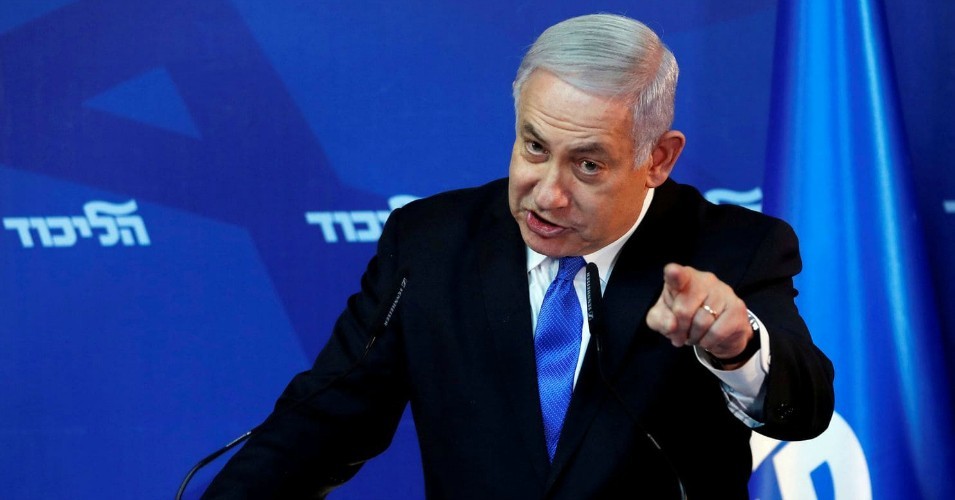
Israeli Prime Minister Netanyahu claimed that the Iraqi bases posed some sort of threat to Israel. But Iraq is a very long way from Israel and Iraqi militias don’t have SCUDs that could strike Israel. Netanyahu is just tweaking Iran and letting the Shiite militias in Iraq know that they are not beyond the reach of Tel Aviv. (Some of the Iraqi Shiite militias have a presence in Syria, from which they could theoretically launch rockets at Israel, though to my knowledge none has). It is the long-time philosophy of Israel’s ruling party, the Likud, that the Arabs will never accept Israel and therefore the only way to deal with them is to flatten them repeatedly. The Likud’s origins are in a far right wing ideologue in the age of dictatorships back in the 1930s.
Netanyahu and other Israeli leaders were frightened half to death earlier this week that Trump might actually meet with Iran’s president Hassan Rouhani and that Trump would pull a North Korea with Iran. Netanyahu leads the most militarily powerful state in the Middle East, but is dedicated to further settler colonialism in the Palestinian West Bank, and needs the bogey man of Iran to wag the dog of international diplomacy in favor of Israel.
The new drone war is largely symbolic. The strike on Hizbullah may have killed a fighter or two. (Hizbullah, which is not nearly as formidable as the Israelis and US politicians keep alleging, has a few thousand fighters.) The point was to send a message that some Hizbullah members are informing for Tel Aviv and Israel knows where at least some of the safe houses are.
The Syria strike was nothing new — Israel has occasionally been bombing such facilities for years. Mainly Netanyahu wants, again, to send a message to Iran that Israel is watching, knows where the facilities are, and knows where the 2,000 Iranian advisers are, from the Jerusalem or Qods Brigade of the Iranian Revolutionary Guards Corps. Israel is very sensitive to the possibility of rocket or drone strikes, since enough of them could start a mass migration out of the country. There are already thousands of Israelis in Germany and likely hundreds of thousands in the US who say life was too nervous-making in Israel.
While the Israeli military can handily defeat a major conventional military threat from an Arab neighbor, Israeli intelligence is concerned about micro-rockets and drones that can be launched without a clear return address. While Israel knows every inch of the West Bank, the 2006 war showed that their intelligence in southern Lebanon was primitive, and while they may have a few assets in Syria and Iraq, they are vulnerable from the vast hinterland of what Jordan’s King Abdullah II called the “Shiite Crescent.”
The drone and air strikes have provoked a lot of unrealistic heated rhetoric. Lebanese president Michel Aoun (a Christian and a former general) called the Israeli attack “a declaration of war.” One of his advisers pledged that the response would be “like lightning.” A twitter account of the Israeli military suggested that Aoun recall the 2006 war (in which Israel destroyed much of Lebanon’s infrastructure and set the country back economically forty years).
Iraqi member of parliament Mansour al-Baiji, from the State of Law Coalition, urged that Iraq ally with anti-American countries so as to strike back at Israel for its attacks on Shiite militia bases in Iraq. The former leader of the State of Law, and former long-serving Iraqi prime minister, Nouri al-Maliki, made similar remarks last week. Some Iraqi politicians blame the Trump administration for allowing or encouraging the Israeli strikes on Iraq, and are demanding that the 5,000 US troops in country leave. US embassy personnel in Baghdad appear to be nervous about the rising tide of anger against Washington provoked by the Israeli strikes, and actually came out to name Israel last week. Presumably this was self-protection and perhaps a shot against Israel’s bow, and would have come from career State Department circles at odds with secretary of state Mike Pompeo.
This rhetoric was to be expected. What is perhaps surprising is that the foreign ministry of Bahrain supported the Israeli strikes on Lebanon, Syria and Iraq– a statement to which Iraqi foreign minister Mohamed Ali Alhakim reacted with fury.
Bahrain has a minority Sunni establishment, including the monarchy, presiding over a restive Shiite majority. Like Saudi Arabia and the United Arab Emirates, both of which have developed a paranoia about being encircled by Iran, it now tilts toward Israel. Saudi Arabia, which has a powerful Wahhabi movement but a pragmatic monarchy, has to be more discreet about public statements in support of Israel. But crown prince Mohammed Bin Salman is known to be pro-Israel as a result of his vendetta with Iran.
When King Abdallah initially told Robin Wright about his “Shiite crescent” fears in 2004, there was little reality to it. Lebanon’s prime minister was a Sunni with Saudi dual citizenship, Syria was a Baath regime with little to do with Iran-style orthodox Shiism, headed by a member of the Alawi sect of folk Shiism. Alawis don’t have clerics so much as gnostic sages, much less ayatollahs. And Iraq was under American military occupation with a mixed government. But now, in part because of the rise of Sunni radicalism in the form of ISIL and al-Qaeda affiliates, and in part because of the Syrian civil war, there really is increasing military cooperation between Iran and Shiite militias in Iraq and Lebanon, which operated to save the al-Assad government in Syria. Not only is there a Shiite crescent but there is now increasingly a Gulf-Israel Axis in opposition to Iran. The polarized set of alliances sounds ominously like the situation in Europe in early 1914.