Showing posts with label Hamas and Hizbullah. Show all posts

Monday, September 30, 2019

Israel and the evolution of asymmetric warfare

Omar Ahmed
War, wrote the 19th century Prussian General and military strategist Carl von Clausewitz, is an “act of force to compel our enemy to do our will.” This is an enduring maxim of the essence of war to this day, with von Clausewitz’s work still studied by army officers around the world.
It is generally understood among military academics that a distinction should be made between war’s objective nature and its subjective character. Among them is professor of international relations and strategic studies Dr Colin Gray, who stated that, “Nothing essential changes in the nature [of war] in sharp contrast to the character – of strategy and war.”
The character of war, it is argued changes over time and can be impacted by factors such as technological advances, culture and ethics.
Ever since the end of the Cold War and more so post-9/11, the concept of “asymmetric warfare” has become increasingly relevant and prominent in literature on contemporary warfare, especially with the supposed decline of state against state warfare, for the time being, at least.
In simple terms, Dr Rod Thornton describes it as “violent action undertaken by the ‘have-nots’ against the ‘haves’.” The have-nots are usually non-state actors, explains the Senior Lecturer in Defence Studies, and seek to generate profound effects by capitalising on their relative advantages against vulnerabilities in larger, conventional opponents, essentially national armed forces.
In relation to the attacks in the US on 11 September 2001, Thornton wrote how four aircraft were brought down, along with twin icons of American economic might — contributing to the 3,000 people killed in the world’s most powerful state with the world’s most sophisticated military – by men “armed only with box cutters”. However, recent developments would suggest that things have changed considerably in asymmetric warfare since that fateful day.
The “game-changing” usage of unmanned aerial vehicles (UAV) — commonly referred to as drones — by Yemen’s Houthis against big defence spender Saudi Arabia and its oil producing facilities, resulting in halving its output and a temporary surge in oil prices, is notable in this respect. One Reuters article quoted an unnamed Saudi security analyst who acknowledged that, “The attack is like September 11th for Saudi Arabia; it is a game changer.”
Supporters of the Houthis participate in a march to mark the 5th anniversary of Houthis' control of the Yemeni capital Sanaa, on 21 September 2019 [Mohammed Hamoud/Anadolu Agency]
Supporters of the Houthis participate in a march to mark the 5th anniversary of the Houthis’ control of the Yemeni capital Sanaa, on 21 September 2019 [Mohammed Hamoud/Anadolu Agency]
Elsewhere in the Middle East, tensions appear to have flared up again between Israel and Lebanon’s Hezbollah, after two Israeli drones crashed into the southern suburbs of Beirut, where the movement has its headquarters. It will be interesting to see how this perceived evolution in asymmetric warfare affects the balance of power between the Israeli army and Hezbollah’s armed wing, Al-Muqawama Al-Islamiyya or the Islamic Resistance, a reference to the struggle against the Israeli occupation of south Lebanon in the early 1980s whence the social movement was founded.
Hezbollah believes that its armed resistance is legitimate as Israel continues to occupy the Shebaa farms in Lebanon to this day; the area is part of the occupied Golan Heights, most of which belong to Syria. Earlier this year, US President Donald Trump caused uproar with a controversial decision to recognise Israeli sovereignty over the Syrian Golan, contravening decades of US policy on the region. In addition to being committed to liberation for Palestinians living under occupation, Hezbollah says that it must continue its armed struggle to reclaim all Lebanese territory.
During the 2006 Lebanon War, Hezbollah used several Iranian made Ababil drones, which were shot down by Israel’s air defence systems. The movement has managed to enter Israeli airspace on numerous occasions since then, despite Israel’s Iron Dome defence system.
Israeli soldiers walk near an Israeli Irone Dome defence system (L) on 25 February, 2016 [AFP/Gil Cohen-Magen/Getty]
Israeli soldiers walk past an Israeli Iron Dome defence system on 25 February, 2016 [AFP/Gil Cohen-Magen/Getty]
Although Hezbollah’s drone usage continues to become more sophisticated, the movement has “led the way in the deployment and use of drones for non-state groups for more than a decade”.
Hezbollah’s first known use of a drone occurred in 2004, when it infiltrated Israeli airspace for reconnaissance purposes, successfully returning to Lebanon before the Israelis, who were caught off guard, could intercept or destroy it. It was alleged to be an Iranian supplied Mirsad-1 UAV.
Iran began manufacturing drones in the 1980s during the Iran-Iraq War, primarily for surveillance and aerial monitoring purposes, although they have grown in sophistication and capability and have been exported over the years to regional allies in Syria, Iraq, Yemen, Lebanon and occupied Gaza. In late 2010, Israeli Brigadier-General Nitzan Nuriel confirmed that both Hezbollah and Hamas were in possession of a number of drones with a range of 300km.
Israel is a leading developer of drone technology and has the upper hand, but Iranian made UAVs certainly constitute a “limited threat”.
Hezbollah’s battle experience has also undoubtedly been bolstered by its involvement in the Syrian civil war. This extends to its knowledge in utilising drones, or as one Hezbollah fighter told Middle East Eye in 2017, “We are definitely learning a lot by working with Russians and Iranians in the Syria war and more specifically when it comes to UAVs.” Israel has also turned to drones for the many air strikes which it has been accused of carrying out in Syria.
An image released by the Iranian military in April 2016, showing it's replicated shell of the captured US RQ170 drone
An image released by the Iranian military in April 2016, showing it’s replicated shell of the captured US RQ-170 Sentinel drone
Due to the low-cost, high impact nature of drone attacks in contemporary warfare, the stakes are definitely higher, especially with the increased access of open source satellite imagery since the 2006 Israeli invasion of Lebanon. Such images can enable the careful, strategic targeting of specific sites.
Writing about a Houthi drone attack earlier this year on Saudi-backed forces, author Aaron Stein mentioned how the Houthis are “using drones in ways reminiscent of precision-guided-munitions.”
For over a decade, Israel and Hezbollah have maintained an uneasy absence of hostilities, although occasional comments by observers always suggest that another war is flaring up. That narrative is being heard more often with the downing of the Israeli drones in Beirut, and the response by Hezbollah, which claimed to have destroyed an Israeli armoured vehicle, killing and wounding the soldiers inside.
Israel has vowed to use its 2006 “Dahiya doctrine” — named after a Hezbollah stronghold in Beirut and which involves “indiscriminate destruction of infrastructure and disproportionate force against communities thought to be supporting Hezbollah across the country” – although there is arguably nothing exactly novel or unprecedented about this. We just have to look at Israel’s military offensives against the Palestinians in the Gaza Strip, which have not, it must be said, deterred the resistance movements there.
Returning to von Clausewitz, who wrote of “friction” in warfare, more widely understood as the “fog of war”, there is still that inherent element of ambiguity and uncertainty, as the Aramco attacks have illustrated. What is certain, though, is that asymmetric warfare has evolved with the democratisation of drones among non-state actors; they are set to be an enduring part of contemporary warfare, especially in the Middle East.

Wednesday, December 19, 2018

U.S. trying to avenge defeat at the United Nations

By Ruhollah Ghasemian
TEHRAN - The U.S. House of Representatives and Senate approved a new draft law against leaders of Hamas and Hezbollah. Approval of the draft law follows the recent failure of the United States to condemn Hamas.
Zionist broadcasts have claimed that Hamas and Hezbollah leaders have been using civilians as human shields, among other charges.  The U.S. sources also emphasized that the draft law would be presented for final signature by U.S. President Donald Trump. The law was introduced and approved following efforts of the Zionist lobby in the United States.
Donald Trump, since taking office almost two years ago, has taken a considerable action against the Palestinians, among which the most important is recognition of Jerusalem as the capital of the Zionist regime and, worse, the transfer of the embassy from Tel Aviv to Jerusalem. Now, the new aggressions against Hamas is in line with the same basic policy of the U.S. government and Trump particularly.
The recent move by the United States to set up a new draft law against the leaders of the Hamas resistance movement can be seen as a kind of retaliation by Washington because of its recent fiasco in the United Nations General Assembly. The U.S. tried to condemn Hamas. The draft measure required approval by two-thirds of the members of the UNGA (the United Nations General Assembly). The sole governments that voted in favor of this draft were the United States, the Zionist regime, Australia, Liberia, Marshall Islands, and Nauru.
A few minutes before the vote on this draft, another vote was taken at the General Assembly, which determined the majority needed to approve the proposed draft. In the vote, the U.S. proposed that it would be enough to obtain a simple majority of votes, but Kuwait suggested that the adoption of such a draft requires a vote of at least two-thirds of the members. Finally, the Kuwaiti proposal was accepted.
The U.S. and Zionist authorities, after the UNGA vote, have not been able to hide their anger at the non-adoption of a resolution against Hamas.
Nicky Haley said: “We cannot talk about peace in the Middle East unless we agree on the Hamas condemnation.” Zionist ambassador to the United Nations, Danny Danon, also criticized the failure to approve the draft U.S. anti-Palestinian resolution. He praised Haley's efforts on Twitter.
The United States still fails to realize that the world is no longer unipolar. The Americans have shown they continue to believe that the universe is unipolar and that it is only Washington that can put forward the first and last words on some matter. Washington, before the start of the Friday poll on an anti-Palestinian resolution at the UN General Assembly, even threatened the members of the assembly that if there was no positive vote on the resolution, it would have heavy consequences for them.
Americans are pursuing their hostile and discouraging moves to achieve what the Zionists could not accomplish in the military battleground with the Palestinian Islamic Resistance groups in the Gaza Strip. What seems to be clear is that, as much as possible, further efforts of the United States against resistance groups are planned, though they may be as ineffective as the recent U.S. defeat at the UNGA.

Wednesday, November 21, 2018

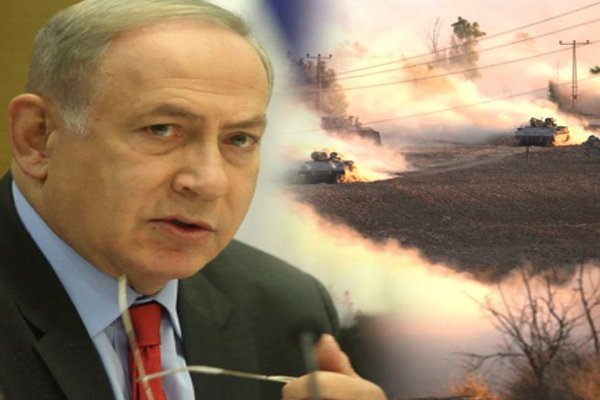
Gaza expects new developments, Netanyahu’s possible adventure

By Farzad Farhadi
TEHRAN - Following the short war between Israel defense forces (IDF) and Palestinian resistance group, the question is what is awaiting Gaza particularly after the defeat of the Zionists. 
Israeli Education Minister Naftali Bennett and Jewish Home leader, speaking at the Knesset in Al-Quds recently, has slammed Netanyahu saying, “Israel has stopped winning and Netanyahu won’t quit the government. Israel is facing a security confidence crisis, not a political crisis. There are enemies, but not an enemy that worries me. The source of the crisis is not its external enemies but is the bad internal situation. Israel has not won as that was the case in the Second Lebanon War (33-day war against Lebanon) in 2006, and it was frustration, disunity, and lack of spirit for Israel. Hamas and Hezbollah have become more courageous because they believe that we are afraid of confronting them. The Israeli ship is not going the right way.”
Tsizka Fogel, an Israeli general and the former commander of the southern Israeli army told Mario, “The Middle East is witnessing new enemies like Hezbollah in the north and Hamas in the south of Israel. Some 50 years ago, in June 1967, Israel fought with three Arab states and defeated them all, but today, we cannot win the battle against Hamas. Israel’s security condition today is an insult to the October 1973 war, because it seems that politicians do not care about the future of Israel and are engaged in political games, and even Benjamin Netanyahu's delivers an unacceptable illusion story to us.
Additionally, some other Zionist authorities have, too, spoken of defeat against Hamas. What remains to be seen is that after the recent grand victory of the Palestinian resistance group and failure of Israeli security operation when Hamas fired 500 rockets to Israeli settlements, what the future holds for the Gazans. Will there be another conflict as Netanyahu is going to bring back glory to its worn down military among the Zionists? 
A senior Hamas official doesn’t see the likelihood of that and in an interview with Raialyoum newspaper said, “A military attack and retaliation against the Gaza Strip is very unlikely because Israeli military commanders have realized that another war will take a heavy toll on them, be it emotionally, financially or human life.  However, it is likely that the Mossad tries to assassinate some of the Hamas's top officials by the US help, especially since the US has recently offered a $5 million reward for two Hezbollah officials, and one with Hamas who is Saleh al-Arouri, a prominent leader of Hamas.
The victory in Gaza has military and political importance and will strengthen Hamas’ position. This is while Netanyahu’s financial pressure on Gaza and Hamas has lost effect after the United Nations monitored the power plant in Gaza. In other words, after the victory of Hamas, the situation in Gaza will not be the same. 
The Zionist regime is quite disturbed as it is apparent from their media which are mirror of all the thoughts of decision-makers in Tel Aviv.
The Israeli media analyzed Netanyahu’s speech on Sunday, and some have suggested the possibility of a war without a frontier by Tel Aviv that is against Palestinian resistance group in Gaza, Hezbollah in Lebanon, Syria and other areas.  
Alex Fishman, an analyst at Yedioth Ahronoth newspaper said, “The longer it takes for Israel to have an election day, the more likelihood of a war between Israel and Palestinian resistance group. Netanyahu’s speech on Sunday was the most dangerous speeches he has ever delivered in recent years which may push him to a war to restore his face after their defeat in Gaza. Netanyahu’s objective is to postpone election by relying on his position as Israel’s prime minister. However, the election should be held very soon to prevent threats. It is very unlikely that Lt. General Gadi Eisenkot, commander of the Israeli army, whose term ends next December, and other Israeli generals agree to another war.”
However, others consider Netanyahu's speech an attempt to calm Israel’s internal affairs and repair his damaged reputation after his recent defeat. Among these analysts is Simeon Schiff, who in his article in Yedioth Ahronoth newspaper called Netanyahu's speech “a campaign speech”. 
«The editor of Haaretz newspaper Alfuf Ben resembled Netanyahu's speech to an election campaign speech, and said, “Any military adventure in the north or south will be as a major challenge for Netanyahu, which will end its term.”
However, some believe that the pressure that Netanyahu is struggling with may make him think of an adventure or a widespread anti-Gaza war in response to critics, especially since protests in occupied Palestine are still ongoing against Netanyahu.
The Palestinian resistance groups are prepared, especially since all the evidence show that Netanyahu may turn to a military confrontation in Gaza. Netanyahu will not do anything to rebuild his tarnished reputation. 
It is unlikely that Netanyahu takes a new adventure in Syria, but carrying out an operation in Gaza is by far simpler, as he pointed in his speech on Sunday. 
Fadi Abdulhadi, a Palestinian expert told the Palestine Alyoum, "Netanyahu's speeches carry two messages, one for the domestic front and one for the residents of Gaza. Netanyahu's words are dangerous and maybe pave the way for a war on Gaza.” 
Adnan Abu Amer, another Palestinian expert, in an interview with the Palestine Alyoum said, "Netanyahu's speech resembles a war speech."
Ahmad Al-Tayebi, a representative of the Arab Knesset, told the Palestine Alyoum, “It's not unlikely that Netanyahu would launch a new attack on Gaza to improve his condition.”
In any case, it is not unlikely that Netanyahu seeks a new adventure in Gaza.  

Monday, October 15, 2018

Khashoggi’s Brutal Murder: How Safe are South African Critics of Saudi Arabia?

Iqbal Jassat


What certainty do South African critics of Saudi Arabia have that they will not face the same tragic fate that befell Jamal Khashoggi?
These concerns may have been dismissed as laughable and perhaps even paranoid a fortnight ago. But the horrific murder and dismemberment of Khashoggi by hitmen assigned to commit the ghastly crime within the confines of a consulate, has underlined the danger faced by critics and opponents of the Najdi oligarchy.
The Saudi regime may not enjoy the psychological pressure that Israel usually applies. To slander opponents of its occupation and apartheid policies, the settler colonial entity resorts to branding them as "antisemites". This defamatory tool is regularly applied by Israel to intimidate and silence external critics.
In the case of Saudi Arabia, its unelected leaders have traditionally whipped up sectarian divisions a la George Bush: "You either with us or against us". In a religious context, this divisive strategy has served Saudi geopolitical interests well for "with us" equates to "Sunni Islam" while "against us" means being in bed with "Shia Islam".
Thus in a broad context, Saudi dependency on keeping America's discredited "war on terror" alive, explains a great deal about the royal family's use of it as a defensive shield and offensive wars.
Derailing the Arab Spring, funding and arming Egypt's military coup, laying siege on Qatar, bombing Yemen, allying with Israel against Palestinians, seeking military aggression against Iran, outlawing legitimate civil society formations and resistance movements such as the Muslim Brotherhood, Hamas and Hizbullah as "terrorists", and stoking intra-Muslim strife are some of the despicable tactics that define Saudi Arabia.
Critics, whether in South Africa or elsewhere are probably aware of Saudi intelligence ties to Israel's notorious Mossad. They'd also be mindful of the long reach of Saudi Mokhabarat (intelligence agents) as the willful murder of Khashoggi demonstrates.
Reports about Khashoggi's disappearance and brutal murder while he visited the Saudi consulate in Istanbul, Turkey, have not only devastated his family, friends and fellow journalist colleagues, but also activists campaigning for drastic socio-political changes in the Arabian peninsula.
A one-time adviser to the Saudi kingdom with close ties to the establishment, including prominent members of the "royal" family, Khashoggi's increasingly critical views of the de facto ruler Mohammed bin Salman, (MbS) turned him into an enemy.
The threat he posed in his role as an active dissident derived from the fact that having interacted closely with Saudi and Arab intelligence services for more than 30 years, he was privy to many secrets. In addition, his position as a columnist for Washington Post and access to influential platforms in America and Europe, amplified his power to undermine MbS and his fake "reforms".
Khashoggi's self-imposed exile in Washington was evidently a choice he made to avoid being a victim of the harsh crackdown on independent voices. Despite his profile as a renowned political analyst-cum-journalist, with close to two million Twitter followers, it did not render him immune from state sponsored harm, as we now know.
It is known too from credible reports, that the folly, arrogance and brutality associated with MbS seems limitless. It may be his reasoning that if close allies and patrons such as Netanyahu and Trump can get away with murder, surely their protection would be sufficient for him to continue liquidating opponents under the guise of eliminating "terrorists"?
Bin Salman has been lauded in the West as a "great reformer" and harbinger of "friendship" with the colonial entity that has occupied Palestine for more than seven decades. Unfortunately for him and the rapacious family of "royals" he symbolises, the Khashoggi affair has exposed Saudi Arabia as a ruthless dictatorship that uses brutal methods to dispose of enemies.
Though international outrage against the killing has been as loud as media coverage, the South African government has yet to make its stance known.
Justifiably, critics will question whether the controversial yet lucrative arms trade and the pledge of billions of dollars made to President Ramaphosa, will hold us hostage to a rogue regime's contempt for human rights and the right to life itself.