Showing posts with label Cuba and Venezuela. Show all posts

Tuesday, November 05, 2019

Chilean protests: A revolt against neoliberalism the media refuses to acknowledge

Alan MacLeod

“Neoliberalism was born in Chile and will die in Chile” has become a rallying cry for the movement. Yet few in the West are aware of the country’s tumultuous history as an experimental laboratory for free market economics imposed on Chile by the United States.
These were the remarks of Alan MacLeod in his report for MintPress, titled: “Chilean protests: A revolt against neoliberalism the media refuses to acknowledge”.
Macleod is author of the book “Bad News From Venezuela: Twenty Years of Fake News”.
Recently, Chilean President Sebastian Piñera during a speech to the nation, deliberately echoing the infamous catchphrase of fascist military dictator Augusto Pinochet, thundered: “We are at war with a powerful, relentless enemy that respects nothing nor anyone”.
The “enemy” he was referencing were Chilean citizens, more than one million of them taking to the streets Friday afternoon in a revolt against the neoliberal system Piñera was implementing against their will, demanding his resignation.
The spark for the revolt that started October 14 was a 30-Peso increase to the subway fare in Santiago, the country’s capital and by far its largest and most important city. But demonstrations quickly escalated into a general protest against the decades of neoliberal economic policies carried out by successive governments that increased the cost of living and marginalized and disenfranchised the population, leading to greater social and economic inequality. As a popular slogan of the protest goes: “It’s not about 30 pesos; it’s about 30 years.”
The government’s response has been brutal. The President has declared a state of emergency across much of the country and ordered tanks through Santiago to break the movement in images that would be on endless repeat in our media if Piñera were not such a loyal ally of Washington. The death toll currently stands at 18, with security forces arresting over 5,400 people in the first four days alone, well over double the number arrested in Hong Kong after six months of unrest. This is one reason why many in Chile see the threat to their country coming not from the people in the streets, but from the Piñera administration itself.
While most of the images we see emanating from Chile are from Santiago, the protests have spread across the country, including to the sleepy southern regions where MintPress News staff writer Whitney Webb lives and reports from.
She emphasized the regional differences in the protests by saying: “In Valdivia there have been a lot of riots and looting recently but a couple hours to its north, in Temuco, protests lately have been peaceful with whole families participating (kids and babies included) in marches against austerity and the AFP system, among other hot button issues.”
She was referencing to the hated privatized pension program AFP. Whitney Webb added: “I have lived in the Araucania region for five years and have never seen protests (peaceful or otherwise) on this scale ever. From what I’ve experienced here and from what I’ve seen of Santiago, I think people are by and large fed up, whether on the left or the right, with the crony capitalism and corruption that has enriched people just like Piñera and those that surround him.”
The protesters see themselves as fighting to end the neoliberal model imposed on them since 1973.
“Neoliberalism was born in Chile and will die in Chile” has become a rallying cry for the movement. Yet few in the West are aware of the country’s tumultuous history as an experimental laboratory for free-market economics imposed on Chile by the United States.
The American professor Noam Chomsky, who is known to be a strong critic of the policies of the US government, remarked: “I’m not at all surprised at what’s happening in Chile. They are the completely predictable consequence of the neoliberal assault on the population for forty years.”
After managing to overthrow the democratically-elected Marxist President Salvador Allende in a 1973 coup, the United States had an opportunity to construct a new society based on neoliberal principles, with the help of the new fascist dictator, Augusto Pinochet. The country became the “empire’s workshop,” where American economists had free rein to construct the perfect society along market principles.
The problem was that the population did not want everything privatized, sold off to foreign corporations, for workers’ rights to be removed and the social safety net to be destroyed. Therefore, the population had to be terrorized into submission first. At least 3,000 people were killed, and tens of thousands brutally tortured by the Pinochet dictatorship, which remained in power until 1990. Two hundred thousand managed to flee the country.
The economy immediately collapsed, as did living conditions for ordinary people. It continued to underperform and proved extraordinarily volatile throughout the 70s and 80s. However, the upper class prospered, and many foreign investors became incredibly rich, explaining perhaps why the Washington Post described the country as an “economic miracle” and a “model” for others to follow. Chile became one of the most unequal countries in the world; something that scholars of neoliberalism such as David Harvey, Gerard Duménil and Dominique Levy argue was precisely the point.
While the dictatorship is formally over, Pinochet negotiated a transition from a position of power, leaving many of his henchmen in high office and those handpicked and fast-tracked under the fascist dictatorship now in top positions in the police, army, courts and the media. Furthermore, the neoliberal economic system and Pinochet’s constitution remained, as did the people’s fear of the government and what it was capable of.
Two of those tortured in concentration camps were the parents of journalist and documentary maker Pablo Navarrete, founder and co-editor of Alborada Magazine. Pablo spoke to MintPress News about the protests threatening to upend the social order.
“Chile is living through an incredible moment,” Navarrete said, adding: “The neoliberal model forced on Chilean society with such brutality under Pinochet from 1973 onwards and which served as a laboratory for the right in places such as the UK and US has been dealt a mortal blow.”
Despite the “vicious levels of repression” by security forces, Navarrete claimed that his country has reached a “tipping point” where “Chileans have lost their fear” of the state. What is the way forward now? Can the protesters topple a president, or will the replacement of a figurehead without meaningful structural change achieve anything?
“It’s now key that we support the Chilean people’s call for the creation of a Constituent Assembly, so they can create a new, democratic constitution, and discard the current one that was imposed under Pinochet,” he advised.
It is an outrage that nearly 30 years since the end of the dictatorship, Chile should still have this Pinochet-era constitution in place.”
Mainstream media, like CNN, NBC News and the Guardian, have shown far less interest in, or solidarity with, Chile than Hong Kong, framing the former not as protests, but as “riots,” a word never used to describe the Hong Kong protests.
Webb criticized the press for their warped coverage: “The media in the West and also in Chile has focused largely on the looting and rioting (that does occur) and is claiming that ALL the protests are this way, and this is completely false” she told Mint Press.
Navarrete agreed, recommending that, “Those wanting to keep abreast of events in Chile in the English-language will, as with most other issues, have to turn to independent media for balance, as there has been a relative absence of mainstream media coverage regarding the scale of the uprising and the ferocity of the government’s repression.”
There has been comparatively little coverage of the massive movement in Chile. And much of it obscures what the protests are for, and crucially, what they are. Neoliberalism is largely absent in mainstream reporting of the protests; there has been no mention of the word or its derivatives in any reporting on Chile from CNN, MSNBC or Fox News, for example. Meanwhile Slate amended the title of an article originally titled “Chile’s People Have Had Enough of Neoliberalism” so the headline read simply “Chile’s People Have Had Enough”, removing all mention of the word from their reporting
The real driver in all this, according to a Wall Street Journal opinion piece, was not crony capitalism, but the socialist governments of Cuba and Venezuela, who are “playing a key role” in directing the movement. Piñera, it explains, was “forced to declare a state of emergency” to “protect property and life” from the “left-wing terrorists savaging Santiago and cities around the country.” Only a fool would believe these protests are organic, it explains. After all, “market policies have been successful” in Chile, so why would anyone be unhappy? The United States, however, sees a Russian hand directing the protest. Trump-appointed Assistant Secretary for the Bureau of Western Hemisphere Affairs Michael Kozak claimed that the Kremlin has penetrated Chilean social networks and was circulating fake news in order to inflame tensions.
Meanwhile Human Rights Watch, always quick to condemn leftist Latin American governments like Bolivia, Venezuela or Nicaragua for their transgressions, called for the swift prosecution…of the protestors. Its Director of the Americas, José Miguel Vivanco, stating, “Prosecutors should also carry out prompt, thorough, and impartial investigations into serious crimes committed by demonstrators in recent days.” The full-scale crackdown and the suspension of the most basic civil liberties merely had Vivanco “worried” that “there has been an excess of force” from the government.
Piñera has already gutted his cabinet in an attempt to placate the public. But Webb suspects the protesters will not be silenced so easily.
“He is mistaken to think this will die down. I think at this point the only way he could quiet it would be to do something more drastic in terms of policy, like end the AFP program” she said. “I doubt he will though, since his brother was a key factor in putting that program in place and it would be a blow to the great neoliberal “experiment” that was foisted on Chile during the Pinochet era.” 
Despite the elite voices in the West working to undermine the emerging anti-austerity movement, Navarrete is hopeful:
 It’s clear that Chileans have had enough and are demanding profound democratic changes. Chile has awoken and I’m excited about the country’s future.”
Corporate media is unlikely to give the protestors a fair hearing, given what their demands are and what they are struggling against, but that should not surprise or disappoint them. Those who witnessed how Occupy Wall Street, the anti-war demonstrations, the Global Climate Strike or the Sanders campaign were treated by the press know how it works. After all, as the jazz poet Gil Scott Heron told us, “The Revolution Will Not Be Televised.”

Thursday, September 05, 2019

Concealing The Truth

Concealing the truth from the people is not unusual in politics. It is perhaps more pronounced in global politics partly because it is more difficult to hold powerful global actors accountable. That might is right is an adage that rings true at the international level more than in the domestic arena.
There are currently a number of international issues where the truth is concealed or camouflaged. The demonstrations in Hong Kong for instance which have gone on for weeks are perceived by a lot of people as a struggle for freedom and democracy against an authoritarian government in Beijing. The truth may be a little more complex. It may be in the interest of certain elements in some Western capitals to encourage mass protests in Hong Kong as part of their larger agenda to create instability in China. This in turn may be aimed at curbing China’s rise as a global power which its adversaries perceive as a challenge to their hegemony of the planet.
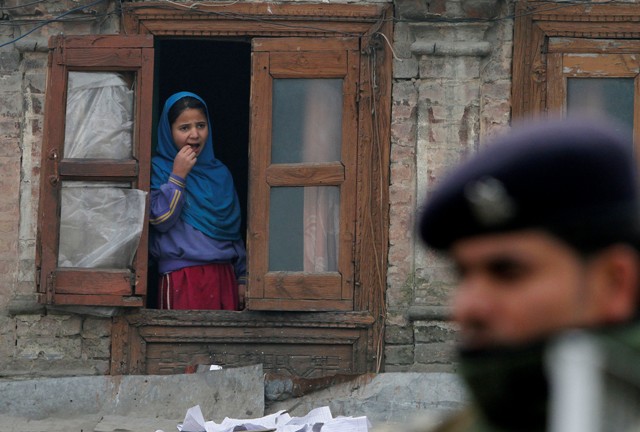
The crisis in Kashmir is another example of an issue where the entire story may not be known to the people. While changes made to the Indian Constitution have been presented by the government in New Delhi as an attempt to integrate the disputed territory into the national structure, the real reason may be more closely aligned to the ideological orientation of the present BJP leadership. This is why it may have serious repercussions for India’s religious diversity which has been its civilizational hallmark.
A third region in crisis may also reveal that the underlying causes may be quite different from what has been portrayed in the media. Iran has been depicted as the country that is responsible for the present tensions in West Asia. Even if we confined our observation to the immediate circumstance, it is obvious that it is the United States’ decision to scuttle the Iran nuclear deal of July 2015 that is the real reason for the tensions. Why President Trump moved in that direction has a lot to do with increased Israeli and Saudi influence over the White House and their misperception of the power dynamics in West Asia.
Perhaps an even more blatant instance of concealing the truth is the continuing crisis in Venezuela. The US and some of its allies are trying to convey the impression that if the oil-rich state is grappling with serious economic challenges it is due entirely to an oppressive leadership pursuing socialist policies. The truth is that unending schemes and ploys bythe US since the presidency of Hugo Chavez which even witnessed a failed coup against him in April 2002 are the main cause of Venezuela’s woes.
If the truth about what is happening in relation to Venezuela, Iran, Kashmir and Hong Kong is not widely known it is largely because the media, old and new, serve the interests of the powerful. This may not be obvious to many of us because these are on-going crises in constant flux. A quick look at some past episodes may be useful.
In August 1964, the US leadership alleged that North Vietnamese ships had fired at US ships in the Gulf of Tonkin. The allegation provided the justification for the US to intensify its aggression against North Vietnam. The truth is there was no North Vietnamese attack against US ships. The incident was invented as the US Secretary of Defence at that time Robert McNamara admitted years later.
To justify US military action against Iraq when the latter invaded Kuwait in August 1990, a story was concocted that accused Iraqi soldiers of plucking babies out of their incubators and throwing them onto the floor of a hospital in Kuwait. The fabrication was designed to incite public anger against an “utterly brutal and inhuman regime” in Baghdad.  A few years later a monstrous lie was invented about Iraq’s weapons of mass destruction in order to convince the world that the Anglo-American invasion of Iraq in 2003 was totally justified.
A more recent example of political lying was the accusation that Bashar Al-Assad of Syria was responsible for a chemical gas attack in Eastern Ghouta on the 21st of August 2013.  It was the celebrated investigative journalist Seymour Hersh who revealed the truth: that the Western backed rebels were behind the chemical attack.
More than any country in West Asia it is tiny Cuba that has borne the brunt of its huge neighbour’s lies and distortions. Since its Revolution in 1959, it has been constantly accused of fomenting instability and violence in Latin America. And yet, it is the US through its agents and proxies that has orchestrated acts of terror against Cuba the most infamous of which was the downing of a Cuban commercial plane on the 6th of October 1976 that killed 73 people including a number of children. The mastermind of that heinous crime Posada Carilles was given protection in the US until his death in May 2018.
Why lies are propagated so frequently and the truth sacrificed so easily, it is not difficult to understand. It is because the powerful want to protect their power at all costs. Sometimes this would require targeting their foes without proof.
This may be true of two final episodes which I have kept to the end because both have not been investigated thoroughly and therefore one cannot draw definite conclusions. The 9-11 tragedy and the MH 17 disaster though different in many ways are similar in some respects. In both cases, a certain party pointed fingers at the “culprits” almost immediately without presenting an iota of evidence. US officials and the media accused Osama bin Laden of planning  9-11 within hours of the attacks upon the Twin Towers and the Pentagon. Similarly, the then US Secretary of State, John Kerry stated that “There is overwhelming evidence of Russia complicity in the downing of a Malaysia airline plane,” as quoted in the BBC on the 21st of July 2014, 4 days after the disaster.  Kerry did not bother to provide any evidence.
It is equally significant that in both cases important questions about the actual episodes have remained unanswered. In the 9-11 episode, it is still unclear what caused the collapse of a third tower in the vicinity of the Twin Towers and what exactly hit the Pentagon. Likewise, in the case of MH 17, the official version of what had caused the downing of the plane does not blend with some eye-witness accounts or with expert analysis of the nature of the damage to the cockpit.
9-11 was the raison d’etre for the US led onslaught on Afghanistan on the 7th of October 2001. More important, it ignited the US led War on Terror that lasted more than a decade and was seen by many Muslims as an affront to their identity and their dignity. Is it a coincidence that after the July 17th air disaster — the overwhelming majority killed were Europeans —- European governments were more supportive of severe economic sanctions against Russia proposed by the US some months before?  Did the disaster unwittingly achieve some geopolitical objective?
It is only if we continue to ask probing questions that the truth that is concealed will be revealed for the good of everyone.
Dr. Chandra Muzaffar is President of the International Movement for a Just World (JUST). Malaysia.

Wednesday, July 31, 2019

Why Should Iran Be Cherished And Defended

As I pen this short essay, Iran is standing against the mightiest nation on earth. It is facing tremendous danger; of annihilation even, if the world does not wake up fast, and rush to its rescue.
Stunning Iranian cities are in danger, but above all, its people: proud and beautiful, creative, formed by one of the oldest and deepest cultures on earth.
This is a reminder to the world: Iran may be bombed, devastated and injured terribly, for absolutely no reason. I repeat: there is zero rational reason for attacking Iran.
Iran has never attacked anyone. It has done nothing bad to the United States, to the United Kingdom, or even to those countries that want to destroy it immediately: Saudi Arabia and Israel.
Its only ‘crime’ is that it helped devastated Syria. And that it seriously stands by Palestine. And that it came to the rescue of many far away nations, like Cuba and Venezuela, when they were in awful need.
I am trying to choose the simplest words. No need for pirouettes and intellectual exercises.
Thousands, millions of Iranians may soon die, simply because a psychopath who is currently occupying the White House wants to humiliate his predecessor, who signed the nuclear deal. This information was leaked by his own staff. This is not about who is a bigger gangster. It is about the horrible fact that antagonizing Iran has absolutely nothing to do with Iran itself.
*
Which brings the question to my mind: in what world are we really living? Could this be tolerable? Can the world just stand by, idly, and watch how one of the greatest countries on earth gets violated by aggressive, brutal forces, without any justification?
I love Iran! I love its cinema, poetry, food. I love Teheran. And I love the Iranian people with their polite, educated flair. I love their thinkers. I don’t want anything bad to happen to them.
You know, you were of course never told by the Western media, but Iran is a socialist country. It professes a system that could be defined as “socialism with Iranian characteristics”. Like China, Iran is one of the most ancient nations on earth, and it is perfectly capable of creating and developing its own economic and social system.
Iran is an extremely successful nation. Despite the embargos and terrible intimidation from the West, it still sits at the threshold of the “Very high human development”, defined by UNDP; well above such darlings of the West as Ukraine, Colombia or Thailand.
It clearly has an internationalist spirit: it shows great solidarity with the countries that are being battered by Western imperialism, including those in Latin America.
*
I have no religion. In Iran, most of the people do. They are Shi’a Muslims. So what? I do not insist that everyone thinks like me. And my Iranian friends, comrades, brothers and sisters have never insisted that I feel or think the same way as they do. They are not fanatics, and they do not make people who are not like them, feel excluded. We are different and yet so similar. We fight for a better world. We are internationalists. We respect each other. We respect others.
Iran does not want to conquer anyone. But when its friends are attacked, it offers a helping hand. Like to Syria.
In the past, it was colonized by the West, and its democratic government was overthrown, in 1953, simply because it wanted to use its natural resources for improving the lives of its people. The morbid dictatorship of Shah Pahlavi was installed from abroad. And then, later, again, a terrible war unleashed against Iran by Iraq, with the full and candid support of the West.
I promised to make this essay short. There is no time for long litanies. And in fact, this is not really an essay at all: it is an appeal.
As this goes to print, many people in Iran are anxious. They do not understand what they have done to deserve this; the sanctions, the US aircraft carriers sailing near their shores, and deadly B-52s deployed only dozens of miles away.
Iranians are brave, proud people. If confronted, if attacked, they will fight. And they will die with dignity, if there is no other alternative.
But why? Why should they fight and why should they die?
Those of you, my readers, living in the West: Study; study quickly. Then ask this question to your government: “What is the reason for this terrible scenario?”
Rent Iranian films; they are everywhere, winning all festivals. Read Iranian poets. Go eat Iranian food. Search for images of both historic and modern Iranian cities. Look at the faces of the people. Do not allow this to happen. Do not permit psychopathic reasoning to ruin millions of lives.
There was no real reason for the wars against Iraq, Afghanistan, Libya and Syria. The West perpetrated the most terrible imperialist interventions, ruining entire nations.
But Iran – it all goes one step further. It’s a total lack of logic and accountability on the part of the West.
Here, I declare my full support to the people of Iran, and to the country that has been giving countless cultural treasures to the world, for millennia.
It is because I have doubts that if Iran is destroyed, the human race could survive.
*Andre Vltchek is a philosopher, novelist, filmmaker and investigative journalist. He has covered wars and conflicts in dozens of countries. Four of his latest books are China and Ecological Civilizationwith John B. Cobb, Jr., Revolutionary Optimism, Western Nihilism, a revolutionary novel “Aurora” and a bestselling work of political non-fiction: “Exposing Lies Of The Empire”. View his other books here. Watch Rwanda Gambit, his groundbreaking documentary about Rwanda and DRCongo and his film/dialogue with Noam Chomsky “On Western Terrorism”. Vltchek presently resides in East Asia and the Middle East, and continues to work around the world. He can be reached through his website and his Twitter.