Showing posts with label Barham Salih. Show all posts

Tuesday, December 10, 2019

Finding a replacement for Adel Abdul Mahdi

By Ramin Hossein Abadian
Under the Iraqi constitution, the president must ask the grand coalition in the parliament to nominate a new candidate, which usually takes some time.
Although Iraqi political groups have always needed a lot of consultations to make the final decision, it seems even more difficult to agree on a candidate, especially as there is a pressure by the protesters. 
Meanwhile, some figures are calling for the resignation of the heads of the three branches of the government and holding an early election. 
Currently, the Iraqi president is extensively consulting with political groups and parliamentarians to make a final decision. Some conditions have been stated for the new prime minister that makes it even harder for the president to come to a decision. 
The Iraqi politicians believe that in addition to an agreement on a new prime minister or his acceptance by people, the interpretation of the constitution is another problem for electing new prime minister. 
According to Article 76 of the constitution, the president charges the candidate, who is nominated by the grand coalition, with forming a cabinet. If the nominee cannot establish a cabinet within the given time, he must resign or be removed, and the president should appoint another person to form a cabinet in 15 days. But, Iraq’s constitution has not specified whether or not the nominee should be a person from the grand coalition. 
On the other hand, from the Iraqi observers’ point of view, by this mission, the Iraqi parliament has put Barham Salih in charge of making a decision. Now, the president should satisfy protesters and face the anger of those political groups that elected him to the post of president or take the political groups’ side and await the protesters’ rage. 
The constitution has created a dilemma for the Iraqi president, so he has to decide to whether support protesters or the political groups.
Another issue is that there is no interpretation in the constitution to determine how many times the president can nominate a candidate.
If the candidates nominated by the president fail for several times, then what will happen next? This is an issue that should be determined by Iraq’s Federal Supreme Court.
The Parliament's legal committee member Bahar Mahmoud told Al-Araby Al-Jadeed that according to Article 81 of the constitution, in case the post of prime minister remains vacant, the president will serve in the position for 15 days. The premiership vacuum happens in cases of dismissal, resignation, permanent disability or illness that prevent performing the prime ministerial duties. In the current situation, any action, which is not under the article, is illegal.
Ali al-Tamimi, an Iraqi legal expert, told Al-Araby Al-Jadeed that if the president cannot find a replacement for the prime minister by the end of 15-day period, Adel Abdul Mahdi will remain in power for another 30 days. After this period the president will be in charge of running the country for 30 days. If a new premiership candidate is not found, Iraq will face a constitutional vacuum. The constitution has no solution to the problem because such a situation has not been predicted. 
The constitutional deadline is not observed in many cases, so it is expected that Abdul Mahdi remain in power for the next six months. This matter will create constitutional problems, and the decisions made by the prime minister will not be legally valid.
But it has not yet been determined that who will be the next prime minister of Iraq, especially given that the life of the Iraqi caretaker government is not more than a month under the constitution, and consultations have not yet come to a conclusion. 
Indeed, the process of electing a new prime minister will be very difficult. Earlier, a source close to the Iraqi president announced that he had not yet received a name for the prime minister. 
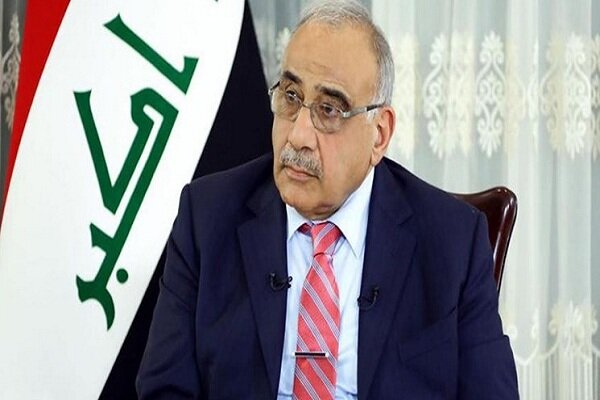
Meanwhile, Iraq’s caretaker Prime Minister Adel Abdul Mahdi urged political groups to nominate a new person.
Abdul Mahdi said that the cabinet had only two choices, either to resign, which is what he did, or to vacate the prime ministerial position, and in that case the president would serve as prime minister for 15 days until a new prime minister was elected.  “Finally,” he said, “We decided to resign after consultations with the Federal Court.” 
Anyway, Salih has no more than 12 days to elect a new prime minister. But given the difficulties, it seems unlikely that the president can carry out this job within remaining time as electing a new prime minister is a time consuming process. 

Monday, November 04, 2019

Intensifying pressure on Abdul Mahdi to resign

By Ramin Hossein Abadian
Domestic and foreign pressure for ousting Iraqi Prime Minister Adil Abdul Mahdi appear to have increased more than ever.
Iraq’s President Barham Salih has also recently made a statement in this regard, saying, “The prime minister had previously agreed to submit his resignation if the blocs agree on an acceptable replacement in order to adhere to constitutional and legal frameworks”.
Condemning the violence against the protesters, Salih claimed that he will stand beside the Iraqi people.
The prime minister added that he is against quelling the protesters. Addressing the protesters, he said the Iraqi people and security forces are on the same side. Noting that forcible action is not the way to deal with the protestors, Salih said that reforms is the only solution.
There are two-point regarding the remarks by the Iraqi president. The first point is that Abdul Mahdi has only announced his consent for resignation, and considered its dependent on the agreement of political parties about a replacement.  Therefore, as some foreign media have suggested, a resignation of Abdul Mahdi cannot be considered inevitable.
 The second point in Salih’s remarks is that Adul Mahdi is well aware of Iraq’s political situation. He knows that even if he resigns, political parties will not come to an agreement about a replacement, at least in the short run, and this matter will emerge as a serious problem. The prime minister has agreed to “conditional resignation” to prevent Iraq from facing a “power vacuum”.
Currently, it is obvious that domestic and foreign pressure has increased on the Iraqi government to make Abdul Mahdi step down.  Domestic pressure mainly comes from a particular political current that has repeatedly asked for the resignation of the prime minister and hold an early election. In such a situation, Iraqi Shi'ite leader Muqtada al-Sadr had earlier announced if Abdul Mahdi did not step down, Iraq would become like Yemen and Syria.
The pressure by political parties and figures such as Muqtada al-Sadr on the prime minister is taking place while the government has taken great steps to carry out reforms, and has also established good cooperation with the parliament. To this end, one of the latest government’s reform plans includes training job seekers, reducing retirement age, cutting taxes for small businesses and industries and removing their income tax.
According to a recent statement issued by the government, it is stated in the new reform package that the Ministry of Energy should train job seekers and provide them with financial aid so that they can get a job in government organizations, or help them to launch small businesses. The government put Civil Servants Pension Organization in charge of developing a plan to reduce retirement age in government jobs and to provide more employment opportunities for the youth.
Last week, Abdul Mahdi released an important message about reforms, stating that the government had emphasized the importance of creating a special anti-corruption court to prosecute the corrupt.
In addition to domestic pressure, the U.S. applied its pressure since the very first days of the protests to force Iraq’s prime minister to resign. Americans have played an important role in Iraq’s uprising through their embassy in Baghdad.
Earlier, the Lebanese newspaper Al-Akhbar wrote, “Attempts for political coup are supported by the United States.” The newspaper also said the cost of the coup is $150 million, which Saudi Arabia has pledged to provide, and its implementation is on Iraqi civil society organizations backed by the U.S. embassy in Iraq.
The U.S. ambassador to Iraq, Matthew Tueller, is also involved in foreign pressure on the prime minister. This matter can be easily understood in the remarks of the ambassador about the recent unrest. For example, Tuller recently said that it “appears inevitable” that Abdul Mahdi would resign.
In addition, about three weeks ago the American newspaper Task and Purpose revealed Tuller’s correspondence with Washington officials about Abdul Mahdi’s resignation.
According to the newspaper, in a classified email sent to U.S. military leaders on Saturday morning, Tueller wrote, “We assess Moqtada al-Sadr is seeking to take advantage of this crisis by giving demonstrators a dramatic response to their anger against the government and strengthening his own hand. Subsequently, former PM Haider al-Abadi also issued a call for early elections. With these drastic developments, the resignation of [Adil Abdul-Mahdi] by as early as today appears inevitable and Iraq's government will enter unchartered [sic] and fraught political territory.”
In view of all these things, it is clear that domestic and foreign pressure is intensifying on the government.

Wednesday, January 16, 2019

Zarif satisfied with his visit to Iraq, says 'always a pleasure to be back touring in Iraq'

By: Lachin Rezaian

Zarif satisfied with his visit to Iraq, says 'always a pleasure to be back touring in Iraq'


TEHRAN, Jan. 15 (MNA) – Iran's Foreign Minister Mohammad Javad Zarif described the details of his trip to Baghdad and his separate meetings with Iraqi officials in eight tweets, posted early on Tuesday.
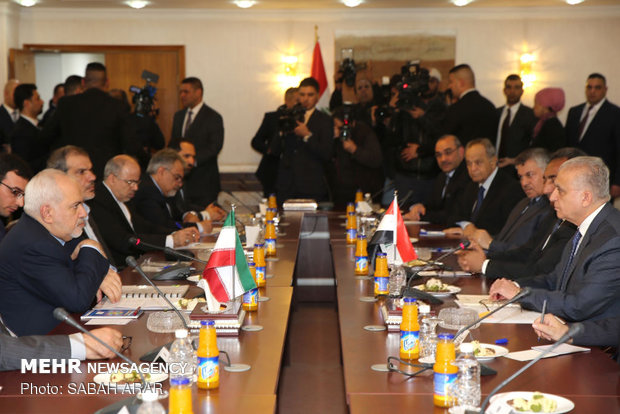
Javad Zarif addressed a gathering of representatives from hundreds of Iranian and Iraqi companies in the Iraqi capital city of Baghdad on Monday, during a trade meeting between the economic agents of the two countries’ private sectors. The meeting was held with the purpose of discussing opportunities for investment in Iraq, the participation of Iran's private sector in the reconstruction of Iraq after the defeat of ISIL terrorists and enhancement of trade cooperation.
Today, I, accompanied by 6 Iraqi ministers, addressed hundreds of participants at the Iran-Iraq Joint Trade Conference; exploring paths to significantly expand bilateral trade and investment. With implementation of shared vision, doubling of annual trade volume is on the horizon," Zarif wrote on his Twitter.
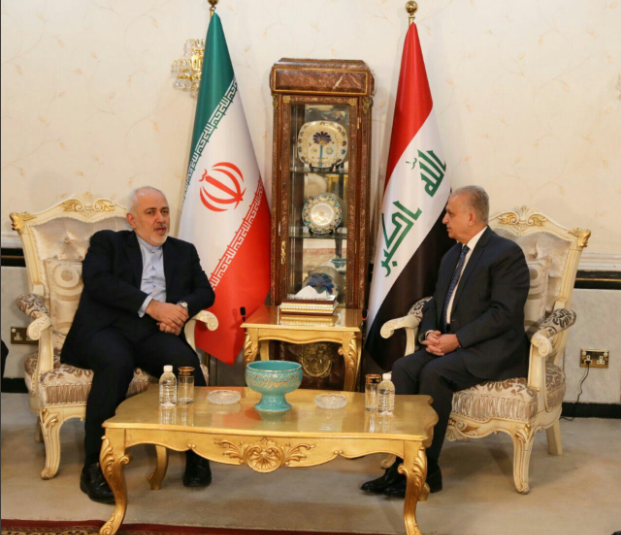
Zarif also met with Iraq’s Prime Minister Adil Abdul-Mahdi in the Iraqi capital of Baghdad on Sunday, during the meeting, the two sides explored avenues for further expansion of bilateral relations. They also discussed the latest developments in the region.
"Always a pleasure to be back touring in #Iraq. Yesterday I had the honor to meet with PM @AdilAbdAlMahdi and FM @Maalhakim to discuss strategy on how to further expand bilateral relations–including trade. We also exchanged views on regional & int’l issues, such as #Yemen, #Syria," Zarif's tweet reads.
​
Iranian minister also held a meeting with Iraq’s National Wisdom Movement Leader, Ammar al-Hakim, during which the two sides discussed Iran-Iraq relations and cooperation in fighting terrorism, especially IAIL. The Iraqi official acknowledged Iran’s fundamental role in fighting against ISIL and assisting Iraqi people.
"Additionally, I've had the good fortune to engage in fruitful exchange of thoughts with the head of #Iraq’s Reform and Reconstruction Alliance @Ammar_Alhakeem, as well as with prominent Iraqi leaders -- from @AyadAllawi to friends from the Nasr and Sadrist coalitions," he said.
​
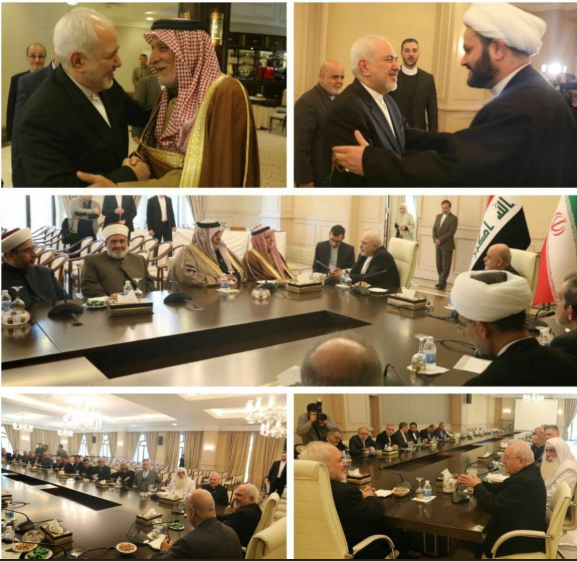
Zarif held separate meetings with representatives of religious, political, cultural, ethnic and social groups, organisations and institutions, including the head and members of the Sunni Waqf and representatives of Christian, Mandaean, Turkmen and Izadi minorities on Monday.
In the meeting, Zarif stressed the need for deep, brotherly and respect-based relations between the people of Iran and Iraq, saying that “close relations between our nations are a source of hope and an excellent example of [friendly] relations between nations in the region.”
"As with my past visits, I've been honored to be able to make use of opportunity to engage with representatives of the many diverse actors in the rich mosaic of #Iraq; from Christians, Yezidis, Sabaeans, Turkmen, and Feyli Kurds to the Sunni Endowment," his next tweet reads.
​
In a meeting with the Speaker of Iraqi Parliament Mohamed al-Halbousi in Baghdad on Monday, Zarif referred to the good relations between the two countries, especially parliamentary relations, adding the annual exchange of visits by Iranians and Iraqis to each other’s countries show the high level of bilateral relations. Mohamed al-Halbousi also emphasized the strengthening and expansion of bilateral relations with Iran.
"Pleased to meet Parliament Speaker Mr. Al-Halbousi and engage in an extensive, constructive and friendly dialogue with him and 20 of his colleagues in #Iraq's Council of Representatives," Zarif said.
​
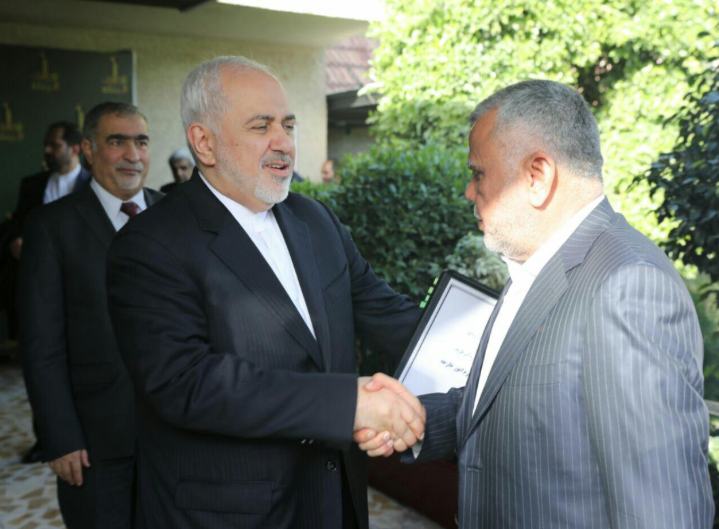
Later on Monday, Zarif met with Iraq’s President Barham Salih at the presidential palace in Baghdad. During the meeting, the two sides discussed Iran-Iraq relations as well as major developments in the world and the region.
Salih emphasized the importance of bolstering his country’s relations with Iran, noting that this issue will not only serve the two nation’s interests, but also benefit security and stability of the entire region.
"Honored to have substantive meeting and dinner with President @BarhamSalih to discuss further cooperation and constructive engagement between our two countries. Iran and Iraq are determined to work together to promote a strong region," Zarif's tweet reads.
​
In another tweet, Zarif described his meeting with leadership of the Reform Alliance as effective and Construction Alliance; they discussed bilateral and regional issues.
"After Sunday dinner in Baghdad with the leadership of the Reform Alliance, I had the pleasure of lunch today with the leadership of the Construction Alliance—the other major Iraqi coalition—to discuss bilateral and regional issues. Both parties cross ethnic & sectarian divides," Zarif reiterated.
​
Iranian foreign minister in a meeting with former Iraqi Prime Minister Nouri al-Maliki discussed the latest regional developments.
"Separately, I had the pleasure of meeting with former Prime Minister Maliki and former Prime Minister Allavi—with members of his coalition, including former Speaker Salim al-Jabouri. My visit allows for engaging in dialogue with different political currents and leaders in Iraq," Zarif asserted in a tweet on Tuesday.
​
Zarif, heading a politico-economic delegation, arrived in Baghdad on Sunday; senior managers of several Iranian state and private sector companies are accompanying Zarif during his 5-day trip.

Sunday, November 18, 2018

Iraq, Iran Further Cement Fraternal Ties to US Detriment


By: S. Nawabzadeh
We had said earlier – on several occasions – in the columns of this newspaper that in West Asia there are no countries as close to each other in terms of a shared history geography, religion, politics, culture, economy, trade exchanges, ecology, types of food, etc., as Iran and Iraq.
This commonality, or in other words friendship and fraternity, was emphasized yet once again on Saturday in Tehran by Iraqi president, Barham Salih, an ethnic Kurd familiar with both the Arabic and Persian languages, during his meeting with his Iranian host, Hojjat al-Islam Dr. Hassan Rouhani – and reciprocated by Iranian officials.
The newly elected Head of State of the Land of the Two Rivers also made it quite clear that Iraq is looking forward to further expansion of neighbourly ties with Iran and on no account will allow any enemies or outside forces to try to disrupt relations with the Islamic Republic, to whom the Iraqi people feel highly indebted for its timely help.
Such stating of the basic facts regarding Iran’s help are not limited to the recent routing by Iraq’s popular forces of the Saudi-created and US-supported takfiri terrorists who had planned to seize the whole country, but are also indicative of the assistance that the Islamic Republic, as part of its principled foreign policy for peace and stability in the region, has continued to provide to its brethren in Iraq (Arabs, Kurds, Shi’as, Sunnis, and Christians) since the reign of terror of Saddam of the repressive Ba’th minority regime and throughout the American occupation.
Salih’s realistic remarks may have maddened Trump and his team of thugs in Washington who are trying in vain to meddle in Iraq in a bid to distance it from Iran. His statement, coupled with the wise words of senior Iranian officials, especially the Leader of the Islamic Revolution, have certainly struck the seditious Saudis like a slap in the face, but there is nothing the region’s unrepresentative tyrannical regimes and their American masters can do.
Ayatollah Seyyed Ali Khamenei, who warmly received Barham Salih and gave him brotherly advice on how to stand firm like a mountain in the face of enemy plots and attempts to meddle, did not mince words when he said: "The way to overcome problems and frustrate enemy plots is to preserve national unity in Iraq, properly recognize friends from foes, stand up to the brazen enemy, rely on youths and maintain and strengthen links with the (religious) authorities.” 
Thanking President Salih for Iraq’s hospitality towards Iranian pilgrims during the recent commemoration of the Arba’een anniversary in holy Karbala marking the traditional 40th day of the martyrdom of Imam Husain (AS) – grandson and 3rd Infallible Heir of Prophet Muhammad (SAWA) – he said in a clear tone: "certain ill-wishing regimes now seek to deprive Iraqis of the sweet taste of their great achievement of gaining independence as part of their plot to prevent restoration of peace in Iraq and the entire region.”
This means that in contrast to the Arab world’s collective submission to Israel, American pressures against Iraq will never succeed including the abortive attempt to disband the popular mobilization units (PMU – Hashd ash-Sha’bi).
Iraq is part of the Solid Chain of Resistance linking Iran to Syria and Lebanon, and Tehran will take every necessary step to further strengthen ties with Baghdad, including the connecting of the railway networks of the two countries in order to facilitate trade and travel.       
The present volume of annual trade exchanges between Iran and Iraq stand at 12 billion dollars, and as President Rouhani told his smiling counterpart during talks, efforts are being made to increase this amount to at least 20 billion dollars yearly. 
In view of these undeniable facts, including the miserable failure of the US plot of the 1980s to create bad blood between the brotherly peoples of the two countries through Saddam’s 8-year war, it is but natural for the Iraqis – both Arabs and Kurds, whether Shi’a or Sunni – to stand beside their Iranian brethren, fully knowing that in addition to their overseas enemy, the US, their chief regional enemy is the Wahhabi cult of the spurious entity called Saudi Arabia, which used to fund to the tune of tens of billions of dollars, the genocide of Shi’a Arab Muslims and the ethnic Kurds by the Ba’thist regime.
It should be noted that the Iraqi people are too mature to be swayed either by Washington’s propaganda tirade to endorse the illegal sanctions against Iran, or the bribes of Riyadh in building a football stadium and a power plant in Basra, as well as the doling out of a few million dollars of the stolen oil wealth of the deprived people of Qatif, to some suspicious elements.
Iraq and the Iraqi people, along with their Iranian brethren, fully know that Trump’s state terrorism of economic sanctions against the Islamic Republic is only a passing phase in the glorious history of the people of the region, while the future appears brilliantly bright with the fast approaching end of the American client regimes in the region, such as the Aal-e Saud, the Aal-e Khalifa, the Aal-e Nahyan and Aal-e Sayhoun (Zionists).