Showing posts with label Iraqi Prime Minister. Show all posts

Monday, November 04, 2019

Intensifying pressure on Abdul Mahdi to resign

By Ramin Hossein Abadian
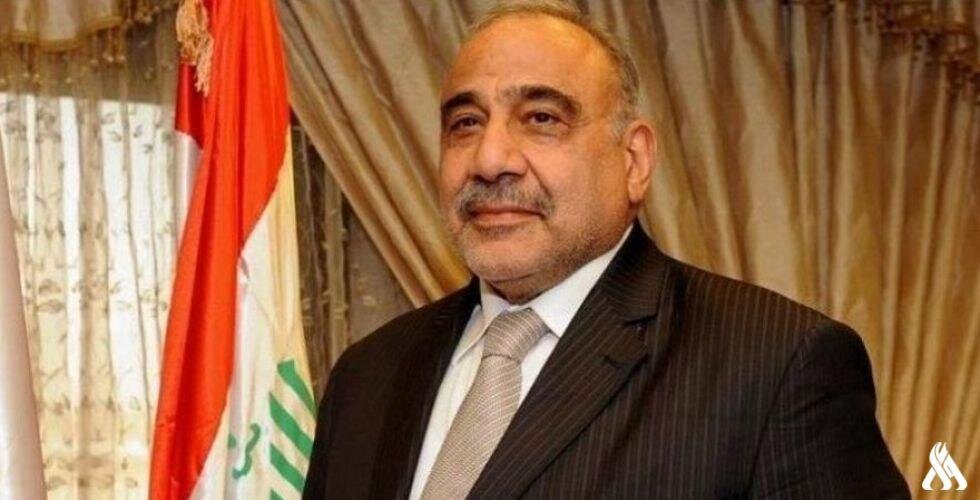
Domestic and foreign pressure for ousting Iraqi Prime Minister Adil Abdul Mahdi appear to have increased more than ever.
Iraq’s President Barham Salih has also recently made a statement in this regard, saying, “The prime minister had previously agreed to submit his resignation if the blocs agree on an acceptable replacement in order to adhere to constitutional and legal frameworks”.
Condemning the violence against the protesters, Salih claimed that he will stand beside the Iraqi people.
The prime minister added that he is against quelling the protesters. Addressing the protesters, he said the Iraqi people and security forces are on the same side. Noting that forcible action is not the way to deal with the protestors, Salih said that reforms is the only solution.
There are two-point regarding the remarks by the Iraqi president. The first point is that Abdul Mahdi has only announced his consent for resignation, and considered its dependent on the agreement of political parties about a replacement.  Therefore, as some foreign media have suggested, a resignation of Abdul Mahdi cannot be considered inevitable.
 The second point in Salih’s remarks is that Adul Mahdi is well aware of Iraq’s political situation. He knows that even if he resigns, political parties will not come to an agreement about a replacement, at least in the short run, and this matter will emerge as a serious problem. The prime minister has agreed to “conditional resignation” to prevent Iraq from facing a “power vacuum”.
Currently, it is obvious that domestic and foreign pressure has increased on the Iraqi government to make Abdul Mahdi step down.  Domestic pressure mainly comes from a particular political current that has repeatedly asked for the resignation of the prime minister and hold an early election. In such a situation, Iraqi Shi'ite leader Muqtada al-Sadr had earlier announced if Abdul Mahdi did not step down, Iraq would become like Yemen and Syria.
The pressure by political parties and figures such as Muqtada al-Sadr on the prime minister is taking place while the government has taken great steps to carry out reforms, and has also established good cooperation with the parliament. To this end, one of the latest government’s reform plans includes training job seekers, reducing retirement age, cutting taxes for small businesses and industries and removing their income tax.
According to a recent statement issued by the government, it is stated in the new reform package that the Ministry of Energy should train job seekers and provide them with financial aid so that they can get a job in government organizations, or help them to launch small businesses. The government put Civil Servants Pension Organization in charge of developing a plan to reduce retirement age in government jobs and to provide more employment opportunities for the youth.
Last week, Abdul Mahdi released an important message about reforms, stating that the government had emphasized the importance of creating a special anti-corruption court to prosecute the corrupt.
In addition to domestic pressure, the U.S. applied its pressure since the very first days of the protests to force Iraq’s prime minister to resign. Americans have played an important role in Iraq’s uprising through their embassy in Baghdad.
Earlier, the Lebanese newspaper Al-Akhbar wrote, “Attempts for political coup are supported by the United States.” The newspaper also said the cost of the coup is $150 million, which Saudi Arabia has pledged to provide, and its implementation is on Iraqi civil society organizations backed by the U.S. embassy in Iraq.
The U.S. ambassador to Iraq, Matthew Tueller, is also involved in foreign pressure on the prime minister. This matter can be easily understood in the remarks of the ambassador about the recent unrest. For example, Tuller recently said that it “appears inevitable” that Abdul Mahdi would resign.
In addition, about three weeks ago the American newspaper Task and Purpose revealed Tuller’s correspondence with Washington officials about Abdul Mahdi’s resignation.
According to the newspaper, in a classified email sent to U.S. military leaders on Saturday morning, Tueller wrote, “We assess Moqtada al-Sadr is seeking to take advantage of this crisis by giving demonstrators a dramatic response to their anger against the government and strengthening his own hand. Subsequently, former PM Haider al-Abadi also issued a call for early elections. With these drastic developments, the resignation of [Adil Abdul-Mahdi] by as early as today appears inevitable and Iraq's government will enter unchartered [sic] and fraught political territory.”
In view of all these things, it is clear that domestic and foreign pressure is intensifying on the government.

Wednesday, April 24, 2019

US new suspicious moves in Iraq

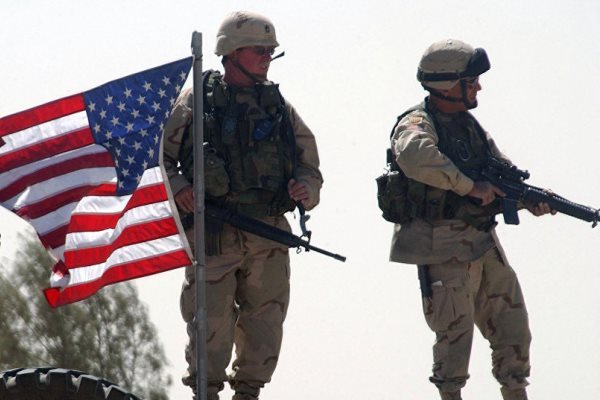
TEHRAN, Apr. 23 (MNA) – Washington's suspicious military moves in Tikrit city of Iraq indicate that Washington has devised another conspiratorial scenario in Iraq.
It seems that there is no end to US military maneuvers in Iraq. Recently, new reports have been published on the measures of American troops in Iraq, which has raised concerns about Washington's possible future scenario in the country.
In this regards, local sources announced the arrival of a group of US troops to the Camp Speicher in Tikrit, 140 kilometers northwest of Baghdad. Regarding to these sources, “This group of militia was massively armed and had weapons and equipment."
According to reports, after arrival of US troops to the Camp Speicher, a number of nomads’ figures also went and met with American generals stationed there.
While the necessity of the withdrawal of foreign troops from Iraq was on the agenda of the parliamentary factions and became one of the main issues in the political and media circles, the US military's new operations in northern Iraq are under way.
Accordingly, the major alliances of Iraq, including the "reform and construction" coalition, called for an expeditious withdrawal of US troops from Iraqi territory, urging parliamentarians to take the necessary measures to remove alien forces from Iraqi territory as quickly as possible.
Meanwhile, Fatah Alliance also demanded a similar stance toward the exit of American troops from Iraq.
It seems that Americans are seeking new conspiracies in Iraq to target the Iraqi government and nation, and on the other hand, to challenge the relations of Baghdad with its allies in the region, including The Islamic Republic of Iran.
As it seems, the visit of Iraqi Prime Minister Adil Abdul Mahdi to Iran was not pleasant for Washington. Abdul Mahdi traveled to Iran while Americans expected Iraq to reduce its relations with Tehran following extensive financial sanctions against Tehran and to refrain from any economic cooperation with Iran while limiting bilateral relations.
However Iraqi Prime Minister signed MoUs with Iranian authorities in various fields while traveling to Tehran. It seems that the new US moves in Iraq are aimed at reducing the influence of Iran in the country.
On the other hand, Baghdad officials’ refrain from accompanying Washington's ally in the region, Riyadh, caused that Americans to increase their influence in Iraq, in order to prevent Tehran's proximity to Baghdad.
In addition, consultations have been underway to complete the Iraqi cabinet, headed by Adil Abdul Mahdi. Meanwhile, the continuation of political consultations between the parliamentary coalitions of the "reform and construction" and "Fatah Alliance" shows the fact that the completion of the Iraqi Cabinet has become an imminent issue.
On this basis, the talks and negotiations of Iraqi government and political groups about completion of Iraqi cabinet are prior, so that the process of democracy that began last May has not been challenged and successfully completed.
Therefore, Iraqi groups are aware that avoiding any conflict and resorting to dialogue and negotiation can help government to defeat foreign conspiracies in addition to fulfill its domestic demands.
In this regard, the leader of the National Wisdom Movement of Iraq, Ammar al-Hakim in Baghdad and leader of "Reform and Construction" coalition, a major coalition in parliament, stressed to complete Iraqi cabinet as soon as possible through dialogue and negotiation.
He also called for an all-round dialogue between political organizations, especially between the "Reform and Construction" and "Fatah Alliance" coalitions, and emphasized that dialogue and negotiation could solve many uncertain issues and largely help the government to provide services. "
Whereas, Hadi Al-Ameri, chairman of the Badr Organization and leader of “Fatah Alliance", one of the two major Iraqi parliamentary factions, has also emphasized to complete cabinet through political negotiations between parliamentary factions previously.
Consequently, it is clear that US is not interested in completion of democracy process and the cabinet formation in Iraq. It is obvious that US recent moves in Iraq are also linked with their efforts to prevent the completion of the cabinet.
 In addition to US moves, some media are stimulating political parties and factions against the government of Baghdad in order to delay cabinet completion.
In this regards, Adil Abdul Mahdi has shown that he has a high morale to engage with various political parties, factions and political alliances since his appointment as Iraqi cabinet's secretary by President Barham Salih. He can manage Iraqi political atmosphere in a way not to let Iraq become the scene of useless political struggles. This characteristic of Abdul Mahdi led him to initiate a constructive engagement with leaders of various factions.
In conclusion, the new US moves in Iraq are implemented with major goals to affect the relations of Tehran and Baghdad, as well as challenging the internal developments in Iraq, including the completion of the process of democracy and the introduction of the remaining cabinet ministers. It is clear that Americans are not pleased with the process of democracy in Iraq and its relations with Tehran, and resort to any move to create chaos in this country.

Sunday, April 07, 2019

Iran & Iraq “Two Bodies One Soul”

By: Kayhan Int’l 

"Two bodies one soul” could be an apt description of the vast West Asian region geographically classified as the Iranian Plateau and Mesopotamia and known in modern political terminology as Iran and Iraq – which for almost two millenniums since 539 BC was one single realm and which since 1639 AD have shared a 1458 km long border, stretching from the headwaters of the Persian Gulf in the south to Mount Kuh e-Dalanper in the Zagros range in the north.

The current visit to the Islamic Republic by Iraqi Prime Minister, Adel Abdul-Mahdi, as a sequel to last month’s memorable trip to the Land of the Two Rivers by Iranian President, Hassan Rouhani, is ample proof of the age old indivisible ties between the Muslim peoples of the two lands.


As a matter of fact, so firm and formidable are these relations that cover all spheres of life, ranging from religion, culture, politics, ecology, economy, industry, science, technology, etc., that the US which failed to create bad blood between the Iranian and Iraqi Muslims by imposing the 8-year war in the 1980s through its agent Saddam of the tyrannical Ba’th minority regime, has again banged its head into an iron wall by its vain bid to drive a wedge between the two countries.


Iran needs Iraq, and Iraq needs Iran; and with this in mind the leaders of the two countries are confident of boosting the volume of Tehran-Baghdad trade exchanges in the next few months to at least 20 billion dollars, much to their chagrin of their common enemies – the US, the illegal Zionist regime, and the unrepresentative reactionary Arab regimes.


The Iraqi guest in his press conference in Tehran on Saturday again expressed gratitude for Iran’s timely help in thwarting and throwing out the Takfiri terrorists, which backed by the US and Saudi Arabia were on the verge of taking Baghdad.


In other words, Iranian training to the Hashd ash-Sha’bi or Popular Mobilisation Units (PMU) and supply of Iranian weaponry to them was the key factor for the defeat of the macabre Daesh terrorists trained in the most murderous methods by the Zionists and possessing state-of-the art American manufactured military hardware.


This is one of the reasons why the Iraqis give preference to Iranian products and have ignored Washington’s pressures to discontinue import of natural gas and electricity from Iran.

Adel-Abdul Mahdi had the honour of being granted audience by the Leader of the Islamic Revolution, Seyyed Ali Khamenei, who lauding the alertness of the Iraqi people against imperialist designs and their resistance towards the nefarious plots of the reactionary regimes of the region, told the venerable visitor that the sooner the US occupation forces are made to leave, the better for Iraq.


The Iraqi premier discussed a wide range of topics with his hosts, including the futile American bid to endorse Israel’s illegal bid to annex Syria’s Gold Heights and the declaration of the occupied Islamic city of Bayt al-Moqaddas as capital of the illegal Zionist regime, in addition to the state terrorism of Saudi Arabia in Yemen, as well as the situation in the region.


To sum up, the Iraqi politicians and the Iraqi people are well aware that for the security and progress of their country they need to join the Resistance Front led by a friendly and fraternal Iran, which is resolved to connect Baghdad to the railway planned to link Tehran to the Mediterranean via Damascus.
And this means the Americans, along with their Trojan Horses – Saudi Arabia and the reactionary Arab regimes – are unwelcome in Mesopotamia.