Showing posts with label Ottoman Empire. Show all posts

Thursday, November 28, 2019

The Most Enduring Media Cover-Up

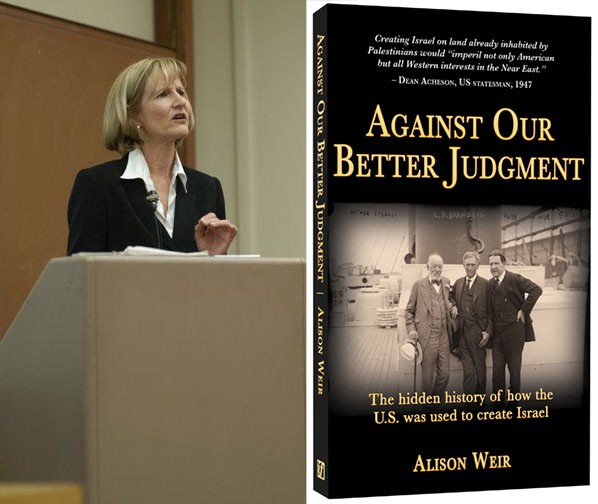
Clearing the FOG hosts Margaret Flowers and Kevin Zeese interviewed Alison Weir, journalist and founder of If Americans Knew, a website that provides factual information about the Israeli State and Palestine. Weir describes how she learned firsthand that US media provide a false and one-sided narrative about Occupied Palestine and why she has dedicated the past twenty years to counter that. She also explains some of the most common myths and what she learned as she did research for her book, “Against Our Better Judgment.” Weir is a very clear thinker on the issue of Palestine-Israel and provides the data and language we need to speak to a propagandized population. You can listen to the entire interview and the week’s news analysis on Clearing the FOG.
Interview
Clearing the FOG (CtF): Alison, your website is a great source of information. Before we get into the site, why don’t you tell us about how you got involved in this issue.
Alison Weir (AW): People always wonder that because I don’t happen to be Jewish or Arab or Muslim or Palestinian and like most Americans 20 years ago, I knew very little about this issue. I had been active on other issues, anti-war during the Vietnam war, civil rights, that type of thing but I had never focused on Israel-Palestine until the Second Intifada began in the Fall of 2000. I’m sure you know intifada just means “Uprising,” a Palestinian Uprising. When that began, in Fall of 2000, I got curious about it.
My background is journalism. At that time, I was the editor of a very small weekly newspaper in Northern California. This wasn’t for my job, it was just my personal curiosity. I started to follow the news coverage on this uprising and I quickly noticed that it was very one-sided, that we were hearing from and about Israelis in great detail, but we got very little information from and about Palestinians.
I went on the internet and discovered a great deal of information from the region itself, from humanitarian agencies that were there, Israeli media in English, Palestinian media. And I discovered that Israeli forces were shooting Palestinians every day in large quantities, including many children and I noticed this reality was not being reported on the news sites that I usually looked at. The San Francisco Chronicle, the New York Times, especially NPR, seemed to be covering that up.
So the more I looked into it, the more I felt this was a truly significant cover-up. I felt and I do feel now that this was the longest-lasting and most enduring cover-up I had ever seen and that it was occurring across the political spectrum. After a few months of looking into that, I decided, it seemed so significant that I quit my job in Sausalito and traveled as a freelance reporter throughout Gaza and the West Bank. It was a very intense trip, I was not part of any delegation. There really weren’t any delegations at that time.
When I came back, I started the organization, If Americans Knew. The goal has been to be very factual, to show the sources of our information. It’s very transparent. It gives Americans without ideological slant the facts on Israel-Palestine and especially the American connection, the fact that we are in many ways responsible for what Israel does because our tax money goes to Israel. It’s now over 10 million dollars per day. We’ve given Israel far more than we’ve given anybody else.
Most Americans, I think, are the way I was. I felt I had no connection to this confusing issue on the other side of the world, but I learned I have a very direct connection to it and therefore it’s my responsibility to know about it and to act in ways that I feel are morally required. In a nutshell, that’s how I ended up 20 years later still working on this issue.
CtF: That was a very courageous thing to do. Of course, the US also provides cover for Israel in the United Nations or when the International Criminal Court wants to investigate Israel. How were you received by Palestinians when you went there to cover the Intifada?
AW: The perception was and is that you will be in great danger from Palestinians. But I discovered it was the opposite. I was welcomed. I was invited to stay in people’s homes, which I often did. People were very excited to learn that an American journalist was there. I told people I’m here to see what’s going on and people would smile at me in places like Gaza where there were really very few Americans at that time. I didn’t see any other journalists traveling around.
Crowds of people would come up to me and they wanted to show me their bullet-riddled homes and show me what was happening to them. So I found it then and on my other trips there since, people are very welcoming, very friendly. Often they’re very aware of how much money the US gives to Israel. Even though most Americans don’t know that, it is known in the region. Despite their knowledge of that and despite their knowledge of how the US has supported Israel in so many ways, they’re still very welcoming to Americans and very willing to not blame us for what our government is doing. So it’s really the opposite of what people have been led to believe it would be like.
CtF: We were just in Occupied Palestine recently and what you describe is very consistent with our experience as well. Your website focuses on correcting the misconceptions. What are some of the most important misconceptions that people in the United States have about the situation in Occupied Palestine?
AW: That’s at the heart of the problem because there are so many that it’s hard to make people realize it’s really as different as they expect. If there were only one or two, people can accept that. It’s harder for them to realize that almost everything they thought was true is not accurate. And that is what I am often telling them.
One of the main things is that we are directly related to the conflict. We give Israel massive amounts of money. This is per capita on average 7,000 times more than we give other people. One of the other things is that many people are unaware that Israel was established in my lifetime, that when I was born there was no Israel. There was a region called Palestine that had been there called Palestine for really millennia.
Many intelligent and knowledgeable people are not aware of what Israel Palestine is about, that basically Israel was established through warfare. It was not established by the United Nations, another misconception. It was established by a war of ethnic cleansing. That’s what we now term that type of war. It’s the title of an excellent book by an Israeli historian Ilan Pappe, so, the very foundation of Israel is very different than people realize.
This was an intentional dispossession of the indigenous population. It started with the beginning of the establishment of the modern state of Israel and continues through today. Constantly Israel is confiscating additional Palestinian land and taking it over for Jewish-only settlements, as they’re called. Many people are unaware that many Palestinians are Christians. This is where Christianity began. It’s rarely mentioned in the US media.
The other thing people are often unaware of these days is media coverage always focuses on “rockets from Gaza.” Every news report mentions rockets from Gaza. The fact is that I was there traveling around by myself as a reporter before any rockets had been fired and I saw already at that time in early 2001 extreme devastation. I saw neighborhoods in Gaza that were bullet-riddled, that looked like the pictures you see of World War II ruins. In the West Bank too shelling was going on. This was before any rockets had been fired.
People think Israel is defending itself from rockets, but the rockets were actually resistance groups in Gaza trying to fight back with really very ineffectual rockets. In the whole time they’ve been used, they’ve killed at most a few dozen Israelis. Meanwhile, Israeli forces have killed many thousands of Gazans. The only statistic we get in the typical news report is thousands of rockets have been fired from Gaza. They never tell that the total number of Israelis who have been killed is perhaps by now, maybe 50, perhaps not even that high and they never tell that during that time about 5,000 Gazans have been killed. We don’t hear about the massive bombardment of Gaza that’s been going on for a very long time and that has killed thousands of Gazans. And of course, killed many people in the West Bank also.
CtF: When we were there, we saw fighter planes flying over Jerusalem on their way to bomb Gaza. Over 30 Gazans were killed, including a family. Tens of thousands of Palestinians were displaced from their homes in the recent siege of Gaza. And these so-called rocket attacks, they’re like little pipsqueak rockets. These rockets were a response to an Israeli assassination in Gaza. It’s really amazing they use that as an excuse, but they do.
AW: They get away with it because the media only tell about the response and don’t tell about what came before. The American population is completely misled. Most of these are small homemade projectiles, but media will report them as missiles and people are imagining a Nike missile or something. That’s just not what’s going on.
There have been studies of the chronology of the violence in the conflict. There was one excellent study by an MIT professor who looked at periods of calm, at various truces through the years. Her study showed that it was something like 96% of the time in the shorter truces it was Israel that had first resumed violence against Palestinians and in the longer truces, it was 100% of the time that Israeli forces resumed the violence. This is just not known to the American public because it’s very filtered news coverage that people are getting.
Your point of hearing jets flying over to bomb Gaza is very significant. People don’t know that here we have one of the most powerful militaries on the planet, largely due to our tax money and often US weaponry, fighting against a population that has no Air Force, no Navy, no aircraft, no helicopter gunships. The disparity is astounding and the media try to call it a war. A war is between two military forces. That’s not what we have when we look at Gaza and Israeli forces.
CtF: It’s such an asymmetric situation. Palestinians have been forced from their homes, living in an apartheid state and have the right under international law to defend themselves. But the Palestinians we met with while we were there, activists, said we are nonviolent, we believe in using non-violence and talked about teaching their children not to hate other people, how giving in to that was destructive. One of the things that people push back in the United States is they say that there never really was a Palestine, that Palestinian nationality didn’t start until the 20th century. Can you comment on that? 
AW: Yes. This is one of the Israeli talking points that many people have fallen for. You see this on Facebook and Twitter and various places. It’s a nonsensical argument. It’s true, there was not a state of Palestine. There was not a state of Israel. There was a region called Palestine. You can look at old maps.
Palestine was a region back in biblical times. It was talked about in more recent times. It was talked about in more recent centuries. It was under the Ottoman Empire. It was what we call multicultural. Around 1900, the population was about 80 percent Muslim, about 15 percent Christian and a little under five percent Jewish. This was a region. It was not a nation-state, as we know nation-states came relatively late to the world. Germany wasn’t a nation-state for many years. The United States did not used to be a nation-state. Palestine was a region. Palestinians have existed.
There was a book published some years ago by an Israel partisan who went by the name Joan Peters claiming the Palestinians did not exist, that they were just nomads that had come in because the Zionists’ wonderful entrepreneurial spirit had created jobs for these nomads to join them. This is the thesis of her book called “From Time Immemorial.” Many people read it. It was praised by pretty much every book review in the United States.
People like Barbara Tuchman, an Israel partisan, but known as a historian, praised it. It turned out to be a complete hoax.  Some very good historians and analysts including some Jewish Americans looked into the book and found out that these many footnotes were often fraudulent. They were actually coming from Zionist propaganda. In Israel itself, it was exposed as non-factual. In Britain, it was exposed as non-factual. In the United States, it eventually was, but I don’t think any of the people that gave it a positive review and that endorsed it then had the honesty or principle to retract their erroneous reviews.
Many people, especially many Jewish Americans, read that book and were taken in by it and then repeat the myth that there were no such thing as Palestinians. Even Golda Meir, the famous Israeli Prime Minister, said at one point that quote there were no Palestinians. That’s like Americans trying to say well there were no Native Americans here. Of course, there was.
CtF: Even in the country itself Israeli Jews seem oblivious to the reality in their own country. Home demolitions and the settlers putting settlements on Palestinian communities and on Palestinian lands. We drove on Jewish-only roads. If I Google “Jewish only roads,” I find an article about “Jewish only roads don’t exist.” One of the challenges we have in talking to people in the United States, and even in Israel, Occupied Palestine, is they don’t want to see reality. How do you communicate to people who just seem oblivious whether unintentionally or intentionally?
AW: Certainly, Israelis have been brought up to be just the way you’re describing. Nurit Peled, an academic, has done excellent work showing that Israeli textbooks are very propagandistic in the way that they depict Palestinians. They’re not even called Palestinians. They call them Israeli Arabs. So this is deeply embedded in many portions of the Israeli population.
Fortunately, there are many people in Israel that are dissenting from that and they’re trying to reach their fellow Israelis. There are Israelis Against Torture and Israelis Against Home Demolition. There are a number of Israeli groups within the society, a small fraction, but they’re doing really wonderful work in trying to expose what’s actually going on. There are some Israeli journalists, especially Gideon Levy, who write every week in the Israeli media about some of the latest atrocities being committed by Israel against Palestinians.
I would love to reach everybody. I’d love to reach every Israeli. I’d love to reach every American who’s taken in by Israeli talking points. What I focus on is the really fairly promising reality that about three-quarters of the American population, despite the pro-Israel media coverage that we’ve been getting for decades and despite Hollywood, really does not have a strong view on this issue. And general surveys will show that they say something like we shouldn’t take sides, which is sensible. If you don’t know much about an issue, you just don’t take sides.
That sounds like a fairly wimpy approach to those of us who know what’s going on there, but what that would mean if you don’t take sides is we would stop giving Israel 10 million dollars per day. We would stop vetoing UN resolutions to protect Israel from world condemnation of its violence. So it’s actually quite a good stand if we did what the majority of Americans already say we should do.
I try to focus on giving the general public the facts on this issue and the importance of making their wishes known to their elected representatives that it’s time to stop this massive aid to Israel. It prevents peace. Israeli militarists think they have a blank check from the most powerful nation on the planet, which they do right now. So my view is we give voters factual information on this. We show how extremely tragic the situation is because of what we’re funding and the fact that it hurts us as well and emphasize how important it is to tell our elected representatives that we want them to change these misguided destructive US policies of a blank check to Israel.
It’s time for us to vote and to work on the issue of Israel Palestine. Not only because of what it’s doing to Palestinians, not only because of what it then does to the US but because our support of Israel has led to our wars in the region. It has led to much of the violence in the region that has since spilled over elsewhere. It’s the core issue of the Middle East and it’s the time for us to focus on it and to address it.
CtF: I want to ask you about a topic that you’ve been writing about recently. And that is the criticism that people who question or criticize the Israeli state are anti-semitic. Can you talk about that?
AW: Yes, that’s used all the time and most of us are profoundly opposed to bigotry of all kinds. We don’t want to be splattered with such mudslinging. We don’t want to be called anti-Semitic. We don’t want to be anti-Semitic and we’re not being anti-Semitic when we speak out for justice as a principal, but that’s the attack that they try to use.
A member of the Israeli Parliament some years ago on Amy Goodman’s Democracy Now said, and I’m paraphrasing, she said this is a trick. We always use it when somebody is critical of Israel, we call them anti-Semitic and that is exactly what going on. Nobody should be anti-Semitic. Nobody should be against any population, should be hostile and prejudiced against people. Bigotry is wrong. So that’s what they try to use.
What’s gotten worse is that not only do they try to claim somebody’s anti-Semitic when we’re talking about a nation-state and talking about injustice and trying to support principles of justice for all people, there is an effort to change the definition of anti-Semitism to include criticisms of Israel. This is extremely insidious.
It’s been going on for a number of years. There’s a new formulation in which certain criticisms of Israel, factual statements about Israel, will now be defined as anti-Semitism. Therefore it will be defined as hate speech, etc. This effort was begun by an Israeli Minister named Natan Sharansky. It has now been embedded in the US State Department and it’s being embedded elsewhere around the world. We need to learn about that and we need to oppose it. We need to stick with the traditional definition of anti-Semitism and we should oppose all anti-Semitism just as we oppose all racism, but we should not allow that incorrect epithet to be used to silence us or to prevent us from working for justice and human rights for all people including Palestinians.
CtF: One of the people we visited with when we were recently in Occupied Palestine was Rabbi Hirsh, who is with an ultra-orthodox Jew, and he makes a very strong case that Zionism is inconsistent with Judaism, that it violates the Torah. That makes the state of Israel really under his religious analysis to be against Judaism. A growing group of Jews in the United States is getting active in the Boycott, Divestment, and Sanctions movement. A number of Jewish groups are actually beginning to criticize Zionism and Israel. It’s really is an absurd claim that people who criticize Israel or Zionism are anti-Semitic. It just shows the weakness of their arguments.
AW: It does and I’m glad you brought that up because when Zionism, political Zionism, began with Theodore Herzl and some conferences in Switzerland in the late 1800s, the majority of Jews around the world did not join that movement. They said we’re Americans, we’re British etcetera. Even a Jewish population in Palestine was opposed to it, especially observant Jews were opposed to it and considered it a heretical move. There are many Jews who for religious reasons oppose Zionism saying this is against the Bible. It’s against God’s will. That’s part of what people don’t know. And in my book, in the research I did, it was very interesting to see how Zionists were very upset that Jewish-Americans were not embracing Zionism in the early years. In fact, for a number of decades, there were groups such as the American Council on Judaism that actively and strenuously opposed Zionism.
CTF: Finally, how can people learn more about the work that you do?
AW: The first thing would be to go to our website: IfAmericansKnew.org. From there, you will also go to our blog, the If Americans Knew blog. Between those two resources, I believe there’s a lot of information that will be useful to people. My book is available on Amazon. The short title is “Against Our Better Judgment.” It can be read very quickly. It’s one of the selling points and it’s thoroughly cited. It turned out that the book is half citations. So every statement in it, you can find the source for that statement. It contains a great deal of information that many people, even experts on the issue, did not know about before because when I started researching it, I was starting from scratch. I read a huge number of books. We’re also working to encourage people to join the effort to work within their congressional district to inform the people in your community about what’s going on. You can email us at contact@IfAmericansKnew.org and help get this information off the internet and into the hands of people in your community. We also have a very active Facebook page, If Americans Knew Facebook page, where we post things every day. I especially encourage people to join our email list. We should not rely on Facebook for our communication. That is a private company and they could turn it off whenever they want to so, please join our email list also.
CtF: If you haven’t visited If Americans Knew, it’s a very deep website. If you ever want to understand a particular aspect of Israel or Occupied Palestine, you’ll find a lot of the facts right there. If you’re ever writing about it, debating it, trying to understand and discuss it with others, it’s a very fact-based and deep web site that serves a very useful purpose for engaging on this issue. 
AW: We’ve certainly tried and the websites been live about 15 or 16 years. There’s really a depth of content there. We’re trying to upgrade it to a more modern look but there’s so much content, we just haven’t been able to do that yet. So it’s an old-school look but the content is there for people to find and it’s all sourced. We try to make sure that our material is factual and show people that that’s the case.

Sunday, October 20, 2019

The Road to Damascus: How the Syria War was Won


Following the Damascus-Kurdish alliance, Syria may become the biggest defeat for the Central Intelligence Agency since Vietnam, says Pepe Escobar.
Pepe ESCOBAR
What is happening in Syria, following yet another Russia-brokered deal, is a massive geopolitical game-changer. I’ve tried to summarize it in a single paragraph this way:
“It’s a quadruple win. The U.S. performs a face saving withdrawal, which Trump can sell as avoiding a conflict with NATO ally Turkey. Turkey has the guarantee – by the Russians – that the Syrian Army will be in control of the Turkish-Syrian border. Russia prevents a war escalation and keeps the Russia-Iran-Turkey peace process alive.  And Syria will eventually regain control of the entire northeast.”
Syria may be the biggest defeat for the CIA since Vietnam.
Yet that hardly begins to tell the whole story.
Allow me to briefly sketch in broad historical strokes how we got here.
It began with an intuition I felt last month at the tri-border point of Lebanon, Syria and Occupied Palestine; followed by a subsequent series of conversations in Beirut with first-class Lebanese, Syrian, Iranian, Russian, French and Italian analysts; all resting on my travels in Syria since the 1990s; with a mix of selected bibliography in French available at Antoine’s in Beirut thrown in.
The Vilayets
Let’s start in the 19thcentury when Syria consisted of six vilayets — Ottoman provinces — without counting Mount Lebanon, which had a special status since 1861 to the benefit of Maronite Christians and Jerusalem, which was a sanjak (administrative division) of Istanbul.
The vilayets did not define the extremely complex Syrian identity: for instance, Armenians were the majority in the vilayet of Maras, Kurds in Diyarbakir – both now part of Turkey in southern Anatolia – and the vilayets of Aleppo and Damascus were both Sunni Arab.
Nineteenth century Ottoman Syria was the epitome of cosmopolitanism. There were no interior borders or walls. Everything was inter-dependent.
Ethnic groups in the Balkans and Asia Minor, early 20th Century, 
Historical Atlas, 1911.
Then the Europeans, profiting from World War I, intervened. France got the Syrian-Lebanese littoral, and later the vilayets of Maras and Mosul (today in Iraq). Palestine was separated from Cham (the “Levant”), to be internationalized. The vilayet of Damascus was cut in half: France got the north, the Brits got the south. Separation between Syria and the mostly Christian Lebanese lands came later.
There was always the complex question of the Syria-Iraq border. Since antiquity, the Euphrates acted as a barrier, for instance between the Cham of the Umayyads and their fierce competitors on the other side of the river, the Mesopotamian Abbasids.
James Barr, in his splendid “A Line in the Sand,” notes, correctly, that the Sykes-Picot agreement imposed on the Middle East the European conception of territory: their “line in the sand” codified a delimited separation between nation-states. The problem is, there were no nation-states in region in the early 20thcentury.
The birth of Syria as we know it was a work in progress, involving the Europeans, the Hashemite dynasty, nationalist Syrians invested in building a Greater Syria including Lebanon, and the Maronites of Mount Lebanon. An important factor is that few in the region lamented losing dependence on Hashemite Medina, and except the Turks, the loss of the vilayet of Mosul in what became Iraq after World War I.
In 1925, Sunnis became the de facto prominent power in Syria, as the French unified Aleppo and Damascus. During the 1920s France also established the borders of eastern Syria. And the Treaty of Lausanne, in 1923, forced the Turks to give up all Ottoman holdings but didn’t keep them out of the game.
Turkish borders according to the Treaty of 
Lausanne, 1923.
The Turks soon started to encroach on the French mandate, and began blocking the dream of Kurdish autonomy. France in the end gave in: the Turkish-Syrian border would parallel the route of the fabledBagdadbahn — the Berlin-Baghdad railway.
In the 1930s France gave in even more: the sanjak of Alexandretta (today’s Iskenderun, in Hatay province, Turkey), was finally annexed by Turkey in 1939 when only 40 percent of the population was Turkish.
The annexation led to the exile of tens of thousands of Armenians. It was a tremendous blow for Syrian nationalists. And it was a disaster for Aleppo, which lost its corridor to the Eastern Mediterranean.
Turkish forces under entered Alexandretta 
on July 5, 1938.
This emergent Syria — out of conflicting Turkish, French, British and myriad local interests —obviously could not, and did not, please any community. Still, the heart of the nation configured what was described as “useful Syria.” No less than 60 percent of the nation was — and remains — practically void.Yet, geopolitically, that translates into “strategic depth” — the heart of the matter in the current war.To the eastern steppes, Syria was all about Bedouin tribes. To the north, it was all about the Turkish-Kurdish clash. And to the south, the border was a mirage in the desert, only drawn with the advent of Transjordan. Only the western front, with Lebanon, was established, and consolidated after WWII.
From Hafez to Bashar
Starting in 1963, the Baath party, secular and nationalist, took over Syria, finally consolidating its power in 1970 with Hafez al-Assad, who instead of just relying on his Alawite minority, built a humongous, hyper-centralized state machinery mixed with a police state. The key actors who refused to play the game were the Muslim Brotherhood, all the way to being massacred during the hardcore 1982 Hama repression.
Secularism and a police state: that’s how the fragile Syrian mosaic was preserved. But already in the 1970s major fractures were emerging: between major cities and a very poor periphery; between the “useful” west and the Bedouin east; between Arabs and Kurds. But the urban elites never repudiated the iron will of Damascus: cronyism, after all, was quite profitable.
Damascus interfered heavily with the Lebanese civil war since 1976 at the invitation of the Arab League as a “peacekeeping force.” In Hafez al-Assad’s logic, stressing the Arab identity of Lebanon was essential to recover Greater Syria. But Syrian control over Lebanon started to unravel in 2005, after the murder of former Lebanese Prime Minister Rafiq Hariri, very close to Saudi Arabia, the Syrian Arab Army (SAA) eventually left.
Bashar al-Assad had taken power in 2000. Unlike his father, he bet on the Alawites to run the state machinery, preventing the possibility of a coup but completely alienating himself from the poor, Syrian on the street.
What the West defined as the Arab Spring, began in Syria in March 2011; it was a revolt against the Alawites as much  as a revolt against Damascus. Totally instrumentalized by the foreign interests, the revolt sprang up in extremely poor, dejected Sunni peripheries: Deraa in the south, the deserted east, and the suburbs of Damascus and Aleppo.
Protest in Damascus, April 24, 2011. 
(syriana2011/Flickr)
What was not understood in the West is that this “beggars banquet” was not against the Syrian nation, but against a “regime.” Jabhat al-Nusra, in a P.R. exercise, even broke its official link with al-Qaeda and changed its denomination to Fatah al-Cham and then Hayat Tahrir al-Cham (“Organization for the Liberation of the Levant”). Only ISIS/Daesh said they were fighting for the end of Sykes-Picot.
By 2014, the perpetually moving battlefield was more or less established: Damascus against both Jabhat al-Nusra and ISIS/Daesh, with a wobbly role for the Kurds in the northeast, obsessed in preserving the cantons of Afrin, Kobane and Qamichli.
But the key point is that each katiba (“combat group”), each neighborhood, each village, and in fact each combatant was in-and-out of allegiances non-stop. That yielded a dizzying nebulae of jihadis, criminals, mercenaries, some linked to al-Qaeda, some to Daesh, some trained by the Americans, some just making a quick buck.
For instance Salafis — lavishly financed by Saudi Arabia and Kuwait — especially Jaish al-Islam, even struck alliances with the PYD Kurds in Syria and the jihadis of Hayat Tahrir al-Cham (the remixed, 30,000-strong  al-Qaeda in Syria). Meanwhile, the PYD Kurds (an emanation of the Turkish Kurds’ PKK, which Ankara consider “terrorists”) profited from this unholy mess — plus a deliberate ambiguity by Damascus – to try to create their autonomous Rojava.
A demonstration in the city of Afrin in support 
of the YPG against the Turkish invasion of Afrin, 
Jan. 19, 2018. (Voice of America Kurdish, Wikimedia Commons)
That Turkish Strategic Depth
Turkey was all in. Turbo-charged by the neo-Ottoman politics of former Foreign Minister Ahmet Davutoglu, the logic was to reconquer parts of the Ottoman empire, and get rid of Assad because he had helped PKK Kurdish rebels in Turkey.
Davutoglu’s Strategik Derinlik (“Strategic Depth’), published in 2001, had been a smash hit in Turkey, reclaiming the glory of eight centuries of an sprawling empire, compared to puny 911 kilometers of borders fixed by the French and the Kemalists. Bilad al Cham, the Ottoman province congregating Lebanon, historical Palestine, Jordan and Syria, remained a powerful magnet in both the Syrian and Turkish unconscious.
No wonder Turkey’s Recep Erdogan was fired up: in 2012 he even boasted he was getting ready to pray in the Umayyad mosque in Damascus, post-regime change, of course. He has been gunning for a safe zone inside the Syrian border — actually a Turkish enclave — since 2014. To get it, he has used a whole bag of nasty players — from militias close to the Muslim Brotherhood to hardcore Turkmen gangs.
With the establishment of the Free Syrian Army (FSA), for the first time Turkey allowed foreign weaponized groups to operate on its own territory. A training camp was set up in 2011 in the sanjakof Alexandretta. The Syrian National Council was also created in Istanbul – a bunch of non-entities from the diaspora who had not been in Syria for decades.
Ankara enabled a de facto Jihad Highway — with people from Central Asia, Caucasus, Maghreb, Pakistan, Xinjiang, all points north in Europe being smuggled back and forth at will. In 2015, Ankara, Riyadh and Doha set up the dreaded Jaish al-Fath (“Army of Conquest”), which included Jabhat al-Nusra (al-Qaeda).
At the same time, Ankara maintained an extremely ambiguous relationship with ISIS/Daesh, buying its smuggled oil, treating jihadis in Turkish hospitals, and paying zero attention to jihad intel collected and developed on Turkish territory. For at least five years, the MIT — Turkish intelligence – provided political and logistic background to the Syrian opposition while weaponizing a galaxy of Salafis. After all, Ankara believed that ISIS/Daesh only existed because of the “evil” deployed by the Assad regime.
The Russian Factor
Russian President Vladiimir Putin meeting with President 
of Turkey Recep Erdogan; Russian Minister of Foreign 
Affairs Sergei Lavrov standing in background, Ankara, 
Dec. 1, 2014 Ankara. (Kremlin)
The first major game-changer was the spectacular Russian entrance in the summer of 2015. Vladimir Putin had asked the U.S. to join in the fight against the Islamic State as the Soviet Union allied against Hitler, negating the American idea that this was Russia’s bid to restore its imperial glory. But the American plan instead, under Barack Obama, was single-minded: betting on a rag-tag Syrian Democratic Forces (SDF), a mix of Kurds and Sunni Arabs, supported by air power and U.S. Special Forces, north of the Euphrates, to smash ISIS/Daesh all the way to Raqqa and Deir ez-Zor.
Raqqa, bombed to rubble by the Pentagon, may have been taken by the SDF, but Deir ez-Zor was taken by Damascus’s Syrian Arab Army. The ultimate American aim was to consistently keep the north of the Euphrates under U.S. power, via their proxies, the SDF and the Kurdish PYD/YPG. That American dream is now over, lamented by imperial Democrats and Republicans alike.
The CIA will be after Trump’s scalp till Kingdom Come.
Kurdish Dream Over
Talk about a cultural misunderstanding. As much as the Syrian Kurds believed U.S. protection amounted to an endorsement of their independence dreams, Americans never seemed to understand that throughout the “Greater Middle East” you cannot buy a tribe. At best, you can rent them. And they use you according to their interests. I’ve seen it from Afghanistan to Iraq’s Anbar province.
The Kurdish dream of a contiguous, autonomous territory from Qamichli to Manbij is over. Sunni Arabs living in this perimeter will resist any Kurdish attempt at dominance.
The Syrian PYD was founded in 2005 by PKK militants. In 2011, Syrians from the PKK came from Qandil – the PKK base in northern Iraq – to build the YPG militia for the PYD. In predominantly Arab zones, Syrian Kurds are in charge of governing because for them Arabs are seen as a bunch of barbarians, incapable of building their “democratic, socialist, ecological and multi-communitarian” society.

Kurdish PKK guerillas In Kirkuk, Iraq. 
(Kurdishstruggle via Flickr)
One can imagine how conservative Sunni Arab tribal leaders hate their guts. There’s no way these tribal leaders will ever support the Kurds against the SAA or the Turkish army; after all these Arab tribal leaders spent a lot of time in Damascus seeking support from Bashar al-Assad.  And now the Kurds themselves have accepted that support in the face of the Trukish incursion, greenlighted by Trump.
East of Deir ez-Zor, the PYD/YPG already had to say goodbye to the region that is responsible for 50 percent of Syria’s oil production. Damascus and the SAA now have the upper hand. What’s left for the PYD/YPG is to resign themselves to Damascus’s and Russian protection against Turkey, and the chance of exercising sovereignty in exclusively Kurdish territories.
Ignorance of the West
The West, with typical Orientalist haughtiness, never understood that Alawites, Christians, Ismailis and Druze in Syria would always privilege Damascus for protection compared to an “opposition” monopolized by hardcore Islamists, if not jihadis.  The West also did not understand that the government in Damascus, for survival, could always count on formidable Baath party networks plus the dreaded mukhabarat — the intel services.
Rebuilding Syria
The reconstruction of Syria may cost as much as $200 billion. Damascus has already made it very clear that the U.S. and the EU are not welcome. China will be in the forefront, along with Russia and Iran; this will be a project strictly following the Eurasia integration playbook — with the Chinese aiming to revive Syria’s strategic positioning in the Ancient Silk Road.
As for Erdogan, distrusted by virtually everyone, and a tad less neo-Ottoman than in the recent past, he now seems to have finally understood that Bashar al-Assad “won’t go,” and he must live with it. Ankara is bound to remain imvolved with Tehran and Moscow, in finding a comprehensive, constitutional solution for the Syrian tragedy through the former “Astana process”, later developed in Ankara.
The war may not have been totally won, of course. But against all odds, it’s clear a unified, sovereign Syrian nation is bound to prevail over every perverted strand of geopolitical molotov cocktails concocted in sinister NATO/GCC labs. History will eventually tell us that, as an example to the whole Global South, this will remain the ultimate game-changer.

Friday, October 11, 2019

Syria Between the Ottoman Hammer and the Israeli Anvil

Elias SAMO

Syria, uncomfortably and vulnerably, finds itself sandwiched between the Ottoman hammer to the North and the Israeli anvil to the South. Both power houses are, hostile, expansionist and occupy Syrian territory. When one thinks of a ‘safe zone’ along the Syrian-Turkish border on the Syrian side, one is reminded of the American-Mexican border. Both borders face a similar security situation: one state faces security threats emanating from the neighboring state.
The American-Mexican border has long been a source of security concerns in Washington due to the influx of illegal Latin American immigrants, known pejoratively as the ‘wet backs’ – as they would get wet crossing the Rio Grande River to US mainland. To deal with border security, Trump did not consider establishing a ‘safe zone’ on the Mexican side of the border, for such a zone would have to be occupied and ruled by the American military, in violation of international law and Mexico’s sovereign and territorial integrity. Instead, Trump decided to build a wall on the American side of the border to alleviate the security threat.
Similarly, Erdogan views the concentration of anti-Turkish armed Kurds, whom he considers terrorists, on the Syrian side of the Syrian-Turkish border, a threat to Turkey’s national security. However, he does not think a wall is good enough to deal with the Kurdish threat. He opted, ironically with Trump’s blessings and partnership, to establish a 400 kilometers long – and at the moment still undecided depth – ‘safe zone’, on the Syrian side of the border, East of the Euphrates to the Iraqi border, in violation of international law and Syrian sovereignty and territorial integrity. Erdogan’s insistence on having Turkish boots in the zone, in Syria, is a military occupation. A similar process West of the Euphrates covering the remaining segment of the Syrian-Turkish border, according to Erdogan, will eventually complete 800 kilometers long ‘Ottoman Belt’.
Erdogan is determined and impatient to have the zone established and have Turkish boots on the ground. Recently, in a speech in Istanbul, he said “We don’t have much time or patience regarding the security zone which will be established along our complete border, East of the Euphrates, in a few weeks. If our soldiers don’t start actual control of the area, there will not be any option except the implementation of our plans.” Erdogan choosing the zone rather than the wall raises a serious question about Erdogan’s real and ultimate intention and plans. If it is not the wall, it is not security; if it is the zone, it is occupation, similar to the Northern Cyprus precedent.
Erdogan has three objectives regarding the establishment of a safe zone; two declared short range and a third undeclared long range. The first objective is security; the withdrawal of the armed Kurdish groups from the zone, a process which appears to have started. The second objective is resettling the Turkey-based Syrian refugees in the zone. The third and insidious objective is potentially reclaiming Syrian territory which was occupied by the Ottomans for 400 years, until the end of World War I. It should be noted that the 800 kilometers Syrian-Turkish border was based on the Sykes-Picot Agreement and drawn after WWI and the demise of the Ottoman Empire; it is not a historic nor natural border. A substantial part of the border is the Orient Express rail track, built by German Christians to be the border between two antagonistic Muslim states and not to the liking of either.
Erdogan is using a double strategy in dealing with the great powers to implement his three objectives. With Europe, it is blackmail. He either gets European support, or he will facilitate shipping hundreds of thousands of refugees to Europe. With Washington and Moscow, it is ‘the other woman’. I recall the Israeli-Palestinian and the Israeli-Syrian peace negotiations in the early 1990s. Whenever the Israelis didn’t get their way in one track, they would hint of reverting to the other track; so is the case with Erdogan vis-a-vis Washington and Moscow.
As for southern Syria, although Netanyahu and Erdogan overtly appear antagonist, they in fact share one common objective which is to squeeze and occupy Syrian territory. In the pursuit of their objectives, both rely on questionable historical claims and power differential between Syria on the one hand and Turkey and Israel on the other. Netanyahu’s annexation of the occupied Golan on the basis of questionable historical claims and Trump’s blessings is not objectionable to Erdogan despite his pretentious public protestations. The Ottomans occupied Syria for 400 years and Netanyahu claims the Golan historically belongs to Israel. Both Turkey and Israel have ‘recovered’ part of what they believe was theirs; Turkey ‘recovered’ Syrian Alexandretta district in 1939 and Israel ‘recovered’ two thirds of the Syrian Golan in the 1967 War and one assumes that both would like to ‘recover’ more.
There is an old Arab proverb: The camel’s nose is in the tent. Turkish tanks and soldiers are in northern Syria; Israeli military and settlements are in the Golan. The ultimate irony is that Syria, the eternal, the cradle of civilization and the home of the three monotheistic religions, has become a prey to the Ottoman and Israeli empires. What a travesty; a treachery. However, take note, Syria is not a pushover, nor is it alone.

Friday, September 06, 2019

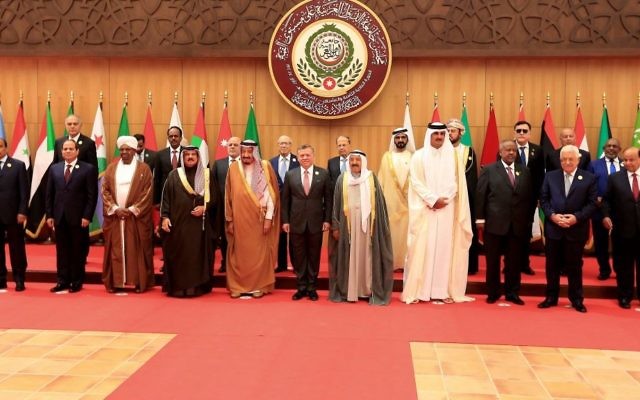
Sins of The Arab Leaders

An American friend asked me the following question: How is it that the large Arab World that extends from the Persian Gulf east all the way to the Atlantic Ocean west, and from Turkish border north to the Indian Ocean south with all its wealth of oil and gas, and spending trillions of dollars acquiring American, British and French sophisticated weapons could not stop Zionism from occupying Palestine and is still unable today to defeat the tiny terrorist state of Israel?
Due to the Zionist controlled and poor American education system, and the Zionist control over the media, it is difficult for the average American to understand the modern Arab history in general and the Palestinian cause in specific. You have to live it in order to understand the depth of the real history especially the vast oral history and the undocumented events.
The Middle Eastern region was inhabited by many separate Arab Bedouin tribes until they were united by the Islamic rule in 661 A.D and became a part of the Islamic Umayyad Caliphate that extended from India east all the way to Spain west, covering Middle Eastern and north African regions. This situation lasted for more than 600 years under different forms of Islamic Caliphates until 1362 A.D. when the Ottoman Empire took over governing the whole Middle Eastern region for 400 years until the beginning of WWI.
According to the Sykes-Picot Agreement, Britain and France divided The Middle East into different mandates and installed their own Arab puppet rulers. Britain, also, gave Palestine to Zionist Jews. To maintain their British gold salaries and their ruling positions over their perspective region (state) those installed Arab puppets had tacitly accepted and agreed to sacrifice Palestine to the Zionists. Fearing for their rules from popular revolts those Arab leaders, pretending to oppose the unjust and illegal 1948 UN Partition Plan of Palestine, sent few troops; a total of 20 thousand Arab soldiers to Palestine to fight the 80 thousand Zionist terrorist militias. The real goal for these troops was not to destroy the unilaterally declared terrorist state of Israel, rather to prevent Israel from occupying territories assigned to a Palestinian state according to the Partition Plan. Arab leaders wanted a buffering Palestinian state preventing Zionist expansion.
Since 1948 until this very day, most of Arab leaders including the Arab League, although pretending to support the Palestinian cause, have not only abandoned the Palestinians to face Zionist genocidal terror alone as if they were non-Arab foreign population, but also had covertly conspired against them and against any Arab organization or government that would support them.  They shared the Israeli first Prime Minister; Ben Gurion’s, false hope, who said that the “old [Palestinians] will die and the young will forget.” Yet the Palestinian successive new generations are still carrying the keys for their grandfather’s homes in Palestine, and are more aggressively fighting for their freedom and for their right of return.
Here follows a short history of the sins of some Arab leaders:
Saudi rulers: Their history started with Hussein ibn Ali Al-Hashemi, who was the Sharif (ruler) of Mecca in the Arabian Peninsula, who entered into agreement with the British, known as Hussein-McMahon Agreement, where he agreed to enter WWI on the British side and lead an Arab revolt against the Ottoman Empire, in return Britain would help him establish a Pan-Arab State in the Middle East. After the defeat of the Ottoman Empire Sharif Hussein discovered that Britain had betrayed him by entering into agreement with France (Sykes-Picot agreement) in order to divide the region among themselves, and by Balfour Declaration promising Palestine to the Zionists.
Due to Hussein’s opposition to this betrayal the British supported and armed Abdul Aziz Al-Saud with his extremist Wahhabi militias, to topple Hussein in 1925 and to establish the Kingdom of Saudi Arabia in 1932. For the British support Abdul Aziz wrote a letter to sir Percy Cox, the British High Commissioner, expressing his agreement to hand over Palestine to Zionist Jews. It is important to mention, here, that Al-Saud family is originally Jewish (Arabic sourceEnglish source) from the city of Isfahan, whose founding grandfather was called Mordechai bin Abraham bin Moshe Al-Donamy, who changed his name to Marikhan Al-Saud when immigrated to the Arabian Peninsula.
It has to be said that policies of the successive Saudi kings had the most drastic effects in spreading political chaos, divisions, hatred, wars and destructions within the Arab states generally and the worst detrimental effect on Palestine specifically for the sole benefit of the Zionist Israeli project.
In 1945 King Abdul Aziz shifted allegiance from Britain to the USA; the main supporter to Israel. Although reports indicated that the Saudi king expressed his opposition to the Israeli project to President Roosevelt during their meeting on the USS Quincy destroyer, yet the secret Saudi Israeli intelligence cooperation and military collaboration continued as has been revealed many times lately.
This military collaboration, exposed by Foreign Affairs, was played in 1964 in Yemen during the North Yemen civil war when an Israeli military pilot; Aryeh Oz, conducted 14 air drops of Saudi weapons to Yemeni royalists. Such military air collaboration is still going on today in the Yemeni theatre. Israeli air force planes were reported delivering Israeli weapons; missiles and other military equipment to Saudi Khamis Mushait base in Asir. Israeli officers were also reported killed by Yemeni’s Scud missiles targeting this base. During the present Saudi war against Yemen Israel, with the agreement of Saudi king, took this opportunity to test its tactical nuclear weapons and to help the Saudi king when in May 2015 Israeli military pilots dropped nukes on Sana’a, Yemen.
In 1966 the Saudi king Faisal bin Abdel Aziz sent a letter to the American president Lyndon Johnson urging him to push Israel to attack Egypt, Jordan, and Syria and to occupy Gaza, Sinai, the West Bank, and the Golan Heights, thus ending the Palestinian cause and disrupting Egyptian President Nasser’s plans to form an Arab Union.  The king also urged Johnson to establish a Kurdish state in Iraq. This was a push towards the 6 days war in 1967.
Saudi Arabia had also provided military intelligence to Israel during its 2006 war in Lebanon. In 2014 it was reported that Saudi Arabia had financed most of Israel’s weapons build up and paid $1 Billion for the assassination of Iranian nuclear scientists. According to Panama Papers Saudi king Salman bin Abdul Aziz helped finance the election campaign of Israeli Prime Minister Netanyahu in 2015.
It is known to the whole world that Saudi Arabia partnered with Qatar, Turkey, Israel and the US in creating, financing and arming all the terrorist groups; ISIS and its off shoots, to destroy Syria even before Qatar former Prime Minister Hamad bin Jassim’s confession.
Saudi anti-Arab posture in support to Israel was not exclusive to the ruling family. Saudi princes, business men, and clergy had many times expressed their support to Israel blaming Palestinian resistance and Intifadas. The statements of Saudi billionaire Al-Walid bin Talal during an interview with the Kuwaiti paper “Alqabas” was just one example. Al-Walid expressed his support to Israel against the Palestinian Intifada, and called for a Saudi Israeli coalition against what he called the Iranian threat.
The myth of the Iranian threat is being widely used by the Saudi, Israeli and American politicians and media narratives in an attempt to divert attention from the real Israeli threat to the region. The Saudi Israeli political and military cooperation has come to the open, and is been claimed as an example to follow for the rest of the Gulf States to face the Iranian threat. As part of this Saudi Israeli military cooperation the two countries formed a joint militia to control the Red Sea. Lately Saudis are seeking to acquire Israeli Iron Dome missiles in an attempt to stop Yemeni rockets.
The Saudi treachery against Arabs and cooperation with the terrorist Israeli state would fill volumes. It has come recently to the open, and one needs only follow the news to understand its depth.
Egyptian rulers: Saudi rulers are not the only Arab traitors. Egyptian rulers had also played the same role. Gamal Abdel-Nasser was the only genuine leader who pushed for Arab unity and supported the Palestinians. He created and supported the Palestinian Liberation Organization (PLO) under the leadership of Yasir Arafat. Yet, he was betrayed and is suspected to be assassinated rather than dying of a heart attack.
After Nasser’s death (assassination) Muhammad Anwar el-Sadat became the president. Sadat got rid of all the influential Egyptian politicians by either forced retirement or by imprisonment, and turned Egyptian economy upside down by divorcing the Soviet Union and cozying up to pro-Israel USA. Sadat is known for two accomplishments (sins); the 1973 October war and peace treaty with Israel.
After the 6 Days War the Suez Canal was closed against international traffic. This closure was costly for the western corporations as well as for Egypt.  The 1973 October War was Henry Kissinger’s (then the American Secretary of State) plan to fix this problem. This war was a conspiracy between Sadat and Kissinger in order to re-open the Suez Canal for business and to destroy the Syrian military forces (Alan Hart’s “Zionism, The Real Enemy of The Jews; Volume II). This conspiracy was also confirmed in a memo by Vladimir Vinogradov; the Soviet Ambassador in Cairo:
“Sadat entered into conspiracy with the Israelis, betrayed his ally Syria, condemned the Syrian army to destruction and Damascus to bombardment, allowed General Sharon’s tanks to cross without hindrance to the western bank of the Suez Canal, and actually planned a defeat of the Egyptian troops in the October War.”
After the cease fire Sadat visited Israel giving a speech in the Knesset, and entered into peace agreements that was culminated in 1979 with Camp David Accords providing free passage to Israeli ships through Suez Canal and recognizing the Strait of Tiran and the Gulf of Aqaba as international waterways. Such recognition, plus the Egyptian exit from the Israeli Arab conflict were great gains for Israel. With the Egyptian army neutralized the whole Israeli army was free to focus on the PLO in Lebanon that eventually led to the 1982 Israeli invasion and devastation of Lebanon.
In 1981 Sadat was assassinated and was succeeded by Hosni Mubarak, who ruled Egypt for 30 years. Besides being Egyptians, Mubarak’s family members are also British citizens. Besides his oppressive rule and theft of around $134 billion of Egyptian wealth, Mubarak was a good friend for Israel. He sold Israel Egyptian natural gas for a lot cheaper than the global market price. His wife; Suzanne Mubarak, received $300 million Israeli bribe in order to affect changes in the Egyptian educational curriculum, especially in historical and religious studies, to reflect positive attitude towards Israel.
Mubarak instigated enmity against Palestinians especially in Gaza Strip, who used to be Egyptian citizens before 1967. When Israel enforced a siege against Gaza Strip in 2007, Mubarak joined Israel in the siege and closed Rafah Crossing; the only life line left for Gaza. Worse than that he constructed in 2009 an underground steel barrier on the Egyptian border with Gaza, and flooded Gaza’s food smuggling tunnels.  As a mediator between Fatah and Hamas Mubarak actually sabotaged any possible compromise between the two parties.
Abdel Fattah El-Sisi became the Egyptian president in 2014. He is a Sephardi crypto Jew; the son of a Moroccan Jewish mother; Malikah Titani, and the nephew of Uri Sabbagh; a member in David Ben Gurion’s political party. He was the only surviving Egyptian captain of the 1999 crash of EgyptAir 990 because he changed his flight plan at the last minute. There were 33 Egyptian military officers, including three Egyptian nuclear scientists, on the plane returning from military training in the US.
El-Sisi had accused Hamas of terrorism and tightened the siege against Gaza. He evacuated and destroyed the whole town of Rafah on the Gaza/Egypt border to create an 8 miles buffer zone to destroy Gaza tunnels and to choke and starve Gaza Palestinians. He gave ownership of the two strategic islands; Sanafir and Tiran on the Red Sea, to Saudi Arabia, who in turn turned them to Israel. The two islands control the sea passage to ports of Aqaba in Jordan and Eilat in Israel. El-Sisi claims that Egypt is mediating Hamas/Fatah reconciliation talks for unification when the facts show that El-Sisi is actually sabotaging these reconciliation attempts to keep Palestinians divided.
After eliminating any real political opposition (former head of armed forces Sami Anan, human rights lawyer Khaled Ali, former prime minister Ahmed Shafik, and army colonel Ahmed Konsowa)  El-Sisi won 2018 election with 97% of votes; a suspicious percentage used by previous Egyptian presidents as a proof of popularity. Yet, voters’ turnout was only 41%. The election featured only one other candidate – himself an ardent El-Sisi supporter.  Running against El-Sisi was Moussa Mustafa Moussa, chairman of the liberal El-Ghad Party, and an El-Sisi loyalist. Mousa was just a placeholder to give election a democratic face.
Jordanian kings: In 1921 Trans-Jordan (Jordan) was carved out of the Ottoman Empire and became a British protectorate according to Sykes-Picot agreement. The British installed Abdullah bin Hussein bin Ali as the ruler with his tacit agreement and acceptance of the establishment of a Jewish homeland in Palestine. King Abdullah met several times with Golda Meier, then the representative of the Jewish Yishuv, and formed what was known as a Hashemite-Zionist Accord, according which the Zionist would occupy more Palestinian land that allotted to them by the Partition Plan, while Abdullah would grab the West Bank under his rule. This was done in 1948. On his way to pray in Al-Aqsa Mosque in Jerusalem and then to meet some Israeli generals afterwards, King Abdullah was assassinated by a nationalist Palestinian.
Hussein bin Talal; the grandson of King Abdullah, became king of Jordan in 1952 when he was still 17 years old. He was raised and educated under the pro-Israel British supervision. He was a graduate of the British Harrow School and the Royal Military Academy Sandhurst. The salaries of his administration as well as his own salary were paid originally by the British government and later on by the successive American administrations. As an employee he had to follow his employer’s orders.
Many successful diaspora Palestinians, who returned home to establish businesses/factories in the West Bank to improve the economy faced two major obstacles. First, they would not get licenses or permits for their businesses unless they establish the business in the East Bank of Jordan and mainly in the capital Amman. The second is that the fees for such a business license include an under-the-table large bribe or part ownership to ministers in charge. These indicate a foreknowledge of the future Israeli occupation of the West Bank that took place in 1967.
I lived through the Six Days War.  Contrary to the reports, Israeli, not Jordanian, army initiated the attack. My house overlooked the main battle for Jerusalem. On a high hill in my town there was a Jordanian military base strategically overlooking the whole Jerusalem city. Before any shot was fired this military base was completely evacuated, and the military trucks drove to the East Bank on an old desert road south passing the city of Hebron. Few Palestinian soldiers defied the withdrawal orders and engaged the invading Israeli tanks on the opposite hill until they ran out of ammunition. Israeli warplanes saturated the area with napalm bombs.
After the war I was told by a distant relative, who was a captain in the Jordanian army based in Amman, that his brigade was loaded unarmed in closed trucks and driven to Jericho to face the Israeli army. He was told that they would receive arms there. But no arms were delivered, and eventually he ordered his troops to go home.
After March 1968 Karameh Battle when PLO fighters and the Jordanian army rebelled an Israeli incursion against the town, the PLO grew in number and in arms. When in September 1970 the Popular Front for the Liberation of Palestine (PFLP) hijacked three passenger planes to a deserted Jordanian air field King Hussein came under American pressure to destroy PLO bases in Jordan. Using imported Israeli “uzi” machine guns the Jordanian army was able to destroy PLO bases and evict Arafat out of Jordan.  This was known as Black September.
King Hussein conducted separate secret contacts with Israeli officials including Moshe Dayan, Yigal Alon, Yitzhak Rabin, and Golda Meier. He used to fly his own helicopter to Israeli-occupied Jerusalem or cross the border at Aqaba/Eilat ports for these meetings. Before October 1973 War he warned Golda Meier of the impending attack.
The present King Abdullah II is not better than his father nor his grandfather. With his salary being paid by the American administration Abdullah has to jump according to American orders. His kingdom has been a major conduit for Israeli products to the Arab World. Jordan is working with Israel on the Two Seas Canal; known also as Red Sea-Dead Sea Water Conveyance, whose declared purpose is to save the Dead Sea from evaporation, while its long term concealed purpose is to be a preliminary water canal connecting the Red Sea to the Mediterranean through Occupied Palestine (Israel) to circumvent the Egyptian Suez Canal. The kingdom had announced in September 2016 that it will import gas (Palestinian stolen gas) from Israel for $10 Billion, despite Algiers’ offer to provide Jordan with all needed gas for much lower prices.
Worse than that is the Jordanian Israeli American military cooperation against Syria. Irbid; a Jordanian city adjacent to the southern Syrian border, had a military operation center that included Jordanian, Israeli and American military officers, who worked together training new ISIS recruits before entering the Syrian territory. Jordan had also sent 12 of its military captains to Israel in September 2016, where they met with Israeli military officials in the Israeli military academy in the city of Netanya according to Israeli Yede’ot Ahranot. Such Jordanian Israeli intelligence cooperation is still going on under the guise of fighting terrorist groups.
Palestinian leaders: Many consider Yasser Arafat as a Palestinian freedom fighter hero. Actually, he was the worst that had happened to the Palestinians. He accepted the Israeli occupation of Palestine, and had virtually initialed his approval stamp on Balfour Declaration when he signed the Oslo Accord. Balfour gave a “promise” for a Jewish home land, a land he had no right to promise, then Arafat fulfilled  Balfour’s promise, and ignoring the rights of Palestinian land owners, he even gave Zionists more Palestinian land; land he never had any right to give away.
One should have the courage to state clearly that Arafat was a corrupt military dictator. Since taking over the PLO in 1969 he insisted on having total control over all decisions and finance without any accountability. Although he was selected as the leader of the PLO through devious methods, Arafat was never officially elected/selected by Palestinians under Israeli occupation or in refugee camps to represent them. He had forced his representation on them.
Many would be surprised to learn that Arafat had long accepted the Israeli occupation of Palestine, and all what he wanted was a small part of it for Palestinians; a two-state solution. This was a solution that Palestinians would not originally accept, and Arafat had to gradually sell it to them. In 1968 he came up with a political programme for a democratic state of Palestine; one-state solution, where Jews and Arabs live together with equal rights. In February 1974 the Central Council of the PLO issued the “Working Paper” calling for Arab and international recognition of Palestinian right to establish a national authority on any lands that can be wrested from Zionist occupation. This is a two-state solution, yet without any stipulation about Jerusalem. (Alan Hart: “Arafat: Terrorist or Peacemaker?”)
Arafat was a lousy politician. He was not able to gain Jordanian love and respect that led his PLO to be kicked out of Jordan in 1970 Black September. Rather than learning from his Jordanian experience he did the same mistake in Lebanon; a mistake led to his discharge from the country in 1982 civil war. Unlike the rest of Arab leaders, who distant themselves from Iraqi Saddam Hussein after his invasion of Kuwait in 1990, Arafat rushed to meet and to embrace him hoping for more financial support. Although the embrace is an Arab cultural greeting, yet it had cost Arafat the anger of Arab Gulf leaders and their financial aid.
Arafat’s worst mistake: most detrimental to Palestinians, was his signature on Oslo Accords in 1993. During the Arab/Israeli peace negotiations the Arab team was divided; each Arab country negotiated separately with Israel, leaving the Palestinian negotiating team in a weaker position. In his rush to achieve a political victory, Arafat circumvented the Palestinian negotiating team and signed the Oslo Accords without studying its deliberate contorted legal statements and its dangerous loopholes. The Accords granted Israel full and unconditional recognition and right to exist on usurped Palestinian land but no promise for a Palestinian state, no recognition of UNSC resolutions 242 (Israeli withdrawal from 1967 occupied territories), no recognitions of UNSC resolution 194 (Palestinian right of return), no end to Israeli occupation, no freeze on Israeli illegal colonies (settlements), and no reparations for all the destroyed Palestinian towns and for all the Palestinian massacres perpetrated by Israel.
More dangerous than that was when Arafat labeled Palestinian struggle for freedom and independence as acts of terrorism and violence and pledged PLO’s commitment to protect Israel’s security. In what is known as the “exchange of letters” between Arafat and Rabin, Arafat stated in his September 9th, 1993 letter that:
“The PLO recognizes the right of the State of Israel to exist in peace and security …. The PLO renounces the use of terrorism and other acts of violence and will assume responsibility over the PLO elements and personnel in order to assure their compliance to prevent violations and discipline violators …”
Trained by the American general Keith Dayton, the Palestinian security forces became Israel’s proxy police force suppressing Palestinian dissent and arresting many Palestinian activists. Arafat surrendered the fate of his Palestinian Authority and the fate of his people to Israeli whims when he agreed that Israel will function as the Palestinian tax collecting agency before depositing money into PA’s accounts.
Despite all of his political concession to Israel Arafat was poisoned by polonium; a radioactive substance, to clear the way for a more agreeable and a more conciliatory dictator; Mahmoud Abbas.
Abbas is the worst Palestinian traitor. He conducted secret negotiations with the Israelis leading to the devastated Oslo Accords. Arafat did not trust him and initially denied him entry to the West Bank. Later, the US and Israel forced Abbas onto Arafat and onto the Palestinians in March 2003 as a prime minister of the Palestinian National Authority.  A power struggle issued between Abbas and Arafat over the control of the Palestinian Security Services that led Abbas to resign 130 days later in September 2003. After Arafat was “removed” in November 2004, and after the removal of better suitable successors such as Marwan Barghouti, who was imprisoned by Israel, Abbas won the planned fake presidential election in January 2005. He is still the president today even though his term had expired in January 2009.
Farouk Kaddoumi; a co-founder of Fatah and later Chairman of Fatah’s Central Committee, accused Abbas and Mohammed Dahlan; head of the Preventive Security Forces in Gaza at the time, of conspiring with Ariel Sharon to assassinate Arafat and other Palestinian officials (Arabic source). He is also accused of conspiring with Israel in the assassination of Khalil al-Wazir; a military leader and cofounder of Fatah. Al-Wazir was assassinated by Israeli assassins in Tunis in April 1988. Abbas was living next door to al-Wazir and had ordered his guards not to save al-Wazir.
Abbas is a worse dictator than Arafat. He was welcomed by butcher Ariel Sharon in his speech to AIPAC, and by former Israeli cabinet minister; Efraim Sneh, who call him “the most courageous partner we have had.” As the president of Palestinian Authority, the Chairman of the PLO, and the Chairman of Fatah, Abbas controlled the three powers of legislative, judicial and executive, thus virtually controlling every aspect of Palestinian life; politically, security, financially, economically and even socially. He immediately got rid of Arafat’s old guards by either forced retirement or imprisonment.
Abbas and his two sons; Yasser and Tarek, were so corrupt stealing Palestinian money and monopolizing major businesses that led Fatah to lose the 2006 legislative elections to Hamas. Abbas, then, and Mohammed Dahlan planned the failed military insurrection in Gaza against Hamas that led to Palestinian division; Abbas in West Bank and Hamas in Gaza Strip.
Abbas’s policies are core-Zionist anti-Palestinian. He surrendered his right to the town of his birth; Safad. The Zionist colonies (settlements) in the West Bank and al-Quds had quadrupled from 230,000 occupiers in 2005 to more than 750,000 occupiers in 2018 without any serious objection by the PA.  He considered “security cooperation” with Israel; protecting Israelis rather than Palestinians, a very SACRED matter in his own words, which led to suppression of all Palestinian dissent, the capture of many Palestinian resistant fighters, and imprisonment and torture of many Palestinian activists by Abbas’s security guards as reported by Arab Organization for Human Rights in the UK (AOHRUK). Abbas has turned Fatah from once self-claimed liberator to oppressor of Palestinians.
During his dictatorship the Palestinian budget deficit skyrocketed to $15 billion in 2018. He forced early retirement and cut down employees’ salaries to almost 50% and eliminated many public jobs raising unemployment to 56%. He suppressed freedom of speech and issued cyber-crimes law to suppress electronic dissent. He withheld money and humanitarian aid due to Gaza Strip, and defended and supported Israeli wars against Gaza in 2008/9, in 2012 and in 2014.
The Palestinian peace negotiators continued their fruitless charade negotiation with Israelis giving up more land to Israel while gaining virtually nothing to a point where chief negotiator Sa’eb Erekat stated that they offered Israel the “biggest Yerushalayim in history.”
During his meeting with president Trump in September 20th. 2017 Abbas expressed his willingness to accept Trump’s peace deal (Deal of the Century), yet Trump announced after two months his administration’s plans to move the American embassy to al-Quds (Jerusalem) declaring the city the capital of Israel.
With Arab leaders like these how could Palestinians regain their homeland and their freedom, and how could Arabs unite into united Arab states under one administration? With leaders like these, who needs enemies?
Dr. Elias Akleh is an Arab American from a Palestinian descent. His family was evicted from Haifa, Palestine, after the 1948 Nakba when the Zionists stole his family’s property. Then the family was evicted again from the West Bank during the 1967 Naksah, after the Zionist, again, occupied the rest of Palestine.