Showing posts with label History. Show all posts

Monday, November 18, 2019

A look at the Prophet Mohammed and his political activism

In a time where racism, rampant slavery, and open discrimination based off trivial tribal affiliations were the norm, the Prophet Mohammed stood as a groundbreaking example of how human beings should treat each other.
The Prophet Mohammed can often be upheld as a figure almost above human beings, as someone who is almost not relateable because of his greatness. While none today can indeed compare to his greatness, it is also important to remember his humanity. The Prophet Mohammed, after all, was still a human being just like the rest of us. His devotion to equality, justice, and goodness are also at the core of his Prophet mission, teaching us that with a devotion to Allah comes responsibilities on how to conduct ourselves within society.
Arguably, one can even say that the Prophet led the way in terms of political activism, teaching us that we must ideologically, physically, and morally strive towards bettering our societies from the bottom up. In our world today, rampant with Islamophobia, hate-speech, racism, and divisive rhetoric coming from the highest levels of government, it becomes more important than ever to remember the Prophet and his message: we must always strive towards what it good and stop those who attempt to oppress others.
So here are three examples of the Prophet Mohammed and his political activism, and how we can learn and utilize these for ourselves today:

Before Prophethood, he ensured the safety of foreign traders and travellers in the region

During the Prophet’s early days before he received the message, he often travelled with his uncle for trade and commerce, witnessing many scenes that must have disturbed him profoundly. Particularly, in a place called ‘Ukaz, an enormous annual fair used to be held during the month of Dhul-Qa’dah, in which bloody quarrels, drunken lewd acts, prostitution, and general corruption were rampant.
Once the tribe of Qureysh were the leading family in the region, the Prophet helped spearhead a league called Hilf-ul-Fudhul, which aimed to stop the rampant corruption and scenes of moral degradation prominent in the region. The League, most importantly, helped victims of previous oppression and protected foreign travellers to the area, who had previously often been cheated, beaten, or disturbed by locals.
The Prophet’s commitment towards ensuring the safety and protection of travellers, traders, and those previously without rights is a profound example of what we may tentatively call political activism – he not only actively fought for the equal treatment of all peoples, regardless of tribal affiliation or social status, but he also helped establish a league that would help formally create a system of protecting rights.
The league was an important step in the Prophet’s wider mission later, and having been formed before his Prophethood he was asked on numerous occasions what he thought of his participation in the league in retrospect. The Prophet’s response was: “If even now (i.e. after the commencement of the prophetic mission) I am invited to a similar agreement I shall accept it”.

The Prophet and Bilal

Bilal, one of the earliest Africans to convert to Islam, was formally a slave. Raised in slavery, Bilal worked under Ummayya bin Khalaf, who was not Muslim. Despite the family who owned him praying to idols, Bilal fell in love with Islam, and secretly became Muslim when he was around the age of 40.
Unfortunately, when Ummayya bin Khalaf found out that Bilal prayed to God, he was mercilessly tortured and abused for this beliefs. On the day that Bilal was tied to the ground, burning from the hot sand and weighed down with an enormous heavy stone on his chest, it was reported that Bilal fell into a swoon and fainted from pain. When he awoke, he found the stone was no longer on his chest and he found the face of the Prophet Mohammad, smiling and looking down on him.
The Prophet Mohammed had reportedly been pained when learning that Bilal had been tortured by his horrendous family for simply being Muslim, and had instructed his companion Abu Bakr to pay off Ummayya bin Khalaf until he agreed to release Bilal from his servitude. The Prophet Mohammed, once Bilal had been released from the holds of slavery, had set him free as an example of how Islam views all human beings: all are born and should remain free, only except in the beautiful servitude towards God.
In a time where racism, rampant slavery, and open discrimination based off trivial tribal affiliations were the norm, the Prophet Mohammed stood as a groundbreaking example of how human beings should treat each other. Setting Bilal free from slavery, bringing him into his inner circle, and appointing him as the first mu’adhdhin, or the one who called the adhan for prayer, set a profound example for all to see. This groundbreaking act can be taken as an example in today’s political activism: we must, no matter who the oppressed are, stand with them, and protect the sanctity of goodness and love over the evils of slavery, discrimination, and social hierarchies.
The Prophet’s love for Bilal was endless, on one occasion it is said that Bilal entered a room where the Prophet and his other companions were seated. The Prophet’s eyes brightened and he exclaimed in his beautiful voice to Bilal: “If we should want to take one particular person as the shining example of good behaviour and adab, then you would be the clear and obvious example”.

Protecting the rights of religious minorities

When the Prophet Mohammed and his companions were forced to migrate to Medina after being tortured, harassed, and attacked by their enemies in Mecca, he soon had to come up with a treaty to live in peace with the minority Jewish community that lived in their new home of Medina. The Prophet never forced conversion, or went to war with the Jewish community, instead he orchestrated one of the greatest charters on the protection of religious minorities.
Knowing that living in peace with all despite apparent differences was more important that forcing a religion upon another, the Prophet set an example for all of humanity: all should be free to practice their religion in peace, so long as there is a mutual understanding of respect. Although the majority of Medina celebrated and embraced the Prophet and his companions as their leaders in Islam, the Prophet ensured the protection of the minority Jews regardless of who was the majority.
This Charter was monumental in the fact that it ensured the Jewish community full rights to practice Judaism without harassment or compromise. All Jewish people who entered into the covenant were protected from insults and taunts, and were guaranteed equal rights and full access to assistance and services. The Jewish community members were also given the full right to completely practice their faith freely with no restrictions. Finally, another groundbreaking point in the Prophet’s treaty was that the peaceful allies of the Jews would also enjoy the same protection and freedoms under the charter.
The Prophet provided an important and timeless example of how to treat all people in society, no matter how much of a minority they might be. He made the monumental point of ensuring that a community means a community of all, no matter what religion or background some may be from. In a time where our own societies seem even more divided with hate, the example set forth by the Prophet remains more important than ever: we must step up within our own political and societal circles to ensure all in society are protected – even those who we would consider a minority.

Wednesday, November 13, 2019

40 years since the Iranian student takeover of the US embassy: What has changed?

November 4th is today known as the National Day of Fight against Global Arrogance in Iran, and Iranians continue to rally in the capital of Tehran every year to mark one of the most crucial events between Iran and the United States in modern history.
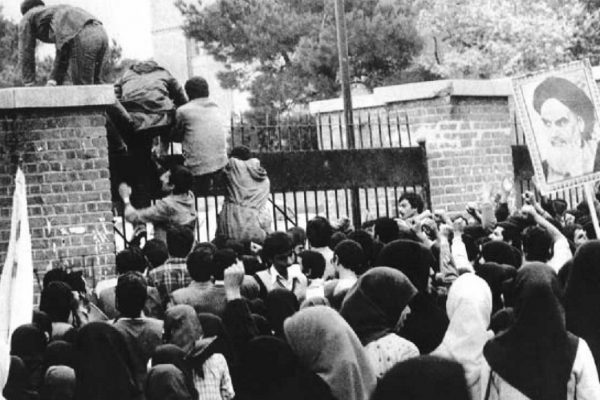
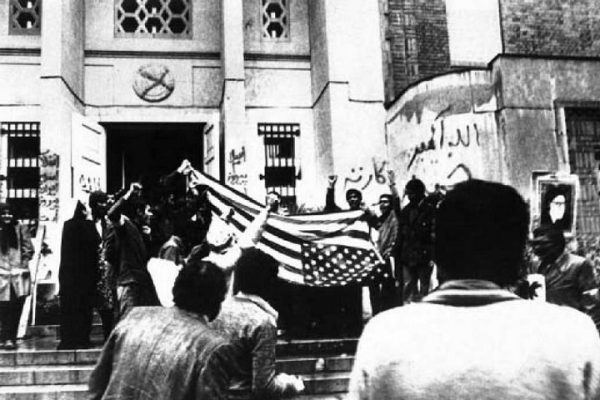
On November the 4th, 1979, Iranian students climbed over the gate and broke into the American embassy in Tehran, taking hostage 52 US citizens over what would end up being a period of 444 days. This historical event was spurred by massive protests beginning in 1977, against the US-backed Shah of Iran, Mohammed Reza Pahlavi. After the Shah fled into exile in the US, and was replaced by the Grand Ayatollah Ruhollah Khomeini in the wider 1979 Iranian Revolution, many Iranians felt cheated that the Shah was able to escape trial.
The Shah of Iran, Mohammed Reza Pahlavi, was the last King of Iran and was heavily criticized for being a pawn of the US government. Essentially replacing the democratically elected Prime Minister Mohammad Mosaddegh in a 1953 CIA-backed coup, the Shah became associated with a backwards lavishness and Western-influenced imperialism while the majority of Iranians suffered under economic strain and his notorious secret police service.

Iranian students scale the gate into the US embassy.
After the Iranian Revolution in early 1979, the Shah flew into exile in the United States, which eventually lead to the hostage crisis of November the 4th. Upset that the Shah would not return to Iran to face trial over the numerous human rights abuses, extrajudicial killings, and torture of the Iranian people during his reign, many took to the streets demanding his return.
Iranian students, supported by massive protests across the country, overran the US embassy in Tehran and took hostage more than 50 American diplomats and other citizens who were in the embassy, holding them hostage for a total of 444 days. Demanding the Shah return to Iran for trial, the hostage crisis only ended when Iran agreed to release the hostages in 1980 after the Algiers Accords, minutes before US President Ronald Reagan was sworn into office.
November 4th is today known as the National Day of Fight against Global Arrogance in Iran, and Iranians continue to rally in the capital of Tehran every year to mark one of the most crucial events between Iran and the United States in modern history. In a time of heightened tensions between the US and Iran, it remains deeply worrying that the tensions that erupted in the aftermath of the Iranian Revolution have only continued to simmer underneath renewed sanctions and political backbiting between the two nations.

The hostage crisis of 1979 lasted 444 days.
US President Trump’s decision last year to withdraw from a major nuclear deal with Iran, paired with renewed sanctions on ordinary Iranians, have shocked those hoping for a possible peace deal between the two nations in regards to nuclear proliferation. In addition to this, the US’ continued alliance with Saudi Arabia, who views Iran as its eternal enemy in the region, have only furthered the rift between Iran and the West at large. The recent attack on Saudi’s oil fields, which the Houthi rebels of Yemen claimed responsibility for, were immediately blamed as being a direct attack from Iran by both Saudi Arabia and the US.
All of this points towards the continued stance of the US on painting Iran as the enemy of the East, constantly blaming Iran for numerous conflicts in the wider Middle East while adamantly standing alongside Saudi Arabia, despite Saudi’s continued human rights abuses in Yemen. Iran as well has continued to repute attacks from the US, and while can be criticized on numerous accounts for internal human rights abuses, has never shied away from criticizing US imperialism.
In light of this, it seems as though nothing has really changed much with Iranian-US relations. While there has been a greater flow of peoples, language, and culture between the two nations, the government of both Iran and the US continue to remain staunch enemies. As the Arabian Peninsula becomes increasingly burdened by the yoke of Saudi Arabia, Iran is oftentimes on its own when it comes to political partnerships in the region. While another Iranian Revolution or student takeover of the US embassy are likely to never happen again, ordinary Iranians continue to suffer under harsh sanctions and governmental bickering from both sides – it remains to be seen whether any real relationship between the two nations will ever form at the highest levels of government.

Friday, November 01, 2019

Remembering and Learning From US Responsibility for the 1953 Iran Coup

Daniel LARISON
Roham Alvandi and Mark Gasiorowski describe in detail how the U.S. overthrew Iran’s prime minister Mohammed Mossadeq in 1953, and they push back against the false revisionism being pushed by Iran hawks and the Trump administration that seeks to absolve the U.S. of responsibility for the coup:
Behbahani and Kashani were maverick, populist political activists, distant from—and often disdained by—the mainstream Shiite clergy epitomized by Borujerdi. Their involvement in the coup should not be taken as evidence that the mainstream clergy supported or participated in the coup, as Bayandor implies. And the clerics who did participate did so with U.S. support.
Acknowledging the role of Iranian actors, including some of the Shiite clergy, in the 1953 coup does not absolve the United States of responsibility for the coup. Many historians of the 1953 coup, most recently Ervand Abrahamian and Ali Rahnema, have judiciously documented the overwhelming evidence that the United States played a central role in toppling Mosaddeq. But their voices are being drowned out by a shrill cacophony of opportunistic politicians and revisionist scholars and pundits.
While British and Iranian actors played significant roles in the events before and during the coup in August 1953, it was the Americans who organized and led the overthrow of Mosaddeq, mobilizing and directing the Iranians who carried it out.
The 1953 coup was a clear case of blatant U.S. interference in Iran’s internal affairs. Overthrowing Mossadeq was one of the earliest examples of destructive U.S. meddling in the affairs of other nations during the Cold War, and it should be taken as a cautionary tale about what happens when the U.S. tries to dictate the political future of another country. Our government bears responsibility for the coup, and it seems fair to conclude that without our government’s involvement the coup would not have happened. Iran’s political development was severely distorted as a result of the coup, and Iranians have been living with the consequences of this interference for decades.
Meddling in Iranian affairs didn’t just blow up in America’s face later on, but it was also the wrong thing to do at the time. It was one of the first things Eisenhower did as president, and it was one of his worst mistakes. Whatever the U.S. might have gained from the coup in the short term has been far exceeded by the damage that U.S. support for the shah did to Iran and to U.S.-Iranian relations over the longer term. We need to remember the truth about this shameful intervention so that it isn’t whitewashed and erased by propagandists, and we also need to learn from it that our government has no right to meddle in other countries’ affairs.
It is interesting that the leading “revisionists” that have tried to cast doubt on the importance of the U.S. role in the coup are leading proponents of interfering in Iranian internal affairs today. Iran hawks today are strangely eager to minimize the U.S. role in 1953 in order to promote a regime change agenda now. They seem to think that if they can shift the blame for the coup to Iranian clerics that this will help to undermine the current government:
If the revisionists can pin the blame for Mosaddeq’s downfall on the Shiite clergy of the 1950s, so the thinking goes, then they might be able to use Mosaddeq’s ongoing popularity to mobilize Iranians against their clerical rulers today.
The problem for the “revisionists” is that there is so much evidence of U.S. culpability that this will never work, but their attempt to rewrite history needs to be refuted just as Alvandi and Gasiorowski have done in their article. Iran hawks want to rewrite Iran’s past so they can justify another outrageous U.S. intervention in Iranian politics, and they mustn’t be allowed to get away with it.

Sunday, October 20, 2019

The Road to Damascus: How the Syria War was Won


Following the Damascus-Kurdish alliance, Syria may become the biggest defeat for the Central Intelligence Agency since Vietnam, says Pepe Escobar.
Pepe ESCOBAR
What is happening in Syria, following yet another Russia-brokered deal, is a massive geopolitical game-changer. I’ve tried to summarize it in a single paragraph this way:
“It’s a quadruple win. The U.S. performs a face saving withdrawal, which Trump can sell as avoiding a conflict with NATO ally Turkey. Turkey has the guarantee – by the Russians – that the Syrian Army will be in control of the Turkish-Syrian border. Russia prevents a war escalation and keeps the Russia-Iran-Turkey peace process alive.  And Syria will eventually regain control of the entire northeast.”
Syria may be the biggest defeat for the CIA since Vietnam.
Yet that hardly begins to tell the whole story.
Allow me to briefly sketch in broad historical strokes how we got here.
It began with an intuition I felt last month at the tri-border point of Lebanon, Syria and Occupied Palestine; followed by a subsequent series of conversations in Beirut with first-class Lebanese, Syrian, Iranian, Russian, French and Italian analysts; all resting on my travels in Syria since the 1990s; with a mix of selected bibliography in French available at Antoine’s in Beirut thrown in.
The Vilayets
Let’s start in the 19thcentury when Syria consisted of six vilayets — Ottoman provinces — without counting Mount Lebanon, which had a special status since 1861 to the benefit of Maronite Christians and Jerusalem, which was a sanjak (administrative division) of Istanbul.
The vilayets did not define the extremely complex Syrian identity: for instance, Armenians were the majority in the vilayet of Maras, Kurds in Diyarbakir – both now part of Turkey in southern Anatolia – and the vilayets of Aleppo and Damascus were both Sunni Arab.
Nineteenth century Ottoman Syria was the epitome of cosmopolitanism. There were no interior borders or walls. Everything was inter-dependent.
Ethnic groups in the Balkans and Asia Minor, early 20th Century, 
Historical Atlas, 1911.
Then the Europeans, profiting from World War I, intervened. France got the Syrian-Lebanese littoral, and later the vilayets of Maras and Mosul (today in Iraq). Palestine was separated from Cham (the “Levant”), to be internationalized. The vilayet of Damascus was cut in half: France got the north, the Brits got the south. Separation between Syria and the mostly Christian Lebanese lands came later.
There was always the complex question of the Syria-Iraq border. Since antiquity, the Euphrates acted as a barrier, for instance between the Cham of the Umayyads and their fierce competitors on the other side of the river, the Mesopotamian Abbasids.
James Barr, in his splendid “A Line in the Sand,” notes, correctly, that the Sykes-Picot agreement imposed on the Middle East the European conception of territory: their “line in the sand” codified a delimited separation between nation-states. The problem is, there were no nation-states in region in the early 20thcentury.
The birth of Syria as we know it was a work in progress, involving the Europeans, the Hashemite dynasty, nationalist Syrians invested in building a Greater Syria including Lebanon, and the Maronites of Mount Lebanon. An important factor is that few in the region lamented losing dependence on Hashemite Medina, and except the Turks, the loss of the vilayet of Mosul in what became Iraq after World War I.
In 1925, Sunnis became the de facto prominent power in Syria, as the French unified Aleppo and Damascus. During the 1920s France also established the borders of eastern Syria. And the Treaty of Lausanne, in 1923, forced the Turks to give up all Ottoman holdings but didn’t keep them out of the game.
Turkish borders according to the Treaty of 
Lausanne, 1923.
The Turks soon started to encroach on the French mandate, and began blocking the dream of Kurdish autonomy. France in the end gave in: the Turkish-Syrian border would parallel the route of the fabledBagdadbahn — the Berlin-Baghdad railway.
In the 1930s France gave in even more: the sanjak of Alexandretta (today’s Iskenderun, in Hatay province, Turkey), was finally annexed by Turkey in 1939 when only 40 percent of the population was Turkish.
The annexation led to the exile of tens of thousands of Armenians. It was a tremendous blow for Syrian nationalists. And it was a disaster for Aleppo, which lost its corridor to the Eastern Mediterranean.
Turkish forces under entered Alexandretta 
on July 5, 1938.
This emergent Syria — out of conflicting Turkish, French, British and myriad local interests —obviously could not, and did not, please any community. Still, the heart of the nation configured what was described as “useful Syria.” No less than 60 percent of the nation was — and remains — practically void.Yet, geopolitically, that translates into “strategic depth” — the heart of the matter in the current war.To the eastern steppes, Syria was all about Bedouin tribes. To the north, it was all about the Turkish-Kurdish clash. And to the south, the border was a mirage in the desert, only drawn with the advent of Transjordan. Only the western front, with Lebanon, was established, and consolidated after WWII.
From Hafez to Bashar
Starting in 1963, the Baath party, secular and nationalist, took over Syria, finally consolidating its power in 1970 with Hafez al-Assad, who instead of just relying on his Alawite minority, built a humongous, hyper-centralized state machinery mixed with a police state. The key actors who refused to play the game were the Muslim Brotherhood, all the way to being massacred during the hardcore 1982 Hama repression.
Secularism and a police state: that’s how the fragile Syrian mosaic was preserved. But already in the 1970s major fractures were emerging: between major cities and a very poor periphery; between the “useful” west and the Bedouin east; between Arabs and Kurds. But the urban elites never repudiated the iron will of Damascus: cronyism, after all, was quite profitable.
Damascus interfered heavily with the Lebanese civil war since 1976 at the invitation of the Arab League as a “peacekeeping force.” In Hafez al-Assad’s logic, stressing the Arab identity of Lebanon was essential to recover Greater Syria. But Syrian control over Lebanon started to unravel in 2005, after the murder of former Lebanese Prime Minister Rafiq Hariri, very close to Saudi Arabia, the Syrian Arab Army (SAA) eventually left.
Bashar al-Assad had taken power in 2000. Unlike his father, he bet on the Alawites to run the state machinery, preventing the possibility of a coup but completely alienating himself from the poor, Syrian on the street.
What the West defined as the Arab Spring, began in Syria in March 2011; it was a revolt against the Alawites as much  as a revolt against Damascus. Totally instrumentalized by the foreign interests, the revolt sprang up in extremely poor, dejected Sunni peripheries: Deraa in the south, the deserted east, and the suburbs of Damascus and Aleppo.
Protest in Damascus, April 24, 2011. 
(syriana2011/Flickr)
What was not understood in the West is that this “beggars banquet” was not against the Syrian nation, but against a “regime.” Jabhat al-Nusra, in a P.R. exercise, even broke its official link with al-Qaeda and changed its denomination to Fatah al-Cham and then Hayat Tahrir al-Cham (“Organization for the Liberation of the Levant”). Only ISIS/Daesh said they were fighting for the end of Sykes-Picot.
By 2014, the perpetually moving battlefield was more or less established: Damascus against both Jabhat al-Nusra and ISIS/Daesh, with a wobbly role for the Kurds in the northeast, obsessed in preserving the cantons of Afrin, Kobane and Qamichli.
But the key point is that each katiba (“combat group”), each neighborhood, each village, and in fact each combatant was in-and-out of allegiances non-stop. That yielded a dizzying nebulae of jihadis, criminals, mercenaries, some linked to al-Qaeda, some to Daesh, some trained by the Americans, some just making a quick buck.
For instance Salafis — lavishly financed by Saudi Arabia and Kuwait — especially Jaish al-Islam, even struck alliances with the PYD Kurds in Syria and the jihadis of Hayat Tahrir al-Cham (the remixed, 30,000-strong  al-Qaeda in Syria). Meanwhile, the PYD Kurds (an emanation of the Turkish Kurds’ PKK, which Ankara consider “terrorists”) profited from this unholy mess — plus a deliberate ambiguity by Damascus – to try to create their autonomous Rojava.
A demonstration in the city of Afrin in support 
of the YPG against the Turkish invasion of Afrin, 
Jan. 19, 2018. (Voice of America Kurdish, Wikimedia Commons)
That Turkish Strategic Depth
Turkey was all in. Turbo-charged by the neo-Ottoman politics of former Foreign Minister Ahmet Davutoglu, the logic was to reconquer parts of the Ottoman empire, and get rid of Assad because he had helped PKK Kurdish rebels in Turkey.
Davutoglu’s Strategik Derinlik (“Strategic Depth’), published in 2001, had been a smash hit in Turkey, reclaiming the glory of eight centuries of an sprawling empire, compared to puny 911 kilometers of borders fixed by the French and the Kemalists. Bilad al Cham, the Ottoman province congregating Lebanon, historical Palestine, Jordan and Syria, remained a powerful magnet in both the Syrian and Turkish unconscious.
No wonder Turkey’s Recep Erdogan was fired up: in 2012 he even boasted he was getting ready to pray in the Umayyad mosque in Damascus, post-regime change, of course. He has been gunning for a safe zone inside the Syrian border — actually a Turkish enclave — since 2014. To get it, he has used a whole bag of nasty players — from militias close to the Muslim Brotherhood to hardcore Turkmen gangs.
With the establishment of the Free Syrian Army (FSA), for the first time Turkey allowed foreign weaponized groups to operate on its own territory. A training camp was set up in 2011 in the sanjakof Alexandretta. The Syrian National Council was also created in Istanbul – a bunch of non-entities from the diaspora who had not been in Syria for decades.
Ankara enabled a de facto Jihad Highway — with people from Central Asia, Caucasus, Maghreb, Pakistan, Xinjiang, all points north in Europe being smuggled back and forth at will. In 2015, Ankara, Riyadh and Doha set up the dreaded Jaish al-Fath (“Army of Conquest”), which included Jabhat al-Nusra (al-Qaeda).
At the same time, Ankara maintained an extremely ambiguous relationship with ISIS/Daesh, buying its smuggled oil, treating jihadis in Turkish hospitals, and paying zero attention to jihad intel collected and developed on Turkish territory. For at least five years, the MIT — Turkish intelligence – provided political and logistic background to the Syrian opposition while weaponizing a galaxy of Salafis. After all, Ankara believed that ISIS/Daesh only existed because of the “evil” deployed by the Assad regime.
The Russian Factor
Russian President Vladiimir Putin meeting with President 
of Turkey Recep Erdogan; Russian Minister of Foreign 
Affairs Sergei Lavrov standing in background, Ankara, 
Dec. 1, 2014 Ankara. (Kremlin)
The first major game-changer was the spectacular Russian entrance in the summer of 2015. Vladimir Putin had asked the U.S. to join in the fight against the Islamic State as the Soviet Union allied against Hitler, negating the American idea that this was Russia’s bid to restore its imperial glory. But the American plan instead, under Barack Obama, was single-minded: betting on a rag-tag Syrian Democratic Forces (SDF), a mix of Kurds and Sunni Arabs, supported by air power and U.S. Special Forces, north of the Euphrates, to smash ISIS/Daesh all the way to Raqqa and Deir ez-Zor.
Raqqa, bombed to rubble by the Pentagon, may have been taken by the SDF, but Deir ez-Zor was taken by Damascus’s Syrian Arab Army. The ultimate American aim was to consistently keep the north of the Euphrates under U.S. power, via their proxies, the SDF and the Kurdish PYD/YPG. That American dream is now over, lamented by imperial Democrats and Republicans alike.
The CIA will be after Trump’s scalp till Kingdom Come.
Kurdish Dream Over
Talk about a cultural misunderstanding. As much as the Syrian Kurds believed U.S. protection amounted to an endorsement of their independence dreams, Americans never seemed to understand that throughout the “Greater Middle East” you cannot buy a tribe. At best, you can rent them. And they use you according to their interests. I’ve seen it from Afghanistan to Iraq’s Anbar province.
The Kurdish dream of a contiguous, autonomous territory from Qamichli to Manbij is over. Sunni Arabs living in this perimeter will resist any Kurdish attempt at dominance.
The Syrian PYD was founded in 2005 by PKK militants. In 2011, Syrians from the PKK came from Qandil – the PKK base in northern Iraq – to build the YPG militia for the PYD. In predominantly Arab zones, Syrian Kurds are in charge of governing because for them Arabs are seen as a bunch of barbarians, incapable of building their “democratic, socialist, ecological and multi-communitarian” society.

Kurdish PKK guerillas In Kirkuk, Iraq. 
(Kurdishstruggle via Flickr)
One can imagine how conservative Sunni Arab tribal leaders hate their guts. There’s no way these tribal leaders will ever support the Kurds against the SAA or the Turkish army; after all these Arab tribal leaders spent a lot of time in Damascus seeking support from Bashar al-Assad.  And now the Kurds themselves have accepted that support in the face of the Trukish incursion, greenlighted by Trump.
East of Deir ez-Zor, the PYD/YPG already had to say goodbye to the region that is responsible for 50 percent of Syria’s oil production. Damascus and the SAA now have the upper hand. What’s left for the PYD/YPG is to resign themselves to Damascus’s and Russian protection against Turkey, and the chance of exercising sovereignty in exclusively Kurdish territories.
Ignorance of the West
The West, with typical Orientalist haughtiness, never understood that Alawites, Christians, Ismailis and Druze in Syria would always privilege Damascus for protection compared to an “opposition” monopolized by hardcore Islamists, if not jihadis.  The West also did not understand that the government in Damascus, for survival, could always count on formidable Baath party networks plus the dreaded mukhabarat — the intel services.
Rebuilding Syria
The reconstruction of Syria may cost as much as $200 billion. Damascus has already made it very clear that the U.S. and the EU are not welcome. China will be in the forefront, along with Russia and Iran; this will be a project strictly following the Eurasia integration playbook — with the Chinese aiming to revive Syria’s strategic positioning in the Ancient Silk Road.
As for Erdogan, distrusted by virtually everyone, and a tad less neo-Ottoman than in the recent past, he now seems to have finally understood that Bashar al-Assad “won’t go,” and he must live with it. Ankara is bound to remain imvolved with Tehran and Moscow, in finding a comprehensive, constitutional solution for the Syrian tragedy through the former “Astana process”, later developed in Ankara.
The war may not have been totally won, of course. But against all odds, it’s clear a unified, sovereign Syrian nation is bound to prevail over every perverted strand of geopolitical molotov cocktails concocted in sinister NATO/GCC labs. History will eventually tell us that, as an example to the whole Global South, this will remain the ultimate game-changer.

Thursday, May 16, 2019

What Is Nakba Day? Here’s the Truth the Mainstream Media Won’t Tell You

By Jeremy R. Hammond

The New York Times’ reporting on the meaning of Nakba Day shows how the major media systematically whitewash the ethnic cleansing of Palestine from history.


Today is “Nakba Day”, which commemorates the ethnic cleansing of most of the Arab inhabitants of Palestine in 1948, a crime carried out by Zionist forces in order to establish there a “Jewish state”. But that’s not how the Western mainstream media explain it. Instead, Al-Nakba—Arabic for “The Catastrophe”—is whitewashed from history. The New York Times, America’s “newspaper of record” and arguably the most influential newspaper in the world, provides a useful case study.
The Times sometimes presents an explanation for the Nakba taken straight from Zionist propaganda, contending simply that Nakba Day is when Palestinians lament the establishment of Israel in 1948—as though Palestinians had no cause for lamentation other than an apparent hatred of Jews.
Sometimes in presenting the Zionist narrative, the Times does acknowledge that hundreds of thousands of Palestinians became refugees in 1948, but this is characterized as simply a consequence of a war started by the Arabs against the newly formed state of Israel—thus again leaving readers with the same false impression that the Arabs were the aggressors and had no reasonable cause.
Sometimes, the Times acknowledges that many Arab villages were also destroyed, though the fact that these numbered in the hundreds is rarely if ever mentioned.
On extremely rare occasions in the past, the Times has used the term “ethnic cleansing” in the context of Israel’s founding and the creation of the Palestinian refugee crisis that persists to this day. But the application of this term to what happened in 1948 is characterized as though dubious and controversial.
This is rather puzzling for a newspaper that in 1979 reported how former Prime Minister Yitzhak Rabin had provided a firsthand account of how Palestinian civilians were deliberately expelled from their homes by Zionist forces.
It’s true, of course, that there are those who deny that what occurred was ethnic cleansing, but their denials are simply untenable. Israeli historian Benny Morris, for example, has argued that the term “ethnic cleansing” doesn’t apply, even though his own published research shows that ethnic cleansing is exactly what occurred.
As I relate in my book Obstacle to Peace: The US Role in the Israeli-Palestinian Conflict, in 2011, an episode occurred that is particularly illuminating with respect to how the New York Times willfully deceives its readers.
On May 14 of that year, Ethan Bronner wrote in the Times, “After Israel declared independence on May 14, 1948, armies from neighboring Arab states attacked the new nation; during the war that followed, hundreds of thousands of Palestinians fled or were driven from their homes by Israeli forces. Hundreds of Palestinian villages were also destroyed.”
A reader wrote to the editors to object to the Times omitting the fact that hundreds of thousands of Arabs had already been expelled from their homes before the Zionists unilaterally declared the existence of their “Jewish state” on May 14, 1948.
The public editor, Arthur S. Brisbane, relayed Bonner’s response that “space was limited in a short story and he wasn’t trying to recite the full history.”
In other words, neither Mr. Bronner nor his editors considered the fact particularly relevant, and due to space limitations, nothing could be done but mislead readers into believing that the flight and expulsions began only after the neighboring Arab states had sent their armies into Palestine.
We can demonstrate what a sorry excuse that was by simply rewriting the sentence to accurately communicate what happened in the same number of words: When the state of Israel was declared on May 14, 1948, armies from neighboring Arab states were sent to stop the ethnic cleansing operations that had already been underway for several months. Hundreds of thousands of Palestinians fled or were expelled from their homes.
There is only one purpose for the Times’ deception: to whitewash the ethnic cleansing from history. This is in keeping with the function that the major media serve of manufacturing public consent for government policies.
Just as the media spewed state propaganda to manufacture consent for the US government’s illegal war of aggression against Iraq in 2003, so do they spew propaganda to manufacture consent for the US government’s policy of supporting Israel’s crimes against the Palestinians.
By whitewashing the Zionists’ crimes against the Palestinians, the media whitewash Western governments’ complicity in them.
Indeed, the ethnic cleansing was a crime that was facilitated by the victorious Allied Powers in the wake of the First World War, particularly Great Britain, which enforced a belligerent occupation of Palestine after the dissolution of the defeated Ottoman Empire precisely in order to deny Palestine’s inhabitants their right to self-determination so that the Zionist project could proceed apace to reconstitute the Arab territory into a demographically “Jewish state”.
The policy course instituted by Britain’s infamous Balfour Declaration of 1917 ultimately facilitated the ethnic cleansing of most of the Arab population from their homes in Palestine in order for Israel to be established.
By the time the Zionists unilaterally and with no legal authority declared the existence of the state of Israel on May 14, 1948, more than a quarter of a million Arabs had already become refugees. By the time armistice lines were drawn in 1949, more than 700,000 Palestinians had been ethnically cleansed. The reason this refugee crisis has persisted to this day is because Israel refuses to allow Palestinian refugees to exercise their internationally recognized right to return to their homeland.
There is an institutionalized bias in the Western mainstream media toward the Israel-Palestine conflict, such that the fact that ethnic cleansing operations were already underway before the neighboring Arab states militarily intervened in Palestine is deemed irrelevant. Disclosing such facts doesn’t lead readers toward the desired conclusions.
The New York Times’ treatment of what “Nakba Day” means to Palestinians illustrates how the media attempt to conceal important historical facts from the general public in order to legitimize the heinous crime by which the “Jewish state” came into being and thus also to whitewash Western governments’ complicity in it.
But the truth cannot be concealed from the masses forever. The historical facts, no thanks to the major corporate media, are becoming known to an increasing number of people, prompting many to become active in the struggle for a just peace.
The governments of the world aren’t going to get the job done. The mainstream media refuse to do it. It is up to us to effect the paradigm shift necessary for a just peace to be realized. It is to empower people with the knowledge they need to speak out and help effect that shift that I wrote the book Obstacle to Peace: The US Role in the Israeli-Palestinian Conflict.
Without US support, Israel would simply not be able to sustain its oppressive occupation regime. Effecting the paradigm shift necessary so that it remains no longer politically tenable for the US to continue its policy of supporting Israel’s crimes against the Palestinians—or for the major media to continue deceiving the public about the fundamental essence of the conflict—should therefore be the primary goal of activists in the struggle for a just peace.
American activists in particular have a special responsibility in that regard.

Jeremy R. Hammond

The government perpetually lies to the public about important issues. The mainstream media dutifully serve to manufacture consent for criminal policies. I free people's minds by exposing state propaganda intended to keep them in servitude to the politically and financially powerful. My writings empower readers with the knowledge to see through the deceptions and fight for a better future, for ourselves, our children, and future generations of humanity. I'm an independent political analyst, journalist, publisher and editor of Foreign Policy Journal, and author of several books. I'm also a writing coach who helps bloggers and journalists communicate their ideas more effectively to make a greater positive impact.