
Turkish trade figures show 'zero trade' with Israel since mid-2024, yet oil and other goods continued reaching Israeli markets through indirect routes
News Desk - The Cradle

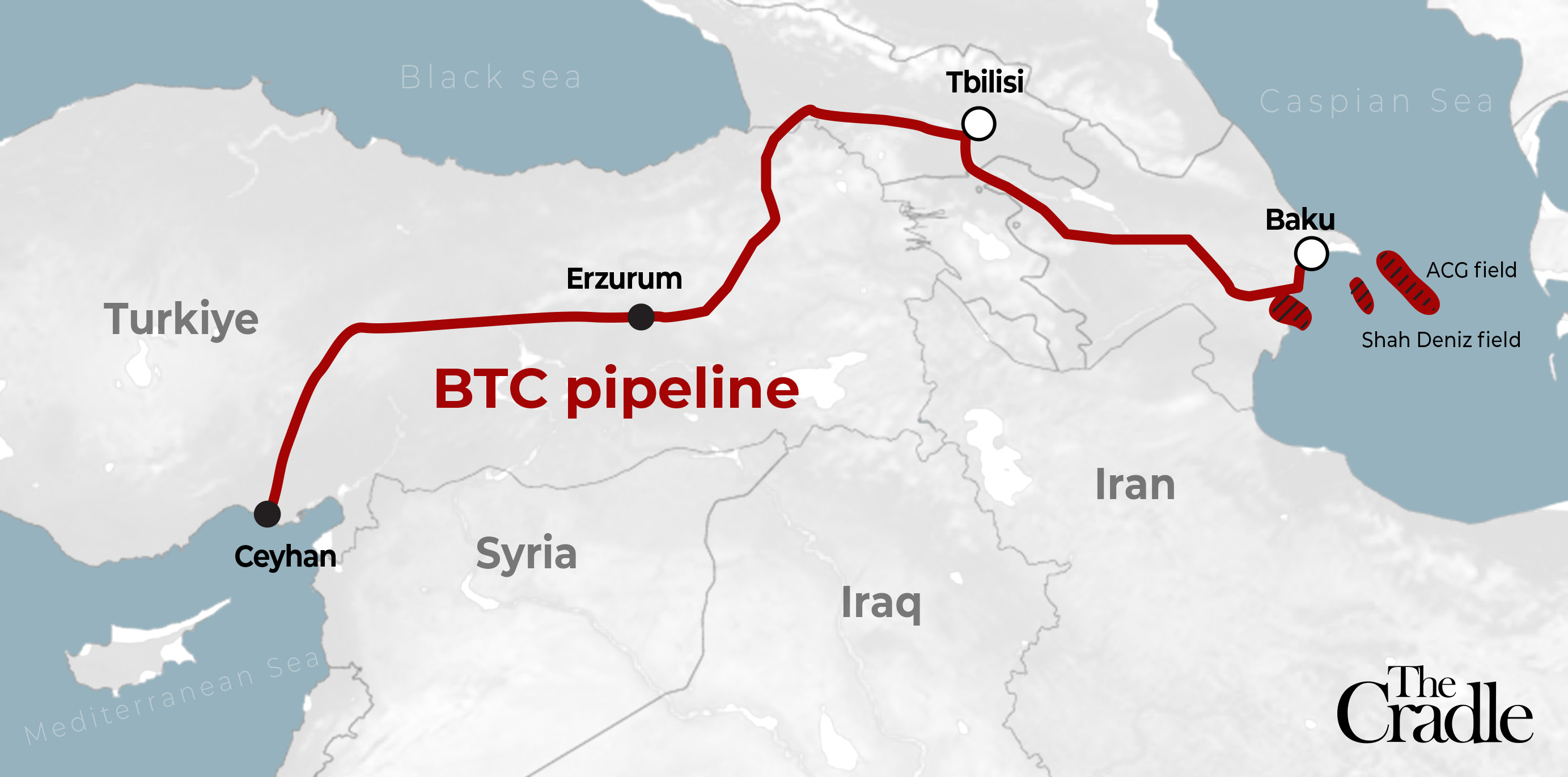
Kpler figures show Israeli imports of Azerbaijani crude linked to the Ceyhan terminal averaged 94,000 barrels per day (bpd), a 31 percent year-on-year increase and the highest level since 2022.
The increase further widened Azerbaijan’s lead over Russia, Israel’s second-largest oil supplier. Russia accounted for roughly 28 percent of Israel’s oil imports, according to Kpler, while Azerbaijani crude ultimately made up 46.4 percent last year.
The deliveries persisted despite Turkish government data showing no recorded trade between Turkiye and Israel since June 2024, when Ankara announced a ban tied to Israel’s genocide in Gaza.
Turkish officials have argued that the state does not determine the final destination of crude transported via the Baku-Tbilisi-Ceyhan Pipeline (BTC).
In a statement issued in November 2024, Ankara said exporters operating through Ceyhan had “respected its decision to end trade with Israel” by not declaring Israel as a destination.
Shipping analysts cited by Reuters dispute that claim. Data from Kpler and Vortexa shows vessels bound for Israel routinely conceal their routes by disabling tracking systems or signaling alternate destinations.
“The vessel will typically signal offshore Egypt/Cyprus, and will discharge to Israel,” Vortexa said.
In November last year, Oil Change International reported that Azerbaijan remained one of Israel’s main energy suppliers during the Gaza genocide – alongside Kazakhstan, the US, and Russia, followed by 21 other countries – with most crude shipments routed through the Baku–Tbilisi–Ceyhan Pipeline and Turkiye’s Ceyhan port, despite public claims of trade restrictions.
Earlier that year, Turkish Foreign Minister Hakan Fidan said Ankara would uphold a full ban on trade, economic ties, and airspace access with Israel over Gaza and Syria, even as Israeli data and media pointed to Turkish goods and energy continuing to reach Israel indirectly via third countries.
Writing for The Cradle, Turkish journalist Erman Cete stated that Israel is far from isolated, arguing that its war economy is sustained by a dense global energy network spanning Azerbaijan, Turkiye, Europe, Africa, Russia, and parts of the Arab world.
He showed how oil and fuel continue to reach Israel through protected pipeline regimes, third-country routing, and compliant energy firms and states, making public embargoes largely ineffective, while ensuring that the resources powering Israel’s war machine flow uninterrupted.

No comments:
Post a Comment