Showing posts with label “The Theological Origins of Modernity”. Show all posts

Tuesday, January 22, 2019

Religion is not in conflict with IR theory: Prof.Askari

By Javad Heirannia
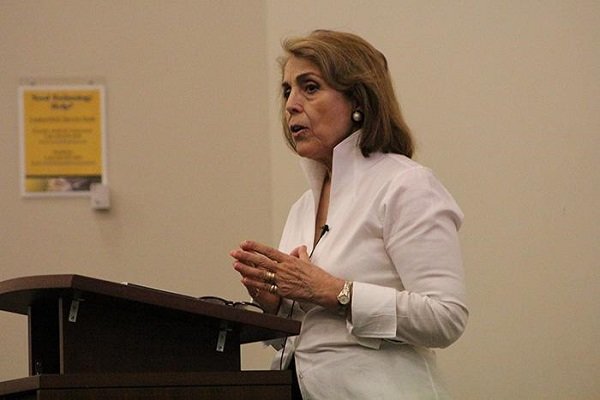
TEHRAN – Professor Hossein Askari, an expert on Saudi Arabia who also teaches international business at the George Washington University, believes that “I agree wholeheartedly that religion is not in conflict with international relations theory.”
 “Religious, sectarian, ethnic and tribal dimensions of international relations have become increasingly important and these dimensions have to be integrated into any universal theory,” Hossein Askari, who served as special advisor to Saudi finance minister, tells the Tehran Times.
He adds that “Introduction of religious and sectarian variables can explain many facets of international relations that traditional theories cannot.”
Following is the text of the interview:
Q: When did the religious issues become a matter of great significance in Theorizing of International Relations?
A: To the best of my knowledge, as I am an economist, the study of international relations as a separate field of study emerged after WWI. Theories of international relations emerged about two decades later. It all depends what you mean by a field of study. There are some who trace go as far back as Aristotle, Cicero, Hobbes, Machiavelli, Rousseau or Kant. When did religion enter the field is tough to answer also. If you mean into formal theories, then we are talking in the last fifty or so years. There is an excellent edited volume (Religion and International Relations Theory) by Jack Snyder (2011) which answers your question more precisely. But to my mind, Rousseau, Kant, and Adam Smith were the precursors of all of this, especially Smith with his devotion to a theocentric world as in The Theory of Moral Sentiments. There are some developments since WWII that have sort of brought religion more directly into international relations theory from the backdoor. For instance after the birth of Israel, books written on the Jewish lobby in the United States; the rise of religious extremism; the rise of sectarianism; and the Iranian Revolution.
Q: Some argue that if the theory of International Relations means a constitutive and critical theory, then bringing religion into International Relations is possible, but if the theory of International Relations is an explanatory-empirical theory, the theorizing religion in International Relations is not possible and, in fact, there is not theological positivism theory in International Relations. What is your opinion?
A: Again, as an economist, I look at these things from a different lens. In today’s world, nation-states no longer provide an unchallenged lens for assessing all dimensions of international relations. For me, tribalism and religious (and sectarian) divisions are becoming increasingly important and have to be incorporated into any meaningful theory. But please let me be clear, these divisions are becoming more important because rulers, politicians are using them to divide, get support and stay in power. For instance, the Al-Sauds use the Shia-Sunni dispute going back to the passing away of the Prophet Mohammad (sawa) to isolate and demonize their own Shia Muslims and by extension all Shia Muslims, to brainwash Sunnis that Shia are a threat and must be discriminated against in order to keep opportunities and wealth for the Sunni. This is not propagated only within Saudi Arabia but is at the heart of Al-Saud international relations policy in order to win international support for the Al-Saud in the Muslim World and beyond.
Q: Some scholars such as “Michael Allen Gillespie” in the book “The Theological Origins of Modernity” believe that modernity was not initially against religion, and in later years, as a result of social, cultural and political conditions, it has led to secularism. So Based on this conception, religion does not conflict with modernity, so can it be said that religion does not conflict with the International Relations theory stemming from modernity?
A: I agree that religion is not in conflict with modernity. It all depends on how the religion is perceived. Without dogma and if free debate and discussion is encouraged or at least tolerated. I agree wholeheartedly that religion is not in conflict with international relations theory. As I have just said, it is at the heart of Saudi international relations and as such, it is a reality that must be integrated into a widely applicable theory.
Q: Some argue that the current International Relations theory cannot explain some of the current phenomena of international relations and we need a religious theory of International Relations, especially with regard to religious issues. What is your opinion? In general, theorizing Religion in International Relations is feasible?
A: Clearly many actions of state and non-state actors cannot be explained within the confines of prevailing and prominent theories of international relations. Religious, sectarian, ethnic and tribal dimensions of international relations have become increasingly important. These dimensions have to be integrated into any universal theory.
Q: If theorizing Religion in International Relations is possible, can a religious theory in International Relations explain all the unresolved issues and problems? 
A: Nothing can explain ALL unresolved issues. But I believe that the introduction of religious and sectarian variables can explain many facets of international relations that traditional theories cannot. Just look at the international relations and policies of Muslim countries. Or those of the United States, Israel and non-state actors such as ISIS. Religious and sectarian divides are embedded in their policies.

Sunday, January 20, 2019

Religion is not necessarily in conflict with modernity: Kevin Richards

By Javad Heirannia
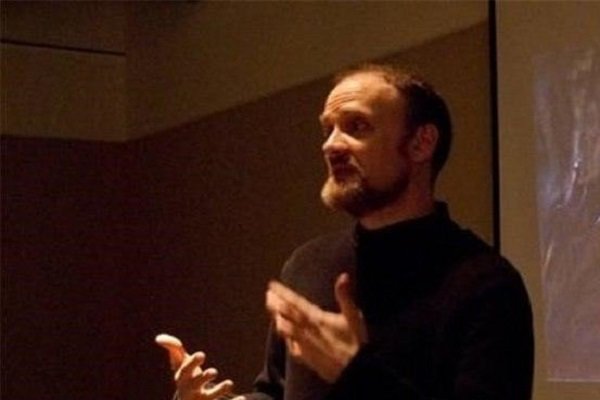
TEHRAN - Professor Kevin Richards, chair of Liberal Arts Department at Pennsylvania Academy of the Fine Arts, tells the Tehran Times that “I would agree with the larger premise that religion is not necessarily in conflict with modernity.”
He also adds that “I don’t think religion or any single theory or field can help to resolve all the problems and issues in International Relations theory.”
Professor Richards adds that “This is no fault of religion, but, rather, part of the nature of plurality and complexity.”
Following is the text of the interview:
Q: When did the religious issues has been a matter of great in Theorizing of International Relations?
A: In exploring the role of religion within International Relations theory, it is important to explore the origins of International Relations theory as a whole.  Yet, tracing the roots of International Relations theory also opens up a number of other questions.  In a narrow sense, we can map International Relations theory as emerging out of the context of the interwar period in Europe, a historical moment that is critical not just in European history, but also within the history of the relations between the West and the Middle East.  In this regard, the work of E. H. Carr is seen as marking a foundational moment.  Within this context, however, one can see the development of realism and, in particular, the positivist/rationalist school of thought regarding International Relations as being dependent on a Western notion of sovereignty and the nation-state, especially as marked by the early twentieth century.  Yet, at the same time, the realist school also makes claims to originating out of Antiquity, as a number of classical Greek and Roman thinkers are invoked as the origins for International Relations theory, such as Thucydides.  Either way, the initial perspectives provided by International Relations theory are informed by a Western metaphysical tradition that needs to be deconstructed to open up to other perspectives.
On the other hand, a number of idealist strains of International Relation theory map their origins in the work of Immanuel Kant and the post-Enlightenment thinkers who modernize the Western metaphysical tradition.  Out of this larger school of thinking, one can see more recent developments, such as complex interdependence, post-liberalism, and constructivism, that all can be viewed as potentially offering a role for considering the place of religion within International Relations theory.
Q: Some argue that if the theory of International Relations means a constitutive and critical theory, then bringing religion into International Relations is possible, but if the theory of International Relations is an explanatory-empirical theory, then theorizing religion in International Relations is not possible and, in fact, there is not theological positivism theory in International Relations. What is your opinion?
A: From my perspective, a strict empiricist/positivist perspective is untenable in regards to International Relations theory.  These realist approaches tend to reduce the motivating factors for nation-states down to base material needs.  This approach may be useful for capitalist democracies that are ruled through maximizing profits, but it entails merely one perspective on the motivations of a nation-state and tends to do so from a Western, first-world perspective.  It also tends to import a whole range of Western values that can cause foundational questions and challenges to an approach towards International Relations theory.  Indeed, when accounting for material factors beyond the considerations of an empiricist/positivist perspective, the influence of post-structuralism and post-colonial approaches to International Relations theory can be helpful in exposing these cultural biases that come to delimit the effectiveness of traditional realist approaches to International Relations theory.
Instead, approaches that consider the complicated and contingent relations between nation-states would seem to offer a more conducive space to consider non-Western perspectives.  One can see possibilities for such an alternative approach growing out of constructivist and post-liberal approaches.  One can also suggest that ideas from post-structuralism and post-colonial theory would be very beneficial in shifting the terms of International Relations from the schools that seem all too intimately tied to Western values and concepts of the nation-state to progressive alternative models that would be inclusive of other perspectives, including religion.  For instance, the concept of the rhizome, developed by Felix Guattari and Gilles Deleuze, could be seen as offering a non-hierarchical, open-ended approach to thinking through the myriad phenomena that inter-connect nation-states.  Of course, this does not mitigate the complex space through which nations relate to one another, but it helps heighten awareness of the numerous factors that have to be considered as nation-states work together to try to resolve conflicts in a peaceful and productive manner.
Q: Some scholars such as “Michael Allen Gillespie” in the book “The Theological Origins of Modernity” believe that modernity was not initially against religion, and in later years, as a result of social, cultural and political conditions, it has led to secularism. So based on this conception, religion does not conflict with modernity, so can it be said that religiondoes not conflict with the International Relations theory stemming from modernity?
A: I would agree with the larger premise that religion is not necessarily in conflict with modernity, though I would frame the relation between religion and modernity in two ways.  First, the influence of humanism leads spiritual yearnings more towards art and aesthetics.  That is to say, the nineteenth century sees the birth of modern museums and when one looks at the theorists of museology, most articulate the ideal that museums will play the role of places of worship within the modern world.  This connection between spiritual yearnings and aesthetics also helps to explain the way that Western museums in the nineteenth century are modeled after religious temples from Antiquity.  This perspective presents art as playing the role of religion within a secular world.  In this way, the religious feeling does not leave the West with modernity but gets rerouted through humanist ideals and institutions.
Second, while the Enlightenment helps to establish a tradition that leads to the growth of Western-style democracies, it also leads to some unquestioned assumptions.  On the surface, Western-style democracy articulates an ideal of the separation of church and state, one that seems to contour the roots of International Relations theory.  At the same time, however, the values and perspective of these democracies seem to be clouded by a privileging of Christianity.  The tension between the ideal of separating church and state and the reality of the role of religion within domestic and international politics can be exemplified by America.  Founded as a nation built upon religious tolerance, American politics has always been marked by religious intolerance.  In the mid-nineteenth century, for instance, American politics was marked by a paranoia surrounding Mormonism.  Later, concerns arose around Catholicism, something that even clouded John F. Kennedy’s run for the presidency in 1960.  More recently, one can see how the rise of the religious right has impacted American domestic and foreign policy over the past thirty years, leading to figures who are extremely intolerant of non-Christian perspectives, despite the ideals of religious tolerance that supposedly founded America.  We even see this paradox on American money.  A nation that espouses religious tolerance prints “In God we trust” on its currency.  In this vein, religion never leaves Western society, but gets more deeply embedded into its ideology.
In this regard, Gillespie’s premise bears a lot of merit, though I would consider the question of the relation between modernity and religion from a number of perspectives.  In particular, I think Nietzsche’s work becomes critical, especially his “Death of God” parable, as it poses a challenge to traditional Western ideals, playing on a tension between science and reason, on the one hand, and faith and religion on the other.  In addition, Nietzsche also points to the way that Christian values become nihilistic within modernity.  That is to say, capitalists compete and cheat Monday through Saturday, but try to absolve themselves of their sins on Sunday, or, in other words, they may say they’re Christian, but only practice on Sunday, while worshiping capitalist ideals on all the other days.  This leads to a gap between Western ideals and the material practices of Western capitalism.
Q: Some argue that the current International Relations theory cannot explain some of the current phenomena of international relations and we need a religious theory of International Relations, especially with regard to religious issues. What is your opinion? In general, theorizing Religion in International Relations is feasible?
A: I do think that religion has to be accounted for within International Relations theory.  In part, this is tied to the historical moment in which International Relations theory was developed, a historical moment marked by Eurocentrism and blindness to other perspectives.  In addition, the way that the ideal of religious tolerance, discussed above, in concert with an assumption of a Christian perspective that Eurocentrism embodies, necessitates questioning the role of religion within International Relations theory both in how it contours Western values and also in the way that it excludes potentially non-Christian perspectives.  In this regard, again, I find post-colonial and post-structuralist perspectives important in situating the role of religion in a more dynamic fashion, as well as one that opens up to other perspectives on the role of the nation-state.
Q: If theorizing Religion in International Relations is possible, can this religious theory in International Relations explain all the unresolved issues and problems?
A: I don’t think religion or any single theory or field can help to resolve all the problems and issues in International Relations theory.  This is no fault of religion, but, rather, part of the nature of plurality and complexity.  Of course, this reflects the influence of Jacques Derrida on my thought, something that would lead me to question any totalizing framework for International Relations theory.  In regards to conflicts globally and thinking through some of the issues within International Relations theory, however, I think an interesting approach may be offered by William T. Vollmann in his seven-volume Rising Up, Rising Down.  In this monumental work, he looks to how violence is justified around the globe, breaking it down into several categories, precisely the areas that need to be thought through, given the way that they are implicated in unresolved issues and problems internationally.  While writing from a perspective outside of International Relations theory, his categories offer useful cartography of the motivations for conflict.  Among the justifications for violence globally he lists “defense of honor,: “defense of class,” “defense of authority,” “defense of race and culture,” defense of creed,” “defense of war aims,” “defense of homeland,” “defense of ground,” “defense of earth,” “defense of animals,” “defense of gender,” “defense against traitors,” “defense of revolution,” as well as a few others.  These justifications factor into what he terms ‘the moral calculus’ that nations and governments use to justify conflict and violence, even as he looks to the problems in using such justifications.  In this regard, religion is just one motivating factor within conflicts and unresolved issues internationally and, while it is necessary to be able to account and provide space for religion within International Relations theory, resolving conflicts and problems globally entails very complicated and highly contingent negotiations between states and their differing values.


Wednesday, November 14, 2018

Religion is not major determinant of international actors' behavior: Hunter

Religion is not major determinant of international actors' behavior: Hunter

TEHRAN, Nov. 13 (MNA) – Shireen Tahmaasb Hunter, a professor of political science at Georgetown University, says that Analysis of international relations has shown that very seldom religion per se determines behavior, whenever it does, it is by being part of the states' and non-state actors' ideational, ideological and value systems.
“All IR theories, including the realist theory that emphasizes the role of power and search for security, account for the impact of ideational and value related factors and thus they can address the role of religion as well. The problem is that religion as such is not a major determinant of international actors' behavior,” Hunter tells the Tehran Times.
Following is the text the interview:
When did the religious issues has been a matter of great in Theorizing of International Relations?
Focus on religion and its role in international affairs occurred after the fall the USSR and the end of an ideological era in international relations best exemplified in the Cold War. The end of ideology left a paradigmatic vacuum which was filled by theories such as the Clash of Civilizations. Prior to that, the ideologization of religion especially in Muslim societies increased its impact on the domestic politics of some countries and on their foreign policy. However, this ideologized religion is different from the traditional religion and is similar to secular ideologies and plays the same role.
Some argue that if the theory of International Relations means a constitutive and critical theory, then bringing religion into International Relations is possible, but if the theory of International Relations is an explanatory-empirical theory, the theorizing religion in International Relations is not possible and, in fact, there is not theological positivism theory in International Relations. What is your opinion?
Most theories, certainly those related to social sciences, which includes international relations, are explanatory. They try to make sense of what is happening and identify consistent patterns and factors that help shape these patterns. If the observations show that religion is impacting the behavior of international actors, then they will factor that in. So far, however, analysis of international relations has shown that very seldom religion per se determines behavior. Whenever it does, it is by being part of the states' and non-state actors' ideational, ideological and value systems. All IR theories, including the realist theory that emphasizes the role of power and search for security, account for the impact of ideational and value related factors and thus they can address the role of religion as well. The problem is that religion as such is not a major determinant of international actors' behavior.
Some scholars such as “Michael Allen Gillespie” in the book “The Theological Origins of Modernity” believe that modernity was not initially against religion, and in later years, as a result of social, cultural and political conditions, it has led to secularism. So Based on this conception, religion is not in conflict with modernity, so can it be said that religion is not in conflict with the International Relations theory stemming from modernity?
The foundation of modernity is based on rational thinking. According to this way of thinking, the reason is the source of knowledge and there is no magical explanation for natural phenomena. Religion, by contrast, believes that revelation is the source of knowledge. As such, all religions are at odds with rational thinking. The other foundation of modernity is secularism. Secularism is not against religion. However, it believes that it should be relegated to the private sphere of life. In public life, religious people can express their views, but they cannot demand special privileges as representatives of a higher truth or value. The foundation of legitimacy in modern societies is the will of the people and not some divine source and those who claim they represent this divine source. Thus a modern society is one that as Max Weber puts it is disenchanted and does not rely on metaphysical explanations for natural phenomenon.
Some argue that the current International Relations theory cannot explain some of the current phenomena of international relations and we need a religious theory of International Relations, especially with regard to religious issues. What is your opinion? In general, theorizing Religion in International Relations is feasible?
I do not agree with this view. Exiting theories of international relations do explain the current phenomenon. In particular, the realist theory based on the centrality of power and security is still valid. Most of the post -Soviet era developments have their roots in states' quest for regional and international hegemony and other states' efforts to prevent and defeat their ambitions. I don't see how religion can explain these realities unless we accept Huntington's thesis of the clash of civilization and his contention that all civilizations are based on religion.
If theorizing Religion in International Relations is possible, can this religious theory in International Relations explain all the unresolved issues and problems?
Religion cannot solve today's problems any more than it was able to solve problems of bygone eras. Some of the most terrible wars in history were caused by religious differences and zealotry. Remember the Crusades, the thirty years wars, the Sunni-Shia conflicts etc. Religion tends to make compromise more difficult because adherents of every religion believe that they alone are the representative of God's word. If religion was a source of unity, the Christian world would not have been divided into states nor Muslims would have been fighting one another. To some extent conflict is inevitable. The important thing is how to create a condition that actors' would be inhibited from acting in violent ways. This is best achieved through an adequate balance of power and the cultivation of a culture of compromise.
Interview by Javad Heirannia