Showing posts with label Crown Prince MbS. Show all posts

Thursday, October 03, 2019

Nobody Buys MbS’s Whitewashing of Murder

By: Madawi al-Rasheed*

The brutal murder of journalist Jamal Khashoggi at the Saudi consulate in Istanbul on October 2, 2018 shattered the myth of the benevolent monarchy and set Riyadh on a charm offensive.

While the murderers are yet to be convicted in Saudi courts, Crown Prince Muhammad bin Salman (MbS) has come close to admitting responsibility. His recent PBS interview included a statement that should have been made a year ago, as the prince admitted the crime happened under his watch - but he went on to say that there are three million Saudis working in the public sector, and officials among them were responsible for the crime.

A year after the murder, neither the perpetrators nor the boss who gave the orders have been convicted. A secretive trial of 11 operatives has yet to issue its verdict. And bin Salman’s key aide, Saud al-Qahtani, named as one of the suspects, has disappeared from the public eye, while the crown prince enjoys applause at carefully staged populist events, including the September 23 celebration of Saudi Arabia’s national day.

Yet, while the veneer of "life as normal” continues in the kingdom, the crime of the century changed many things. It was a catalyst that reminded the world of the treacherous nature of a regime long endeared to its Western allies. The U.S., UK and other partners were not going to change their intimate relations with Saudi Arabia simply for the sake of a slain journalist.

After all, thousands of Yemeni men, women and children have been bombed over the past five years, without shaking the conscience of those who arm Saudi Arabia and support its air strikes on the ground.

Realpolitik prevails against the uproar of global civil society and UN agencies who have conducted their own investigations of the Khashoggi murder and the war on Yemen. The Khashoggi case was not going to change the basic rules of the game.

But domestically, the trust between the Saudi leadership and the people has been permanently shattered. The murder exposed the deep state that Muhammad bin Salman inherited from his deposed cousin, Muhammad bin Nayef, who wired Saudi Arabia to control its citizens and widened the net to catch critics, dissidents and civil society founders, under the guise of fighting terrorism.
'Maybe He Did'

Unfortunately for bin Nayef, he became persona non grata despite him being the CIA’s preferred candidate to succeed King Salman. Bin Nayef was sacked as U.S. President Donald Trump clashed with his intelligence agencies and offered the crown prince cart blanche to rise to the top posts in the kingdom, amassing a half-dozen senior jobs.

Trump even refused to accept the verdict of his own intelligence services on the Khashoggi murder, shrugging off the evidence and the intercepted phone calls, and concluding that "maybe he did” have knowledge of the event "and maybe he didn’t”.

The Khashoggi murder was merely a symbol of the erratic, daring and brutal thinking of the crown prince, who proved capable of humiliating his own kin under the guise of anti-corruption.

His bullying of the wealthy elite to save the initial public offering of five percent of the state-owned Aramco oil company promised to safeguard his Vision 2030 and raise much-needed cash. The princes and business elite detained in the Ritz Carlton two years ago are terrified at the prospect of losing their own excessive wealth, but also their heads, should they attempt resistance. 

A Clear Message

Murdering Khashoggi sent a clear message to all citizens, including royalty. This regime is drawing the curtain on previous episodes of royal politics, namely the deployment of carrots and sticks, which to a certain extent succeeded in containing dissenting voices and earned the regime the title of benevolent dictatorship. But alas, the carrots have vanished, and the sticks have been replaced by sharp knives.

The rentier redistributive economy that ensured acquiescence is giving way to a new strategy of ultimatums. You either pay and keep silent, possibly while under a travel ban, or face a return to the Ritz or somewhere even worse. This is the new face of the kingdom, under the full control of the boy king.

Bin Salman’s treacherous nature is reminiscent of an earlier historical episode. It reminds us of that moment when his grandfather, Abdulaziz bin Saud, eliminated the very people who consolidated his kingdom, a consortium of zealot tribal leaders, as he killed them one after another when the job was finished. He sacked towns, killed people in mosques, and precipitated massacres in places such as Riyadh, Taif, Hayil and others.

While this history has yet to be written properly, the boy king promises to continue that tradition with impunity. The murder of Khashoggi, described by his Turkish fiancee Hatice Cengiz as a man "from the palace”, was perhaps just the beginning. Saudi jails are bulging with prisoners of conscience, and executions are on the rise.
Dishonoring the Dead

Bin Salman will not even honor the dead. Khashoggi’s corpse disappeared, and there are no signs that parts of it will be found or returned to his family to be buried properly.

According to Ali al-Dubaisi, director of European Saudi Organisation for Human Rights in Berlin, the regime is still holding 83 corpses of slain detainees, mostly Shia prisoners who were executed behind closed doors.

Khashoggi's murder alerted the world to how the boy king is determined to rule with an iron fist

The future of the kingdom under the crown prince looks bleak, despite all the hype about tourism, entertainment and other new opportunities on the horizon. Repression will continue hand-in-hand with so-called reform. Khashoggi’s murder alerted the world to how the boy king is determined to rule with an iron fist.

 *Madawi al-Rasheed is visiting professor at the Middle East Institute of the London School of Economics.
-Courtesy: Middle East Eye

Thursday, August 29, 2019

Saudi Arabia And The UAE Fund Academia With Strings Attached

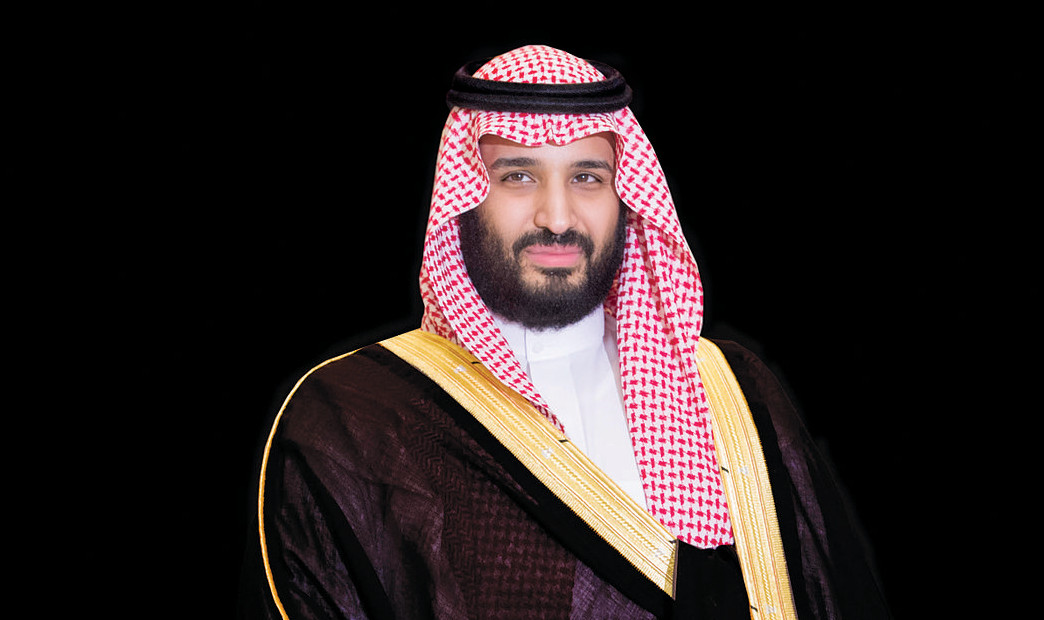
Saudi Crown Prince Mohammad bin Salman
by Jonathan Fenton-Harvey
As Saudi Arabia and the United Arab Emirates have both tried to build up their soft power across the Middle East and North Africa, both states have also attempted to gain greater influence in the West. In particular they’ve targeted Western academia, a useful object as it allows them to promote their political narratives.
Since the 2000s, Western universities have received steadily increasing funding from Gulf Cooperation Council states, directed towards academic centers, student scholarships, academic chairs and fellowships, and donations to archives and museums.
“By 2008 Saudi Arabia had given UK HEIs £189.8m, £21m to Oxford, £8m to Edinburgh, £8m to Cambridge, £1m to the Oxford Middle East Center at St Antony’s College and a large amount to the Oxford Center for Islamic Studies,” Dr. Anthony Glees, Professor of Politics at the University of Buckingham, who previously researched Gulf funding into Western universities, told LobeLog. Other UK universities like Durham, the London School of Economic and Political Science, and Exeter have since received sizable donations.
Meanwhile, U.S. universities have received $2.2 billion from Gulf states since the beginning of 2012, according to a Financial Times analysis. MIT, for instance, received numerous Saudi donations. Among these were $25 million in March 2018 from Saudi Aramco, for research in renewable energy and artificial intelligence. The university also received individual gifts from Saudi billionaires totaling as much as $43 million. Harvard, Yale, Northwestern, Stanford, and the California Institute of Technology are other elite U.S. universities that have received Saudi financing. These investments have largely focused on Western Middle East Studies centers. Virtually every Middle East department in the West has some Gulf funding.
One mechanism for this funding is state-linked foundations. Saudi Arabia’s Alwaleed Philanthropies (formerly the Al Waleed bin Talal Foundation) has provided considerable funding and scholarships to several academic institutions. Meanwhile, the Emirates Foundation has created closer ties with universities like LSE, reportedly to “support academic collaboration and knowledge transfer between LSE and Arab universities.”
In the UK particularly, government cuts and potential losses from Brexit mean that universities are increasingly desperate for new sources of funding. As leaders like Saudi Crown Prince Mohammad bin Salman pursue a ‘charm offensive’ in both Britain and the United States, higher education institutions and think tanks are attractive targets for their largesse.
“Brexit has meant a 7% fall in EU student numbers and will mean a loss of 16% of the research funds that are used by UK universities. Government funding is set to decrease by £120m by the new academic year, 2019-20,” said Dr. Glees, while suggesting that universities are therefore likely to depend more on external financing.
On the surface, these Saudi and Emirati investments seemingly promote academic benefits for the West and the donor states, while forging closer ties between the West and the Gulf. “The first objective of academic funding is capacity building, i.e. the education of indigenous population in all academic disciplines,” Dr. Andreas Krieg, Assistant Professor at King’s College London, told LobeLog.
“Also, Saudi investment in the MIT to support research projects in the hydrocarbon sector supports indigenous capacity building. In this context, there is a genuine interest in independent research and education.”
As Western universities grow further dependent on Saudi and Emirati support, it allows these Gulf states to reshape their academic narratives. Andreas Krieg said that the UAE has utilized such strategies to promote its own narratives, not just in universities but also in think tanks.
“The UAE have understood how important academic centers and experts are in providing legitimacy and credibility to their grand strategic narratives. Since the 2006 Dubai Port World controversy in the United States, the academic component is a solid part of the UAE’s (dis)information network,” he said.
“Think tank funding can also buy favourable expert opinion, sometimes by directly supporting the funder’s narratives and sometimes by omitting critical data. Here, the independence of researchers is compromised. Also, because researchers are selected based on their compatibility with the funder’s narratives,” Krieg added.
However, human rights violations by the UAE and Saudi Arabia have generated greater scrutiny towards this funding. Al-Waleed bin Talal has been a controversial investor, with several calls to boycott his donations. While considered a relatively liberal voice within the Saudi royal family, there were calls for Edinburgh to refuse his donations, particularly after he donated 100 cars to Saudi pilots to reward them for their role in the bombing campaign in Yemen. Al-Waleed’s foundation had funded Edinburgh’s center for Islamic studies.
Universities from both the U.S. and UK have faced criticism over Gulf funding, particularly as awareness has grown regarding Saudi and Emirati human rights abuses and suppression of academic freedom. Both countries’ domestic policies have raised concerns about women’s and LGBT rights; the suppression of academia, free speech, and press freedom; and human rights violations against state critics.
New questions arose last year, when Emirati authorities imprisoned British PhD student Matthew Hedges, accusing him of ‘spying’ for the British government when he was merely conducting research for his thesis. Hedges was kept in solitary confinement for six months in the UAE, suffering psychological torture, and was sentenced to life in prison in November 2018 after being forced to sign a “confession” statement in Arabic—which he did not understand. Eventually, international media pressure and the UK Foreign Office helped secure his release. This incident occurred in the wake of the Saudi-sanctioned killing of Washington Post journalist Jamal Khashoggi in the Saudi consulate in Istanbul.
Though several universities, including Durham, Exeter, and Birmingham initially suspended their UAE ties during Hedges’ imprisonment, and Harvard University ended its own ties to MbS’ MiSK foundation, many universities did not reconsider their own links. Moreover, once the Emiratis released Hedges many universities restored their UAE funding streams.
Krieg added that the ongoing GCC crisis, which began two years ago when Bahrain, Egypt, Saudi Arabia, and the UAE cut economic and diplomatic ties with Qatar, has not impacted this funding. Qatar, in fact, plays a minimal role in financing academic institutions.
“When Qatar arrived on the scene in Washington in 2017, the UAE in particular had already seized much of the academic market leaving few options for Qatar to fund projects,” said Krieg. “Qatar’s narrative might be more conducive to the ideology and values of most academics. Qatar does not need to invest as much to legitimize its narrative.”
Glees worried that this Gulf funding could influence academic narratives, inhibiting legitimate criticism of those states which fund universities. After the Arab Spring, western universities paid closer attention to human rights violations and democratisation in the Middle East and North Africa. Yet research from academics Martin Lestra and Jonas Bergan Draege suggests that “institutions funded by Gulf countries continued to be somewhat less likely to raise these issues.”
Dr. Madawi al-Rasheed, visiting Professor at the London School of Economics and Political Science, said that Saudi Arabia expects support for its policies in return for its funding. It blames criticism on research funded by its regional rivals. “Western academic institutions defend their objectivity by claiming that they remain objective despite the funding,” she said. “But this will be difficult to sustain, as Saudi funding may be cut if activities at such centers are deemed hostile [to] or critical of Saudi Arabia.”

Tuesday, July 30, 2019

UAE Troop Drawdown: Beginning of the End for Yemen War


UAE Troop Drawdown: Beginning of the End for Yemen War
TEHRAN (FNA)- The United Arab Emirates has been forced to withdraw its occupying troops from Yemen in coordination with key ally Saudi Arabia. This should mark the beginning of the end for the failed US-backed, Saudi-led war on Yemen.
The UAE, a leading member of the Western-backed Arab coalition battling the Ansarullah movement, is reducing its military presence after almost five years of failed war on the poorest country in the Arab world. The Persian Gulf state has pulled many troops from areas including the Southern port of Aden and the Western coast, but claims it remains committed to the ousted government of president Abd-Rabbu Mansour Hadi.

The drawdown was not a last-minute decision and had been discussed extensively with Riyadh. It came after the failed attempt to defeat the resistance movement of Ansarullah amid international condemnations for the ongoing human rights violations and war crimes in the war-torn country by the Saudi-led coalition.

Indeed, behind the drawdown is a disastrous failure of decision-making that led to the war on Yemen in 2015; the signature initiative of the Crown Prince MBS. Thanks to his leadership, Saudi cities and infrastructure are now targets for a once-ragged army that has developed increasingly sophisticated drones and missiles. The war is the worst humanitarian catastrophe in the world.

The Trump administration’s decision to sell billions in arms to Riyadh without congressional approval has only encouraged the crown prince to continue the quagmire too. The Saudis are not more capable of winning the war with more munitions. The American support has singularly helped in five years to support the Saudis in bombing civilian targets or increasing the carnage of the war. Children are the most at risk and are paying a horrible cost.

On the other hand, the war on Yemen has exposed the tenuous nature of Saudi Arabia’s relationships with its principal Muslim allies. The most important of them, Pakistan, surprisingly refused to send its army to assist the regime. The Sisi government in Egypt also refused to send large numbers of ground troops to participate in the fighting. Instead, Cairo sent a small contingent of several hundred soldiers and three to four ships to assist Riyadh.

And in recent instances, even those countries that agreed to participate in the Saudi-led campaign developed conflicts of interest with Riyadh over the course of the fighting; for example, the Saudis and the Emiratis are backing forces that are at odds over the future of Yemen and this has created friction that has at times erupted into violence between local actors.

In the prevailing environment, expect the Saudi coalition fighting in Yemen to be forced more into a stalemate following the UAE’s decision. Riyadh and Abu Dhabi had promised a swift campaign in what has now become one of the fiercest battles in the devastating conflict. Their initially stated goal was a total defeat of Ansarullah in Yemen, but after a couple of years they changed their claim, and said their goal is to cut off the Ansarullah’s main supply line and force them back to the North. However, little progress has been made since the campaign was launched, as the country is heavily defended by land and sea.

Last but not the least, the Saudi coalition’s inability to win or even to advance in Yemen has a two-pronged diagnosis: The fact that the Ansarullah are well-situated to repel foreign fighting forces; and the fact that the Saudi military suffers from its own systemic ineffectiveness and divisions – for instance, the UAE’s failed efforts to bring its power to bear in the fight war and its recent decision to withdraw. 

Which is to say: The illegal war on Yemen has been a disaster for all involved parties, and so ending it is both the smart thing to do as well as the right thing to do under international law and UN Charter. And because American interference is most successful in regions that suffer from conflict or insecurity, ending the war has the added benefit of potentially weakening the War Party’s ability to meddle in regional affairs.

Monday, July 22, 2019

Newsweek: 2019 Bloodiest Year in Saudi Arabia with Political Executions, War on Yemen


 The first half of 2019 has been a bloody one in Saudi Arabia, with more than one prisoner executed by the government each day on average, the Newsweek reported on Monday.
David Brennan, who wrote cthe report has said the number of executions in the first six months of the year is the highest recorded in the past five years, and more than double the 55 from the same period in 2018, according to a new report by the European Saudi Organisation for Human Rights.
From January until the end of June, 122 people were executed in the ultra-conservative kingdom, he added. Among them are six minors and 58 foreign nationals, from nations including Pakistan, Yemen and Syria. Three women were among those killed, one each from Saudi Arabia, Nigeria and Yemen.
Fifty-one of those killed were executed for drug offenses, though ESOHR noted that in many nations the crimes would not have been among the most serious.
The report says among the remainder were political prisoners—including many Shiite citizens, persecuted in the Sunni-dominated nation—charged in relation to anti-government protests. Some of these charges dated back to the Arab Spring, when unrest spread to Saudi Arabia in 2011 and 2012 but was quickly crushed by the government.
Brennan pointed out that on just one day—April 23—37 people were executed. The majority of these had been convicted of offenses linked to Shiite anti-government demonstrations, ESOHR explained. The new focus on political dissenters shows that the country is "experiencing a particularly brutal period of repression," the report said.
The soaring rate of executions in the authoritarian state comes despite Crown Prince Mohammed bin Salman's promise—made in April 2018—to reduce the use of the death penalty to as low as possiblek, he added.
Brennan ridiculed the allegations and pledges made by bin Salman after  221 people have been executed. While now hugely influential, he is part of a bigger problem—714 individuals have been executed since King Salman took the throne in January 2015.
Ali Adubisi, the director of ESOHR, said there appears not to be "any signal" that MBS will follow through on his promise. 
Bin Salman came to the fore lauded as a much-needed reformer, vowing to liberalize the nation and diversify its oil dependent economy.
The Vision 2020 initiative would, he told the world, open Saudi Arabia to global commerce, offer new freedoms to its citizens and phase out some of the more archaic elements of Saudi society.
But many of his actions have run contrary to the project. He led Saudi Arabia into a devastating war in Yemen, was linked to the brutal murder of Washington Post journalist Jamal Khasohggi, arrested and extorted billions from allegedly corrupt Saudi business people, and cracked down on human rights, pro-democracy and Shiite activists, the report says.
ESOHR noted its "serious concerns about the extent to which the Saudi government will expand capital punishment this year." If the current execution rate is maintained, there will be 244 executions by the end of 2019.

Saturday, July 06, 2019

Hannah Smith: Saudi Arabia Executed 37 Citizens with Trump’s Blessing

TEHRAN (FNA)- Hanna Smith, British Muslim rights activist, says Saudi Arabia, as the US’s "major cash cow” with its growing support for Israel, has become an “invaluable pawn in Zio-American foreign policy”, with no fear of being discarded over the human rights of Saudi citizens.
In an exclusive interview with FNA, Ms. Smith also said, “The US always put political economics over ethical foreign policy and have done the same upon hearing of the executions of Shia prisoners... The unsurprising US silence about the unjust executions is confirmation enough of their support for Saudi regime atrocity.”

Hannah Elizabeth Smith is the Co-Founder and Director of Initiative for Muslim Community Development, a US-based think tank with its focus on Muslims human rights.
Below is the full text of the interview:

Q: Saudi Arabia executed 37 people, majority of them Shias. Shias, in Saudi Arabia, are minority in terms of population, but majority when it comes to capital punishment. How do you view it?

A: The Saudi leaders have always responded to demands of the human rights activists and organizations for the improvement of rights conditions with an iron fist. In 2009, the Saudi regime under pressure of the international rights organizations approved the Arab Charter on Human Rights to limit the death penalty to only serious crimes. Over the past years, Saudis have tried to tie the executions to acts of terrorism and drugs smuggling, an effort that has so far failed to convince the home and foreign critics. The Saudi rulers apparently have begun to feel the risks of a popular revolution as the internal dissent is growing, particularly in the predominantly-Shia Eastern Province where the Shia citizens are subjected to tough economic deprivation and political discrimination despite concentration of the oil reserves in their region. In fact, in the wake of the risk of an outbreak of uprisings in the Arab countries after a wave of recent uprisings in Sudan and Algeria, the Saudi authorities have stepped up the crackdown on the political activism of the opposition. Existence of at least seventy people from Shia minority among those executed sets off the alarm bells about the rise of a new wave of sectarianism and repression of the dissenters.

Q: The US Administration neither condemned the Saudi’s mass execution, nor Khashoggi’s killing. Instead, it praised the regime for its massive oil exports. How do you assess that?

A: The US always put political economics over ethical foreign policy and have done the same upon hearing of the executions of Shia prisoners. The US are more concerned about losing their most important Arab ally, or should we say puppet, in the region. The unsurprising US silence about the unjust executions is confirmation enough of their support for Saudi regime atrocity. It appears that bin Salman has carried out the executions with Trump’s blessings and indeed tacit support. The Saudis are undoubtedly planning further clampdown on the opposition with the green light of Washington and without fear from prosecution of the Western powers.

As the United States major cash cow in the Middle East and with its growing covert and overt support for the Zionist regime in Israel the Saudis are too invaluable a pawn in Zio-American foreign policy globally to be discarded over the human rights of its citizens.

Q: Is the mass execution in line with the Crown Prince MbS claims of having planned reforms in the ultra-conservative country?

A: Mohammad bin Salman has unleashed a superficial liberalization agenda at home to create a smokescreen for the barbarity of his actual despotic agenda. However it is true that women are now allowed to drive, a halal gambling venue has opened up and bikini beaches are in the pipeline; all this is just for starters. In a nation that prided itself in implementing the most draconian interpretation of Islam these are gargantuan moves towards an astounding cultural makeover - religion-social engineering, akin to extreme cosmetic surgery, some might say. At the same time the Saudi obsession with erasing all heritage architecture in Mecca and Medina continues unabated. so clearly their 'cultural revolution' hasn't apparently reached the ears of their corporate development departments who have bulldozed Prophetic history and replaced it with ...well in the environ of the Holy Ka'aba, the most spiritual place on Earth, a gigantic clock with Las Vegas style shopping and entertainment facilities.