Showing posts with label Iran-Yemen. Show all posts

Wednesday, October 02, 2019

Repercussions of Riyadh’s Definite Defeat in Yemen Invasion

By
 Ali Hassan Heidari

Saudi Arabia along with its allies, including the United Arab Emirates (UAE), Qatar, Bahrain, Kuwait, Jordan, Sudan, Egypt and Morroco, began an all-out aerial campaign against Yemen called “Decisive Storm” in 2015. But it has brought nothing but a definite failure for the Saudi regime.
The Saudi-led attacks have left more than 10,000 people dead and hundreds of thousands homeless. Humanitarian organizations estimate that over 16 million Yemenis, which accounts for 61 percent of the country’s population, are in dire need of humanitarian aid.
Background of Saudi Aggression against Yemen
Yemen is home to a whole variety of ethnic and religious groups. It has a population of over 23 million people 87% of which is comprised of Arab tribes falling into two categories: Zaydi Shiites and Sunnis. Zaydi Shiites ruled Yemen for centuries and stayed in power until the 1960s. However, a coup was staged against their rule with the help of the Saudi government, resulting in the formation of a Republic government. Consequently, under the newly formed government, the Houthi movement was practically sidelined and lost its leverage.
The historical experience on the Saudi government’s political behaviour in the region is a testament to the fact that this hereditary government has always wanted nearby countries to be ruled by governments that lack a democratic nature and lean toward the Al Saud dynasty and are submissive to Riyadh. Hence, when Houthis also known as Ansarullah took power in Sana’a following the ouster of the Ali Abdullah Saleh’s regime in 2012, the Saudi government, which has always sought to steer clear of democratic rules, regarded the emergence of a democratic government as a major threat to the hereditary Al Saud monarchial rule.
Therefore, Riyadh mobilized its material and spiritual resources in an all-out attempt to topple the fledgling government in Yemen led by the powerful Ansarullah movement. Accordingly, Riyadh formed an Arab coalition in keeping with the West’s strategy in the region and engineered a military campaign against Yemen. Then, Saudi Arabia launched its all-out aggression on both hard and soft dimensions against Yemeni infrastructure and people. In order to justify its attacks, Saudi Arabia promoted the allegations that Ansarullah (Houthi) troops are backed by Iran and that the stabilization of their position means the spread of Iran’s influence and presence in the region and in an Arab country, which would serve as a major threat for the future of the region. So, as Saudi Arabia suggested, world powers, especially Arab states, have a duty to prevent the formation of the Shiite Crescent.
Nevertheless, four years on, all Saudi and Western potential and actual capacities have proven inefficient against the democratic government of Yemen and have lost their effect on the ground and the balance of power has fully changed in favour of the Yemeni government. Yemeni forces have made tremendous progress in the military, missile and air combat domains and have been able to strike targets deep within the Saudi territory.
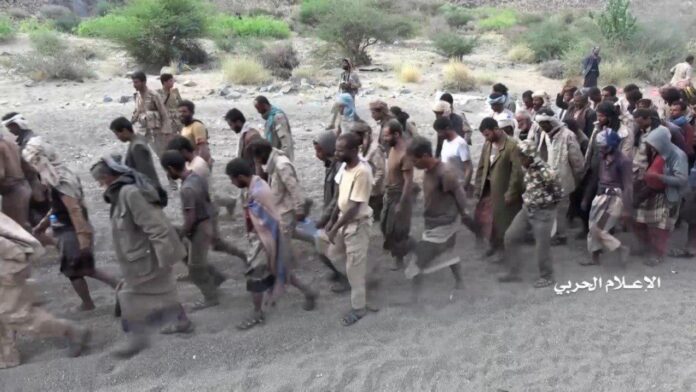
The balance of power has been disrupted in the battlefield, so much so that the Saudis have no more justification, whatsoever, for playing a blame game and levelling accusations against Yemen’s allies in aerial and ground combat (especially after attacks by Yemeni drones against Saudi Aramco oil facilities and the heavy defeat inflicted on Saudi forces in a recent operation).
These wide-ranging failures against Yemeni troops has averted the possibility of playing a blame game, and Yemeni people will no longer buy into this ploy and the Saudi will have no choice but to accept their inefficiency in managing he war and tolerate its repercussions. This defeat has resulted in political and military consequences for the Saudis and their allies, which are briefly described below.
  1. the collapse of the Arab coalition comprising eight Arab countries led by Saudi Arabia
  2. The Iranian Leader’s historical prediction that this coalition will suffer defeat coming true
  3. Saudi Arabia’s failure to achieve its set goals (restoring ousted Yemeni President Abd Rabbu Mansur Hadi to power, breaking the Ansarullah movement apart and capturing Sana’a)
  4. Revolutionaries gaining power in Yemen (Given the historical background of the Saudi aggression against Yemen and
  5. A drop in Saudi Arabia’s political legitimacy and military credibility in the region and the undermining of the Saudi leader’s status in the Arab world and making Riyadh permanently unable to make a consensus in the region and creating a new trend in the region in the future.
  6. Influencing the equations of power in Saudi Arabia’s political system as well as political and security equations in the region in light of turning the resistance front into an efficient hub in the management of crises and its turning into reliable power in forming regional domestic equations with the cooperation of regional countries without the presence of foreign powers.
  7. Proving the inefficiency of US allies in implementing the United States’ schemes and scenarios in the region and trying to respectably withdraw from the US coalition against Yemen’s democratic government.
8.the defeat of the coalition in the clash of strategies in running the region. The US and its regional allies led by the Saudi government also suffered a historical defeat in the war of strategies and, in the war of wills, it was the willpower of Yemeni popular mobilization that won over the political and military mobilization of major Arab and Western powers.
  1. a decline in Saudi Arabia’s regional power and influence; this defeat showed that Riyadh is no longer able to maintain its strategic role in the region and to serve as a country capable of preserving the balance among regional powers because it is no capable of doing so.
The last point is that Yemen’s democratic government is edging closer to determining victory and has passed through the process of the political stability of its government after five years of defending the nation’s independence and democracy in its fight against regional and global hegemony led by the US and the monarchial and hereditary Saudi rule. On the other hand, masterminds behind the war on Yemen have conceded defeat, which means they have admitted to their strategic failure against Yemen’s fledgling and young government.
This means the start of a real step toward ending a five-year war against poor and defenseless, but strong people, who achieved their goal by relying on the resistance front’s model of dealing with aggressors. Before facing the new condition, which will destroy their remaining political and military credibility in the court of the public opinion, they should concede defeat and announce an end to their aggression against Yemen. This will be in their interest.
However, it does not mean they will not be accountable to the public opinion as well as international legal organizations and circles. They should be answerable for their aggression against the democratic government of Yemen and tens of thousands of women and children and civilians in Yemen.
The UN is also duty-bound to send envoys to Yemen to introduce the Saudi government as the one that initiated the Yemen conflict, like what the world body did with regards to the war imposed in the 1980s on Iran by an international coalition led by former Iraqi strongman Saddam Hussein and introduced Saddam Hussein as the initiator of the war. The UN should make Riyadh compensate for the damage it has inflicted on Yemen and for the blood of innocent Yemeni people.

Monday, September 16, 2019

Yemeni Drone Attacks Aimed at Forcing Saudis to End War: Ansarullah

By
 IFP Editorial Staff


A senior member of the Supreme Political Council of Yemen’s Ansarullah Movement says the goal of the Yemeni army’s recent drone strike at Aramco oil facilities was to force Saudi Arabia to end the war.
Mohammed al-Bukhaiti said when Saudi Arabia stops its aggression and ends its siege against Yemen such attacks will automatically come to an end.
Regarding Saudi Arabia’s claims and charges against Iran, he told Tasnim News Agency that “Saudi Arabia has declared war on Yemen on the pretext that our stored missiles are a threat to its security, and today, when we target Saudi oil wells, it is a surprise that they accuse other countries. It proves that they are defeated and also shows their cowardice.”
Al-Bukhaiti said US and Saudi radars are unable to intercept Yemeni aircraft adding that if they could intercept these aircraft, they would shoot them down.
In addition, he added, US Secretary of State Mike Pompeo said that the planes come from Iran because there is no proof showing they come from Yemen. “Essentially, he had to provide proof for his claim. This is a military and political defeat for Saudi Arabia and the United States.”
In response to a question about Iran’s initiative to stop the war on Yemen and Saudi Arabia’s opposition to it, Bukhaiti said “Riyadh is not moving towards its own interests and its people. It just pursues the interests of the Americans.”
“Now the cessation of war has not only become a benefit for Yemen and Saudi Arabia, but beyond that it has become a more important benefit for Saudi Arabia. Because Yemen doesn’t have much to lose, yet we see the obstinacy of Saudi Arabia as the US decides for them,” underlined Bukhaiti.
Ansarullah movement used 10 drones on Saturday to target two oil facilities of Saudi Arabia’s Aramco Company, sparking a huge fire at a plant crucial to global energy supplies.
The facilities in of Aramco in Buqayq and al-Khurais were hit by the drones. The attack led to the disruption in Saudi oil production and exports.
Reports suggest that the Yemeni forces’ attacks have disrupted 5 million barrels per day of oil production. The amount is almost half of the kingdom’s current output.
Yemen’s senior military officials say attacks like this are just the tip of the iceberg in case Riyadh is to continue its war on the country.
Saudi Aramco operates the world’s largest oil processing facility and crude oil stabilisation plant, with a crude oil processing capacity of more than 7 million barrels per day.

Tuesday, January 01, 2019

Jubeir’s Replacement Could Adopt Softer Line on Tehran: Iranian Ex-Diplomat


By
 IFP Editorial Staff


A FORMER IRANIAN DIPLOMAT SAYS NEW SAUDI FOREIGN MINISTER IBRAHIM AL-ASSAF MAY ADOPT A SOFTER LINE VIS-À-VIS IRAN.
Qassem Mohebali, the former director general for the Middle East section at the Iranian Foreign Ministry, said in an interview with Entekhab news website that Tehran should wait and see whether a Cabinet reshuffle in Riyadh would bring about a shift in Saudi policy toward the Islamic Republic of Iran.
 Bin Salman’s Power Diminishing
The former diplomat also weighed in on whether or not the changes indicate that Saudi Crown Prince Mohammed bin Salman’s position has been undermined.
“Not undermined, but early indications suggest bin Salman’s power has been weakened compared to the past,” he said.
“We should wait and see what other changes will be made and what tendencies the new officials will have. But it seems that some sort of adjustment has been made to the decision-making structure in Saudi Arabia, leading bin Salman’s power to reduce,” he added.
 Riyadh May Adopt Softer Line
The ex-diplomat also expressed his views the impact of the changes on the Saudi foreign policy and whether Saudi Arabia is a country where the foreign minister can put his own policies into effect.
Mohebali said in Riyadh the king and heir to the throne are the major decision-makers.
“But the selection of that person (Assaf) is indicative of their tendency,” he added.
“As I mentioned before, the new foreign minister, who used to work in the economic sector and was less political than al-Jubair, may adopt a more moderate approach on regional issues, especially regarding Yemen, Iran and Syria,” he added.
He also touched upon the connection between Sudanese President Omar al-Bashir’s trip to Syria and the political developments in Saudi Arabia.
“It’s been quite some time that the Arab League has decided to improve its relations with Syria and bring the country back to the league. Omar al-Bashir has sent this message [to Damascus], which was naturally coordinated with Saudi Arabia,” he said.
The former diplomat said the re-opening of the United Arab Emirates’ embassy in Damascus is another signal that Saudi Arabia’s allies are making changes to their policies, too.
Mohebali said the UAE’s acceptance of the ceasefire in Yemen, Arab countries’ efforts to mend ties with Syria and the travel of a Syrian delegation to Tunisia for the Arab League meeting are other signs Saudi Arabia and its allies are changing tack.
 Toughest Challenge in Saudi Foreign Policy
Mohebali then weighed in on whether the changes in Saudi policies will cause a shift in the country’s approach toward Iran.
“We should wait. This might be the most difficult issue in Saudi Arabia’s foreign policy. The new [Saudi] foreign minister’s positions should be explored, though he does not seem to be as political as [the outgoing Saudi Foreign Minister Adel] al-Jubair,” said the ex-diplomat.
“We should not rush into [judging] his stances, but he may adopt a more moderate approach compared to al-Jubair, who was fiercely opposing Iran,” Mohebali added.
He said the position of the hard-line current in the Saudi government, including al-Jubair, seems to have been weakened.
“The new foreign minister, who has served as the Saudi representative to the World Bank, has a softer political approach. But we should wait and see what changes will be made,” he noted.
 Foreign Parties Disappointed With Positive Changes in Saudi Arabia
He also elaborated on the impact of the weakening of bin Salman’s power on Saudi Arabia’s foreign policy.
“Following the recent developments such as the case of Khashoggi and the defeats in Yemen, the policies followed by al-Jubair [proved weak], and bin Salman lost some power,” said the ex-diplomat.
“The Saudi foreign policy has … generally faced problems. They were not successful on Qatar, as the country has reinforced its position. The same happened in Yemen. After the Khashoggi incident, their relations with Turkey and the US are not the same as before, and they lost their status among the Europeans as well,” he said.
“So, unlike 2015 and 2016 when [people were hopeful about changes in Saudi Arabia], now it seems that foreign parties have become disappointed with the possibility of positive changes in Saudi Arabia,” said Mohebali.
 Russians Cash in on Weakening Saudi-US Ties
He also elaborated on Russia expressing support for bin Salman and issuing warning to the US with regards to changes to the Saudi government’s structure.
“This is another sign that the Americans have probably been trying to bring about changes to Saudi Arabia’s power structure. The differences in Al Saud family contribute to it, too,” said the ex-diplomat.
“Anyway, following Khashoggi’s murder, US-Saudi relations are not as good as before. And it seems they are interested to make changes to the power structure in Saudi Arabia.  One of several scenarios has been to designate one of the king’s brothers as Crown Prince or choose one of Abdullah or Nayef’s children as Crown Prince. These show clandestine changes are taking place in the Saudi government,” he said.
“Russians are opportunistically try to take advantage of this atmosphere and get concessions from Saudi Arabia by drawing closer to the country at a time when Saudi Arabia has been weakened … and to replace the US now that Washington’s relations with Riyadh have been worsened,” he said.
 Saudi-Iran Ties Not Warming
Mohebali also made comments about the opening of Iran’s Interests Section in Jeddah.
He said the opening of the office does not mean Tehran-Riyadh relations will be restored.
“The issue has been a subject of discussions for quite some time now. Because relations between the two countries have been cut off, the rule of thumb under such circumstances is that a third country undertakes to secure their interests in one another’s capitals,” he said.
“As for Hajj, after the Hajj season this year, the Saudis were interested to see Iranian pilgrims traveling to Saud Arabia for the minor Hajj rituals, but maybe the Iranian side was not interested,” the ex-diplomat said.
 Saudi Arabia Keen to Host Iranian Pilgrims for Umrah
He said Saudi authorities want to draw a line between the issue of Hajj and political issues.
Mohebali said Riyadh’s strategy is to strengthen bonds between the people of both countries in order to burnish their image among Iranians while keeping relations between the two governments strained.
“Western governments try to improve people-to-people or non-governmental relations when they do not have good ties with a government. Saudi Arabia, too, seeks to use this policy to improve its image among Iranian people,” he noted.