Showing posts with label Palestinian Resistance. Show all posts

Monday, January 21, 2019

Iran holds international conference on Gaza resistance

Iran's Vice President Ali Akbar Salehi addresses an international
conference, dubbed Gaza the Symbol of Resistance, in Tehran
on January 20, 2019.

Iran has hosted an international conference on the anti-Israeli resistance of the Palestinian people in the besieged Gaza Strip.
The international event dubbed “Gaza the Symbol of Resistance,” was held in Tehran on Sunday, sponsored by the Iranian Society for the Defense of the Palestinian Nation in cooperation with Quds News Agency and the Islamic Culture and Relations Organization.
Addressing the conference, Iran's Vice President Ali Akbar Salehi said the Israeli regime only follows aggressive and cruel policies and has no fate but to collapse.
"We have no doubt that the resistance [front] will achieve victory (in the face of the Israeli regime)," he added.
He pointed to efforts made by Arab countries, particularly Egypt, to liberate Palestine and said, "These countries tried to advance negotiations and the fight for Palestine's liberation on the basis of the Arab nationalism, but they failed."
However, resistance movements, which have been founded in recent decades, have managed to form the Palestinian resistance based on the Islamic values, the Iranian official emphasized.
Salehi, who is also the head of the Atomic Energy Organization of Iran, said the Israeli regime has now influence in the US and other countries, but it would soon be defeated, because it is going astray.
For her part, Secretary General of the Iranian Society for the Defense of the Palestinian Nation Zahra Mostafavi said the conference is underway in Iran at a time that countries in the Middle East, particularly Palestine, are experiencing new developments.
"Regional equations have completely changed and the resistance front has succeeded in creating a new balance with the Zionist enemy," Mostafavi said.
She added that the US government, as the main and most important supporter of the Israeli regime, has suffered defeat in regional countries such as Iraq, Syria and Afghanistan, adding that the US-proposed "deal of the century" for Palestine was nothing but a plot, which has been made ineffective even before its implementation.

Wednesday, November 21, 2018

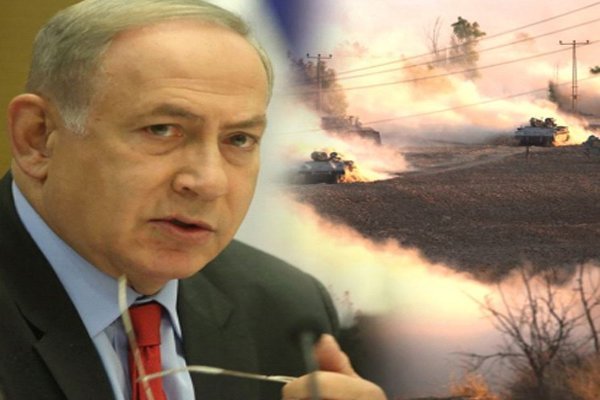
Gaza expects new developments, Netanyahu’s possible adventure

By Farzad Farhadi
TEHRAN - Following the short war between Israel defense forces (IDF) and Palestinian resistance group, the question is what is awaiting Gaza particularly after the defeat of the Zionists. 
Israeli Education Minister Naftali Bennett and Jewish Home leader, speaking at the Knesset in Al-Quds recently, has slammed Netanyahu saying, “Israel has stopped winning and Netanyahu won’t quit the government. Israel is facing a security confidence crisis, not a political crisis. There are enemies, but not an enemy that worries me. The source of the crisis is not its external enemies but is the bad internal situation. Israel has not won as that was the case in the Second Lebanon War (33-day war against Lebanon) in 2006, and it was frustration, disunity, and lack of spirit for Israel. Hamas and Hezbollah have become more courageous because they believe that we are afraid of confronting them. The Israeli ship is not going the right way.”
Tsizka Fogel, an Israeli general and the former commander of the southern Israeli army told Mario, “The Middle East is witnessing new enemies like Hezbollah in the north and Hamas in the south of Israel. Some 50 years ago, in June 1967, Israel fought with three Arab states and defeated them all, but today, we cannot win the battle against Hamas. Israel’s security condition today is an insult to the October 1973 war, because it seems that politicians do not care about the future of Israel and are engaged in political games, and even Benjamin Netanyahu's delivers an unacceptable illusion story to us.
Additionally, some other Zionist authorities have, too, spoken of defeat against Hamas. What remains to be seen is that after the recent grand victory of the Palestinian resistance group and failure of Israeli security operation when Hamas fired 500 rockets to Israeli settlements, what the future holds for the Gazans. Will there be another conflict as Netanyahu is going to bring back glory to its worn down military among the Zionists? 
A senior Hamas official doesn’t see the likelihood of that and in an interview with Raialyoum newspaper said, “A military attack and retaliation against the Gaza Strip is very unlikely because Israeli military commanders have realized that another war will take a heavy toll on them, be it emotionally, financially or human life.  However, it is likely that the Mossad tries to assassinate some of the Hamas's top officials by the US help, especially since the US has recently offered a $5 million reward for two Hezbollah officials, and one with Hamas who is Saleh al-Arouri, a prominent leader of Hamas.
The victory in Gaza has military and political importance and will strengthen Hamas’ position. This is while Netanyahu’s financial pressure on Gaza and Hamas has lost effect after the United Nations monitored the power plant in Gaza. In other words, after the victory of Hamas, the situation in Gaza will not be the same. 
The Zionist regime is quite disturbed as it is apparent from their media which are mirror of all the thoughts of decision-makers in Tel Aviv.
The Israeli media analyzed Netanyahu’s speech on Sunday, and some have suggested the possibility of a war without a frontier by Tel Aviv that is against Palestinian resistance group in Gaza, Hezbollah in Lebanon, Syria and other areas.  
Alex Fishman, an analyst at Yedioth Ahronoth newspaper said, “The longer it takes for Israel to have an election day, the more likelihood of a war between Israel and Palestinian resistance group. Netanyahu’s speech on Sunday was the most dangerous speeches he has ever delivered in recent years which may push him to a war to restore his face after their defeat in Gaza. Netanyahu’s objective is to postpone election by relying on his position as Israel’s prime minister. However, the election should be held very soon to prevent threats. It is very unlikely that Lt. General Gadi Eisenkot, commander of the Israeli army, whose term ends next December, and other Israeli generals agree to another war.”
However, others consider Netanyahu's speech an attempt to calm Israel’s internal affairs and repair his damaged reputation after his recent defeat. Among these analysts is Simeon Schiff, who in his article in Yedioth Ahronoth newspaper called Netanyahu's speech “a campaign speech”. 
«The editor of Haaretz newspaper Alfuf Ben resembled Netanyahu's speech to an election campaign speech, and said, “Any military adventure in the north or south will be as a major challenge for Netanyahu, which will end its term.”
However, some believe that the pressure that Netanyahu is struggling with may make him think of an adventure or a widespread anti-Gaza war in response to critics, especially since protests in occupied Palestine are still ongoing against Netanyahu.
The Palestinian resistance groups are prepared, especially since all the evidence show that Netanyahu may turn to a military confrontation in Gaza. Netanyahu will not do anything to rebuild his tarnished reputation. 
It is unlikely that Netanyahu takes a new adventure in Syria, but carrying out an operation in Gaza is by far simpler, as he pointed in his speech on Sunday. 
Fadi Abdulhadi, a Palestinian expert told the Palestine Alyoum, "Netanyahu's speeches carry two messages, one for the domestic front and one for the residents of Gaza. Netanyahu's words are dangerous and maybe pave the way for a war on Gaza.” 
Adnan Abu Amer, another Palestinian expert, in an interview with the Palestine Alyoum said, "Netanyahu's speech resembles a war speech."
Ahmad Al-Tayebi, a representative of the Arab Knesset, told the Palestine Alyoum, “It's not unlikely that Netanyahu would launch a new attack on Gaza to improve his condition.”
In any case, it is not unlikely that Netanyahu seeks a new adventure in Gaza.  

Friday, November 02, 2018

Israeli Apartheid, Palestinian Resistance

Apartheid thrives where the dominant power culture allows it to


By Nwabisa Sigaba

South Africa’s liberation struggle reveals an important fact: the vital role the youth played in fighting against apartheid. There are many other struggles in the world that resemble such youth activism. Young people took it upon themselves to fight for freedom and stand up against an overbearing system that sought to suppress their identity, usurp their land, and barricade them in the confines of Bantustan in an attempt to stifle their struggle for political and economic emancipation.
The 1976 uprisings in Soweto witnessed thousands of youth as young as 12 years old fighting military police with nothing but their pride in black consciousness, stones, and petrol bombs. They were fighting against a vicious system that denied their humanity; they were treated as non-beings. The rise of the Black Consciousness Movement (BCM) and the formation of South African Students Organization (SASO) raised the political consciousness of many students while others joined the wave of anti-apartheid sentiment within the student community.
On June 16, 1976, between 3,000 and 10,000 students mobilized by the South African Students Movement’s Action Committee supported by the BCM marched peacefully to protest against the government’s changed language policy on Afrikaans as a medium of instruction. The uprising took place at a time when liberation movements were banned throughout the country and South Africa was in the grip of apartheid. The Soweto protest started peacefully but it turned violent when the police opened fire on unarmed students. By the third day, the unrest had gained momentum and spread to townships around Soweto and other parts of the country.
The class of 1976 bravely took to the streets and overturned the simplistic notion that workers were the only essential force to challenge the apartheid regime, but that a formidable unity was capable of shaking the foundations of the power structure.
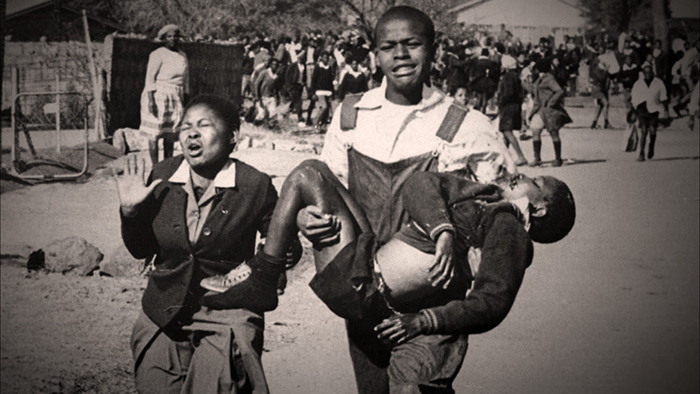
The official death toll was put at 23 but the real figure was higher than 200 because the incident triggered widespread violence throughout South Africa, which claimed more lives. The first student to be shot that fateful day was 15-year old Hastings Ndlovu. However, the killing in the same incident of 12-year-old Hector Pieterson gained the movement worldwide attention and evoked widespread condemnation of apartheid.
Let us focus on another locale where people face an equally ruthless system of apartheid, this time operating under the label of Zionism. Almost nine months have passed since the start of a massive wave of protests known as the “Great March of Return,” organized by the Palestinians in the Gaza Strip, protests that are very similar to those of the 1976 uprising in Soweto. The protests commenced on March 30, in commemoration of Land Day, which marks the events of 30 March 1976 (a few months before the Soweto Uprising in South Africa), when Israeli police shot and killed six Palestinians living in Israel as they protested against the Israeli regime’s expropriation of their land.
The scenes of the current conflict between the Palestinians and Zionist Israel are reminiscent of the 1976 Uprisings where we see insurgent youth in Gaza taking to the streets in a desperate attempt to regain their humanity and protect their land. Young people were among those leading the protests, demonstrating their frustration against the continued stifling of their hopes and dreams in their occupied land.
The Great March of Return protests made a rallying call for the right of return of Palestinian refugees, a right enshrined in international law, to their homelands and end to the siege imposed on the Gaza Strip by Israel and Egypt for over a decade. This blockade has caused suffering to the Palestinians living in Gaza as well as other parts of Palestine.
Against the backdrop of buildings and other students, the image captures Hector Pieterson, his sister, Antoinette Pieterson, and the fellow student, Mbuyisa Makhubo, who was carrying Pieterson, 6-16-1976. Many people today forget that among the very last nations to officially reject apartheid and sanction South Africa were the United States and Israel, who held out until it was a fait accompli. Before the Zionist-controlled media in both countries was finally forced to acknowledge Mandela as a liberator and freedom fighter, they had officially condemned him as a terrorist.
The living conditions of Palestinians are truly appalling and inhumane. The UN has reported that the Gaza Strip will be unlivable by 2020. The lives of Palestinians do not matter to Israelis and they are treated as a cheap trade-off by Israel for their continued apartheid rule. According to al-Mezan Center for Human Rights, 194 Palestinians have been killed and more than 18,000 people wounded in the Gaza Strip since the commencement of protests on March 30.
The protests escalated further when Israel demonstrated its utter disregard for the Palestinian people. Abandoning even the fiction of the peace process, Zionist Israel together with the US, decided to name Jerusalem as its capital. To mark this decision, Donald Trump announced relocation of the US embassy from Tel Aviv to Jerusalem.
This sparked outrage among the Palestinians ahead of the annual commemoration of Nakbah Day. This marks the day when Zionist terrorist gangs drove Palestinians out of their homes, villages and land as the Zionist entity was founded in the aftermath of the Second World War. The establishment of Israel in 1948 came about following a scandalous vote in the United Nations General Assembly in November 1947 when the Palestinians were not even consulted. Such was the arrogance of the colonial powers. When the Palestinians rejected such brazen theft of their land under the figleaf of the UN assembly vote, the Zionist marauders grabbed more land.
This coincided with the institutionalization of apartheid as a system of domination in the same year. The lives of native Palestinians and native Africans began to change for the worse in the years that followed, with Palestinians still experiencing the catastrophe of segregation. While there is much talk against discrimination globally, the Palestinians continue to suffer Zionist racism, brutality, and dehumanization in full view of the entire world.
Israel has continued its apartheid policy toward the Palestinian people. Zionist Israel continues to treat Palestinians like non-humans, caging them like animals, restricting and surveilling their movement in the land of their birth. Through mass demonstrations, the Palestinians are displaying their abhorrence and rejection of a system that seeks to obliterate their identity, heritage, and indeed their very existence as human beings. Much like the Soweto Uprising, Palestinians have used these demonstrations as a way of regaining their agency as citizens and inheritors of the Holy Land.
Palestinian resistance is indicative of the continued struggle against colonialism in the world and there are many historical struggles that resemble the fighting spirit of Palestinians from which all oppressed people draw inspiration. The apartheid regime in Israel, like the one before it in South Africa, must be dismantled. This can occur through a collective effort globally through such actions as Boycott, Divestment and Sanctions (BDS) as well as exposing the ugly face of Zionist colonialism. This colonial monstrosity must be dismantled so that all the inhabitants of Palestine — Muslims, Christians and Jews — can live as equal citizens under the law. The people of Palestine can and must be free.
Welcome to “modern India” with Delhi becoming the rape capital of the world and the country earning the reputation with the most HIV/AIDS cases in the world.
Nwabisa Sigaba is with the Media Review Network in Johannesburg.