Showing posts with label CENTCOM. Show all posts

Tuesday, December 03, 2019

American Exceptionalism Is Killing the Planet


The Many Abuses of Endless War

By William J. Astore


"Information Clearing House" - Ever since 2007, when I first started writing for TomDispatch, I’ve been arguing against America’s forever wars, whether in Afghanistan, Iraq, or elsewhere. Unfortunately, it’s no surprise that, despite my more than 60 articles, American blood is still being spilled in war after war across the Greater Middle East and Africa, even as foreign peoples pay a far higher price in lives lost and cities ruined. And I keep asking myself: Why, in this century, is the distinctive feature of America's wars that they never end? Why do our leaders persist in such repetitive folly and the seemingly eternal disasters that go with it?
Sadly, there isn’t just one obvious reason for this generational debacle. If there were, we could focus on it, tackle it, and perhaps even fix it. But no such luck.
So why do America’s disastrous wars persist? I can think of many reasons, some obvious and easy to understand, like the endless pursuit of profit through weapons sales for those very wars, and some more subtle but no less significant, like a deep-seated conviction in Washington that a willingness to wage war is a sign of national toughness and seriousness. Before I go on, though, here’s another distinctive aspect of our forever-war moment: Have you noticed that peace is no longer even a topic in America today? The very word, once at least part of the rhetoric of Washington politicians, has essentially dropped out of use entirely. Consider the current crop of Democratic candidates for president. One, Congresswoman Tulsi Gabbard, wants to end regime-change wars, but is otherwise a self-professed hawk on the subject of the war on terror. Another, Senator Bernie Sanders, vows to end “endless wars” but is careful to express strong support for Israel and the ultra-expensive F-35 fighter jet. The other dozen or so tend to make vague sounds about cutting defense spending or gradually withdrawing U.S. troops from various wars, but none of them even consider openly speaking of peace. And the Republicans? While President Trump may talk of ending wars, since his inauguration he’s sent more troops to Afghanistan and into the Middle East, while greatly expanding drone and other air strikes, something about which he openly boasts.
War, in other words, is our new normal, America’s default position on global affairs, and peace, some ancient, long-faded dream. And when your default position is war, whether against the Taliban, ISIS, “terror” more generally, or possibly even Iran or Russia or China, is it any surprise that war is what you get? When you garrison the world with an unprecedented 800 or so military bases, when you configure your armed forces for what’s called power projection, when you divide the globe -- the total planet -- into areas of dominance (with acronyms like CENTCOM, AFRICOM, and SOUTHCOM) commanded by four-star generals and admirals, when you spend more on your military than the next seven countries combined, when you insist on modernizing a nuclear arsenal (to the tune of perhaps $1.7 trillion) already quite capable of ending all life on this and several other planets, what can you expect but a reality of endless war?

Think of this as the new American exceptionalism. In Washington, war is now the predictable (and even desirable) way of life, while peace is the unpredictable (and unwise) path to follow. In this context, the U.S. must continue to be the most powerful nation in the world by a country mile in all death-dealing realms and its wars must be fought, generation after generation, even when victory is never in sight. And if that isn’t an “exceptional” belief system, what is?
If we’re ever to put an end to our country’s endless twenty-first-century wars, that mindset will have to be changed. But to do that, we would first have to recognize and confront war’s many uses in American life and culture.
War, Its Uses (and Abuses)
A partial list of war’s many uses might go something like this: war is profitable, most notably for America’s vast military-industrial complex; war is sold as being necessary for America’s safety, especially to prevent terrorist attacks; and for many Americans, war is seen as a measure of national fitness and worthiness, a reminder that “freedom isn’t free.” In our politics today, it’s far better to be seen as strong and wrong than meek and right.
As the title of a book by former war reporter Chris Hedges so aptly put it, war is a force that gives us meaning. And let’s face it, a significant part of America’s meaning in this century has involved pride in having the toughest military on the planet, even as trillions of tax dollars went into a misguided attempt to maintain bragging rights to being the world’s sole superpower.
And keep in mind as well that, among other things, never-ending war weakens democracy while strengthening authoritarian tendencies in politics and society. In an age of gaping inequality, using up the country’s resources in such profligate and destructive ways offers a striking exercise in consumption that profits the few at the expense of the many.
In other words, for a select few, war pays dividends in ways that peace doesn’t. In a nutshell, or perhaps an artillery shell, war is anti-democratic, anti-progressive, anti-intellectual, and anti-human. Yet, as we know, history makes heroes out of its participants and celebrates mass murderers like Napoleon as “great captains.”
What the United States needs today is a new strategy of containment -- not against communist expansion, as in the Cold War, but against war itself. What’s stopping us from containing war? You might say that, in some sense, we’ve grown addicted to it, which is true enough, but here are five additional reasons for war’s enduring presence in American life:
  • The delusional idea that Americans are, by nature, winners and that our wars are therefore winnable: No American leader wants to be labeled a "loser." Meanwhile, such dubious conflicts -- see: the Afghan War, now in its 18th year, with several more years, or even generations, to go -- continue to be treated by the military as if they were indeed winnable, even though they visibly aren’t. No president, Republican or Democrat, not even Donald J. Trump, despite his promises that American soldiers will be coming home from such fiascos, has successfully resisted the Pentagon’s siren call for patience (and for yet more trillions of dollars) in the cause of ultimate victory, however poorly defined, farfetched, or far-off.

     
  • American society’s almost complete isolation from war's deadly effects: We’re not being droned (yet). Our cities are not yet lying in ruins (though they’re certainly suffering from a lack of funding, as is our most essential infrastructure, thanks in part to the cost of those overseas wars). It’s nonetheless remarkable how little attention, either in the media or elsewhere, this country’s never-ending war-making gets here.

     
  • Unnecessary and sweeping secrecy: How can you resist what you essentially don’t know about? Learning its lesson from the Vietnam War, the Pentagon now classifies (in plain speak: covers up) the worst aspects of its disastrous wars. This isn’t because the enemy could exploit such details -- the enemy already knows! -- but because the American people might be roused to something like anger and action by it. Principled whistleblowers like Chelsea Manning have been imprisoned or otherwise dismissed or, in the case of Edward Snowden, pursued and indicted for sharing honest details about the calamitous Iraq War and America’s invasive and intrusive surveillance state. In the process, a clear message of intimidation has been sent to other would-be truth-tellers.

     
  • An unrepresentative government: Long ago, of course, Congress ceded to the presidency most of its constitutional powers when it comes to making war. Still, despite recent attempts to end America’s arms-dealing role in the genocidal Saudi war in Yemen (overridden by Donald Trump’s veto power), America’s duly elected representatives generally don’t represent the people when it comes to this country’s disastrous wars. They are, to put it bluntly, largely captives of (and sometimes on leaving politics quite literally go to work for) the military-industrial complex. As long as money is speech (thank you, Supreme Court!), the weapons makers are always likely to be able to shout louder in Congress than you and I ever will.

     
  • America’s persistent empathy gap. Despite our size, we are a remarkably insular nation and suffer from a serious empathy gap when it comes to understanding foreign cultures and peoples or what we’re actually doing to them. Even our globetrotting troops, when not fighting and killing foreigners in battle, often stay on vast bases, referred to in the military as “Little Americas,” complete with familiar stores, fast food, you name it. Wherever we go, there we are, eating our big burgers, driving our big trucks, wielding our big guns, and dropping our very big bombs. But what those bombs do, whom they hurt or kill, whom they displace from their homes and lives, these are things that Americans turn out to care remarkably little about.
All this puts me sadly in mind of a song popular in my youth, a time when Cat Stevens sang of a “peace train” that was “soundin’ louder” in America. Today, that peace train’s been derailed and replaced by an armed and armored one eternally prepared for perpetual war -- and that train is indeed soundin’ louder to the great peril of us all.
War on Spaceship Earth
Here’s the rub, though: even the Pentagon knows that our most serious enemy is climate change, not China or Russia or terror, though in the age of Donald Trump and his administration of arsonists its officials can’t express themselves on the subject as openly as they otherwise might. Assuming we don’t annihilate ourselves with nuclear weapons first, that means our real enemy is the endless war we’re waging against Planet Earth.
The U.S. military is also a major consumer of fossil fuels and therefore a significant driver of climate change. Meanwhile, the Pentagon, like any enormously powerful system, only wants to grow more so, but what’s welfare for the military brass isn’t wellness for the planet.
There is, unfortunately, only one Planet Earth, or Spaceship Earth, if you prefer, since we’re all traveling through our galaxy on it. Thought about a certain way, we’re its crewmembers, yet instead of cooperating effectively as its stewards, we seem determined to fight one another. If a house divided against itself cannot stand, as Abraham Lincoln pointed out so long ago, surely a spaceship with a disputatious and self-destructive crew is not likely to survive, no less thrive.
In other words, in waging endless war, Americans are also, in effect, mutinying against the planet. In the process, we are spoiling the last, best hope of earth: a concerted and pacific effort to meet the shared challenges of a rapidly warming and changing planet.
Spaceship Earth should not be allowed to remain Warship Earth as well, not when the existence of significant parts of humanity is already becoming ever more precarious. Think of us as suffering from a coolant leak, causing cabin temperatures to rise even as food and other resources dwindle. Under the circumstances, what’s the best strategy for survival: killing each other while ignoring the leak or banding together to fix an increasingly compromised ship?
Unfortunately, for America’s leaders, the real “fixes” remain global military and resource domination, even as those resources continue to shrink on an ever-more fragile globe. And as we’ve seen recently, the resource part of that fix breeds its own madness, as in President Trump’s recently stated desire to keep U.S. troops in Syria to steal that country’s oil resources, though its wells are largely wrecked (thanks in significant part to American bombing) and even when repaired would produce only a miniscule percentage of the world’s petroleum.
If America’s wars in Afghanistan, Iraq, Libya, Syria, Somalia, and Yemen prove anything, it’s that every war scars our planet -- and hardens our hearts. Every war makes us less human as well as less humane. Every war wastes resources when these are increasingly at a premium. Every war is a distraction from higher needs and a better life.
Despite all of war’s uses and abuses, its allures and temptations, it's time that we Americans showed some self-mastery (as well as decency) by putting a stop to the mayhem. Few enough of us experience “our” wars firsthand and that’s precisely why some idealize their purpose and idolize their practitioners. But war is a bloody, murderous mess and those practitioners, when not killed or wounded, are marred for life because war functionally makes everyone involved into a murderer.
We need to stop idealizing war and idolizing its so-called warriors. At stake is nothing less than the future of humanity and the viability of life, as we know it, on Spaceship Earth.


William Astore, a TomDispatch regular, is a retired lieutenant colonel (USAF) and history professor.

Tuesday, April 23, 2019

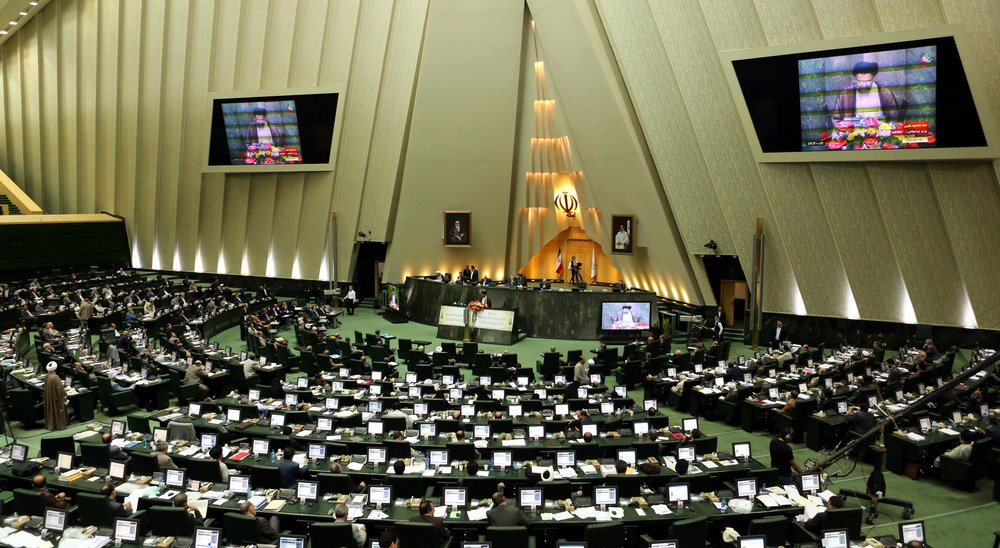
Iranian Parliament declares CENTCOM as terrorist

TEHRAN – In a retaliatory move on Tuesday, the Iranian Parliament voted to put the U.S. Central Command (CENTCOM) in West Asia on the list of terrorist groups.
According to the parliamentary ratification, the forces and organizations under the authority of the CENTCOM are also considered terrorist.
Accordingly, any aid to these forces is also considered cooperation with terrorism.
The bill was approved with 173 votes in favor, four against, and 11 abstentions.
The branding of CENTCOM as a terrorist organization came after the United States designated the Islamic Revolution Guards Corps (IRGC) as a foreign terrorist organization on April 8.
On the same day that the U.S. took such a move against the IRGC, Iran’s Supreme National Security Council (SNSC) declared CENTCOM as terrorist and the U.S. government as sponsor of terrorism.

Monday, April 22, 2019

A ridiculous war – How the US military feeds at the terror trough

by Tom Engelhardt

Without the least doubt, the United States of America is the godfather of terrorism worldwide, irrespective of the administrations that march in and out of the White House – whether Republicans or Democrats.
Stay with us for a well-researched article in this regard for the ‘TomDispatch’ site by Tom Engelhardt, co-founder of the American Empire Project and the author of “A History of the Cold War”, titled: “A Ridiculous War – How the US Military Feeds at the Terror Trough.”
Here’s a statement it might be hard to disagree with: American war is off the charts.
Still, I’d like to explain – but I’m nervous about doing so. I know perfectly well that the next word I plan to write will send most of you tumbling elsewhere in a universe in which "news" is the latest grotesque mass shooting; the craziest tweet from you-know-who; celebrities marching into court over college-admissions scandals; or even a boy, missing for years, who suddenly turns up only to morph into a 23-year-old impostor with a criminal record.
How can America’s wars in distant lands compete with that? Which is why I just can’t bring myself to write the next word. So promise me that, after you listen to or read it, you’ll hang in there for just a minute and give me a chance to explain.
Okay, here it goes. We start with Somalia. A country in the horn of Africa, it once glued American eyeballs, but that was so last century, right? We mean, there was that bestselling book and that hit Hollywood movie directed by Ridley Scott (Blade Runner, Alien!) about the disaster early in Bill Clinton’s presidency that came to be known as Black Hawk Down (aka the Battle of Mogadishu).
In the age of Donald Trump, wasn’t that a million presidencies ago? Honestly, can you even tell me anymore what in the world it was all about? I couldn’t have, not without looking it up again. A warlord, starvation, US intervention, 18 dead American soldiers (and hundreds of dead Somalis, but that hardly mattered) in a country that was shattering. President Clinton did, however, pull out those troops and end the disastrous mission – and that was that, right? I mean, lessons learned. Somalia? Africa? What in the world did it all have to do with the Americans? So Washington washed its hands of the whole thing.
And now, on a planet of outrageous tweets and murderously angry white men, you probably didn’t even notice, but more than two years into the era of Donald Trump, a quarter-century after that incident, American air strikes in… yep, Somalia, are precipitously on the rise. Last year’s 47 strikes, aimed at the leaders and fighters of ash-Shabaab, a terror outfit, more than tripled the ones carried out by the Obama administration in 2016 (themselves a modest increase from previous years). And in 2019, they’re already on pace to double again, while Somali civilians – not that anyone (other than Somali civilians) notices or cares – are dying in significant and rising numbers. And with 500 troops back on the ground there and Pentagon estimates that they will remain for at least another seven years, the US military is increasingly Somalia-bound, Congress hasn’t uttered a peep on the subject, and few in this country are paying the slightest attention.
So consider this a simple fact of the never-ending global war on so-called terror. The US military just can’t get enough of Somalia. And if that isn’t off the charts, what is? Maybe it’s even worth a future book (with a very small print run) called not ‘Black Hawk Down II’ but ‘US Down Forever and a Day’.
And now that I’ve started on the subject, when it comes to the US military, it’s not faintly just Somalia. It’s all of Africa. After all, this country’s military uniquely has a continent-wide Africa Command (aka AFRICOM), founded in 2007. As Nick Turse has often written for TomDispatch, that command now has its troops, thousands of them, its planes, and other equipment spread across the continent, north to south, east to west – air bases, drone bases, garrisons, outposts, staging areas, you name it. Meanwhile, AFRICOM’s outgoing commanding general, Thomas Waldhauser, only recently told Congress why it’s bound to be a forever outfit – because, shades of the Cold War, the Russians are coming!
And honestly, 600-odd words in, this wasn’t meant to be a piece about either Somalia or Africa. It was meant to be about those US wars being off the charts, about how the Pentagon now feeds eternally at the terror trough, ash-Shabaab being only a tiny part of the slop it regularly digests. So let me change the subject to something a little more appealingly – to quote a well-known authority – "ridiculous" when it comes to American war.
Maybe you won’t be surprised to learn that what I have in mind is the war in Afghanistan, another of Washington’s off-the-charts affairs. It might even qualify as the original one (if you don’t count Vietnam, which would take you back to the Neolithic Age of the US military’s infinite wars). Lest you think I only mean the war that began in Afghanistan after the incident of 9/11/2001 in New York, think again. I’m talking about the American war in that distant land that started in 1979, the decade-long conflict in which the US supported extremists (including a young Saudi named Osama bin Laden) – they were our guys, then – to successfully force the Red Army out of Afghanistan.
That was in 1989, 30 years ago, and a triumphant Washington promptly took more than a decade-long holiday, while a brutal set of civil wars continued in already devastated Afghanistan and the Taliban rose to power in most of the country. Then, as in Somalia, having learned their lesson (the wrong one, of course), George W. Bush, Dick Cheney, and crew decided after 9/11 to emulate… well, the Red Army and occupy the Afghan capital, Kabul – even though the Soviet Union had imploded a decade earlier. For the only great power left on the planet, facing a lightly armed extremist group, what could possibly go wrong?
Seventeen and a half years later, Congress has rarely focused on the war (not) to end all wars and there are still 14,000 American troops (and the usual set of private contractors) there, along with enough US air power to… well, blow up a lot but not change anything decisively. Of course, the Taliban was long ago supposedly finished off in a hand basket…
…Whoops!  The Taliban in 2019 is stronger and in control of more territory than at any moment since it was driven from power in November 2001. Staggering billions of American taxpayer dollars have gone into the "reconstruction" of Afghanistan to little effect (while the domestic infrastructure of the United States has begun to crumble without significant new federal investment). Meanwhile, the security forces of the American-backed Afghan government have been taking casualties at a reportedly unsustainable rate.
After not paying much attention to all of this for something like a decade and a half, the American people did, however inadvertently, vote into the White House a presidential candidate who had long had dissident thoughts about the Afghan War. Typical was this 2012 tweet of his: "Why are we continuing to train these Afghanis who then shoot our soldiers in the back? Afghanistan is a complete waste. Time to come home!"
And it’s not a set of thoughts Donald Trump tossed overboard once he entered the Oval Office either. Only the other day, he ludicrously praised the "great strides in Afghanistan" that the US military and NATO are(n’t) making in an awkward meeting with that alliance’s secretary general (in which he also managed to claim that his father – distinctly from the Bronx, New York – had been born and raised in Germany). He then doubled back and termed the Afghan War "ridiculous" and "unfortunate." And last December, soon after he announced that he was pulling all US troops out of Syria (on which more in a moment), he essentially demanded that the US military cut its forces in Afghanistan from 14,000 to 7,000 as part of its route (not rout!) out. That number was assumedly meant to include the 3,000 troops he had been persuaded to add to US forces there in his first year in office.
As it happened, however, the Pentagon had its own forward-looking ideas on how to "withdraw" from Afghanistan. Having already turned that war into the longest in American history, the high command was now evidently vying for another awe-inspiring record: the longest withdrawal of American forces from a war zone ever – a three-to-five-year span of time with perhaps an initial cut of 7,000 somewhere in the months to come (though I wouldn’t hold my breath on the subject). In that way, they were working to produce an American war of at least 21 years, while perhaps also hoping to outlast this president and get one willing to commit to forever war forever.
Admittedly, the Trump administration has also launched peace talks with the Taliban and who knows where they might lead sooner or later. Still, when it comes to the "ridiculous" war the president continues to belittle, give credit where it’s due. It remains robustly, even disastrously, ongoing and off the charts.
And none of that compares to Trump’s Syrian debacle. In December, the US president publicly overruled his advisers and ordered that the 2,000 US troops stationed in that country be withdrawn within 30 days. "We have won against Daesh," he declared in a video posted on Twitter. "Our boys, our young women, our men – they’re all coming back, and they’re coming back now."
I think of what followed as "the Trump surge," the third of the era. The first, of course, was General David Petraeus’s 2007 surge into Iraq with more than 20,000 American troops. Its aim: to turn the disastrous occupation of that country that followed George W. Bush’s May 2003 "mission accomplished" moment into a raging success. Petraeus, in fact, made his reputation on that turn-around of a surge… until, of course, it wasn’t, and by then he had moved on.
The second surge was President Obama’s decision to send more than 30,000 new US troops into Afghanistan in 2009 – and, of course, you know how that turned out.
Now, appropriately enough, we’ve had an upside down, inside-out surge in Syria. Honestly, it could have been a Saturday Night Live routine, complete with Alec Baldwin.
In response to Trump’s withdrawal decision, Secretary of Defense James Mattis promptly resigned and was almost instantly lauded as an all-American hero by a Congress and a media in an uproar over the decision. We’re talking, of course, about "Mad Dog" Mattis, the former Marine general who so classically said of fighting the Taliban, "It’s a hell of a hoot. It’s fun to shoot some people. I’ll be right up there with you. I like brawling."
And then, in February, as the pressure on Trump ramped up, there was the first partial retreat. Think of it as the beginning of a withdrawal from the withdrawal.  The news leaked out that, in a "concession" to Pentagon officials, 200 US troops would be left in Syria "for a period of time." It only took another day for that number to rise to 400. Then, in mid-March, the Wall Street Journal reported that, in reality, 1,000 troops would be left in that country, a figure promptly and definitively denied ("factually incorrect") by no less a personage than the chairman of the Joint Chiefs of Staff, General Joseph Dunford. By month’s end, however, that factually incorrect figure had been confirmed – 1,000 US personnel would indeed remain indefinitely, or at least until the fall of 2020.
Where the Trump surge will go from here we simply don’t know as the subject has largely dropped from the news about the American president from Riyadh?
Meanwhile, don’t forget the war that, unlike Afghanistan and Syria, Donald Trump may not be able to imagine ending, the only one on which, since 2001, Congress has taken a stand.
I’m thinking, of course, about the grim US-backed Saudi and Emirati war in Yemen. As April began, Congress passed a resolution calling on the president to "remove United States Armed Forces from hostilities in or affecting" Yemen within 30 days. (Of course, you already know how well such 30-day deadlines work when it comes to America’s wars.) In the single most obvious situation in which a war (or at least American involvement in it) might possibly be ended, in which the president with the help of Congress might actually override the national security state’s urge to fight on anywhere and everywhere, President Trump may sign the second veto of his term in office and successfully nix the congressional resolution.
And if so, who could be surprised. It’s obviously the wrong off-the-charts war for the president from Riyadh to end – or have I, like the president himself, gotten confused about which Trump was born where?
Oh yes, and talking about learning one’s lessons, as well as truly going off the charts…
As the 2020 elections approach, watch out. There’s one possible American war still to come in the West Asia. I’m thinking, of course, about a potential war with Iran (the one the Bush administration’s top officials wished for before they bogged down so disastrously in Iraq and Afghanistan). President Trump’s foreign-policy team – National Security Advisor John Bolton (a relic of the Bush years) and Secretary of State Mike Pompeo – are visibly dying (if that’s the right word) for just such a war and the president who ripped up the Obama administration’s Iran nuclear deal, recently labelled the Islamic Revolution’s Guards Corps (IRGC) a terror group, and has been threatening Iran ever since, seems all too open to it as well.
So, for the last few of us still here thinking about American wars, I would say that if it comes to off the charts, it’s possible that you haven’t seen nothing yet – It will be suicidal and self-destructive for the US with the CENTCOM, which Iran in retaliation has designated as ‘terrorist’ driven to the last man out of the whole region of West Asia, North Africa and Afghanistan.

Thursday, April 11, 2019

Iran’s IRGC Leading Anti-Terror Force in Region: US Analyst

TEHRAN (Tasnim) – An American political commentator described US President Donald Trump’s move to blacklist the Islamic Revolution Guards Corps (IRGC) as “insane” and “self-defeating”, saying that the force is the “leading regional force fighting against the actual terrorists”.

“Iran’s IRGC ... does not intentionally or systematically target civilians. On the contrary, it is the leading regional force fighting against the actual terrorists, the groups that really do intentionally and systematically target civilians, namely, Israel and Daesh. So to be accurate, the (US) State Department should change its statement and designate the IRGC as the world’s leading anti-terrorist group,” Kevin Barrett told Tasnim in an interview.
The following is the full text of the interview.
Tasnim: The Trump administration on Monday labeled IRGC as a terrorist group and said, “This unprecedented step, led by the Department of State, recognizes the reality that Iran is not only a State Sponsor of Terrorism, but that the IRGC actively participates in, finances, and promotes terrorism as a tool of statecraft”. What is your take on the move?
Barrett: Reckless, absurd, insane, self-defeating…there are no words to describe it. Undoubtedly, all of the actual Iran experts in the State Department opposed the move. But Trump’s political appointees, supported by however many Israeli agents have infiltrated the State Department—presumably quite a few of them—were apparently able to override truth, logic, and the US national interest and hand another gift to Trump’s boss Netanyahu.
The word terrorism once actually meant something: “A military tactic consisting of intentionally targeting civilians to spread fear.” But since the neocon-Zionist orchestrated false flag event of September 11 2001, the word terrorism has been systematically abused by the Zionist-dominated Western media. Today, terrorism means whatever the Zionists want it to mean. It is an empty slur used against everyone the Zionists perceive as an enemy.
And what makes the situation so Orwellian is that the Zionists are themselves the world’s worst terrorists. The book State of Terror by Thomas Suarez makes it clear that the settler colonial project known as “Israel” was created by terrorism and persists by terrorism. The entire Zionist project is one ongoing long-term systematic terror attack on a civilian population. And the Zionists are masters of false flag terror against their own people and their own supposed allies as well.
Today the Zionists routinely and as a matter of policy drop bombs and white phosphorous on schools, hospitals, ambulances, UN installations, and other civilian targets. Their snipers routinely and as a matter of de facto policy lure children within reach of their guns and murder them for sport, as Chris Hedges describes in his article "Gaza Diary.” 
Iran’s IRGC, by contrast, does not intentionally or systematically target civilians. On the contrary, it is the leading regional force fighting against the actual terrorists, the groups that really do intentionally and systematically target civilians, namely, Israel and Daesh. So to be accurate, the State Department should change its statement and designate the IRGC as the world’s leading anti-terrorist group.
Tasnim: Later in the day, Iran’s Supreme National Security Council in turn designated US forces in West Asia, known as the United States Central Command (CENTCOM), as a terrorist organization. What are your thoughts on this?
Barrett: CENTCOM is not quite as obviously a terrorist organization as Israel and DAESH are. Israel systematically assaults civilians in pursuit of its policy of ethnic cleansing. Massacring and terrorizing civilians is its main mission. Likewise, DAESH systematically assaults and terrorizes civilians. These are “pure” terrorist groups.
CENTCOM’s official policy is to try to avoid or at least limit civilian casualties, which it euphemistically calls “collateral damage.” But because its main mission is to force entire peoples into subjugation to the US empire, it inevitably finds itself fighting civilians and guerrilla forces that enjoy mass support among civilians. So it ends up murdering far more civilians and becoming a bigger terrorist organization, than even the born-and-bred terrorists like Israel and DAESH.
According to Chomsky and Vltcheck’s On Western Terrorism, the US has murdered roughly 60 million people in military and CIA invasions and interventions since World War II. And according to Australian scientist Dr. Gideon Polya, the US has murdered 27 million people in predominantly Muslim countries since the 9/11 false flag event, which was a carefully designed psychological operation whose purpose was to trigger that very wave of mass murder.
So despite CENTCOM’s protestations that it doesn’t “intentionally” target civilians, it could accurately be called the most murderous and destructive terrorist group on earth.
Tasnim: As you know, Trump announced the decision on the eve of Israel’s election. Netanyahu took credit for the move and said, “Thank you, my dear friend, President Donald Trump,” Netanyahu tweeted in Hebrew, “for answering another one of my important requests”. What do you think?
Barrett: For once in his life, Netanyahu is telling the truth. He really does own Donald Trump, whose entire career has consisted of serving as a front man for Jewish-dominated organized crime.
Prior to the 1990s, organized crime in the US and much of the Western world was controlled by the “boss of bosses,” the banker to the mob, Meyer Lansky. The young Donald Trump was anointed in the 1960s by Lansky’s New York lieutenant Roy Cohn and set up in the money laundering business. (Trump’s hotels and casinos are primarily devoted to money laundering, not hospitality or gambling.)
In the 1990s the Jewish-Russian mob took over America including most of what had previously been Lansky’s domain. The best book on this is Red Mafia by Robert Friedman, a brave Jewish investigative journalist who was murdered by the people he exposed. The “Russian” (really Zionist-Israeli) mob’s headquarters is the top section of Trump Tower.
Trump’s kosher nostra handler is his son-in-law Jared Kushner. Trump’s main political/financial backer is Sheldon Adelson, the Las Vegas Godfather who is very close to Netanyahu.
“Russia-gate” was in reality a smokescreen designed to hide Israel-gate. Michael Flynn’s real crime was to act as an agent of Israel, not Russia, as he tried to undermine Obama’s Middle East policy prior to Trump taking office. In this, Flynn was obviously acting under orders from Trump and his Zionist handler, Kushner.
So yes, Netanyahu is right about his total control of Donald Trump. But if the Israeli and Jewish people think that is good for them in the long term, they are very sadly mistaken. As more and more people in the US and around the world learn the truth about these matters, popular anger is rising. Sooner or later, there will be hell to pay.

Iran well respond by naming CENTCOM as terrorist organization: Askari

By Javad Heirannia
TEHRAN – Professor Hossein Askari, an expert on Saudi Arabia who also teaches international business at the George Washington University, believes that “Iran might well respond by naming the U.S. Central Command as a terrorist organization operating in the Persian Gulf and in the greater Middle East, the Navy Seals, the CIA and on and on.”
“To the Trump administration the word terror is fungible. If Saudi Arabia commits an act of indisputable terror, Washington is not quite sure who is behind that particular act of terror but though they say they don’t know who did it, they are sure it is Iran or some other ‘Islamists.’,” Hossein Askari, who served as special advisor to Saudi finance minister, tells the Tehran Times.
Following is the text of the interview:
Q: What is the U.S. basis for declaring the IRGC a terrorist organization? Do you agree with it?
A: The reason is unclear to me. I think it is because Netanyahu and Mohammad bin Salman (MBS) have an obsession with Iran and they see the IRGC as a potent force. That is the real reason. These two along with Kushner are hoping to engineer regime change in Iran by inciting a war that draws in the United States. I know it sounds farfetched but to me this is what’s behind all this.  
How they justify it in public is different. They argue that the IRGC is aligned with Hezbollah which they declare a terrorist entity say that the IRGC has killed American soldiers in Iraq. Yet when the U.S. or its allies, Israel and Saudi Arabia, kill innocent people, they call it self-defense.
As an aside, I should point out that Trump was okay with the IRGC when he was doing business with IRGC’s associates, as reported in Vanity Fair. Now, managed by the triumvirate of Kushner, Netanyahu and MBS, Trump is taking impetuous steps, which could endanger the Middle East and the world.
Q: Do you consider Hezbollah a terrorist organization?
A: Absolutely not. They are a legitimate part of the Lebanese government. They have defended Lebanon against Israel. They provide social services for the poor and needy. Yes, they have defended Assad in Syria. I don’t personally like the Assad regime but they were invited into Syria by its legitimate government. Others engage in covert operations and kill innocent people, and not invited by a legitimate government, but they are not called terrorists. This is all a game of double standards and smoking mirrors.
Q: What about Saudi Arabia’s killing of Khashoggi in Turkey? Wasn’t this an act of terror?
A: Absolutely. But to the Trump administration the word terror is fungible. If Saudi Arabia commits an act of indisputable terror, Washington is not quite sure who is behind that particular act of terror but though they say they don’t know who did it, they are sure it is Iran or some other ‘Islamists.’ This is a charade. How can America get Muslim support around the world when it supports such horrific acts and rulers who torture and kill their own people and expect to be believed when it accuses the IRGC and by association Hezbollah and its leader Hassan Nasrallah, possibly the most admired Muslim leader in the Muslim world?
Q: So if Khashoggi’s killing was an act of terror, is the U.S. a party to terror for protecting MBS and his murderous henchmen?
A: You mean guilt by association? To me the U.S. is rapidly losing all credibility in the Middle East. Yes, of course if the U.S. supports MBS and the Al-Sauds Washington must take some responsibility for their horrendous policies.
Q: Can Iran categorize many U.S. entities as sponsors of terror—uninvited covert operations, drone attacks, support of Saudi terrorist acts in Yemen and elsewhere and so on?
A: I believe that now that the U.S. has taken the step of naming the IRGC a terrorist outfit, then Iran can name many branches of the U.S. armed forces that conduct covert operations, drone attacks and kill innocent civilians as terrorist organizations and deal with them as the U.S. deals with the IRGC. Iran might well respond by naming the U.S. Central Command as a terrorist organization operating in the Persian Gulf and in the greater Middle East, the Navy Seals, the CIA and on and on.
Q: Can Iran attack U.S. entities it considers acting in terror?
A: If the U.S. adopts such a policy, then Iran has every right to do the same and reciprocate.
Q: Where was the U.S when Iran was invaded by Iraq? 
A: The U.S. said and did nothing when Saddam Hussain invaded Iran. The U.S. in fact made sure that the United Nations did nothing. Even worse, the U.S. and Saudi Arabia led the global effort to isolate Iran.
Q: Who supplied Iraq with internationally banned chemical weapons? Was this an act of terror?
A: This was a truly shameful episode in U.S. and Western history. U.S. and Europeans facilitated the transfer of internationally outlawed chemical weapons to Saddam Hussain as the best way he could defend Iraq after the Iranians pushed his forces back. The number of Iranians gassed, with thousands killed and even more severely disabled and relegated to oxygen tanks, is a constant reminder of the hypocrisy in international rule of law and the pretensions of the sanctimonious Western powers.
Q: Who defended Iran?
A: The IRGC. It was the IRGC that kept Iran together in the face of foreign onslaught. They are an integral part of the Iranian armed forces. Iranians respect what they did during the war. If you call them terrorists, then the armies of the greater powers are super terrorists.
Q: How could all this affect the U.S. position and its future in the Middle East?
A: I think that the Trump administration has sowed the seeds for the expulsion of the U.S. from the Middle East by continuing to back illegitimate Muslim dictators and going all in with Israel to rob Arabs of their political and human rights and in turn their dignity. Everyone has a limit. Arabs will soon reach that limit if Netanyahu is reelected, if Israel continues with its declaration of sovereignty over the Golan Heights, if it annexes and declares sovereignty over the West Bank, takes over the Temple Mount and annexes the Haram esh-Sharif and the rest of the Al Aqsa compound. In this eventuality, the Muslim World, two billion strong, will turn its anger against Israel, the U.S. and against their rulers who serve Western interests. Needless to say, the U.S. is no longer seen as an honest broker in the Middle East.
Eventually Muslims will resist the oppression they face. There is the Prophetic saying that on the Day of Reckoning the oppressor, the oppressed, and the person(s) who stood by and observed the oppression will be called upon to answer: the oppressor for oppression, the oppressed for not resisting the oppression, and the bystander for not assisting the oppressed.
Q: Is there anything you would like to add?
A: Yes. It is indeed ironic that the Persian King, Cyrus the Great, saved the Jews from extinction, and now Netanyahu wants to do all he can to destroy the Persians. Mr. Netanyahu should put on his thinking cap and recall an evident fact. Iran or Persia will be where it is long after he has departed this world. He should study the tragedies that Jews have faced throughout their history and not initiate something that Jews may regret. He and Israel should be aware of the dangers of hubris.