
By Ivan Kesic

For more than two decades, Iran’s expansive oil, gas, and petrochemical sectors operated under a significant technological constraint, relying entirely on imported systems for advanced gas separation. This dependence was not merely an economic liability; it imposed a structural limit on the nation’s industrial aspirations. That chapter has now decisively closed.
Through sustained effort by domestic knowledge-based enterprises, Iran has achieved full command of gas separation membrane technology, encompassing design, manufacturing, and deployment of complete systems that match the performance of established Western and Asian leaders.
This achievement, led by Radman Naft & Gas Hirbod, goes far beyond simple import substitution. It marks Iran’s emergence as a credible technological competitor alongside major American, German, and Chinese firms in a strategically critical field at the heart of modern energy efficiency and environmental compliance.
The ramifications are far-reaching: significant foreign exchange savings, measurable reductions in industrial emissions, and a compelling demonstration of how long-term investment in indigenous innovation can recalibrate a nation’s position within the global energy value chain.
From reliance to sovereignty: Closing a two-decade import era
Iran’s energy sector has long been defined by abundant natural resources, yet paradoxically constrained by technological dependence in key processing domains. Gas separation membranes epitomized this contradiction.
For over twenty years, these advanced systems, vital for natural gas purification, hydrocarbon recovery, and regulatory compliance, were sourced exclusively from foreign suppliers. Every element, from membrane materials and engineered modules to installation expertise and commissioning know-how, was imported.
This dependency exacted a steep price: sustained outflows of foreign currency, delays in maintenance and capacity expansion, and heightened exposure of critical infrastructure to geopolitical risk and supply chain disruption.
The localization of this technology, therefore, represents far more than an industrial success; it constitutes a strategic realignment. By internalizing the entire value chain, from polymer science and membrane fabrication to module assembly and full-system integration, Iran has converted a long-standing vulnerability into a durable foundation of domestic capability and industrial resilience.
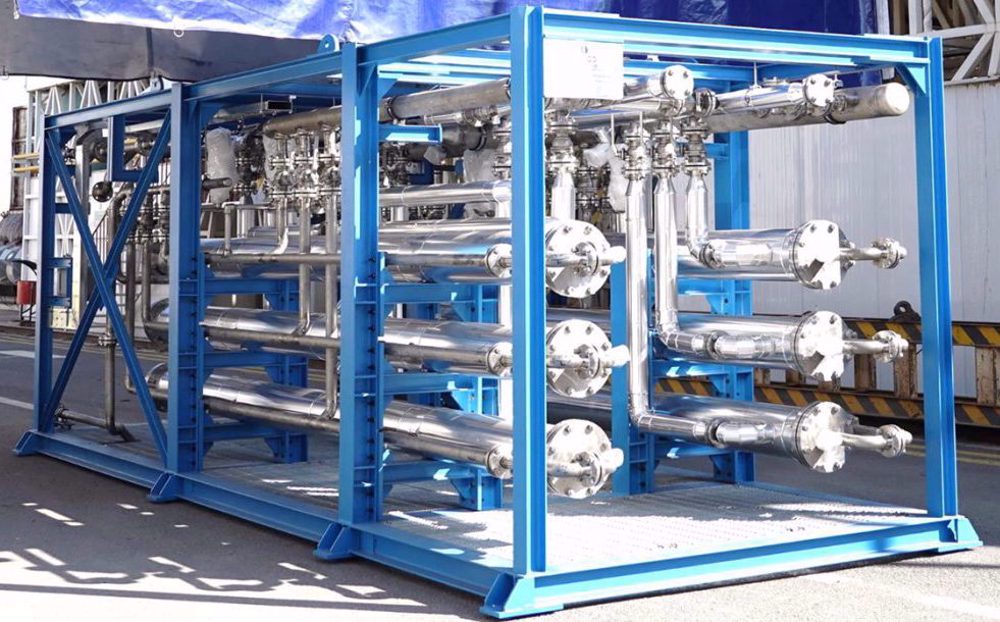
Mechanics of a quiet revolution: Understanding membrane technology
To fully grasp the significance of this achievement, it is essential to understand the sophistication of the technology involved.
Gas separation is a cornerstone of hydrocarbon processing. Raw gas streams, complex mixtures of methane, carbon dioxide, nitrogen, hydrogen sulfide, and various heavier hydrocarbons, must be purified and fractionated before they can be safely transported, processed, or consumed.
Conventional separation techniques, such as chemical absorption towers or cryogenic distillation, are effective but typically energy-intensive, capital-heavy, and operationally complex. Membrane-based separation offers a far more elegant and efficient alternative.
This technology relies on engineered polymer films with precisely controlled microstructures or selective chemical affinities that function as molecular gates. When a pressurized gas mixture is introduced, certain molecules permeate the membrane more readily than others, enabling separation based on molecular size, diffusivity, or solubility.
The advantages are substantial: markedly lower energy consumption, compact system design, minimal moving parts, faster deployment, and greater operational flexibility. These benefits make membrane systems especially attractive for decentralized processing, offshore platforms, and emissions-control applications.
Yet mastering this technology is exceptionally demanding. It requires advanced expertise in polymer chemistry, nanoscale materials engineering, high-precision manufacturing, and integrated process design. These barriers have historically restricted commercial leadership to a small number of technologically advanced firms.
Joining the elite: A new entrant among global leaders
Iran’s announcement explicitly identifies the companies whose technological territory it now enters: America’s MTR, Germany’s Borsig, and China’s Eurofilm. These comparisons are neither casual nor symbolic. They are deliberate reference points that frame both capability and ambition.
MTR is widely regarded as a pioneer in polymer membrane systems for natural gas and hydrogen separation. Borsig represents decades of German industrial excellence in high-pressure filtration and separation technologies. Eurofilm reflects China’s rapid ascent in advanced manufacturing and its growing influence in global technology exports.
To be positioned alongside these established leaders signals more than domestic progress. It asserts that Iran’s indigenous systems are engineered to meet international performance benchmarks, not merely as substitutes for imported equipment, but as credible competitors in terms of efficiency, durability, and cost effectiveness.
This framing elevates the achievement from a national industrial milestone to a strategic entry into the global high-technology marketplace, where sustained success is determined by performance, reliability, and long-term value rather than origin alone.

Tangible impacts: Economic savings and environmental stewardship
The true value of this technological advance becomes most apparent in its real-world applications, where economic efficiency and environmental responsibility intersect.
A flagship demonstration is the project at the Regal Petrochemical complex, where Iran’s first domestically produced gas separation membrane unit was installed and successfully commissioned. The system performs the critical function of separating valuable propylene from nitrogen, an achievement that enabled the permanent shutdown of a flare that had burned continuously for nearly two decades.
This single outcome encapsulates the dual promise of the breakthrough. Economically, it converts what was once a wasted byproduct into a recoverable, marketable hydrocarbon, transforming routine losses into sustained operational value. For the facility, the previously flared gas represented an estimated annual loss of one to two million dollars, an inefficiency that has now been eliminated.
Environmentally, extinguishing the flare produces an immediate reduction in greenhouse gas emissions and local air pollutants, bringing industrial operations into closer alignment with international environmental and sustainability standards.
Each subsequent deployment amplifies these gains. Planned installations at Pars Glycol and Pars Petrochemical, likewise aimed at flare elimination and gas recovery, extend the impact beyond a single facility, gradually turning long-standing environmental liabilities into benchmarks of efficient resource management.
Calculating national gain: Foreign exchange savings and market potential
The economic implications of this indigenization extend well beyond individual plant performance. By substituting imported, multimillion-dollar systems with domestically engineered alternatives, Iran significantly reduces the outflow of foreign currency tied to critical industrial infrastructure.
Company executives estimate that each completed project saves the national economy between three and six million dollars in avoided imports. With the domestic market for gas separation membrane systems estimated at approximately $50 million, the cumulative foreign exchange savings are substantial.
Equally important, local production shields the energy sector from disruptions caused by volatile global supply chains, sanctions-driven procurement risks, and currency fluctuations. This insulation enables more predictable long-term planning and capital investment across the oil, gas, and petrochemical industries.
Beyond direct financial savings, the technology’s localization fosters high-skilled employment in advanced engineering, materials science, and precision manufacturing, strengthening the country’s knowledge economy and laying the foundation for future innovation.
In transitioning from a consumer to a producer of high-value industrial technology, Iran fundamentally reshapes the economic dynamics of its most strategically important sector.
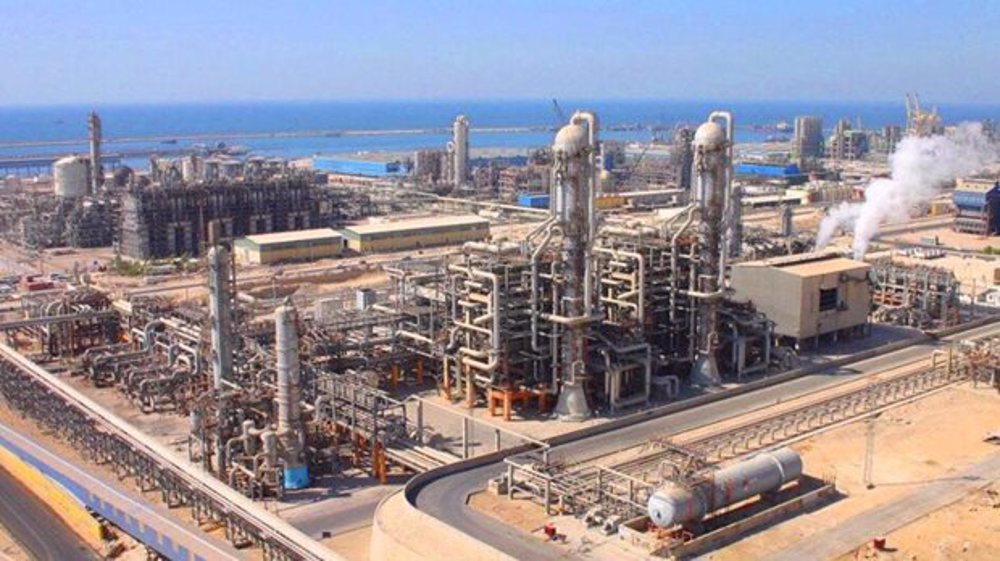
Foundation of success: Academic rigor and research depth
Behind this industrial success lies a deep and robust foundation of academic research and scientific inquiry.
Iran’s achievement in gas separation membranes is not a sudden development but the culmination of years, if not decades, of focused research within its universities and scientific institutes.
Iranian researchers have made notable contributions to the fundamental science of membrane materials, including investigations into nanostructured polymers and the optimization of gas permeation properties.
This strong academic bedrock provided the essential knowledge pool from which applied industrial solutions could emerge.
The synergy is further evidenced by the country's active role in cutting-edge global research, as demonstrated by Iranian scientists co-authoring comprehensive systematic reviews in prestigious international journals.
A notable 2025 review in Applied Energy on machine learning applications for advancing gas separation membranes, led by researchers from Persian Gulf University, underscores the depth and contemporary relevance of Iran’s scientific engagement in this field.
This scholarly output showcases a research community that not only contributes to but also synthesizes global progress, ensuring that the latest international scientific advancements inform domestic industrial development.
Strategic horizons: From national independence to global ambition
The strategic dimensions of this technological milestone are profound. In an era where technological sovereignty is increasingly intertwined with national resilience, mastering such a critical component of energy infrastructure grants Iran greater agency.
It reduces strategic vulnerabilities associated with foreign dependence and strengthens the nation’s hand in a complex geopolitical landscape. Looking forward, the trajectory points beyond national borders.
The technological and operational challenges faced by Iran’s energy sector, flare gas recovery, gas sweetening, and meeting stringent environmental standards, are shared by many hydrocarbon-producing nations, particularly in the surrounding region.
A domestically proven, cost-competitive technology portfolio creates a potential platform for export and international collaboration.
If Iranian membrane systems continue to demonstrate parity in performance and reliability, they could find receptive markets in neighboring countries seeking to optimize their own energy efficiency and environmental footprints.
This potential export pathway would transform the achievement from an act of import substitution into a generator of foreign revenue, completing a full cycle from technological consumer to technological provider.
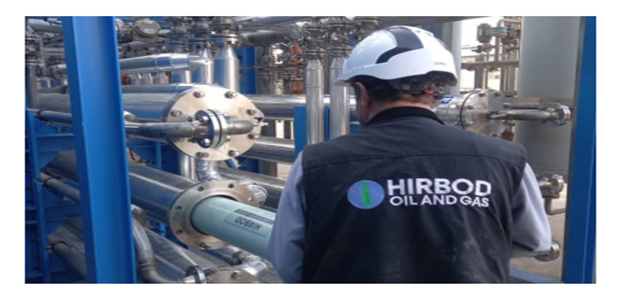
Road ahead: Sustaining innovation and building confidence
While this breakthrough is undeniably significant, the path ahead presents its own set of challenges, chief among them scale, sustained innovation, and market confidence.
Meeting full domestic demand will require continued investment in manufacturing capacity, workforce development, and resilient supply chains. Preserving technological competitiveness, meanwhile, demands an unwavering commitment to research and development, particularly as global leaders advance new membrane architectures such as mixed-matrix systems and thin-film nanocomposites.
Equally critical is the task of building enduring confidence among domestic operators and prospective international clients. This will depend on transparent performance benchmarking, rigorous quality assurance, and clear evidence of long-term reliability across a wide range of operating conditions.
Progress on all these fronts will hinge on sustained collaboration between Iran’s academic research institutions and its growing ecosystem of knowledge-based enterprises, ensuring that innovation flows continuously from laboratory to industry and remains responsive to the evolving demands of the global energy sector.
A paradigm of indigenous capability
Iran’s successful indigenization of gas separation membrane technology stands as a compelling example of how a resource-rich nation can translate intellectual capital into technological sovereignty.
It marks a decisive shift away from a development model defined solely by hydrocarbon extraction toward one rooted in advanced engineering and strategic innovation.
By joining the small circle of global producers in this field, Iran has achieved more than the elimination of gas flaring or the preservation of foreign exchange. It has demonstrated a concrete capacity to master complex, high-value industrial technologies that sit at the core of modern energy systems.
The result is a strengthening of economic resilience, meaningful progress toward environmental goals, and a recalibration of Iran’s position within the global energy technology hierarchy.
In the steady, understated operation of a membrane separation unit lies the sound of a strategic threshold being crossed, an affirmation that Iran is positioning itself not merely as a supplier of raw resources, but as a capable and innovative architect of its own energy future.

No comments:
Post a Comment