Tuesday, September 26, 2017

The Revival of Ottomanism in Shaping Turkey’s Influence in the Muslim World

By 


A screenshot from the show "Resurrection: Ertugrul" on Netflix


There is a wealth of lessons that Turkey can learn from their Ottoman predecessors in order to progress as an emerging superpower in the region.


Turkey’s Islamic identity is an indisputable fact. Since the dawn of Turkic dynasties that took control of former Abbasid territories at the end of the tenth century, the “Turks” became the main face of Muslim empires for the best part of 800 years. The decisive victory for the Seljuk Empire against the Byzantines in the Battle of Manzikert in 1071 CE opened the doors for Turkic tribes to the region known as Anatolia, which stood at the gates of Christian Europe.
Fast forward two centuries from Manzikert, the birth of the Ottoman sultanate in 1299 CE eventually superseded the Mamluks, Seljuks, Ayyubids and Abbasids as the largest Sunni Muslim empire for six centuries, especially when it assumed the position of the Caliphate over the Islamic world in 1517 CE under Selim I.
The Ottoman Empire’s distinct Turkish identity shaped the way this Muslim superpower dealt with respective European polities. From the conquest of Constantinople in 1453 CE to the siege of Vienna in 1529 CE, right up to the Battle of Gallipoli during World War One, the “Turks” will forever be remembered by their European neighbours as the Muslim thorn at the heart of Europe.
But it wasn’t all doom and gloom. War and trade necessitated alliances, albeit short-lived, between the Ottoman Empire and mainly France and Britain, usually against the Habsburg and Russian empire. However, due to the Ottomans siding with a defeated Germany in WW1, the Sykes-Picot agreement led to the carving up of the Middle East into small nation-states which remain until today.

The Turkish Republic and Europe

After the abolition of the Ottoman Caliphate on 3rd March 1924 and the declaration of a secular republic by Mustafa Kemal Ataturk, Turkey looked towards Western Europe as a political model to emulate.
During its formative years, the new Turkish republic saw a period of forced assimilation to secularism, and the censorship of Turkey’s innate Islamic identity and culture. The Kemalist regime imposed several draconian policies which included the banning of the hijab, outlawing the public call to prayer, the closure of religious schools, and the abandonment of the Arabic language from the education curriculum.
The authoritarian crackdown on anything overtly Islamic lasted for nearly 70 years with numerous military coups taking place when the “security” and “unity” of the secular republic was threatened. And throughout this period, the historical remnants of the Ottoman Empire were generally erased from public life, as the higher echelons of Kemalist power perceived it as a regressive chapter of Turkey’s past.
For a Muslim majority country with a population of 80 million, one of the strongest standing armies in the world, and with social norms that are not entirely palatable to secular liberal Europe, Turkey’s desire to be accepted into the European Union was destined to be problematic. The accusations of human rights abuses and censorship of freedoms are frequently levied against Turkey by some EU members when opposing their bid to join the bloc. And whilst it may not be politically correct to say this, Turkey’s historical track record with Europe during the Ottoman era makes its Muslim identity an elephant in the room.
Consequently, it is safe to say, for now, that Turkey under the leadership of the charismatic President Recep Tayyip Erdogan of the Justice and Development Party (Adalet ve Kalkınma Partisi, or AKP) is now looking towards the Middle East and North Africa to gain political influence and economic prosperity.

Revival of Ottoman history

The popular likening of President Erdogan and the AKP to the Ottoman Empire is a fallacy. This “link” between “Sultan Erdogan” and the Ottoman Empire was born out of the reality that for decades Turkey was structurally suppressed from the public recognition of its Islamic heritage, something commonly attributed to the Ottomans and the Seljuks before them. Inevitably, when a seemingly unapologetic Muslim leader emerged from the gradual decline of Kemalism, a logical outcome was for some to liken Erdogan and the AKP to modern-day Ottomans.
While this comparison to the Ottomans has been parroted by Western journalists and Turkish secularists, comparing Erdogan and the AKP to the Ottomans can neither be substantiated from a political rhetoric point of view, let alone policies.
However, Ottoman nostalgia is certainly on the rise in Turkey. During my two visits to Istanbul since 2015, I noticed a consistent level of cross-spectrum positive sentiments of Ottoman history among the hotel staff, taxi drivers, restaurant waiters, shopkeepers and university students I interacted with—and some were ardent critics of Erdogan and the AKP.
As stated earlier, whilst it would be incorrect to even figuratively compare Erdogan to the Ottoman sultans of the past, there is no denying that the AKP has played a key role in normalising Ottoman nostalgia in Turkey. From commemorating historical battles like Gallipoli to welcoming world leaders with Ottoman-dressed guards, it is fair to say that much of Erdogan’s rhetoric and the AKP’s social policies would make Ataturk turn in his grave.
In addition to calling on Muslim youth in Turkey to wed young, urging married couples to have at least five children, rhetoric in support of the oppressed Palestinians, Syrians and the Rohingya, another indicator of Erdogan and the AKP’s role in reviving Ottoman history is their support for popular Ottoman TV shows.

Dirilis Ertugrul (Resurrection: Ertugrul)

Dirilis Ertugrul was launched in 2013, and the fourth season is rumoured to release later this year. The show’s conservative producer and director, Mehmet Bozdag, is a celebrated filmmaker in Turkey whose affiliation to the AKP is no secret. The show was an acclaimed hit with Turkish audiences when it aired on TRT—the national Turkish broadcaster—while being an even bigger hit with non-Turkish viewers who watched the show on Netflix.
The fantastically produced programme has even been dubbed by some as the “Turkish Game of Thrones”, but whilst I feel that is a bit of an exaggeration, the series was certainly very well acted with epic fight scenes and nail-biting plots.
“Ertugrul Gazi” was the father of Osman I, the founder of the Ottoman Empire. Very little is known about the life of Ertugrul except that he was the son of Sulaiman Shah of the Kayi tribe who migrated from Central Asia and settled in Anatolia due to the Mongol raids. The character of Ertugrul is played by Turkish heartthrob Engin Altan Duzyatan, who executed the role to perfection.
The show follows Ertugrul’s struggle to find a permanent homeland for the Kayi tribe from Aleppo to Erzurum, whilst simultaneously fighting the Knights Templers, the Mongols, treacherous Seljuk governors and generals, and internal spies. As a loyal servant to Seljuk Sultan Alladeen Kaykubad, Ertugrul serves to protect and expand the Seljuk Empire with the long-term plan of establishing his own principality that will take over the bastion from the Seljuks.
Throughout the series, Ertugrul is guided by religious scholars, Sufi mystics, his mother Hayme, and his Seljuk wife Halime. The series consists of strong themes pertaining to the establishment of an expansionist state that will rule with justice, as well as the Islamic concepts of unity, jihad, martyrdom, patience and hope, which is coupled with an unadulterated hatred for the Crusaders and their spies from ‘within’ the tribe. I could not help but feel the Crusaders and their Turkic agents fitted perfectly with Erdogan’s official coup plot narrative—an act of treason that was orchestrated by the West and carried out by the treacherous Gulenists.                  

Payitaht Abdulhamid (The Last Emperor)

Payitaht Abdulhamid follows the concluding years of Sultan Abdulhamid II’s rule, which was marred with separatist rebellions, coup plots by the Young Turks, as well as external threats from European powers, which the show implies were being orchestrated by Theodore Herzl, the founder of Zionism. The character of Abdulhamid is played by Bulent Inal, who perfectly delivers the stern and uncompromising personality of the 34th Ottoman sultan.
The programme received much praise from President Erdogan and conservative sections of Turkish society, as well as being warmly received by Shahzade (prince) Abdulhamid Kayıhan Osmanoğlu—Sultan Abdhulhamid’s great grandson who helped with the show’s production. However, Payitaht Abdulhamid caused uproar on social media among some members of the Jewish community who accused the show of peddling anti-Semitism. Lobbyists successfully prevented Netflix from airing the show, whilst staff members from the ‘Foundation for Defense of Democracies’ claimed that Payitaht Abdulhamid promoted an “antidemocratic, anti-Semitic and conspiratorial worldview”.
However, historically speaking, Abdul Hamid II was widely regarded by Muslim historiansas the great Ottoman Caliph who singlehandedly drove the empire to survive for another 40 years. Dubbed by his European critics as a regressive monarchist who prevented the modernization of the empire, when in actuality, Abdulhamid implemented major educational, military and economic reforms which resulted in the empire surpassing its expected “sell by date” by half a century until his removal in 1909.
The first season of Payitaht Abdulhamid aired on TRT earlier this year, and it is the latest pro-Ottoman programme on mainstream Turkish TV.

Muhtesem Yuzyil (Magnificent Century)

Magnificent Century is a soap drama that depicts the life of Sulaiman ‘The Magnificent’—one of the greatest Ottoman sultans who led the empire to its zenith in the sixteenth century. In stark contrast to Dirilis Ertugrul and Payitaht Abdulhamid, Magnificent Century mainly focuses on the sultan’s womenfolk—his jealous wives, competing concubines and controlling mother—all of whom were seeking to gain influence within the palace.
Magnificent Century, which was aired on TRT, was also a mega hit in Turkey; however, the Turkish broadcasting regulator RTUK stated that they received more than 70,000 complaints due to the show’s depiction of the sultan’s personal sex life, of him gambling, and the extravagance of the royal family. Erdogan also weighed in on the criticisms calling the soap “disrespectful” towards a revered historical figure. The show covers the meteoric rise of Hurrem—the former Orthodox Christian slave from Crimea—who went onto to become Sulaiman’s wife and one of the most powerful women in Ottoman history.
Whilst Magnificent Century is a far cry from Dirilis Ertugrul and Payitaht Abdulhamid, the show still managed to illustrate—in consistent snippets—the glory of the Ottoman Empire, and Sulaiman as the great Caliph of Islam who took Shariah law and jihad very seriously. Considering the directors and producers of Magnificent Century are widely regarded as secularists, their inclusion of Islamic concepts and the historical distrust of Christian Europe in a soap that has been described as the Turkish ‘Sex and The City’ was surprising, and very telling of the religious sensitivities in Turkey.

The future of Ottomanism in Turkey

Kudos and criticisms of political figures and parties should be proportionality based on policies and reality, as opposed to rhetoric alone. In the same way that Ataturk did everything in his means to eradicate Islam from Turkey’s public sphere, including Ottoman history, similarly Erdogan and the AKP cannot be exclusively praised for the recent revival of Ottoman history. Ataturk on numerous occasions criticised Islam and the influence of the “backward” Arabs on the Turkish nation, in the same way that Erdogan has clearly statedthat he has absolutely no intention to govern by Shariah law or to establish a Caliphate.
The Ottoman Empire makes up 625 years of Turkey’s history. Therefore, 70 years of Kemalist oppression or 20 years of AKP’s so-called “Islamification” can neither diminish nor revive such a vast legacy overnight. The truth of the matter is that it is physically impossible to erase Ottoman history because it dominates the very landscape that Turks see every day, along with the plethora of cultural norms among the indigenous people that date back to the Ottomans.
However, the exact details of Erdogan and the AKP’s influence aside, one must question where this “revival” of Ottomanism in Turkey will lead to? Surely, if the masses are being shown via mainstream TV a glorious Islamic empire that existed only 93 years ago, which ruled large swathes of the Middle East, North Africa, the Mediterranean, the Balkans, and assumed overall leadership over the Muslim world, it will naturally influence the psyche of Turkey’s population.
Turkey’s selective military involvement in Syria, its ongoing skirmishes with Kurdish separatists, the formation of military training camps in Somalia, Erdogan’s purging of coup plotters and Gulenists, the war against ISIS, and the AKP’s warm relationship with the Muslim Brotherhood are a mere spectacle compared to the militaristic, expansionist and religious narratives being disseminated in Dirilis Ertugrul, Payitaht Abdülhamid and Magnificent Century.
Whether the revival of Ottoman heritage is a passive AKP “Islamification” policy or a genuine celebration of Turkey’s history, if a government allows the masses to be constantly reminded of their historical glory and accomplishments, many will begin to yearn to see a repeat of those achievements. It happens in the Western world all the time. In the U.S., Britain and France, the masses are frequently reminded by the mainstream media about of how “great” their colonial forefathers were in shaping the modern world, which strengthens the population’s sense of global importance and interventionism.
With the consistent themes of military conquests, Islamic unity, Jewish conspiracies, and the concept of jihad as a mechanism to liberate occupied lands embedded in TV shows like Dirilis Ertugrul and Payitaht Abdulhamid, it can only lead to two things: the subconscious desire to return to such glory, and the conscious comparison between celebrated Ottoman sultans and Turkey’s contemporary leaders. And this may also manifest in the Turkish public being more receptive and supportive of military interventionism in the region, and even expansion of its borders.
Inevitably, if such a situation were to occur, there will always be domestic opposition to military interventionism and expansionism from anti-war activists and opposition parties, but it cannot be ruled out. In recent years, nation-state borders have been altered: the breaking of the border between Iraq and Syria by ISIS, the accession of Crimea to Russia, the breakaway of South Ossetia from Georgia, and the formation of a de-facto autonomous Kurdistan are a testimony that nation state borders can shift.
However, it is important to note that the cultural revival of Ottomanism isn’t necessarily an “Islamic” sentiment that could lead to the re-establishment of a Turkish-headed Caliphate or a neo-Ottoman Sultanate—for some it may be, but for many others, it really isn’t.
While there is a distinct link between the Ottoman Empire’s Islamic authoritative legitimacy and Turkey’s inescapable Muslim identity—neo-Ottomanism has recently been promoted by Turkish nationalists to justify pan-Turkism. The fact that the Ottomans were unapologetically Turkish and had ruled vast lands inhabited by Turkic people, the current Ottoman nostalgia could lead to widespread acceptance and support for Turkey to involve itself in the political and economic affairs of former Turkic Ottoman territories.
As an admirer of Ottoman history, I perceive the current resurgence in Ottoman heritage as a positive and refreshing change for Turkey since the dark days of Kemalist tyranny. It would be unfortunate if such a legacy was suppressed by Kemalists or manipulated by opportunistic “Islamists” when there is a wealth of lessons that Turkey can learn from their Ottoman predecessors in order to progress as an emerging superpower in the region.
ABOUT THE AUTHOR
Dilly Hussain is the deputy editor of British Muslim news site 5Pillars. He is also a political blogger for the Huffington Post and a features writer for Al Jazeera English specializing in human rights. 

Tuesday, September 19, 2017

Saudi plan to ‘accept Israel as a brotherly state’


Saudi Crown Prince Mohammed Bin Salman is working to “westernise” the Kingdom and change people’s mindsets when it comes to Israel, Twitter user Mujtahidd has reported.


The account, which is believed to be reporting from inside the ruling family in Saudi Arabia, wrote: “Arrangement among the UAE, Egypt, Saudi Arabia and Bahrain is wider than our expectations. Israel and American bodies linked to Trump are involved.”
“The plan is complete. It is based on unifying the bases of security, media, culture and education, including religion, in Egypt and all the Gulf States except Oman.”
The plan, according to Mujtahid, was drawn in Egypt which is the “supplier of cadres who will deal with the issues of media, security, Islamic movements, education syllabuses and religious institutions.”
According to Mujtahidd, it aims to “distance any political, cultural, educational, financial, religious effect on the people of Egypt and the Gulf States in order to reach a state of full and eternal normalisation with Israel.”
It also said that the arrangement for this plan started in Saudi Arabia, Egypt, the UAE and Israel before US President Donald Trump was inaugurated, noting that former American President Barack Obama did not join the plan because he feared these states and the recklessness of Crown Prince Mohamed Bin Salman.
Trump, Mujtahidd tweeted, supported the plan and this encouraged Bin Salman and Crown Prince of Abu Dhabi Mohammed Bin Zayed to kick start its implementation earlier than planned. The plan includes hiring hundreds of Egyptian officials and officers in the Gulf States to supervise security, armies, media, religion and education.
Mujtahidd added that the plan includes arresting hundreds of religious scholars, stressing that Bin Salman was enthusiastic about the implementation of the plan due to Israel’s pledge to get Trump’s help to support his bid to become King of Saudi Arabia.
The Twitter user added the plan was implemented and included the “use of social media to turn the public opinion against Islam in general and specifically political Islam and accepting Israel as a brotherly state.”

Thursday, September 14, 2017

The Genocide Of The Rohingya: Big Oil, Failed Democracy And False Prophets


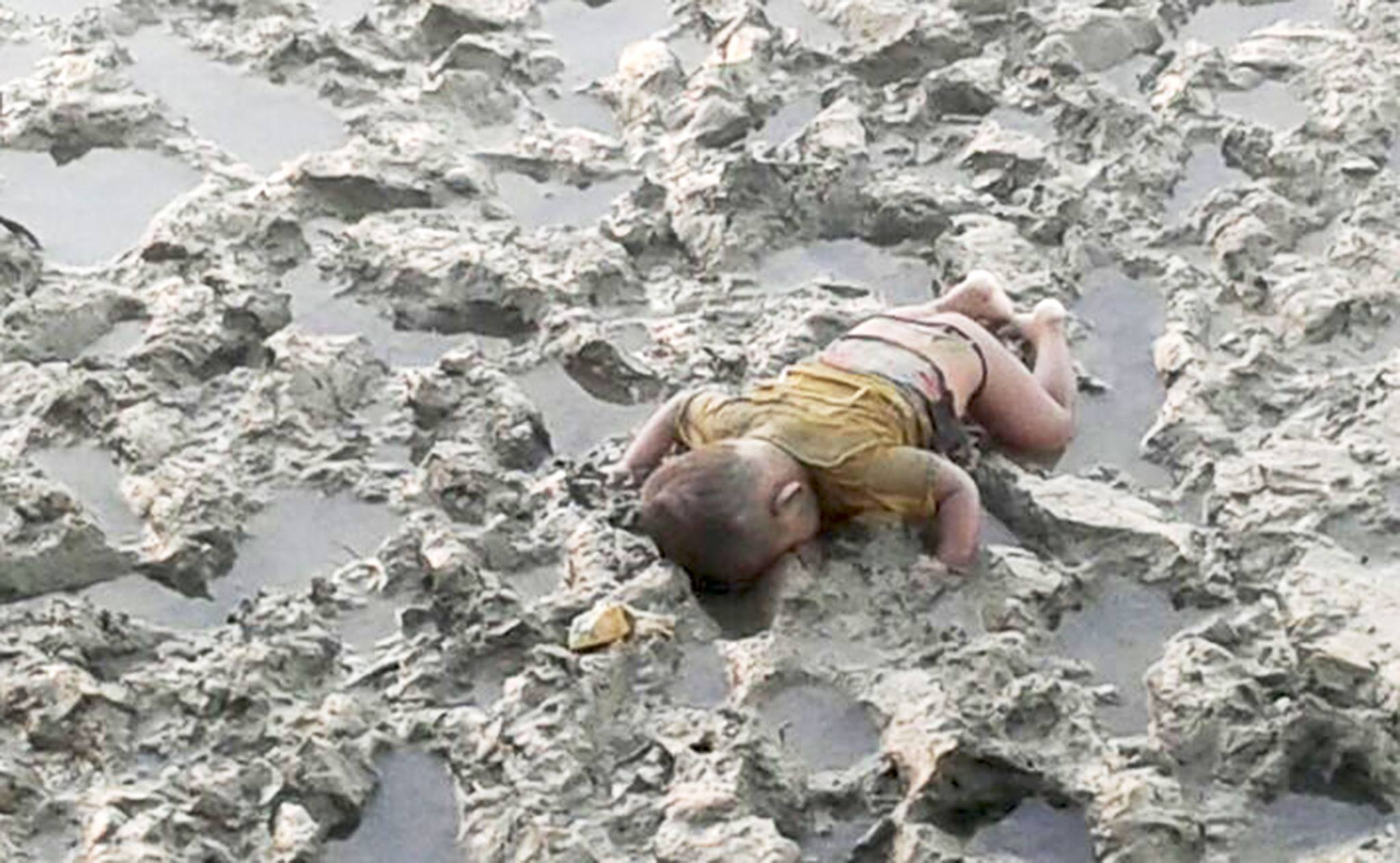
Rohingya-baby
To a certain extent, Aung San Suu Kyi is a false prophet. Glorified by the west for many years, she was made a ‘democracy icon’ because she opposed the same forces in her country, Burma, at the time that the US-led western coalition isolated Rangoon for its alliance with China.
Aung San Suu Kyi played her role as expected, winning the approval of the Right and the admiration of the Left. And for that, she won a Nobel Peace Prize in 1991; she joined the elevated group of ‘The Elders’ and was promoted by many in the media and various governments as a heroic figure, to be emulated.
Hillary Clinton once described her as “this extraordinary woman.” The ‘Lady’ of Burma’s journey from being a political pariah in her own country, where she was placed under house arrest for 15 years, finally ended in triumph when she became the leader of Burma following a multi-party election in 2015. Since then, she has toured many countries, dined with queens and presidents, given memorable speeches, received awards, while knowingly rebranding the very brutal military that she had opposed throughout the years. (Even today, the Burmese military has a near-veto power over all aspects of government.)
But the great ‘humanitarian’ seems to have run out of integrity as her government, military and police began conducting a widespread ethnic cleansing operation that targeted the ‘most oppressed people on earth’, the Rohingya. These defenseless people have been subjected to a brutal and systematic genocide, conducted through a joint effort by the Burmese military, police and majority Buddhist nationalists.
The so-called “Cleansing Operations” have killed hundreds of Rohingya in recent months, driving over 250,000 crying, frightened and hungry people to escape for their lives in any way possible. Hundreds more have perished at sea, or hunted down and killed in jungles.
Stories of murder and mayhem remind one of the ethnic cleansing of the Palestinian people during the Nakba of 1948. It should come as no surprise that Israel is one of the biggest suppliers of weapons to the Burmese military. Despite an extended arms embargo on Burma by many countries, Israel’s Defense Minister, Avigdor Lieberman, insists that his country has no intentions of halting its weapons shipments to the despicable regime in Rangoon, which is actively using these weapons against its own minorities, not only Muslims in the western Rakhine state but also Christians in the north.
One of the Israeli shipments was announced in August 2016 by the Israeli company TAR Ideal Concepts. The company proudly featured that its Corner Shot rifles are already in ‘operational use’ by the Burmese military.
Israel’s history is rife with examples of backing brutal juntas and authoritarian regimes, but why are those who have positioned themselves as the guardians of democracy still silent about the bloodbath in Burma?
Nearly a quarter of the Rohingya population has already been driven out of their homes since October last year. The rest could follow in the near future, thus making the collective crime almost irreversible.
Aung San Suu Kyi did not even have the moral courage to say a few words of sympathy to the victims. Instead, she could only express an uncommitted statement: “we have to take care of everybody who is in our country”. Meanwhile, her spokesperson and other mouthpieces launched a campaign of vilification against Rohingya, accusing them of burning their own villages, fabricating their own rape stories, while referring to Rohingya who dare to resist as ‘Jihadists‘, hoping to link the ongoing genocide with the western-infested campaign aimed at vilifying Muslims everywhere.
But well-documented reports give us more than a glimpse of the harrowing reality experienced by the Rohingya. A recent UN report details the account of one woman, whose husband had been killed by soldiers in what the UN described as “widespread as well as systematic” attacks that “very likely commission of crimes against humanity.”
“Five of them took off my clothes and raped me,” said the bereaved woman. “My eight-month-old son was crying of hunger when they were in my house because he wanted to breastfeed, so to silence him they killed him with a knife.”
Fleeing refugees that made it to Bangladesh following a nightmarish journey spoke of the murder of children, the rape of women and the burning of villages. Some of these accounts have been verified through satellite images provided by Human Rights Watch, showing wiped out villages throughout the state.
Certainly, the horrible fate of the Rohingya is not entirely new. But what makes it particularity pressing is that the west is now fully on the side of the very government that is carrying out these atrocious acts.
And there is a reason for that: Oil.
Reporting from Ramree Island, Hereward Holland wrote on the ‘hunting for Myanmar’s (Burma) hidden treasure.’
Massive deposits of oil that have remained untapped due to decades of western boycott of the junta government are now available to the highest bidder. It is a big oil bonanza, and all are invited. Shell, ENI, Total, Chevron and many others are investing large sums to exploit the country’s natural resources, while the Chinese – who dominated Burma’s economy for many years – are being slowly pushed out.
Indeed, the rivalry over Burma’s unexploited wealth is at its peak in decades. It is this wealth – and the need to undermine China’s superpower status in Asia – that has brought the west back, installed Aung San Suu Kyi as a leader in a country that has never fundamentally changed, but only rebranded itself to pave the road for the return of ‘Big Oil’.
However, the Rohingya are paying the price.
Do not let Burmese official propaganda mislead you. The Rohingya are not foreigners, intruders or immigrants in Burma.
Their kingdom of Arakan dates back to the 8th Century. In the centuries that followed, the inhabitants of that kingdom learned about Islam from Arab traders and, with time, it became a Muslim-majority region. Arakan is Burma’s modern-day Rakhine state, where most of the country’s estimated 1.2 million Rohingya still live.
The false notion that the Rohingya are outsiders started in 1784 when the Burmese King conquered Arakan and forced hundreds of thousands to flee. Many of those who were forced out of their homes to Bengal, eventually returned.
Attacks on Rohingya, and constant attempts at driving them out of Rakhine, have been renewed over several periods of history, for example: following the Japanese defeat of British forces stationed in Burma in 1942; in 1948; following the takeover of Burma by the Army in 1962; as a result of so-called ‘Operation Dragon King’ in 1977, where the military junta forcefully drove over 200,000 Rohingya out of their homes to Bangladesh, and so on.
In 1982, the military government passed the Citizenship Law that stripped most Rohingya of their citizenship, declaring them illegal in their own country.
The war on the Rohingya began again in 2012. Every single episode, since then, has followed a typical narrative: ‘communal clashes’ between Buddhist nationals and Rohingya, often leading to tens of thousands of the latter group being chased out to the Bay of Bengal, to the jungles and, those who survive, to refugee camps.
Amid international silence, only few respected figures like Pope Francis spoke out in support of the Rohingya in a deeply moving prayer last February.
The Rohingya are ‘good people’, the Pope said. “They are peaceful people, and they are our brothers and sisters.” His call for justice was never heeded.
Arab and Muslim countries remained largely silent, despite public outcry to do something to end the genocide.
Reporting from Sittwe, the capital of Rakhine, veteran British journalist, Peter Oborne, described what he has seen in an article published by the Daily Mail on September 4:
“Just five years ago, an estimated 50,000 of the city’s population of around 180,000 were members of the local Rohingya Muslim ethnic group. Today, there are fewer than 3,000 left. And they are not free to walk the streets. They are crammed into a tiny ghetto surrounded by barbed wire. Armed guards prevent visitors from entering — and will not allow the Rohingya Muslims to leave.”
With access to that reality through their many emissaries on the ground, western government knew too well of the indisputable facts, but ignored them, anyway.
When US, European and Japanese corporations lined up to exploit the treasures of Burma, all they needed was the nod of approval from the US government. The Barack Obama Administration hailed Burma’s ‘opening’ even before the 2015 elections brought Aung San Suu Kyi and her National League for Democracy to power. After that date, Burma has become another American ‘success story’, oblivious, of course, to the facts that a genocide has been under way in that country for years.
The violence in Burma is likely to escalate and reach other ASEAN countries, simply because the two main ethnic and religious groups in these countries are dominated and almost evenly split between Buddhists and Muslims.
The triumphant return of the US-west to exploit Burma’s wealth and the US-Chinese rivalries is likely to complicate the situation even further, if ASEAN does not end its appalling silence and move with a determined strategy to pressure Burma to end its genocide of the Rohingya.
People around the world must take a stand. Religious communities should speak out. Human rights groups should do more to document the crimes of the Burmese government and hold to account those who supply them with weapons.
Respected South African Bishop Desmond Tutu had strongly admonished Aung San Suu Kyi for turning a blind eye to the ongoing genocide.
It is the least we expect from the man who stood up to Apartheid in his own country, and penned the famous words: “If you are neutral in situations of injustice, you have chosen the side of the oppressor.”

– Ramzy Baroud is a journalist, author and editor of Palestine Chronicle. His forthcoming book is ‘The Last Earth: A Palestinian Story’ (Pluto Press). Baroud has a Ph.D. in Palestine Studies from the University of Exeter and is a Non-Resident Scholar at Orfalea Center for Global and International Studies, University of California.

Wednesday, September 13, 2017

International Conference on Interfaith Dialogue, entitled "Towards a Culture of Interfaith Dialogue"

Beirut : The first day of the International Conference on Interfaith Dialogue, entitled "Towards a Culture of Interfaith Dialogue", was concluded on Tuesday (September 12th).

Under the auspices of Lebanese President Michel  Aoun, the first day of the International conference had two out of five seminars involving keynote researchers in the field of interfaith dialogue. The rest of the three seminars took place on the following day (Wednesday 13 September) of the international conference at the Lancaster Hotel- Beirut.

The first-afternoon session after the morning session of the ceremonial opening of the international conference pivoted on "The formation of religious culture and intellectual pluralism". The former President of the Lebanese University, HE Dr Adnan Al-Sayyid Hussein chaired the session.


The Director-General of the Institute of Religious Wisdom,  Sheikh Shafiq Jaradi, steered the discussion of the seminar by addressing the case of "The Formation of Religious Culture". He drew the attention to the continuity of the religious beliefs, despite the overwhelming challenges and called for reviewing the stages of the cultural formation of religion by making a distinction between the “Salafism” and “ Pastism”. He stressed the importance of forming the religious culture based on the mind as well as determining the responsibilities of humans out of the capabilities they already have.

Subsequently, Dr Abdel Hakim Ghazawi, the Director of the Institute of Social Sciences - Branch III at the Lebanese University, had the opportunity to deal comprehensively with the idea of “the Social Educational dimension in the Formation of Religious Culture”. He pointed out the central role of education in the establishment of a culture of dialogue, given that the education upholds consistently the human and just values that prepare the foundation of a good citizen. As well, he called for the inclusion of courses about dialogue in majors at the universities.

The second session of the Interfaith Dialogue conference had the title of "The Obstacles of Interfaith Dialogue" and was chaired by Sheikh Ahmed Qabalan, the Grand Mufti of Jaafari in Lebanon.

Dr Aqeel Mahfoud, Head of the Department of Studies at the Damascus Research Center, spoke about "The Culture of Hatred and Distortion of Religion" where he mentioned that the hatred features were swarming the sociological scene as most of them justified on threatening sources derived from the historical memory, causing in effect a culture of brutality (Al-Twahush).  

In turn, Dr Talal Atrissi, Scientific and Academic Adviser at the University of Al Maaref, addressed the issue of "Islamophobia", by referring to its conceptual meaning, and its evolution in time. He was of the opinion that such a phenomenon had a pivotal role in establishing the elements of fear, despise and hatred towards Islam.

Sheikh Dr Akram Barakat, Professor of Philosophy at the Lebanese University, however, discussed "the Image of the Other in the Religious Perspective". He called first to examine the outlook on God before looking at the Other to know the wisdom of the Creator, from which one can determine the image of the Other according to divine wisdom.


At the third session, the conference focused on the role of Religious Institutions in the Culture of Dialogue: Practical Experiences. The seminar was chaired by the patron of the Maronite Diocese of Batroun, Mounir Khairallah.

Dr Abed Al Amir Zahid, Professor of Islamic studies at the University of Kufa and a member of the Scientific Research Authority at the Ministry of Higher Education in Iraq, introduced a genealogy of the concept of dialogue as a practice within the institution of Hawza in Najaf. He believed that such a history could be relied upon to extract matured principles for present-day dialogues.

Father Porphyrius Jerji, Dean of the Faculty of Theology at the University of Balamand, took on board the explanation of the experience of “Church” in instituting an exceptional track of dialogue derived from the lived reality of the Lebanese religious mosaic.

Dr Mohammed Alloush,  Researcher of Islamic movements, had a detailed preview of the main facts and practices that would confirm the idea that Al Azhar embraces the dialogue philosophy at every turn of its institutional development in different historical phases and concomitant challenges.

The sessions witnessed interventions and questions related to a range of intricate propositions by the audience. The discussions were pivoting around the feasibilities for deriving effective framework of dialogue that could institute for a new generation equipped with agreed shared principles and recognition of the Other.

By the end of the two sessions of seminars and in the result of dealing with a range of audience interventions, the first day of the conference was declared completed, hoping that the three more sessions on Wednesday 13th September would be followed-up further with a detailed information about “Towards a Culture of Dialogue among Religions”.

Sunday, September 10, 2017

Hajj: Antidote for the malignancy of American materialism

By Yuram Abdullah Weiler


“There is no crime America will not commit in order to maintain its political, cultural, and military domination of those parts of the world where it predominates.” —Imam Khomeini to Hajj pilgrims, September 12, 1980

Muslims of the world, whether Sunni or Shi’a, can attest to the veracity of Imam Khomeini’s words of nearly a half century ago. Since those prescient words were uttered by the Founder of the Islamic Republic of Iran, the United States, under the rubric of fighting terrorism, has shed blood and spread chaos in the Muslim world, the likes of which had not been seen since the times of the crusades.

Among the crimes committed by the Washington regime are supporting a sanguinary 8-year-long war upon Iran, backing a brutal occupation of the Palestinian homeland by its Zionist collaborator, invading the sovereign nation of Iraq and subjecting its people to unimaginable humiliation and death, laying waste to Afghanistan while coopting a rebellion and turning it into a proxy war against the former Soviet Union, instigating and funding a terrorist campaign aimed at the legitimate government of Syria, and providing military and logistic support for the vicious Saudi war against the people of Yemen.  These are but a few crimes from a long list of outrages.


Beyond these unconscionable criminal carnages perpetrated by the Potomac plutocrats, who, hand-in-hand with their Zionist accomplices, have turned the Middle East into a cauldron of chaotic conflict, lies the crime of exporting the seductive but contagious cancer of American materialism. If not for Islam and the valiant resistance of Muslims, this malignancy would metathesize unabated, spreading its infectious ideology to societies around the world.  The same can be said for Washington’s illegal and immoral policies of instigating sectarian violence and rebellion to destabilize legitimate governments in the Islamic countries.

This two-pronged assault on the Islamic world, materialism and destabilization, was mentioned by the Leader of the Islamic Revolution, Ayatollah Sayyid Ali Khamenei, in his annual Hajj message for 2017. “On the one hand, the magic of materialism is busy beguiling and annihilating by using advanced instruments,” the Leader noted, “and on the other hand, the policies of the system of domination are instigating sedition and fueling the fire of discord among Muslims and turning Islamic countries into a hell of insecurity and disagreement.”

What about this magical magnetism of American materialism and how, like a stealth weapon, can it ultimately destroy a society? “Materialism is, amongst all nations, a dangerous disease of the human mind; but it is more especially to be dreaded amongst a democratic people, because it readily amalgamates with that vice which is most familiar to the heart under such circumstances,” wrote Alexis de Tocqueville in his classic work, Democracy in America.  

Tocqueville went on to explain that democracy unchecked has the potential to push its adherents towards ever higher levels of self-gratification, which “soon disposes men to believe that all is matter only.”  In other words, people in a western-style democracy, unrestrained by the oversight of a religious scholar and fellow clerics, are irresistibly compelled by their appetites to embrace materialism. But then a destructive feedback loop acting upon the members of society is created by materialism itself, as Tocqueville noted, which “hurries them back with mad impatience to these same delights: such is the fatal circle within which democratic nations are driven round.” Like so many rats on a treadmill, those afflicted with this “dangerous disease” work rabidly to acquire more and more material possessions, which, in turn, only makes them desire even more.

Research into the nature of materialism appears to suggest that developing nations are particularly susceptible to its pernicious pull. “Recent analyses of globalism suggest that consumer culture is spreading from the West to other parts of the world,” researchers Giiliz Ger and Russell W. Belk wrote in 1994.  Disturbingly enough, they observed that “consumers of even the so-called Third World seem to be starting to want luxury consumer goods similar to those of the West, even before they have adequate nutrition.” 

Consequently, one of the most menacingly effective means of achieving total economic domination, which is the aim of western capitalism, is by promoting conspicuous consumption. Bombarded incessantly by advertising from the corporate media, the unsuspecting inhabitants of the Global South are persuaded into believing the consumptive lifestyle of the west is better for them. Ger and Belk highlight this point by stating “consumers in less economically developed nations try to imitate the more extravagant consumption of consumers from more economically developed nations with whom they come in contact.” Once someone is hooked on American materialism, it seems, there is no turning back from economic enslavement.

Obviously detrimental to the society in the targeted country, the imitation of conspicuous consumption is obscenely profitable for U.S. multinational corporations, which benefit from the Washington regime’s predatory policies of imposing corrosive corporate capitalism on developing nations under the façade of fostering economic growth. For example, the International Monetary Fund, essentially an appendage of Washington, has some 3,000 employees who dictate economic terms to 1.5 billion people in the developing nations.

So rather than creating “the opportunities impoverished households need to raise their living standards,” as the U.S. Agency for International Development insists is one of their areas of focus, Washington’s underlying goal is the perpetuation of profits for U.S. multinational corporations. However, as William Lazonick, a professor of economics at the University of Massachusetts at Lowell, has pointed out in the prestigious Harvard Business Review, “Corporate profitability is not translating into widespread economic prosperity,” an observation all too clear even to most Americans.

According to Belk, materialism has three dimensions: possessiveness (owning rather than renting or borrowing), nongenerosity (unwillingness to share with others), and envy (coveting the possessions of others).  One need only look to the current occupant of the Oval Office, the tangerine toupee-topped tweeter, to see all of these obnoxious characteristics in their most extreme form.  Here is a vulgar man so enmeshed in materialism that he could not resist seeking his own cravings for self-aggrandizement while posing in front of TV cameras against a backdrop of devastation caused by hurricane Harvey, and thereby marginalizing the misery of his fellow citizens.  As the Leader remarked, Trump “is showing the truth about America.”

As Ayatollah Khamenei has pointed out in his 2017 Hajj message, the way for Muslims to combat this pernicious, western-produced pandemic of materialism is by participating in the annual Hajj pilgrimage. “Hajj can be a cure for both of these grave maladies that the Islamic Ummah is suffering from,” the Leader stated.  “It can purge hearts of impurities and enlighten them with the light of piety and understanding,” he continued. Additionally the Hajj “can open eyes to the bitter realities of the world of Islam,” according to the Leader, undoubtedly a reference to the U.S.-induced catastrophes currently proliferating across the Middle East.

How does the Hajj serve as an antidote to materialism?  By tackling the three dimensions of materialism mentioned above—possessiveness, nongenerosity and envy—separately during the Hajj with appropriate rituals.  Firstly, envy is dashed by the plain, unstitched, two-piece white cloth garments worn by all pilgrims, thus making the rich indistinguishable from the poor. The Hajj garments, which resemble the burial shrouds placed upon the dead, force the pilgrims from the material world of envy and any other disobedience into the realm of submission to Allah.

Next, possessiveness is countered by circumambulating the Ka’aba, a simple mud and stone building, which has none of the glitter of the material possessions promised by western capitalism, yet attracts millions of pilgrims each year from around the world. By circumambulating the Ka’aba, the pilgrim demonstrates a desire only for Allah and nothing else.  

And lastly, nongenerosity is nullified by the sacrifices of animals made by the pilgrims on Eid, a portion of the meat of which is donated to the poor and indigent.  When making the sacrifice, the pilgrim should intend to “cut off the throat of greed,” for as Imam Ali (AS) said, “Love of the world engenders greed.”

The Prophet (S) and the Imams of Ahl ul-Bayt (AS) have been fighting materialism since the advent of Islam.  Intending to disparage the Hajj, one materialist named Ibn Abi’l-Aujaa asked Imam Sadiq (AS), “Until when will you work on this threshing-floor, seek refuge from this stone, worship this house of mud and stone, and go around it like frightened camels?”  The Imam (AS) replied, “Whomever Allah causes to go astray and to be blind in heart will find the truth bitter and will have the Satan as guardian and lord, and will be damned to perdition from which there is no return.”

It is clear that Allah has caused the leaders of the United States to go astray and be blind in their hearts, as evidenced by their crimes, which they continue to commit in the Middle East and elsewhere around the world. One of these many crimes is promulgating materialism, and as Ayatollah Khamenei has indicated in his address, the Hajj is the antidote.  As Imam Ali (AS) said, “The Hajj is the jihad of every weak person.”  May we Muslims merit joining this jihad, and thereby eradicate the malignancy of American materialism.


-Yuram Abdullah Weiler


Friday, September 01, 2017

Zionism’s doomsday scenario


Failure of Israel’s deterrent capability
Zaakir Ahmed Mayet


There appears to be blood across the Israeli flag as politicians, the security establishment and parties with vested interests battle it out to direct the future of the colonial state. As fighting continues an inevitability has dawned on all the major players including hardliners, that the current trajectory of Israeli policy mirrors that of Apartheid South Africa. The end result will be a one state solution which means the dismantling of the colonial outpost to reflect a democratic state representative of all the people.
Statements at the Herzliya conference (May 2017) reflect a deeply fractured Israeli landscape. Former Israeli Prime Minister (one-time defence minister) Ehud Barak stated at the conference that current policy “will surely result in a ‘one-state solution’ which will either be an ‘Apartheid State’… or a ‘bi-national state’ in which the Jews will become a minority within a couple of generations, and will most likely be in a continuous civil war.” This was not the only attack on the hard-line coalition. The erstwhile former Foreign Minister Tzipi Livni added to the chorus, “The decision of whether to work toward a two-state solution or toward a single united nation should be a national one, in order to ‘take back our democratic Jewish Israel.’” The recent publication of the “Security First” report authored by over 200 former Israeli generals, Shabak, and Mossad figures, and the Center For A New American Security report paint a similar picture of polarisation. The recognition by the Israeli security establishment that military force can no longer solve the problems Israel faces is a damning indictment of the failure of Israeli policy. Therefore, the current discourse revolves around a two-state or one-state solution, the latter lifting the veil on the apartheid nature of Israel which is being exhibited by the current right-wing regime. As the political crisis continues, Israel faces a far more serious challenge.
The State of Israel was founded on the basis of terror and disproportionate force. The first signs of this entrenched policy emerged in the massacres of Deir Yassin, which were characterised with such brutality that it served as a primer for the mass exodus and ethnic cleansing of the indigenous Palestinian population. Menachem Begin stated, “Without what was done at Deir Yassin there would not have been a State of Israel.” He added, “While the Haganah [the Jewish terrorist group] was carrying out successful attacks on the other fronts… The Arabs began fleeing in panic, shouting ‘Deir Yassin’.”
This policy has remained the cornerstone of Israeli militarism. History is often written by the victors and the public narrative of the June 1967 war is no exception. Israel was portrayed as a victim, bullied and bludgeoned by its larger Arab neighbours. The 1967 victory was projected as a miracle confirming alleged divine help and the justness of Zionist occupation.
Occasionally, the true narrative pierces the proverbial propaganda veil and truth filters through. The catalytic deterrence capacity policy was the prime motivator for the first strike Israel conducted to spark the 1967 war. Ariel Sharon, a divisional commander at the time stated “deterrence capability… our main weapon — the fear of us.” The deterrence capacity policy of Israel has been characterised as one of deterrence by punishment which constitutes disproportionate force and punishment.
This particular shade of Israel’s deterrence doctrine was incorporated by the Israeli military with adoption of the Dahiya doctrine. Major General (ret) Giora Eiland who is thought to be the real mastermind behind this doctrine argued the “impossibility of defeating Hizbullah.” He devised a policy that would “lead to the elimination of the Lebanese military, the destruction of the national infrastructure, and intense suffering among the population,” so much so that “the suffering of hundreds of thousands of people are consequences that can influence Hizbullah’s behaviour more than anything else.” The diabolical playbook of disproportionate force was utilised by the then head of Israel’s Northern Command, Gadi Eizenkot who stated,
What happened in the Dahiya quarter of Beirut in 2006 will happen in every village from which Israel is fired on… We will apply disproportionate force on it and cause great damage and destruction there. From our standpoint, these are not civilian villages, they are military bases…
This doctrine is premised on the fact that the sheer magnitude of destruction would discourage further engagement on the battlefield and reinforce three concepts: that the Israeli military has the capacity to wipe out the opposition merely with the might of its bombardment (shock and awe). Second, that Israel would act viciously against anyone, be they civilian or combatant, once they had commenced bombardment and finally, that their conduct should serve as a signifier of the fate that will await any who cross their path.


This doctrine of deterrence via punishment was successful in all major Israeli-Arabian wars, particularly the 1967 war. Adoption of Israeli policy of deterrence was also hinged on shorter and increasingly brutal engagements. The aim of these shortened engagements is to project deterrence while preventing a war of attrition. This rubric, however, was rewritten with the war against the Hizbullah in 2006 with the first effective failure of the cornerstone of Israeli militarism and deterrence capacity. This came on the back of Israel’s forced abandonment of a portion of Lebanon in 2000 due to Hizbullah’s heroic resistance. In a public lecture under the auspices of the Jerusalem Centre for Public Affairs, Major General Uzi Dayan delivered a striking blow to the deterrence doctrine and the outward edifice of success that Israel was projecting post-2006. He stated that Israel lost a lot of deterrence in the last war in Lebanon (2006), this being a turning point not only for Israel but other resistance movements. This acknowledgement emerged from the then opposition leader Benjamin Netanyahu who stated, “The greatest failure as a result of the war is that Israel’s deterrent capability has been severely harmed.”
Israel’s inability to adapt to the changing environment resulted in the further implementation of the doctrine in Gaza during 2008. The stated aim of Operation Protective Edge was to put an end to Hamas rocket fire, a feeble attempt at restoring Israel’s deterrence capacity. On the contrary, global opinion shifted dramatically against Israel and calls for the prosecution of Israeli leaders for war crimes grew louder. The finding of the United Nations Fact-Finding Mission was a severe blow to Israel in the global arena. Further engagements occurred inside the Gaza Strip. Despite the brutality of Operation Cast Lead, the Palestinian resistance movement Hamas rolled out extensive rocket and mortar attacks on Israel in 2014. The record of prior engagements regardless of whether initiated by Israel or Palestinians evidences the fact that the deterrence or fear of Israel has not been re-established. According to the Washington Institute “Over time, deterrence in the Gaza situation will likely fail. Deterrence works best in essentially stable situations, wherein the sides clearly understand each other’s calculus.”
The continued siege of Gaza fuels instability that creates an appetite for resistance. The equation that follows is that but for Israel’s occupation, there would be no need to resist. In fact, instead of deterring escalation, according to US analysis, the resistance in Gaza is becoming stronger. The same report by the Washington Institute stated, “The military capabilities of the Qassam Brigades and other organisations have increased, perhaps making them more confident as well as more dangerous. This may lead to sharper fighting along the buffer zone — and inevitably to more casualties, including IDF — along with increased pressure on the IDF to respond with greater force.” This deterrence failure was further captured in a Congressional Service Report by analyst Jim Zanotti in which it was stated,
Teams of engineers, chemists, and machinists have improved the range and payload of the Qassam series rockets over time, and Israeli military raids have targeted several individuals and facilities associated with rocket research and production operations. Over the years, rockets have expanded in range beyond relatively small Israeli communities near the Gaza border, such as the town of Sderot (population est. 24,000), to the larger coastal cities of Ashqelon (population est. 120,000) and Ashdod (population est. 200,000) and to the Negev city of Beersheva (population est. 185,000). Mid-range Gradstyle rockets (thought to be smuggled into Gaza) that travel farther than Qassam rockets have been fired from Gaza by Hamas, Palestinian Islamic Jihad (al-Quds series) and the Popular Resistance Committees (Nasir series).
The alleged success of Iron Dome appears to be fraudulent. According to Theodore Postol, missile expert from the Massachusetts Institute of Technology (MIT), the Iron Dome is only intercepting 5% or less of Hamas projectiles. Further supporting evidence comes from the comments of Major General Uzi Dayan when he related the story of an Israeli who stated that if Israel cannot stop Hamas, what chance do they have of stopping Iran. Hamas’ challenge was magnified in the last conflict via the penetration of resistance forces into Israeli territory via the sea. Footage appears to have leaked showing Hamas frogmen infiltrating Zikim beach military facility. The troops opened a new era of warfare which exposed a military threat to Israel from the Mediterranean. This new front of operations is now open from the north via Hizbullah after they targeted the Israeli navy’s missile corvette, one of the most sophisticated pieces of Israeli military equipment; the Saar-5 during the 2006 Lebanon war. In February of 2017, the Times of Israel ran a story stating that Hizbullah had acquired sophisticated anti-ship missiles during the Syrian conflict. This weapon in the hands of the Hizbullah as per the Israeli source would be a game changer thus severely constraining Israeli’s dominance. Therefore a pincer-like threat engulfs Israel from both the north and south thus compromising the western borders of the Zionist State and poses a tangible threat to Israel’s access to its gas fields. This was communicated in March of this year by Dr. Efraim Inbar, who is Director of the BESA Center (Begin-Sadat Center for Strategic Studies) and professor-emeritus of political science at Bar-Ilan University.
The defeat of Israel in 2006 set the bar for Hamas and an opaque reference to the same was made in the aforementioned report,
The Iran-backed Hizbullah movement in Lebanon provides military training as well as financial and moral support and has acted in some ways as a mentor or role model for Hamas, which has sought to emulate the Lebanese group’s political and media success.
There was a distancing of Hamas from Iran during the Syrian conflict, which weakened the axis of resistance. However, post the elections within Hamas, there has been an embracing of Hamas by both Iran and Hizbullah. It has been reported that in the most recent speech of Sayyid Hasan Nasrullah of Hizbullah he honoured Hamas, which symbolised an important rapprochement. The meeting in 2016 between Iran and Hamas was of particular importance as one of the key meetings was between Hamas and Major General Qasem Soleimani, the Commander of the Quds Forces. This marked a realignment of forces once again directed at the Zionist occupation of Israel. This reignited the fears of Israel and the United States as Israel is indeed an extension of its hegemonic policy in the Muslim East. The threat to the existence of Israel was communicated in the erstwhile congressional report that said,
Israel also fears that Iran, Syria, and possibly other actors in the region might use Hamas’s proximity to Israel either to facilitate a coordinated multi-front military attack or to mobilize regional and international political pressure against Israel through the precipitation of crises and causes célèbres.
Zaakir Ahmed Mayet is Chairman of the Media Review Network of Pretoria, South Africa.