Showing posts with label Shireen Hunter. Show all posts

Tuesday, October 22, 2019

What Is Turkey Really After In Syria?

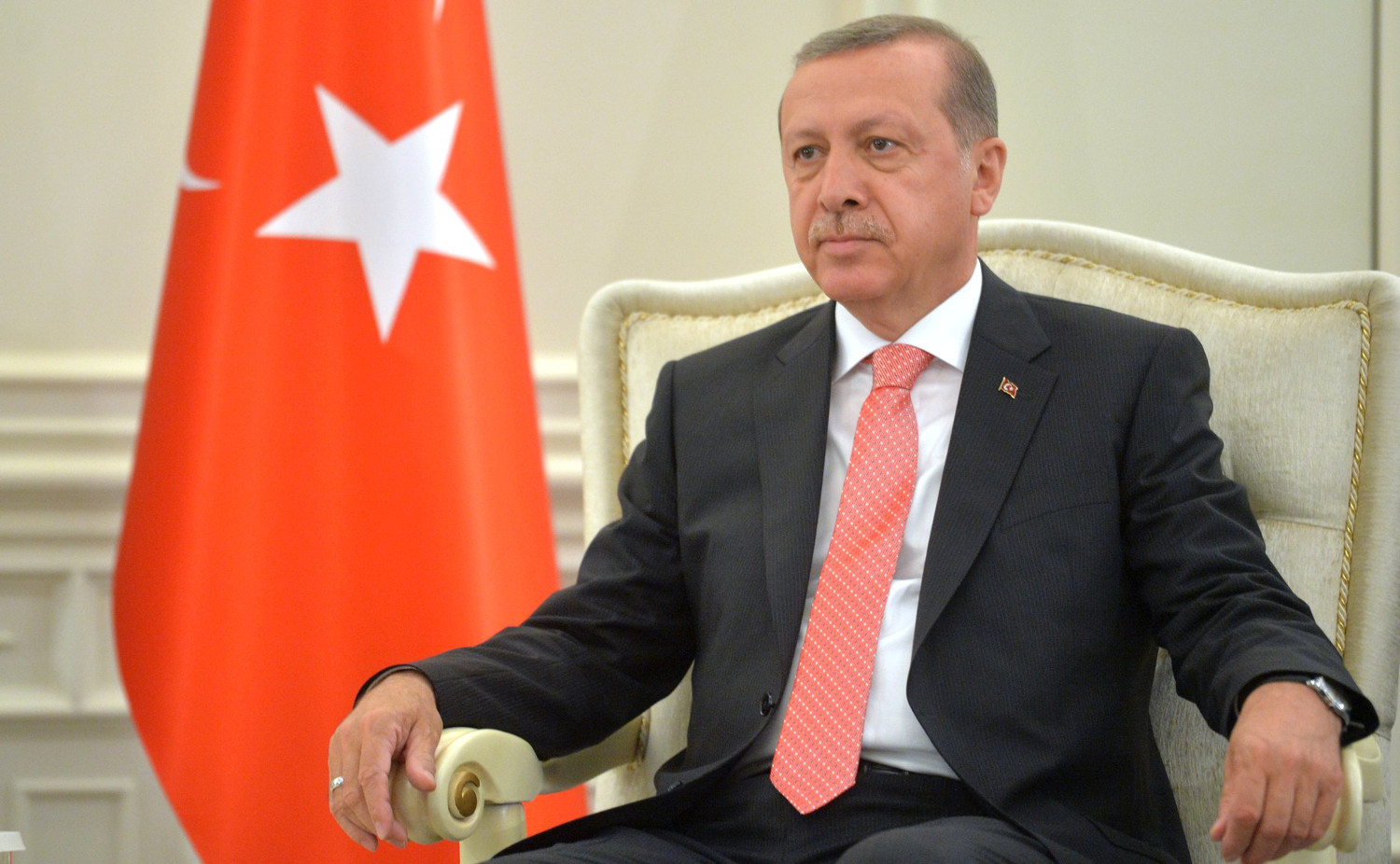
Turkish President Recep Tayyip Erdogan
Turkish President Recep Tayyip Erdogan has justified his invasion of the Kurdish-inhabited areas of northeastern Syria in terms of preventing Syrian Kurdish groups linked to Turkey’s Kurdistan Workers’ Party (PKK) from assisting that group’s insurgency against the Turkish government. According to Erdogan, the ultimate goal of the offensive, dubbed “Operation Peace Spring,” is to ensure Turkey’s security. The other rationale used by Erdogan has been that Turkey wants to unburden itself of the large number of Syrian refugees who have fled to Turkey since the outbreak of civil war in Syria.
Both these concerns are real. Turkey has a near phobia about the establishment of another Kurdish autonomous region in Syria similar to what has happened in Iraq. Even though Iraq’s Kurdish autonomous government has good relations and extensive economic links with Ankara, Turkey worries that a regional trend toward Kurdish autonomy could inspire its own often restive Kurdish population.
Ankara also wants to reduce the number of Syrian refugees. Their presence is causing unhappiness among many Turks, who feel that the government is spending too much money on the Syrians—money that could be used to improve the lot of the Turkish people.
However, other factors, including considerations of regional power politics and Turkey’s long term interests and goals in the region, have also been important factors in Ankara’s decision to undertake Operation Peace Spring.
Continued Hostility to Bashar al-Assad
Though Erdogan and Syrian President Bashar al-Assad appeared to be getting along fairly well prior to the Arab Spring, the outbreak of civil war supported by the West provided Turkey an opportunity to support efforts to oust Assad.
Erdogan also became angry at Assad for rebuffing his 2008 efforts to mediate between Damascus and Israel over the Golan. He was hoping that success in this effort would make him the great conciliator in the Middle East—in contrast to Iran, which has earned the sobriquet of the great troublemaker. Moreover, Erdogan was hoping that Assad’s removal would result in the establishment of a Sunni, and preferably Muslim Brotherhood-aligned, government in Damascus. This, he hoped, together with a similar government in Egypt, would increase Ankara’s influence in the Arab world. But Mohamed Morsi’s government in Egypt did not last long, and Assad—with help from Iran and especially Russia—has managed to survive and thus remain a thorn in Ankara’s side. Turkey was so keen to remove Assad that it even reportedly allowed Islamic State (IS or ISIS) fighters to seek refuge and medical treatment in Turkey.
Here it should be mentioned that, when ISIS first emerged in Iraq and later in Syria after the outbreak of civil war many regional and international actors saw it as a useful instrument to check Iran’s influence in Iraq and Syria, much the same way that they had looked at the Taliban as a counter to Iran in Afghanistan. It was only after ISIS began to commit atrocities against Western nationals that attitudes towards the group changed. Ankara, too, then altered its position and claimed that it was fighting the group.
Therefore, a major reason for Turkish incursions into Syria is to signal to Damascus that Ankara will not sit still if developments in Syria evolve in ways that could be detrimental to Turkish interests. This factor became more imperative when it became apparent that the United States was beginning to significantly reduce its presence in Syria and possibly even move all of its troops out of the country. In the absence of the United States, Ankara felt that it could not allow the Syrian government, backed by Russia and—worse—Iran, to fill the vacuum. In short, a main reason for the Turkish intervention is Ankara’s desire to have a say in Syria’s ultimate destiny.
Iran, Russia, and Arab Factors
Despite outward signs of friendship and cooperation, Erdogan does not have cordial feelings towards Iran. In fact, as I was told by a Turkish expert, Turkey sees Iran as its only viable rival for influence in the Middle East—and, one might also add, in the Caucasus and Central Asia.
Turkey has not been happy with the change of leadership in Iraq following the U.S. ouster of Saddam Hussein, which has allowed Iraqi Shia to play a greater part in the country’s government. Although Turkey does more trade with Iraq than does Iran, it does not have the same political influence in Baghdad as does Tehran. Thus the idea that Iran could consolidate its influence in Damascus in the aftermath of the reduction in U.S. military presence was quite unpalatable to Ankara. At the very least, Turkey feels that it must establish a firm presence in Syria so as to balance Tehran’s influence.
The same is also true regarding Russia. Turkish-Russian relations in many respects are also, if not conflictual, at least competitive. Hence, Ankara feels that it cannot leave Syria entirely to Russia either.
Furthermore, Ankara would not be happy if Syria was reintegrated into the Arab fold. Turkey’s relations with such key Arab states like Saudi Arabia, Egypt, and the UAE are tense. Quite clearly. Ankara would not want to face a solid Arab front standing in the way of its regional ambitions. Turkey has benefitted from intra-Arab divisions such as the Saudi-Qatari rift. Prior to the murder of Jamal Khashoggi, Ankara had close ties with Saudi Arabia and used Arab-Iranian tensions to its own advantage as well.
Erdogans Ambitions and His Self-Image
U.S. Vice President Mike Pence and Secretary of State Mike Pompeo met with Erdogan in Turkey on October 17, after which they announced that Turkey would agree to a temporary ceasefire allowing for the withdrawal of Kurdish fighters from the border area. However, Turkish Foreign Minister Mevlut Cavusoglu later refused to call it a “ceasefire,” adding that a ceasefire has to be between two legitimate parties—which implies that the Turks do not view the Kurdish fighters as a legitimate entity. Turkish rhetoric, as well as these other reasons for intervening in Syria, make it unlikely that Ankara will withdraw from Syrian territory anytime soon.
Turkey’s approach towards Syria and many other Middle East issues cannot be understood without understanding Erdogan’s views, self-image, and ambitions. Erdogan believes that a historical wrong was done to Turkey after the collapse of the Ottoman Empire. He sees the old Ottoman territories as the natural sphere of Turkey’s influence. These territories stretch from the Balkans all the way to North Africa, all areas in which Turkey has involved itself. Furthermore, he believes in his historic mission to restore the old Ottoman glory, albeit in an indirect way rather than through outright territorial expansion. The fact that the U.S. has now agreed to the indefinite presence of Turkish troops in northeastern Syria indicates that “Operation Peace Spring” is largely about Turkey’s long-term objectives.
In short, Turkey’s actions in Syria should be seen as the first steps in the unfolding of a new era of regional competition, rivalry, and possibly even conflict. This should not come as a surprise. The events of the last two decades, especially since the U.S. invasion of Iraq in 2003, the Western intervention in Libya, and the civil war in Syria, have collapsed four Middle Eastern governments and upset regional balances of power. They have also opened new opportunities for key regional states to try expanding the spheres of their influence. Consequently, they have set in motion new rivalries for deciding the future political and possibly even geographical map of the Middle East. Turkey is set to be a major participant in the unfolding of this regional contest for power. Its invasion of Syria, notwithstanding the recently agreed pause in military operations, could come to be remembered as the first salvo in this new game.
avatar

SHIREEN HUNTER

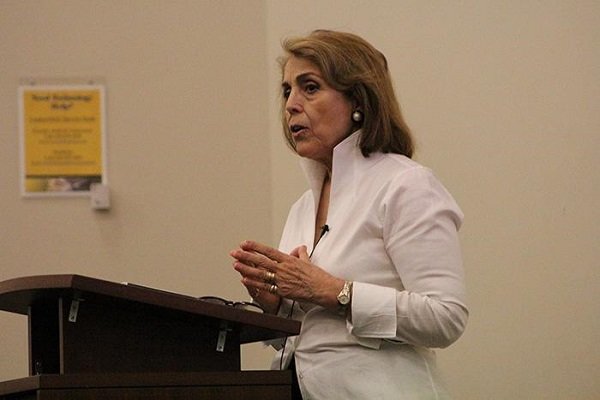
Shireen Hunter is a University Associate with Georgetown University. From 2007 to 2014 She was a Visiting Professor and from 2014 until July 2019 she was a Research Professor at the School of Foreign Service. Her latest publication is Arab-Iranian Relations: Dynamics of Conflict and Accommodation, Rowman & Littlefield International, June 2019.

Tuesday, December 11, 2018

PGCC was never effective organization: Shireen Hunter

By Javad Heirannia
TEHRAN - Shireen Tahmaasb Hunter, a professor of political science at Georgetown University, tells the Tehran Times that “the PGCC was never an effective organization. Certainly, it has been an unequal partnership in the sense that Saudi Arabia has dominated the Organization.”
“The PGCC was also created as a response to the 1979 Iranian revolution and the Iran-Iraq war, especially the perceived Iranian threat to the Persian Gulf security,” Hunter tells the Tehran Times.
She adds that “Now Iraq is practically out of the strategic equation at least for the foreseeable future. Iran no longer poses a viable ideological or security threat for the Gulf Arab states.”
Following is the text the interview:
Q: The Persian Gulf Cooperation Council's (PGCC) annual summit was held in Riyadh while the Qatari emir and the Sultan of Oman refrained from joining. What are the reasons behind this refusal?
A: The reluctance of Oman's and Qatar's leaders to attend the PGCC Summit and instead send lower level representation, reflects their differences with Saudi Arabia and their resentment of Riyadh's efforts to dominate the PGCC. Saudi Arabia's current problems following the assassination of Jamal Khashoggi has undermined its position and prestige, thus making it easier for Doha and Muscat to snub the kingdom.
Q: Qatar left OPEC and according to some reports, it might break-up with PGCC. Do you think that Qatar will leave the PGCC?
A: Qatar's decision to exit OPEC does not necessarily mean that it will leave the PGCC. However, given the divisions within the PGCC and the fact that most PGCC members sided with Saudi Arabia in its dispute with Qatar, it is conceivable that Qatar might leave the organization. However, given continued U.S. support for the PGCC, at least in the short term, such a decision might undermine Qatar's security as well as its position in confrontation with Saudi Arabia.
Q: The PGCC failed to find a purely internal collective solution to the Qatar crisis. With regard to this failure, how do you see the future of PGCC?
A: The PGCC was never an effective organization. Certainly, it has been an unequal partnership in the sense that Saudi Arabia has dominated the Organization. The PGCC was also created as a response to the 1979 Iranian revolution and the Iran-Iraq war, especially the perceived Iranian threat to the Persian Gulf security. Now Iraq is practically out of the strategic equation at least for the foreseeable future. Iran no longer poses a viable ideological or security threat for the Gulf Arab states. By contrast, it is the Saudi and Emirati ambitions and behavior that is destabilizing the region. In other words the very raison d'etre of the PGCC has disappeared. Therefore, it is no wonder that the PGCC failed to reconcile Qatar's and Saudi Arabia's diverging interests and outlooks.
Q: In case of Qatar's exit from PGCC, is there any possibility of a new alliance between Qatar and Turkey?
A: In the short term, the PGCC will survive, although its efficacy will be further undermined. In the long term, much would depend on what happens in Saudi Arabia and in Iran. A change in Saudi attitude in the direction of more cooperation and less bullying of regional actors might revitalize the PGCC. Iran's reintegration into the international community, could even provide an opportunity to transform the PGCC into a more inclusive regional organization, with Iraq and Iran also joining it. As to a closer Turkish -Qatari alliance, it is not clear what shape such alliance could take. Anything beyond what already exists, especially extensive military cooperation and greater Turkish military presence in the Persian Gulf, would trigger concerns in other regional states, including Iran and Saudi Arabia regarding Turkey's long term goals and ambitions. Greater Turkish military presence in the Persian Gulf could also cause anxieties among European countries.  In general bilateral alliances between Persian Gulf states and extra-regional states, including Turkey could be destabilizing. A viable security organization must include all of the Persian Gulf's littoral states. Other states such as Pakistan, Turkey and possibly Egypt could be affiliate members or participate as observers.

Thursday, November 08, 2018

Iran is being used as a bargaining chip by East and West


(persia Digest) - A university professor in the US believes: Under these circumstances, Iran should not put all its hopes in one or two countries. Instead, it should have acceptable relations with all major players and thus improve its bargaining position.
Some experts in Iran believe that power and wealth are shifting from West to East and the world is on the threshold of a historic transfer of power. Furthermore, the attitude of the West towards Iran in general, and following Trump coming to power in particular, strengthens the viewpoint that Iran must pursue the look to the East strategy more vigorously. Others believe that the East is still unable to stand up to the West. Regarding Iran, the East is not only thinking about its maximum interests, it is even taking advantage of Iran’s limitations. This claim can be seen in Russia's decision to increase oil production in the current situation or China's conditions for settling Iranian oil money with Chinese goods.
Persia Digest (PD) has conducted an interview on this topic with Shireen Hunter who is a Research Professor at the Center for Muslim-Christian Understanding at Georgetown University in Washington DC, and she has published many books and articles on Iranian issues.
You can read the interview here:
Can the strategy of looking to the East be in Iran’s interest under the circumstances?
Iran's strategy of "Looking to the East" is nothing new. It experienced with it in the 2000s. A major problem with this strategy is that it still conceives of East and West in Cold War terms, whereas the dynamics of international relations have fundamentally altered. Unlike the Cold war era, inter-state relations are far more asymmetrical and a mixture of conflict and accommodation. Under these circumstances, states cooperate with others on some issues while disagree on others. This applies both to Western states as well as to other countries, including Russia and China. By not having constructive relations with the West, Iran puts itself in a position of disadvantage vis a vis Eastern states and enables them to take advantage of it.
Do countries such as China, Russia, India…change the quality of their relations with Iran to its detriment due to US sanctions, or are the sanctions a pretext to use Iran’s particular circumstances to their own benefit?
China, India, Russia and other states are after their own interest. In relations with Iran they want to maximize their own profits and not help Iran economically or otherwise. For example, neither China nor India want Iran to become a powerful state economically and thus compete with them. They also have no intrinsic strategic interest in Iran. For example, China still sees Pakistan as an important part of its security strategy, but it does not have the same view of Iran. China and India want to sue Iran to their own interest. As Iran has narrowed its options through hostility towards the West, these countries have treated Iran unfairly. Sanctions have given them an added excuse to try to gain advantages at Iran's expense.
If Iran, for any reason, does not choose to change its relationship with the West, especially the United States, and follow the strategy of looking to the East, what would be the requirements of such a strategy?
If Iran does not improve its bargaining position by resolving its problems with the West, especially America, Eastern states will continue to take advantage of it. But if Iran comes out of its isolation, then Eastern states would have to compete with the West in gaining Iran's cooperation on many fronts, and they would be more willing to invest in Iran and otherwise help it.
Some in Iran call Russia a strategic partner and cite the two countries’ cooperation in the Syrian crisis as an example. Can the Iran-Russia relations be strategic?
Russia has never considered Iran a strategic ally. On the contrary, throughout the post-Soviet years it has used Iran as a bargaining chip in competition with the West and as an instrument of its regional policies. Russia has treated Turkey much better than Iran and has even sought cooperation with Saudi Arabia on oil issue at Iran's expense. On the Caspian. it has sided with Azerbaijan and the Central Asian states. It has not even gotten Iran into the Shanghai treaty organization, while because of the Chinese support Pakistan is a full member. This, too, is natural since Iran has narrowed its option by its hostility towards the West. Russia has felt that Iran has nowhere else to go, Thus, the idea of Russia as a strategic ally is worse than an illusion. In general, in the post-Cold War era there are not many strategic alliances. Even US-Europe alliance is fraying.
From an American perspective, China and Russia are among the most important threats to its national security. To the contrary, Iran is trying to establish a link between itself and these two countries. Will such a link increase Iran's security? To what extent will the China-Russia-Iran triangle be a danger to the US?
In the foreseeable future, I do not see any coming together of China and Russia to counter America on the pattern of Cold War era politics. The relations among these states will be competitive but far from full scale conflict. Iran's participation in a so-called triangle will not have much impact, since neither China nor Russia will provide Iran with sufficient capacity to challenge America say in the Persian Gulf. If Iran were to do such a thing it would suffer total devastation. To protect its interests, Iran must finally realize that the Cold War distinctions between East and West are no longer valid. China and Russia do not have ideological dispute with America. Theirs is more of a classic great power rivalry. Under these circumstances, Iran should not put all its hopes in one or two countries.
Instead, it should have acceptable relations with all major players and thus improve its bargaining position.