Showing posts with label Dr Ramzy Baroud. Show all posts

Thursday, November 28, 2019

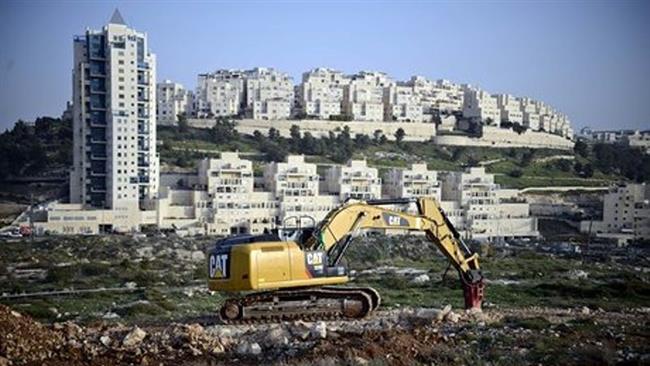
Israel’s Next Move: The Real Danger in US Decision to Normalize Illegal Jewish Settlements

It is hardly shocking that the United States government has finally decreed that illegal Jewish settlements which have been built in defiance of international law, are, somehow, “consistent” with international law.
US foreign policy has been edging closer towards this conclusion for some time. Since his advent to the White House in January 2017, President Donald Trump has unleashed a total and complete reversal of his country’s foreign policy regarding Palestine and Israel.
Let us not have any illusion regarding the American approach to the so-called ‘Israeli-Palestinian conflict’ prior to Trump’s Presidency. The US has never, not even once, stood up for Palestinians or Arabs since the establishment of the State of Israel over the ruins of historic Palestine in 1948. Moreover, Washington has bankrolled the Israeli occupation of Palestine in every possible way, including the subsidizing of the illegal Jewish settlements.
However, Pompeo’s statement at a State Department press conference on November 18 that, “the establishment of Israeli civilian settlements is not, per se, inconsistent with international law,” is still very dangerous and it does, in fact, constitute a political departure from previous US policies. How?
Historically, the US has struggled in its understanding of international law, not because of its lack of legal savvy but because, quite often, US interests clashed with the will of the international community. A recurring case in point is the Israeli occupation of Palestine, where the US has vetoed or voted against numerous United Nations Security Council and General Assembly resolutions that either criticized Israel or supported the rights of the Palestinians.
Only in 1978, did an American Administration dare describe Israeli settlements as “inconsistent with international law”. That declaration took place during Jimmy Carter’s Presidency, when Washington began earnestly fiddling with the “peace process” political model, which eventually led to the signing of the Egypt-Israel Peace Treaty, signed at Camp David in 1979.
“Since then,” Joseph Hincks wrote in Time Magazine online, “Republican and Democratic Presidents have referred to settlements as ‘illegitimate’ but declined to call them illegal—a designation that would make them subject to international sanctions.”
That said, it was Reagan himself – although objecting to the principle of illegality of the settlements – who deemed them to be an “obstacle to peace”, demanding a freeze on all settlement construction.
Pompeo’s statement is, in fact, compatible with Washington’s self-contradictions regarding the construction of Israel’s illegal settlement in occupied Palestine.
In December 2016, the Barack Obama administration declined to veto a UN Security Council resolution that described the settlements as a “flagrant violation” of international law, adding that they have “no legal validity”.
Although Obama chose to abstain from the vote, that very decision was, itself, seen as a historical departure from traditional US foreign policy-making, further highlighting the US unconditional and, often, blind support for Israel.
While, in some way, the Trump administration’s support for Israel is a continuation of the dismal trajectory of American bias, it is also particularly unique and disturbing.
Previous US administrations attempted to maintain a degree of balance between their own interests and those of Israel. Trump, on the other hand, seems to have aligned his country’s foreign policy regarding Palestine and Israel entirely with that of Israeli Prime Minister, Benjamin Netanyahu, and his right-wing camp.
Indeed, for over two years, the State Department has been giving Israel political carte blanche, agreeing to all of Israel’s demands and expectations and asking for nothing in return. As a result, Washington has accepted Israel’s designation of Jerusalem, including occupied East Jerusalem, as Israel’s “eternal and undivided capital”; agreed to Israel’s sovereignty over the occupied Golan Heights; and actively plotted to dismiss the issue of Palestinian refugees altogether. The latest announcement by Pompeo was but one of many such steps.
One theory regarding the ongoing surrender of US foreign policy to Israel is that Washington is slowly, but permanently, withdrawing from the Middle East, a process that began in the later years of George W. Bush’s presidency and continued unabated throughout the two terms of Obama administration as well. The current succumbing to Israel’s wishes is like America’s departing gift to its most faithful ally in the Middle East.
Another explanation is concerned with the apparently defunct “deal of the century”, a vaguely defined political doctrine that seeks to normalize Israel, regionally and internationally, while keeping the status quo of occupation and Apartheid untouched.
For that deal to be resurrected after months of inertia, Washington is keen to prolong Netanyahu’s premiership, especially as the long-serving Israeli Prime Minister is facing his greatest political challenge and even a possible jail time for various corruption charges.
Currently, Israel is undergoing a political crisis – two general elections within six months, with the possibility of a third election, coupled with a historic socio-economic and political polarization among the people. To keep Netanyahu politically alive, his allies in Washington have thrown him some major lifelines, all in the hope of winning him more support among Israel’s dominant right-wing political camp.
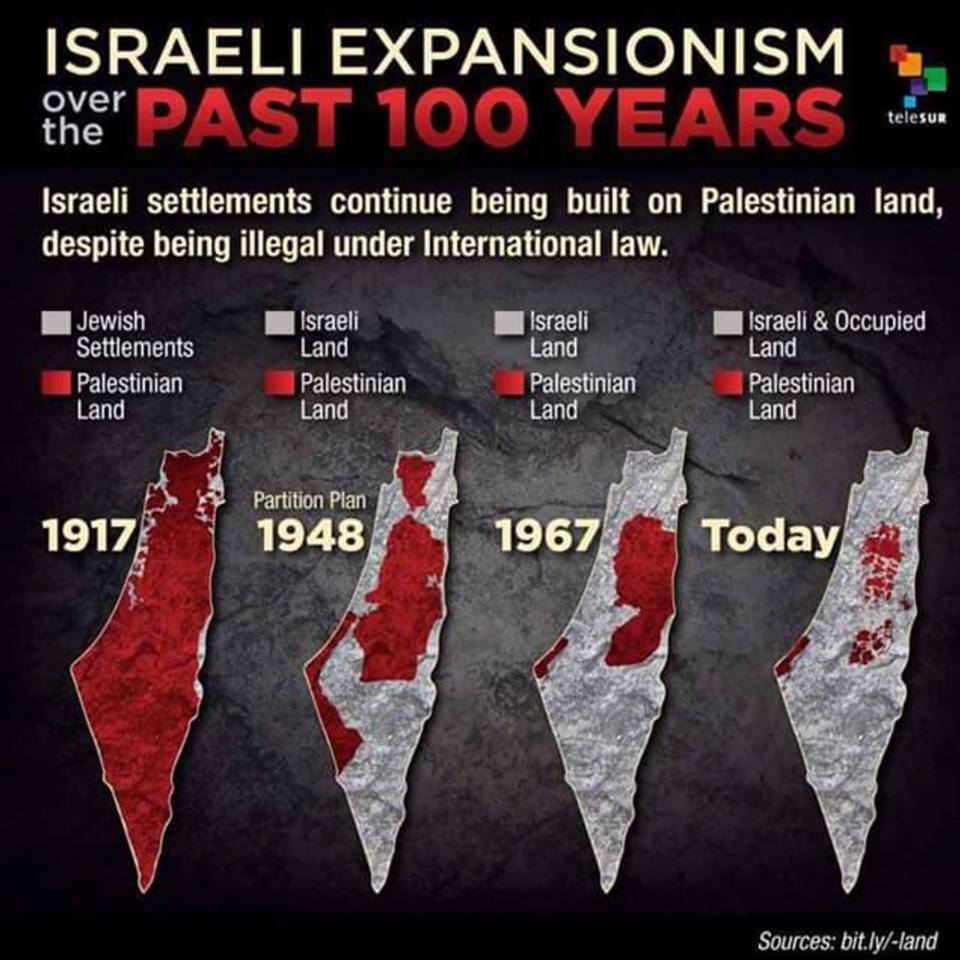
By rendering the illegal settlements “consistent” with international law, Washington is paving the road for Israel to annex all major settlement blocs in the occupied West Bank.
Israel, which was never truly concerned with international law in the first place, urgently required this American nod to move forward with annexing at least 60% of the West Bank.
With the hemorrhaging of US concessions to Israel, Netanyahu is eager for more. Desperate to strengthen his faltering grip on power, the Israeli leader agreed on November 20 to advance a bill that calls for the annexation of the Jordan Valley.
The bill was drafted by a member of the Israeli Likud – Netanyahu’s party – Sharren Haskel, who tweeted following Netanyahu’s decision, that the US announcement was “an opportunity to promote my law for sovereignty in the [Jordan] Valley.”
The US decision to defy international law on settlements is not dangerous because it violates international law, for the latter has hardly been a concern for Washington. The danger lies in the fact that the US foreign policy regarding the Israeli occupation has become a mere rubber stamp, that allows Israel’s extreme right-wing government to single-handedly determine the fate of the Palestinian people and sow the seed of instability and war in the Middle East for many years to come.
– Ramzy Baroud is a journalist, author and editor of The Palestine Chronicle. His last book is The Last Earth: A Palestinian Story (Pluto Press, London) and his forthcoming book is These Chains Will Be Broken: Palestinian Stories of Struggle and Defiance in Israeli Prisons (Clarity Press, Atlanta). Baroud has a Ph.D. in Palestine Studies from the University of Exeter. 

Wednesday, August 14, 2019

Manifestos of Hate: What White Terrorists Have in Common

Writing under the title of “If the El Paso shooter had been Muslim”, Moustafa Bayoumi stated the obvious.
“If the El Paso shooter had been a Muslim,” Bayoumi wrote in the British Guardian newspaper on August 6, US President Donald Trump “would be lobbing accusations such as ‘Islam hates us’ in the direction of Muslims and not lecturing the public about video games.”
Bayoumi was referring to the double standards that define much of western official and media discourses regarding violence. When the alleged perpetrator of violence is a Muslim, then the case becomes a matter of national security and is categorically dealt with as an act of terrorism. When the perpetrator is a white male, however, it is a whole different story.
On August 3, 21-year-old Patrick Crusius carried out a mass shooting in a Walmart store in El Paso, Texas, killing 22 innocent people.
Neither US authorities nor media used the term “terrorism” in describing the heinous act. Instead, the Justice Department is “seriously considering” bringing federal hate crime charges against the killer, CNN reported.
On the other hand, Trump reasoned that “mental illness and hatred pull the trigger, not the gun,” in another attempt at whitewashing violent crimes by white individuals.
The “mental illness” explanation, in particular, has served as the convenient rationale for all similar violence.
For example, when 28-year-old Ilan Long opened fire on college students in Thousand Oaks, California, in November 2018, killing 12 people, Trump offered this logic. “He was a very, very mentally ill person,” he said, referring to Long. “He’s a very sick — well, it’s a mental health problem. He is a very sick puppy. He was a very, very sick guy.”
The mental illness argument was infused repeatedly, including last March, when Brenton Tarrant opened fire on Muslim worshippers in Christchurch, New Zealand, killing 51 people.
“I think it’s a small group of people that have very, very serious problems,” Trump said of Tarrant’s anti-Muslim terrorist attack.
Compare this to Trump’s response to the killing of 14 people in San Bernardino, California, which was blamed on two Muslims. Trump immediately assigned the word “terrorism” to the violent act, while calling for a “total and complete shutdown” of the entry of Muslims to the United States, “until our country’s representatives can figure out what the hell is going on”.
But we do, in fact, know “what is going on”, a truth that goes beyond the typical western double standards. Crusius, Tarrant and many such white terrorists are connected through a deep bond that exceeds the supposed claim of mental illness into something truly sinister.
These individuals are all part of a larger phenomenon, an amalgamation of various ultra-nationalist governments, political movements and groups all around the world, all united by their hate for immigrants, refugees and Muslims.
Crusius and Tarrant were not “lone wolf” terrorists, as some would want us to believe. Even if they were single-handedly responsible for the mass murder of those innocent people, they are members of a large, ideological, militant network that is dedicated to spreading hate and racism, one which sees immigrants – especially Muslims, as “invaders”.
In his “manifesto”, a 74-page document that he posted online shortly before he carried out his heinous act, Tarrant references the far-right, the racist ideologues who inspired him, along with fellow “ethno-soldiers” – like-minded murderers who committed equally horrific acts against civilians.
It was not by accident that Tarrant named his document the “Great Replacement”, as it was framed after a similarly named conspiracy theory made popular by a strong Israel supporter, Renaud Camus.
Camus is an infamous French writer whose “Le Grand Remplacement”, an even more extreme interpretation of Francis Fukuyama’s Clash of Civilizations, envisages a global conflict that sees Muslims as the new enemy.
The Great Replacement, along with other such literature widely popular among the far right, represents the ideological foundation for the, until recently, disorganized and disconnected efforts by various ultra-nationalist movements around the world, all united in their desire to address the “Muslim invasion”.
The common thread between violent white males who commit mass killings is obvious: a deep indoctrination of racism, anti-immigrant sentiment and hate for Muslims. Like Tarrant, Crusius also left his own manifesto, one that is, according to CNN, “filled with white nationalist and racist hatred toward immigrants and Hispanics, blaming immigrants and first-generation Americans for taking away jobs and the blending of cultures in the US”.
Moreover, both seemed to subscribe to the same intellectual discourse, as they had posted links to a 16,000-word document on Twitter and 8chan that was “filled with anti-immigrant and anti-Muslim sentiments”.
“The writer of the document linked to the El Paso suspect expressed support for the shootings of two mosques in Christchurch,” CNN also reported.
White militants are gripped by the groundless fear that they are being “replaced”. “Great Replacement” promoters argue that Islam and the Islamic civilization are “ethnically replacing” other races, and that such a supposed phenomenon must be stopped, using violent means if necessary. Unsurprisingly, they see Israel as a model country that is succeeding in fighting against the “Muslim menace”.
What makes violent white supremacists even more dangerous is the fact that they now have friends in high places. Trump’s refusal to address the issue of white nationalist militancy in a serious way is no accident. But the American president is not alone. The rising star of Italian politics, Matteo Salvini, for example, has a great deal of sympathy for such movements. Following the Christchurch massacre, the Italian defense minister refused to condemn white extremists. Instead, he said: “The only extremism which should be carefully addressed is the Islamic one.”
The list of far-right ideologues and their benefactors is long and constantly expanding. But their hate-filled speech and disturbing “theories”, along with their fascination with Israeli violence and racism, would have been assigned to the bins of history if it were not for the high price of violence that is now associated with this movement.
Our understanding of white nationalist violence should move beyond the double-standard argument into a more wholesome analysis of the ideological links that tie these individuals and groups together. In the final analysis, no form of violence targeting innocent people should be justified or tolerated, regardless of the skin color, religion or identity of the perpetrators.
 – Ramzy Baroud is a journalist, author and editor of Palestine Chronicle. His last book is ‘The Last Earth: A Palestinian Story’ (Pluto Press, London). Baroud has a Ph.D. in Palestine Studies from the University of Exeter and was a Non-Resident Scholar at Orfalea Center for Global and International Studies, University of California Santa Barbara. 

Friday, August 09, 2019

The War on Innocence: Palestinian Children in Israeli Military Court

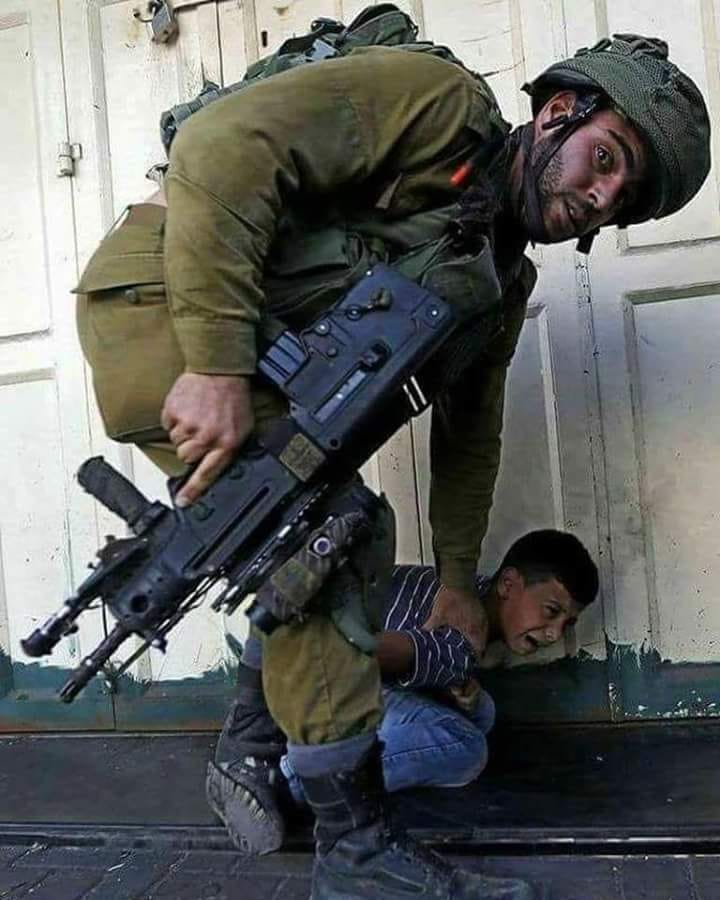
On July 29, 4-year-old Muhammad Rabi’ Elayyan was reportedly summoned for interrogation by the Israeli police in occupied Jerusalem.
The news, originally reported by the Palestinian News Agency (WAFA), was later denied by the Israeli police, likely to lessen the impact of the PR disaster that followed.
The Israelis are not denying the story in its entirety, but are rather arguing that it was not the boy, Muhammad, who was summoned, but his father, Rabi’, who was called into the Israeli police station in Salah Eddin Street in Jerusalem, to be questioned regarding his son’s actions.
The child was accused of hurling a stone at Israeli occupation soldiers in the Issawiyeh neighborhood, a constant target for Israeli violence. The neighborhood has also been the tragic site for house demolition under the pretext that Palestinians there are building without permits. Of course, the vast majority of Palestinian applications to build in Issawiyeh, or anywhere in Jerusalem, are denied, while Jewish settlers are allowed to build on Palestinian land, unhindered.
With this in mind, Issawiyeh is no stranger to the ridiculous and unlawful behavior of the Israeli army. On July 6, a mother from the beleaguered neighborhood was arrested as a means to put pressure on her teenage son, Mahmoud Ebeid, to turn himself in. The mother “was taken by Israeli police as a bargaining chip,” Mondoweiss reported, quoting the Jerusalem-based Wadi Hileh Information Center.
Israeli authorities are justified in feeling embarrassed by the whole episode concerning the 4-year-old boy, thus the attempt at poking holes in the story. The fact is WAFA’s correspondent in Jerusalem had, indeed, verified that the warrant was in Muhammad’s, not Rabi’s, name.
While some news sources bought into the Israeli ‘hasbara’, readily conveying the Israeli cries of ‘fake news’, one must bear in mind that this event is hardly a one-off incident. For Palestinians, such news of detaining, beating and killing children is one of the most consistent features of the Israeli occupation since 1967.
Just one day after the summoning of Muhammad, Israeli authorities also interrogated the father of a 6-year-old child, Qais Firas Obaid, from the same neighborhood of Issawiyeh, after accusing the boy of throwing a juice carton at Israeli soldiers.
“According to local sources in Issawiyeh the (Israeli) military sent Qais’ family an official summons to come to the interrogation center in Jerusalem on Wednesday (July 31) at 8 am,” reported the International Middle East Media Center (IMEMC). In one photo, the little boy is pictured while holding up to a camera the Israeli military order written in Hebrew.
The stories of Muhammad and Qais are the norm, not the exception. According to the prisoners’ advocacy group, Addameer, there are currently 250 children in Israeli prisons, with approximately 700 Palestinian children going through the Israeli military court system every single year. “The most common charge levied against children is throwing stones, a crime that is punishable under military law by up to 20 years,” Addameer reports.
Indeed, Israel has so much to be embarrassed about. Since the start of the Second Intifada, the popular uprising of 2000, some 12,000 Palestinian children have been detained and interrogated by the Israeli army.
But it is not only children and their families that are targeted by the Israeli military, but also those who advocate on their behalf. On July 30, Palestinian lawyer, Tariq Barghouth, was sentenced to 13 years in prison by an Israeli military court for “firing at Israeli buses and at security forces on a number of occasions.”
As flimsy as the accusation of a well-known lawyer firing at ‘buses’ may sound, it is important to note that Barghouth is well-regarded for his defense of many Palestinian children in court. Barghouth was a constant source of headache for the Israeli military court system for his strong defense of the child, Ahmad Manasra.
Manasra, then 13-years of age, was tried and indicted in Israeli military court for allegedly stabbing and wounding two Israelis near the illegal Jewish settlement of Pisgat Ze’ev in Occupied Jerusalem. Manasra’s cousin, Hassan, 15 was killed on the spot, while wounded Ahmad was tried in court as an adult.
It was the lawyer, Barghouth, who challenged and denounced the Israeli court for the harsh interrogation and for secretly filming the wounded child as he was tied to his hospital bed.
On August 2, 2016, Israel passed a law that allows authorities to “imprison a minor convicted of serious crimes such as murder, attempted murder or manslaughter even if he or she is under the age of 14.” The law was conveniently crafted to deal with cases like that of Ahmad Manasra, who was sentenced on November 7, 2016 (three months after the law was approved) to 12 years in prison.
Manasra’s case, the leaked videos of his abuse by Israeli interrogators and his harsh sentence placed more international focus on the plight of Palestinian children in the Israeli military court system.
“Israeli interrogators are seen relying on verbal abuse, intimidation and threats to apparently inflict mental suffering for the purpose of obtaining a confession,” Brad Parker, attorney and international advocacy officer at Defense for Children- Palestine, said at the time.
The United Nations Convention on the Rights of the Child, of which Israel, as of 1991, is a signatory, “prohibits torture and other cruel, inhuman or degrading treatment or punishment.” Yet, according to Parker, “ill treatment and torture of Palestinian children arrested by Israeli military and police is widespread and systematic.”
So systematic, in fact, that videos and reports of arresting very young Palestinian children are almost a staple on social media platforms concerned with Palestine and Palestinian rights.
The sad reality is that Muhammad Elayyan, 4, and Qais Obaid, 6, and many children like them, have become a target of Israeli soldiers and Jewish settlers throughout the Occupied Palestinian Territories.
This horrendous reality must not be tolerated by the international community. Israeli crimes against Palestinian children must be effectively confronted as Israel, its inhumane laws and iniquitous military courts must not be allowed to continue their uncontested brutalization of Palestinian children.
 – Ramzy Baroud is a journalist, author and editor of Palestine Chronicle. His last book is ‘The Last Earth: A Palestinian Story’ (Pluto Press, London). Baroud has a Ph.D. in Palestine Studies from the University of Exeter and was a Non-Resident Scholar at Orfalea Center for Global and International Studies, University of California Santa Barbara. 

Friday, June 28, 2019

Palestine and Kenya: Our Historic Fight against Injustice Is One and the Same

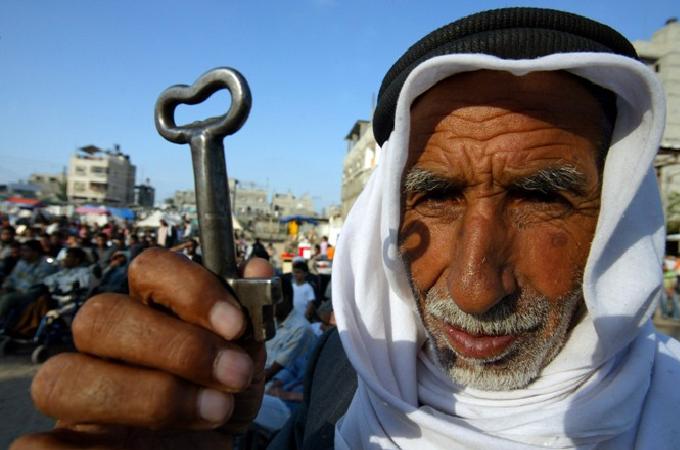
In 1948, my grandfather, along with thousands of Badrasawis, was expelled by Israeli military forces from our ancestral village of Beit Daras in Palestine.
Like hundreds of thousands of Palestinians from over 500 other villages, my grandfather assumed he would be back home in a few weeks. “Why bother to haul the good blankets on the back of a donkey, exposing them to the dust of the journey, when we know that we will return to Beit Daras in a week or so?” he asked my bewildered grandmother, Zeinab.
Beit Daras was located 32 kilometers north-east of the Gaza Strip, perched between a large hill and a small river that seemed never to run dry. A massacre took place as people fled the village. Houses were blown up, and wells and granaries sabotaged.
A peaceful village, that had existed for millennia, was completely destroyed with the intention of erasing it from existence. In its place now stands the Israeli towns of Giv’ati, Azrikam, and Emunim. The life of those Israeli towns is based on the death of our village.
Seventy years later, we have still not returned. Not just the Badrasawis, but millions of Palestinians, who are scattered in refugee camps all across the Middle East and a growing diaspora globally. Our good blankets have been lost forever, replaced with endless exile and dispossession.
The occupation of Palestine is not a “conflict” – as the Israelis like to present it. Israel is a colonial power that is ethnically cleansing an entire indigenous population in order to legitimize and grow its colony.
And like all people, we Palestinians have the right to resist colonial domination and occupation. This is an inalienable right enshrined in international law.
It is this right that justified Africa’s anti-colonial struggles and wars of liberation in the 1950s and 1960s, the American Revolution and the Cuban Revolution. This right also legitimates Palestinian resistance – whether that resistance is through the Boycott, Divestment and Sanctions (BDS) Movement, prosecution of Israeli war criminals at the International Criminal Court, or through armed struggle.
Dedan Kimathi is celebrated as a hero to Kenyans because of his resistance to – not because of his subservience to – colonialism and occupation. The Mau Mau rebellion is a source of inspiration – not just for Kenyans – but for all of humanity.
Israel will claim its occupation of Palestine is self-defense; that its demolition of Palestinian homes, detention without trial policies, construction of illegal settlements, theft of Palestinian land in the West Bank and East Jerusalem, and restrictions on Palestinian freedom of movement, are necessary for ‘security’. Israeli security and peace cannot be built on injustice and occupation – at the expense of Palestinian security, justice, dignity and peace. The life of one group should not be based on the death of the other.
Israeli military strikes on Palestinian targets in the Gaza Strip are always portrayed as a “response” to Palestinian fire. But Palestinian fire is never contextualized. It is never “in return” for the cruel, years-long Israeli siege that has systematically destroyed Gaza’s economy and subjected an entire generation of Palestinian children to malnutrition-related deficiencies.
It is never “in return” for decades of devastating military occupation of Palestinian land and life. Fire from Gaza is never “in return” for the continued dispossession of historic Palestine which made most of the population in Gaza refugees in the first place.
The Palestinian liberation struggle is simply dismissed as “terrorism”. The word “terrorism” is readily applied to Palestinian individuals or groups who use homemade bombs, but never to a nuclear-armed Israeli state that has used white phosphorous, DIME bombs, and other internationally-prohibited weapons against Palestinian civilians.
What is happening in occupied Palestine is incremental genocide – not self-defense. Israel is asking the Palestinian people to let their freedom die so that the Israeli people can live.
Submit or fight. These were the two choices facing Kenyans during your anti-colonial struggle. Like you, we Palestinians have also chosen to fight for our dignity – for ourselves and our children. We will not let our dream of freedom die.
For me, Beit Daras is not just a piece of earth but a perpetual fight for justice that shall never cease, because the Badrasawis belong to Beit Daras and nowhere else.
Israel can no longer rationalize its oppression of Palestinians by blaming Palestinians who exercise their natural and internationally recognized right to resist occupation and colonialism.
We will continue to resist Israeli colonialism, armed with our rights and international law.
(A version of this article first appeared in The Star)
– Ramzy Baroud is a journalist, author and editor of Palestine Chronicle. His last book is ‘The Last Earth: A Palestinian Story’ (Pluto Press, London). Baroud has a Ph.D. in Palestine Studies from the University of Exeter and was a Non-Resident Scholar at Orfalea Center for Global and International Studies, University of California Santa Barbara.

Thursday, June 20, 2019

‘World Refugee Day’: Palestinians Keep Their Right of Return Alive Through Hope, Resistance

by Dr Ramzy Baroud 


The United Nations’ World Refugee Day, observed annually on June 20, should not merely represent a reminder of “the courage, strength and determination of women, men and children who are forced to flee their homeland under threat of persecution, conflict and violence.”
It should also be an opportunity for the international community to truly understand and actively work towards finding a sustainable remedy to forced displacement, for no woman, man or child should be forced to endure such grueling, shattering and humiliating experience in the first place.
Palestinians who have withstood the degradation of exile for over 70 years embody the harshness of this collective experience more than any other group.
To be a refugee means living perpetually in limbo – unable to reclaim what has been lost, the beloved homeland, and unable to fashion an alternative future and a life of freedom, justice and dignity.
According to the United Nations High Commissioner for Refugees (UNHCR), there are currently 68.5 million people around the world who have been forced out from their homes, with 25.4 million of them classified as refugees.
Of the officially listed refugees, 5.4 million are Palestinians, registered with the UN Relief and Works Agency (UNRWA).
For Palestinians, the grim reality of being a refugee is compounded through the absence of any political horizon, enough to convey a sense of hope that, 70 years after the genesis of the Palestinian refugee crisis, a remedy is at hand.
Abandoned in this seemingly eternal quest for a homeland, Palestinians hold tighter onto hope, because it is hope alone that feeds their own sense of determination, which neither time nor distance will stand between them and their Right of Return. This internationally-honored right is etched in the hearts and minds of millions of Palestinians everywhere.
The archetypal image of a refugee – a man, a woman, a child holding on to the pole of a tent, charting a path of exile to no specific place, imploring UN officials for help, and the world for mercy – is, by itself, not enough to deconstruct the complexity of that identity. To belong to a place that has ejected you, yet to seek an alternative home in places to which you do not belong, culturally and in every other way, confuses one’s sense of being. The psychological trauma alone is shattering.
While Palestinians continue to hold on to a sense of identity in their various spaces of exile – refugee camps across Palestine and the Middle East – their prolonged odyssey is seen as a ‘problem’ to be haphazardly fixed, or entirely dismissed, in order for Israeli Jews to maintain their demographic majority.
The mere fact that the Palestinian people live and multiply is a “demographic threat” to Israel, a ‘demographic bomb,’ even. This unmistakably racist notion is wholly embraced by Israel’s allies in Washington and elsewhere.
When Israel and its friends argue that the Palestinians are an “invented people“, not only are they aiming to annihilate the Palestinian collective identity, but they are also justifying in their own minds the continued killing and maiming of Palestinians, unhindered by any moral or ethical consideration.
Israel and the US will do anything in their power to trivialize the centrality of the Palestinian refugee question and its relevance to any future just peace in Palestine.
Nearly a million Palestinian were made refugees following the establishment of Israel on the ruins of historic Palestine in 1948. Hundreds of thousands more acquired that dismal status in subsequent years, especially during the Israeli war and occupation of East Jerusalem, the West Bank and Gaza in 1967.
The 5.4 million refugees registered with UNRWA are those original refugees and their descendants.
Israel has never agreed to take responsibility for the consequences of its violent inception – the ethnic cleansing, the untold destruction of towns and villages and the very erasure of historic Palestine.
Even during the Oslo Peace Process, Israel refused to discuss the core issue of refugees, relegating it to the ‘final status negotiations’, which have never taken place and will, most likely, never actualize.
In the meantime, Palestinian refugees have been sentenced to subsist in this unfair status – neither here nor there. If there was such a status as second, third and fourth time refugees, Palestinians would have acquired that, as well.
Indeed, millions of Palestinian refugees have been exiled more than once, from Palestine to Jordan or Lebanon; from there to Syria, and back and forth.
The US invasion of Iraq in 2003 and the current war in Syria have taught us that Palestinian refugees with relatively better living conditions are not safe, either.
The small Palestinian refugee community in Iraq was persecuted after the invasion, to the point that they were forced to leave, en masse, to any country willing to take them. Many of them ended up as refugees in South America.
The same sordid scenario was repeated in Syria and will, tragically, be replayed elsewhere in the future.
Instead of remedying the crisis with a degree of moral and legal accountability, successive US administrations have tried to marginalize the importance of the Right of Return.
Israel, on the other hand, has targeted refugee communities through wars and massacres, most notably during the 1982 war and invasion of Lebanon, and the subsequent Sabra and Shatila Massacre in September of that same year.
Now, with the help of the Donald Trump’s administration, Israel and the US are orchestrating even more sinister campaigns to make Palestinian refugees vanish through the very destruction of UNRWA and the redefining of the refugee status of millions of Palestinians.
By denying UNRWA urgently needed funds, Washington wants to enforce a new reality, one in which neither human rights, nor international law or morality are of any consequence.
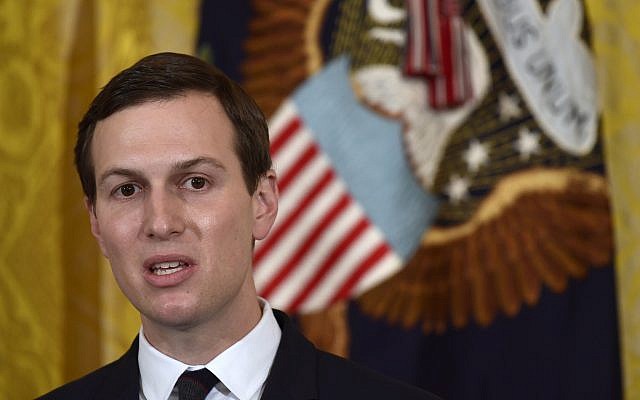
What will become of Palestinian refugees seems to be of no importance to Trump, his son-in-law and adviser, Jared Kushner, and other US officials. The Americans are now watching, hoping that their callous strategy will finally bring Palestinians to their knees so that they will ultimately submit to the Israeli government’s dictates.
The Israelis want the Palestinians to give up their Right of Return in order to get “peace”. The joint Israeli-American “vision” for the Palestinians basically means the imposition of apartheid and keeping Palestinian exiles in a never-ending ordeal.
The Palestinian people will never accept this injustice.
The Right of Return remains a driving force behind Palestinian resistance, as the Great March of Return demonstrated in Gaza, starting March of last year.
All the money in Washington’s coffers will not reverse what is now a deeply embedded belief in the hearts and minds of millions of refugees throughout Palestine, the Middle East and the world.
Palestinian refugees may not top the political agenda of the Middle East at the moment, but it is their persistence, determination and undying hope that will keep their cause alive until international law is respected and human rights are truly honored.
– Ramzy Baroud is a journalist, author and editor of Palestine Chronicle. His latest book is The Last Earth: A Palestinian Story (Pluto Press, 2018). He earned a Ph.D. in Palestine Studies from the University of Exeter, and is a former Non-Resident Scholar at Orfalea Center for Global and International Studies, UCSB. 

Thursday, June 13, 2019

Kushner as a Colonial Administrator: Let’s Talk About the ‘Israeli Model’

In a TV interview on June 2, on the news docuseries “Axios” on the HBO channel, Jared Kushner opened up regarding many issues, in which his ‘Deal of the Century’ was a prime focus.
The major revelation made by Kushner, President Donald Trump’s adviser and son-in-law, was least surprising. Kushner believes that Palestinians are not capable of governing themselves.
Not surprising, because Kushner thinks he is capable of arranging the future of the Palestinian people without the inclusion of the Palestinian leadership. He has been pushing his so-called ‘Deal of the Century’ relentlessly, while including in his various meets and conferences countries such as Poland, Brazil and Croatia, but not Palestine.
Indeed, this is what transpired at the Warsaw conference on ‘peace and security’ in the Middle East. The same charade, also led by Kushner, is expected to be rebooted in Bahrain on June 25.
Much has been said about the subtle racism in Kushner’s words, reeking with the stench of old colonial discourses where the natives were seen as lesser, incapable of rational thinking beings who needed the civilized ‘whites’ of the western hemisphere to help them cope with their backwardness and inherent incompetence.
Kushner, whose credentials are merely based on his familial connections to Trump and family friendship with Israeli Prime Minister, Benjamin Netanyahu, is now poised to be the colonial administrator of old, making and enforcing the law while the hapless natives have no other option but to either accommodate or receive their due punishment.
This is not an exaggeration. In fact, according to leaked information concerning Kushner’s ‘Deal of the Century,’ and published in the Israeli daily newspaper, ‘Israel Hayom’, if Palestinian groups refuse to accept the US-Israeli diktats, “the US will cancel all financial support to the Palestinians and ensure that no country transfers funds to them.”
In the HBO interview, Kushner offered the Palestinians a lifeline. They could be considered capable of governing themselves should they manage to achieve the following: “a fair judicial system … freedom of the press, freedom of expression, tolerance for all religions.”
The fact that Palestine is an occupied country, subject in every possible way to Israel’s military law, and that Israel has never been held accountable for its 52-year occupation seems to be of no relevance whatsoever, as far as Kushner is concerned.
On the contrary, the subtext in all of what Kushner has said in the interview is that Israel is the antithesis to the unquestionable Palestinian failure. Unlike Palestine, Israel needs to do little to demonstrate its ability to be a worthy peace partner.
While the term ‘US bias towards Israel’ is as old as the state of Israel itself, what is hardly discussed is the specific of that bias, the decidedly condescending, patronizing and, often, racist view that US political classes have of Palestinians – and all Arabs and Muslims, for that matter; and the utter infatuation with Israel, which is often cited as a model for democracy, judicial transparency and successful ‘anti-terror’ tactics.
According to Kushner a ‘fair judicial system’ is a conditio sine qua non to determine a country’s ability to govern itself. But is Israeli judicial system “fair” and “democratic”?
Israel does not have a single judicial system, but two. This duality has, in fact, defined Israeli courts from the very inception of Israel in 1948. This de facto apartheid system openly differentiates between Jews and Arabs, a fact that is true in both civil and criminal law.
“Criminal law is applied separately and unequally in the West Bank, based on nationality alone (Israeli versus Palestinian), inventively weaving its way around the contours of international law in order to preserve and develop its ‘(illegal Jewish) settlement enterprise’,” Israeli scholar, Emily Omer-Man, explained in her essay ‘Separate and Unequal’.
In practice, Palestinians and Israelis who commit the exact same crime will be judged according to two different systems, with two different procedures: “The settler will be processed according to the Israeli Penal Code (while) the Palestinian will be processed according to military order.”
This unfairness is constituent of a massively unjust judicial apparatus that has defined the Israeli legal system from the onset. Take the measure of administrative detention as an example. Palestinians can be held without trial and without any stated legal justification. Tens of thousands of Palestinians have been subjected to this undemocratic ‘law’ and hundreds of them are currently held in Israeli jails.
It is ironic that Kushner raised the issue of freedom of the press, in particular, as Israel is being derided for its dismal record in that regard. Israel has reportedly committed 811 violations against Palestinian journalists since the start of the ‘March of Return’ in Gaza in March 2018. Two journalists – Yaser Murtaja and Ahmed Abu Hussein – were killed and 155 were wounded by Israeli snipers.
Like the imbalanced Israeli judicial system, targeting the press is also a part of a protracted pattern. According to a press release issued by the Palestinian Journalists Union last May, Israel has killed102 Palestinian journalists since 1972.
The fact that Palestinian intellectuals, poets and activists have been imprisoned for Facebook and other social media posts should tell us volumes about the limits of Israel’s freedom of press and expression.
It is also worth mentioning that in June 2018, the Israeli Knesset voted for a bill that prohibits the filming of Israeli soldiers as a way to mask their crimes and shelter them from any future legal accountability.
As for freedom of religion, despite its many shortcomings, the Palestinian Authority hardly discriminates against religious minorities. The same cannot be said about Israel.
Although discrimination against non-Jews in Israel has been the raison d’être of the very idea of Israel, the Nation-State Law of July 2018 further cemented the superiority of the Jews and inferior status of everyone else.
According to the new Basic Law, Israel is “the national home of the Jewish people” only and “the right to exercise national self-determination is unique to the Jewish people.”
Palestinians do not need to be lectured on how to meet Israeli and American expectations, nor should they ever aspire to imitate the undemocratic Israeli model. What they urgently need, instead, is international solidarity to help them win the fight against Israeli occupation, racism and apartheid.
Ramzy Baroud is a journalist, author and editor of Palestine Chronicle. His latest book is The Last Earth: A Palestinian Story (Pluto Press, 2018). He earned a Ph.D. in Palestine Studies from the University of Exeter, and is a former Non-Resident Scholar at Orfalea Center for Global and International Studies, UCSB.

Friday, May 31, 2019

Resurrecting the PLO is Palestine’s Best Response to the ‘Deal of the Century’

Palestinian groups, Fatah, Hamas and others should not confine themselves to simply rejecting the Trump Administration’s so-called ‘Deal of the Century’. Instead, they should use their resistance to the new American-Israeli plot as an opportunity to unify their ranks.
Leaked details of the ‘Deal of the Century’ confirm Palestinians’ worst fears: the ‘Deal’ is but a complete American acquiescence to the right-wing mentality that has ruled Israel for over a decade.
According to the Israeli daily newspaper, Israel Hayom, a demilitarized state, ‘New Palestine’ will be established on territorial fragments of the West Bank, as all illegal Jewish settlements would permanently become part of Israel. If Palestinians refuse to accept Washington’s diktats, according to the report, they will be punished through financial and political isolation.
This is certainly not an American peace overture, but an egregious act of bullying. However, it is hardly a deviation from previous rounds of ‘peace-making,’ where Washington always took Israel’s side, blamed Palestinians and failed to hold Israel to account. Washington has never refrained from supporting Israeli wars against Palestinians or even conditioned its ever-generous aid packages on the dismantling of the illegal Jewish settlements.
The only difference between the US ‘peace process’ of the past and today’s ‘Deal of the Century’ is in the style and tactics as opposed to the substance and details.
Undoubtedly, the ‘Deal’, championed by Jared Kushner, President Donald Trump’s adviser and son-in-law, will fail. Not only will it not deliver peace – this is not the intention – but it is most likely to be rejected by Israel. The formation of Israel’s new government under Benjamin Netanyahu’s leadership is centered round far-right and religious parties. It is no longer politically correct in the new Israeli lexicon to even discuss the possibility of a Palestinian state, let alone agree to one.
Netanyahu, however, is likely to wait for Palestinians to reject the deal, as they certainly should. Then, with the help of pro-Israel mainstream western media, a new discourse will evolve, blaming Palestinians for missing yet another opportunity for peace, while absolving Israel from any wrongdoing. This pattern is familiar, highlighted most starkly in Bill Clinton’s Camp David II in 2000 and George W. Bush’s Road Map for Peace in 2003.
In 2000, the late Palestinian leader, Yasser Arafat, rejected then Israeli Prime Minister, Ehud Barak’s ‘generous offer’, an entirely manufactured political hoax that, to this day, defines official and academic understanding of what had transpired in the secret talks then.
All Palestinians must reject the ‘Deal of the Century’, or any deal that is born out of a political discourse which is not centered on Palestinian rights as enshrined in international law, a political frame of reference that is agreed upon by every country in the world, save the US and Israel. Decades of fraudulent American ‘peace making’ prove that Washington will never fulfill its self-designated title as an ‘honest peacemaker.’
However, rejection per se, while going back to business as usual, is inadequate. While the Palestinian people are united behind the need to resist the Israeli Occupation, challenge Israeli apartheid and employ international pressure until Israel finally relents, Palestinian factions are driven by other selfish priorities. Each faction seems to rotate within the political sphere of foreign influence, whether Arab or international.
For example, Fatah, which is credited for ‘igniting the spark of the Palestinian revolution’ in 1965, has been largely consumed with the trappings of false power while dominating the Palestinian Authority, which itself operates within the space allocated to it by the Israeli military occupation in the West Bank.
Hamas, which began as an organic movement in Palestine, is forced to play regional politics in its desperation for any political validation in order to escape the suffocating siege of Gaza.
Whenever both parties verge on forming a united leadership in the hope of resurrecting the largely defunct Palestine Liberation Organization (PLO), their benefactors manipulate the money and politics, thus resuming disunity and discord.
The ‘Deal of the Century’, however, offers both groups an opportunity, as they are united in rejecting the deal and equally perceive any Palestinian engagement with it as an act of treason.
More importantly, the steps taken by Washington to isolate the PA through denying Palestinians urgently needed funds, revoking the PLO’s diplomatic status in Washington and shunning the PA as a political ally provide the opportunity to open the necessary political dialogue that could finally accomplish a serious Fatah-Hamas reconciliation.
Israel, too, by withholding tax money collected on behalf of the PA, has lost its last pressure card against Mahmoud Abbas and his government in Ramallah.
At this point, there is little else that the US and Israel could do to exert more pressure on the Palestinians.
But this political space available for Palestinians to create a new political reality will be brief. The moment the ‘Deal of the Century’ is discarded as another failed American scheme to force a Palestinian surrender, the political cards, regionally and internationally, will be mixed again, beyond the ability of Palestinian factions to control their outcome.
Therefore, it is critical that Palestinian groups at home and in the diaspora push for Palestinian dialogue, not simply for the sake of forming a unity government in Ramallah, but to revitalize the PLO as a truly representative and democratic body that includes all Palestinian political currents and communities.
It is only through the resurrection of the PLO that Palestinians could finally return to their original mission of devising a national liberation strategy that is not manipulated by money and not subjected to regional politicking.
If history is any indication, the ‘Deal of the Century’ is another sinister American attempt to manage the situation in Palestine in order to assert political dominance in the region. This ‘Deal’ is essential for American reputation, especially among its disgruntled regional allies who feel abandoned by the progressive American military and political retreat from the region.
This latest charade does not have to be at the expense of Palestinians, and Palestinian groups should recognize and grasp this unique opportunity. The ‘Deal of the Century’ will fail, but efforts to achieve Palestinian unity could finally succeed.
– Ramzy Baroud is a journalist, author and editor of Palestine Chronicle. His latest book is The Last Earth: A Palestinian Story (Pluto Press, 2018). He earned a Ph.D. in Palestine Studies from the University of Exeter, and is a former Non-Resident Scholar at Orfalea Center for Global and International Studies, UCSB.