Showing posts with label Aleppo. Show all posts

Monday, November 26, 2018

War-Party Washington’s Chemical Goons Rise Again in Post-ISIL Syria

TEHRAN (FNA)- Washington's favourite terrorists, so-called ‘moderate rebels, fired a flurry of shells against the Northern Syrian city of Aleppo on Saturday, November 24, wounding dozens of people. At least 32 were hospitalized with breathing problems.
According to the Syrian state media, the shells contained chlorine gas and as many as 50 people suffered from the effects. Of course, the “moderates” are denying that they used chemical weapons in any way. However, they have worked on chemical weapons capabilities. They have also used such attacks to cause panic, sicken many, and then use it as a false flag against the Syrian government forces.
The media says the shells hit two districts. Witnesses reported that the al-Razi hospital was treating those wounded in strikes or sickened by the chlorine gas. Though American and Western officials have been deeply critical when the government’s forces are framed for such attacks, they are yet to say anything because their favourite terrorists who are behind the Thursday attacks have failed to entrap the government troops in a set up to work out a complete false-flag situation.
Quite the opposite, they prefer to claim that this is a “civil” war; the “rebels” are “democratic”; and the Syrian government does “starve its own people”, even using chemical weapons against them! In other words, they will never bother to use the new incident in Aleppo as further proof that America’s favourite terrorists have once again deployed chemical weapons against civilians since the incident is short of anything that could implicate the Syrian government.
They all know that the OPCW in its November 2013 report did confirm that Syria had “completed the functional destruction of critical equipment for all of its declared chemical weapons production facilities and mixing/filling plants, rendering them inoperable.”
They also know that chemical weapons can be delivered with rockets used by terrorists to justify Western intervention and salvage their faltering position. These goons don't need to have access to technology. A rocket can be launched from a simple tube, and the only additional technology they may have required for the larger rockets to attack Aleppo would have been a truck to mount them on.
Further still, they know that the attack on Aleppo would need to utilize stabilized chemical weapons and personnel trained in their use. From stockpiles looted in Libya to chemical arms covertly transferred by the US or Israel into Syria, there is no short supply of possible sources for those who attacked Aleppo.
And finally, regarding these murderous US-backed elements lacking the necessary training to handle chemical weapons – US policy has seen to it that not only did they receive the necessary training, but American-Israeli military contractors specializing in chemical warfare are reported to be on the ground with militants inside Syria. Western media news networks reported back in 2012: “US helping underwrite Syrian rebel training in Turkey and Jordan on securing chemical weapons.”
In terms of International Law, however, the United States has invaded Syria, a sovereign country and a United Nations member state. The United States, by tacitly joining forces with exporters of radical Wahhabi ideology Saudi Arabia, Israel and the UAE, also used the bogus war on terror to occupy the failed state permanently. Now the criminal hordes have begun looking the other way as their goons attack innocent civilians in Aleppo with chemical weapons. At the same time, they continue to build illegal military bases in Northern Syria, demonize the Syrian government for fighting their terror proxies, call for a wider war on Syria, and prolong the disaster that is the Syrian conflict.
The new conclusive evidence demonstrates that the widespread suffering of the Syrian people could be averted if only the United States and its client states stopped assisting, training, weaponizing (including with chemical weapons) and deploying their instruments of terror into Syria on the pretext of liberation and democracy-building.
The regime changers are free to claim otherwise, but the powerful reality is that by backing these terrorist groups they also condone their beheadings and chemical attacks, and hence, are complicit in their crimes against humanity. What's more, as maintained by United Nations High Commission for Human Rights, the US-led war on terror - and support for “moderate” rebels - violates UN conventions. The international civil society is outraged by the hypocrisy of the West's supposed respect for human rights while America’s favourite terrorists use chemical weapons to target civilians in Syria. A permanent occupation of Northern Syria implies a permanent US-led war on Syria and its allies as well.
The US government and associates continue to justify the training and arming of their “moderate” terrorists in the push for regime change in Damascus. These countries have a long record of supporting terrorists and using false flag operations and tactics to implicate the Syrian government for their own chemical attacks against the Syrian people. The slogans of humanitarianism merely make them look hypocritical to the rest of the world community.
Since it is clear from the above material that the War Party and associates have frequently used terror tactics and false flag operations, and have, even to the present time, supported many chemical weapons attacks against civilians, they all wind up being complicit in their terror proxy forces’ chemical crimes. It is long overdue they observed International Law and the UN Charter, and stopped training and arming their “moderate” goons with chemical weapons in Syria.

Tuesday, November 20, 2018

Iran Remains Key Balancing Force at Astana Process: Australian Prof.

TEHRAN (Tasnim) – A senior professor and political analyst based in Australia praised Iran’s role in the Syria peace process and said Tehran has remained “a key balancing force at Astana”.


Iran Remains Key Balancing Force at Astana Process: Australian Prof.
“Iran’s role remains vital, in diplomacy as in support for the long-suffering Syrian military,” Professor Tim Anderson, a lecturer at the University of Sydney, said in an interview with the Tasnim News Agency.
“We can readily see the ‘fruit’ of Tehran keeping open its channels with Turkey and Qatar, and all this is despite the pathological hostility of the Muslim Brotherhood network towards Shiite Muslims,” he said, adding, “Iran generously assisted Qatar, when the small monarchy was under attack from Riyadh; and it remains a key balancing force at Astana.”
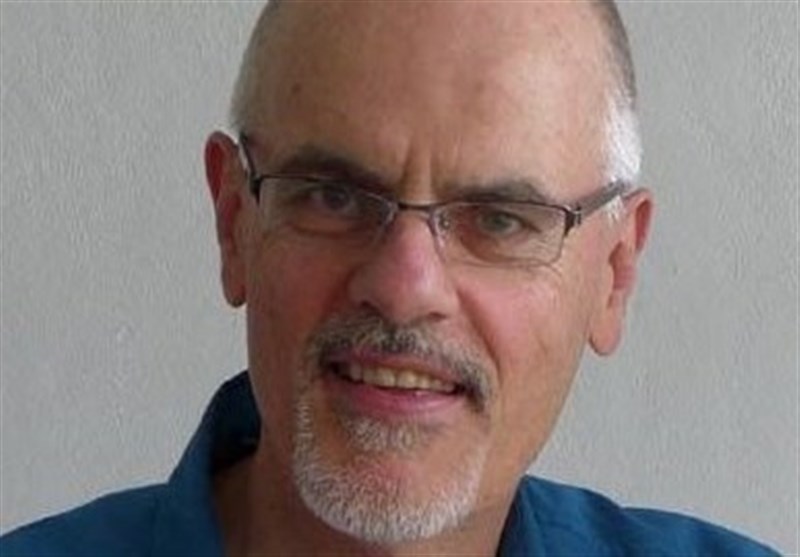
Professor Tim Anderson is a distinguished author and senior lecturer of political economy at the University of Sydney, Australia. Author of the 'The Dirty War on Syria', he has been largely published on various issues particularly the Syrian crisis.
The following is the full text of the interview:
Tasnim: Turkey recently rejected Syrian government accusations that it is not meeting its obligations under an agreement to create a demilitarized zone around the insurgent-held Idlib region, saying the deal was being implemented as planned. Syrian Foreign Minister Walid al-Muallem had said that Turkey appeared unwilling to implement the deal. What is your opinion about the comments and the future of the Idlib province, which with adjacent areas is the last stronghold of insurgents?
Anderson: The agreement between Russia and Turkey over Idlib is a temporary diplomatic move, designed to give President Erdogan a chance to prove his goodwill, and to head off planned aggression from the NATO powers (the USA, UK, France and of course Turkey). The mid-October deadline set for creating a buffer zone to prevent armed group attacks on Latakia and Aleppo has long gone. The other major objective was to reopen major road traffic across Idlib between Aleppo, Hama, and Latakia. There is no sign of this yet. The Russian leadership is putting a more hopeful face on the flagging agreement than the Syrian leadership, but both have recently stressed that, if there is little progress on the Russia-Turkey Idlib agreement, and if the ceasefire violations continue, they will liberate Idlib by force. The Syrian and Russian ambassadors both made this clear at the UN Security Council, and President Putin has repeated that commitment. The Syrian leadership does not trust Mr. Erdogan at all, but they have the advantage of two major allies who can still speak with him. The al-Qaeda led groups, for their part, have rejected the agreement and have violated the ceasefire several times, with attacks on adjacent areas. Recently, several people were killed in Aleppo. So it is really just a matter of time before Russia and Iran back a Syrian move to liberate the entire province. One risk has been that the armed groups have been re-supplied; on the other hand, fighters have been buying their way out of the trap and escaping into Turkey and Europe. The diplomatic advantage of the Idlib agreement is that, if Mr. Erdogan fails to deliver on his word, the capacity of Turkey to resist the final move will be weakened.
Tasnim: A four-way summit on Syria recently ended in Turkey’s Istanbul without any major breakthrough. In a joint communique following their meeting, Turkish President Recep Tayyip Erdogan, German Chancellor Angela Merkel, French President Emmanuel Macron and Russian President Vladimir Putin called for "an inclusive, Syrian-led and Syrian-owned political process" and said conditions needed to be created for the safe and voluntary return of refugees. The comments came as the summit was not attended by any Syrian groups. What do you think about the summit?
Anderson: Each successive external agreement, including the UNSC resolutions, the Astana process and the recent four-party meeting in Turkey, has stressed a Syrian-led process and respect for the territorial integrity of Syria. That increases the difficulty of Turkey maintaining their current military posts in Idlib. They are left with the ‘Kurdish card’; having always seen Turkish Kurd separatists as behind the much smaller group of Syrian Kurdish separatists. They are right on this. However, despite the Syrian Kurds’ naïve reliance on US support, they have also been in discussions with Damascus. Assurance of a Kurdish place in Syria’s constitutional discussions, and allowing the Syria Arab Army into previously YPG held areas, could help Turkey disengage from Idlib.
As for the recent talks in Turkey, which included Russia, Germany, and France, we cannot say that there is much new in substance. However, it is symbolically important that European states, which have assisted the anti-government armed groups, are now effectively linked into the Astana process without the presence or permission of the mastermind of the regional aggression, the government of the USA. Washington had previously refused observer status at Astana, so this is yet another measure which excludes the key external aggressor from the regional peace process and which opens the possibility of a more independent European stance. At the recent UNSC meeting, the US, UK, and some Europeans did try to demand a UN-driven constitutional committee for Syria. However, Syria, Russia, and others seem to have successfully countered that the UN’s role should remain as a facilitator of that process, not a controller. That, of course, is consistent with all the agreements which have demanded a ‘Syrian-led’ settlement. Astana remains the main road to a UN-sanctioned settlement; all the progress in recent years has come from these talks.
Tasnim: Iran, Russia, and Turkey - the three guarantor states of de-escalation zones in Syria - have held several rounds of peace talks in Kazakhstan’s Astana and elsewhere to help end the conflict in the Arab country. The fourth round of those talks in May 2017 produced a memorandum of understanding on de-escalation zones in Syria, sharply reducing fighting in the country. What is your assessment of the parallel talks between the three countries on the Syrian crisis and Tehran’s role in the peace process?
Anderson: It is quite true that the Astana talks have helped de-escalation, and indeed (alongside the Syria-Russia-Iran military victories) they have also helped the Syrian ‘reconciliation’ process, which includes surrenders and amnesties. It is the case that the fighters in Idlib now include many who rejected earlier amnesties, but that helps underline why the diplomatic process remains so important. The more these gangs are isolated, the less likely they are to be able to resist a rapid assault. We saw how quickly the ‘southern front’ collapsed after Washington withdrew its support. That group had the advantage of supply from and safe havens in Jordan and the Israeli-occupied Golan Heights. However, when President Trump abandoned them, both Jordan and Israel immediately followed suit. That really did show who was ‘calling the shots’.

Iran’s role remains vital, in diplomacy as in support for the long-suffering Syrian military. We can readily see the ‘fruit’ of Tehran keeping open its channels with Turkey and Qatar, and all this is despite the pathological hostility of the Muslim Brotherhood network towards Shiite Muslims. Iran generously assisted Qatar, when the small monarchy was under attack from Riyadh; and it remains a key balancing force at Astana. Despite the hostility from Israel and Washington, Turkey has been forced to recognize the Islamic Republic of Iran as a strategic neighbor and partner of substance. That swings the balance even further towards a Syrian victory, which will be of great significance for the region.

Friday, October 19, 2018

The endgame?

JOHN CHERIAN


Free Syrian Army fighters eating in the cave where they
live on the outskirts of the northern town of Jisr
al-Shughur, west of the city of Idlib, on September 9.
As the decisive battle for Idlib province looms, a motley
crew of opposition fighters are holed up in this last
rebel stronghold. 

The Syrian government claims that the conflict in the country is nearing an end as its troops prepare for an offensive against the last rebel stronghold, in Idlib province, and Israel, despite its aggressive posturing, seems to be lying low following the downing of a Russian military plane.
September was an eventful month in Syria. Even as the Western powers led by the United States were predicting a humanitarian catastrophe in the rebel-held areas of Idlib province in western Syria, Russia and Turkey sprang a surprise by announcing in the third week of September that a deal had been reached whereby the Syrian government would temporarily put on hold its plans for launching a military offensive. Russia and Turkey agreed to establish “a demilitarised zone” that would separate the rebels and the Syrian army, which is determined to purge the last remnants of terrorism from the country. The agreement was announced after a meeting between Turkish President Recep Tayip Erdogan and Russian President Vladimir Putin in the Russian resort town of Sochi. President Putin said that the two sides had agreed to the creation of a 20-24-kilometre-wide buffer zone separating the rebel forces from the Syrian army by the middle of October. The rebel fighters, along with their heavy weaponry, will have to exit from the demilitarised zone by October 10.
Turkey now fears that the imminent defeat of the rebels and their jehadist compatriots will trigger a new refugee flow into its territory. Many of the extremists currently holed up in Idlib will also eventually find their way into Turkey, which is among the main backers of the principal rebel groups in Idlib. This motley group of rebels has hard-core jehadists, including those owing allegiance to Al Qaeda outfits such as the Tahrir al Sham. Idlib is the last pocket of resistance following the fall of rebel strongholds in Aleppo, Daraa and Damascus in the last couple of years.
The government in Damascus has been trying to get the rebels there to surrender or defeat them militarily. It was evident, despite forecasts by the West of an imminent attack by government forces, that Damascus was ready to exercise patience. Senior officials in the Donald Trump administration such as Nikki Haley had gone to the ridiculous extent of predicting that the Syrian government was preparing to use poison gas on its people. The Trump administration was evidently waiting for an excuse to bomb Syria again. The Russian government had issued a series of warnings that the rebel groups were preparing to stage a fake chemical attack, like they had done in the past, in order to precipitate a Western military attack on Syria.
Russian Foreign Minister Sergei Lavrov, speaking at the United Nations General Assembly, issued a strong warning to the terrorist groups and their patrons. “We warn the terrorists and their sponsors that new provocations involving chemical weapons are unacceptable,” he declared. He said that reconstruction of the war-torn country should be the priority for the international community and that it should be implemented without any “double standards”. He told the media in New York that the American military presence in Syria was illegal and went against U.N. Security Council resolutions. He also said that the United States was protecting terrorist groups in the al-Tanf area.
Reports from the ground in Syria, including from reputed Western correspondents like Robert Fisk, had belied stories of an imminent large-scale aerial and ground attack against the populated parts of Idlib province, which has an estimated three million people, along with 30,000 rebel fighters. The rebels have been evidently told by their patrons such as Turkey to give up fighting. The Syrian government has promised them amnesty or safe passage out of Idlib. The die-hard jehadi fighters, especially those belonging to the al Nusra, are still insisting that they would rather die fighting than surrender.
Displaced Syrian children at a refugee camp in Atimah
village of Idlib province on September 11. 

‘Occupying forces should withdraw’


Russia’s Deputy Foreign Minister Mikhail Bogdanov, who is the Special Representative of the Russian President, said in late September that the goal of liberating the whole of Idlib from terrorists remained unchanged and that setting up “de-escalation zones” was only a “temporary measure”. Syrian Deputy Prime Minister Walid al Moualem, who is also Foreign Minister, said in his speech at the General Assembly that the U.S., French and Turkish troops operating in Syrian territory, which he described as “occupying forces”, should withdraw immediately and “without conditions”. He assured the General Assembly that the battle against terrorism was nearing its end and that the need of the hour was to ensure the quick return of millions of Syrians displaced during seven years of bloodshed. Blaming the “illegal coalition” led by the U.S. for the widespread destruction in his country, he said it had “fought everything but terrorism…. Instead it has proved that its goals are almost the same as the terrorist groups, mainly fostering chaos, death and destruction.”
Israel, a de facto member of the coalition, has been trying to undo the substantive gains made by Syria, Russia, Iran and allies such as Hizbollah in the war against terrorism. Israel has the dubious distinction of having carried out more than 200 air strikes on Syrian government targets in the last two years in its increasingly desperate efforts to stop the decimation of the terror groups by the Syrian army. In recent years, it has been justifying its attacks by saying that the real targets are Iranian military advisers who have played a crucial role in the defeat of the jehadi forces. Before that, the Israelis said that they were targeting Iranian missiles and armaments meant for the Hizbollah militia in Lebanon that were transiting through Syria. The Russians, for reasons of their own, had decided to look the other way as Israel was allowed a free run over Syrian airspace. Moscow is playing a careful balancing game as it manages friendly relations with both Tel Aviv and Tehran.
But predictably, the Israelis overplayed their hand. In the second week of September, a Russian military surveillance plane inside Syrian airspace was shot down. Israeli fighter jets on a bombing mission over Latakia had taken shelter behind the Russian IL-20 reconnaissance plane as they came under attack from Syrian ground defences. The Russian plane came down in the crossfire. The Israelis had not bothered to inform the Russian ground control either about the presence of the plane or about the mission it was conducting. All 15 crew members on board were killed.
The Kremlin was livid. Israeli Prime Minister Benjamin Netanyahu, who thinks he has “a special relationship” with Putin, tried to blame the Syrian army. The Russian Defence Ministry angrily accused the Israelis of positioning their F-16 jets behind the Russian transport plane. Israel was also accused of not adhering to the one-minute warning system agreed between the two militaries, whereby notice is given to the Russian military before the Israelis decide to strike a military target inside Syria. Russian Defence Minister Sergei Shoigu said that the Israelis had deliberately used the Russian surveillance plane as a cover for their own war planes “on the assumption that Syrian air defences would not be operating in the area”. Shoigu pledged that Russia would not leave “such provocations unanswered”.
The Kremlin seems to have at last decided to end the free run Israel enjoyed over the skies of Syria. Within days of the downing of the Russian plane, the Kremlin announced that it was bringing in the lethal S-300 missile batteries to Syria. Netanyahu had wanted to send a high-level delegation to Moscow to persuade the authorities there about Israel’s non-culpability in the downing of the Russian plane. Moscow politely refused to receive it. The Kremlin said there was enough evidence to prove Israel’s guilt. The S-300s, which have been compared to the U.S.’ Patriot systems, have a range of more than 250 km. The Russians have also installed an electronic system in Syria that is able to distinguish between friendly and enemy aircraft. According to reports, Russia will shortly dispatch two to four S-300 systems to guard Syria’s coastline and its borders. More S-300 units will be sent in later.
The Russians have already sent sophisticated electronic equipment to Syria that is able to interrupt the radar and navigation equipment of hostile aircraft. Military experts agree that the deployment of the new missiles will significantly curb Israel’s ability to hit targets in Syria at will. If deployed in Damascus, the missile system will be able to monitor the entire Israeli airspace. According to Russian officials, the S-300s will help Syria regain full sovereignty over its airspace as it will now have the capability to close its airspace “where necessary”. The “defensive weapons”, according to defence analysts, will lead “to the stabilisation of the region”.
John Bolton, National Security Adviser to U.S. President Donald Trump, has termed the stationing of the S-300 missiles as “a significant escalation”. But Netanyahu has said that it will not stop Israel from continuing with its raids. He told the media that he had got assurances from the Trump administration that it would continue backing Israel’s bombing campaign in Syria. “We will continue to act to prevent Iranian build-up in Syria,” he said. There are only a handful of Iranian military advisers in Syria. Iran does not need military bases in the region to spread its political influence. Israeli Defence Minister Avignor Lieberman has talked of destroying all missile systems in Syria if Israeli planes are targeted on their bombing missions. This prompted Russia to issue a warning that any such act would result in a dramatic escalation of the conflict.
There have not been any serious Israeli acts of aggression against Syria since the downing of the Russian plane despite the threats issued by Netanyahu and his Defence Minister. The recent events could in fact hasten the end of the insurrection supported by the West and its allies in Syria. More than 50,000 Syrian refugees have returned home in the last couple of months. Once Idlib is liberated and U.S troops leave the eastern part of Syria, comprehensive peace could once again return to the country.
Courtesy- Frontline.

Wednesday, September 05, 2018

Trump’s Talking of Trash Will Not Deter Damascus & Allies

By: Kayhan Int’l 


Ignorance, arrogance, insolence, and imprudence, are some of the words to describe the mindset of the US Administration of Donald Trump which the Free World is beginning to view as a psychiatric ward where some of the most deranged elements have been assembled by a dotard.

The other day Trump talked trash when he tweeted against the long overdue military operations by President Bashar al-Assad to clear Idlib – and soon Deir ez-Zore – of terrorists, who by refusing to surrender to the government in Damascus, continue to endanger the lives of three million men, women, and children, living as virtual hostages in that northern Syrian province, thereby inviting necessary military action.

The poor guy who neither knows geography nor history, let alone politics or diplomacy, seems to have confused Idlib for Idaho and Deir ez-Zore for Delaware.

Trump thinking that Syria and its allies – the Islamic Republic of Iran, Russia and Lebanon’s legendry anti-terrorist organization, the Hezbollah – are all set for a grand campaign to liberate the occupied homelands of the persecuted Amerindians from the rule of the Anglo-Saxons in the White House, blurted whatever came to his walnut-sized brain.

It is high time some sane persons in Washington rapped this knucklehead and warned him of the dangerous consequences of meddling in sovereign independent countries where the illegally-based American troops run high risk to their lives by siding with terrorists and supplying them with chemical gasses for use on civilian populations under their control in a bid to cry wolf against the government of Syria.

The US should understand that if it repeats the worn-out tactics of asking the terrorists to gas people and then lay the blame on President Assad – as happened in Homs, Aleppo, Ghoutha and other places – in order to wade into the war to chalk out zones of American influence, this would be a fatal mistake.

The Syrians and their allies are in no mood to tolerate Trump’s theatrics and are serious on liberation of Idlib – and soon Deir ez-Zore – even if it means direct confrontation with any foolhardy US invasion that will entail only body bags for the dead-scared and demoralized 2,000 odd American troops. 

It is the sovereign right of the government of Syria, guaranteed by the UN Charter, to cleanse its terrorist-infested territories, which means any attempt by outside parties to aid, abet, and arm the terrorists, is tantamount to act of war against Damascus, which, with the help of its allies, can take whatever military action it deems necessary.

The Russians are not reckless in supporting the legitimate stand of President Assad, nor will the Iranian advisors who have been invited by Damascus withhold any effort, and neither the battle-hardened militias assisting the Syrian Arab Army in its spectacular victories of the past few years will be cowed down by threats.

The recent visits to Syria by senior Iranian officials, such as Defence Minister Amir Hatemi and Foreign Minister Mohammad Javad Zarif, both of whom met the Syrian President to discuss a wide variety of topics, including reconstruction, defence, and diplomacy, are part of the stabilizing policy of the Islamic Republic to safeguard the security of the whole region from terrorism.

The whole world knows, but for the timely response of Tehran to the urgent requests from Damascus and Baghdad for help, the two countries would have been occupied by macabre head-chopping and raw human-liver-eating terrorists.

In view of this fact, the US, or more properly the Don Quixote in the White House, is advised to come to its/his senses, and instead of destabilizing the region from Lebanon to Yemen, contribute to peace.

We know the American Administration is unable to overcome its inherent traits of ignorance, arrogance, insolence, and imprudence, and will continue to side with terrorists, criminals, and all enemies of humanity.

Therefore, for the safety and security of the people of the region, including the three million odd civilians trapped in Idlib, the government of Syria and its allies are prepared for all eventualities, confident of yet again routing out the terrorists and their dastardly backers.