Sunday, September 20, 2026

Iran ends the American Middle East: analysis

‘Trump’s debacle in Iran has shattered the illusion of American military omnipotence’
TEHRAN - Marc Lynch, a professor of political science and international affairs at George Washington University, says the failed U.S.-Israeli war on Iran has put an end to “the American Middle East.”

Writing an article in Foreign Affairs, Lynch says, “If the war in Gaza left the future of American regional leadership in doubt, the war with Iran was confirmation of the end of the order.”

He adds, “Events together have dealt a death blow to the American Middle East.”

“Trump’s debacle in Iran has shattered the illusion of American military omnipotence,” says Lynch, the author of America’s Middle East: The Ruination of a Region.

The following is a shortened version of the article titled “The End of the American Middle East”:

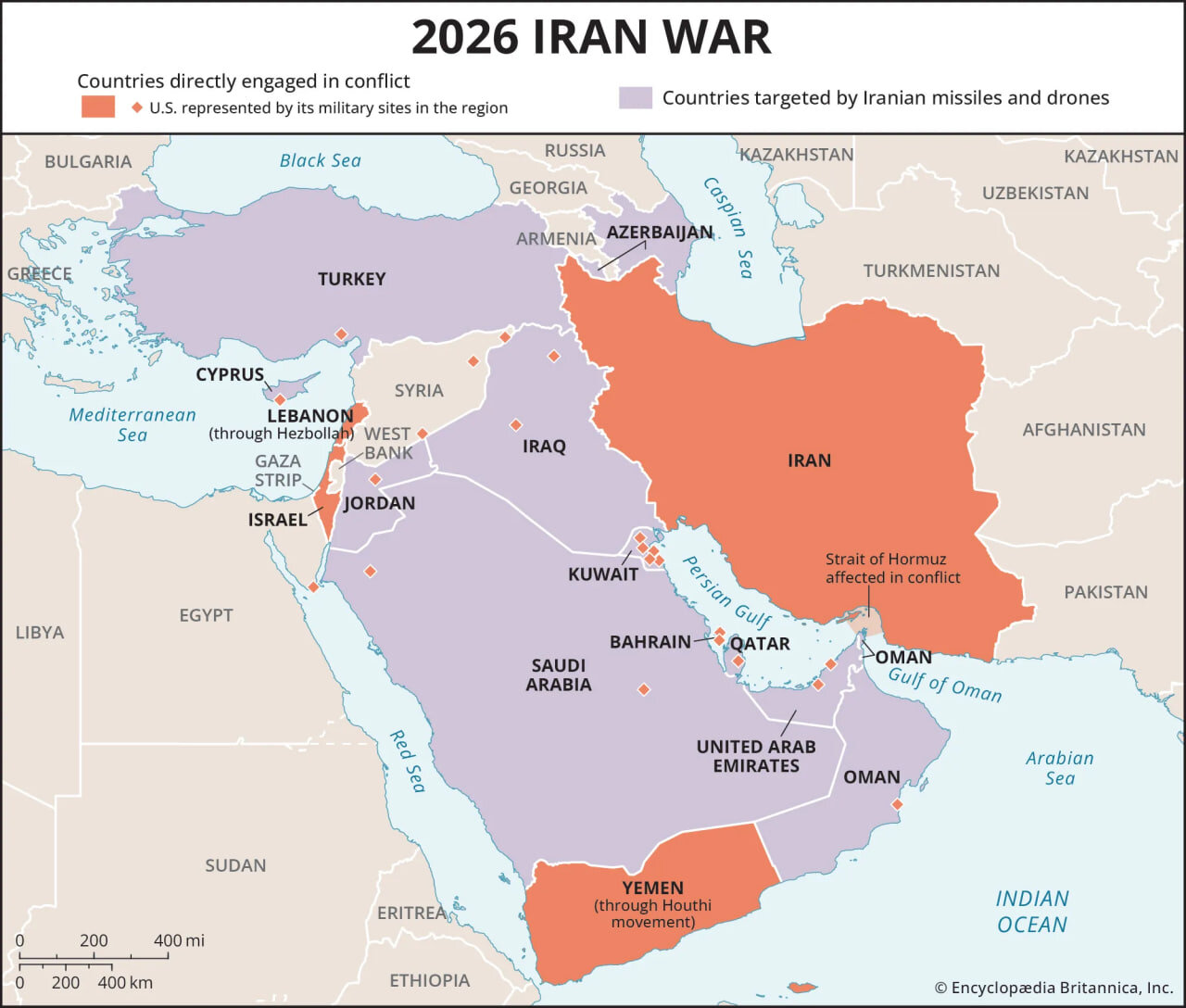
The American Middle East is finished. The regional order that has prevailed since 1991 has been one of the many casualties of the U.S.-Israeli war with Iran. The American and Israeli failure to dislodge the ruling system in Tehran has proved the bankruptcy of decades of sanctions and violence. The inability of the United States to protect its Persian Gulf allies from Iranian attacks or to keep the Strait of Hormuz open has fatally undermined the core security bargain that justified its network of military bases in the region. And Israel’s increasingly threatening posture and abandonment of any pretense of interest in reaching an accommodation with the Palestinians have ended Washington’s decades-long mission of bringing its Arab allies and Israel together into an enduring security partnership.

The United States’ primary goal for three and a half decades has been to lock its disparate allies into an order built around protecting Israel while containing, at first, Iran and Iraq, and more recently Iran and its nonstate allies. Far from being a deviation from that strategy, President Donald Trump’s war took it to its logical end, seeking to undermine Iran by force in one fell swoop. As American leaders did before the 2003 invasion of Iraq and Israel has done in its wars against Hezbollah and Hamas, the architects of this war vastly exaggerated what military power could achieve, underestimated the capacity of adversaries to adapt, took for granted that allies would fall in line. Washington’s misadventure was not an aberration so much as the ultimate expression of the inherent vice of its Middle East strategy.

At first, it may not look as though the war has had much effect on the alliances that form the American order. Facing an inconclusive war and an empowered Iran, the Persian Gulf states may ramp up their arms purchases and their demands for renewed security guarantees, creating the illusion of continuity. But the old order is in fact giving way to something new. The 1956 Suez crisis is remembered today as the last gasp of British and French imperial power in the Middle East, but it took years to reach that inevitable end. American primacy will not disappear immediately, either, but long-building doubts about American power and purpose have passed their tipping point. The revelations of the Iran war and of the Israeli war in Gaza before it have already changed the calculations of U.S. allies and adversaries. Another round of fighting or the election of a different American president will not repair the rupture.

The years ahead promise further discord. 

Israel hopes to expand its de facto borders, including by annexing as much as possible of historic Palestine, and to impose its writ by force across vast swaths of the region. And assuming that the Iranian government does not collapse any time soon—which it appears highly unlikely to do—an emboldened Tehran will hope to defend and expand its regional influence by bogging Washington down in the kinds of endless, borderless “gray zone” conflicts in which it has always thrived.

If the United States is finally willing to abandon its failed strategy, however, the collapse of one order could still be an opportunity to build a new and better one. The conditions, admittedly, are far from ideal. Although most of the region’s leaders and publics desperately want a respite from military strikes and economic disruption, they also deeply resent Washington for dragging them into a disaster. But discarding its policy of support for autocrats, impunity for allies, and militarized containment of enemies might enable the United States to engage with the region in a healthier way—one that eventually could yield the durable stability Washington has claimed to want all along.
For many decades after World War II, American ambitions in the Middle East were defined by its global competition with the Soviet Union, which gave Washington an outsize interest in regional politics but made it wary of overt military intervention. The current Middle East order, established by the George H. W. Bush administration after the collapse of the Soviet Union and the liberation of Kuwait from Iraqi occupation in the Persian Gulf War of 1990–91, has been defined by American primacy. Presented with a historic opportunity to secure uncontested dominance over a long-contested region, Washington made itself indispensable by setting up military bases and security arrangements to contain Iraq and Iran. Its military and political support underpinned the survival of nearly every regime in the region.

To legitimize its role as something more than predatory domination, Washington launched the Arab-Israeli peace process in hopes of integrating its Arab allies and Israel into a common security framework. The result was a region divided between an American-led bloc that included Israel, Turkey, and almost every Arab state, and an opposing, less formal bloc that included Iran, Syria under the Assad dynasty, and nonstate actors such as Hamas, Hezbollah, and the Houthis. This structure remained remarkably unchanged through three decades of dramatic changes in global, regional, and American politics.

In the American telling, this order has provided a degree of stability while protecting core U.S. interests such as the oil trade and Israeli security. And in many ways, that has been true. Israel has not faced a state-level threat or fought a war against a peer competitor since 1973, which perhaps led it to underestimate the challenge of attacking Iran. Arab countries have worked with Israel against their common enemies despite the lack of a just solution to the Israeli-Palestinian conflict. For the most part, oil has flowed consistently at reasonable prices. No rival great power has seriously challenged American primacy—not even China, which has been content to sit back and take advantage of the economic opportunities made possible by the American provision of security.

For most people, the U.S. order meant only violence and deprivation.

For Washington, the strategic benefits accrued from this order seemed to justify the costs of the wars required to sustain it. But the price was much higher for those who live in the region. The past 35 years have seen Israel enter numerous smaller wars against its much weaker neighbors, the Israeli-Palestinian peace process completely fall apart, Hamas attack Israel on October 7, and Israel subsequently embark on the destruction of Gaza. In Iraq, the United States inflicted a dozen years of punishing sanctions, intermittent bombing, and failed regime change and counterproliferation efforts, followed by the disastrous 2003 invasion and occupation, all at tremendous human cost. Under American stewardship, catastrophic wars have shattered Lebanon, Libya, Sudan, Syria, and Yemen.

The regional order rested on American security guarantees not only to Arab states but also, critically, to the autocrats who sat atop them. For a brief moment during the 2010–11 Arab uprisings, the drive for change seemed unstoppable, but otherwise the arrangement worked. Nearly all regimes within the American alliance system held on to power; most tightened their grip in the protests’ wake. American support for neoliberal economic reforms encouraged those regimes to pursue privatization schemes that turbocharged elite corruption while impoverishing the majority of the population. Although the wealthy Persian Gulf oil states and small slivers of Arab elites flourished within this system, for most people the American order meant only violence, hopelessness, and deprivation. By nearly every economic, political, and developmental indicator, the Middle East under American domination has performed far worse than any other region.

Ironically, American security guarantees encouraged allies to disregard Washington’s policy interests. Most felt safe from external invasion or attack, creating a moral hazard: they could pursue their own ideological and political projects without fear of meaningful consequences. Washington’s preoccupation with its own domestic politics, inattention to the region’s nuances, and inflated fears of Chinese and Russian advances all made the United States an easy mark for manipulative local powers. As a result, it repeatedly failed over the decades to meaningfully restrain Israel or to prevent Arab allies from adopting policies that undermined stated U.S. goals. Those ostensible allies shrugged off criticism of their destructive interventions in Libya, Sudan, Syria, and Yemen. Nearly all actively opposed the 2015 nuclear agreement with Iran, which the Obama administration hoped would help stabilize the region. And in 2017, the blockade of Qatar led by the United Arab Emirates (UAE) and Saudi Arabia badly undermined the united front against Iran that Trump’s “maximum pressure” campaign required.

The 2010–11 uprisings pushed Arab governments into new forms of interventionism, in part because they lost confidence in the United States’ ability and willingness to respond to what they considered to be urgent threats. Autocratic allies that already feared potential coups and popular revolts now saw them as imminent realities as they faced down challenges from Islamist and jihadist movements, and young liberal democratic activists. Watching the lightning-fast spread of the protests, these regimes learned that the threat at home could begin anywhere, even beyond their borders. And when they saw the overthrow of Egypt’s Hosni Mubarak in 2011, they concluded that they could not count on the United States to save them from internal challenges. If they wanted to ensure their own survival, they would have to go out and contain the danger themselves. Their meddling repeatedly yielded devastating outcomes, however, contributing to a military coup in Egypt and several civil wars.

Israel enjoyed the most ironclad of American security guarantees. Although it is a democracy, at least for Jewish citizens, the country’s prime ministers have often fallen into a trap akin to the one ensnaring the United States’ autocratic allies. Israel’s military superiority and confidence in American support enabled its leaders to prioritize maintaining their governing coalitions and fending off domestic political threats over seriously addressing the Palestinian issue or easing regional instability. But when the October 7 attacks shattered that complacency, Israel’s response was to go all-in on military escalation. It displayed ever greater excess in its use of force across the region and entrenched its military occupation in the Gaza Strip, in the West Bank, and even in parts of Lebanon and Syria.

Part of the reason the American order lasted as long as it did was that the security bargains at its core were never truly tested. The region’s leaders complained endlessly of feeling abandoned but never behaved as if abandonment were a significant possibility. For years, interstate war was not a particularly salient threat, either. Israel bombed Gaza and Lebanon with some frequency, but no Arab state aligned with the United States was overly worried about an Israeli attack. Iran loomed larger among their concerns, but even a direct Iranian attack seemed extremely unlikely. 

At the same time, the United States was trying to institutionalize its Middle East order by brokering open military and political cooperation between its Arab allies and Israel. The goal was not new. Fostering an anti-Iranian coalition under American leadership had been an objective of every American government since 1991. Trump diverged from his predecessors, however, in pushing it forward without tying steps toward Arab-Israeli normalization to progress on the Palestinian issue. In 2020, his administration brokered the Abraham Accords between Israel and, originally, Bahrain and the UAE. Morocco joined soon after, and Sudan signed an initial agreement that has not been formalized. But when the Biden administration tried to cajole Saudi Arabia into signing on, it misjudged the importance of the Palestinian cause to the Saudi public and the rising competitiveness between Riyadh and Abu Dhabi. It failed to see the growing popular hostility to normalization—or to anticipate the looming catastrophe in Gaza.

The United States’ regional order has been shaken up before, including during the disastrous 2003 invasion of Iraq and the popular uprisings of 2011, but it has always reconstituted itself. U.S. policymakers were as trapped by the structure they designed as were the regional powers embedded in it. Every president since Bill Clinton came to office vowing to reduce American involvement in the Middle East, and every president has found himself dragged back into the same policies and the same wars.

The dual crisis of Israel’s destruction of Gaza and the U.S.-Israeli war in Iran may seem like just another episode in this cycle. But in truth, these events together have dealt a death blow to the American Middle East. American support for Israel’s assault on Gaza, particularly under President Joe Biden, swept away any residual moral authority the United States could claim. Trump’s debacle in Iran has shattered the illusion of American military omnipotence. Both incidents have demonstrated to Arab states their lack of meaningful influence within the regional order and the diminishing returns of American security guarantees.

American officials under Biden and Trump failed to appreciate the seismic effects of the Israeli war in Gaza. They shared a view that regional leaders’ opinions were the only ones that mattered, that those leaders had long forgotten about the Palestinians, and that they were eager for closer relations with a capable Israel and for the stronger security guarantees the United States offered as incentives. Few things better exemplified this myopia than Biden’s quixotic pursuit of brokering a normalization of relations between Israel and Saudi Arabia even after the rising death toll in Gaza had rendered such cooperation politically toxic among the Arab publics that Riyadh aspired to lead.

Washington’s unceasing push for Arab cooperation with Israel created further divides. As one of the first two signatories of the Abraham Accords, the UAE continued working with Israel during the Israeli campaign in Gaza and as Israel carried out military strikes in Iraq, Lebanon, Syria, Yemen, and even Qatar. During the war with Iran, according to The Wall Street Journal, the UAE has coordinated with Israel and the United States to launch strikes on Iranian targets. Saudi Arabia, meanwhile, has watched the Emirati-Israeli alignment with unease. Riyadh and Abu Dhabi were already at loggerheads over Syria, with Saudi Arabia backing the post-Assad regime and the UAE sharing Israel’s hostility to it, and Yemen, where Saudi Arabia had just driven out Emirati proxies. Saudi Arabia complained that the UAE was promoting secessionist movements that undermined regional stability, and it broadly saw a partnership between Israel and the UAE as a threat to its own regional leadership. The rift greatly complicated any chance Washington may have had of lining up the region’s heavyweights behind its campaign to defeat Iran.

If the war in Gaza left the future of American regional leadership in doubt, the war with Iran was confirmation of the end of the order. Persian Gulf leaders were furious that the United States and Israel started the war without consulting them, while knowing they opposed it, and in the middle of Omani-brokered negotiations with Iran. Within a few weeks, Iran managed to damage, destroy, or render irrelevant large parts of the archipelago of American military bases in these countries that had underwritten American primacy in the Middle East.

Persian Gulf allies’ confidence in Washington eroded further when the U.S.-Israeli campaign proved unable to dislodge the Iranian regime. For decades, advocates of bombing Iran argued that such an attack might be messy but would ultimately weaken Iran. Yet the United States and Israel, with all their military might, simply failed. On top of that, the United States sat by helplessly as Iran closed the Strait of Hormuz, endangering the entire Persian Gulf economy. Once again, Persian Gulf leaders were shocked not just by American disregard for their preferences but also by the revelation of American impotence. And their shock turned to anger when the United States bombed Iranian water storage facilities and Israel struck Iranian oil depots. Washington was gambling with its partners’ futures; had Tehran responded by striking Persian Gulf water facilities or nuclear power sites, the resulting cycle of escalation could have ended with Persian Gulf states’ facing economic catastrophe and enough environmental destruction to render them uninhabitable.

What the Persian Gulf took away from all this was that American security guarantees, the heart of the regional bargain, were no longer reliable. The region had already learned in 2011 that Washington could not protect it from domestic threats. If Washington could not even be counted on to consult its allies, defeat its adversaries, or protect its partners from the fallout of its regional misadventures, then what good were its promises? The fundamental bargain the United States offered has crumbled, and it will not be easily rebuilt.

It has become commonplace to refer to the Iran war as Washington’s Suez moment. There are indeed similarities between today’s catastrophe and the failed British-French-Israeli scheme to take the Suez Canal from Egypt in 1956, which delivered a stunning political victory to Egyptian President Gamal Abdel Nasser. Suez became a shorthand for the demise of the European empires and the passage from a multipolar world to the bipolar Cold War–era system. 

By the time of the Suez crisis, the dissolution of the European empires was inevitable—not because of one policy fiasco, but because of the rise of nationalism and anticolonialism as well as the economic and political exhaustion of the European imperial model. The United States’ Middle East order, too, had been decaying for years as policy and political failures accumulated, culminating in the loss of shared purpose and the military impotence revealed by the latest crises.

Washington will be tempted to stand by the policies that have defined its Middle East approach for decades, leaning on its relationships with the brutal, insecure, and repressive leaders who populate the landscape it designed. If American leaders stick to the same path, they should expect the same result: a region beset by constant instability, economic and political failure, and repeated eruptions of violent conflict. These conflicts may only occasionally draw in American military forces, but the chaos will consistently demand attention and pointlessly consume resources. The forever wars will continue.

That outcome may seem acceptable to American policymakers who have become accustomed to managing conflicts and maintaining relationships with bad actors. But Washington cannot stave off a transition to a new regional order by simply pretending that nothing has changed. Arab allies that have lost faith in the United States will increasingly exercise their autonomy. At times, that could mean pursuing diplomacy with Iran and expanding relations with China and Russia against American wishes. At others, it might mean meddling in Libya, Sudan, and the Horn of Africa or reigniting violent conflict in Iraq, Lebanon, Syria, and Yemen.

Forces largely beyond American control will shape this emergent order. For one, Israel is determined to carry on with military interventionism regardless of American preferences. It continued its war with Hezbollah in defiance of the U.S.-Iranian memorandum of understanding reached in June, and it indicated no willingness to withdraw its military from southern Lebanon. Israeli officials insist that the country will maintain a troop presence in Syria as well. And with no serious domestic pressure to adopt more dovish policies, there is little standing in the way of Israel’s annexation of the West Bank and its complete destruction of Gaza.

Although suffering from the war, Iran remains intact, and its regional power has grown. Iran has demonstrated its ability to effectively control the Strait of Hormuz and to strike American allies in the region. American pressure on weak governments in Iraq and Lebanon to disarm pro-Iranian militias could trigger additional conflict in which Iranian allies would hold the upper hand.

Regional alignments will drift further away from the anti-Iranian coalition that American officials envision. Instead of relying on American protection, many Persian Gulf states could pursue side deals with Iran to keep themselves off Tehran’s target list. And instead of following Washington’s lead, regional politics will likely revolve around a deepening competition for primacy between the Emiratis and the Saudis. Before the Iran war began at the end of February, Riyadh had started to mobilize a coalition that included Egypt, Pakistan, Qatar, and Turkey to counter the U.S.-backed Emirati-Israeli alliance. This contest will resume after the fighting simmers down, likely destabilizing already beleaguered states, stretching across the wider region, and generating endless new crises that a distracted Washington will struggle to navigate.

Finally, most regimes will face ever greater pressures from below as the fallout of the Iran war ripples through the region’s struggling economies. It is not only countries whose infrastructure has been affected by the Iran war. In Egypt, for example, steep hikes in fuel and food prices and enormous losses of Suez Canal revenues as the war disrupts global shipping are compounding existing fiscal and unemployment crises. Many countries already hurt by cuts in U.S. aid may lose another critical source of external investment as the wealthy Persian Gulf states grapple with their own economic problems. Domestic grievances and outrage over Gaza make for a potent mix, and a wave of protest comparable to the uprisings of 15 years ago could again be on the horizon.

The Iran fiasco has thoroughly exposed the hollowness of hawkish calls for war and promises of decisive action. It is time for Washington to commit to a diplomatic process that can bring Iran into the regional security system as an invested partner. The Persian Gulf states may be open to such an approach; after all, Saudi Arabia and Iran reached a rapprochement in 2023. The Obama administration evoked a similar vision when it was negotiating the 2015 Iran nuclear deal, and even Vice President JD Vance has spoken of a willingness to “fundamentally transform” the U.S. relationship with Iran following a new agreement. The aspiration is there, but a new administration will have to demonstrate quickly and decisively that it intends to see it through.

Lamerd Attack: An Atrocity that Adds to the US Crimes Case

Alwaght- Over the past seven months, massive American and Israeli strikes across Iran have laid bare a raw portrait of violence and atrocity, killing and wounding a large number of civilians. Yet from the very first hours of the 40-day war, some cities tasted the bitter cost of the enemy's crimes; cities that still bear the scars months after the attacks ended, every corner of them telling a story of the aggressors' brutality.

Lamerd, in Fars province of Iran, is one of them. On the first day of 40-day war on Iran on February 28, it was hit by banned American ammunitions, and despite Washington's claims, civilians were the sole victims of that horrific crime.

The ferocity and scale of the strike were such that its marks remain visible months later, traces that speak not only of the destruction left behind but stand as living testimony to what befell the city and its people. So significant was the attack that Iranian political officials traveled to the site in person to inspect the devastation wrought by the enemy up close.

Meanwhile, on Saturday, Foreign Ministry spokesman Esmail Baghaei, visiting Lamerd and meeting its residents, pointed to the American missile strike and said: "The aim of this attack was to take civilian lives, and civilian sites, including schools and sports facilities, were targeted."

Noting that the strike hit at 5:12 p.m., February 28, the spokesperson said: "Given the timing and the method of target selection, it is likely that the aim was to inflict the maximum number of casualties among the people, and had schools been in session at that hour, the toll of martyrs and wounded from this attack could have been several times higher."

He, pointing to the close proximity of the missile impact sites to one another, said: "Within a 500-meter radius, there are four launch and impact points, yet none of the targets had a military nature. A school, a girls' sports facility, and a boys' sports facility were among the targets of this attack, and that makes the dimensions of the crime committed all the clearer."

Lamerd attack, a war crime instance

In the decades since World War II, the US has repeatedly tested each new generation of its weapons on real battlefields by attacking other countries, a pattern repeated in the recent war against Iran, where some of the most advanced American weaponry was deployed.

In that vein, the foreign ministry spokesman, citing statements by American officials about the attack, stressed: "America has openly accepted responsibility for this action and has even declared that it used this type of missile for the first time to assess the extent of destruction. In similar cases, too, efforts have been made to offer differing accounts of the attacks, and responsibility for certain actions against Iran has even been attributed to artificial intelligence, but the nature of these actions is not something that can be overlooked under humanitarian law."

It is noteworthy that on the first day of the war, several American missiles struck the Shahid Naeemi sports hall and surrounding residential areas in Lamerd. The significance of the matter grew when independent assessments of the weapon used pointed to the American PrSM missile.

The new American missile tested on the people of Lamerd was built by Lockheed Martin and, at the time of the attack, scattered 180,000 fragments each into the city's residents, leaving behind many wounded and martyred.

In that horrific crime, 21 people were killed and more than 100 others wounded by missile fragments, and more than six months on, several boys and girls from Lamerd, along with their families, are still grappling with disabilities and severe pain and suffering from those wounds. A number of tungsten pellets from the PrSM missiles remain lodged in the bodies of some children.

The missile was designed to explode at altitude and scatter a large volume of metal fragments, and an Airwars assessment found that in Lamerd the lethal effects of the blasts were observed up to roughly 50 meters from the impact point, with destruction extending some 170 meters. Post-attack imagery shows numerous fragment strikes on buildings, vehicles, and streets in the surrounding area.

Washington has confirmed the use of PrSM missiles in Iran but denied that one struck Lamerd. Yet six weapons experts who spoke with The Associated Press, based on the available evidence, deemed the use of the missile likely and said the pattern of destruction is consistent with the weapon.

Documenting Lamerd war crime

The spokesman described the purpose of his visit to the damaged areas of Lamerd as helping document the dimensions of the brutal attack , saying: "This crime must be recorded for Iranians, for future generations, and for global public opinion, so it is clear how America and the Zionist regime sought to bring the Iranian people to their knees through fear and intimidation."

"What was done in Lamerd constitutes a war crime, both for the use of a prohibited weapon and for the selection of civilians as targets and the killing of people," Baghaee continued.

Although the Geneva Conventions and international humanitarian law prohibit the use of weapons such as cluster bombs that cause "superfluous injury or unnecessary suffering," what happened in the attack on Lamerd has once again raised serious questions about the US adherence to those principles, an attack whose human toll and consequences, alongside Washington's other military actions in the region, cannot simply be set aside.

Continuing his remarks, Baghaee engaged in a symbolic gesture with the people of Lamerd, holding up three-gram pellets and volleyballs and showing them to the media, presenting the world with a document of the Iranian people's oppression and innocence.

Baghaei also spoke of the anguish, pain, and hardship endured by the people, the families of the martyrs, and the wounded, and of two-year-old Avina in particular, describing the innocent child martyr not merely as a child but as a symbol and testament to the oppression of this painful and sorrowful catastrophe.

At the gathering, families of the martyrs and those wounded in the atrocity stressed the need for a resolute pursuit of the Lamerd case and for the crime to be documented and widely publicized on a global scale. Baghaei, joining the people of Lamerd, called on domestic and foreign media to convey this bitter and painful truth to the world in all its dimensions.

Responding to a question about a proposal to designate February 28 as a "World Day Against Unconventional Weapons," Baghaei said: "The foreign ministry will support any initiative that can keep alive the memory of Lamerd's martyrs and draw global public attention to the consequences of using prohibited weapons."

These accounts and images lift Lamerd beyond a single news item amid the flood of wartime developments, turning it into a living narrative of the human cost of war, one that shows that behind every attack and every statistic of casualties lie human beings who will carry the marks of this atrocity for years to come.

Silence of world community

Even as the UN and some bodies claiming to defend human rights loudly condemn the smallest violent act against civilians in Western countries and brand its perpetrators as terrorists, they maintain a deathly silence before the crimes Western powers commit against other nations.

That double standard becomes even starker when the US and the Israeli regime are involved, commmiting crimes that in many cases meet no serious, deterrent response from the international community. The American attack on Lamerd is a case of this double standards: despite the lingering marks of the strike and the damage to civilian targets, no voice of protest was heard from the UN or human rights organizations.

Even Antonio Guterres, the UN secretary-general charged with upholding global peace and security, on the first day of the war refrained from condemning these crimes, offering only the remark that the American and Israeli attacks contravene the UN Charter and international law, and warning of their humanitarian consequences.

Yet, the global silence does not absolve the perpetrators of these crimes, but it sends the dangerous message that major powers can continue their actions without fear of legal or international consequences, a situation that ultimately casts ever more doubt on the credibility of global human rights mechanisms.

What is unfolding today in Gaza, after three years of atrocity and destruction before the eyes of the world, is the fruit of the international community's silence and failure to stop the Israeli regime's crimes, a silence repeated in various forms elsewhere in the world, paving the way for the continued genocide by major powers.

Despite the silence of political and human rights bodies before American and Israeli crimes, global public opinion today is more alert and aware than ever, closely following the crimes of powers against oppressed and wronged nations. As a result, the efforts of Washington and Tel Aviv's leaders to justify their crimes and evade responsibility no longer deceive global public opinion as easily as before.

Content published on social media in recent years has shown that public opinion has largely filled the void left by the silence of the UN and self-styled human rights bodies, transmitting directly and unfiltered to the world realities that some governments and affiliated media try to distort.

Finally, Lamerd is no longer merely the name of a damaged city but a symbol of the new crimes of the US well named as "Great Satan" by Iranian nation. The city is a place where the wounds of its people and its ruins strip away the deep gap between human rights slogans and the ruthless reality of global politics.

International Youth Festival 2026 in Russia ends with 50 Iranian youth participants

 By Mehdi Soltani

The festival highlights Russia’s focus on youth potential for development and international cooperation

YEKATERINBURG, Russia — The International Youth Festival 2026 concluded in Yekaterinburg on September 17, bringing together around 10,000 young people from 191 countries, including approximately 50 young participants from Iran.

Held from September 11 to 17, the festival combined cultural, educational, scientific and diplomatic programs. More than 113,000 young people from around the world reportedly applied to participate, with 5,000 Russian and 5,000 international participants ultimately selected.

Beyond cultural activities, the festival provided a platform for young leaders, government officials and youth representatives to develop international contacts and discuss cooperation in education, science, entrepreneurship, culture and youth policy.

A major theme of the festival was the role of young people in innovation, national development and international cooperation. Russia also used the event to showcase its capabilities in different fields, particularly projects, technologies and initiatives in which its younger generation has played an important role.

Iran was represented by a delegation of around 50 young participants. Alireza Rahimi, Deputy Minister of Sports and Youth Affairs of Iran, also attended the festival with an official delegation and held bilateral meetings with counterparts from several countries. The meetings focused on expanding cooperation in youth affairs and developing joint initiatives.

The experience may also offer an important lesson for countries facing sanctions and external restrictions, including Iran. The capabilities demonstrated by Russia in different fields, particularly those developed with the participation of young people, show how the potential of a country's younger generation can help reduce the impact of external restrictions, foster innovation and create new channels for international cooperation and development.

For Iran, greater investment in young researchers, entrepreneurs, innovators, cultural figures and international youth networks could similarly help transform its considerable human potential into new opportunities for cooperation, innovation and economic development despite external constraints.

Denmark makes strategic blunder by giving in to Trump’s annexation threats over Greenland

 By M.A. Saki

Greenland may prove to be another Palestine

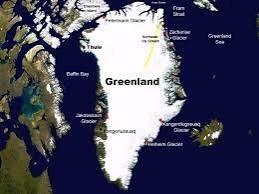
TEHRAN – After threatening for much of his second term to annex the semi-autonomous Danish territory of Greenland by force, if necessary, Donald Trump announced on Friday that the United States had reached an Arctic security pact with the leaders of Denmark and Greenland.

Key details of the agreement, which Trump boastfully described as “very important, historic, and special,” have not been made public, including the extent of the U.S. military presence in the territory and whether any formal authority over foreign policy and natural resources would be ceded to Washington.

The announcement is a gift to a president whose illegal war against Iran, followed by Tehran’s response to the attack through the closure of the Strait of Hormuz, has disrupted global energy supplies and made the already unstable Middle East more insecure.

Denmark and Greenland expressed hope that the deal would end months of uncertainty triggered by Trump’s threats, which have centered on Greenland’s strategic location for defense purposes and its mineral wealth.

The deal is expected to be signed on the sidelines of the UN General Assembly in New York next week.

“Next week could be a good week for Greenland, Denmark, and the United States,” Danish Foreign Minister Lars Løkke Rasmussen said in a statement on Saturday.

“A time of uncertainty will hopefully give way to a binding agreement that strengthens security in the Arctic and the North Atlantic, and thereby our shared security within NATO and Europe, while respecting the (Danish) Kingdom’s red lines,” he said.

Despite such optimistic remarks, one cannot be certain whether Danish and Greenlandic officials genuinely welcome the pact or have simply submitted to Trump’s threats.

Had such an agreement been reached without Trump’s annexation threats, it could be argued that the United States was approaching the 2,166,086-square-kilometer Arctic island from a geostrategic perspective.

However, given Trump’s background as a real estate developer, it is highly unlikely that he views the island solely as a strategic shield to protect the United States from perceived adversaries, particularly Russia and China.

Trump appears to view the island, with its vast untapped mineral wealth, as an asset to be acquired rather than merely a military advantage. This is especially concerning given that he has threatened to withdraw the United States from NATO and advocated the dissolution of the European Union. He sees a strong and united Europe as a rival rather than a partner.

While Trump continues to insist on his astonishing and absurd demand that Canada become part of the United States, and has punished Canada through various measures, including tariffs, for rejecting that demand, Denmark and Greenland are making a serious strategic mistake by planning to sign such a deal with Washington.

How can Denmark and Greenland trust the United States to address security concerns in the Western world without eventually behaving like Israel and turning Greenland into another Palestine?

Given that Trump and members of Congress loyal to him have threatened and sanctioned International Criminal Court (ICC) officials over the issuance of arrest warrants for Benjamin Netanyahu on charges of war crimes and crimes against humanity in Gaza, what assurances can Denmark, Greenland, NATO, and Europe reasonably expect from Washington?

Even if the Trump administration remains committed to the still-undisclosed terms of the agreement throughout his presidential term, how can Denmark and NATO be assured that a future president, another Trump, perhaps, will not take control of the White House and seek to expropriate territories across North America, including Greenland, which lies in close proximity to Canada?

NATO may believe that granting the United States extensive security control over the island could appease Washington and persuade it to halt its threats and pressure against Europe. This is particularly relevant as Russia’s war in Ukraine, which began in February 2022, continues to pose a security challenge in Eastern Europe. However, Europe as a whole, and Denmark in particular, must learn from history.

The clearest example is Israel’s continuing expansion and annexation of Palestinian territories.

Europe may feel caught between a rock and a hard place, facing U.S. pressure and annexation threats on one side and the war in Ukraine on the other. Yet, as UN Secretary-General António Guterres reportedly told the Financial Times in August, the great powers are discovering the limits of their power. He cited Russia’s war in Ukraine, the failed U.S. war against Iran, and the emergence of new powers as concrete examples.

Although Denmark and Greenland have repeatedly insisted that Washington respect the sovereignty of the Kingdom of Denmark and acknowledge that Greenland is not for sale, the agreement may, in practice, produce the opposite outcome.

The days when the United States was regarded as a law-abiding country are long gone. Trump’s abrogation of the hard-won 2015 Iran nuclear deal, which had been endorsed by the UN Security Council, and his alignment with Israel in launching a full-scale, surprise, and illegal war against Iran in 2026 serve as reminders before the eyes of the entire world, including Europe.

Greenland’s Prime Minister Jens-Frederik Nielsen welcomed the agreement with the Trump administration.

“I am delighted on behalf of Greenland that we are nearing the conclusion of an agreement. An agreement that will benefit not only the security of us all, but also the continued development of this country,” he said in a social media post on Saturday.

“The agreement recognizes the sovereignty and territorial integrity of our Kingdom and the right of the Greenlandic people to self-determination,” he added.

Earlier in his term, Trump argued that the United States needed control of Greenland for “economic security” and described ownership and control of the territory as an “absolute necessity.” During his first term, in 2019, he characterized the potential purchase of Greenland as “essentially a large real estate deal.”

Taken as a whole, Denmark, Greenland, Europe, and NATO may be turning a page against their own interests, a decision that could prove extremely detrimental to them in the long run.

It may not be long before they come to regret their acquiescence to the unpredictable Trump administration and the potential actions of future U.S. presidents who may adopt similar ambitions.

Schadenfreude: From Hidden Gas Chambers to Israel’s Viewing Gallows

By Jamal Kanj

Far-right Israeli minister Itamar Ben-Gvir has been a leading advocate for the execution of Palestinian prisoners. (Photo: video grab)

Since October 2023, at least 98 Palestinian hostages, a little over one percent of all held in the Israeli dungeons, have died or been killed, most showing signs of torture.

What’s the difference between the Auschwitz-Birkenau complex and the Israeli Zionist gallows? Auschwitz-Birkenau did not come with a special “viewing chamber.”

That is not a metaphor. It is what Israeli National Security Minister Itamar Ben Gvir announced on camera on August 19. He waved his hand and heralded to his Instagram followers the gallows Israel plans to use to execute Palestinian prisoners. Like a serial killer, a diabolical smirk on his face, he gloated as he described his 21st-century damnatio ad bestias.

Israeli culture didn’t need a climate-controlled stage to derive pleasure from watching Palestinian pain. For years, they did it at “Sderot Cinema.” Residents of Jewish-only colonies along the Gaza boundary have hauled lawn chairs and snacks and huddled on the hilltops to watch the bombing of Gaza the way Americans watch Fourth of July fireworks. They watched the bombs with awe and excitement, cheering the massive explosions that lit up Gaza’s night sky and applauding each plume of smoke rising from smoldering neighborhoods with unadulterated cruelty.

This was not only since October 7, 2023, but back to 2014, when murder and destruction were filmed and normalized as a form of public entertainment. The open-air cinema that once required a folding chair on a hill now has an enclosed theater, offering the Israeli audience more comfortable seating to maximize its pleasure. Designed by a minister who celebrated his 50th birthday with a noose-decorated cake and a message, “Congratulations, Minister Ben Gvir; sometimes dreams come true.”

This is Zionist Schadenfreude: a culture that needs a viewing chamber for an execution because it has been indoctrinated, for years, to see Palestinian death as entertainment. From hilltop watch parties to sea cruises and the gallows room, it is the same impulse, some enacted in the open air, the other behind closed doors.

The execution law passed by the Knesset last March makes death the mandatory sentence for freedom fighters resisting illegal colonizers. The same law does not apply to the Jewish mobs who have murdered twelve Palestinian civilians since the beginning of this year alone, and nine American citizens since 2022. Rarely, if ever, do Jewish killers get indicted for their crimes against Palestinians or Palestinian Americans.

The Association for Civil Rights in Israel petitioned the Supreme Court, arguing the Knesset had no authority to legislate for people who are not its citizens. The foreign ministers of Germany, France, Italy and the UK warned of the bill’s “de facto discriminatory character.” Eight Muslim-majority governments called it part of a system that “entrench(es) apartheid.”

The gallows are not being built in isolation. Israel holds roughly 9,200 Palestinians in custody; almost 40%, including 191 minors, are administrative detainees, held without charge and without trial. Doctors kidnapped from the hospital’s operating rooms, students and educators from their universities, or elected legislators from their homes. With a six-month extendable military detention, a Palestinian can vanish into the Israeli prison system indefinitely. Civilian hostages held by Israel as bargaining chips for exchanges. A law that applies exclusively to non-Jews in the West Bank and Gaza. While Jewish mobs terrorizing West Bank villages are immune from the same military law.

Since October 2023, at least 98 Palestinian hostages, a little over one percent of all held in the Israeli dungeons, have died or been killed, most showing signs of torture; freed detainees describe electric shocks, dog attacks, and sexual assault during interrogation. UN expert called Israeli torture a state doctrine. In fact, the torture at Abu Ghraib prison in Iraq was a carbon copy of Israeli torture chambers. A system that imprisons without charging them or uses extrajudicial executions to murder activists does not need much retooling to start hanging them.

Four UN special rapporteurs, including the expert on extrajudicial executions, declared in April that the execution law “constitutes a discriminatory regime” and manifestly violates Israel’s obligations under international law. The International Court of Justice’s 2024 finding that Israel’s policies in the occupied Palestinian land breach the prohibition on racial segregation and apartheid. Writing in Opinio Juris, a professor of criminal law laid out the case that the new Israeli law may meet the Rome Statute’s definition of the crime against humanity of apartheid, by establishing an institutionalized regime of domination by one racial group over another. He noted the precedent is clear in apartheid South Africa, where it instituted a compulsory death penalty against the Black majority.

Put the pieces together and the picture is not ambiguous. A state culture with documented host parties of civilians gathering to cheer the bombing of civilians, and now with a stage designed for spectators. A prison system that holds thousands without charge, and is already responsible for dozens of documented deaths in custody, now seeks to codify that impunity into law. A court system that tries one person (non-Jew) under military law and the other under civilian law (Jew) has produced a judicial apartheid.

Eighty years ago, the gas chambers were hidden because even their Nazi designers understood, at some level, that the world would not tolerate watching. Israel’s national security minister is building a killing chamber “with a view,” boasted about on Instagram, next door to a hillside culture that has spent decades in watch parties celebrating war crimes, rehearsing all along for the next damnatio ad bestias, a 21st-century Zionist Schadenfreude.

– Jamal Kanj (jamalkanj.com) is the author of Children of Catastrophe: Journey from a Palestinian Refugee Camp to America, and other books. He writes frequently on Palestine/Arab world issues for various national and international publications. He contributed this article to the Palestine Chronicle.