
By Palestine Chronicle Staff
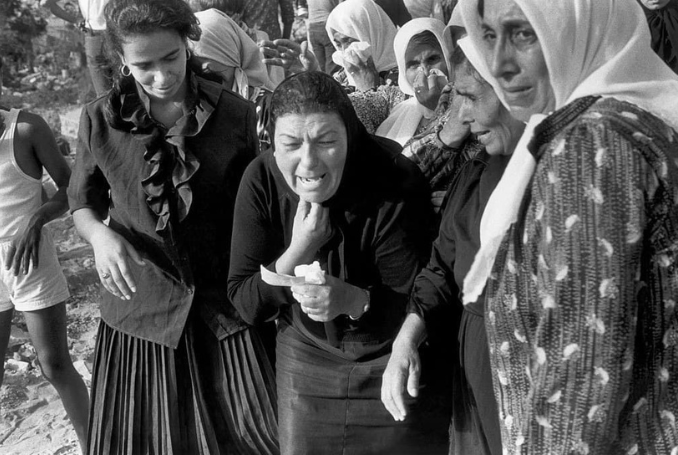 On September 16, in 1982, several thousand Palestinians at the Sabra and Shatila refugee camps in Lebanon were brutally massacred. (Photo: File)
Palestinian groups called for a gathering in Shatila on Wednesday, commemorating 44 years since the 1982 massacre of refugees there.
Key Takeaways
- Palestinian factions, popular committees and civil institutions called for a gathering in Shatila to commemorate the massacre’s 44th anniversary.
- From September 16 to 18, 1982, Israeli-backed Lebanese militiamen massacred Palestinian refugees and Lebanese civilians in Sabra and Shatila.
- Palestinian resistance movements said decades of impunity had helped enable the crimes being committed today in Gaza, the West Bank and Lebanon.
‘We Will Not Forget’
Palestinian factions, popular committees and civil institutions in Shatila called on residents to gather inside the refugee camp on Wednesday to commemorate the 44th anniversary of the Sabra and Shatila massacre.
“We will not forget and we will not forgive. Their names will remain in our memory,” organizers wrote in a flyer announcing the gathering.
“Let us gather on this painful anniversary, and renew our commitment to pursue the Palestinian cause in our hearts and in our conscience,” the flyer added.
Palestinian factions, popular committees and civil society organizations were expected to participate in the commemoration at the camp where thousands of Palestinian refugees and Lebanese civilians were massacred in September 1982.
The Palestinian resistance movement Hamas described Sabra and Shatila as “one of the most heinous crimes committed by the Israeli occupation and its agents against the Palestinian people.”
The movement pledged to continue efforts to pursue those responsible for massacres and genocide against Palestinians in Gaza, the occupied West Bank and Lebanon.
Today marks the 44 anniversary of the Sabra and Shatila massacre 16–18/09/ 1982
The video is of that 3 day massacre that killed 3500 Palestinian civilians in Lebanon
Israël Forced those Palestinian to move to Lebanon and leave their land then follow them and killed them.. pic.twitter.com/tYb8bz4tIj
— Saif Maher (@SaifMaher421388) September 16, 2026
The Palestinian Islamic Jihad movement also said the failure to hold the perpetrators accountable had consequences extending far beyond 1982.
The “world’s silence and failure” to prosecute those responsible, despite extensive evidence and documented testimonies, had encouraged “the emergence of new criminals within the occupying entity today,” the movement said.
It pointed to Israel’s continuing attacks against Palestinians and other peoples of the region, particularly in Gaza, the occupied West Bank, Lebanon and Syria.
The movement also accused the international community of failing to protect the camps after the Palestine Liberation Organization’s departure from Beirut, leaving their residents exposed to the forces that carried out the massacre.
The Names behind the Numbers
Forty-four years have passed since Sabra and Shatila became synonymous with one of the darkest chapters in the history of Palestinian refugees in Lebanon.
For the families who survived the massacre, and for generations born long after it, September 16 remains a day of remembrance, mourning and unanswered questions.
On September 16, 1982, several thousand Palestinians in the Sabra neighborhood and Shatila refugee camp in Lebanon were brutally massacred by Lebanese Phalange militias at the behest of the Israeli military, which had besieged and bombarded the area for days.
Working closely with the Lebanese militiamen, the Israeli army allowed them access to the camps. Despite knowing that civilians were being massacred inside, the Israeli military prevented Palestinians from escaping.
The massacre claimed the lives of at least 3,000 Palestinian refugees.
For three days of constant killing, the Israeli military continued its siege and prevented international humanitarian workers and journalists from entering.
At night, Israeli soldiers fired flares to illuminate the sky, allowing the militiamen to move through the camps’ narrow alleys. The massacre continued from September 16 to 18.
As the bloodbath concluded, Israeli bulldozers began digging mass graves in an apparent attempt to conceal the extent of the crime.
In 1983, Israel’s Kahan Commission found that Ariel Sharon, the Israeli defense minister at the time, bore “personal responsibility” for the slaughter of Palestinian and Lebanese civilians.
A Camp Surrounded
The massacre at Sabra and Shatila was a direct consequence of Israel’s violation of the American-brokered ceasefire and the impunity granted to Israel by the United States and the international community in occupied Lebanon.
Under an internationally brokered agreement, Palestine Liberation Organization fighters withdrew from the Lebanese capital. Their departure left Palestinian refugees in Beirut without the protection of the armed Palestinian presence that had previously existed there.
On September 14, Lebanese President-elect and Phalangist leader Bashir Gemayel was assassinated in a bombing.
Israeli forces entered West Beirut the following day, in violation of the arrangements governing the PLO withdrawal, and established control over the area surrounding the Sabra neighborhood and the adjacent Shatila refugee camp.
On the evening of September 16, armed members of the Lebanese Phalange and allied forces entered the area with Israeli authorization.
For the next three days, militiamen moved through homes and narrow streets, killing Palestinian and Lebanese civilians, including women, children and elderly people.
Israeli troops maintained control over the perimeter and access points while the killings continued. Israeli forces also occupied observation positions overlooking the area and fired illuminating flares during the night. Residents were trapped inside.
Accounts gathered after the massacre documented summary executions, abductions, sexual violence and the disappearance of an unknown number of victims.
When journalists and relief workers entered after the militiamen withdrew, they encountered bodies in homes, alleys and beneath the ruins of buildings.
The massacre provoked international outrage and mass protests inside Israel, forcing the Israeli government to establish a commission of inquiry.
In December 1982, the UN General Assembly adopted a resolution describing the massacre as an “act of genocide.”
Yet no meaningful process of accountability followed.
Forty-four years later, Palestinians continue to remember the victims while confronting the consequences of that impunity in Gaza, the occupied West Bank and Lebanon.
(PC, Palestinian media)

No comments:
Post a Comment