Showing posts with label modi. Show all posts

Friday, December 13, 2019

India’s Parliament approves controversial citizenship bill that excludes Muslims

In the state of Assam, in northeastern India, where a huge number of Indian Muslims have lived for generations without citizenship, thousands have joined in the protests. The Indian army has reportedly been deployed to the region.

TMV Team
India’s Parliament has voted in favor of a controversial citizenship bill that will grant citizenship to persecuted minorities from the neighboring countries of Bangladesh, Afghanistan, and Pakistan – except this bill will exclude all Muslims who are currently living in India. Dubbed the ‘anti-Muslim’ bill, this new bill will specifically only grant citizenship to Hindus, Sikhs, Buddhists, Jains, Parsis, and Christians who have either fled to or moved to India. All Muslims who fall under this same category will not be granted citizenship.
This new legislation by Modi’s leading Bharatiya Janata Party (BJP) has been labelled by many critics as yet another example of the growing Hindu-nationalist policies put in place by the BJP, in where many Indian Muslims, including those in Kashmir, are under growing threat.
Sonia Gandhi, the leader of the main opposition Congress party, stated:
The passage of the Citizenship Amendment Bill marks the victory of narrow-minded and bigoted forces over India’s pluralism.”
Despite criticism from both opposition party members and human rights groups, Modi has celebrated this decision by calling it “a landmark day for India and our nation’s ethos of compassion and brotherhood”:
A landmark day for India and our nation’s ethos of compassion and brotherhood!

Glad that the has been passed in the . Gratitude to all the MPs who voted in favour of the Bill.

This Bill will alleviate the suffering of many who faced persecution for years.
32.8K people are talking about this
Numerous protests have also erupted across India, with many upset and in shock that a citizenship bill like this would so blatantly exclude an enormous number of Indian Muslims who will not be granted citizenship. In the state of Assam, in northeastern India, where a huge number of Indian Muslims have lived for generations without citizenship, thousands have joined in the protests. The Indian army has reportedly been deployed to the region, with police using teargas to contain the situation.
Faizan Mustafa, a constitutional law expert and vice chancellor at NALSAR University of Law in Hyderabad, spoke to Al Jazeera on the deteriorating situation that a bill like this could cause in India:
It is arbitrary because it’s not based on reasonable classification, it doesn’t have rational objective to achieve, it does not cover all the neighbours, it doesn’t cover all the persecuted minorities. It is constitutionally suspect and legally untenable.”

In a country where Modi’s Hindu-nationalist BJP government is forcing many Indian Muslims to feel like second-class citizens, a bill like this is even more worrying. The situation in Kashmir, where the Muslim-majority region was stripped of its previous autonomous powers, the citizen’s register in the state of Assam that left 1.9 million mostly Muslims stateless, and now this controversial citizenship bill all point towards the growing trend of dangerous nationalism in a country that prides itself in multi-culturalism and religious diversity.

Tuesday, August 27, 2019

How Modi, Shah Brought Kashmir to Global Centre-Stage

Kudos to Narendra Modi and his hefty henchman, Amit Shah. They have managed to transform India’s image overnight from that of being the world’s largest democracy into a highhanded occupation power. Something that Pakistan couldn’t quite accomplish over the past 73 years despite its best efforts. The much feted democracy is today being compared to the Apartheid states of Israel and erstwhile South Africa.
Over the years, many Pakistani commentators, including some of my friends from Kashmir, have tended to see parallels between Palestine and Kashmir. Today, all those equivalences appear justified after what Kashmir and Kashmiris have been put through over the past three weeks.
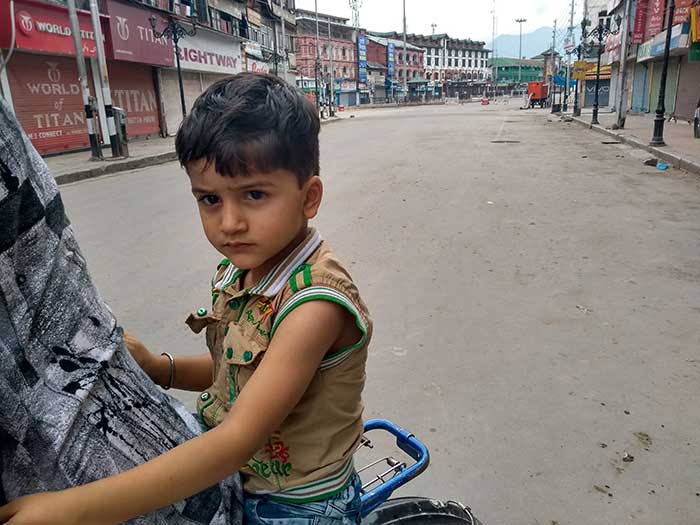
Barricaded in their homes and deprived of the basic essentials of life as the security forces besiege and patrol the length and breadth of the bifurcated state, the Kashmiri predicament appears little different from that of the historically dispossessed Palestinians.
The Internet and telephone lines continue to remain suspended; more than 200 newspapers published from the state are in a freeze and even hospitals shut.
If all this looks and feels like occupation, it probably is.
When you have an entire state imprisoned and their basic rights scrapped by a couple of folks sitting in their high citadels in distant Delhi, well, that sounds like anything but democracy.
Many pundits suggest that Modi’s India is following in the footsteps of his friend Benjamin Netanyahu’s Israel. But even Israel in its long history of subjugating Palestinians couldn’t quite manage to shut down the life in the Occupied Territories in the manner the BJP has done in Kashmir.
By summarily scrapping Article 370 that solemnised the accession of J&K to India in extraordinary circumstances and acknowledged the special status promised to the Muslim-majority state by Delhi, Modi has managed to implement one of the three key poll planks of the BJP and its presiding deity, RSS; the other two being the Uniform Civil Code and building of a Ram temple at the site of the martyred Babri Masjid.
Distinguished author and legal luminary AG Noorani is convinced that the BJP will soon push ahead with the implementation of the rest of the saffron agenda too.
Given the manner the country’s highest courts have lately been conducting themselves, a “favourable verdict” on Ayodhya does look like an inevitability. The moment is ripe too, given the utter chaos and disarray in the opposition ranks and collapse of the rule of law.
The contentious Article 370 has been on the agenda of the RSS and its various offshoots since 1952. The Parivar has repeatedly attacked the special autonomy and recognition Article 370 and Article 35 (A) conferred on Kashmir although over the years and thanks to the pliability of Kashmiri politicians, these historic assurances have been hollowed out.
The state had already lost much of its autonomy and the so-called special character. Nearly all laws of the Indian Union came to apply in J&K. This gradual loss of autonomy and special Muslim character of the state is one of the main reasons behind the political unrest and resurgence of militancy in the state in the 1990’s.
As the Kashmiris saw it, instead of honouring its commitment of a plebiscite under the United Nations and allowing Kashmiris on both sides to determine their own destiny, New Delhi had over the years gradually stripped the state of the last semblance of autonomy.
Now even that fig leaf of autonomy and commitments made to Kashmiris by India’s founding fathers has been snatched away – and in such a crude, contemptuous manner!
No wonder even the most “pro-India” politicians in the state are finding it difficult to stomach the humiliation and betrayal. Not only has the J&K been stripped of its autonomy and special identity, it has been fractured into two and downgraded to the status of a Union territory without any powers, to be governed by Delhi through a puppet lieutenant governor.
This is a classic case of adding insult to the injury.
In the words of A S Dulat, former head of India’s premier intelligence agency, RAW (Research and Analysis Wing) and top adviser to the Vajpayee government on Kashmir, by revoking Article 370 and degrading J&K to a Union territory, the BJP government has not just betrayed Kashmiris, it has run their nose into the ground.
As someone put it, in the eyes of the BJP, the Kashmiris are doubly guilty – they are Muslims and have the audacity to pine for freedom.
But this is not just about showing the Kashmiris their place. Those who have closely followed the political trajectory of Prime Minister Modi since his eventful days as Gujarat’s satrap would understand this.
This is about showing ‘Them’ – the Kashmiris, Indian Muslims and Pakistan, take your pick; they are all one and the same in the saffron worldview – as well as the waiting gallery of the BJP’s majoritarian support base what a resurgent ‘Hindu India’ led by Modi can do.
As Kapil Komireddi argues in the Washington Post, the Kashmir crisis is no longer about territory. It’s about a Hindu victory over Islam: “Modi’s sudden takeover in Kashmir is the fulfilment of a long ideological yearning to make a predominantly Muslim population surrender to his vision of a homogenous Hindu nation. It is also a way of conveying to the rest of India – a union of dizzyingly diverse states – that no one is exempt from the Hindu-power paradise he wants to build on the subcontinent. Kashmir is both a warning and a template: Any state that deviates from this vision can be brought under Delhi’s thumb in the name of “unity.”
But if the BJP and the powerful duo that rules India through it think they can get away with these delusions of grandeur, they had better think again. Their reckless actions in Kashmir risk producing at least two serious and unintended consequences:
First and foremost, the BJP move has wittingly or unwittingly resurrected the Kashmir question, something that had been nearly consigned to the back-burner of history by successive Indian governments and their dexterous diplomats with the connivance of world powers. Modi and Shah have now brought it to the global centre-stage, practically internationalising it. US President Donald Trump has twice offered to mediate between India and Pakistan and help them resolve the K conundrum.
Last week, the UN Security Council met to discuss the issue in an extraordinary closed-door meeting, after more than five decades. Although the meeting ended without an outcome, the issue is certain to hang fire, occupying the world body’s attention for weeks and month to come.
The global media has also been preoccupied with the issue dedicating much of their coverage to the manner in which the greatest democracy has overnight divested Kashmiris of their own. Most influential Western newspapers and media outlets have been outraged by the unprecedented crackdown on the Himalayan state and basic rights of Kashmiris.
Governments around the world with their strategic economic interests may choose to ignore what is happening in Kashmir. But they cannot ignore the global public opinion, including their own, forever.
Secondly, the power grab in Kashmir is bound to give a new lease of life to the insurgency and strong separatist movement in the state. This has already angered and re-eneregised the influential Kashmiri diaspora in the UK and US; they have started pressuring the lawmakers on both sides of the pond asking them to intervene.
On Tuesday, a number of US lawmakers, including Congressman Adam Smith, Chairman of the House Armed Services Committee, called India’s US ambassador to express their concern over the situation, urging India to immediately lift curbs on Kashmiris. “There are legitimate concerns about the ongoing communications blackouts, increased militarisation of the region, and enforcement of curfews,” Smith told the Indian envoy.
What would it take for politicians in Delhi to see that the Kashmiris are a fiercely proud and free-spirited people. You can only win them over with love and empathy. You can never subjugate them at gunpoint; nor crush their spirit.
Aijaz Zaka Syed is an award winning journalist and former editor.

India annexes Kashmir under the dark shadow of Netanyahu and Modi’s far-right embrace

The depth of love between Israeli Prime Minister Benjamin Netanyahu and his Indian counterpart Narendra Modi has few parallels. Many traits unite the current crop of populist, power-hungry, authoritarian strongmen that have been on the rise of late, but few have enjoyed the kind of relationship that has blossomed between Modi and Netanyahu. The two are in a league of their own; conjoined twins some may say, whose friendship is forged through similar racist ideologies and deep dislike of minorities.
Both leaders again expressed their affection for each other yesterday. Netanyahu responded to Modi’s declaration of “eternal” friendship by saying: “Thank you, my friend, Indian PM @narendramodi. I could not agree with you more. The deep connection between Israel and India is rooted in the strong friendships between Israelis and Indians. We cooperate in so many areas. I know our ties will only strengthen in the future!”
Netanyahu’s adoration was prompted by a Modi tweet in which he thanked an Israeli Embassy message on Twitter: “May our ever-strengthening friendship & #growingpartnership touch greater heights.” Replying in Hebrew, Modi said: “Thank you; I wish the great citizens of Israel and my friend @netanyahu a happy Friendship Day. Israel and India have proved their friendship over time. Our ties our eternal and strong. I hope that our friendship will continue to thrive and grow even further.”
The exchange took place as India prepared to more or less annex the Muslim-majority state of Jammu and Kashmir by revoking its special status. Modi’s right-wing Hindu nationalist government pushed forward with a hostile move to revoke the part of the constitution that gives Indian-administered Kashmir special status in what is seen as an unprecedented move. It is not unlike Israel’s ongoing attempt to seize the whole West Bank and is just as likely to spark unrest.
Article 370 is sensitive because it guarantees significant autonomy for the disputed territory by allowing the 12 million people who live in Jammu and Kashmir to have their own constitution, a separate flag and independence over all matters except foreign affairs, defence and communications. India’s decision has been denounced by the former chief minister of the state, Mehbooba Mufti, who is reported by the BBC as saying that the move effectively made India an occupying force. “Today marks the darkest day in Indian democracy,” she tweeted, adding that the government’s “unilateral decision” is “illegal and unconstitutional.”
Modi’s decision, which upheld a promise made by his right-wing Hindu nationalist party during its 2019 election campaign, is expected to lead to violence and arrests. Activists on the ground in Kashmir spoke to MEMO of the “total communication blackout since midnight” and reported that the “whole of Kashmir is under strict indefinite curfew.” In recent days, the Indian government has also moved 10,000 troops to what is already one of the most militarised regions in the world and ordered tourists and Hindu pilgrims to leave the Himalayan valley.
The newly dispatched soldiers will join the nearly 700,000 Indian soldiers already deployed in Indian-administered Kashmir, where civilian protesters and armed rebels either want freedom for the Muslim-majority Kashmir from India or merger with Pakistan. Both India and Pakistan claim the region of Kashmir in full and have fought two of their three wars over it.
Modi’s plan for India-administered Kashmir has uncanny similarities with the way in which Netanyahu, with a similar right-wing extreme nationalist government, is looking to annex the West Bank. The ideological bond between the extreme version of Zionism represented by Netanyahu and the extreme Hindu nationalism of the Hindutva, represent by Modi, is almost identical: both are political ideologies; both subscribe to the same concept of a far-right ethno-nationalist movement that uses religion to achieve its aims, and both misrepresent history to justify atrocities against minorities in pursuit of an exclusivist and discriminatory political vision.
Hinduvta members, like their ideological counterparts in Israel, speak openly of ethnic cleansing and expelling minority communities: that includes Dalits, Muslims, Christians, Sikhs, Ravidassias and Buddhists in the case of the extremist Hindus, and Christian and Muslim Palestinians in the case of Israel. Their vision is rooted in fascism and white supremacy. Hindutva is identified commonly as the guiding ideology of the Hindu Nationalist Rashtriya Swayamsevak Sangh (RSS) of which Modi is a member.
A profile of RSS ideology shows that its leaders draw their inspiration from right-wing, fascist European groups and their leaders, including Hitler and Mussolini. Its long-time chief, M S Golwalkar, is said to have openly admired Hitler’s “final solution” and wanted to apply the same approach in India to eliminate the country’s minorities. This makes the strong bond between Modi and Netanyahu even harder to understand.
While the two countries under their current rulers can be said to enjoy an ideological affinity and subscribe to the exclusivist political vision of the far-right, both are also locked in a struggle with a large minority group challenging military occupation and human rights abuse, thus making them allies in ways that are rare on the global stage. Relations between the two countries have never been better. India is now the largest weapons market for the Israeli arms trade; the two countries carry out joint military exercises; and Israel uses the Negev Desert to train Indian soldiers in the tactics of suppressing civilian populations, its expertise learned through the suppression of Palestinians in the Gaza and the West-Bank.
It’s in this regard that Israel, perhaps more than any other right-wing government, has excelled. It is in an enviable position, according to Israeli author Jeff Halper, to “secure insecurity” having had decades of experience suppressing Palestinians. In his 2015 book, War Against the People Halper argues that Israel’s security exports are unmatched due to its ability to develop weapons and techniques for urban warfare, surveillance and intelligence; what Halper calls “full-spectrum domination”. Israel’s success is put down to its knowledge and experience of developing control technologies and battle-tested weapons that have become the “must-have” items in the armoury of every authoritarian dictator facing a restive population. This was demonstrated clearly when Israeli-made Rafael Spice-2000 “smart bombs” were used by the Indian air force in its strike against Kashmiri “terrorists” inside Pakistan in February.
Beyond trade and arms sales, Israel has also found an ally in Modi on the international stage where the Zionist state regularly comes under sharp criticism from the UN and other international bodies. In June, New Delhi’s representative at the global body voted in favour of Israel in a vote to grant consultative status to a Palestinian human rights NGO, which eventually lost its bid to join the UN Economic and Social Council (ECOSOC). The vote marked an unprecedented stage in relations between the two countries. India’s history in the anti-colonial movement once made it a strong ally of the Palestinian cause. Previous Indian prime ministers, including the country’s founder and revered leader Mahatma Gandhi, opposed Israel, believing it to be a colonial enterprise. The leader of the Indian independence movement against the British was strongly opposed to the idea of a Jewish national home in Palestine, he believed it was an an expression of ethnonationalism that was inimical to the values of secular liberal democracy.
With his embrace of Netanyahu, Modi has turned his back on the legacy of Gandhi and his vision of a secular democracy based on civic nationalism and equality for all, irrespective of race and religion. Indian democracy has indeed taken a serious hit.

Sunday, August 11, 2019

Don’t take Modi’s Bait, Pakistan

– by AZ


The meaningless rhetoric by the nation’s leaders in the parliament of Pakistan resembled a circus in shallow braggadocio addressed at a populace that has been raised on propaganda for the past seventy years, and now cannot be weaned away in a hurry, while taking care not to upset the generals. IK, who I believe knows better than that, was no exception. In fact, his was the worst speech.
There can be hues of sane opinions on what Pakistan should do at this juncture. However, there should be no doubt on what Pakistan must not do. It is, she must not do what Modi wants her to do – flagrant sabre rattling. Engage the international community, by all means, but no war mongering. Don’t take Modi’s bait. Don’t fire up the nation for a battle over Article 370 of Indian Constitution that no Pakistani ever accepted and most never knew existed. Be assertive, not mad.
In fact, those who dislike India should sit back and enjoy Modi ruining India’s secular fabric. It will lead India to where religiosity has led Pakistan to. To intolerance, excessive self-absorption, and to a stage where the leaders are compelled to follow the whims, myths, anger, and biases that their voters (will) have been fed on for decades. Whether it takes thirty years or fifty years, unless there is a change of course, the path Modi is on for now does not lead anywhere else. The recent world history bears enough witness to it.
Enjoy the blessings of the other face (Hindu nationalism) of the two-nation theory taking roots on the other side of the border. Collective anger, that is also cumulative, is a very toxic emotion for a nation that over time begins to manifest itself in psychotic behavior in everyday life. You have been there, if your neighbor wants to tread there, let her make the journey.
So how does Pakistan stand up for herself well enough? Here is what, I think, Pakistan should do: she should buckle down and for a minimum next ten years focus exclusively on getting rid of Jihadis, fostering education and health, building economy, enhancing transparency, and strengthening institutions.
Show the world that you can run, and not just defend, your country. Use aggression to come up with a plan to integrate with the world. You cannot negotiate if you don’t have any power. Especially if you are dealing with someone who is really out to get you.
Be truthful with your own population. Each time India and Pakistan have come close to a solution -Nawaz Sharif/Vajpayee; Musharraf/Vajpayee; Musharraf/M M Singh- it has consisted in accepting the LOC. There has been no other solution in sight for at least the last fifty years. The only other option for now is fighting an all-out war.
Having said the above, I feel extremely sad for the Kashmiris caught in the stampede of history. Too much suffering, blatant oppression. Both India and Pakistan have used them and, since 1989 at least, have only done them harm.