Showing posts with label gholamali khoshroo. Show all posts

Sunday, August 04, 2019

AMERICA’S MILITARY ADVENTURISM IN THE MIDDLE EAST . . .

. . . and the Scapegoating of Iran!


by Selvam Canagaratna
article_image
"The scapegoat has always had the mysterious power on unleashing man's ferocious pleasure in torturing, corrupting, and befouling."
– François Mauriac, Second Thoughts, 1961.


Seventeen years of war in the Middle East, noted Pulitzer Prize-winning journalist and Truthdig columnist Chris Hedges, before posing the inevitable question: "and what does the United States have to show for it?"


Someone has to be blamed for debacles that have resulted in hundreds of thousands of dead, including at least 200,000 civilians, and millions driven from their homes, he wrote. ‟Someone has also to be blamed for the proliferation of radical jihadist groups throughout the Middle East, the continued worldwide terrorist attacks, the wholesale destruction of cities and towns under relentless airstrikes and the abject failure of US and US-backed forces to stanch the insurgencies."


The Concise Oxford Dictionary defines ‘scapegoat’ as ‟a person bearing the blame for the sins, shortcomings, etc. of others, esp. as an expedient."


But you can be sure it won’t be the generals, the politicians such as George W. Bush, Barack Obama and Hillary Clinton, the rabid neocons such as Dick Cheney, Paul Wolfowitz and John Bolton who sold us the wars, the Central Intelligence Agency, the arms contractors who profit from perpetual war or the celebrity pundits on the airwaves and in newspapers who serve as cheerleaders for the mayhem.


Donald Trump’s unilateral decision to withdraw from the Iran nuclear deal, although Iran was in compliance with the agreement, was the first salvo in this effort to divert attention from these failures to Iran. Bolton, the new National Security Adviser, and Secretary of State Mike Pompeo, along with Trump lawyer Rudy Giuliani, advocate the overthrow of the Iranian government, with Giuliani saying last month that Trump is "as committed to regime change as we [an inner circle of presidential advisers] are."


"The Iran nuclear deal was possible following several letters by President Barack Obama assuring the Iranian leadership that America had no intention of violating Iranian sovereignty," the Iranian Ambassador to the United Nations, Gholamali Khoshroo, told me. "America said it wanted to engage in a serious dialogue on equal footing and mutual interests and concerns. These assurances led to the negotiations that concluded with the Joint Comprehensive Plan of Action."


Donald Trump, however, even as a candidate, called the agreement with Iran ‘the worst deal America ever made’, Ambassador Khoshroo reminded the world. "He called this deal a source of embarrassment for America. Indeed, it was not the deal but America’s unilateral decision to walk away from an agreement that was supported by the United Nations Security Council, and in fact co-sponsored and drafted by the United States that is the source of embarrassment for America. To walk away from an international agreement and then threaten a sovereign country is the real source of embarrassment since Iran was in full compliance while the US never was."


Iran announced recently that it has tentative plans to produce the feedstock for centrifuges – the machines that enrich uranium – if the nuclear deal is not salvaged by European members of the JCPOA. European countries, dismayed by Trump’s decision to withdraw from the agreement, are attempting to renegotiate the deal, which imposes restrictions on Iran’s nuclear development in exchange for the lifting of international sanctions.


"Why go to war with a country that abides by an agreement it has signed with the United States?" asked Chris Hedges. "Why attack a government that is the mortal enemy of the Taliban, along with other jihadist groups, including al-Qaida and Islamic State, that now threaten us after we created and armed them? Why shatter the de facto alliance we have with Iran in Iraq and Afghanistan? Why further destabilize a region already dangerously volatile?"


The architects of these wars are in trouble, explained Hedges. "They have watched helplessly as the instability and political vacuum they caused, especially in Iraq, left Iran as the dominant power in the region. Washington, in essence, elevated its nemesis. It has no idea how to reverse its mistake, beyond attacking Iran. Those both in the US and abroad who began or promoted these wars see a conflict with Iran as a solution to their foreign and increasingly domestic dilemmas."


Hedges noted that it was Saudi Crown Prince Mohammed bin Salman, facing internal unrest, who launched the war in Yemen as a vanity project to bolster his credentials as a military leader. Now he desperately needs to deflect attention from the quagmire and humanitarian disaster he has created.


And then there is President Trump, desperate for a global crusade he can use to mask his ineptitude, the rampant corruption of his administration and his status as an international pariah when he runs for re-election in 2020.


"Of course, blaming and threatening Iran is not new," Ambassador Khoshroo said. "This has been going on for 40 years. The Iranian people and the Iranian government are accustomed to this nonsense. United States intervention in the internal affairs of Iran goes back a long time, including the [Iranian] war with Iraq, when the United States supported Saddam Hussein. Then America invaded Iraq in 2003 in their so-called ‘intervention for democracy and elimination of WMDs.’ Iran has always resisted and will always resist US threats."


"America was in Iran 40 years ago," the Ambassador recalled. "About 100,000 US advisers were in Iran during the rule of the Shah, who was among the closest allies of America. America was unable to keep this regime in power because the Iranian people revolted against such dependency and suppression. Since the fall of the Shah in 1979, for 40 years, America continued to violate international law, especially the Algeria agreements it signed with Iran in 1981."


The Algeria Declaration was a set of agreements between the United States and Iran that resolved the Iranian hostage crisis. It was brokered by the Algerian government.


The warmongers have no more of a plan for "regime change" in Iran than they had in Afghanistan, Iraq, Libya or Syria. European allies, whom Trump alienated when he walked away from the Iranian nuclear agreement, are in no mood to cooperate with Washington. The Pentagon, even if it wanted to, does not have the hundreds of thousands of troops it would need to attack and occupy Iran. And the idea – pushed by lunatic-fringe figures like Bolton and Giuliani – that the marginal and discredited Iranian resistance group Mujahedeen-e-Khalq (MEK), is a viable counterforce to the Iranian government is ludicrous.


In all these equations the 80 million people in Iran are ignored just as the people of Afghanistan, Iraq, Libya and Syria were ignored. Perhaps, they would not welcome a war with the United States. Perhaps if attacked they would resist. Perhaps, they don’t want to be occupied. Perhaps a war with Iran would be interpreted throughout the region as a war against Shiism. But these are calculations that the ideologues, who know little about the instrument of war and even less about the cultures or peoples they seek to dominate, are unable to fathom.


The issue of Palestine is at the heart of turmoil in the Middle East for Muslims. Americans say they want the Middle East to be free from violent extremism, but this will only happen when the Middle East is free from occupation and foreign intervention.


The Americans are selling their weapons throughout the Middle East. They calculate how much money they can earn from destruction. They don’t care about human beings. They don’t care about security or democratic process or political process. This is worrisome."


"What are the results of American policies in the Middle East?" asked Hedges. "All of the American allies in the region are in turmoil. Only Iran is secure and stable. Why is this so?"

Courtesy- The Sunday Island

Friday, November 16, 2018

Nations the World Over Disapprove of US Foreign Policy, Except for Israel

You don’t need a Pew poll to know which way the world thinks. But it is useful.


By Vijay Prashad


Last week, the United Nations General Assembly voted overwhelmingly to condemn the US embargo against Cuba. A total of 189 member-nations said Cuba did not deserve this embargo, which began in 1961 and has continued unabated to this day. Only two countries – the United States and Israel – voted against the motion. No country abstained.
Cuba’s minister for foreign affairs, Bruno Eduardo Rodríguez Parrilla, has said the US embargo has cost the small socialist island state upwards of US$933.678 billion, with the losses in the past year amounting to $4.3 billion (twice the amount of foreign direct investment into the island). This embargo, Rodríguez Parrilla said as he put the resolution forward, is an “act of genocide” against Cuba and its people.
The Group of 77 and the Non-Aligned Movement – both important groupings of the Global South – as well as regional groupings from Africa to Latin America backed the resolution. China’s representative to the UN, Ma Zhaoxu, made the case that the US embargo on Cuba prevented the island from meeting its obligations to the UN Sustainable Development Goals.
Last year, the United States strengthened the embargo with an attack on the tourism sector (83 hotels were placed on the banned list). It is likely that President Donald Trump’s administration will deepen its assault on Cuba.
Threats by the United States did not convert the vote of otherwise reliable US allies. Each year since 1992 a resolution of this kind has come before the UN General Assembly. Each year the world has overwhelmingly voted against the US embargo. This year was no different.
 World worried about the United States
You don’t need a Pew poll to know which way the world thinks.
But it is useful. Last month, Pew Research Center released a poll that looked at the image of Donald Trump and the United States in 25 countries around the world. In most countries, neither Trump nor the United States come off well. Seventy percent of the populations in these countries have no confidence in Trump. The same proportion of people believe that the United States does not take the interests of other countries into consideration when moving policies forward. This is evident with the US embargo on Cuba.
Neither the people of Canada nor Mexico – the closest neighbors of the United States – have a favorable view of either Trump or the United States. Only Israel, which voted with the United States over the embargo on Cuba, has a high opinion of Trump and of the US.
Beyond the Pew poll, it is evident from the atmosphere in the United Nations that the countries of the world – even close US allies – fear US policy on a number of issues. Cuba is a canary in the coal mine. But even clearer is the US policy of ramping up sanctions against Iran.
 World does not want to strangle Iran
At the debate over the US embargo on Cuba, Iran’s representative to the UN, Gholamali Khoshroo, detailed how the US had withdrawn from several international agreements and how it had failed to implement UN Security Council resolutions that it did not like.
Behind Khoshroo’s comments lay the US withdrawal from the 2015 nuclear deal agreed upon by Iran and the UN Security Council members, the United Nations and the European Union. This deal was sanctified by a Security Council resolution. Trump’s unilateral move to scuttle the nuclear deal and the return of sanctions against Iran this week replicates, Khoshroo intimated, the long-standing and unpopular sanctions against Cuba. The United States, he said, should “sincerely apologize” to the people of Cuba and Iran.
As the new US sanctions regime went into place against Iran, Turkish President Recep Tayyip Erdogan told reporters in Ankara, “US sanctions on Iran are wrong. For us, they are steps aimed at unbalancing the world. We don’t want to live in an imperialist world.”
Erdogan is not alone here. Even countries with close ties to the United States, such as India and Japan, are against the sanctions. They may not use words like “imperialist,” but their actions clearly bristle at the heavy-handedness of the US government when it comes to its use of instruments such as financial sanctions.
It was clear that China was never going to honor the new US sanctions on Iran. Nor were Turkey and Iraq, and nor were the three large economies of Asia that rely on Iranian oil (India, Japan and South Korea). No wonder the United States gave these countries waivers to the sanctions.
Some countries, including India and Japan, have been discussing the need for an alternative financial system so that they can do trade with countries that are sanctioned by the United States. They do not believe that the US should be allowed to suffocate world trade through its control over banking systems and through the world’s reliance on the dollar. Pressure to build alternatives no longer comes from the margins; it comes from Tokyo and New Delhi, from Frankfurt and Seoul.
One major casualty of the US sanctions on Iran will be Afghanistan, already ripped apart by almost two decades of war. Afghanistan relies on Iranian oil and, during this year, non-oil trade rose by 30%. India’s project to help build a port in Chabahar is linked to opening new land routes into Afghanistan.
Just as the US sanctions went into place against Iran, Ahmad Reshad Popal, director general of Afghanistan’s Customs Department, opened the Farah crossing to Iranian goods – a snub to US policy. Even Afghanistan, virtually under US occupation, cannot abide by the US policy on Iran. Nor even can the NATO troops in Afghanistan, whose trucks are fueled in part by Iranian oil.
 World does not want ‘Iraq war’ in Latin America
George W Bush used the term “axis of evil” to lump together Iran, Iraq and North Korea. Of the three, the US was only able to go to war against Iraq, in 2003. Pressure for regime change in North Korea was held back by its nuclear-weapons program, while pressure for regime change in Iran continues.
Donald Trump has now come up with a new term – “troika of tyranny,” which comprises Cuba, Nicaragua and Venezuela. In Miami, Trump’s close adviser John Bolton gave a speech where he inaugurated this term.
He spoke of the right-wing turn in Latin America and the isolation – as far as he was concerned – of socialist governments. Bolton celebrated the election of men such as Jair Bolsonaro in Brazil and Ivan Duque in Colombia, men who he said were committed to “free-market principles and open, transparent, and accountable governance.” No mention here of the grotesque views of Bolsonaro or the militarism of both men.
Bolton called the leaders of Cuba, Nicaragua and Venezuela “strongmen.” But there is no more “clownish, pitiful” figure – to borrow from Bolton – than Bolsonaro, no more authoritarian heads of government than Bolsonaro, Duque and Trump. Duque has taken Colombia into the North Atlantic Treaty Organization, a sign that the Colombian military will now answer more to Washington than to the Colombian people.
In his speech, Bolton threatened the governments in Cuba, Nicaragua and Venezuela. Trump’s administration, he said, “is taking direct action against all three regimes” – “direct action” a key phrase here.
Such actions against these countries are not new.
The United States invaded Cuba in 1898 and held it as a virtual colony until the Cuban Revolution of 1959. Pressure on the Cuban Revolution intensified by 1961, with the US forcing an embargo on the island, attempting an invasion of the country and attempting to assassinate the leadership of the revolution.
US marines entered Nicaragua in 1909 and occupied the country until 1933. When the marines left, the national liberation forces under Augusto César Sandino attempted to free the country. Sandino was assassinated, and a US-backed dictatorship by the Somoza family ruled the country until 1979. That year, the Sandinistas – named after Sandino – overthrew the dictatorship. In response, the US funded the Contras (short form for counter-revolutionary forces), who prosecuted a bloody war against the small country.
Ever since Hugo Chavez came to power in Venezuela, the US has tried to overthrow the Bolivarian Revolution that he inaugurated. A failed coup in 2002 was followed up by various forms of intimidation and sanctions. In 2015, US president Barack Obama declared that Venezuela was an “extraordinary threat to US security” and slapped sanctions on the country. It is this policy that Trump has since continued.
Itchy fingers in the Trump administration are eager to start a shooting war somewhere in Latin America – either Cuba, Nicaragua or Venezuela. The appetite for this is not there in the United Nations. Nor is it shared in Latin America. But that has never stopped the United States.
Disregard for world opinion as well as the opinion of the US citizenry defines the US government. Thirty-six million people around the world, half a million of them in New York City, protested on February 15, 2003, in an attempt to prevent the US war on Iraq. George W Bush did not pay attention to them. Nor will Trump.
Last August, Trump asked his advisers why the US couldn’t just invade Venezuela. The next day, on August 11, 2017, he said he was considering the “military option” for Venezuela. At a private dinner with four Latin American allies, Trump asked if they wanted the US to invade Venezuela. Each of them said no.
Not sure if their opinions count.
Top Photo | A six-meter high cartoon baby blimp of U.S. President Donald Trump is flown as a protest against his visit, in Parliament Square in London, England, July 13, 2018. Matt Dunham | AP
Vijay Prashad is an Indian historian, journalist, commentator, and a Marxist intellectual. He is the Executive Director of Tricontinental: Institute for Social Research and the Chief Editor of LeftWord Books

Friday, November 09, 2018

Iran Sanctions: The Death Knell of American Exceptionalism and Hegemony


TEHRAN (FNA)- On Monday, the Trump administration announced the re-imposition of the “toughest” sanctions ever against Iran.

They had been lifted under the 2015 nuclear deal, officially known as the Joint Comprehensive Plan of Action, after the US pulled out of the agreement reached between Iran and the P5+1 group of countries - the US, Britain, France, Germany, China, and Russia.

The sanctions, objected by the world community, are supposed to hit Iran's oil exports, shipping and banking. However, the US has agreed to grant temporary waivers to eight countries - China, India, Italy, Greece, Japan, South Korea, Taiwan and Turkey - on Iranian oil imports.

Nevertheless, the unilateral sanctions disregard the Security Council Resolution 2231 (2015), which endorses the JCPOA, which means the world community needs to act before this gets out of control. After all, no one expects Iran to stay in the deal if it doesn’t see any economic benefits.
The good news is that the United Nations, the European Union, as well as Russia and China have all made clear that they will continue to do “legitimate trade” with Iran and disregard Washington’s threats. More so, the majority of UN member states see Washington as bullying others with the threat of its military and sanctions regime. They also see the US as not obeying International Law.

The truth is that the Trump regime’s bullying is a deep part of American culture. This is especially true of the political and media establishments, who present themselves as being civil and savior, and anything but bullies. The inconvenient truth is that bullying is embedded in American culture, governing elites and most powerful institutions: the military, the corporation, and the state. They all live in a society that bullies the world through militarized capitalism. And they never bother to play by international rules and protocols.

Likewise, the war-party establishment embraces a global militarism that threatens and bullies all nations opposing US interests. Although Trump preaches many universal values with a pledge to “save the world from tyranny,” he is still explicit in his embrace of Xenophobia, Islamophobia, Iranophobia, Russophobia, and even torture and murder. The latest case could be Trump’s inaction over Saudi Arabia’s grisly killing of journalist Jamal Khashoggi in its consulate in Istanbul, Turkey, on October 2.

As is often the case, Washington’s blatant foreign policy of bullying and sanctions threatens not just Iran, but the entire international community because it draws attention to the subtler bullying that is commonplace within the American political establishment. Both the Democratic and Republican parties favor war, bullying, sanctions and threats – albeit using different approaches.

It is crucial therefore to the warmongers that their international bullying be disguised as a legitimate practice that serves universal purposes. Faith in their rule can be maintained only if most of the world community sees militarism, war, and corporate power not as bullying, but as "moral intervention".

In the prevailing environment, the international civil society and independent nations don’t have to abide by Washington’s self-serving rules and bullying tactics, including its addiction to sanctions. Sovereign nations don’t have to embrace the bullying code of the US military either. Quite the opposite, the world community hold the US to account for its illegal move to reinstate sanctions on Tehran.

According to Iran's Ambassador to the United Nations Gholamali Khoshroo, "The UN and its member states, in accordance with the Charter of the United Nations and the international law, should resist against these wrongful acts and hold the United States accountable for such actions. The irresponsible conduct of the US necessitates a collective response by the international community in order to uphold the rule of law, to prevent undermining diplomacy and to protect multilateralism."

Taken together, all UN member states seeking to survive and succeed in a violent, destabilized world - even Washington’s allies in Europe - cannot be complicit in the use and abuse of American military power and bullying tactics to rule the world. The policy of sanctions and threats by the US against Iran and the international community proves beyond any doubt that no change in Washington will ever come to reinforce multilateralism. Hence, the UN can no longer rely on Washington to impose order worldwide, and should take matters into its own hands.

In these contemporary times, the re-imposition of sanctions against Iran has both reinforced the dark underside of American society, giving it unprecedented divisive voice on the world stage, and moved to destroy the world order. It is perfectly clear that the outcome has to be the death knell of American exceptionalism, hegemony, and influence.

Thursday, November 01, 2018

Iran UN envoy lashes out at US unilateral sanctions on Cuba


New York, Oct 31, IRNA – Permanent Representative of the Islamic Republic of Iran to the United Nations Gholamali Khoshroo on Wednesday slammed US unilateral sanctions against Cuba, saying that embargoes are a vivid example of the unilateral way in which the United States acts in the world.

Addressing a meeting themed “Necessity of ending the economic, commercial and financial embargo imposed by the United States of America against Cuba”, he added that the strengthening of the extraterritorial application of the blockade had profound adverse effect on Cuba’s international financial and loan relations.

Full text of his statements is as follows: 

“At the outset, I would like to express my gratitude for the recent report compiled by Secretary-General, demonstrating states and international organization’s strong stance on the necessity of ending the economic, commercial and financial embargo imposed by the United States of America against Cuba.

Warmly welcoming His Excellency Bruno Eduardo Rodríguez, the Foreign Minister of Cuba and his delegation, I wish to seize this opportunity to reaffirm Iran’s full support for the people and Government of Cuba against this long lasting unilaterally imposed an unlawful and immoral embargo.

My delegation aligns itself with the statements made earlier by the representatives of the Movement of Non-Aligned Countries (NAM); the Group of 77 and China; and the States members of the Organization of Islamic Cooperation (OIC). However, allow me to add the following remarks in my national capacity.

Mr. President,

Undoubtedly, the economic, commercial and financial blockade against Cuba is the most unjust and longest-lasting unilateral sanctions imposed against a country in our modern world history. The blockade is a vivid example of the unilateral way in which the United States acts in the world. In fact, the way and one-track mindset of some of high ranking officials of the later State, increasingly keep them away from existing realities of today’s multilateral world. US long obstinacy and pathological tendencies on imposing unilateral sanctions, in particular, during recent administration, which pursue the Cold War obsolete policies, has inflicted enormous damage on all sectors of the Cuban economy and caused untold hardship for the Cuban people, preventing them from fully enjoying their human rights.

The strengthening of the extraterritorial application of the blockade and the intensification of this policy, had profound adverse effect on Cuba’s international financial and loan relations.

During 2018, dozens of banks all over the world decided to shut down their relations with Cuban or foreign companies in order to eliminate any ties with their activities with Cubans merely for the their nationality.
The blockade also constitutes a massive, flagrant and systematic violation of the human rights of all the Cuban people. It violates the United Nations Charter and international law and constitutes an obstacle for international cooperation.

Regretfully, in the 21st century, US officials still use and resort to inflammatory and hostile rhetoric in the spirit of the Cold War. Instead of learning lessons from their short-sighted and disastrous policy on Cuba as well as in our region, Middle East, they set a course of action and renewed the intensification of the blockade against the Island to increase political pressure on the Cuban leadership under far-fetched pretexts.

Mr. President,

The Islamic Republic of Iran, which has been more than 37 years subject to US unilateral coercive measures, including unprecedented economic and financial sanctions, fully shares the valid concern of the Government and people of Cuba, suffering from the recklessness and disregard of US for international values and institutions. Enjoying close companionship with Cuban people, the Iranian people have demonstrated their unwavering resilience during the past 37 years despite the difficulties and constraints caused by sanctions.

In this context, I deem it necessary to point out how US is addicted to imposition of sanction as an instrument to achieve its bilateral goals. The conclusion of the Joint Comprehensive Plan of Action in 2015 between Iran and the P5 + 1, which has been endorsed by Security Council resolution 2231, adopted under Chapter Seven of the UN Charter is a good example of the fact that the US is perfidious player in the international scene. The Security Council resolution 2231 was supposed to put an end to the imposed sanctions to Iran. It is so tragic that the US, a Permanent Member of the Security Council and one of the principal negotiator and parties to the agreement and drafting SC resolution, now punishing and threatening sovereign states, not because of violating, but for being abided by a Security Council Resolution.

The economic war that the United States has initiated under the rubric of new sanctions not only targets the Iranian people but also entails harmful repercussions for the people of other countries, and that war has caused a disruption in the state of global trade. 

The re-imposition of sanctions against Iran after the unilateral withdrawal indicated that US is not trustworthy at all and is a colossal mistake to count on its commitments. 

Mr. President,

The message of today’s meeting is the reaffirmation of the fact that the time of interventionist policy and interference in farthest reaches of the world has elapsed. The era of coups d’état, invasions and destabilization, the policy of walls, sanctions and aggression that threatens the peace and security of the world is over.

The message of our today’s unanimous condemnation of unilateral coercive measures, in particular, ‘unilateral embargo and sanctions’ is that the preservation of interests and security in the world in the least costly manner is solely possible through the cooperation, solidarity and coordination among, countries in the framework of multilateralism. Although, it is unfortunate that we are witnessing rulers in the world who think they can secure their interests better—or at least in the short-term ride public sentiments and gain popular support—through the fomenting of extremist nationalism and racism, as well as through the trampling of global rules and undermining international institutions.

Confronting multilateralism by resorting to unilateral actions, including imposition of embargo and sanctions, is not a sign of strength; rather it is a symptom of the weakness of intellect—it betrays an inability in understanding a complex and interconnected world. 

Thank you Mr. President.”

Friday, October 12, 2018

Nikki Haley forced to resign following failed anti-Iran bid at UN Security Council: senior analyst

TEHRAN – Ali Khorram, a senior analyst and former Iranian ambassador to UN bodies in Vienna, says U.S. Ambassador to the United Nations Nikki Haley was fired by Donald Trump because of her failure in uniting the members of the UN Security Council against Tehran.
In an article published on the Arman daily on Wednesday, Khorram said Haley wanted to turn the recent Security Council session, which was headed by the United States, into “Iran’s trial” but she failed because of her lack of diplomatic experience and cooperation with the Security Council.
“The outcome of that meeting was that Iran emerged victorious and the permanent and temporary members [of the council] spoke out against Donald Trump and the [U.S.] withdrawal from the JCPOA (the official name for the 2015 nuclear deal),” he remarked.
Khorram also said Trump has no mercy even for his friends, and is willing to sacrifice those who have served him faithfully.
The remarks came a day after Haley tendered her resignation as the UN ambassador, which Trump accepted.
According to Al-Monitor, the “sudden” and “enigmatic” resignation hit the headlines of most Iranian papers Oct. 10, as they reviewed her anti-Iran stances and particularly her vehement opposition to the JCPOA.
Pejoratively describing the U.S. diplomat as “the anti-Iran sheriff,” reformist paper Etemad recalled her “show” in Washington where she gathered ambassadors to present what she claimed was evidence of Iranian military aid to Yemen's Houthi fighters. The editorial dug into the roots of Haley's “blind hostility” toward Iran in her “fervent support for Israel during her youth … a sentiment that she still maintains with no less passion.”
“Haley is too ambitious to think of anything less than the presidency in 2020 or 2024,” Etemad concluded, a prediction that was also raised by reform-leaning daily Hamdeli.
Haley's anti-Iran positions were the central themes in the Iranian media’s coverage of her resignation, which featured speculations about the reasons for her decision to step aside later this year. According to Khorasan, the U.S. diplomat's resignation could be traced to her idea for President Trump to chair the Sept. 26 UN Security Council meeting on nonproliferation, which focused on Iran. It described the session as a “political failure” for both Haley and the U.S. government. “All those present at the meeting criticized the U.S. withdrawal from the Iran [nuclear] deal, prompting Trump's departure from the session ahead of schedule," wrote Mardomsalari under a headline that referred to Haley as “the enemy of the United Nations.” The world body, according to the editorial, will now enjoy “a sigh of relief” for some time before Trump assigns a new envoy.
Haley's Iranian counterpart also reacted to her decision. “Mrs. Haley entered the UN with a unilateralist approach," said Gholam-Ali Khoshroo, who heads Iran's mission at the United Nations. “She looked upon the UN as a military base or a prison.”

Saturday, August 18, 2018

Scapegoating Iran

By Chris Hedges


NEW YORK—Seventeen years of war in the Middle East and what do we have to show for it? Iraq after our 2003 invasion and occupation is no longer a unified country. Its once modern infrastructure is largely destroyed, and the nation has fractured into warring enclaves. We have lost the war in Afghanistan. The Taliban is resurgent and has a presence in over 70 percent of the country. Libya is a failed state. Yemen after three years of relentless airstrikes and a blockade is enduring one of the world’s worst humanitarian disasters. The 500 “moderate” rebels we funded and armed in Syria at a cost of $500 million are in retreat after instigating a lawless reign of terror. The military adventurism has cost a staggering $5.6 trillion as our infrastructure crumbles, austerity guts basic services and half the population of the United States lives at or near poverty levels. The endless wars in the Middle East are the biggest strategic blunder in American history and herald the death of the empire.
Someone has to be blamed for debacles that have resulted in hundreds of thousands of dead, including at least 200,000 civilians, and millions driven from their homes. Someone has to be blamed for the proliferation of radical jihadist groups throughout the Middle East, the continued worldwide terrorist attacks, the wholesale destruction of cities and towns under relentless airstrikes and the abject failure of U.S. and U.S.-backed forces to stanch the insurgencies. You can be sure it won’t be the generals, the politicians such as George W. Bush, Barack Obama and Hillary Clinton, the rabid neocons such as Dick Cheney, Paul Wolfowitz and John Bolton who sold us the wars, the Central Intelligence Agency, the arms contractors who profit from perpetual war or the celebrity pundits on the airwaves and in newspapers who serve as cheerleaders for the mayhem.
“The failed policies, or lack of policies, of the United States, which violate international law, have left the Middle East in total chaos,” the Iranian ambassador to the United Nations, Gholamali Khoshroo, told me when we met in New York City. “The United States, to cover up these aggressive, reckless and costly policies, blames Iran. Iran is blamed for their failures in Yemen, Iraq, Afghanistan, Syria and Lebanon.”
The Trump administration “is very naive about the Middle East and Iran,” the ambassador said. “It can only speak in the language of threats—pressure, sanctions, intervention. These policies have failed in the region. They are very risky and costly. Let the Americans deal with the problems of the countries they have already invaded and attacked. America lacks constructive power in the Middle East. It is unable to govern even a village in Iraq, Afghanistan, Yemen or Syria. All it can do is use force and destructive power. This U.S. administration wants the Middle East and the whole world to bow to it. This is not a policy conducive to sound relationships with sovereign states, especially those countries that have resisted American influence.”
“The plan to arm ‘moderate’ rebels in Syria was a cover to topple [Syrian President] Bashar al-Assad,” the ambassador went on. “The Americans knew there were no ‘moderate’ rebels. They knew these weapons would get into the hands of terrorist groups like Daesh [Islamic State], Al-Nusra and their affiliates. Once again, the American policy failed. The Americans succeeded in destroying a country. They succeeded in creating bloodbaths. They succeeded in displacing millions of people. But they gained nothing. The sovereignty of Syria is expanding by the day. It is hard to imagine what President Trump is offering as a strategy in Syria. One day, he says, ‘I will move out of Syria very soon, very quickly.’ The next day he says, ‘If Iran is there, we should stay.’ I wonder if the American taxpayers know how much of their money has been wasted in Iraq, Syria and Yemen?”
Trump’s unilateral decision to withdraw from the Iran nuclear deal, although Iran was in compliance with the agreement, was the first salvo in this effort to divert attention from these failures to Iran. Bolton, the new national security adviser, and Secretary of State Mike Pompeo, along with Trump lawyer Rudy Giuliani, advocate the overthrow of the Iranian government, withGiuliani saying last month that Trump is “as committed to regime change as we [an inner circle of presidential advisers] are.”
“The Iran nuclear deal was possible following several letters by Ppresident Barack Obama assuring the Iranian leadership that America had no intention of violating Iranian sovereignty,” Ambassador Khoshroo said. “America said it wanted to engage in a serious dialogue on equal footing and mutual interests and concerns. These assurances led to the negotiations that concluded with the JCPOA [Joint Comprehensive Plan of Action]. From the beginning, however, America was not forthcoming in its dealings with us on the JCPOA. President Obama wanted the agreement to be implemented, but he did not want it implemented in its full capacity. Congress, on the day JCPOA was implemented, passed a law warning Europeans that were doing business with Iran. The staffs of companies had to apply for a visa to the United States if they had traveled to Iran for business purposes. This began on the first day. The Americans were not always very forthcoming. OFAC [Office of Foreign Funds Control] gave ambiguous answers to many of the questions that companies had about sanctions, but at least in words the Obama administration supported the JCPOA and saw the agreement as the basis for our interactions.”

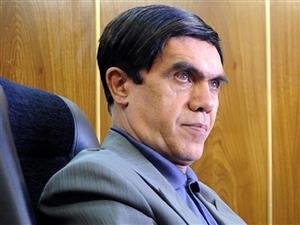
Iranian ambassador to the United Nations, Gholamali Khoshroo

“President Trump, however, even as a candidate, called the agreement ‘the worst deal America ever made,’ ” the ambassador said. “He called this deal a source of embarrassment for America. Indeed, it was not the deal but America’s unilateral decision to walk away from an agreement that was supported by the United Nations Security Council, and in fact co-sponsored and drafted by the United States, that is the source of embarrassment for America. To walk away from an international agreement and then threaten a sovereign country is the real source of embarrassment since Iran was in full compliance while the U.S. never was.”
“In 2008, the Israelis told the world that Iran was only some days away from acquiring an atomic bomb,” he said. “The Israelis said there had to be a military strike to prevent Iran from acquiring a nuclear weapon. What has happened since? During the last two years, there have been 11 reports by the IAEA [International Atomic Energy Agency] clearly confirming and demonstrating Iran’s full compliance with the JCPOA. All of the accusations [about] Iran using nuclear facilities for military purposes were refuted by the IAEA as well as by Europe, Russia, China, along with many other countries in Asia, Latin America, Africa. America is concerned about Iranian influence in the region and seeks to contain Iran because the U.S. administration realizes that America’s policies in the Middle East have failed. Their own statements about Iran repeatedly contradict each other. One day they say, ‘Iran is so weak it will collapse,’ and the next day they say, ‘Iran is governing several Arab capitals in the Middle East.’ ”
Iran announced recently that it has tentative plans to produce the feedstock for centrifuges, the machines that enrich uranium, if the nuclear deal is not salvaged by European members of the JCPOA. European countries, dismayed by Trump’s decision to withdraw from the agreement, are attempting to renegotiate the deal, which imposes restrictions on Iran’s nuclear development in exchange for the lifting of international sanctions.
Why go to war with a country that abides by an agreement it has signed with the United States? Why attack a government that is the mortal enemy of the Taliban, along with other jihadist groups, including al-Qaida and Islamic State, that now threaten us after we created and armed them? Why shatter the de facto alliance we have with Iran in Iraq and Afghanistan? Why further destabilize a region already dangerously volatile?
The architects of these wars are in trouble. They have watched helplessly as the instability and political vacuum they caused, especially in Iraq, left Iran as the dominant power in the region. Washington, in essence, elevated its nemesis. It has no idea how to reverse its mistake, beyond attacking Iran. Those both in the U.S. and abroad who began or promoted these wars see a conflict with Iran as a solution to their foreign and increasingly domestic dilemmas.
For example, Israeli Prime Minister Benjamin Netanyahu, mired in corruption scandals, hopes that by fostering a conflict with Iran he can divert attention away from investigations into his abuse of power and the massacres Israel carries out against Palestinians, along with Israel’s accelerated seizure of Palestinian land.
“The most brutal regime is now in power in Israel,” the Iranian ambassador said. “It has no regard for international law or humanitarian law. It violates Security Council resolutions regarding settlements, its capital and occupation. Look at what Israel has done in Gaza in the last 30 days. On the same day America was unlawfully transferring its embassy to Jerusalem, 60 unarmed Palestinian protesters were killed by Israeli snipers. [Israelis] were dancing in Jerusalem while the blood of unarmed Palestinians was running in Gaza. The Trump administration gives total support and impunity to Israel. This angers many people in the Middle East, including many in Saudi Arabia. It is a Zionist project to portray Iran as the main threat to peace in the Middle East. Israel introducing Iran as a threat is an attempt to divert attention from the crimes this regime is committing, but these too are failed policies that will backfire. They are policies designed to cover weakness.”
Saudi Crown Prince Mohammed bin Salman, facing internal unrest, launched the war in Yemen as a vanity project to bolster his credentials as a military leader. Now he desperately needs to deflect attention from the quagmire and humanitarian disaster he created.
“Saudi Arabia, as part of [the civil war in Yemen], has a tactical and strategic cooperation with Israel against Iran,” the ambassador said. “But the Saudi regime is defying the sentiments of its own people. How long will this be possible? For three years now, Saudi Arabia, assisted by the United States, has bombed the Yemeni people and imposed a total blockade that includes food and medicine. Nothing has been resolved. Once again, Iran is blamed for this failure by Saudi Arabia and the United States in Yemen. Even if Iran wanted to help the Yemenis, it is not possible due to the total blockade. The Yemeni people asked for peace negotiations from the first day of the war. But Saudi military adventurism and its desire to test its military resolve made any peaceful solution impossible. The U.S. and the U.K. provide military and logistical support, including cluster bombs to be used by the Saudis in Yemen. The Emiratis are bombing Yemen. All such actions are doomed to failure since there is no military solution in Yemen. There is only a political solution. Look at the targets of Saudi airstrikes in Yemen: funerals. Wedding ceremonies. Agricultural fields. Houses. Civilians. How do the Saudis expect the Yemeni people to greet those who bomb them? With hugs? The war has cost a lot of money, and Trump responds by saying [to Saudi Arabia], ‘Oh you have money. [Paraphrasing here.] Please buy our ‘beautiful weapons.’ They are killing beautiful children with these ‘beautiful’ weapons. It is a disaster. It is tragic.”
And then there is President Donald Trump, desperate for a global crusade he can use to mask his ineptitude, the rampant corruption of his administration and his status as an international pariah when he runs for re-election in 2020.
“Of course, blaming and threatening Iran is not new,” the ambassador said. “This has been going on for 40 years. The Iranian people and the Iranian government are accustomed to this nonsense. United States intervention in the internal affairs of Iran goes back a long time, including the [Iranian] war with Iraq, when the United States supported Saddam Hussein. Then America invaded Iraq in 2003 in their so-called ‘intervention for democracy and elimination of WMDs.’ Iran has always resisted and will always resist U.S. threats.”


“America was in Iran 40 years ago,” the ambassador said. “About 100,000 U.S. advisers were in Iran during the rule of the shah, who was among the closest allies of America. America was unable to keep this regime in power because the Iranian people revolted against such dependency and suppression. Since the fall of the shah in 1979, for 40 years, America continued to violate international law, especially the Algeria agreements it signed with Iran in 1981.”
The Algeria Declaration was a set of agreements between the United States and Iran that resolved the Iranian hostage crisis. It was brokered by the Algerian government. The U.S. committed itself in the Algeria Declaration to refrain from interference in Iranian internal affairs and to lift trade sanctions on Iran and a freeze on Iranian assets.
The warmongers have no more of a plan for “regime change” in Iran than they had in Afghanistan, Iraq, Libya or Syria. European allies, whom Trump alienated when he walked away from the Iranian nuclear agreement, are in no mood to cooperate with Washington. The Pentagon, even if it wanted to, does not have the hundreds of thousands of troops it would need to attack and occupy Iran. And the idea—pushed by lunatic fringe figures like Bolton and Giuliani—that the marginal and discredited Iranian resistance group Mujahedeen-e-Khalq (MEK), which fought alongside Saddam Hussein in the war against Iran and is viewed by most Iranians as composed of traitors, is a viable counterforce to the Iranian government is ludicrous. In all these equations the 80 million people in Iran are ignored just as the people of Afghanistan, Iraq, Libya and Syria were ignored. Perhaps they would not welcome a war with the United States. Perhaps if attacked they would resist. Perhaps they don’t want to be occupied. Perhaps a war with Iran would be interpreted throughout the region as a war against Shiism. But these are calculations that the ideologues, who know little about the instrument of war and even less about the cultures or peoples they seek to dominate, are unable to fathom.
“The Middle East has many problems: insecurity, instability, problems with natural resources such as water, etc.,” Khoshroo said. “All of these problems have been made worse by foreign intervention as well as Israel’s lawlessness. The issue of Palestine is at the heart of turmoil in the Middle East for Muslims. Any delay in finding solutions to these wounds in the Middle East exposes this region to more dangerous threats. Americans say they want the Middle East to be free from violent extremism, but this will only happen when the Middle East is free from occupation and foreign intervention. The Americans are selling their weapons throughout the Middle East. They calculate how much money they can earn from destruction. They don’t care about human beings. They don’t care about security or democratic process or political process. This is worrisome.”
“What are the results of American policies in the Middle East?” he asked. “All of the American allies in the region are in turmoil. Only Iran is secure and stable. Why is this the case? Why, during the last 40 years, has Iran been stable? Is it because Iran has no relationship with America? Why is there hostility between Iran and America? Can’t the Americans see that Iran’s stability is important for the region? We are surrounded by Pakistan, Afghanistan, Iraq, Syria, Yemen. What good would come from destabilizing Iran? What would America get out of that?”
CHRIS HEDGESColumnist
Chris Hedges is a Pulitzer Prize-winning journalist, New York Times best selling author, former professor at Princeton University, activist and ordained Presbyterian minister.