Showing posts with label Secretary of Defense James Mattis. Show all posts

Monday, January 14, 2019

Syria: The underlying reasons for this terrible bloody war

Michael Payne

Journalist Michael Payne says in his article for the “Interpreter”, titled: “Syria: The underlying reasons for this terrible bloody war”: So here’s a message for (US president Donald) Trump: in addition to Syria get out of Iraq, get out of Afghanistan, and get out of the entire Middle East where this current government, with an overly aggressive foreign policy, never did belong and had no right to be.
Trump, the “lame duck” president who is on his way out the door, has just set off a massive firestorm in Washington D.C. with the announcement that he is going to remove all US troops from the bloody war in Syria. Washington D.C., including the Congress, the military establishment, and various foreign affairs experts and observers were shocked and stunned after hearing that news.
In a very short time, Secretary of Defense James Mattis announced that he was resigning and would leave the Trump administration at the end of February. He indicated he is resigning in protest of the move that he has called a monumental mistake. Trump, upon hearing of his resignation and the reasons he stated, immediately fired him.
It’s been widely reported that “Mattis’s resignation letter was the sharpest, and most public, protest from inside the Trump administration over the president’s rejection of the alliances and relationships that have underpinned American security since the end of World War II.”
Washington is in an uproar over this sudden move, one that is not going to die down in the near future.
I have a very different view than Trump relative to the Syrian situation. He wants to pull our troops out of that country because he believes that Daesh has now been defeated and that terrorist group is no longer a threat in that country.
I think that American troops should be removed from that country, but for an entirely different reason; because they should never have been sent to that country in the first place, that their illegal entry into Syria was in no way justifiable.
My position on this issue is not new. In fact, it was clearly stated in an article that I wrote back in September 2015, the purpose of which was to identify and report on the specific root causes of the war in Syria, based on the facts and evidence gathered from some of the best, highly respected Middle East experts.
Many of my conclusions were based on the excellent writings and conclusions made by one of the very best Middle Eastern and Eurasian affairs experts, Pepe Escobar, who for many years was the main writer for the Asian Times website. There are few of his kind who can match his expert views and conclusions in these regions of the world.
Here are some excerpts from the article: “This situation is very complex and there is much confusion over who initiated this war; who is the most responsible and the most guilty, and how and it will ever be resolved. We must not just accept the usual explanations that are offered up by this government or the controlled national media but, instead, think deeper to try to develop the most plausible underlying causes.
With that in mind let’s turn our attention to the vast oil and natural gas reserves in the Middle East and the transit systems that are used to deliver these resources to other countries. When we speak of pipelines it should be understood that a tremendous competition currently exists for delivery of natural gas to many of the European nations.
The tiny country of Qatar has substantial reserves of gas which it badly wants to sell to these European countries, to take the business away from Russia, the current major supplier, and prevent to Iran from doing the same in the future. The favored, most expeditious route for the Qatar gas pipeline is via Saudi Arabia, Jordan, and Syria, to Turkey and then to Europe.
President Assad of Syria refused to endorse Qatar’s plan. And that was what then triggered this massive, bloody conflict that has devastated the country of Syria and its people.
Assad refused because he decided to align himself with the planned development of the competing Iran-Iraq-Syria pipeline – the shortest and surest pipeline to the Mediterranean Sea.
That move on his part is why many geopolitical experts say that this clash between Syria, Iran and Russia on the one side and Qatar, Saudi Arabia and the US on the other, was the main reason why this conflict erupted.
Is it logical to think that competition over a pipeline route could actually cause such a massive war and crisis? Well, many past wars were started over much less important issues; and in this situation, the European gas market represents mega-billions of business for whoever is the major supplier and controls the method of delivery.”
Back to this article: The Washington government at that time, with President Barak Obama in office, was intent on helping Saudi Arabia, its close ally, and Qatar to build that pipeline so that it would compete with and take business away from the existing Russian pipeline going to Europe. Saudi Arabia?
Oh, yes, I remember now; Saudi Arabia was the home country of 15 of the 19 hijacker terrorists that supposedly caused the horrific 911 incidents in New York in 2001.
At that time Assad and Putin were the bad guys in the eyes of the US government. Now it seems that the situation has been reversed since Putin has become a very good friend of Trump and is no longer the bad guy.
Let me correct Mr. Trump on one of his many examples of misinformation. I heard him say more than once that President Obama created Daesh when he initiated the removal of US troops from Iraq in 2007 that was completed in 2011. Hey, Mr. Trump, Obama did not create Daesh during that time because it already was in existence.
The facts of the matter are that G.W. Bush and Dick Cheney were entirely responsible for creating Daesh after they illegally invaded Iraq. Many, many Iraqis were killed and millions were sent into exile in nearby countries. So Mr. Trump, hopefully, this will provide you with the real facts that many others already know so you can stop spreading your misinformation on this issue.
So why is Trump really pulling American troops out of Syria? He says it is because Daesh has been defeated but that seems to be just a diversion from the real truth. Think about this:
It’s no secret to those in the know that Putin feels that Russia and Iran have defeated the combination of the anti-Assad government forces and Daesh and various other terrorist groups and that this war is now winding down. He has stated that he would like to remove most or all of his troops and let that country slowly return to normal. But he’s not going to pull them out as long as American troops are there.
So, all of a sudden we hear that Trump, without any agreement from the US military establishment, will pull out American troops.
Now it becomes more clear about what Trump’s real motive may be. If he follows through with this surprising move, and that then prompts Putin to make his exit, then we will have the answer; we will see the clear connection between Trump and Putin and their mutual strategy.
One way or another, if both Russian and US troops are removed from war-torn Syria then that will be a great thing for Syria and the entire world; no matter what the real reasons behind these decisions may be.
So here’s a message for Trump: in addition to Syria get out of Iraq, get out of Afghanistan, and get out of the entire Middle East where this current government, with an overly aggressive foreign policy, never did belong and had no right to be. Just get out and stay out.

Tuesday, December 25, 2018

Intelligence and Trump’s war against truth

The Trump administration’s tendency to disregard conclusions of the U.S. intelligence community has become, as the Washington Post’s Greg Miller has reported, a habit.
Paul R. Pillar is Non-resident Senior Fellow at the Center for Security Studies of Georgetown University and an Associate Fellow of the Geneva Center for Security Policy. He is a Vietnam War veteran and a retired officer in the U.S. Army Reserve. Pillar has written an article on the issue under the heading of “Intelligence and Trump’s war against truth.”
Initially, Trump’s shoving aside of the intelligence agencies’ assessments was all about his refusal to acknowledge the role that Russia played in his election victory in 2016. During the subsequent two years, the administration’s rejection of those agencies’ analysis has extended to a variety of important topics, from North Korea and Iran to migrant caravans and murder in Istanbul.
Miller quotes comments of an anonymous U.S. intelligence official about how “there is extraordinary frustration” over how the “time, energy, and resources” devoted to providing accurate intelligence to Trump seems to be all “a waste.” What is proper or improper in policy-intelligence relations is more complicated, however, than simply noting how much the current president either heeds or blows off what intelligence officers tell him.
There is no need to feel sorry for intelligence officers more than other public servants, notwithstanding the aforementioned frustration. In some respects, the intelligence agencies are more insulated from Trump’s excesses than are many other federal departments and agencies. The intelligence agencies’ mission involves providing the best possible information and analysis to inform policy decisions; it does not extend to the policy decisions themselves.
The job of intelligence includes leading the policy horse to water and advising whether the water is safe to drink; the job does not include getting the horse to drink it. This principle is not always observed in public perceptions of how well intelligence has done its job, but that’s a problem with the public perceptions, not with the administration of the day.
We should feel sorrier for public servants in those parts of the federal government—such as the Environmental Protection Agency or the Consumer Financial Protection Bureau—whose core missions the Trump administration is negating and are led by people appointed to impede those missions. In such places the government-wide drop in morale under Trump has understandably been especially steep.
For any of several legitimate reasons, foreign and security policy might not take the direction that an intelligence assessment seems to imply. Important foreign policy issues commonly involve multiple U.S. interests and objectives. An assessment on any one question does not speak to all those interests and objectives. Policy-makers must choose among competing national priorities and consider where to pay costs and to assume risks. Intelligence cannot make those priority-setting decisions. Makers of foreign policy also must consider resource constraints and domestic support, and not only the situation overseas that the intelligence agencies describe.
A policy-maker going against what appears to be the implied direction of intelligence assessments should be honest about the reasons for doing so and should respect the legitimacy of the intelligence agencies’ assessments even if they do not ultimately guide the policy. As Miller observes, Trump doesn’t do that. Instead, he attacks the accuracy of the information those agencies provide. This type of reaction is not unprecedented. It prevailed during the George W. Bush administration’s selling of the invasion of Iraq, when that administration denigrated the intelligence agencies’ (accurate) assessment that the Iraqi regime had nothing to do with the operations of al-Qaeda and promoted an alternative (false) notion of an “alliance” between the regime and the terrorist group.
Another unfortunate tactic much in evidence under Trump is to demand an extreme and probably unattainable level of “proof” before accepting a reality. The administration has used this tactic in refusing to acknowledge the role of Saudi crown prince Mohammed bin Salman in the murder of journalist Jamal Khashoggi. Secretary of Defense James Mattis and Secretary of State Mike Pompeo talk about the absence of a “smoking gun” or “direct evidence” implicating the crown prince. Such a tactic, if applied to foreign policy generally, would be a recipe for paralysis, because most situations to which foreign policy must respond do not offer smoking-gun type evidence but are no less a reality because of that.
Again, there is precedent in the Bush administration’s selling of the Iraq War, when policy-makers disregarded probabilities to promote their preferred notions, although in that case the promoted notions more often were that something did occur rather than that it didn’t. Secretary of Defense Donald Rumsfeld preached that “absence of evidence is not evidence of absence,” and Vice President Richard Cheney propounded the “one percent doctrine,” under which we were supposed to treat as a certainty something that was highly unlikely.
Trump’s rejection of reality is nonetheless unprecedented in a couple of respects. One is the sheer scope and magnitude of the lying, with tallies of presidential falsehoods having gone off the charts. Another is Trump’s persistent repetition of lies even after their falsity has been conclusively and publicly demonstrated. Already overworked fact-checkers in the media have had to develop new scoring systems to track this Trumpian habit. The habit resembles nothing in previous American history as much as it resembles the Big Lie technique that totalitarian regimes have perfected. In Trump’s case the idea evidently is that if he repeats a falsehood often enough and long enough, it will replace reality at least in the minds of his cherished political base.
Intelligence agencies are seemingly in the truth business, and so it is natural to think of them when contemplating Trump’s war against truth. But the agencies are not central to what is at stake in most of this war. We don’t need intelligence agencies to know how much of this presidency is based on falsehoods, even in foreign affairs. For example, acknowledging the Saudi crown prince’s role in the Khashoggi murder depends less on some juicy bit of reporting from an intelligence agency than on an understanding of how the current Saudi regime operates.
Americans certainly should be attuned to misrepresentations of reality that involve misuse of intelligence. Such abuse is most likely to involve cherry-picking, in which a few bits of intelligence reporting are publicly highlighted to make a case while disregarding other information that fully and more accurately portrays reality. Such cherry-picking in the selling of the Iraq War is echoed in much of the Trump administration’s promotion of hostility toward Iran. For example, Pompeo’s most recent statement about Iranian defensive missiles was a highly selective treatment that left unsaid anything about other missile activity in the region, the threats and aggression to which Iran is responding, and who is and is not respecting obligations in multilateral agreements and United Nations Security Council resolutions.
Yes, it would be better if Trump heeded the intelligence agencies’ assessments more than he does. But defending American democracy in the face of Trump’s war against truth and trying to prevent more such damage to that democracy in the future go beyond the role of those agencies. The defense includes somehow instilling in the general population not only the ability but also the duty to distinguish between truth and lies.

Saturday, November 03, 2018

Manama’s dangerous assembly; Trump’s plot against Iran with the Arab NATO

By Farzad Farhadi
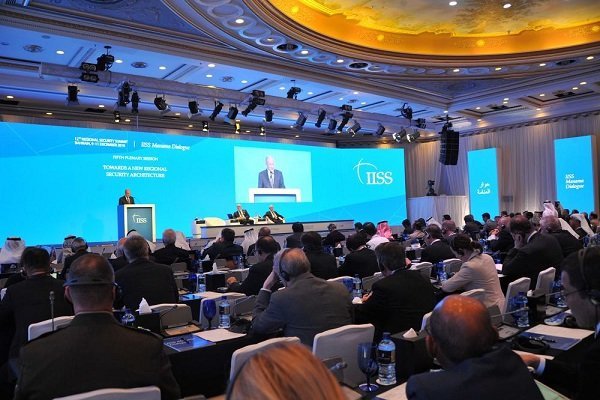
TEHRAN - A security summit about formation of the Arab NATO, the Middle East Strategic Alliance (Mesa), ended on Sunday in Bahrain’s capital. Earlier last month, there was a summit on the Arab NATO in Kuwait, an initiative pushed by U.S. President Donald Trump to confront Iran in terms of political, economy and military affairs. However, the Manama summit took place in a much more serious way than was held in Kuwait as Secretary of Defense James Mattis personally led the summit.  
During the three-day summit, Mattis discussed it all with the foreign ministers of the Persian Gulf Arab states with gloomy future.
In other words, Mattis told FMs what was expected of them by their lord, Trump, before attending an upcoming summit in Washington. The summit is scheduled to take place with the participation of the [Persian] Gulf Cooperation Council (PGCC) plus Egypt and Jordan. 
What the U.S. Secretary of Defense dictated to the PGCC states at the Manama Summit Dialogue included financial support for pre-mediated plans for the region and ultimately a renewal of allegiance to the White House that is hungry for the money and plunders the rich Arab states.
Meanwhile, Bahraini Foreign Minister Khalid bin Ahmed Al-Khalifa claimed that Arab NATO plays an important role in the security and stability of the Persian Gulf region, a comment that was described “ridiculous”.
The regional situation, successive meetings and type of attendees all prove preparation of a terrible plan for the region that even the leading participants do not dare to express. And it becomes more dangerous when these meetings are set up by U.S. and Trump’s orders.
These meetings are a series of plots against the region that began seven decades ago with the occupation of Palestine and continued with the war in Lebanon and Gaza. The Zionist actions continued with the backing of anti-protest of the Great March of Return rallies by the Arab regimes.
Arabs tend not to learn the lessons of previous experiences, as they have witnessed the failure of the Great plan of Middle East, the breakdown of Iraq, Syria, and Yemen, and are now witnessing conspiracies against the Palestinian cause.
It seems that reactionary regimes, which face popular protests against normalization of relations, are actually seeking to inflict the latest blow to the Palestinian cause. Will the Arab NATO find a better fate than Camp David?
Abdel Bari Atwan, the famous analyst of the Arab world, wrote: “It is no coincidence that U.S. Secretary of Defense James Mattis was the star of the Manama Summit Dialogue, which was held several days ago with the presence of a large number of foreign ministers of the [Persian] Gulf Cooperation Council, with the exception of Qatar.”
Because the first and foremost goal of this meeting is to provide the political and intellectual context of what the Middle East Strategic Alliance (MESA) called Arab NATO, is doing in practice in early New Year's Summit in Washington, where the leaders of the six [P]GCC countries along with Egypt and Jordan is being chaired by Donald Trump, President of the United States.
“The Manama Summit completed the military summit of Kuwait held last month when the heads of the Persian Gulf states and Egypt and Jordan were attending it along with the U.S. Central Command commander Army General Joseph Vote.”
Referring to the hostile and repeated anti-Iran position of Adel Al-Jubeir, Atwan stated: “Saudi Foreign Minister Adel al-Jubeir, who has appeared after a month of not being in the public eye, spoke of Iran's defeat. At the Manama summit, two main approaches were unveiled which could be for the new coalition in the region.
First, the existence of secret communications in the Persian Gulf states led by the U.S. to find a solution to the Qatari crisis, which seems to have had great progress. Al-Jubeir insisted Qatar would be a participant in a new strategic coalition to confront Iran, and referred to the security agreements recently reached at Riyadh Summit in Qatari. Al-Jubeir pointed to Saudi Crown Prince Mohammad bin Salman’s speech at the Davos Summit where MbS praised the Qatari economy as a strong economy in the Middle East region.
Second, Israel will be the main partner in the Arab NATO, and its rapid normalization ties with the Arab states, including the visit of Israeli sports delegations to Doha and Abu Dhabi, and Netanyahu's visit to Muscat. It is not unlikely that Israel will participate in the Washington summit, where the new coalition begins to work in early January. In particular, Yousef bin Allawi, the foreign minister of Oman, spoke about Israel at Manama summit as a country to interact with and treat just like any other country.
We do not agree with Bahrain's Foreign Minister Khalid bin Ahmed Al-Khalifa when he said that this alliance will play a role in strengthening the security and stability of the region and will help its countries to confront the challenges. We believe that the Arab NATO will generally ignore the issue of Palestine and will be interrupted by its political, moral and religious affiliation. This alliance is a declaration of the tribal warfare in the region and the implementation of the Israeli plan for the destruction of Iran, similar to what happened in Iraq, Syria, Libya and Yemen.
Sunni Arab NATO will play the same role that the Persian Gulf states and some other Arab countries played in the wars against Iraq, Syria, Libya and Yemen. That means, providing Arab-Islamic coverage for the future American-Israeli war against Iran in the region. But in the impending new war on Iran, the issue is completely different, and the alternative is to do away with the Palestinian cause, basically through the deal of the century.”
Netanyahu went to Muscat a few days ago. It would not surprise me to see him in Abu Dhabi, Manama, Doha or Riyadh tomorrow. We are witnessing the birth of a new regional system as the replacement of the current fragile system of Arab-dominated states, the backbone of which is Israel, transforming the enemy into a strong ally and a friend who supports his new allies. In the next four months, we will see a stop to the issue of Palestine in the Persian Gulf region at the level of governments, not nations.”