The third day of the Iranian calendar month of Ordibehesht (April 23), has been designated as the national Architect’s Day. Throughout their history, Iranians have combined their art and creativity with architecture and through long years, they have built edifices which are currently considered as feats of architecture in the world. Iranian architects have designed such magnificent buildings that even now, after the lapse of hundreds of years, they are still amazing and beautiful and have not lost the luster that they had at the beginning of their construction. Experts believe that Iranian architecture dates back to seventh millennium before the birth of Christ. Painstaking calculations, choice of correct covering, meticulous observance of technical and scientific issues in construction, high arcades, tall columns, and finally different kinds of eye-catching decorations are all elements that have made the Iranian architecture more beautiful and magnificent. The Iranian architecture has seen various styles. Persian, pre-Persian, and Median as well as specific architectural styles aging back to Achaemenid, Seleucid, and Sassanid eras have been among prominent and diverse architectural methods and styles practiced in Iran before the advent of Islam. After conversion of Iranians to Islam, such new styles as Khorasani, Razi, Isfahani, and Azeri accounted for the lion’s share of Iranian architecture. This article reviews architectural characteristics of some of the most amazing Iranian buildings.
Persepolis
 The architecture style in Persepolis is one of the most amazing feats in the field of design and construction of a building all across the world. At that time, building this monumental edifice was aimed to mean nothing but to reflect the glory and grandeur of the Persian Empire, especially the king himself. The abundance of suitable rocks at the location of Persepolis had provided good grounds for construction of palaces with columns, use of stone-cutting and painting for decorations, and also use of glazed bricks in some parts of the building. Despite lapse of long years and going through various historical events, the columns of this building are still upright. Also, in spite of what may seem at the first glance, these columns are not built in one piece and have been made of several pieces stacked one on top of the other. Molten lead has been poured on the junction of these pieces, which has made them resistant to all kinds of shock and jolt. Another prominent feature in the architecture of Persepolis includes the use of precious metals to adorn its designs in addition to spectacular painting and the number of stairs. Construction of this building started about 25
  centuries ago under the rule of Darius the Great and was later completed by his successors. They say it took about 120 years before the Persepolis was finished through the art of Iranian architects and artisans and was introduced to the world as the symbol of the glory and magnificence of Achaemenid kings. One of the main points about architectural style used in Persepolis is that the ratio of the height of entrances to their width as well as the ratio of the height of columns to the distance between two columns is equal to the “golden ratio. ” The golden ratio is a very important ratio in geometry, which can be also found in nature. Using this ratio in building Persepolis has been among unique features of Iranian architecture many centuries ago. This magnificent building was set on fire during an assault by the Greek warrior, Alexander III of Macedon (aka, Alexander the Great) in 330 B.C., which also led to destruction of a huge portion of Achaemenid books, culture and arts. At any rate, the ruins of Persepolis are still among the most popular places which draw Iranians as well as foreign tourists to the southern city of Shiraz.
Taq-e Kasra (The Great Arch of Mada’in)
 Taq-e Kasra or the Great Arch of Mada’in is the biggest adobe arch in the world and a feat of architecture dating back to the era of Sassanid rulers. This structure is said to be the most brilliant work of architecture belonging to that era. They also say that to build Taq-e Kasra, Sassanid kings summoned the most famous architects from various parts of the empire, who built it with three thousand workers. As put by historians, it took 20 years before the structure was finished. The most important part of the palace is its main entrance which is shaped as a high and wide arcade facing outward, with a rectangular hall right behind it. The great arch of this structure has been built over the walls without any columns. There are corridors, chambers and halls on both sides covered by a dome and cradle-like ceiling. The frontal part of the big crescent and a part of the main façade of the palace are still in place. The external view of the palace is made of bricks and its columns and battlements have been covered with copper plates decorated with gold and silver. During past centuries, the Great Arch of Mada’in has fallen out of Iran's geographical realm and its ruins are now located 37 km south of the Iraqi capital city of Baghdad close to the eastern shores of the Tigris.
Sheikh Lotfollah Mosque of Isfahan
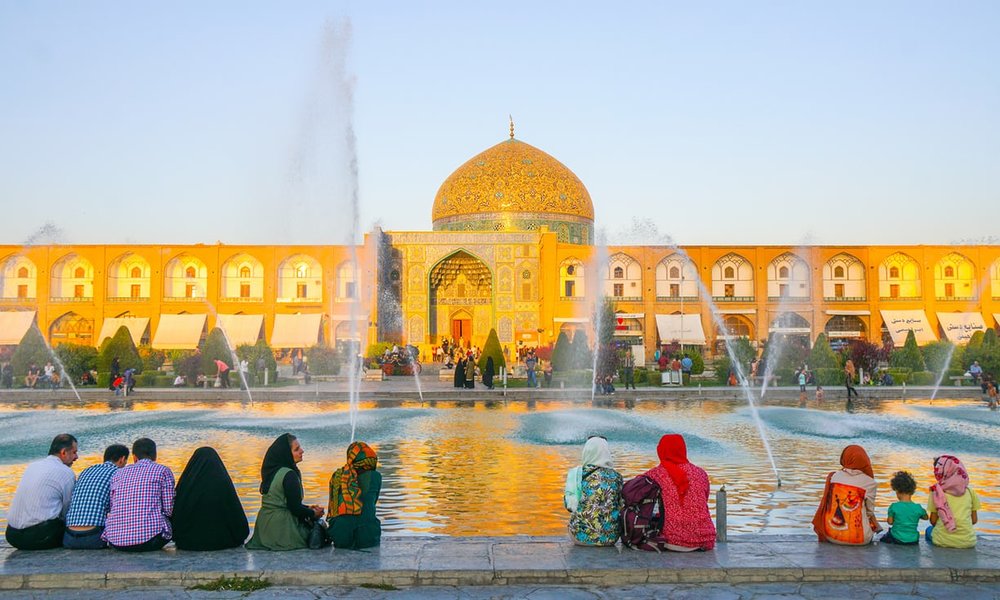
 Sheikh Lotfollah Mosque of Isfahan, which is located on the eastern side of Naqsh-e Jahan Square, is among the most famous mosques in the world in terms of architecture. This mosque was built between 1602 and 1619 on the order of Shah Abbas I of Safavid dynasty. Master Mohammad Reza Esfahani has been the chief architect of this monumental building. The mosque has been named after Sheikh Lotfollah Jabal Ameli, the renowned Muslim scholar of Safavid era, who traveled to Iran from Lebanon on the invitation of Shah Abbas I, and taught Islamic jurisprudence (Fiqh) and principles (Usul). The altar of the mosque is considered a unique masterpiece of architecture because of its delicate tile work and exquisite corbelling. Professor Arthur Upham Pope has written in his valuable book, A Survey of Persian Art, that this building can be hardly considered a work done by human hands. He added that there are no weaknesses in the construction, all sizes are totally proportionate, the plan is powerful and beautiful and the whole building is an amalgam of excitement and vivacity combined with a glorious silence and tranquility which represent extreme aesthetic flair and have come forth from no other source but religious faith and divine revelation.
Soltaniyeh Dome
 By building Soltaniyeh Dome in the city of Zanjan, Iranian architects have recorded the construction of the tallest brick dome and the first double-wall dome of the world in their own name. The dome is 48.5 m high and 24.4 m wide at its mouth. At the time of construction, this building was considered a major hallmark of the Iranian and Islamic architecture. This dome is considered as a masterpiece of the Islamic architecture. Soltaniyeh Dome was constructed between 704 and 712 AH. In terms of volume, architecture style, relations among various spaces, ratios among various components, statics, resistance of the building, and decorations, Soltaniyeh Dome is considered one of a kind. The double-wall structure has made it very resistant to earthquakes. The amazing skylights of Soltaniyeh Dome bemuse every viewer. The skylights act as a sundial. If the light comes through the hole in the main dome, it is noon. The light coming through big windows shows the time of the day in hours while the light coming through small windows shows the time in minutes.
Chehelsotoun
 The era of Safavid rulers was a prime time for prosperity of the Iranian art of architecture. Chehelsotoun building, Khajou Bridge, Tavous Khaneh (House of Peacocks) Garden, Shabakeh (Network) Garden, Ghoushkhaneh (House of Hawks) Garden, and Sa’adatabad Garden are among the most important buildings constructed at that time. Among all those monuments, Chehelsotoun building is of special importance due to its outstanding architecture and its enigmatic name. The early building was built under the rule of Shah Abbas I in the form of a kiosk. Under Shah Abbas II, the building was further developed and called Chehelsotoun. Mirror Hall, 18 Columns Hall, two big northern and southern rooms adjacent to Mirror Hall, two arcades on both sides of the king’s hall and a big pond in front of the hall are major components of this building. The architecture style used in this palace is considered a combination of the Chinese, Iranian and European arts of architecture. The columns of the edifice, which give the palace its name, are made of plane tree and pine wood. The building has, in fact, 20 columns which along with their reflection in the pond have caused the building to be known as Chehelsotoun (meaning Forty Columns in Persian).
Goharshad Mosque in Mashhad
 Goharshad Mosque in Mashhad is one of the most beautiful mosques of Iran and the product of unique art of the country’s architects. The mosque consists of four arcades with seven arched spaces called Shabestan situated among them. The mosque is one of those buildings which demonstrate the main characteristics of Iran's pristine and traditional architecture. One of the unique features of this mosque is the combination of vivid colors used in its painting. Cobalt blue, turquoise, white, bright green, yellow, saffron yellow, azure, and glossy black along with their reflection across the building and in combination with various shades have given a special appearance to the mosque which adds to its beauty.
Eram Garden in Shiraz
 Eram Garden in Shiraz is among the most beautiful works of Iranian architecture. It has been built according to architecture style of Qajar era and imitates architecture style that was vogue under Zand dynasty. The three-story building has been designed and built in such a way that the lowermost level is usually cool and suitable for a rest in summer days. Seven-color tiles have been used in front of the columns on the second and third floors. Painting, stone-cutting, tile work and plaster work used in this building are all among masterpieces of architecture and art of Qajar era. There is a big pool in front of the building which reflects its general view.
Source: Iranian Student's News Agency, ISNA