Showing posts with label John Andrew Morrow. Show all posts

Wednesday, April 03, 2019

The Duty to Protect Sacred Sites – Part IV

Sacredness of all heritage sites is protected

John Andrew Morrow

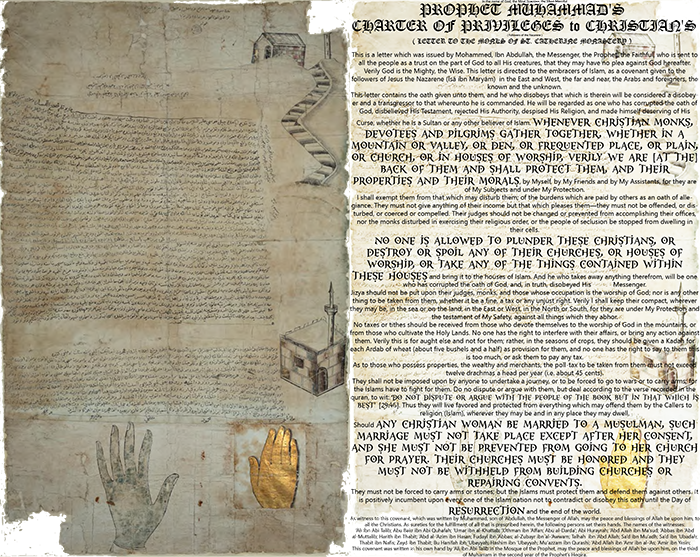
If anyone questions the Islamic obligation to preserve religious heritage sites, the clearest and most definitive answer comes from the Covenant of the Prophet Muhammad with the Armenian Christians of Jerusalem, which reads,

From Muhammad ibn ‘Abdillah, the Prophet and Messenger of Allah, to Abraham, the Patriarch of Jerusalem, and to the Armenian Bishops of Damascus, and those who are found in other Muslim territory, and to those who depend upon them, namely, the Ethiopians, the Copts, and the Syrians, who inhabit Jerusalem: I have granted them their convents, churches, schools, residences, and fields.
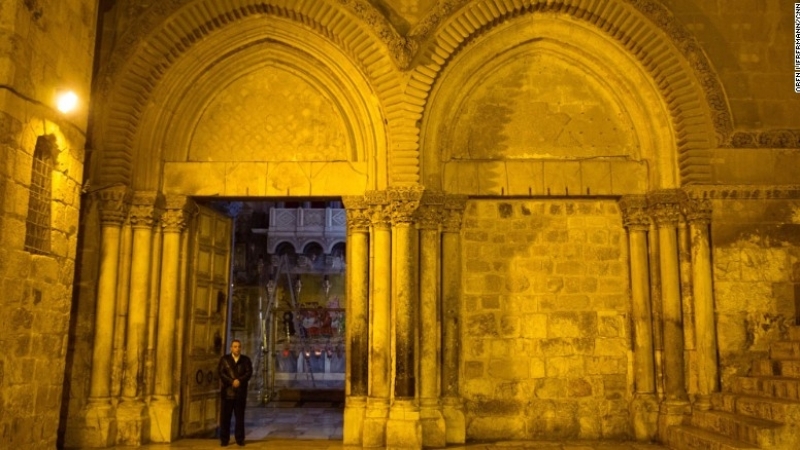
I, the Messenger of Allah, with Allah as my Witness, and with the conscious witness of all people, men and women, who are found here, have promised and granted [them] the churches located in Jerusalem, the Church of the Holy Resurrection, and the Cathedral of St. James in the southern part of the Holy City, which is located next to the Monastery of Zion.
I have also given them the Mount of Olives Monastery, the Chapel of the Prison of Christ, the Church of Bethlehem, and the chapels of St. John of Samaria [Nablus], the oratories located behind the sanctuary of the Holy Resurrection, and the totality of the upper and inner levels of the Golgotha and the Tomb of Christ where the eternal light shines, all the places of religious pilgrimage, as well as the mountains, the valleys, the residences, and their acquisitions; I have granted them with the witness of Allah, the Messenger of Allah, and all believing Muslims (Morrow, vol. 1, pp. 452–53).
If I repeat the protections provided by the Prophet (pbuh) over and over again, I do so for the same purpose that he did: for emphasis, and to demonstrate that the protections in question were not limited to a single community, were not limited to a certain geography, and were not limited to a certain period of time. They are universal laws, principles, and rights. They apply, not only to Christians, but to Samaritans, Jews, and Zoroastrians as well.
In the Covenant of the Prophet Muhammad with the Samaritans, the original of which was preserved by the followers of Moses until the 20th century, the Messenger of Allah (pbuh), states concisely and definitely that, “I, Muhammad ibn ‘Abdillah ibn ‘Abd al-Muttalib, have commanded that a covenant of protection and security be written for the Samaritan community for their persons, their children, their property, their wealth, their places of worship, their financial endowments, and to be binding in all the provinces and places in which they reside. We also pledge to behave with them and the people of Palestine in the best possible manner” (Morrow, vol. 2, p. 527).
And what about the Jews? It is exactly the same. As the Messenger of Allah (pbuh), says in the Covenant of the Prophet Muhammad with the Children of Israel, known also as the Treaty of Maqna, “Yours is the safeguard of Allah and that of His Messenger with regard to your persons, belief, and property…” (Morrow, vol. 2, p. 288).
But what about the Zoroastrians? Some Persians might ask. In the Covenant of the Prophet Muhammad with the House of Salman, which is found in Abu al-Shaykh’s Tabaqat al-Muhaddithin and Abu Nu‘aym’s Akhbar Isfahan, the Messenger of Allah (pbuh) states that “This is a writing for the people of the House of Salman. They have God’s protection and my protection of their blood and property” (Morrow, vol. 2, p. 405). Property is property. It includes all kinds of property. It includes personal property. It includes historical sites. It includes Persepolis and other such places. Such world heritage sites must be protected.
And consider what the Messenger of Allah (pbuh) has to say in the Covenant of the Prophet Muhammad with the Parsis, “Their hands shall be free in building fire temples, administering them, and spending their wealth… They shall be granted exclusive privileges from among the various sects protected” (Morrow, vol. 1, p. 527).
The question begs to be answered. If the Messenger of Allah (pbuh) was so adamant about protecting the places of worship of Christians, Samaritans, Jews, and Zoroastrians, why on earth would he command Muslims to destroy Islamic heritage, masjids, graveyards, tombs, mausoleums, and shrines? Why would he want Muslims to destroy their own religious, historical, cultural, and archeological sites? He would not. It makes no sense. If the lives and property of non-Muslims are so sacred, so are the lives and property of Muslims.
As we have seen, the Qur’an, the Sunnah, the Sirah, and the letters, treaties, and covenants of the Prophet Muhammad (pbuh) are testimonies to the tolerance of Islam and its commitment to protect the lives and property of both Muslims and non-Muslims. Time and again, we see that the protection of people and their property is inseparable. They always go hand in hand.
Is this the life, liberty, and property presented by John Locke, the Founding Fathers, the Declaration of Independence, the Bill of Rights, and the Universal Declaration of Human Rights? No. No. No. That’s the life, liberty, and property presented by the Prophet Muhammad (pbuh). In other words, all of that is from Allah (swt). Respecting, maintaining, preserving, and protecting sacred and world heritage sites is a sacred duty. May the peace and blessings of Almighty Allah be upon the Prophet Muhammad and his family.

Friday, March 01, 2019

THE DUTY TO PROTECT SACRED SITES — PART III

The Prophet’s Covenants establish the Sunnah of historical preservation

By John Andrew Morrow
In light of the war crimes and cultural genocide committed by takfiri terrorists in Libya, Syria, Iraq, and elsewhere, in which masjids, graves, shrines, mausoleums, and churches have been destroyed, what do the letters, treaties, and covenants of the Prophet Muhammad (pbuh), have to say about the preservation of heritage sites — religious, cultural, and historical? This is something truly significant.
In the Covenant of the Prophet Muhammad with the Monks of Mt. Sinai, the famous Ashtiname of Muhammad, ‘ahd nabawi or ‘ahd al-nabi, the Messenger of Allah (pbuh), promises the Christians from the Monastery of St. Catherine in the Sinai Peninsula, that “no building from among their churches shall be destroyed” and warns that “whoever does such a thing violates God’s covenant and dissents from the Messenger of God” (Morrow, vol. 3:2). Not only are Muslims prohibited from demolishing churches, they are exhorted to maintain them, “These people shall be assisted in the maintenance of their religious buildings and their dwellings; thus, they will be aided in their faith and kept true to their allegiance” (Morrow, vol. 3:3).
In the Covenant of the Prophet Muhammad with the Christians of Persia, which was provided to the Armenian Christians of Persia, and was preserved in the Cathedral of New Julfa, in Isfahan, Iran, the Messenger of Allah (pbuh), states that “All pious believers shall deem it their bounden duty to defend believers and to aid them wherever they may be, whether far or near, and throughout Christendom” (Morrow, vol. 3:5).
But what exactly does it mean to protect Christian believers? The Prophet (pbuh), provides the definition. It consists in protecting “the places where they conduct worship, and those where their monks and priests dwell” (Morrow, vol. 3:5–6). He decreed that “their building enterprises shall not be interfered with… neither shall their churches be dismantled or destroyed, or their homes and mansions confiscated by Muslims, for mosques or residences, without their consent” (Morrow, vol. 3:6). What is more, he encouraged Muslims to help Christians repair their churches, chapels, and monasteries.
But for what reason, you may ask. As the Prophet (pbuh) most logically explains, for “the interest of the benevolent Muslim public and of their faith… as an expression of friendship and goodwill” (Morrow, vol. 3:7–8). The relationship is reciprocal. It can help seal a fraternal understanding. That is how you build bonds of brotherhood and sisterhood. That is how you promote social cohesion, tolerance, and coexistence. That is how you unite a diverse community. That is how you honor the signs of God.
Is there any territorial limitation to such obligations of protection of both persons and property? Absolutely not. As the Messenger of Allah (pbuh) explains, it applies
…everywhere, in mountains, on the plains, in towns and in waste places, in deserts, and wherever they may be, that people shall be protected, both in their faith and in their property, both in the West and in the East, both on sea and land (3:5–6).
The Messenger of Allah (pbuh) was not establishing municipal law, state law, or federal rights: he was establishing universal human rights. In fact, he was the very first to do so in the history of humanity. The rights he gave, he gave to all the world. He also warned that “Whosoever shall not do as is here prescribed, but shall do contrary to my behests; the same shall be held a despiser of this Compact, and a gainsayer of the word of God and of his Prophet” (Morrow, vol. 3:6).
In the Covenant of the Prophet Muhammad with the Christians of Najran, which was found by Habib the Monk in the Bayt al-Hikmah of Baghdad in the 9th century CE, the Messenger of Allah (pbuh) states,
I commit myself to support them, to place their persons under my protection, as well as their churches, chapels, oratories, the monasteries of their monks, the residences of their anchorites, wherever they are found, be they in the mountains or the valleys, caves or inhabited regions, in the plains or in the desert” (Morrow, vol. 3:15).
He also stresses, “it is not permitted to destroy any part of their churches, to take parts of their buildings to construct mosques or the homes of Muslims” and warns, “whoever does such a thing will have violated the pact of God, disobeyed his Messenger, and become estranged from the Divine Alliance” (Morrow, vol. 3:16).
In the Covenant of the Prophet Muhammad with the Christians of the World, which was rediscovered in a monastery in the Levant in the 17th century by Father Pacifique de Provins, and published in Paris by Gabriel Sionita, the Messenger of Allah (pbuh) declares,
I grant security to their churches, their places of pilgrimage wherever they are and wherever they may be found, be they in the mountains or the valleys, in the caves or inhabited regions, in the plains or the desert, or in buildings; and that I protect their religion and their property wherever they are and wherever they may be found in land or at sea, in the East or West, in the same way that I protect myself, my successors, and the People of My Community among the Believers and the Muslims (Morrow, vol. 3:21).
The Messenger of Allah (pbuh) asserts that “it is not permitted to destroy any part of their churches, to take parts of their buildings to construct mosques or the homes of Muslims” (Morrow, vol. 3:21). He states that “if the Christians seek the help and assistance of the Muslims in order to repair their churches and their convents… they must help and support them” (Morrow, vol. 3:23). However, he stresses, “they must not do so with the aim of receiving any reward” but rather “they should aim to restore that religion, out of faithfulness to the pact of the Messenger of God, by pure donation, and as a meritorious act before God and His Messenger” (Morrow, vol. 3:23). Once again, he warns, “whoever does such a thing will have violated the Pact of God, disobeyed his Messenger, and betrayed the Divine Alliance” (Morrow vol. 3:21).
In the Covenant of the Prophet Muhammad with the Christians of the World, which was copied in Egypt in 1538 from an ancient manuscript, the Messenger of Allah (pbuh) states,
I grant security to them, their churches, their businesses, their houses of worship, the places of their monks, the places of their pilgrims, wherever they may be found, be they in the mountains or the valleys, caves or inhabited regions, the plains or the desert (Morrow, vol. 3: 26).
He also states that Muslims must help and support Christians if they seek their assistance to repair their churches and convents (Morrow, vol. 3:28). He stresses that they should only do so to restore that religion, out of faithfulness to the Covenant of the Prophet, as a pure good deed, and as a blessed act before God and His Messenger (Morrow, vol. 3:28).
In the Covenant of the Prophet Muhammad with the Assyrian Christians, which was housed in the Cathedral of Jilu until the 19th century, the Messenger of Allah (pbuh) proclaims, “Leave their places of worship in peace” (Morrow, vol. 3:31); “Leave all their possessions alone, be it house or other property, do not destroy anything of their belongings” (Morrow, vol. 3:31). In the words of the Prophet, “their church buildings shall be left as they are, they shall not be altered” (Morrow, vol. 3:31); “None of their churches shall be torn down, or altered into a mosque, except by the consent and free will of the Christians” (Morrow, vol. 3:31). And, once again, he warns, “If anyone disobeys this command, the anger of God and His Prophet shall be upon him” (Morrow, vol. 3:31).
In the Covenant of the Prophet Muhammad with the Coptic Christians, the Messenger of Allah (pbuh) professes,
I will defend their dwellings and their houses of prayer and their churches, their monasteries and their gathering places, the gathering places of their monks and priests and hermits, the places of their hermits, and their monks’ cells and grottos (Morrow, vol. 2:236).
He iterates, “nothing shall be removed from their places of prayer or from their churches which they have” (Morrow, vol. 2:237). He also assures, “every building of their places of prayer and churches that was destroyed shall be rebuilt as it was at first” (Morrow, vol. 2:237). In other words, not only are Muslims required to respect, protect, and preserve religious institutions of other faiths, they are obliged to rebuild any of them that were destroyed.
In the Covenant of the Prophet Muhammad with the Syriac Orthodox Christians, the Messenger of Allah (pbuh) offers the same promise of protection,
I grant security and safety to their churches, their homes, their places of worship, their monasteries, their sites of pilgrimage, wherever they are and wherever they may be, be they in mountains or valleys, in caves or inhabited regions, in plains or in the desert and buildings (Morrow, vol. 2:342).
We see the very same thing in the Covenant of the Prophet Muhammad with the Armenian Christians, in which he says,
I safeguard them and remove all harm from them and from their churches, cloisters, convents, and places of worship, wherever they may be found, by they in mountains, valleys, caves, inhabited regions or in the plains (Morrow, vol. 2:477),
and in which he asserts, “It is not permitted to destroy or take parts of their ancient churches to construct mosques or homes for the Muslims” (Morrow, vol. 2:477).
This version is particularly interesting since it speaks not only of existing structures, but to ancient churches. Protection, therefore, is not limited to modern, contemporary, buildings, but also applies to those of historical importance.

Friday, February 01, 2019

The Duty to Protect Sacred Sites — Part II

Bulldozing and demolishing does not honor the symbols set up by Allah
John Andrew Morrow

As Almighty Allah (swt) states in the glorious Qur’an, “Whoever honors the symbols set up by Allah [shall know that], verily, these [symbols derive their value] from the God-consciousness in the hearts of the [committed Muslims]” (22:32). So, what does “to honor” mean? What does “to magnify” mean? What does it mean to respect and venerate the signs of Allah, the symbols of Allah, the waymarks of Allah, and the offerings consecrated to Allah? I can tell you what it does not mean. It does not mean bulldozing, demolishing, desecrating, and defiling them. It is an exercise in futility to attempt to explain and debunk the reasons used by certain so-called jurists and Islamists to justify their atrocious actions. Intelligence and stupidity do not speak the same language. Civilization and barbarity share no common ground. The deaf will not hear. The dumb will not understand. And the blind will not see.
The glorious Qur’an is a living and breathing book filled with wisdom — past, present, and future. It is the tree of life of a vibrant, living, spiritual tradition. It speaks to us, engages with us, and challenges us. The Qur’an is not meant to be a decorative ornament. It was not revealed to live on a shelf. Rather, it was revealed to live in our hearts and minds. The Qur’an is active, not passive. The Qur’an is totally interactive. Multilayered and multifaceted, it speaks to each soul individually and to each community collectively. Each of its words is a passage to another world. It is a universe that unveils itself through exegesis.
“Have they not traveled through the land and seen how their predecessors met their end? They were mightier than them: they cultivated the earth more and built more upon it” (30:9), asks and affirms the Qur’an. These are not words of condemnation for historical and archeological sites; they are words that call for contemplation and from which we can draw important lessons. The glorious Qur’an evidences a remarkable knowledge of ancient civilizations and devotes many passages to people who have perished (3:137; 6:11; 12:109; 16:36; 22:46; 27:69; 30:9, 42; 35:44; 40:21, 82; 47:10), “Have you considered how your Lord dealt with [the people] of Ê¿‘Ad of Iram [the city] of lofty pillars, whose like has never been made in any land, and the Thamud, who hewed into the rocks in the valley, and the mighty and powerful Pharaoh? All of them committed excesses in their lands, and spread corruption there: your Lord let a scourge of punishment loose on them” (89:6–14).
Almighty Allah (swt) spoke of sites that existed and that had survived for centuries, if not thousands of years. Had He wanted them wiped off the face of the earth, He could have done so. He left them there as signs. The Messenger of Allah (pbuh), who was well-traveled, as were many of the Arab Bedouins and traders, had visited many ancient sites. Had he opposed their existence, he would have commanded Muslims to destroy them. He did not. The Prophet Muhammad (pbuh), respected property, private property, communal property, public property, and the collective property and heritage of humanity.
Allow me to give you but a single example for the sake of illustration. When the Messenger of Allah (pbuh) liberated the Ka‘bah, he came across an image of Jesus, and his holy mother Mary (a), painted in the inner chamber of the sacred sanctuary. He covered the image with his sacred hand and commanded his followers to protect it. The Messenger of Allah did not encourage the visual representation of holy personalities and prophets, since this could lead to the exaggeration of their status and, in the case of Jesus, culminated in his deification. Nonetheless, he respected the signs of Allah (swt) that he saw.
We Muslims, or better yet, we human beings who happen to be Muslims, are morally and ethically required to preserve our heritage. Cells pass down information. DNA is transmitted. Likewise, knowledge and wisdom are passed down; orally, in written form, by means of all of the arts, and by mode of architecture. Tragically, our history is being destroyed every day. Salafi-Wahhabi iconoclasts are committing religious, cultural, historical, and scientific suicide. They destroy sites that are judged important to the collective interests of humanity. As the International Criminal Court in The Hague has established by adopting the Rome Statute in 1998, the destruction of historical buildings is a war crime. The International Criminal Tribunal for the Former Yugoslavia, established in 1993, also considers the destruction of religious buildings as an act of cultural genocide. In the eyes of Allah (swt), in the eyes of Islam, and the eyes of world, the destroyers of sacred world heritage sites are nothing more than criminals of war.

"Church Protection in Islam: Too Late, Too Little"

Court scholars represent power, not Islam

John Andrew Morrow


In 2016, the Ministry of Awqaf of the Supreme Council for Islamic Affairs for the Arab Republic of Egypt published a work titled Church Protection in Islam in various languages. The work, which is dedicated to “Mr. President ‘Abd al-Fattah al-Sisi, the president of the Arab Republic of Egypt,” one of the greatest violators of human rights on the planet, features a foreword from Professor Muhammad Mukhtar Jumu‘ah, Minister of Awqaf, an introduction by Professor Shawqi ‘Allam, along with articles by Prof. Muhammad Salim Abu ‘Asi, Professor ‘Abdullah al-Najjar, Professor Muhammad al-Jibali, Professor Muhammad Nabil Ghanayim, Professor ‘Abd al-Halim and Dr. Majdi ‘Ashur. If you read one, you have read them all, as they all essentially repeat the very same thing, quote the very same Qur’anic ayat, quote the very same prophetic hadiths, and use the very same arguments.
Protecting the church is an obligation in Islam. In other words, there should be no need for Muslims to even speak about it. They should simply act. They should defend the church, protect it from all aggression, care for its members, and support them permanently. This is what the Qur’an commands. This is what the Prophet Muhammad (pbuh), commands. To point out that Islam asks Muslims to protect the church is as silly as pointing out that the sky is blue and that clouds are white. God, the Most Compassionate and the Most Merciful, commanded Muslims to protect and defend all believers. To stress the importance of an obligation that should be well-known to every conscientious Muslim is simply senseless unless, of course, those who do so to seek some sort of revenue. Not only should such work be met with ridicule, it should be met with indignation and outrage. The Prophet gave a clear, direct, and unambiguous order. What these establishment scholars at the service of al-Sisi have done is too little and too late.
Why is it that Church Protection in Islam only appeared toward the end of the ISIS crisis? Muslims have been suffering from the savagery of salafi jihadism for centuries. The scholars who contributed to the work were not around 200 years ago; however, they have been Muslim leaders for decades. They have lived long enough to witness the horrors inflicted by the salafi jihadists upon Muslims and non-Muslims for decades in places like Algeria, Afghanistan, Pakistan, Iraq, Tunisia, Libya, Nigeria, the Philippines, Syria, Egypt, Somalia, Niger, Mali, Kenya, Yemen, Cameroun, India, Burkina Faso, Bangladesh, Chad, Turkey, Mozambique, Iran, and elsewhere. Is it because these Egyptian scholars were bred by the Muslim Brotherhood? Or is it because they are court clerics and palace scholars who would never act on their own initiative and simply responded to a request from al-Sisi to combat domestic terrorism?
The answer to these important questions comes from one of the contributors himself, Professor Muhammad Salim Abu ‘Asi, the Dean of the Faculty of Islamic and Arabic Studies for Girls, al-Azhar University, Sadat City. He provides the following apologia for the takfiri Wahhabi terrorists who have raped, tortured, mutilated, mangled, and murdered thousands of Christians on a yearly basis over the past few decades, “For me, the reasons that some ignorant people, who have no good understanding, may be involved in violation against the non-Muslim places of worship are as follows:
1. Immature understanding of legal indication and lack of juristic integration in relation to the rulings of the People of the Book in the Islamic law, especially on the part of extremist groups;
2. Absence of a standard approach and an ideal method for studying the rulings of the People of the Book, [namely, Jews and Christians], which can highlight the differences between the work of a mufti and the work of the one who just cites rulings from traditional references. In addition, it is important to know the difference between the unanimously agreed-upon legal rulings and the debatable rulings and between the missionary rulings and the rulings within the area of the Shari‘ah-oriented political system. Speakers, who are not well versed in Islamic sciences, on issues related to the People of the Book lack this knowledge; and
3. Inconsideration of changes in conditions, times, persons, circumstances, and necessities as well as new information whereas the legal rulings follow their rationales in presence and absence” (pp. 20–22).
The man sounds like an advocate — the devil’s advocate, one must add — trying to downplay the demonic deviation of the salafi, takfiri Wahhabis. They are simply “ignorant people” who “have no good understanding.” They lack a “standard approach” to jurisprudence. They also fail to contextualize their legal rulings. Lovely. With friends like this, namely, court clerics and apologists for terrorists, we, Muslims, do not need enemies. They are already the “official leaders” of our religion! To add insult to injury, these scholars for dollars employ a supposedly religious and juristic language for the single purpose of treating others as if they were imbeciles. They use so-called technical language so that people with little education will say, “Wow. I don’t understand any of this but based on the terms used, it seems like the authors know a whole lot.” Ultimately, this is how people shamelessly accept falsehood, nonsense, and unjustifiable justifications.
We, of the Covenants Initiative, have bent over backward, using all resources available, and sparing no expenses, to expose so-called “Islamic terrorists” for what they really are: infidels, heretics, criminals, and psychopaths who, in addition, are avowed enemies of God, religion, and humanity. There is no doubt about it. We do not make excuses for them. We do not consider them to be “stupid young boys” as Hamza Yusuf does equating them with juvenile delinquents who stole candies, broke windows, and spray-painted brick walls. We hold them accountable for crimes against humanity that are unforgivable. And we hold accountable those who failed to fulfill their obligations and thereby allowed salafi Wahhabi takfirism to spread without an adequate response and rebuttal.
We, of the Covenants Initiative, financed with faith and armed with good intentions, have waged a grassroots public relations campaign to protect the image of the Prophet (pbuh), Islam, and Muslims in the eyes of non-Muslims. With arguments and evidence, we convinced scores of non-Muslims that true Islam protects the People of the Book and that takfiri terrorists were outside the fold of Islam. We were confronted, from day one, with so-called “traditional” Muslim scholars who insisted that takfiri terrorists were simply ignorant or misguided Muslims: they were sinners, but they were believing Muslims. Anyone who accepts this argument might as well believe the Snake in the Garden. A rapist may claim to be chaste; however, his actions show otherwise. As Imam ‘Ali al-Rida said, “Faith is belief in the heart, a speech of the tongue, an action by the limbs” (Majlisi). The Messenger of Allah himself made it clear that any so-called Muslim who persecuted and oppressed Christians was an enemy of God, the Prophet, and Islam. Such a person cannot be a Muslim. Such is the stance of the Covenants Initiative. But such is not the stance of the Supreme Council for Islamic Affairs for the Arab Republic of Egypt that continues to conceal The Covenants of the Prophet Muhammad with the Christians of the World.
It may well be that the rediscovery of the Covenants of the Prophet clued these Egyptian religious authorities that they had now better turn in the direction of a new wind that is blowing. To mention the Muhammadi Covenants would mean that they ignored or occulted them, placing themselves in a poor light. Acting as they did, they have a slim chance to seem as if they had always taken this position. Clearly, if liars and cowards are forced by circumstances to tell the truth and do the right thing, this is not a good sign for their souls, but it is a good sign for the situation. The state of their souls is an affair between them and Allah (swt), but if the situation improves — whether or not the Covenants Initiative had a hand in it, or whether or not the Covenants of the Prophet get the credit — then al-hamdulillah!
When the hypocrites among the Quraysh embraced Islam after the liberation of Makkah, Allah (swt) may not have conquered their hearts, but he did restrain their hands: all praise be to Allah, Lord of the Worlds, Owner of the Day of Judgement.
 

John Andrew Morrow

Wednesday, January 02, 2019

The Duty of Protecting Sacred Sites

Salafi-Wahhabi rampage has all but eviscerated Islamic heritage

John Andrew Morrow

Throughout the course of Muslim history, the majority of Muslims have respected sacred and world heritage sites. If that were not the case, these sites would not have survived into the second millennium. During every period there were some ambivalent scholars, some who suggested that remnants of the pre-Islamic past should not be preserved; however, they were generally not governed by a sense of urgency to tear them down. While they may not have maintained them, and let time take its toll upon them, they did not desire to destroy every trace of them.
With the marriage of Wahhabism and the Bani-Saud clan in 18th-century Arabia, the Muslim world was faced with a state-sponsored ideology that viewed the destruction of pre-Islamic relics, and so-called Islamic innovations, as a sacred duty. Inspired by the “innovative” ideas of Ibn Taymiyah and Muhammad ibn ‘Abd al-Wahhab, which contradicted the prior consensus of Sunni, Shi‘i, and Sufi scholars, who respected and revered sacred sites, so-called Salafis set out to supposedly purify the histories of their communities from every alleged accretion or innovation and to purge their religion, societies, and cultures, from every tangible symbol of pre-Islamic and purported contemporary paganism. The consequences have been catastrophic, both internally, in Arabia, and externally, in many parts of the Muslim world, where so-called state-actors, like Saudi Arabia, along with salafist-jihadist rogue actors, like the Taliban, ISIS, and others takfiri terrorists, have declared war against sacred and world heritage sites belonging to Islam along with other traditions.
In Saudi Arabia alone, the Salafi-Wahhabis have destroyed the masjid of Hamzah ibn ‘Abd al-Muttalib; the masjid of Fatimah al-Zahra’; Masjid Manaratayn; the masjid and tomb of Imam al-Uraydi ibn Ja‘far al-Sadiq; the four masjids at the site of the Battle of the Trench in Madinah; the masjid of Abu Rashid; the Salman al-Farsi Masjid; and Masjid Raj’at al-Shams in Madinah.
The Salafi-Wahhabis have leveled scores of cemeteries and tombs of sacred figures: Jannah al-Baqi‘, which contains the graves of the family and companions of the Prophet Muhammad (pbuh), including Imam Hasan, Imam ‘Ali Zayn al-‘Abidin, Imam Muhammad al-Baqir, and Imam Ja‘far al-Sadiq (a) and perhaps the Lady of Light, Fatimah al-Zahra’ (a). Halimah, the wet-nurse of the Prophet was buried in al-Baqi‘, so was the mother of Imam ‘Ali (a), Fatimah bint Asad. The same can be said of the prophetic companions, such as ‘Uthman ibn Maz‘un, ‘Uthman ibn ‘Affan, al-‘Abbas ibn ‘Abd al-Muttalib, and ‘Aqil ibn Abi Talib (ra). The Cemetery of Baqi‘ also housed the grave of great Sunni Muslim scholars, such as Imam Malik.
The Salafi-Wahhabis also destroyed Jannah al-Mu‘allah, the ancient cemetery in Makkah; the grave of Hamidah al-Barbariyah, the wife of Imam Ja‘far al-Sadiq and the mother of Imam Musa al-Kazim; the grave of Aminah bint Wahb, the mother of the Messenger of Allah (pbuh), and the grave of ‘Abdullah, the father of the Messenger of Allah; the graves of Banu Hashim in Makkah; the tombs of Hamzah and other companions (ra); as well as the tomb of Eve, the wife of Adam (a), in Jeddah.
The Salafi-Wahhabis have destroyed scores of historical and religious sites, including the house where the Prophet (pbuh) is believed to have been born; the house of Khadijah (ra), his first wife, which was turned into public toilets; Abu Bakr’s house which is now buried under the Hilton hotel; the Prophet’s house in Madinah; Dar al-Arqam, the house where the Prophet preached in Makkah; the burial site of the Prophet’s tooth; the site where Ibrahim, the son of the Prophet, was born; the column that marked the spot where the Messenger of Allah (pbuh) commenced his miraculous voyage to Jerusalem and ascent into heaven; the house of ‘Ali, where al-Hasan and al-Husayn (a) were born; and the house of Imam Ja‘far al-Sadiq. They have even turned the sites of the main battles in Islamic history, Badr and Uhud, into parking lots.
And the aforementioned list barely covers the epidermis of the impact. It does not even address the destruction of cultural heritage sites by the Taliban, ISIS, and other enemies of humanity. Even a cursory account of the sites that have been vandalized and destroyed would take an inordinate amount of time. As of 2015, there remained less than 20 structures in Makkah dating back to the time of the Prophet (pbuh) some 1,400 years ago. Considering the track record of the Salafi-Wahhabi Saudis, concerned Muslims and non-Muslims would be naive to believe that they are safe.
In 2014, the authorities in charge of al-Masjid al-Nabawi in Madinah were discussing plans to move the grave of the Messenger of Allah (pbuh) to an undisclosed location in al-Baqi‘ Cemetery, a move that would result in its destruction. Were the Salafi-Wahhabis to have their way, they would not hesitate to raze the Prophet’s grave and the Holy Ka‘bah to the ground. Of this, there is no doubt. They have shown nothing but ill-will, hostility, and contempt for the signs of Allah (swt) in defiance of the Qur’anic command, “…and anyone who honors the symbols set up by Allah [shall know that] verily, these [symbols derive their value] from the God-consciousness in the [committed Muslims’] hearts.” (22:32).

Saturday, December 02, 2017

Americans Honored for Massacre

US soldiers rewarded for war crimes
John Andrew Morrow


The United States Army awarded Medals of Honor, its highest commendation, to 20 American soldiers who participated in the slaughter of hundreds of unarmed men, women, and children.
After years of conflict with American forces, the tribal members, on the verge of starvation, and at the mercy of the elements, were forced to surrender to the occupiers. Accompanied by their elders, 350 souls set off to the nearest outpost of American soldiers.
Rather than disarm the lightly-armed men immediately, US army forces escorted them five miles away where they instructed them to set up camp near a ravine. American soldiers proceeded to set up four mortar guns around the encampment.
At daybreak on December 31, the commanding officer ordered the surrender of weapons and the removal of the refugees who were supposed to be relocated outside the conflict zone.
Thirty-eight rifles were confiscated during a search of the camp along with other weapons. The more arms the surrendering party turned over, the more abusive the American soldiers became. Tensions rose and tempers flared as US soldiers harassed an elderly deaf man who did not respond to an order to turn over his weapon. When they attempted to forcibly disarm the old man, his rifle discharged.
Since what was supposed to be a peaceful surrender was now turning violent. Five young men pulled out concealed weapons and fired them at the American forces. The US soldiers responded by firing indiscriminately into the crowd of refugees. Although a few of the targeted were able to grab hold of some confiscated weapons, the majority of them were weaponless. With no rifles and no cover, the men were slaughtered in a matter of minutes.
While some US soldiers shot the male refugees at close range, others turned their heavy artillery toward the tents filled with women and children, showering them with a hail of bullets and mortar. As women and children fled toward the nearby ravine, the American soldiers fanned out and finished off the wounded. Others pursued the wounded men, women, and children across the surrounding fields.
Within one hour, at least 150 men, women, and children were killed. According to some sources, the casualties exceeded 300. The harrowing tales of the witnesses are haunting. According to one tribal leader,
There was a woman with an infant in her arms who was killed as she almost touched the flag of truce… A mother was shot down with her infant; the child not knowing that its mother was dead was still nursing… The women as they were fleeing with their babies were killed together, shot right through… and after most or all of them had been killed a cry was made that all those who were not killed or wounded should come forth and they would be safe. Little boys… came out of their places of refuge, and as soon as they came in sight a number of soldiers surrounded them and butchered them there.
Another witness recalled “the butchered women and children lying heaped and scattered all along the crooked gulch.” An American general, who visited the scene of the carnage after a three-day winter storm, estimated that there were approximately 300 frozen corpses strewn across the countryside. As one of the soldiers who was present observed,
He also discovered to his horror that helpless children and women with babies in their arms had been chased as far as two miles from the original scene of encounter and cut down without mercy by the troopers… Judging by the slaughter on the battlefield it was suggested that the soldiers simply went berserk. For who could explain such a merciless disregard for life?
General Nelson A. Miles described the incident as “the most abominable criminal military blunder and a horrible massacre of women and children.” A 20-year-old private, who was present at the massacre, recalled “The screams of mothers as machine gun bullets tore their bodies apart” and described his companions-in-arms as “demon-crazed white soldiers.”
Rather than charge the perpetrators with war crimes, the United States Army chose to honor them, awarding Medals of Honor to 20 of them. No, this massacre did not take place in Afghanistan on December 31, 2016. This tragedy and travesty of justice was perpetrated in the State of South Dakota on December 31, 1890.
Despite resolutions condemning the Medals of Honor, which are really Medals of Dishonor, and demands that they be rescinded, the US Government has consistently refused to withdraw them. In so doing, the American Government memorialized a massacre and those who committed it rather than honoring its victims and compensating their descendants for the loss of loved ones, “Verily, Allah loves not the evildoers” (28:77).
For the love of God and all that is good, please sign the petition demanding that the Wounded Knee Medals of Honor be rescinded (https://www.ipetitions.com/ petition/12-20-1890/).