Showing posts with label Hamas and Islamic Jihad. Show all posts

Tuesday, December 11, 2018

Countdown to the End of the Zionist Regime

By: Kayhan Int’l 

The Intefadha, or Uprising, whose 31st anniversary the Palestinians and their supporters marked yesterday on December 9 with wide scale protests in their usurped homeland and in other countries, re-emphasized the fact that armed struggle to end the illegal existence of the Zionist regime is the only solution to their 70-year long plight.
The Intefadha, which has its roots in Islamic values and for the first time saw the vociferous chants of God’s Majesty (Allah-o-Akbar) reverberating throughout the usurped land of Palestine, changed the nature of the struggle that was hitherto led by so-called nationalist, secular, and socialist parties, lacking the necessary spirit to sincerely confront Israel and always looking for a chance of compromise with their mortal enemies, even if it meant betrayal of the Palestinian cause.
The Intefadha ended once and for all the theatrical struggle led by PLO leader Yasser Arafat, who was time and again deceived by Israel and its godfathers, and was a bolt from the blue for Israel and its accomplices-in-crimes, including certain Arab regimes, conspiring to push into oblivion the chronic question of occupation of Palestine.
Without the least doubt, the Intefadha was inspired by the Islamic Revolution in Iran, whose indomitable spirit the Palestinian Islamic movements, such as Hamas and Islamic Jihad, which were considered marginal groups, discovered rather late when they came into contact with Lebanon’s legendry anti-terrorism movement, the Hezbollah, as a result of the exile of several Palestinian Islamic activists to no man’s land near the Lebanese border by the Zionist regime – although the Father of the Islamic Revolution, Imam Khomeini (RA) had designated in 1979 the Last Friday of the Fasting Month of Ramadhan as World Qods Day to mobilize Muslims and conscientious people all over the globe for supporting the Palestinian cause.
It was indeed a monumental discovery for the Palestinian Muslims and they have never looked backed ever since, going from strength-to-strength by acquiring unthinkable defensive armaments, such as missiles and drones, and blunting on several occasions, albeit through high sacrifices in men and material, the full scale military assaults of the Israeli army.
Starting from the hurling of stones at the Zionists military in 1987, the Palestinians now possess incendiary projectiles, and Insha Allah (God Willing) will soon have more sophisticated means of defence, even in the West Bank, to defeat their mortal enemies and end the illegal existence of the Zionist entity.
It is worth recalling that the Second Intefadha started in Bayt al-Moqaddas on 28 September 2000, following the desecration of the sacred al-Aqsa Mosque by Ariel Sharon the Butcher of over 5,000 Palestinians in the Sabra and Shatilla refugee camps of southern Lebanon in 1982.
Though Sharon, exploited criminal sentiments amongst the Zionist to become Prime Minister the next year, but towareds the end of his terrorist tenure in January 2006 he was struck by Divine Wrath and after eight agonizing years in the state of coma, he plunged into the fires of hell on 11th January 2014.
This means the Palestinian struggle is a sacred one, which no power can stop. And with the stepping up of the campaign, the day will soon dawn when, as the Leader of the Islamic Revolution, Ayatollah Seyyed Ali Khamenei, has prophesied, there will be only one single country called Palestine stretching from the River Jordan in the east to the Mediterranean Sea in the west and from Sinai in the south to the borders of Lebanon in the north.
This is not a delusion as was evident recently by several non-Muslim activists in Europe and the Americas, such as Marc Lamont Hill of the US, who last month in his speech at the UN General Assembly in New York, said in explicit words that the only solution is one singe country called Palestine from the River to the Sea. 
To recall the prophetic words of the Late Imam Khomeini "the cancerous tumour called Israel should be weeded out from the region.”

Monday, November 12, 2018

Hamas, Palestinian factions back Iran against US sanctions


The US Treasury Department last week imposed more sanctions on Iran to limit Tehran's ability to finance hostile activities in the region and fund terrorism. The sanctions now apply to more than 700 Iranian individuals, entities, vessels and aircraft.
Local, regional and international parties immediately reacted. Palestinians rushed to express their fear of the sanctions' impact. Hamas condemned the sanctions in a Nov. 5 statement, charging they aim to destabilize the region. The movement said the United States is favoring Israel at the expense of the Palestinian cause, and Hamas leaders stressed their solidarity with Iran to counter what they called Zionist-US arrogance.
That same day, the Palestinian militant group Islamic Jihad said US leaders were “acting like thugs" by imposing the sanctions. It said the action reinforces Palestinians' belief that Washington is wreaking havoc in the world without interference and must be confronted. Also, the Alliance of Palestinian Forces said the sanctions will not undermine Iran's will and wise leadership.
The next day, the Popular Resistance Committees, an alliance of armed Palestinian groups, called the sanctions a US punishment for Iran’s support of the Palestinian resistance.
Khaled Kaddoumi, a Hamas representative in Iran, told Al-Monitor, “Our position on the sanctions on Iran is not about its support for us. Our relationship with Iran has been defined in many stages. It is not about its financial support or lack thereof. Our joint strategy is to confront Israel, our enemy.”
Kaddoumi added, “Iran has not stopped supporting the Palestinian cause. Recently, [Iran stood by] the marches of return in Gaza."
In June, Iran gave a $500 grant to each of the 190 families who have lost someone in the marches of return protests, which began in March on the border between the Gaza Strip and Israel. In addition, more than 20,000 injured people were given $250 each.
But Kaddoumi said the relationship between Hamas and Iran "has surpassed the issue of financial support today and has turned into a strategic partnership for the fate of both.”
Iran has been increasingly supportive of Palestinians in recent months, both politically and financially. In July, Tehran held a videoconference with Palestinian factions in Gaza, including Hamas and the Islamic Jihad, to stress Iran's support for the Palestinian cause in confronting the US administration's pending peace plan, which the groups' believe favors Israel. During the conference, Iranian Revolutionary Guards Commander Gholamhossein Gheybparvar delivered a speech praising the Palestinian resistance factions in general.
In May, Iran’s Imdad Committee for Islamic Charity set up a breakfast in the Gaza Strip for thousands of Palestinians and provided 300,000 meals throughout the month of Ramadan. In April, Iranian Foreign Minister Mohammad Javad Zarif called Hamas politburo chief Ismail Haniyeh and expressed his solidarity with the Palestinian people, emphasizing Iran's support for the resistance. According to Gadi Eisenkot, chief of staff of the Israeli army, Iran supports Hamas and the Islamic Jihad with $100 million annually.
As opposed to the factions in the Gaza Strip, however, the Palestinian Authority (PA) in the West Bank apparently has a different stance. 
A source close to PA President Mahmoud Abbas told Al-Monitor on condition of anonymity, “The US sanctions on Iran are their business. It doesn't concern us Palestinians, and we don't see the need to express a position on every event in the region, especially if it has nothing to do with us. We have enough on our plate and we don't want any new battles with any party whatsoever." 
While the PA was quick to express its support for Riyadh when many countries recently accused Saudi Arabia of killing Saudi journalist and Washington Post contributor Jamal Khashoggi in Turkey, Hamas remained silent. Today, as Hamas declares its solidarity with Iran against US sanctions, it is radio silence on the PA’s part.
Abdul Sattar Qassem, a political science professor at An-Najah University in the West Bank, told Al-Monitor he believes the sanctions will affect Iranian support for Palestinian organizations.
"One of the reasons for these sanctions is Iran's support of the Palestinians," he said. "Hamas and the Islamic Jihad are concerned about the impact of sanctions on Iran's ability to continue supporting them.” Both Hamas and the Islamic Jihad are designated as terrorist groups by many countries, including the United States and Israel.
Qassem added, “Iran could possibly push the Palestinian organizations to harass Israel in an attempt to export its internal crisis because of the sanctions.”
Israel is keeping an eye on the reaction of Palestinian factions sponsored by Iran, which can reach Israel with their missiles. 
Kayed al-Ghoul, a member of the political bureau of the Popular Front for the Liberation of Palestine, told Al-Monitor, "The sanctions are based on an attempt to stop Iran's support for the Palestinian people. The sanctions could affect the amount of support Iran provides to Palestinians, but the support would never cease to exist, nor will the sanctions force Iran to change its stance on the resistance.”
Ghoul added, “This resistance is not a tool in Iran’s hands. It has built a relationship with Iran and joined forces with it to confront the Israeli occupation.”
But according to United Arab Emirates Foreign Minister Anwar Gargash, Hamas is just that: an Iranian tool. He criticized Hamas' solidarity with Iran over the sanctions, saying Hamas isn't taking into account Arab concerns about Tehran's "regional interventions."
In a tweeted response, Hamas spokesman Sami Abu Zuhri rebuffed the UAE for its positive relationship with Israel.
Saber Anbari, an Iranian researcher from Tehran, told Al-Monitor he believes the sanctions will move Iran even closer to Hamas and the other factions.
“The positions the Palestinian organizations have expressed against the sanctions are not only due to their fear of no longer having Iran's support. They are its allies and they stand beside it in this ordeal. Their positions are in line with the strategy of ‘uniting fronts’ between Tehran and the Palestinians," Anbari added.
“Iran responds to the sanctions by strengthening its relationship with Palestinians and increasing support, as it needs to reinforce its foreign relations to confront the US and Israeli escalation."
These Palestinian forces' decisions to side with Iran raise many questions about whether the organizations will show support merely in the media and the political arena, or if they will end up taking action on the ground.

Friday, September 07, 2018

Imam Khomeini was so eager to bring developments to Islamic Ummah

:Shakibayi

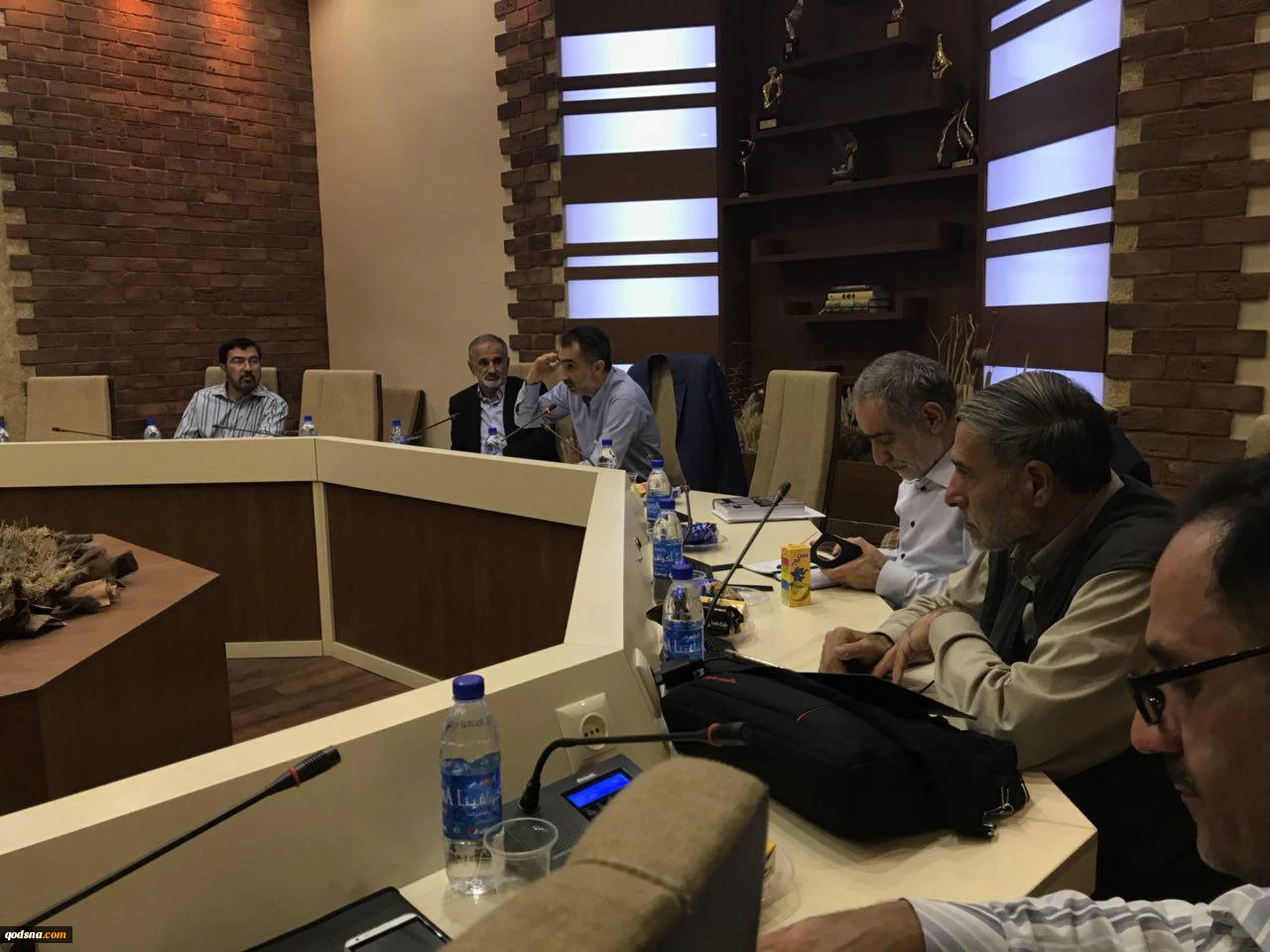
The forty-seventh session of the Far Mosque's Pigeons was held at Salman Harati Art Hall as Yesterday Iran, Today Palestine and Zionist Regime and Psychological Warfare.


As reported by Qods News Agency (Qodsna) the forty-seventh session of the Far Mosque's Pigeons was held at Salman Harati Art Hall as "Yesterday Iran, Today Palestine" and "Zionist Regime and Psychological Warfare".

At the beginning of the session, Mahdi Shakibai, the director manager of the Qods News Agency, said the main topic of the session was supposed to be "Yesterday Iran, Today Palestine" but the was somehow changed. The Iranian people made this slogan during the victory days of the Islamic revolution, by the same slogan Iranians took over the Israeli embassy and gave it to the Palestinians. A week after this incident, Imam Khomeini handed the embassy to the late Palestinian leader Yasser Arafat. Anyway, I would like to thank and appreciate choosing this title for today's meeting, because we are unfortunately seeing different slogans these days. We must consider an image of this slogan to see how far it has been become closer to reality.

The director of the Qods News Agency continued: Imam (PBUH) always emphasized on two dimensions in his struggles: first, the struggle against domestic tyranny and the struggle against international colonialism.

Referring to an article entitled "Where to start," wrote by Lenin, he added that "Lenin has a great horizon in his mind and reached it." In fact, apart from comparing Lenin's approach with the high rank of the founder of the Islamic Revolution of Iran, I would like to say that great people have great thoughts. In fact, Imam Khomeini believed that the Islamic world did not have a good situation but according to him it was reformable. According to Imam, this reformation was the same Islamic awakening.

The political expert said, “Now we need to compare Palestine in 1979 with the current Palestine in 2018. Currently, we are not witnessing a dependent regime such as Saddam's Ba'ath regime, nor a dependent regime in Sudan; in Turkey, the Atatürk military and anti-Islamic regime no longer rules. Similar incidents have occurred in Egypt, Yemen and Libya. I would like to say that based upon Imam Khomeini’s view the Islamic world have changed a lot. In Palestine, similar developments have taken place. Before the Palestinian struggle was limited to few abroad operations, but after the victory of the Islamic Revolution of Iran, resistance groups were formed and liberated parts of the occupied lands. After the victory of the Islamic Revolution, we witness the formation of Islamic movements such as Hamas and Islamic Jihad. We also witness now there is a balance of power between the Palestinian and Israeli settlers.

"We have witnessed many revolutions in the Arab world in recent years, I believe that the root of these revolutions was the Zionist oppression to Palestine," he said. The same oppression triggered the movement of people's demands, for example, you see that they have two important elements in their struggles. First, the element of the struggle against domestic tyranny, and the second, the struggle against foreign colonialism, even their flags, refers to these Islamic symbols. Slowly In fact, this has been modeled on the Islamic Revolution of Iran. Right now, Palestinians have Yemen, Syria, Iraq, and even the people of Jordan and Bahrain alongside them. The Palestinians in 1979 were portrayed by Westerners as a rocket thrower toward the Israelis, but were explained in two intifadahs of a Palestinian militant identity where even the West was forced to admit that Palestinians have demands and want freedom. For example, in 2009, we witnessed mass demonstrations in support of Palestine and Gaza.

The purpose of the Imam from the three elements that he was contemplating was to mobilize all libertarians and the Muslim world in support of Palestine. At the beginning of the revolution, this was not the case, and the situation was different. These, in my opinion, are the fulfillment of the Imam's promises, and I believe that today's slogan of Iran is tomorrow's Palestine. An example in this area that happened around us, which was the night that had a lot of fate in it, was the events in Syria. In my opinion, the collapse of the Zionist regime and the destruction of the Saudi regime in this war were written as a fate. In the developments in Syria, we have approached our goal and, I believe, we have achieved our goals, which exclude a few slogans of Gaza, not Lebanon ... or Syria ... All these actions show this. We have come to the realization of the goals of Imam (RA). These economic pressures, psychological warfare and decisions of Trump all express Imam's motto.