Showing posts with label Iran and Russia. Show all posts

Thursday, December 13, 2018

Multipolar World Order in the Making: Qatar Dumps OPEC

Multipolar World Order in the Making: Qatar Dumps OPEC


The decision by Qatar to abandon OPEC threatens to redefine the global energy market, especially in light of Saudi Arabia’s growing difficulties and the growing influence of the Russian Federation in the OPEC+ mechanism.
In a surprising statement, Qatari energy minister Saad al-Kaabi warned OPEC on Monday December 3 that his country had sent all the necessary documentation to start the country’s withdrawal from the oil organization in January 2019. Al-Kaabi stressed that the decision had nothing to do with recent conflicts with Riyadh but was rather a strategic choice by Doha to focus on the production of LNG, which Qatar, together with the Russian Federation, is one of the largest global exporters of. Despite an annual oil extraction rate of only 1.8% of the total of OPEC countries (about 600,000 barrels a day), Qatar is one of the founding members of the organization and has always had a strong political influence on the governance of the organization. In a global context where international relations are entering a multipolar phase, things like cooperation and development become fundamental; so it should not surprise that Doha has decide to abandon OPEC. OPEC is one of the few unipolar organizations that no longer has a meaningful purpose in 2018, given the new realities governing international relations and the importance of the Russian Federation in the oil market.
Besides that, Saudi Arabia requires the organization to maintain a high level of oil production due to pressure coming from Washington to achieve a very low cost per barrel of oil. The US energy strategy targets Iranian and Russian revenue from oil exports, but it also aims to give the US a speedy economic boost. Trump often talks about the price of oil falling as his personal victory. The US imports about 10 million barrels of oil a day, which is why Trump wrongly believes that a decrease in the cost per barrel could favor a boost to the US economy. The economic reality shows a strong correlation between the price of oil and the financial growth of a country, with low prices of crude oil often synonymous of a slowing down in the economy.
It must be remembered that to keep oil prices low, OPEC countries are required to maintain a high rate of production, doubling the damage to themselves. Firstly, they take less income than expected and, secondly, they deplete their oil reserves to favor the strategy imposed by Saudi Arabia on OPEC to please the White House. It is clearly a strategy that for a country like Qatar (and perhaps Venezuela and Iran in the near future) makes little sense, given the diplomatic and commercial rupture with Riyadh stemming from tensions between the Gulf countries.
In contrast, the OPEC+ organization, which also includes other countries like the Russian Federation, Mexico and Kazakhstan, seems to now to determine oil and its cost per barrel. At the moment, OPEC and Russia have agreed to cut production by 1.2 million barrels per day, contradicting Trump's desire for high oil output.
With this last choice Qatar sends a clear signal to the region and to traditional allies, moving to the side of OPEC+ and bringing its interests closer in line with those of the Russian Federation and its all-encompassing oil and gas strategy, two sectors in which Qatar and Russia dominate market share.
In addition, Russia and Qatar’s global strategy also brings together and includes partners like Turkey (a future energy hub connecting east and west as well as north and south) and Venezuela. In this sense, the meeting between Maduro and Erdogan seems to be a prelude to further reorganization of OPEC and its members.
The declining leadership role of Saudi Arabia in the oil and financial market goes hand in hand with the increase of power that countries like Qatar and Russia in the energy sectors are enjoying. The realignment of energy and finance signals the evident decline of the Israel-US-Saudi Arabia partnership. Not a day goes by without corruption scandals in Israel, accusations against the Saudis over Khashoggi or Yemen, and Trump's unsuccessful strategies in the commercial, financial or energy arenas. The path this doomed
trio is taking will only procure less influence and power, isolating them more and more from their opponents and even historical allies.
Moscow, Beijing and New Delhi, the Eurasian powerhouses, seem to have every intention, as seen at the trilateral summit in Buenos Aires, of developing the ideal multipolar frameworks to avoid continued US dominance of the oil market through shale revenues or submissive allies as Saudi Arabia, even though the latest spike in production is a clear signal from Riyadh to the USA. In this sense, Qatar's decision to abandon OPEC and start a complex and historical discussion with Moscow on LNG in the format of an enlarged OPEC marks the definitive decline of Saudi Arabia as a global energy power, to be replaced by Moscow and Doha as the main players in the energy market.
Qatar’s decision is, officially speaking, unconnected to the feud triggered by Saudi Arabia against the small emirate. However, it is evident that a host of factors has led to this historic decision. The unsuccessful military campaign in Yemen has weakened Saudi Arabia on all fronts, especially militarily and economically. The self-inflicted fall in the price of oil is rapidly consuming Saudi currency reserves, now at a new low of less than 500 billion dollars. Events related to Mohammad bin Salman (MBS) have de-legitimized the role of Riyadh in the world as a reliable diplomatic interlocutor. The internal and external repression by the Kingdom has provoked NGOs and governments like Canada's to issue public rebukes that have done little to help MBS’s precarious position.
In Syria, the victory of Damascus and her allies has consolidated the role of Moscow in the region, increased Iranian influence, and brought Turkey and Qatar to the multipolar side, with Tehran and Moscow now the main players in the Middle East. In terms of military dominance, there has been a clear regional shift from Washington to Moscow; and from an energy perspective, Doha and Moscow are turning out to be the winners, with Riyadh once again on the losing side.
As long as the Saudi royal family continues to please Donald Trump, who is prone to catering to Israeli interests in the region, the situation of the Kingdom will only get worse. The latest agreement on oil production between Moscow and Riyad signals that someone in the Saudi royal family has probably figured this out.
Countries like Turkey, India, China, Russia and Iran understand the advantages of belonging to a multipolar world, thereby providing a collective geopolitical ballast that is mutually beneficial. The energy alignment between Qatar and the Russian Federation seems to support this general direction, a sort of G2 of LNG gas that will only strengthen the position of Moscow on the global chessboard, while guaranteeing a formidable military umbrella for Doha in case of a further worsening of relations between Saudi Arabia and Qatar.
Federico PIERACCINI
Independent freelance writer specialized in international affairs, conflicts, politics and strategies

Friday, November 09, 2018

Erdogan Playing Very Complicated Game in Syria’s Idlib: Italian Analyst

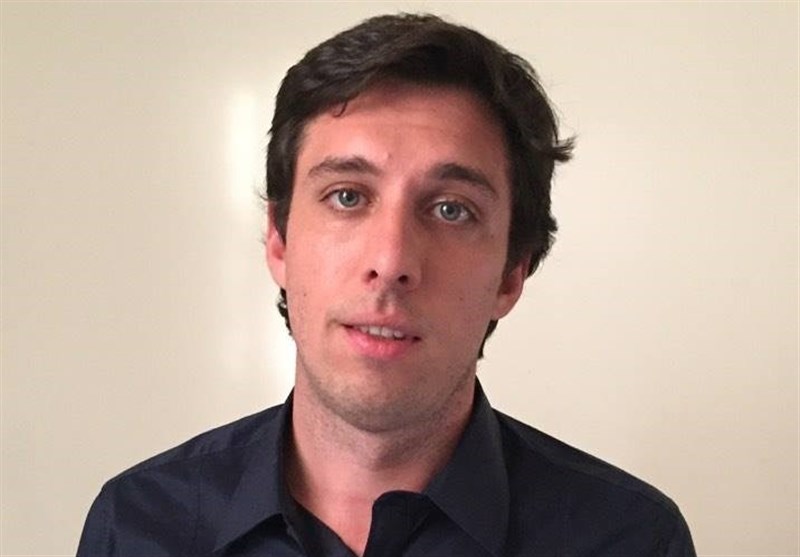
TEHRAN (Tasnim) – A prominent political expert based in the Italian city of Milan referred to Turkish President Recep Tayyip Erdogan’s policy toward Syria and said he is “playing a very complicated game” in the Arab country’s rebel-held province of Idlib.  


Erdogan Playing Very Complicated Game in Syria’s Idlib: Italian Analyst
“Erdogan is currently playing a very complicated game in Syria and Idlib,” Federico Pieraccini said in an interview with the Tasnim News Agency.
“On the one hand, he needs to cooperate with Iran and Russia to maintain the ceasefire, thus avoiding the danger of government troops advancing into Idlib and pushing tens of thousands of militants into Turkey,” he said, adding, “On the other hand, Erdogan needs to nourish the dreams of glory for the militants in Idlib, who are disappointed by the outcome of the war but are reluctant to return home through Turkey.”
Pieraccini is an independent freelance writer and political expert based in Milan, Italy. He specializes in international affairs, conflicts, politics, and strategies. He has covered conflicts in Ukraine, Libya, Egypt, Syria, and Iraq.
The following is the full text of the interview:
Tasnim: Turkey recently rejected Syrian government accusations that it is not meeting its obligations under an agreement to create a demilitarized zone around the insurgent-held Idlib region, saying the deal was being implemented as planned. Syrian Foreign Minister Walid al-Muallem had said that Turkey appeared unwilling to implement the deal. What is your opinion about the comments and the future of the Idlib province, which with adjacent areas is the last stronghold of insurgents?
Pieraccini: The situation in Idlib remains frozen in terms of fighting and any government advances in terrorist-controlled areas. The de-escalation zone agreement between Turkey, Russia, Iran and Syria has as its sole purpose the avoidance of a larger conflict involving these very countries attempting to drive terrorism from Syria and such countries as the US, Israel, Saudi Arabia and Turkey that have been financing and arming militants in Syria over the last seven years.
The words used by Walid al-Moualem do not surprise those who have been following the aggression against Syria over the last few years and know very well Erdogan's personal position on the matter. Erdogan's ambition is to recreate the Ottoman Empire, and this aspiration has guided Turkey's foreign policy over the last several years, serving, in the end, only to lead the Arab country to a dead end. Idlib contains tens of thousands of militants who have no intention of abandoning their fight against the Syrian people and Bashar al-Assad. It is an illusion to believe that Erdogan or Saudi Arabia can (or would want to) control these terrorists and direct them towards the path of moderation.
This ambition leaves one amazed at its scale as well as its lack of understanding of the general dynamics in the region. Erdogan is currently playing a very complicated game in Syria and Idlib. On the one hand, he needs to cooperate with Iran and Russia to maintain the ceasefire, thus avoiding the danger of government troops advancing into Idlib and pushing tens of thousands of militants into Turkey. On the other hand, Erdogan needs to nourish the dreams of glory for the militants in Idlib, who are disappointed by the outcome of the war but are reluctant to return home through Turkey. At the moment, the situation in the province remains frozen; that is at least until the next summit between the United States and Russia scheduled for November 11 in Paris.
Tasnim: A four-way summit on Syria recently ended in Turkey’s Istanbul without any major breakthrough. In a joint communique following their meeting, Turkish President Recep Tayyip Erdogan, German Chancellor Angela Merkel, French President Emmanuel Macron and Russian President Vladimir Putin called for "an inclusive, Syrian-led and Syrian-owned political process" and said conditions needed to be created for the safe and voluntary return of refugees. The comments came as the summit was not attended by any Syrian groups. What do you think about the summit?
Pieraccini: This summit represents quite a novelty in terms of those attending, namely the two European countries of France and Germany together with Russia and Turkey. The summit represents a desperate attempt by Berlin and Paris to continue to try and have influence in the Syrian process, although both countries are now irrelevant to the future of the Arab country. Macron and Merkel would also like to steer the reconciliation process towards the Geneva talks under the auspices of the United Nations rather than the Astana summit that involved Iran, Turkey and Russia. The summit represents a new diplomatic success for the Russian Federation, in the wake of the meetings organized in Sochi with the Syrian opposition.
The summit with the two European countries represents a transition phase during which time the four parties can confront each other to present their concerns and desires. For France, and especially Germany, the issue of refugees and fighting terrorism is a matter of primary importance, especially in relation to the search for a domestic consensus on immigration and counter-terrorism policies. In this sense, Turkey and Russia above all have everything to gain in terms of international visibility linked to the ongoing diplomatic process.
The absence of Syrian representatives at the summit shows that the Russian Federation has a broad mandate to represent the interests of Damascus in negotiations with international partners, highlighting the trust and personal understanding between Vladimir Putin and Bashar al-Assad. Syria’s sovereignty belongs to the Syrian people, and nobody intends to question this principle, especially Putin, who has made the defense of the national interests of his country a cornerstone of his presidency.
Tasnim: Iran, Russia, and Turkey - the three guarantor states of de-escalation zones in Syria - have held several rounds of peace talks in Kazakhstan’s Astana and elsewhere to help end the conflict in the Arab country. The fourth round of those talks in May 2017 produced a memorandum of understanding on de-escalation zones in Syria, sharply reducing fighting in the country. What is your assessment of the parallel talks between the three countries on the Syrian crisis and Tehran’s role in the peace process?
Pieraccini: The role of Iran and Russia in Syria has been paramount. The Russian Federation mainly relies on six means of assisting its Middle Eastern allies: through aerospace and naval forces, missile strikes, air defense, electronic warfare, and diplomacy. For Iran, the situation is different, as the Islamic Republic contributes a great deal in relations to land operations and ground troops that directly fight against militants in Syria. Without Iran and Hezbollah's contribution, Damascus would hardly have achieved the progress seen so far.
The strength of the Iranian and Russian duo, in addition to sharing tasks equally in terms of military assistance, is in having the strong ability to mediate complicated situations with numerous actors. Through the Astana summit, Moscow and Tehran were able to place strong pressure on Turkey that allowed them to obtain the best possible conditions for Syria and its people. The creation of the de-escalation areas was a temporary measure that allowed Russia, Iran and Syria to organize troops and priorities, reorienting the country's liberation strategy against terrorism. It worked amazingly well, with Idlib remaining within about 12 months the only significant de-escalation area yet to be liberated from the scourge of terrorism.

Thanks to the combined military and diplomatic efforts of Iran and Russia, Damascus can now begin thinking about the necessary reconstruction of the country. And it here where the role of the People's Republic of China will be of crucial importance for the future of Syria and the region.

Saturday, September 08, 2018

Iran, Russia can cooperate to contain US: Leader


Leader of the Islamic Revolution Ayatollah Seyyed Ali Khamenei says the developments in Syria and the US defeat in the Arab country show that Washington can be contained.


The Leader made the remarks in a Friday meeting with Russian President Vladimir Putin, who traveled to Tehran to participate in a key trilateral summit on Syria, hosted by Iranian President Hassan Rouhani and also attended by Turkish leader Recep Tayyip Erdogan.
"Cooperation between Iran and Russia on the Syrian issue is a prominent example and a very good experience of bilateral cooperation," the Leader said.
Ayatollah Khamenei added that the two countries can expand cooperation on global issues, saying, "One of the cases that the two sides can cooperate with each other is to contain the US, because it is a danger to humanity and it is possible to contain it."
The Leader stated that the Americans suffered a real defeat in Syria and failed to achieve their goals.
Ayatollah Khamenei also said sanctions imposed by the US on Iran, Russia and Turkey are a very strong common ground for strengthening cooperation, and urged Tehran and Moscow to develop political and economic relations and follow up on the agreements of the summit in Tehran.
The Leader stressed the importance of pursuing non-dollar transactions in trade.
Elsewhere in his remarks, Ayatollah Khamenei said Iran has so far remained committed to a multilateral nuclear agreement, officially known as the Joint Comprehensive Plan of Action (JCPOA), reached between Iran and the P5+1 group of countries in 2015.
"But the Europeans did not carry out their duties, and it is not acceptable that we completely fulfill our commitments within the JCPOA while they don't," the Leader pointed out.
The Leader praised the Russian president's approach to the nuclear deal, adding that the Islamic Republic would adopt a stance on the JCPOA which would meet its national interests.
Although the US now raises Iran's missile program and regional developments, their problem with the Islamic Republic relates to issues beyond them, Ayatollah Khamenei said.
The Leader added that the US has been seeking to topple the Islamic Republic over the past 40 years, but Iran has managed to make substantial advancements during this period.
"Resistance of the Islamic Republic and its advances are another successful example that the US can be contained," Ayatollah Khamenei said.

The Leader also pointed to the deplorable situation of the Yemeni people and their killing at the hands of Saudi Arabia, adding, "The Saudis will definitely fail to achieve a result in Yemen and will not be able to bring the resilient Yemeni people to their knees."
During the meeting, which was also attended by Iranian First Vice President Es'haq Jahangiri, the Russian president said he held very fruitful and good negotiations with President Rouhani on mutual issues of interest, including the situation in Syria.
Iran and Russia discussed the expansion of relations in all fields, particularly in the economic and trade sectors, Putin added.
He said the US is putting obstacles, including banking restrictions, in the way of the development of Tehran-Moscow relations, and added that Washington is making a strategic mistake by limiting financial transactions.
The Russian president expressed regret that the remaining sides to the JCPOA failed to fulfill their commitments under the deal after the US withdrawal.
He said although the Europeans announce that they are seeking ways to keep the nuclear accord alive, they are pursuing the US due to their dependence on Washington.