Showing posts with label Federico Pieraccini. Show all posts

Wednesday, September 18, 2019

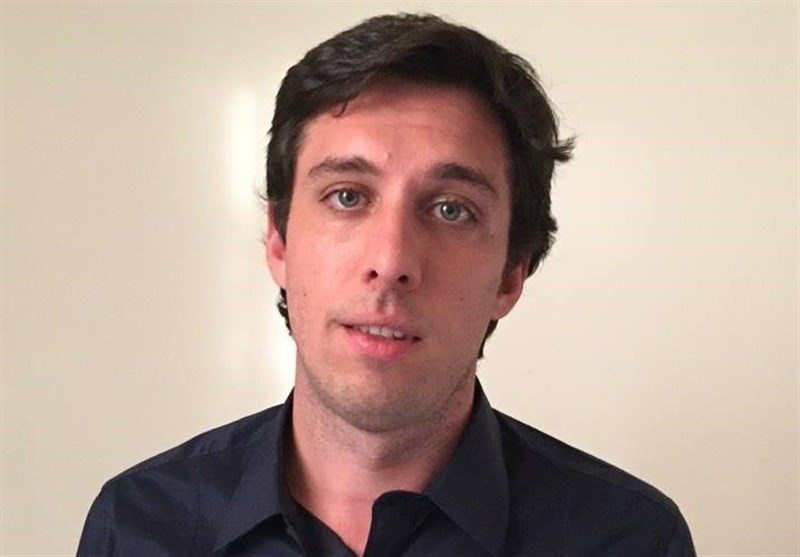
Italian Analyst Lauds Ayatollah Khamenei's Stance on Talks with US

TEHRAN (Tasnim) – A political expert based in Italy praised Leader of the Islamic Revolution Ayatollah Seyed Ali Khamenei’s rejection of US calls for talks with Iran, saying there is no need for new negotiations.
 Italian Analyst Lauds Ayatollah Khamenei's Stance on Talks with US
“I think Ayatollah Khamenei's answer is as coherent as possible,” Federico Pieraccini, who is based in Milan, said in an interview with Tasnim.
“There is no need for new negotiations, the agreement was made after years of negotiations involving the most important nations of the planet,” he added.
Pieraccini is an independent freelance writer and political expert based in Milan, Italy. He specializes in international affairs, conflicts, politics, and strategies. He has covered conflicts in Ukraine, Libya, Egypt, Syria, and Iraq.
The following is the full text of the interview:
Tasnim: On Tuesday, Leader of the Islamic Revolution Ayatollah Seyed Ali Khamenei deplored the US calls for talks with Iran as a trick and said Tehran will not negotiate bilaterally or multilaterally with Washington at any level. What do you think about Ayatollah Khamenei's remarks?
Pieraccini: I think Ayatollah Khamenei's answer is as coherent as possible. There is no need for new negotiations, the agreement was made after years of negotiations involving the most important nations of the planet. From the Iranian point of view, the path to reach the agreement was long and troubled; the fact that it was disregarded by the United States after they signed it confirms that the word of a president of the United States is valid only for the period in which he is in charge. Negotiations of this kind last for years and cannot be questioned based on the mood of the future POTUS or based on domestic policy strategies, as in the case of Trump's withdrawal from the JCPOA agreement.
Tasnim: Iran sees the United States’ calls for negotiation as a trick and part of the so-called “maximum pressure” campaign which has failed to force the Islamic Republic to give in to US demands. How do you assess Iran's policy of "active resistance" against the US pressures?
Pieraccini: Iran's decision to simply continue to behave as it has in the last 40 years has strongly disturbed the efficiency of US 'maximum pressure'. As I have written in the past, Iran has been experiencing a difficult situation since the Islamic Revolution in 1979. If the United States had new methods or means to devastate the Iranian economy, it would have already adopted them. The truth is that Iran is a regional power that cannot be ignored or forced to comply. Moreover, the importance of Iran for the Middle Eastern equilibrium has pushed its main allies in the region and beyond (India, China, Russia, Lebanon, Syria, and many others) to circumnavigate sanctions and operate outside the economic field dominated by the USD and the financial system of London and New York.
Tasnim: Iran has said the US' return to the 2015 nuclear deal, known as the Joint Comprehensive Plan of Action (JCPOA), and the removal of sanctions against the Islamic Republic is the only way that Washington can hold talks with Tehran. How do you see the prospects of open diplomacy between Iran and the US as well as the other parties to the JCPOA?
Pieraccini: This would be the ideal solution for all parties, except for Saudis, Israelis, and neoconservatives, present across the Republican and Democratic parties and strongly opposed to any kind of agreement with Tehran.
Unfortunately, such a solution is highly unlikely given that for Washington, every negotiation or joint negotiation means admitting defeat. Diplomatically, this is a contradiction given that negotiations between countries are at the basis for avoiding conflicts and wars.
Surely, the only ones who have the possibility to bring about better relations between Iran and the United States are, in a limited way, Europeans, Russians, and Chinese. The problem for European countries is the two-way link with the United States and its dollar-based economy. With the sanctions in place, the US especially harms Europeans in trade with Iran in exports and imports. Paris and Berlin have already tried, in a very delicate way, to distance themselves from Washington by supporting the JCPOA. For China and Russia, the main mission is to hold Iran and Europeans in the agreement, seeking to promote commercial exchange between the parties, outside USD and the SWIFT banking system, to keep the agreement alive.
Tasnim: Can we regard the Islamic Republic's strategy of "active resistance" against the US pressures as successful given Ayatollah Khamenei's remarks?
Pieraccini: Iran's reaction is to actively resist US economic pressure, continuing Saudi and Israeli provocations. Without forgetting that the campaign against Iran goes beyond the Persian region and involves the Middle East and North Africa. The possibility for Tehran to forge agreements and friendships with coalitions and nations that have anti-imperialism as their main strategy allows Iran to broaden its political, military, technological and economic horizons, actively resisting the maximum pressure from the United States.
The success of this strategy is evident from the fact that Saudi Arabia, Israel, and the United States are forced to continue provocations against Iran, although the three countries are aware that a war with Iran would be impossible to win. Ultimately, both Iran and its enemies understand in the event of a war, Saudis, Israelis and regional allies (including US military bases) would be the target of specific attacks that would cause unsustainable damage.
The conventional deterrence of Tehran resembles that of the DPRK and in both cases, the threats and the maximum US pressure are ineffective against nations that have been targeted for more than 40 years.

Wednesday, September 04, 2019

No chance for Washington to attack Iran: Federico Pieraccini

By Damir Nazarov

“Federico Pieraccini" is a freelance writer specialized in International Affairs, Conflicts, Politics, and Strategies. Career. As of 2019, Pieraccini was writing exclusively for the Strategic Culture Foundation and L'Antidiplomatico. His works have been translated into dozens of languages and republished.
Below is the full text of the interview.
Q: The USA has an advantage in all major types of weapons of mass destruction. Why did Washington initiate a new arms race with regard to Space?
A: I do not agree that the United States has a military advantage in all major weapon systems. In the nuclear field, Moscow boasts first-rate systems of equal North American capacity if not higher in some areas, with the new RS-28 ICBM in development. Not to mention areas such as Hypersonic missiles, with Moscow and Beijing in clear advantage, even according to assessments made public by the United States Congress. In the field of missile defense, Moscow boasts an undisputed primacy with the A-135, A-235 systems and the various S-300, S-400 and the future S-500 system. This goes without mentioning other weapon systems presented by Putin on March 1, 2018, in the famous conference on Russia's military response to the US’s violation of the ABM and INF treaties.
The United States with President Trump has decided to create a sixth force, called Space Corp. Trump's intention is to invest tens of billions of taxpayers money to finance the creation of some kind of space-based weapons systems. It’s the prosecution of Ronald Reagan's weaponizing of space. It remains to be seen when these systems will be operational, how much they will cost and how effective they will be. The Latest US military productions in terms of cost and efficiency leave much to be desired with the super ship Gerald Ford and its known propulsion problems, the alleged Zumwalt stealth ship and it’s engine problems. Take for example the US Anti-Ballistic Missiles Systems (ABM) failed tests or the repeated missiles launched by the Houthis in Yemen that successfully violated Saudi Airspace, defended by US Patriot systems. All this, without mentioning the already known problems of the F-35.
As I have written in various articles, the United States suffers from enormous military spending that floods the few companies (totally private) that develop weapons, with tons of money. This creates the conditions for little competition between companies and leaves open huge margins for corruption and failed projects. The creation of a space force should be seen more in the perspective of Trump, which seeks to ingratiate itself as much as possible with the North American military industrial complex (MIC), covering them with gold, possibly avoiding at the same time satisfying their wishes for a new war for new profits. 
The MIC always pushes a US president to war, along with the various power lobbies, Trump tries to avoid this event, still creating profits for the MIC with the creation of a new force, in this case, a Space Force.
Q: In the case 3rd World War as a whole are clear main key players. Liberal Western World led by the US and China-Russia alliance. But what about India, Pakistan, and North Korea? They also have Weapon of mass destruction and regional problem.  
A: In the case of a third world war, therefore a clash between military superpowers, the chances of an exchange of Nuclear weapons is very high. In case of an atomic exchange between superpowers, the world in which we live would be completely different, as many scientists have pointed out. 
The consequent climatic changes and the radiations, ignoring the destruction caused from the nukes, would provoke a complete change of the global scenario. For these reasons the hypothesis of a third world war between superpowers is to be considered improbable, even in an uncertain context such as the multipolar one we live in. 
Although historically multipolarity results in instability in a geopolitical framework, with the current technology, transformed into nuclear deterrence called 'MAD', the nuclear factor stabilizes international relations, avoiding the possibility of a clash between powers or superpower. 
In the specific case of a war between Pakistan and India, it is unlikely for these reasons, just as a US intervention in North Korea proved impossible due to the nuclear (and conventional) deterrence posed by Pyongyang.
Q: Western propaganda regular say about "Russian lobby in Europe or China threat". But no proof. How do you think Europe really have parties or organizations who have "anti-EU and anti-US" agenda? 
European countries in the EU have no military sovereignty, given that most of them are in NATO. European countries lack economic and financial sovereignty in a system like the Euro where the central bank is one for all countries and lives in the shadow of the decisions taken by the FED in New York. 
A: The treaties signed over the last 20 years by European countries have deprived national parliamentary decisions that no longer have the economic, financial or military levers to make autonomous decisions in their own interest. In this sense, I do not see socially relevant parties or groupings in EU countries that can understand the historical turning point in which we are, with the attention that must be turned to the east towards Russia, India, China, Iran, and other markets. 
Europe is the victim of its own foreign policy decided in Washington, in the interests of the Pentagon and the FED, and as long as it remains subordinate to the United States it will not be able to take decisions in its own interest.
Q: How you think, is there a risk aggression vs. Iran from trio US-Israel-Saudi Arabia?
A: I see no chance for Washington to attack Iran, essentially for two basic reasons. If Trump unleashes a war, he loses the 2020 elections. This hypothesis seems to be shared by the vast majority of US policy experts and from what we can pick up, the administration and Trump are aware of this possibility.
The other main reason that prevents Washington's aggression against Iran has to do with two aspects: the first is the cost of this aggression in terms of human lives for the United States, the second is the economic cost to be borne. Iran is capable of severely damaging both Israel and Saudi Arabia, as well as closing the Strait of Hormuz, or in any case raising the costs of insurance of oil ships to the point of boosting the price of oil to levels that would cause an economic crisis of vast proportions, coupled with the first signs of a global recession.
 Trump is aware that in the event of an economic disaster caused by a war with Iran, all the blame would fall on him, both by his voters for the electoral betrayal of not starting new wars, both by his detractors that would hold him responsible for the financial disaster.
A global financial crisis, fueled by a devastating war, would lead Washington isolated. The  Saudis, devastated by the conflict with Iran and betrayed by Washington that could not protect Riyad from Tehran's retaliation, could even decide to dump the dollar. The Europeans and the rest of the world would agree in a nutshell, moving to a basket of alternative currencies to the petrodollar for the sale of oil. This would lead to the collapse of the United States in a short period of time. The petrodollar system is a red line that the Pentagon and the Fed cannot afford. It is the source of their status as a superpower (the USD being world currency reserve) and not even a war on Iran with strong Saudi and Israeli interests pressing on Trump will lead to such an obvious suicide of U.S. hegemony.

Tuesday, July 30, 2019

Weaponizing Space Is the New Bad Idea Coming From Washington D.C.

Federico PIERACCINI
When considering the possibility of great-power conflict in the near future, it is difficult to bypass space as one of the main areas of strategic focus for the major powers. The United States, Russia and China all have cutting-edge programs for the militarization of space, though with a big difference.
Donald Trump’s announcement of a “Space Force” is by no means a new idea. During the Reagan presidency, a similar idea was proposed in the form of the famous “Star Wars“ program, formally known as the Strategic Defense Initiative. It aimed to do away with the concept of mutually assured destruction (MAD) by positioning anti-ballistic-missile (ABM) interceptors in low-Earth orbit in order for them to be able to easily intercept ballistic missiles during their entry into orbit and before their re-entry phase. The costs and technology at the time proved prohibitive for the program, but military planners retained the dream of negating the concept of MAD in Washington’s favor, especially with the dawning of the unipolar era following the collapse of the Soviet Union.
The decisions taken in the years since, such as the US withdrawal from the ABM Treaty in 2002 during Bush’s presidency and from the INF Treaty during Trump’s, follows Reagan in trying to invalidate MAD, a balance of terror that has served to maintain a strategic stability.
This hope of doing away with MAD so that the unthinkable may become thinkable has guided the missile developments of Russia and China, which through the development of hypersonic missiles aim to nullify the US’s ABM systems and thereby make the thought of an unreciprocated nuclear first strike MAD again. With Russia’s recent successes in testing hypersoning technologies, and the fast-tracking of other new strategic weapons announced by Putin less than 12 months ago, strategic stability seems to have been restored through Russia’s strengthened deterrence posture.
The weaponization of space is a less known and talked about aspect of Washington’s mad attempts to make mutually assured destruction no longer mutual and therefore thinkable. During the peak of the unipolar moment, the idea of the Pentagon and the lobbyists of the military-industrial complex was to develop the so-called Prompt Global Strike system, which envisioned being able to deliver an air strike with conventional weapons anywhere in the world in the space of an hour. The dream (or delusion) of the US was to have the unique ability to determine the course of events around the globe within an hour. Such experimental craft as the Orbital Test Vehicle seem to confirm that serious efforts have been underway to realize this objective.
Neither China nor Russia has been sitting idly by waiting to be struck undefended. Russia’s development of its S-500 system has been quite timely. The S-500 system is often considered an upgrade to the better-known S-400 system, but these are in reality different systems with different aims and objectives. The main task of the S-500 is to engage long-distance targets in low-Earth orbit. We are therefore talking about the ability to take out military or any future ABM satellites as those originally conceived with Reagan’s “Star Wars” program.
Unlike Washington, Moscow and Beijing do not appear to be developing space-based weaponry; they are certainly not going to increase their military budgets to create a space force. On the contrary, both countries have been working for more than a decade on a proposed Prevention of an Arms Race in Outer Space (PAROS) treaty that seeks to ban the weaponization of space. The aims are summarized as follows:
“Under the draft treaty submitted to the [Conference on Disarmament] by Russia in 2008, State Parties would have to refrain from carrying out such weapons and threatening to use objects in outer space. State Parties would also agree to practice agreed confidence-building measures.
A PAROS treaty would complement and reaffirm the importance of the 1967 Outer Space Treaty, which aims to preserve space for peaceful uses by prohibiting the use of space weapons, and technology related to ‘missile defense’. The treaty would prevent any nation from gaining a military advantage in outer space.”
The intentions of the draft treaty clearly go against Washington’s plans. It is therefore not surprising that Washington has no intention of acceding to PAROS, and it is probably only a matter of time before Washington withdraws from the 1967 Outer Space Treaty.
Trump is looking at things from a practical point of view. He wants to give a major boost to the military-industrial complex, which is salivating at the prospect of being showered with tens or even hundreds of billions of US taxpayer dollars in a quest to weaponize space. But the policy makers in Washington and in think-tanks look at the weaponization of space from a different perspective. They look at it from the point of view of Washington as a superpower that must seek to prolong its unipolar moment through the use of force, even from space. While it is delusional nonsense, it has nevertheless been the prevailing outlook in Washington for at least the last 25 years.
The reason why China and Russia have proposed and continue to discuss the PAROS lies in their political and military philosophies that contrast with that of the US. As an imperial power bent on global domination, the US is always looking for ways to subjugate and dominate what it considers to be its underlings, while Russia and China act to hold back and counterbalance US aggression, in the process serving to enhance global stability.
The proposal for the non-militarization of space is the latest example of what unites and guides the Eurasian strategy of China and Russia without having any illusions about Washington’s intentions. The development of the SR-72system seems to confirm that Washington wants to also bridge the gap with its Eurasian competitors in the field of hypersonic technology in addition to wishing to weaponize space.
Realistically, however, global powers in a multipolar context will seek to defend their territorial and economic sovereignty with every means at their disposal. Likewise, those seeking global hegemony will try to exploit any existing domain to gain an advantage over their rivals.
China and Russia seek to weaponize distance and speed to make any possible US attack on them impracticable, both in terms of the logistics required and the revivified cost-benefit calculus of MAD. The US, on the other hand, is trying to weaponize all conceivable domains of conflict by all means possible, hoping to be able to find a chink in its opponents’ armor.
Beijing and Moscow seem to have studied extensively how to respond. All the various defensive systems produced in recent years, from hypersonic anti-ship missiles to multi-layered defense systems like the S-400, S-500 and A-135/A-235, seem to meet the challenge.
Beijing fears US naval strength, and while seeking to achieve parity and surpass the US in the future, it aims above all to prevent the use of aircraft carriers as launching platforms through the employment of defensive area-denial weapons. In this sense, speed (Mach 10) and extending the range of Chinese anti-ship missiles (DF-21) are fundamental to the success of this strategy. Similarly, Moscow intends to seal Eurasia’s skies, and the S-500 seems to be the final flourish, able to protect up to 800 kilometers above sea level.
The weaponization of space is the latest issue that the US is exploiting for various political purposes. Be that as it may, this creates an adversarial environment that compels the US’s peer competitors to develop weapons capable of countering US belligerency. Instead of sitting down and defining the parameters of major-power interaction so as to reduce the likelihood of war, we are witnessing an intentional US policy of pursuing an arms race in every possible domain of warfare.

Thursday, July 18, 2019

Resistance against Imperialism Duty of Every Nation: Italian Analyst

TEHRAN (Tasnim) – A political expert based in Italy highlighted the successful experiences of countries that chose to resist imperialism and world powers’ bullying, saying that any nation who seeks economic and military sovereignty, should adopt the same strategy.


“International resistance against imperialism (and unbridled capitalism used as an economic weapon) ought to be the duty of every country wishing to guarantee economic and military sovereignty,” Federico Pieraccini, who is based in Milan, said in an interview with the Tasnim News Agency.


Resistance against Imperialism Duty of Every Nation: Italian Analyst
“The dawning of the multipolar age bodes well for the future of the resistance axis, representing a fundamental turning point in our era,” he added.
Pieraccini is an independent freelance writer and political expert based in Milan, Italy. He specializes in international affairs, conflicts, politics, and strategies. He has covered conflicts in Ukraine, Libya, Egypt, Syria, and Iraq.
The following is the full text of the interview:
Tasnim: International developments are full of examples of how regional and trans-regional countries have successfully adopted strategies of resistance against oppression and unilateralism that have borne good results. As you know, countries like Iran, Syria, Yemen, Venezuela, and Palestine have protected their national sovereignty against foreign threats and have achieved many gains through this strategy. In contrast, some countries have adopted a strategy of appeasement or reconciliation when being hectored and bullied by world powers. Given the experiences of these resistance countries, what do you think about their approach and the concept of resistance?
Pieraccini: International resistance against imperialism (and unbridled capitalism used as an economic weapon) ought to be the duty of every country wishing to guarantee economic and military sovereignty. The example of countries in the Middle East and beyond (Venezuela, DPRK) that form the axis of resistance ought to be an example to countries currently finding themselves under the military and economic dominance of the United States, sometimes improperly referred to as the Atlantic alliance (NATO).
The dawning of the multipolar age bodes well for the future of the resistance axis, representing a fundamental turning point in our era. The military umbrella offered by countries like Russia, helping to ward off possible conflicts, guarantees greater stability in the region, given that the United States, Israel and Saudi Arabia know that Russia would be more inclined to help Iran and other allies rather than remain neutral in the event of a conflict. Similarly, Chinese economic aid is essential in supporting the economies of the countries in the axis of resistance as they face illegal sanctions imposed by Washington to crush their economies.
Tasnim: Do you think that countries which currently toe the line of major powers like the US ought to emulate these experiences of resistance countries to protect their independence and stand against unilateralism?
Pieraccini: The multipolar world order in which we live today needs an expansion of centers of power around the globe. If China, Russia and the United States currently represent three poles of global power, India and the major European powers continue to play a role that is ambiguous and difficult to analyze. New Delhi is trying to gain its strategic autonomy, helped by Washington's unilateral impositions, which only serve to drive the Modi-led country into full Eurasian integration, as seen at the G20 and the SCO meetings with (Vladimir) Putin and Xi Jinping.
In this respect, imports of oil and gas from Iran should be increased to demonstrate to the rest of the world that Washington's sanctions and diktats have no effect on great powers in a multipolar world order.
The situation is even more embarrassing for European countries, with little hope that Berlin, Paris and Rome will be able to distance their economic and military policies from those of Atlanticism and the US dollar. Although Trump is a person who inspires fights rather than harmony, Merkel, Macron and Conte do not have the means, will or ability to create strategic distance between European countries and the United States for the purposes of greater economic and military autonomy and freedom.
Tasnim: In an op-ed article written for Tasnim, the Secretary of Iran's Supreme National Security Council, Ali Shamkhani, warned the European countries of the risks of inaction regarding the US administration’s unilateral policies, saying the current EU leaders will be held accountable for Europe’s future challenges. Shamkhani criticized Europe for becoming an unimportant and passive actor that accepts humiliation at the hands of the US and has to live with the destructive effects of Washington’s unilateralism that have affected several international treaties. What is your take on that? Isn’t it better for the EU to stand up to US bullying and unilateralism?
Pieraccini: Washington's abandonment of the JCPOA (2015 Iran nuclear deal), and its insistence that its European allies not trade with Tehran, has made plain Europe’s subordination, obliged to genuflect before what effectively amounts to their American overlords.
Although Europeans have slowly activated an alternative payment system to that of SWIFT called INSTEX, it is still unlikely to see any European banks bold enough to circumvent the US ban and accept payments from Iran. The likelihood of US retaliation is high, and a fragile European banking system that is tightly linked to the US dollar would suffer a significant blow.
A ban on operating in the US market would be devastating to any European entity, especially a bank, and this weighs heavily on the minds of Europeans when they consider whether to continue trading with Iran.
As correctly stated by Shamkhani, history will remember America’s subjugation of Europe, and as a European, I feel responsible for the actions of my government, actions that are certainly not creating a prosperous, free and independent future.
In the long run, sovereign countries like those of the axis of resistance will have more options to choose from in a multipolar environment, being able to act in favor of their own national interest. Whereas we Europeans will continue to be subject to Washington and her interests in exchange for absolutely nothing.

Monday, July 01, 2019

Latest Weapon of US Imperialism

Federico Pieraccini
The United States of America resorts to everything to preserve its already numbered imperialism. Federico Pieraccini, independent freelance writer specialized in international affairs, has dealt with the issue in his essay titled, "Latest Weapon of US Imperialism: Liquefied Natural Gas".
One of the most important energy battles of the future will be fought in the field of liquid natural gas (LNG). Suggested as one of the main solutions to pollution, LNG offers the possibility of still managing to meet a country’s industrial needs while ameliorating environmental concerns caused by other energy sources. At the same time, a little like the US dollar, LNG is becoming a tool Washington intends to use against Moscow at the expense of Washington’s European allies.
From 1990 to today, the world has grown from 220 million tons per annum (MTPA) to around 850 MTPA of regasification capacity. The volume of trade increased from 20-30 MTPA to around 300 MTPA. Likewise, the number of LNG-importing countries has increased from just over a dozen to almost 40 over the course of 15 years, while the number of producers has remained almost unchanged, except for a few exceptions like the US entering the LNG market in 2016.
There are two methods used to transport gas. The first is through pipelines, which reduce costs and facilitate interconnection between countries, an important example of this being seen in Europe’s importation of gas. The four main pipelines for Europe come from four distinct geographical regions: West Asia, Africa, Northern Europe and Russia.
The second method of transporting gas is by sea in the form of LNG, which in the short term is more expensive, complex and difficult to implement on a large scale. Gas transported by sea is processed to be cooled so as to reduce its volume, and then liquefied again to allow storage and transport by ship. This process adds 20% to costs when compared to gas transported through pipelines.
Less than half of the gas necessary for Europe is produced domestically, the rest being imported from Russia (39%), Norway (30%) and Algeria (13%). In 2017, gas imports from outside of the EU reached 14%. Spain led with imports of 31%, followed by France with 20% and Italy with 15%. The construction of infrastructure to accommodate LNG ships is ongoing in Europe, and some European countries already have a limited capacity to accommodate LNG and direct it to the national and European network or act as an energy hub to ship LNG to other ports using smaller ships.
"All of Europe’s LNG terminals are import facilities, with the exception of (non-EU) Norway and Russia which export LNG. There are currently 28 large-scale LNG import terminals in Europe (including non-EU Turkey). There are also 8 small-scale LNG facilities in Europe. Of the 28 large-scale LNG import terminals, 24 are in EU countries and 4 are in Turkey, 23 are land-based import terminals, and 4 are floating storage and regasification units (FSRUs), and the one import facility in Malta comprises a Floating Storage Unit (FSU) and onshore regasification facilities.”

The countries currently most involved in the export of LNG are Qatar, Australia, Malaysia, the US, Nigeria and Russia. Europe is one of the main markets for gas, given its strong demand for clean energy for domestic and industrial needs. For this reason, Germany has for years been engaged in the Nord Stream 2 project, which aims to double the transport capacity of gas from Russia to Germany. Currently the flow of the Nord Stream is 55 billion cubic meters of gas. With the new Nord Stream 2, the capacity will double to 110 billion cubic meters per year.

The South Stream project, led by Eni, Gazprom, EDF and Wintershall, should have increased the capacity of the Russian Federation to supply Europe with 63 billion cubic meters annually, positively impacting the economy with cheap supplies of gas to Bulgaria, Greece, Italy, Serbia, Hungary, Austria and Slovenia. Due to the restrictions imposed by the EU on Russian companies like Gazprom, and the continuing pressure from Washington to abandon the project and embrace imports from the US, the construction of the pipeline have slowed down and generated tensions between Europe and the US. Washington is piling on pressure on Germany to derail Nord Stream 2 and stop the construction of this important energy linkage.
Further tension has been added since ENI, an Italian company that is a leader in the LNG sector, recently discovered off-shore in Egypt one of the largest gas fields in the world, with an estimated total capacity of 850 billion cubic meters. To put this in perspective, all EU countries demand is about 470 billion cubic meters of gas in 2017. ENI’s discovery has generated important planning for the future of LNG in Europe and in Italy.
Problems have arisen ever since Donald Trump sought to oblige Europeans to purchase LNG from the US in order to reduce the trade deficit and benefit US companies at the expense of other gas-exporting countries like Algeria, Russia and Norway. As mentioned, LNG imported to Europe from the US costs about 20% more than gas traditionally received through pipelines. This is without including all the investment necessary to build regasification plants in countries destined to receive this ship-borne gas. Europe currently does not have the necessary facilities on its Atlantic coast to receive LNG from the US, introduce it into its energy networks, and simultaneously decrease demand from traditional sources.
This situation could change in the future, with LNG from the US seeing a sharp increase recently. In 2010, American LNG exports to Europe were at 10%; the following year they rose to 11%; and in the first few months of 2019, they jumped to 35%. A significant decrease in LNG exports to Asian countries, which are less profitable, offers an explanation for this corresponding increase in Europe.
But Europe finds itself in a decidedly uncomfortable situation that cannot be easily resolved. The anti-Russia hysteria drummed up by the Euro-Atlantic globalist establishment aides Donald Trump’s efforts to economically squeeze as much as possible out of European allies, hurting European citizens in the process who will have to pay more for American LNG, which costs about a fifth more than gas from Russian, Norwegian or Algerian sources. Projects to build offshore regasifiers in Europe appear to have begun and seem unlikely to be affected by future political vagaries, given the investment committed and planning times involved:
“There are currently in the region of 22 large-scale LNG import terminals considered as planned in Europe, except for the planned terminals in Ukraine, Russia, Albania and Turkey. Many of these planned terminals, including Greece, Italy, Poland, Turkey and the UK. LNG import terminal for Albania, Croatia, Cyprus, Estonia, Germany, Ireland, Latvia, Romania, Russia and Ukraine. In addition, there are numerous plans for expansion of existing terminals, including in Belgium, France, Greece, Italy, the Netherlands, Poland, Spain, Turkey and the UK.”
Washington, with its LNG ships, has no capacity to compete in Asia against Qatar and Australia, who have the lion’s share of the market, with Moscow’s pipelines taking up the rest. The only large remaining market lies in Europe, so it is therefore not surprising that Donald Trump has decided to weaponize LNG, a bit as he has the US dollar. This has only driven EU countries to seek energy diversification in the interests of security.
The European countries do not appear to be dragging their feet at the prospect of swapping to US LNG, even though there is no economic advantage to doing so. As has been evident of late, whenever Washington says, “Jump!”, European allies respond, “How high?” This, however, is not the case with all allies. Germany is not economically able to interrupt Nord Stream 2. And even though the project has many high-level sponsors, including former chancellor Gerhard Schröder, the project constantly seems to be on the verge of being stopped – at least in Washington’s delusions.
Even Eni’s discovery of the gas field in Egypt has annoyed the US, which wants less competition and wants to be able to force its exports onto Europeans while maintaining the price of the LNG in dollars, thereby further supporting the US dollar as the world’s reserve currency in the same manner as the petrodollar.
The generalized hysteria against the Russian Federation, together with the cutting off of Iranian oil imports at Washington’s behest, limit the room for maneuver of European countries, in addition to costing European taxpayers a lot. The Europeans appear prepared to set whatever course the US has charted them, one away from cheaper gas sources to the more expensive LNG supplied from across the Atlantic. Given the investments already committed to receive this LNG, it seems unlikely that the course set for the Europeans will be changed.

Sunday, April 14, 2019

Julian Assange Is Guilty Only of Revealing the Evil Soul of US Imperialism


Julian Assange Is Guilty Only of Revealing the Evil Soul of US Imperialism
FEDERICO PIERACCINI


Julian Assange was bundled away by British police after Lenin Moreno, the president of Ecuador, gave the green light for the expulsion of the Wikileaks publisher from the Ecuadorian embassy in London. Assange's arrest represents an abuse of power, highlighting not only how true journalism has now been banished in the West, but also how politicians, journalists, news agencies and think-tanks collude with each other to silence people like Julian Assange and his Wikileaks foundation who are a nuisance to US imperialism.
Assange is “guilty” of two “cardinal sins”: revealing US war crimes committed in Iraq and committing the unpardonable sin of publishing the emails of Clinton, Podesta and the Democratic National Committee, thereby revealing such chicanery in US domestic politics as the fraud committed against Bernie Sanders in the 2016 Democratic primaries.
These revelations among the many (Vault 7, Torture, Diplomatic cablograms), by Assange’s Wikileaks, these transgressions in the eyes of the US ruling elite, struck at the very foundations on which the edifice of “American exceptionalism” is built, namely, the democracy that is meant to be a light unto the world, and the “just wars” that flow from a missionary zeal to make the world safe for democracy. The media and politicians accordingly crow about the “beautiful missiles” and other high-tech weaponry that will be employed in the ensuing humanitarian interventions, while omitting to mention that the military-industrial complex that benefits so much from endless wars may be the very donors who fund the warmongering politicians into office, and that the warmongering editorial line of newspapers may be influenced by share portfolios of the editors themselves.
Releasing footage of US military personal laughing as they slaughter dozens of clearly unarmed Iraqis civilians from the distant safety of an Apache helicopter is one of the strongest ways of showing how false, artificial and propagandistic the concept of “humanitarian war” and “responsibility to protect” (R2P) is.
In today’s communication age, that footage, those images, that laughter, are a very powerful antidote against the lies we are daily fed by our media corporations.
The mainstream media will never tell us that the reason why Washington has been at war for half of the last two centuries is because of US imperialism. They will never tell us that the ceaseless interventions are driven by an insatiable greed for resources, or often enough by the simple desire to plunge a country into chaos if its recalcitrant leaders refuse to genuflect appropriately and show due respect.
That footage straightforwardly debunked all the thousands of accumulated hours of media propaganda that had been built up to convince us that Washington beneficently bombs countries in order to bring democracy and free the oppressed.
In the same way, by pulling back the curtain to show how the Democratic primaries were a farce, Wikileaks revealed how the concept of democracy in the United States is worn out and in fact now non-existent. The political parties are fed and controlled by donor money, and the accompanying media coverage can be bought, allowing for tens of millions of Americans to be fed on a steady diet of false news, lies and promises that will never be kept.
It becomes clear, reading the revelations published over the years by Wikileaks, that terms such as democracy and R2P are nothing more than excuses and justifications for the US to bomb whomever it wishes. The moneyed interests ensure the election into office of those who can be relied upon to look after the interests of the 1% at the expense of the 99%, all the while giving moral lectures to the rest of the world while ignoring the inherent double standards.
The mainstream media are tasked by the powers that be with marketing war in order to advance US foreign-policy objectives. Without the moral justification for war, it becomes more difficult to convince Americans and Europeans to send their sons to die thousands of miles away from home. It is straightforward Brainwashing 101: repeat a lie long enough, and people will start to believe it.
The only way the US sees to fix the problem is to silence the source and ignoring the consequences, even when we are talking about a journalist of international fame who has sought asylum in an embassy and has been confined there for seven years.
This Australian has succeeded in simultaneously becoming the number one enemy of the military-industrial complex, the Democrats, and therefore for all American Russophobes. He did his job so well that he managed to become a target of practically all of the Washington establishment, which is determined to lock away the likes of Assange and Snowden (if only they could) and throw away the key.
His destiny seems marked, with a probable extradition to the US, where a secret trial based on false accusations awaits him, without him even being able to examine the evidence with a lawyer. They would have sent him to Guantanamo at an earlier time, but the effect is the same. Of course this is not bad news for everyone, with many rejoicing at the news of his arrest. All the #MeToo crowd and groups related to human rights applaud Lenin Morero's decision to kick Assange out of the embassy and his arrest by the British police. Those who would be expected to make their voices heard reveal themselves to be agents of imperialism by their shameful silence.
Print and broadcast media outside the US play their role in contributing to a wave of disinformation, omissions and lies in the interests of US propaganda. They may be divided over US presidents and their preference for Democrats or Republicans, but they are firmly united in the belief that that Washington (and Tel Aviv) is always in the right.
In the meantime, we see more and more wars caused by the US, whether directly or indirectly and regardless of who sits in the White House. True, authentic journalism disappears under the waves of censorship. In the West, lies and fake news runs rampant, and the three-year Mueller hoax will be remembered in history as a prime example of how the elite can program the minds of tens of millions of citizens by simply repeating again and again a complete and utter falsehood without any supporting evidence.
Assange's arrest and those of Meng Wanzhou, chief financial officer of Chinese technology company Huawei, and Marzieh Hashemi, anchorwoman for Iran's English- language Press TV, leads us to pause for a moment to reflect on the changes taking place and on how the US empire is reacting aggressively to the ongoing transformation from a unipolar to a multipolar world. The loss of prestige, respect, dignity, loyalty and honesty are all consequences that the US now faces, partly as a result of the excellent journalistic work of Wikileaks over the last 15 years.
Arresting a journalist, who is an Australian citizen, in an embassy, then extraditing him to a third country, to be tried in secret, without seeing the evidence (because classified top secret), where he is accused of espionage, is is a new low even for Washington, which should worry anyone who still cares about freedom of information.
The flaccid response of Assange's journalistic colleagues can best be explained by the words of the late Udo Ulfkotte, a German journalist who revealed that he had published fake material fed to him by the CIA, claiming that this was common amongst mainstream journalists:
“Non-official cover occurs when a journalist is essentially working for the CIA, but it's not in an official capacity. This allows you to create a partnership between your partner and your partner. The CIA will find young journalists and mentor them. Suddenly doors will open up, rewards will be given, and you know it, you owe your entire career to them. That's essentially how it works. I was publishing articles under my own name written by agents of the CIA and other intelligence services, especially the German secret service. I was taught to lie, to betray and not to tell the truth to the public."
Or we could mention the great Robert Perry:
“This perversion of principles - twisting information to fit a desired conclusion -- became the modus vivendi of American politics and journalism. And those of us who insisted on defending journalistic principles of skepticism and even-handedness were more shunned by our colleagues, to hostility that first emerged on the right and by neoconservatives but eventually sucked into the progressive world as well… The demonization of Russian President Vladimir Putin and Russia is just the most dangerous feature of this propaganda process -- and this is where the neocons and the liberal interventionists most significantly are together. The US media approach to Russia is now virtually 100 percent propaganda."
Basically, Assange’s major fault lies in having revealed the true face of US imperialism through images, news, emails, cablograms and videos, an imperialism that has for decades brought wars, death and destruction around the world for its own political and economic gain, using illegitimate justifications that are backed up by self-proclaimed experts and amplified and repeated endlessly by the mainstream media.

FEDERICO PIERACCINI


Federico PIERACCINI
Independent freelance writer specialized in international affairs, conflicts, politics and strategies

New World Order In A Nutshell

Federico Pieraccini: A prominent political expert based in the Italian city of Milan

“The ideology of Wahhabism, combined with Zionist fanaticism and the support they receive from Evangelical Christians, is a lethal mix for world peace,” 

“The former (Wahhabism) becomes the instrument at the service of the latter (Zionism) for the benefit of a third party (US Evangelicals)”


Thursday, April 11, 2019

Wahhabism, Zionist Fanaticism Lethal Mix for World Peace: Italian Analyst

TEHRAN (Tasnim) – A prominent political expert based in the Italian city of Milan said Wahhabis and Zionists, who have much in common in terms of “extremism and religious apocalypse”, are a lethal mix for world peace.
Federico Pieraccini 
“The ideology of Wahhabism, combined with Zionist fanaticism and the support they receive from Evangelical Christians, is a lethal mix for world peace,” Federico Pieraccini told Tasnim in an interview.
“The former (Wahhabism) becomes the instrument at the service of the latter (Zionism) for the benefit of a third party (US Evangelicals),” he added.
Pieraccini is an independent freelance writer and political expert based in Milan, Italy. He specializes in international affairs, conflicts, politics, and strategies. He has covered conflicts in Ukraine, Libya, Egypt, Syria, and Iraq.
The following is the full text of the interview:
Tasnim: Turkey's Istanbul recently hosted an emergency meeting of the Organization of Islamic Cooperation (OIC) about "increasing violence based on Islamophobia" a week after the New Zealand mosque attack killed at least 50 Muslims, including children. What do you think about the importance of the emergency meeting and the concerns of the participants?
Pieraccini: It is important that countries work together, such as with this example of the Organization of Islamic Cooperation in Istanbul. Dealing with the common problem of terrorism, whatever its origin, must be a priority for Islamic countries today.
The attack in New Zealand has shown that extremists are a danger to all populations. Terrorism affects innocents and is one of the greatest sources of instability in the world today, fueling hatred and division amongst races and ethnic groups.
Whether it is Wahhabi, extremist or white supremacist in its form, or whether it is embodied in the form of the state known as Israel, the death, misery and destruction that terrorism brings on its victims is the same.
The cynical manipulation of Wahhabi extremism, wielding it as a blunt instrument with which to strike at and disrupt (geo)political adversaries, has been one of the favored practices of the United States, Saudi Arabia and Israel over a period spanning more than 30 years. Having unleashed the dogs of extremism for geopolitical purposes, permission has been given to the media, politicians and racists to paint all Muslims with the same broad brush of Wahhabi extremism, thereby justifying the West’s geopolitical maneuverings against the Muslim world. With mass migration added to the mix, a generalized fear of Islam has today become quite tangible in major European cities.
As anxiety and tension build up amongst ordinary people, the elite exacerbates this situation by bombing poor Muslim countries, creating migrant flows in the process that only adds to this already charged atmosphere. Increasing numbers of ordinary people fed up with their decreasing standards of living and increasing inequality, and who happen to be white and proud nationalists, increasingly find no other outlet for their exasperation than racism against immigrants and Muslims whom the media have so helpfully offered up as scapegoats.
These unfortunate and perverse circumstances seem less the result of accident and more of deliberate intent.
The three countries that exploit these emotions more than any others, through extremist terrorism, are Israel, the United States, and Saudi Arabia. These are the same countries that have everything to gain from a Christian and Muslim clash of civilizations.
This is not to forget that Christian Evangelicals, Zionist Jews and Wahhabis have much in common in terms of extremism and religious apocalypse.
Tasnim: Brenton Tarrant, the Australian terrorist who carried out the pre-planned attack on two mosques in New Zealand’s Christchurch, penned a 74-page manifesto that he published around the time of the shootings. Revealing his admiration for Anders Behring Breivik, who killed 77 people in Norway back in 2011, Tarrant also praised US President Donald Trump as "a symbol of renewed white identity and common purpose." Breivik’s attacks in Norway were described as "lone wolf" domestic terrorist attacks. Some claim that the terror attack in Christchurch was also the same. Can we describe the attack “lone wolf” or you think that an anti-Islam current is behind it?
Pieraccini: I do not believe that there is any coordination between white supremacists and extremist terrorists. Certainly, it remains suspicious that ordinary citizens have been able to purchase and accumulate arsenals of this kind, sometimes warlike (even to the extent of including explosives), without being identified by the security services of their own country. As has happened with other terrorist attacks, certain intelligence services, by not intervening against a terrorist cell, may actually be the way by which they actually direct and orchestrate such events, such practices labeled in intelligence parlance as “false flags”.
If we look at intentional actions, aimed specifically at Muslims, I would look no further than the state of Israel, where an anti-Islamic philosophy is systematically applied to disparage and delegitimize the Syrian, Lebanese and Palestinian populations.
This Israeli attitude has pushed some politicians who are friends of Netanyahu, like Trump and Bolsonaro, to use false and racist comments against Muslims in general, giving a wink and a nod to the most extreme fringes of the populations in Brazil, the US, and around the world.
Tasnim: In your opinion, how can Muslims prevent the spread of Islamophobia? Wahhabism is Saudi Arabia's dominant faith and blamed for the rise of Islamophobia in the world. The ideology is closely linked to extremist ideas that have nothing to do with true Islam. Do not you think that one of the ways to prevent the spread of Islamophobia is to prevent the spread of Wahhabism?
Pieraccini: The ideology of Wahhabism, combined with Zionist fanaticism and the support they receive from Evangelical Christians, is a lethal mix for world peace. The former (Wahhabism) becomes the instrument at the service of the latter (Zionism) for the benefit of a third party (US Evangelicals).
In order to decrease, if not to altogether eliminate, violence in such areas as the Middle East, the ending of the Wahhabi and Israeli Zionist ideologies are necessary conditions for the people of the world to be able to live in harmony with each other. The use of extremism as a tool of war has now gotten out of hand, and the radicalization of populations in the Middle East, with the accompanying misery, hunger and war, has accentuated a problem that will haunt the region for who knows how many years.
The underlying intention of the Saudi, Israeli and American elites was to create an unstable area of the globe without any solution for peace, in order to avoid any domination of the region by any local or foreign powers. Keeping the region in a permanent state of chaos and war appears to be the best means of controlling its resources (oil) and preventing the creation of a peace movement that could oppose extremist terrorism, Israeli Zionist submission, or US imperialism.
Islamic countries and populations must begin to follow a winning social model for peace against the stars-and-stripes imperialism or the racism of Tel Aviv. Such models as that of Iran, which fight against terrorism while favoring interreligious dialogue, is exactly what the Middle East and the world at large need. The vast majority of Jews, Christians and Muslims only want to live in peace and harmony while respecting each other. The political use of religion is just another tool used by US imperialism to implement and reinforce the strategy of divide and rule, which is at the heart of the Western elite’s war-financier modus operandi.