Showing posts with label Books. Show all posts

Tuesday, October 22, 2019

Visits to Munich on Tehran time

By: Seyyed Mostafa Mousavi Sabet
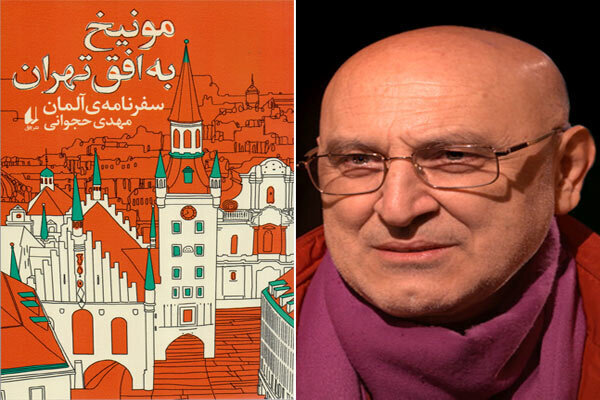
Visits to Munich on Tehran timeTEHRAN, (MNA) – The selection of Mehdi Hejvani as an Iran’s nominee for the 2020 Astrid Lindgren Memorial Award was a greater factor in causing me to increase my knowledge about his activities than his being a children’s book writer and literature expert.

In my view, reading a book by a writer can more helpful to learn more about the writer than studying an extensive résumé with dozens of pages about him/her. Writers have always hidden themselves between the lines in their books, and as such I found Hejvani’s latest book “Munich on Tehran Time”. 
The book gives an account of two trips he made to Munich in 2005 and 2008 after winning scholarships from the International Youth Library (Internationale Jugendbibliothek, IJB) in the southern German city.
The library grants the scholarship to foreign scientists with the objective of supporting research in the areas of international children’s and youth literature, illustration, and promoting scientific exchange and international co-operation.
With the above goal in mind, I accompanied Hejvani on his journey virtually by reading “Munich on Tehran Time”. In the preface to the book, he says that the impressions made during his six visits to Germany, including the abovementioned two trips, provided the motivation for writing the book. He had made the earlier trips to the country to visit the Frankfurt Book Fair and his relatives.
He writes about many topics ranging from streets and houses in Germany to Turkish expatiates and their football mania in the German city, which is home to Bayern Munich, the most successful club in German football history.
In gatherings with his library mates, he made extensive efforts to give fair and honest responses in his poor English – as he described it – to the questions about Iran. He didn’t want to undermine his homeland, but at the same time he didn’t want to give inaccurate answers to persons who know of Iran only through misinformation from the Western media.
One of the best parts of the book is the chapter explaining Hejvani’s visit to a Munich school, which was arranged by the IJB. He was assigned by the library to attend two classes at the school to elaborate on his writings, his family and answer any questions about Iran.
Taking advantage of an opportunity to promote Persian literature, Hejvani gained approval from a library official to tell the schoolchildren the story “Elephant in the Dark House” from Persian poet Molana Jalal ad-Din Rumi’s masterpiece Masnavi-ye Manavi, which has been simplified by Firuzeh Golmohammadi.
During his classroom session, Hejvani was concerned that his presentation may have failed to impress the students, but he found some comfort in a sentence from the teacher, who wrote, “There was complete silence and the children were all ears while you were talking.”
Hejvani praises Munich for its beauty, envying those citizens who enjoy the welfare, security and freedom granted in the city. He asks his readers not to misunderstand the concept of freedom, which in Iran is defined as laxity. He is also complimentary about the water consumption pattern in Germany, advising Iranians to follow this pattern. 
While Hejvani, of course, was an Iranian, he lived like a perfect German citizen over his multi-month stay in Munich. During the trip, he learned how to live and think like German, with rigorous daily work schedules, and not wasting any spare time. He went to the theater and made excursions to Germany’s natural attractions such as Garmisch Partenkirchen and Zugspitze, and was respectful of the law and other people living around him. 
Nevertheless, he still had his Iranian heart during those trips. There is an ambiance of nostalgia for Iran that permeates the whole book. He makes numerous allusions to his personal life in his homeland, sharing bittersweet memories of childhood and youth, which are reasonably interesting. This nostalgic thread that binds the book together is what led the author to choose the poignantly metaphoric title for his book.
Those scholars who win a scholarship to the IJB appear to serve as ambassadors of the library. The center also publishes articles by the scholars and makes the materials accessible to everyone.     
It is my own wish that cultural officials in Iran would recognize that our country also has the potential to offer scholarships such as these.

Thursday, July 18, 2019

The Obama Wars

By David Swanson
President Barack Obama waves at the conclusion of his remarks to
U.S. troops at Bagram Airfield in Bagram, Afghanistan, Sunday,
May 25, 2014. (
Pete Souza/White House)
Obama’s legacy of warmaking has largely been maintained, advanced, and imitated by bipartisan consensus and by Donald Trump.

By “the Obama wars” I don’t mean some overgrown infants on television screaming racist insults or pretending that opposing racism requires cheering for Obama.
I mean: the widespread indiscriminate murder of human beings with missiles — many of them from robot airplanes — let loose to threaten any non-white country on earth by Obama and expanded by Trump. I mean the catastrophic destruction of Libya — still continued by Trump. I mean the war on Afghanistan, the vast bulk of which was overseen by Obama, though Bush and Trump have had minor roles. I mean the assault on Yemen, begun by Obama and escalated by Trump. I mean the war on Iraq and Syria escalated first by Obama and then by Trump (following the de-escalation locked in place by Bush though Obama fought it tooth-and-nail).
I mean the conflict with Iran, heightened by Obama and then dramatically again by Trump. I mean the expansion of conflict-producing troops and bases across Africa and Asia. I mean the creation of the new cold war with Russia. I mean the buildup in nuclear weapons and the delusional rhetoric about “usable” nuclear weapons. I mean the support for Israel’s wars on Palestinians. I mean the coups in Ukraine and Honduras. I mean the threats to Venezuela. I mean the normalization of fantastical excuses for the gravest crimes. I mean the practice of campaigning on ending wars, never ending any of them, and never having anyone really care. I mean the constant shattering of past records in military spending.
Obama’s legacy, despite all sorts of variations, many of them superficial, and despite its role in defeating Hillary Clinton at the ballot box, has largely been maintained, advanced, and imitated by bipartisan consensus and by Donald Trump.
If you want to review what Obama did in that quirky little area of his job to which some 60% of federal discretionary spending is devoted, and which puts us all at risk of nuclear disaster, pick up a copy of Jeremy Kuzmarov’s book Obama’s Unending Wars: Fronting the Foreign Policy of the Permanent Warfare State. Kuzmarov places Obama in historical context and outlines his parallels with Woodrow Wilson, another extreme militarist generally understood as a peace visionary. Kuzmarov reviews — and adds information that many of us probably never knew to — the story of Obama’s rise to power and the story of all of his many wars.
We tend to forget that right up through the presidency of George W. Bush wars were thought of as temporary things that had endings. Now they’re hardly thought of at all, but they’re understood to be permanent. And they’re thought of in partisan terms. We sometimes forget that candidate Obama, like candidate Trump, promised a larger military. Candidate Obama promised a larger war on Afghanistan. And when it came time for Obama’s re-election to a second term, he reached out to the New York Times and asked that paper to write an article about how good he was at killing people, about how he carefully studied a list of men, women, and children and picked out the ones in whose name he would send missiles into clusters of unidentified victims. Obama’s claim, in his own words, was “I’m really good at killing people.” Nobody who liked Obama and didn’t like murder allowed themselves to become aware of this aspect of Obama’s re-election campaign; and they never will become aware of it.
The reason it matters is that over 20 Democrats are now campaigning for president, some of whom are promoting the same sort of militarism, some of whom are opposing it to some degree, and some of whom have revealed little or nothing about their positions on such matters. One of them, Joe Biden, was part of Obama’s wars. Biden is the guy who claimed of the mass-slaughter of people in Libya “We didn’t lose a single life.” Kamala Harris is the woman who will never ever question whether by “life” he meant “non-African life.” She’s too busy worrying that peace might break out in Korea. The stupidity of tokenism will plague us until we at least have the decency to regret having fallen for it before. The stupidity of militarism will plague us until we stop glorifying and excusing it and start supporting efforts to create peace.

David Swanson

David Swanson is an author, activist, journalist, and radio host. He is director of WorldBeyondWar.org and campaign coordinator for RootsAction.org. Swanson's books include War Is A Lie. He blogs at DavidSwanson.org and WarIsACrime.org. He hosts Talk Nation Radio and is a 2015 Nobel Peace Prize nominee.

Saturday, March 02, 2019

When Did We Stop Reading Books?,What Happened to Our Basic Human Curiosity?

AIJAZ ZAKA SYED

For nearly 500 years, from 9th to 13th century, Bait Al Hikma led the movement of knowledge and scientific inquiry in the known world with top scholars from around the world, including Jews and Christians, rubbing shoulders here. Besides translating eminent texts and books from around the world into Arabic, scholars associated with the House of Wisdom also made numerous original contributions to diverse fields.
Resize
Nothing beats the simple pleasure that a bunch of good books promise. A Pakistani friend, who spent some years in the Middle East before happily settling down in the great, green expanses of Canada, shares my weakness for books. We often exchange notes about our latest acquisitions and what we are currently reading. The Middle Eastern history with all its intricacies, high-stake power games and fascinating civilizational encounters remains our chief area of interest.
Having explored nearly all popular libraries in the adopted country and tempted me with some of its tantalizing treasures, my friend has concluded that the Gulf is not the best place for a book lover: “There are no good libraries!”
“Tell me about it!” I said with feeling.
However, I hastened to add, of late efforts are being made to improve the situation. The UAE, for instance, has declared 2016 as the Year of Reading. Sharjah, celebrated as the Cultural Capital of the Arab world, has for years been quietly trying to inculcate reading and love of books in the Emiratis and residents from an early age.
Led by its benign scholar ruler, a double PhD from UK, the Emirate has come up with initiatives like Knowledge Without Borders that includes gifting a small library of 50 books to each family in the Emirate, besides setting up libraries and reading clubs in every neighborhood.
Home to the region’s oldest and largest annual book fair, Sharjah is also planning to publish 1001 Arabic books over the next two years as part of the UAE’s celebration of 2016 as the Year of Reading.
These are of course baby steps in the history of a young nation that is just 44. But as the Chinese would suggest, journey of a thousand miles begins with one bold step.
“Yes, it would be another thousand years before the Arab world catches up with North America or the rest of the West,” says my friend.
“Don’t be so sure! Don’t forget your hosts reached this exalted state of being not long ago. Where was America or Europe for that matter a thousand years ago?”
At the height of the Islamic civilization when Baghdad and Muslim Spain were attracting seekers of knowledge from far corners of the world, the Europeans were still living in the dark ages.
The Western Renaissance owes a great deal to the Islamic civilization and its scientific and medical discoveries, not to mention the whole new world that opened before them in the form of ancient Greek philosophy thanks to the translations done by Muslim scholars.
Between the fall of Roman Empire and the dawn of European Renaissance, Muslim civilization led the world in knowledge and virtually everything else.
Bait Al Hikma (House of Wisdom) in Baghdad was perhaps the world’s first laboratory of ideas.
Founded by Caliph Harun al-Rashid, it reached its heights under his son al-Ma’mun. Bait Al Hikma brought together well-known scholars, scientists and intellectuals encouraging them to debate and exchange ideas and share their knowledge by writing them down.
For nearly 500 years, from 9th to 13th century, Bait Al Hikma led the movement of knowledge and scientific inquiry in the known world with top scholars from around the world, including Jews and Christians, rubbing shoulders here. Besides translating eminent texts and books from around the world into Arabic, scholars associated with the House of Wisdom also made numerous original contributions to diverse fields.
During al-Ma’mun’s reign, astronomical observatories were set up, and Baghdad was an unrivaled center for the study of humanities and science, including mathematics, astronomy, medicine, alchemy and chemistry, zoology, and geography and cartography. Drawing on ancient Greek, Indian and Persian texts, the scholars accumulated a great collection of world knowledge, and built on it through their own discoveries. By the middle of the ninth century, Bait Al Hikma had the largest selection of books in the world.
All this was destroyed in 1258 when the Mongols sacked Baghdad. It’s said that when the invading hordes ransacked the great city, the fabled center of learning and epitome of the Islamic civilization, the city’s rivers turned dark. The heaps of smoldering books, thrown into the river by the marauding hordes, had turned the waters of Tigris black. The Mongols saw civilization and all its gifts as abomination.
Another legendary library that the region once hosted was in Alexandria, the city founded by Alexander the Great after his conquest of Egypt in 332 BC. The great Library of Alexandria, founded by the emperor himself, was lost in similarly tragic circumstances.
For centuries, the Library of Alexandria remained one of the largest and most influential ever in the world, attracting great thinkers, scientists, mathematicians, poets and philosophers of the age. It had as many as 700,000 rare scrolls on its shelves. The Library was forever lost to history in a mysterious tragedy. Scholars are still not sure how.
According to Roman writers, the great library was accidentally destroyed in a massive fire during the siege of Alexandria by Julius Caesar in 48 BC. Other accounts blame the early Christians and even Muslims armies for the destruction of the library.
“In an article nearly a decade ago, I had wondered why there are so few libraries in the Gulf, lamenting how few people in the region read or spent time and money on books. For someone coming from India where even small towns are endowed with good libraries, this was intriguing.  Little has changed since. Indeed, it’s even worse now what with the latest smartphones and tablets providing us with greater avenues of pastime and doing nothing
However, the Muslims do not have a history of burning books or destroying libraries, at least not until the whackos of Taliban and ISIS came along.  Knowledge, said the Prophet of Islam, is the lost heritage of Muslims and they should acquire it wherever they see it.
Indeed, contrary to the reigning perceptions and received wisdom, Muslim scholars traveled long distances in search of knowledge and cherished it wherever they found it.
How do we compare this proud legacy and historical love of knowledge with our current predicament and hopeless state of indifference? Why so few of us buy books and fewer still read them in this part of the world? Why is knowledge such a cheap commodity? Everyone appears to be either lost in his/her smartphone or is preoccupied with other equally rewarding pleasures.
Travelling inside Europe, it’s endlessly fascinating to see everyone, both young and old, armed with books. Even cabbies are seen whiling away their time with their favorite paperback or newspaper.
Why are we different then? What went wrong? When exactly did we stop reading? Whatever happened to our basic human curiosity to learn about new things and discover new worlds of ideas that all good books promise?
This is all the more bewildering considering the importance that pursuit of knowledge enjoys in our faith and culture. The very first revealed word of the Quran ordained: ‘Read!’
In a piece nearly a decade ago, I had asked why there are so few libraries in the Gulf, lamenting how few people in the region read or spent time and money on books. For someone coming from India where even small towns are endowed with good libraries, this was intriguing.
Little has changed since. Indeed, it’s even worse now what with the latest smartphones and tablets providing us with greater avenues of pastime and doing nothing. Newspapers in this part of the world have to bribe their readers with expensive gifts worth more than their annual subscriptions to encourage people to read them.
Will this ever change? It must, unless we want to see our future generations turn out as unthinking automatons. Governments, media and civil society have to put their collective minds together to see what could be done to change this state of affairs.
Because people who do not read lose the capacity to think for themselves.  Knowledge is power.