
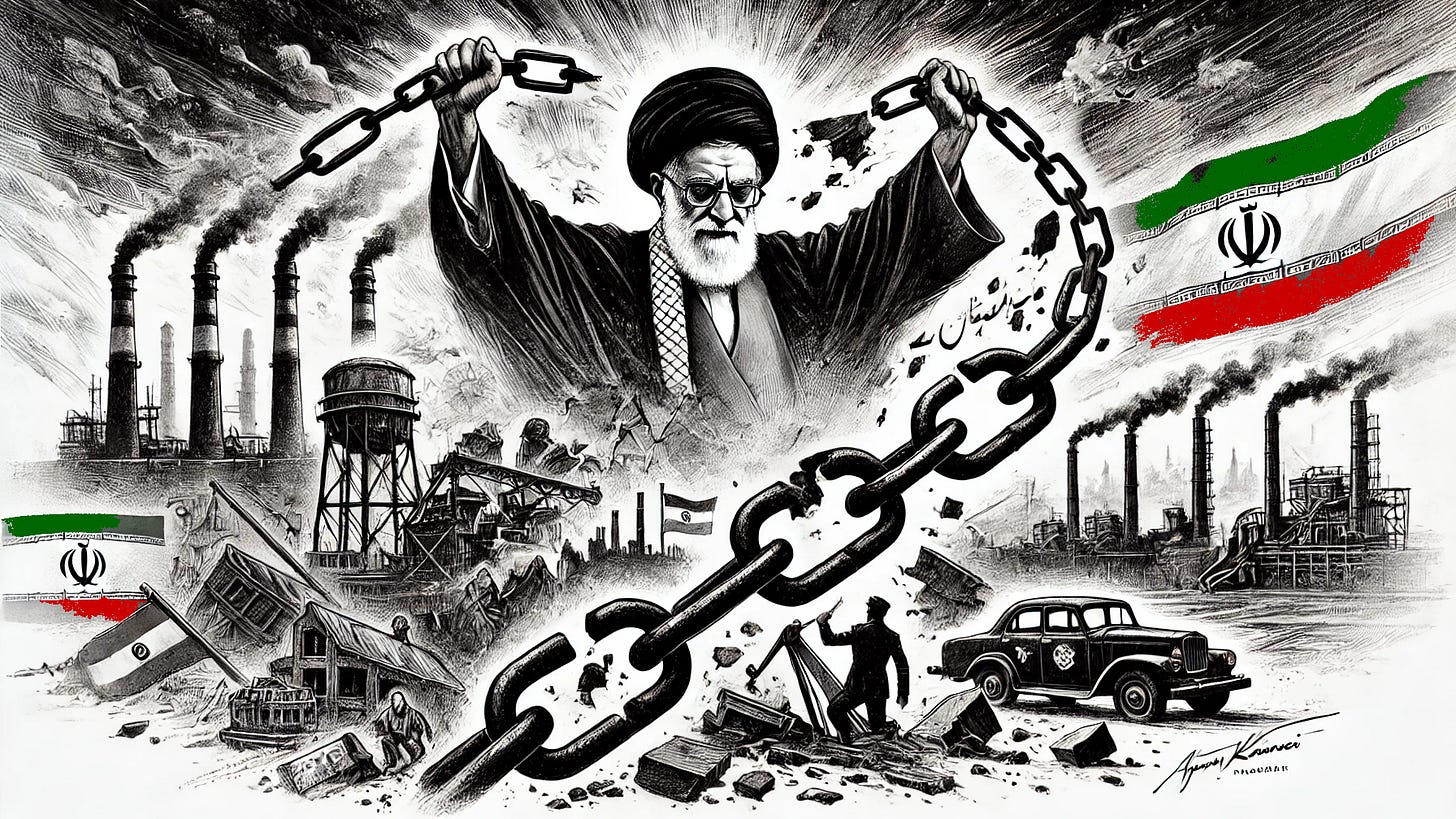
In a recent address to Iran's executive, judicial, and parliamentary branches, the Leader of the Islamic Revolution, Ayatollah Sayed Ali Khamenei, presented a forceful argument on the need to chart an authentically Iranian path in politics and economics[1]. He observed,
"We cannot structure our political and economic policies based on the principles of Western materialist civilisation. While Western civilisation does have its advantages, and we should learn from useful advancements wherever they exist, we cannot rely on its fundamental ideological foundations, as they are flawed and contradictory to Islamic principles."
Although his words specifically aim at Iran's internal affairs, the deeper current reflects a broader global conversation on decolonising societies and minds—a process that each region, from South Africa to India, inevitably tailors to its distinctive values and history.
Challenging the "Colonisation of the Mind"
One of the most striking themes in Ayatollah Khamenei's speech is the rejection of a passive adoption of Western norms. Colonial legacies throughout history did not merely undermine local governance structures; they implanted new cultural attitudes that many countries still wrestle with today. Iran's experience, shaped both by direct foreign interventions and a centuries-old Islamic tradition, has led its leadership to question standard Western models. Ayatollah Khamenei warns that adopting these frameworks wholesale can cause a society to
"lose our identity by adopting a worldview that contradicts our core beliefs."
This stance resonates with other decolonial movements worldwide. In India, intellectuals challenge the infiltration of corporate-driven cultural norms that overshadow local philosophies; in parts of Africa, postcolonial thinkers question the wholesale acceptance of Western liberal capitalism that often neglects communal traditions.
Seen through the lens of "decolonising the mind," Ayatollah Khamenei's address underscores the importance of safeguarding principles that define a people's moral fabric. In the Iranian context, Islamic and national values form the bedrock. Elsewhere, the guiding principles might come from indigenous spiritualities, postcolonial cultural revival, or newly evolving local philosophies.
Western "Civilisation" and Freedom of Speech
Paradoxes
Ayatollah Khamenei's argument that Western powers endorse free speech only selectively challenges the sincerity of what he calls
"the so-called free flow of information."
He specifically asks,
"Can you mention the names of Martyr Qassem Soleimani, Sayyed Hassan Nasrallah, or Martyr Haniyeh on Western social media platforms? Can you criticise the atrocities in Palestine and Lebanon? Can you even question certain historical narratives of Nazi Germany? Their so-called free flow of information is a myth."
This critique emerges from decades of frustration with major platforms silencing or marginalising particular political views. His assertions encourage scrutiny for those seeking a global decolonised approach to media: are we accepting "universal" free expression, or is it consistently manipulated to serve specific hegemonic interests?
Critics outside Iran might identify different examples but echo the same concern. For instance, certain African activists find their social media accounts flagged or removed when highlighting local conflicts overshadowed by Western strategic interests. Indian civil society voices note how global technology firms sometimes tailor policies to suit corporate or foreign diplomatic preferences. In all cases, the underlying question is whether "universal" freedoms are genuinely universal or if selective censure is hidden beneath rhetorical commitments to openness.
Strengthening Domestic Institutions, Avoiding Inertia
A significant portion of Ayatollah Khamenei's speech urges a renewal of Iranian governance structures. He remarks,
"In the face of challenges, what must we do? One of the most urgent priorities is to ensure internal cohesion among governmental institutions… A major priority for our economy is strengthening the national currency."
This practical dimension of decolonising thought underscores that local challenges often centre on forging robust internal systems that are neither reliant on foreign validation nor beholden to imported doctrines. Strengthening a nation's economic pillars, whether by stabilising currency, fostering local industry, or investing in self-reliant development, has proven vital for many postcolonial societies.
His assertion that some Iranian officials prefer inaction to avoid accountability, "Unfortunately, some officials believe that the safest approach is to avoid making decisions altogether," highlights the consequences of complacency. This phenomenon exists in many countries where fear of failure or foreign reprisal can lead to paralysis. In the UK, for example, historically, labyrinthine bureaucracies have sometimes delayed crucial infrastructure projects for fear of public backlash[2]. Ayatollah Khamenei's call to "take responsibility, not avoid difficult choices" echoes a broader decolonial philosophy: genuine autonomy requires decision-making that may clash with foreign interests or internal comfort zones.
Economic Sovereignty and the Weight of Sanctions
Ayatollah Khamenei also diagnoses external pressure—particularly from Western powers—as a deliberate effort to undermine Iran's domestic foundations:
"Hostile powers are primarily targeting our economy, aiming to weaken our ability to provide for our people. Their strategy is to create economic pressure so severe that the government struggles to function."
This resonates beyond Iran's borders. Several African nations, for instance, argue that ongoing neocolonial trade arrangements hamper local industries. Caribbean countries highlight the centuries-old burden of debt structures inherited from colonial systems[3]. The fundamental principle is that a decolonised future cannot bloom without economic resilience.
However, Ayatollah Khamenei clearly states that not every difficulty is inflicted from the outside.
"Many of our problems can and must be addressed independently,"
he states that local mismanagement or policy gaps must be tackled from within. Reliance on external scapegoats can impede introspection in Tehran, Lagos, Durban, or Delhi. Decolonisation, in all its forms, demands communities to correct their internal weaknesses, whether tied to corruption or bureaucratic inertia.
Negotiations and the JCPOA: Resisting External
Coercion
In perhaps his most pointed section, Ayatollah Khamenei criticises European powers over the failed nuclear deal, remarking,
"Now, European nations have issued a statement claiming that Iran has failed to meet its commitments… but did they fulfil their own obligations? There is a limit to how much hypocrisy one can tolerate!"
The subtext is the frustration of a state that complied in good faith yet found the opposite side lacking sincerity. This theme surfaces regularly in the discourse of postcolonial states that entered treaties, economic or otherwise, only to find Western signatories reneging on promises.
He continues with a broader condemnation of Western calls for negotiations, stating,
"The insistence of certain Western governments on negotiations is not about resolving issues, it is about exerting dominance… The Islamic Republic of Iran will never accept such pressures."
From a decolonising angle, the principle is straightforward: honest dialogue can exist only among equal partners. The entire process is compromised if negotiations merely become another tool to impose external demands. The same logic could apply to environmental treaties forced upon developing nations without their full input or external "loan negotiations" that lock states into unsustainable interest rates.
Decolonising Governance in a Broader Context
Ayatollah Khamenei's emphasis on Islamic values differs from how a South African leader might emphasise the African National Congress' historical roots or how an Indian politician might invoke Gandhian moral frameworks. However, the underlying impetus is similar: forging a path that aligns with local ethos, not shaped by Western gatekeepers. He specifically calls for
"the direction [to] serve the interest and needs of Iranian citizens."
That mirrors the demands of multiple grassroots movements worldwide seeking homegrown solutions rather than cookie-cutter models from abroad.
In many ways, the speech can be read as a blueprint for preventing a repeat of the humiliations that accompanied colonial and neocolonial interference, whether it was the CIA-MI6 coup of 1953 in Iran or the large-scale economic restructuring that tied African nations to Western financial institutions. The more profound message is that reclaiming sovereignty means more than proclaiming it; it requires robust institutions, a well-anchored local currency, and a moral code that does not yield to superficial Western norms.
Conclusion: A Shifting Paradigm of Decolonisation
For Iran, Ayatollah Khamenei's words reaffirm an Islamic identity and chart a course beyond Western materialism. For other regions, decolonisation may arise from different traditions—whether indigenous, socialist, or culturally distinctive. However, the common thread is clear: rejecting any approach that severs a people from their foundational values or places them at the mercy of external powers' strategic interests.
When Ayatollah Khamenei stresses,
"One must not negotiate with a government like the U.S. government… Negotiating with it is not wise, is not intelligent, and is not honourable,"
he is cautioning against naive attempts to court systems that have long sought to dominate. It resonates with the broader, unifying theme: decolonisation is about forging forward on one's own terms, whether guided by faith, local culture, or democratically chosen values. For all the talk of global norms and universal best practices, each nation has a right to preserve its unique worldview and stand firm against coercion in any guise.
[1] https://farsi.khamenei.ir/news-content?id=59616
[2] https://www.ft.com/content/0d9f7d46-ed23-4f90-b3ee-ac2481db4de5
[3] https://www.theguardian.com/global-development/2024/oct/30/robert-jenrick-former-colonies-debt-of-gratitude-britain-slavery-colonialism-legacy-brutality-and-exploitation

No comments:
Post a Comment