
In an interview with The Cradle, Ansarallah official Ali al-Imad reveals how Tel Aviv and Washington are directing the Riyadh–Abu Dhabi conflict from the shadows, and warns that any escalation will face decisive, region-wide resistance.
The Cradle

The once‑unified Saudi-Emirati coalition fighting in Yemen has splintered dramatically, highlighted by Saudi airstrikes on southern ports and Riyadh’s demand that Abu Dhabi withdraw its forces amid disputes over control of strategic territory near the Saudi border.
Saudi Arabia has moved to reclaim areas seized by the UAE‑backed Southern Transitional Council (STC) in Hadhramaut and Al‑Mahra, even removing the STC leader Aidarus al-Zubaidi from Yemen’s Presidential Leadership Council (PLC) and accusing the UAE of smuggling him out of the country.
These clashes expose a deeper rift between the two Gulf monarchies over Yemen’s future, with Riyadh viewing the STC’s expansion toward its borders as a security threat and Abu Dhabi pursuing its own regional influence.
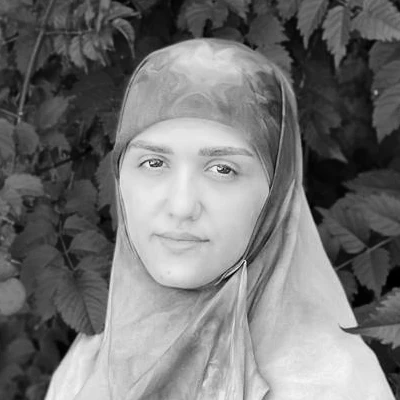
Imad, head of Yemen's Central Organization for Control and Auditing and a senior member of Ansarallah's political bureau, speaks to The Cradle to discuss the next phase of the war in Yemen.
In this exclusive interview, he exposes the inner workings of the Saudi–Emirati rift, Washington's role in sustaining conflict, and Tel Aviv's military designs in the Red Sea.
He also lays out Sanaa’s position on negotiations, military preparedness, and the future of the Yemeni state.
(This interview has been edited for length and clarity)
The Cradle: How do you view the internal rift between Saudi Arabia and the UAE over Yemen?
Imad: What we are witnessing is a carefully managed conflict, orchestrated by global Zionism through the US and the Israeli entity. They use their regional proxies, Saudi Arabia and the UAE. The goal is to fragment the region along sectarian and regional lines, leading to endless, senseless wars.
Despite their conflict, the Saudi defense minister declares that the goal is the ‘Houthis,’ while the UAE-backed STC head, Aidarus al-Zubaidi, declares that the target is Sanaa.
The dispute will persist. Saudi Arabia continues to treat Gulf countries as mere statelets, viewing itself as the elder brother or father figure. The constant in all these shifts is the Gulf’s ongoing subservience to US decision-making.
The Cradle: The UAE claims to have withdrawn from Yemen. Has that really happened?
Imad: The alleged Emirati withdrawal in 2019 was purely cosmetic. They never left. Emirati presence persisted through military commanders managing the scene, intelligence-gathering charities, prisons, mercenaries, and elite forces loyal to them.
They may have reduced their visible footprint in places like Aden or Mokha, but they still shape events from the shadows, with Washington's full backing. The US won't allow them to leave, especially when it comes to Yemen's islands and strategic coastal regions that Saudi Arabia has shown little interest in.
The announcement of a withdrawal was part of a maneuver. First, to respond to an unexpected Saudi reaction, and second, to rebrand the conflict as a broader coalition effort, incorporating new proxies like Islah (Muslim Brotherhood affiliate) to play a larger role in the fight against Sanaa.
The Cradle: What is the current state of negotiations with Saudi Arabia?
Imad: Talks have stagnated. Outside of some movement on the prisoner file, everything else has been frozen. The roadmap agreed nearly two years ago is stuck because Riyadh refuses to honor its commitments.
Saudi Arabia wrongly believes it holds the upper hand after developments in Gaza and Yemen. It's treating this phase as an opportunity to squeeze concessions from us through blockade and economic pressure.
Politically, we will not accept initiatives from Saudi Arabia. Yemenis can reach a consensus among themselves. Anyone imposed as a leader of the PLC – militias divided across frontlines – will not be part of Yemen’s future.
Saudi Arabia is not pursuing a resolution. All indications suggest a shift toward military escalation rather than political understanding, based on intelligence data, Israeli statements, and leaks about preparations for a new confrontation.
The Cradle: Have the Iranian–Saudi understandings affected the Yemen file?
Imad: Not at all. Saudi movements in the region stem not from independent will but from a role imposed by the west, positioning it as the primary regional client. Thus, any openness is still constrained by the US-Zionist agenda.
Riyadh thinks it won the Gaza war and wants to reassert control over regional dynamics. But this is a delusion. There is no real rapprochement with Iran. Nothing has changed. Hostility persists – media rhetoric remains aggressive, policies adversarial, and the kingdom remains a hub for espionage.
This inflated self-image is dangerous. Internally, the kingdom is fragile – its ideological core has been eroded, and its military is too weak to sustain major battles.
The US plan is to keep using Saudi Arabia as a tool of chaos, not stability. Economic projects are just anesthetics. The long-term goal may even be the fragmentation of the kingdom.
The Cradle: If Saudi Arabia or its allies launch another offensive, what will Ansarallah's response look like?
Imad: Any military escalation against Sanaa – any bullet, action, or battle launched by any political faction – will be viewed in its true context: as Saudi-led.
All local tools and mercenaries are directed by intelligence officers, and what happened in the south is evidence of this.
Our target bank has expanded significantly. Saudi Arabia will bear the full cost of this war – not only militarily, but politically and socially – especially given the growing domestic alignment behind the confrontation.
The battlefield is ready. And while we still prefer a political solution, especially on the economic front. But if we cannot resolve this politically, then as our leader [Abdul Malik al-Houthi] has declared: ‘We will target banks for banks, Riyadh airport for Sanaa airport, and ports for ports.’
The Cradle: What role do US and UK intelligence services play in this war?
Imad: One of the Americans and Zionists’ most important weapons is technology and their network of agents on the ground.
We have uncovered 10 spy networks, three of which we've exposed publicly. These cells operated with advanced equipment and under the command of Saudi and British officers in Riyadh. Others were embedded within UN-affiliated NGOs.
There’s a massive file we haven’t fully released to the media. If revealed, it would expose these organizations’ dangerous espionage role, saving intelligence agencies the need for direct presence.
The Cradle: What are Israel’s objectives in Yemen and the Red Sea?
Imad: Any Israeli move – whether through the UAE in Yemen, or in Red Sea nations, or even inside Saudi Arabia – is a direct threat, part of what has long been described as ‘Greater Israel’ or the US-defined ‘New Middle East.’
This delusion is fed by submissive regimes and a public easily distracted by short-term outrage.
Their moves around the Red Sea – like recognizing Somaliland and setting up in Eritrea – are part of a military build-up, tightly coordinated with the UAE. These are launchpads for future wars.
The Cradle: Ansarallah has spoken of a united front with the Axis of Resistance. Is this still a core doctrine?
Imad: The Ansarallah leader asserts that the unity of fronts remains a core principle of the Axis of Resistance – not a temporary stance. Despite Yemen’s leading role in the past two years, we operate from the conviction that the true leaders and masters of resistance remain in the lands of steadfastness – Lebanon and Palestine.
The unity of fronts has thwarted the most dangerous western projects, especially sectarian fragmentation. The recent period has only strengthened our resolve and readiness.
The Cradle: What kind of political future does Ansarallah envision for Yemen?
Imad: The transformation process is serious in contrast to the media noise and propaganda of the other side, whose political and economic situation has been exposed.
I participated in the National Dialogue Conference and was open to discussing federalism. But we soon saw that it was a deceptive plan to divide the country along sectarian and historical lines, in service of Saudi and American interests.
Decentralization and federal projects were never meant to serve the people, but to plunge Yemen into endless conflict. What is being proposed in the south today doesn’t aim to build a sovereign, developed state, but to expand the battlefield. That’s why we see no solution but in unity – of people and land.
The Cradle: What message do you send at this stage to the Yemeni people, the Axis of Resistance, and your adversaries?
Imad: Betting on the US or Israel is a deadly illusion. Experiences in Gaza, Iraq, and Afghanistan prove the west brings only ruin – no matter how it dresses its projects in soft slogans.
This is a critical and difficult phase – but a historical responsibility. Ansarallah remains steadfast, walking this path alongside you, triumphant despite the pressure.
As for his message to neighboring countries – particularly Saudi Arabia – it is a direct warning. The western plan is clear: you are the real target, not Yemen. Sanaa is steadfast, while others are being prepared as easy prey.
Ansarallah treats this moment as an open confrontation. We will be God’s hand on earth to confront these schemes, guided by popular awareness and battlefield experience built over years of resistance.

No comments:
Post a Comment