Monday, September 21, 2026

Al-Zaydi's Trip to New York; Baghdad in New Test of Economic Sovereignty

Simultaneously with the approaching trip of Ali al-Zaydi, the Prime Minister of Iraq, to New York to participate in the United Nations General Assembly meeting in late September, political and popular concerns in Iraq have increased about Baghdad entering a new round of negotiations under the pressure of the harsh conditions of the US Treasury Department and Federal Reserve on the country's banking system and oil revenues.

AhlulBayt News Agency (ABNA): Attention has been drawn to the expected trip of Ali al-Zaydi, the Prime Minister of Iraq, to New York to participate in the United Nations General Assembly meetings.

This trip comes as political and popular concerns have risen about Baghdad entering a new round of negotiations under the pressure of harsh conditions and imposed orders by the US Treasury Department and Federal Reserve on Iraq's banking system and oil revenues.

In this context, Falah al-Zubaidi, an economic expert, in an interview with Al-Maalomah, emphasized, "Iraq's economy is still under the burden of restrictions and clear dependence on the US government; a government that uses the economic and financial file as a tool of pressure and direct extortion to strengthen its influence and consolidate its political presence inside Iraq."

According to him, Washington's monetary policies have held the national economic path of Iraq hostage to its own movements and interests.

Al-Zubaidi noted, "The increasing domination of American companies over vital sectors and points in Iraq disrupts the independence of economic decision-making and prevents Baghdad from diversifying its investment partners."

At the parliamentary level as well, demands for taking a decisive position that would end Washington's exploitation of the financial tool have risen.

Shaker al-Tamimi, a representative of the Coordination Framework, stated in this regard, "Economic domination is the most dangerous tool for targeting sovereign decision-making, and limiting financial transactions and investment to one side exposes the country to continuous extortion."

Al-Tamimi emphasized, "It is essential to act quickly in diversifying international partnerships and opening doors to major economic powers for investment and joint cooperation."

According to him, building balanced relations is the only way to strengthen Iraq's national and financial security, away from American guardianship and orders, and the parliament supports any step that breaks these restrictions and restores Iraq's full economic sovereignty.

Observers believe the New York trip is a real test for the Iraqi government to impose a new economic balance equation and free itself from the banking restriction mechanisms imposed on energy assets.

They warn that retreating before America's demands and conditions will place Iraq's financial and sovereign decision under foreign guardianship for a long time.

Lebanese Cleric: Arab, Islamic Countries Should Act for Joint, Powerful Agreement

The distinguished Jafari Mufti of Lebanon, in a message addressed to Arab and Islamic countries, emphasized that in the current sensitive conditions of the region and in the shadow of the crisis in the international system, these countries must act to achieve a joint and powerful agreement so that America's efforts to create sedition and conflict among them are thwarted.

AhlulBayt News Agency (ABNA): Sheikh Ahmad Qabalan, the distinguished Jafari Mufti of Lebanon, in a message addressed to Arab and Islamic countries, emphasized that in the current sensitive conditions of the region and in the shadow of the crisis in the international system, these countries must act to achieve a joint and powerful agreement so that America's efforts to create sedition and conflict among them are thwarted.

Qabalan said, "Arab and Islamic countries share fundamental interests and identity, and it is essential that they act to provide the ground for an Arab-Islamic agreement so that they are prevented from becoming an arena of conflict, arms purchases, and destruction."

Qabalan said, "Arab and Islamic countries share fundamental interests and identity, and it is essential that they act to provide the ground for an Arab-Islamic agreement so that they are prevented from becoming an arena of conflict, arms purchases, and destruction."

He called on Pakistan, Iran, Saudi Arabia, Turkey, Iraq, Egypt, and Yemen to work swiftly to form this agreement and to base it on "a shared and sincere faith identity, far from the nests of the devils of Washington and Tel Aviv."

Qabalan stated that America and Israel are the root cause of the region's crises, and Washington uses the differences among Arab and Islamic countries to maintain its influence.

The Role of Saudi Arabia and Iran in a Regional Agreement

The Jafari Mufti of Lebanon added, "Saudi Arabia can take steps, especially regarding Yemen, to achieve solutions suited to the new reality of the Middle East, and Iran can also work to form a broad regional agreement and develop partnership among Arab and Islamic countries."

He emphasized that the continuation of differences among regional countries provides the ground for the implementation of plans that target the nations and countries of the Middle East, and the solution in this regard is to strengthen Arab-Islamic relations and cooperation and reduce the role of America and Israel in determining regional relations.

Qabalan also said the current conditions of the region are moving toward finding ways to end conflicts and reduce the dependence of Middle Eastern countries on America, and Lebanon, like other Arab and Islamic countries, awaits the formation of a great regional agreement to overcome the current crises.

He stated, "No one has the ability to change strategic options and implement a great and different agreement as much as Iran and Saudi Arabia"; therefore, it is necessary for Riyadh and Tehran to provide the ground for a new phase of cooperation by relying on religious commonalities and regional interests.

The Jafari Mufti of Lebanon also said the time has come for regional countries to act to prevent new conflicts and save the Middle East from what he called an "American-Zionist sedition."

He concluded by calling on the Persian Gulf Cooperation Council countries to understand the new conditions of the region and emphasized that any reliance on gains resulting from America's role-playing can have widespread consequences for the Middle East.

Guardian: Israel's Upcoming Election May Be its Last Election

The Guardian, in an analytical report, examining the political atmosphere of the Zionist regime before the elections, reported on the concern of some critics of Benjamin Netanyahu's government about the future of "democratic" institutions, "judicial reforms," and the regime's policies in the West Bank.

AhlulBayt News Agency (ABNA): Jonathan Freedland, a Guardian writer, after traveling to the occupied territories and speaking with a number of the country's citizens, reported that some Israelis consider this election "the most important election in the country's history," and there are even concerns that if the coalition led by Benjamin Netanyahu wins again, this election may be Israel's last democratic election.

Freedland stated in his report that the past four years have been accompanied by continuous attacks on the mechanisms of liberal democracy and efforts to weaken institutional constraints on executive power.

According to the Guardian, critics of Netanyahu's government believe the actions of the ruling coalition, including efforts to change the status of the judiciary, can weaken the independence of oversight bodies.

This report also referred to Netanyahu's positions toward some critics of Israel's military policies and emphasized that the Israeli Prime Minister has joined calls for revoking the citizenship of some Israeli filmmakers for making a critical film about the Israeli army's performance in Gaza.

The Guardian, in the continuation of its report, referred to the accusations raised against Yair Golan, the leader of the "Democrats" party, and wrote that Sara Netanyahu, the wife of the Israeli Prime Minister, had accused him of having known about the October 7 operation.

According to this report, Freedland described these accusations as part of a political campaign accompanied by misinformation and conspiracy theories; claims that, according to him, were raised with the aim of diverting attention from the performance of Netanyahu's government on that day.

Freedland, in another part of his report, introduced Israel's judiciary as one of the most important obstacles to the expansion of the government's powers and wrote that this issue has gained more importance in circumstances where Netanyahu is still involved in corruption cases.

According to the Guardian, the Zionist regime's attempt to weaken the Supreme Court's powers in 2023 has created concerns among opponents that such actions will be repeated if the current coalition wins again.

In this context, Yehuda Shaul, an Israeli activist whose statements are included in the Guardian's report, said that Israel's democratic institutions and courts, despite criticisms about their performance regarding Palestinian rights, still provide the possibility of changing conditions, and their collapse could confront the country with a serious crisis.

Expansion of Settlements in the West Bank

The Guardian's report went on to address the situation in the West Bank and wrote that Freedland, during his trip to this region, reported on Palestinian villages and reports related to settler pressure and violence against Palestinian residents.

According to this report, Shaul has assessed the number of new settlements and outposts established since 2023 at about 250.

The Guardian wrote that critics believe the expansion of settlements has reduced the geographical contiguity of Palestinian areas and makes the process of forming a Palestinian state with territorial viability more difficult.

Israel's Election and Consequences Beyond Domestic Borders

Freedland concluded his report in the Guardian by emphasizing that the October 27 election is not merely a domestic competition to determine Israel's next government but will have consequences for the future of the regime's political structure and the situation in the West Bank.

According to the Guardian, the result of this election can affect the course of Israel's internal developments, the status of democratic institutions, and policies related to settlement construction in the Palestinian territories.

Africa: Iran’s Strategic Opportunity to Break the Barriers

Alwaght- Africa is no longer just a continent rich with natural resources and virgin markets for the economic powers. It is becoming one of the most important theaters of geopolitical competitions of the 21st century. A continent of 54 countries and over 1 billion population with enormous mineral and energy resource and one of the youngest populations in the world, Africa is undergoing changes that can transform how it looks like in the international equations.

With this in mind, Iran's presence in Africa should not be seen just within the framework of ordinary exporting or expanding diplomatic ties. For Tehran, Africa can be part of a broader strategy whose aim is breaking economic and political isolation, offering new markets, expanding ties with countries independent of Western influence, and increasing Iran's geopolitical depth in the marine routes passing through to the Red Sea and Indian Ocean.

Africa importance

The stakes become even clearer when you consider that Africa holds a substantial share of the world's strategic mineral reserves. Gold, cobalt, platinum, chromium, uranium, and diamonds, alongside oil and gas, agriculture, and vast renewable energy potential, have turned the continent into one of the key epicenters of the global economy's future.

Beyond natural resources, Africa's expanding consumer market and young population represent an advantage whose long-term significance will likely eclipse that of many of the continent's raw materials.

Dimensions and capacities of Iran's presence in Africa

In past years, Iran has expanded its presence in some parts of Africa. This included diplomatic and political ties to defense and technology cooperation, represented by its exports of drones and other military wares.

Reports have surfaced that several African countries are using Iranian drones, including the Mohajer-6. Such cooperation, while not in itself amounting to a strategic alliance, shows that Iran's defense industry can hold appeal for African states grappling with security threats, terrorism, or weak air power.

It is worth noting that the significance of this for Iran is not purely economic. Defense equipment can serve as a starting point for broader cooperation, from training and maintenance to intelligence-sharing, border security, and technology transfer. Indeed, if Tehran can link arms sales to industrial and training cooperation, a relationship that begins as purely commercial can evolve into a long-term partnership.

Crucially, Africa's geography carries another layer of importance for Iran. Viewed through the lens of the Red Sea, the Gulf of Aden, and the Indian Ocean, this continent shifts from an economic market to a geopolitical variable.

East Africa and the Horn of Africa sit near one of the world's most vital maritime corridors, the route that runs from the Red Sea through Bab-el-Mandeb and on to the Gulf of Aden and the Indian Ocean.

For this reason, any expansion of Iran's ties with East African nations, Yemen, the Horn of Africa, and Indian Ocean coastal states must be seen on a larger map. If sustained and managed wisely, these relationships can help deepen Iran's strategic reach in its surrounding environment, though the extent of that influence should not be exaggerated, nor should every economic or political tie be equated with establishing a base or an axis.

Another key variable creating new opportunities for Iran is the shifting attitude of some African countries toward the West.

In recent years, discontent with traditional cooperation models involving France and other Western powers has grown in parts of Africa, particularly in the Sahel. Military coups in several countries in the region, the drawdown of French military presence, and a growing tilt toward Russia, China, and other non-Western partners all signal this changing environment.

Still, it would be a mistake to read this trend as a simple pivot to the East. Many African governments are not looking to replace one foreign power with another, but rather to have more options at their disposal. That very dynamic creates a significant opening for Iran.

It should be taken into account that Iran can present itself as one of the options avaliable to Africa for cooperation. It is a country that under long-term sanctions has managed to produce its own military equipment for lower prices and also to reach high degree of self-sufficiency in such areas as agriculture, medicine, energy, and some new technologies like nano. Seizing this opportunity, indeed, requires Tehran to avoid ad hoc approaches and regard Africa not as a political backyard or consumer market, but as an array of governments with various interests.

Africa, the emerging ground of competition 

In recent years, competition for presence and influence in Africa has intensified among the world's major powers and regional players, a clear sign of the continent's outsize importance to the future international order.

China has entered Africa through infrastructure investment, loans, and trade, while Russia has focused more on security, military cooperation, and engagement with crisis-ridden states. The US still maintains a network of defense, training, and logistics partnerships across parts of the continent, and the Israeli regime is expanding its ties in areas such as agriculture, technology, security, and health.

Iran, then, is not stepping into a vacuum in Africa, but entering a market where virtually every major power is competing for a share.

Nigeria is a case in point. Medical cooperation and the shipment of equipment and ambulances to the country by the Israeli regime, alongside efforts to expand defense ties, show that influence in Africa does not necessarily run through weapons and security. Health, agriculture, technology, water, and even education can serve as effective instruments of soft power.

That experience carries a clear message for Iran as well: if Tehran wants to build lasting influence, it must not let military tools crowd out every other instrument of diplomacy.

The same holds true for the US. Washington's continued defense cooperation with countries like Botswana shows that, contrary to some perceptions, the US has not fully disengaged from Africa. Even where US direct footprint has shrunk, training, arms, and logistics networks can still sustain its influence.

Russia, by contrast, has sought, particularly in the Sahel region, to exploit the security needs of military and fragile governments. Reports of the so-called Africa Corps supporting Niger's government during an armed uprising illustrate how Moscow's security cooperation with some African states has shifted in nature. This trend shows that competition in Africa is no longer just about markets and security and the survival of political regimes have become part of the contest as well.

Ways to expand Iran's influence and presence in Africa

It should be added that for Iran, these conditions are both a threat and an opportunity. They are an opportunity because the multiplicity of the players allows the African nations to diversify their partners and Iran can be part of this portfolio. The threat lies in the fact that, to secure an effective foothold, Tehran must compete with powers that command far greater financial resources, investment capital, and diplomatic capacity.

So, perhaps the most important advantage of Iran in Africa is not its investments but its power to provide low-cost cooperation, and matching the needs of these countries. Drones, defense equipment, medicine, technical services, machines, agricultural technology, and the precious experience of weathering the Western sanctions are areas where Iran enjoys comparative advantage.

But it must be mentioned that this advantage only translates into lasting influence when it is accompanied by real trade. Iran's foreign relations record shows that announcing grand agreements does not necessarily mean delivering on them, and Africa is no exception. If political ties fail to produce increased trade, joint investment, new transport corridors, banking facilitation, and private-sector presence, their impact will likely be limited and short-lived.

The African Union takes on particular importance here. If Iran's Africa policy is to rise above bilateral relations, it must grasp the continent's institutional architecture. Africa is a collection of 54 countries with distinct interests, political systems, and orientations, no single template can be prescribed for all of them. Engaging with inter-African bodies and blocs, alongside developing bilateral ties, can allow Tehran to upgrade its image from a purely security-oriented actor to a political and economic partner.

Southern Africa, too, should not be dropped from Iran's calculations. Moving from North Africa toward the east, west, and south of the continent and reaching the Indian Ocean rim, if paired with a long-term plan, could project a different image of Iran's Africa policy. The goal of such a policy is not necessarily a military presence, but a network of economic, political, and technological-security relationships that can give Tehran greater depth in times of crisis.

At the same time, a strategic mistake must be warned about. Africa should not be viewed solely through the lens of Iran's confrontation with the West. African countries are independent actors, and many are unwilling to sever ties with the U.S. or Europe because of closeness with Iran. Even states dissatisfied with Western policies may simultaneously cooperate with China, Russia, the US, Europe, Turkey, India, and Iran.

The success of Iran's Africa policy, then, depends less on anti-Western slogans than on Tehran's ability to offer a compelling, actionable cooperation proposal.

Additionally, it should be noted that Africa can serve three simultaneous functions for Iran: a market, a political partner, and geopolitical depth.

A market means access to the continent's growing population and economy. A political partner means expanding the number of countries with which Tehran can maintain relations independent of Western pressure. And geopolitical depth means extending Iran's network of connections along the Red Sea, the Gulf of Aden, and the Indian Ocean.

But realizing these three goals takes a vision review. If Iran sees Africa only as a market, it will fall behind key rivals like China, Turkey, India, and others. And if looks at it as a ground for security competition with the US and Israeli regime, it will lose a great part of its economic and social capacities.

The more effective way can be a combination of the soft and power, trade, technology, official diplomacy, private sector, and bilateral and inter-continental relations. In such a model, defense cooperation is just one of the tools, not the whole strategy.

Seen this way, the core challenge for Tehran is not conquering Africa, but building a durable place in an emerging Africa. A continent that today is a stage of competition among China, Russia, the US, Europe, India, Turkey, and the Israeli regime will likely rank among the world's most important centers of economic and demographic growth in the coming decades.

It should also be added that if Iran can, before the new power configuration fully consolidates, transform its ties with African countries from ad hoc agreements into a network of mutual interests, Africa could shift from a peripheral arena of Iranian foreign policy to one of the pillars of the country's foreign relations diversification.

In that case, Africa's strategic value for Iran will lie not in the number of drones sold or agreements signed, but in the formation of a network of economic, political, military-security, and cultural ties capable of defusing part of the pressure from Iran's external isolation while simultaneously cementing its presence in one of the most important arenas of global power competition.

Latest on Yemen Conflict: Ansarullah Eyeing Progress to Aden

Alwaght- Yemen's Ansarullah advances into the western coastal regions and seizure of Bab-el-Mandeb region have redrawn a major part of Yemen military map, opening the door to new phase of clashes whose consequences will not be limited to inside Yemen, but spread to impact the national security of Arab countries, international maritime security, and world energy markets.

After recent weeks of success in liberating the strategic city of Mokha, the Yemeni armed forces have continued to push forward in a bid to consolidate their gains and fully control the regions overlooking the Red Sea fron the north to the west and southwest.

Fierce clashes on new fronts

Fresh clashes have erupted across multiple frontlines in Yemen, with Turkey's Anadolu Agency reporting new fighting between Ansarallah forces and Saudi-backed troops in Taiz, Marib, al-Jawf, al-Bayda and Lahj. The heaviest combat was reported Saturday in the southwestern provinces of Taiz and Lahj.

According to Arab News, fierce battles between the two sides raged for a fourth consecutive day around a strategic mountain in al-Madharibah, al-Arah and al-Wazi'iyah, in southwestern Taiz and Lahj overlooking the Bab-el-Mandeb Strait, as Sanaa's forces pressed to seize the high ground commanding the vital Red Sea waterway.

In the wake of the fighting, Yemen's armed forces aligned with the Ansarallah movement declared they had succeeded in liberating the strategic heights from Saudi mercenaries.

Citing an official in the exiled Aden government, Arab News claimed Ansarallah is seeking to control mountainous positions overlooking the strait, with its next target potentially a southward push toward areas closer to Aden.

In Marib, Ansarallah and Yemeni army forces clashed with troops loyal to the Aden government across several frontlines on Saturday. Despite casualties on both sides, no significant advances were reported. The Aden-aligned army confirmed 13 of its soldiers were killed over two days in Marib.

Saudi airstrikes on Yemeni cities also figured in the day's developments. Brigadier General Yahya Saree, spokesman for Yemen's armed forces, tallied the Saudi aerial campaign over the past week, noting the enemy had continued its strikes on several provinces in recent hours.

In a brief statement Sunday evening, Saree said Saudi warplanes had carried out 26 airstrikes in the past 24 hours using F-15 aircraft launched from Khamis Mushait and Taif air bases, targeting Taiz province.

Saree said the total number of Saudi enemy airstrikes this week had reached 300, hitting Taiz, Hajjah, Marib, al-Jawf, al-Bayda, Amran, Lahj, Hodeidah and Saada, the bastion of Ansarullah movement. 

Meanwhile, Rashad al-Alimi, head of the Presidential Leadership Council, who runs the exiled cabinet from Riyadh, described Sanaa's advances Thursday as "temporary," claiming Ansarallah had suffered heavy losses in Taiz, Marib, Lahj, al-Jawf, Hajjah, al-Bayda and al-Dhale. He vowed government forces would seize the initiative and retake areas under militia control. But Interior Minister Ibrahim Haidan struck a different note in remarks to Asharq Al-Awsat, voicing concern over the government's fears about expanding fortifications and sites linked to drones, missiles and guided boats in the region.

Alimi's pledge to recapture lost territory comes after Ansarallah and Yemeni army forces seized the Red Sea port city of Mokha, a base for National Resistance forces commanded by Tariq Saleh, a member of the Presidential Leadership Council, in a lightning assault on Sept. 10.

They then pushed south, capturing the strategic island of Perim in the Bab-el-Mandeb Strait and the coastal Kahubab area, gaining control over one of the world's most important international shipping lanes.

Analysts now believe Ansarallah-backed Yemeni armed forces' control of the Al-Aghbarah mountains strengthens their positions at Bab-el-Mandeb, giving them surveillance and fire superiority over the area and enabling them to prevent any enemy troop buildup or movement around Bab-el-Mandeb and the western coast.

Bab-el-Mandeb the main target of Ansarullah: Further pressing Saudi throat

Bab-el-Mandeb links the Red Sea to the Gulf of Aden and is one of the world's busiest shipping corridors between Europe and Asia and constitutes a vital route for oil, gas, and container ships transiting to and from Suez Canal.

Under normal conditions, roughly 12 to 15 percent of global trade has historically passed through this narrow waterway, which separates Yemen from Djibouti and Eritrea on the African side and spans just 30 kilometers at its narrowest point.

The strait's importance surged sharply after insecurity and the closure of the Strait of Hormuz, as the world's most critical oil chokepoint, amid war between Iran and the US and the Israeli regime, which blocked the passage and diverted the bulk of Persian Gulf crude exports to alternative routes.

Saudi Arabia in particular has come to rely on pipelines and Red Sea shipping to bypass Hormuz, sending 4 to 5 million barrels per day to international markets through the Yanbu port before Ansarallah declared a naval blockade in response to the 11-year all-out Saudi siege on Yemen. 

But now that alternative route is itself under threat. Reports indicate that after Ansarallah stepped up pressure, Saudi oil exports through Bab-el-Mandeb have plummeted, forcing Riyadh to shift some cargoes to the longer Suez Canal route, a detour that adds time and cost to oil shipments bound for Asian markets.

For Saudi Arabia, the issue is not merely the loss of a shipping lane; it calls into question the effectiveness of one of the kingdom's most important mechanisms for reducing its vulnerability to a Hormuz crisis. If oil piped from eastern Saudi Arabia to Yanbu cannot transit the southern Red Sea safely, the strategic value of that infrastructure is sharply diminished. The simultaneous crises at Hormuz and Bab-el-Mandeb have thus left Riyadh facing a situation in which both its primary and alternative energy export routes are exposed to security risks and rising costs at the same time.

The fallout is hardly confined to Saudi Arabia. The more ships that divert to alternative routes, the more distance, transit time, insurance and fuel costs rise, expenses that can ultimately be passed on to consumer markets. The stakes are similarly elevated for the Israeli regime, since the Red Sea is one of its key links to Asian and East African markets, and sustained insecurity at Bab-el-Mandeb could drive up the cost of its maritime access to those markets.

Seen in this light, Ansarallah's advance carries another significant consequence: the deterrence equation has shifted from "the ability to attack ships" to "the ability to create sustained uncertainty in a global corridor." Even without a full halt to traffic, heightened risk can push shipping companies and cargo owners to reroute, precisely what was seen earlier in the Red Sea.

Another key dimension of this shift is the geographic position of the Hanish Islands. With their capture, Ansarallah forces now sit roughly 32 kilometers from the US military base in Djibouti, on the African side of the Bab-el-Mandeb Strait.

That proximity carries major strategic weight, as Djibouti sits at the southern entrance to the Red Sea and hosts one of the most important US military bases in the region. Some analysts believe Ansarallah's presence on the Hanish Islands could lay the groundwork for a "zone of influence" for Iran and its allies on both shores of Bab-el-Mandeb.

US avoiding war with Ansarullah

Saudi Arabian Crown Prince Mohammed bin Salman reportedly recently phoned the US President Donald Trump and called for direct US military intervention in defense of the Arab kingdom, only to be surprised by the White House saying that it will not enter a new front and instead saying it talks to Sana'a, with both highlighting the commitment to the ceasefire of last year and security of the American ships transiting Bab-el-Mandeb.

Still, the US agreed to provide intelligence and targeting data and CENTCOM commander Brad Cooper was deployed to Saudi Arabia for talks with Riyadh's rulers. Media reports described this American approach a kind of "support without intervention" to Saudi Arabia. 

The Shadow of Hindutva: Why Confronting RSS is as Necessary as Confronting Zionist State Terrorism

By Iqbal Jassat

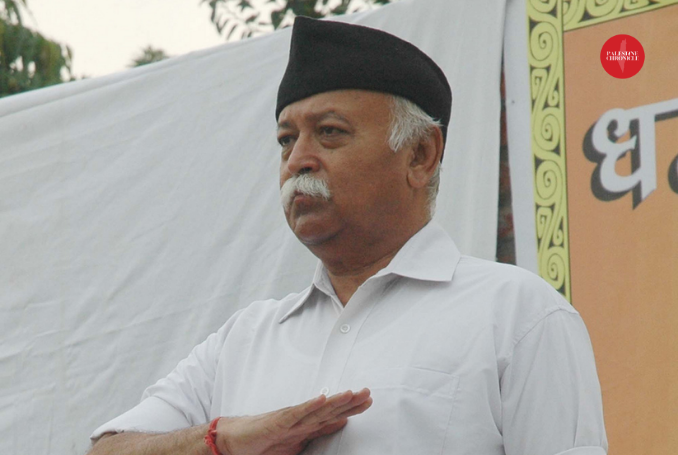
Rashtriya Swayamsevak Sangh (RSS) chief Mohan Bhagwat. (Photo: Vishal Dutta/ Wikimedia Commons)

Human rights organizations, international legal scholars, and anti-racism advocates have strongly condemned both Hindutva and Zionism, classifying them as repressive, discriminatory, and structurally racist ideologies.

The upcoming visit of Rashtriya Swayamsevak Sangh (RSS) chief Mohan Bhagwat to New York has triggered widespread international protests. While organizers frame his appearance as a celebration of unity, civil society groups view it as a legitimization of an exclusionary ideology.

This moment serves as a critical reminder for it brings into sharp focus the global threat posed by the RSS and its founding philosophy of Hindutva.

Founded in 1925, the RSS is a right-wing, paramilitary organization modeled historically on European fascist movements. Its core ideology, Hindutva, seeks to transform India from a secular democracy into an ethno-nationalist Hindu state. Critics argue that this vision fundamentally reduces religious minorities—particularly Muslims and Christians—to second-class citizens.

For organizations committed to human rights and global justice, the RSS is not merely a cultural group, but an extremist apparatus responsible for systemic violence, state capture, and the erosion of democratic institutions.

From a global perspective, the mainstreaming of the RSS mirrors the rise of far-right, Islamophobic movements worldwide.

Under the political wing of the RSS—the ruling Bharatiya Janata Party (BJP)—India has witnessed a sharp increase in hate speech, state-sanctioned demolitions of minority property, and vigilante violence.

Human rights monitors, including the U.S. Commission on International Religious Freedom (USCIRF), have frequently sounded the alarm over these developments. They have called for targeted sanctions against RSS leadership and the revocation of visas for figures like Bhagwat.

Allowing the RSS to use international platforms to launder its image under the guise of cultural pride is dangerous. The global community must look beyond the public relations veneer and confront the documented harm caused by Hindutva nationalism.

Combatting the spread of this ideology is essential to protecting pluralism, human dignity, and international human rights.

Scholars, political analysts, and human rights organizations frequently examine the historical and ideological parallels between Hindutva and Zionism.

Scholars point to the repressive occupation of Jammu & Kashmir and the Palestinian Territories as primary examples of policy convergence.

Following the Indian government’s 2019 revocation of Article 370—which stripped Kashmir of its special autonomous status—critics noted that new domicile and land laws closely mirrored Israeli settlement strategies used to alter demographics in the West Bank.

This ideological affinity is reinforced by a lucrative defense relationship. India has become the world’s largest importer of Israeli military hardware, adopting security tactics, drone technology, and surveillance systems originally developed and tested by Israel.

Both ideologies rely on altering demographics to maintain political dominance. In India, this is seen through controversial citizenship laws (like the CAA-NRC) and changing land laws in regions like Kashmir.

In Israel, it is maintained through the Denial of the Right of Return for Palestinian refugees alongside laws that prioritize Jewish demographic dominance.

And both regimes heavily criminalize human rights defenders, journalists, and activists who challenge state ideology, often using sweeping anti-terror legislation to silence critics and label peaceful opposition as a security threat.

Confronting this global rise of supremacist ideologies requires an unyielding, unified international response. Civil society, human rights organizations, and democratic nations must move past geopolitical convenience and economic self-interest to hold these regimes accountable.

Ultimately, the struggle against Hindutva and Zionism is a defense of universal human dignity.

– Iqbal Jassat is an Executive Member of the South Africa-based Media Review Network. He contributed this article to The Palestine Chronicle. Visit: www.mediareviewnet.com

Trump’s New Sanctions Plan against Iran Futile, Observers Argue

Alwaght- Donald Trump’s declaration of a new “economic war” and fresh sanctions blockade against Iran comes with pledges of the toughest penalties in US history. Yet even inside the US, serious doubts are mounting over whether the strategy will actually work. Trump and Treasury Secretary Scott Bessent contend that the latest financial crackdown on Tehran will force it to back down. But a growing number of American officials and analysts counter that Washington has already deployed nearly every sanctions tool in its arsenal over the past few decades, and that Iran has spent that same period refining its own playbook for evading penalties and preserving trade and financial lifelines. The AP, in its own reporting, underscored that Iran has now weathered nearly five decades of US sanctions, and that the Trump administration is doubling down on a country already counted among the world’s most heavily sanctioned economies.

Senate's Democratic leader: War a total failure for Trump 

Senate Democratic leader Chuck Schumer has not outright said that all Iran sanctions are ineffective, but he has branded Trump’s pressure campaign and economic war against Tehran a failure. Reacting to the ongoing offensive, Schumer charged that “the American people are paying the price for Trump’s total failure in Iran,” pointing to rising fuel costs and the toll on US families as direct consequences of the policy. Schumer had previously condemned Trump’s Iran offensive as “reckless and illegal,” insisting that “this war must end.” The takeaway from his remarks is clear. Actually, even among Trump’s Democratic critics, the core argument is that after months of war, sanctions, and maximum pressure, Washington still has not come close to achieving its stated goals.

Former State Department diplomat: Tree of sanctions cut down

Alan Eyre, a former State Department diplomat and a member of the US negotiating team for the 2015 nuclear deal, has been far blunter than most American officials about the limits of new sanctions on Iran.

Eyre dismissed in an interview with Al Jazeera the latest Trump administration sanctions, saying: “The tree of sanctions has already been picked.” He attributed the move to US “frustration” and warned that fresh economic pressure will not necessarily bring Tehran to its knees.

According to Eyre, when Iranian leaders face existential threats, they do not become more inclined to compromise, on the contrary, they view any retreat as a sign of weakness that would only invite even more US pressure down the line. As a result, he assessed that the likelihood of Iran’s leadership “capitulating” is lower than the likelihood of Tehran escalating its response.

International Crisis Group: Pressure without seeking an exit is futile

Ali Vaez, the Iran project director at the International Crisis Group, has offered a stark assessment of Trump's new policy, warning that Washington is effectively rehashing lessons it has already learned, and failed to learn from, over the past several years.

In an interview with the AP, Vaez said the latest economic pressure campaign has only made Iran's position "harder." He flatly stated: "Pressure without an off-ramp is an exercise in futility." In his view, Iranian officials have repeatedly made clear that even if they were to yield to US demands under economic duress, they have no confidence that Trump would not simply move the goalposts and come back with new conditions.

That assessment underscores the core flaw in US's "economic blockade" strategy against Iran: sanctions can only serve as an effective tool for changing behavior if the other side sees a genuine prospect of relief in exchange for concessions. Without that, economic pressure does not produce capitulation; it fuels resistance and sharpens the incentive to find workarounds.

How did Iran learn to circumvent sanctions?

That concern among US experts cuts straight to Iran's long track record of evading American sanctions. Over years of living under restrictions, Tehran has built up sprawling networks to keep oil exports flowing, money moving, and indirect trade humming. A Middle East Institute analysis points out that Iran has grown increasingly sophisticated at deploying shadow banking, trade intermediaries, cargo reflagging, route switching, and regional commerce to sidestep Western strictures.

The AP, in its own examination of Trump's latest economic blockade, noted that the UAE has in recent years functioned as a major re-export hub, absorbing a significant portion of the sanctions shock aimed at Iran. Those very regional trade webs are precisely one reason Washington struggles to enforce secondary sanctions against Tehran effectively.

Iran cannot be brought to knees

Nearly five decades of sanctions against Iran does not mean the measures have had no economic effect. On the contrary, financial pressure and trade restrictions have imposed real costs on Iran's economy. But the core argument among American critics is that economic impact and the ability to force a country into political submission are two very different things.

Eyre contends that most of American sanctions tools against Iran have already been used, and that Washington is now moving toward measures like naval blockades and multilateral embargoes.

Meanwhile, the AP analysis shows that to close Iran's last remaining economic channels, the Trump administration is compelled to extend pressure beyond Iranian firms and entities to third countries, including major oil buyers, a move that could make enforcement even harder and raise the costs for the US and its allies.

Therefore, the reactions emerging from Washington suggest that Trump's declaration of an "economic blockade" on Iran is less a brand-new weapon than an intensification of a tool Washington has been wielding against Tehran for decades. What' is different today is that Iran, over that same period, has built up the experience, trade networks, and financial mechanisms to cushion the effects of sanctions. That is precisely why critics like Eyre warn that more pressure would not necessarily produce the political outcome Trump wants, and may, instead of forcing capitulation, push Tehran toward economic resilience and even more expansive sanctions-evasion efforts.