Saturday, August 01, 2026

The Defiant Republic: The Ideological Imperative of a Strong Iran

By Dr. M. Reza Behnam
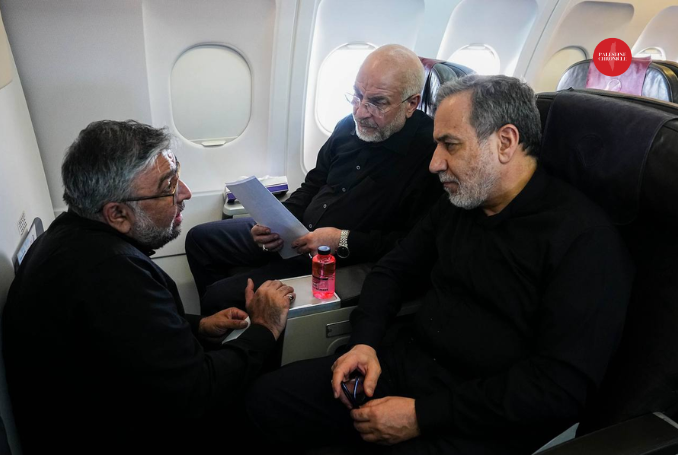
The Iranian delegation on its way to Switzerland. (Photo: Iranian media, via social media)

The war has demonstrated the Islamic Republic’s capacity to adapt its strategy to confront and resist overwhelming military force and reassert its position as a regional power.

The February 2026 Iran war cannot be understood as an isolated event, but rather the outcome of over four decades of coordinated American and Israeli efforts to contain and topple the Islamic Republic. Similarly, Iran’s ability to withstand the military onslaught and emerge victorious must also be situated within that historical context.

After weeks of US-Israeli bombardment, Iran has shown not only that it has been able to withstand an assault by the world’s strongest militaries, but that it could successfully exact substantial military, geopolitical and economic costs on its adversaries. Despite suffering significant damage, and the martyrdom of senior military commanders, including Supreme Leader Ayatollah Ali Khamenei, the state survived.

Tehran’s ability to maintain institutional continuity and operational resilience despite intense pressures could ultimately reshape the geopolitical landscape of West Asia.

Using asymmetric tactics and threatening global energy chokepoints, Iran forced a diplomatic standoff with Washington, which led to the signing on June 17 of the Islamabad memorandum of understanding, establishing an immediate cessation of hostilities across all fronts, including Lebanon. The document also launched the first round of negotiations on June 21 towards securing a final agreement.

It is reasonable to conclude that a secular government or monarchy, like that of the former Shah, would likely have yielded to military duress. Ending the conflict on Iran’s terms, however, required a defiant government driven by an ideological mandate of resistance to oppressors and oppression. Even fierce government critics concede that the Islamic Republic successfully preserved the country’s sovereignty and territorial integrity, and handed the US and Israel an unprecedented defeat.

By recognizing the centrality of the ancient, deeply-rooted cultural concept of Iranzamin (the Land of Iran), that views defense of the physical and sovereign integrity of the historical homeland a sacred trust and government duty, we can better understand the Islamic Republic and the people’s response to the US-Israeli unprovoked wars.

How well, over its 5,000-year history, Iranian monarchs fulfilled this sacred trust is the epic story of military triumphs and devastating territorial amputations. The 19th and 20th centuries, among the lowest points in Iran’s dynastic history, can be described as “centuries of amputation.”

For example, during the 19th century Qajar dynasty, Iran lost vast territories to Russia and Britain, in what came to be known as the “Great Game”—the competition for power between two competing empires.

Through war and subsequent treaties, Iran was permanently stripped of its South Caucasus territories (Georgia, Dagestan and Azerbaijan) in the Treaty of Golestan (1813). Today in Iran, the Treaty of Turkmenchay (1828), which required Iran to give up modern-day Armenia, remains a cultural wound, synonymous with national humiliation.

In addition, in 1857, under Qajar Shah Naser al-Din, Iran was forced by the British to give up its historical claims to the strategic Afghan city of Herat, permanently severing Western Afghanistan from Iran. And in the Treaty of Akhai (1881), Russia dictated that Iran relinquish all historic claims to Turkmenistan and parts of Uzbekistan. Due to the heedlessness of another Shah, Iran was compromised once again when Anglo-Soviet forces invaded and occupied the country during World War II.

The Pahlavi dynasty (1925-1979), founded by Reza Shah, was the last monarchy to rule Iran. His son, Mohammad Reza Pahlavi, like his predecessors, proved incapable of defending the country from Western encroachment. That, as well as his fealty to a foreign power, led to his downfall in 1979.

To gain insight into present-day Iran, it is important to recognize that the 1979 Islamic Revolution and radicalization that followed are also rooted in the legacy of Prime Minister Mohammad Mossadegh, and in the memory of the American CIA-backed coup that overthrew his democratic government in 1953. It can also be traced to the oppressive 26-year reign of Shah Mohammad Reza Pahlavi (1941-1979), who subcontracted Iranian interests to the United States.

Understanding Mossadegh’s actions, ideals, and meaning to generations of Iranians is essential in apprehending how the 1953 coup set Iran on a path that culminated in the 1979 Revolution and the creation of the staunch anti-imperialism of the Islamic Republic.

Mossadegh, an ardent constitutionalist and democratic reformer, viewed oil nationalization as an economic necessity, but also as the ultimate declaration of independence to free Iran from decades of foreign colonial exploitation. His policy resonated deeply with a public eager for self-determination.

Decades of British monopolization of Iran’s oil wealth were shattered in 1951, when Mosaddegh nationalized the oil industry. His fierce defense of Iran’s right to its own resources made him a target of Washington and London.

Conversely, the Shah, yielding to American and British pressure, lent his support to their covert conspiracy. When the initial coup attempt failed, the fearful Shah fled the country, returning to reclaim the throne only after a second, successful putsch—code name “Operation Ajax”—toppled Mossadegh.

The resurrected Shah, aligned once again with the West, oversaw the surrender of Iran’s oil autonomy, signing an agreement in 1954 that transferred significant extraction and development rights to a consortium of Western multinational corporations.

Following in the footsteps of his disgraced father, the eldest son of the fallen Shah, Reza Pahlavi—who recently proclaimed himself “Reza Shah II”—made a pilgrimage to Israel in 2023 to appease his Zionist backers—a visit arranged by the Israeli regime. Once there, he shamelessly prostrated himself before the Western Wall in Jerusalem and sipped tea with genocider, Benjamin Netanyahu; the war criminal who would later bomb the land of his birth and kill 3,468 of the people Pahlavi claims to speak for.

By bowing before the Western Wall, the wannabe king performed an act of submission to Israel and the United States. This gesture echoed the deeply internalized colonized mindset and belief in Western superiority that defined his father’s rule and era.

Under monarchical rule, Iran’s autonomy was routinely compromised by foreign powers. Claiming true independence required a radical, decisive severance to purge the nation from external control, but also to free it from its deeply entrenched pro-Western subservient mindset.

Although kings and dynasties have risen and fallen throughout history, the ancient concept of Iranzamin has consistently prevailed, ultimately serving as an ideological foundation for the modern Islamic government of Iran.

The political-religious framework of the Islamic Republic has institutionalized a distinct ideology of resistance. Iran’s defensive strength relies on this foundational ideology, which has framed enmity toward global arrogance and national survival into an existential religious imperative.

This strategic theo-political integration has provided the resilience needed to survive foreign hostilities, maintain self-reliance, and repel the combined aggression of the US and its Zionist proxy.

For Iran, the coordinated US-Israel bombing campaign (Operation Epic Fury), is a national trauma that will never be forgotten. Its sheer magnitude—measured in thousands of casualties, widespread infrastructural damage, and the assassination of a sovereign head of state—surpassed the tragedy of 9-11 many times over in destruction and lasting political fallout.

For the Islamic Republic, the war was a watershed moment, testing its ability to fulfill the Iranzamin mandate to safeguard national security, repel external threats and preserve territorial integrity. Despite severe degradation to its conventional military and leadership, Tehran achieved major diplomatic concessions through its strategic use of the Strait of Hormuz blockade.

The US military intervention against Iran, initiated to achieve “regime” change and break apart the Iranian nation, on behalf of Israel, backfired. Rather than collapsing the government, Washington has been forced to capitulate and make significant concessions to Tehran, including an end to the US naval blockade of the strait, sanctions relief, release of billions of dollars of frozen Iranian assets, and pledges for economic reconstruction.

In addition, while struggling for the past 47 years to protect its own sovereignty, the Islamic Republic has not faltered in its commitment to the Palestinian cause, continuously championing their right to self-determination and statehood.

For them, the liberation of Palestine and their own resistance against Western domination are inseparable.

Tehran and its allies understand that Palestine symbolizes liberation and autonomy for the entire region. Breaking the spirit of Palestine—the long-standing aim of Israel and the US—would remove the major obstacle to their ambitions to establish hegemony across West Asia.

Having faced brutal military offensives, Iran has an existential obligation and absolute right to maintain a robust, modernized defense to deter further destruction and to protect its citizens against US and Israeli aggression.

The war has demonstrated the Islamic Republic’s capacity to adapt its strategy to confront and resist overwhelming military force and reassert its position as a regional power. Iran has sent a forceful message to the bullies: the era of strong-arming, coercion, and intimidation is over.

– Dr. M. Reza Behnam is a political scientist specializing in the history, politics and governments of the Middle East. He contributed this article to The Palestine Chronicle.


From Zion Mules in 1915 to a Foreign Legion in 2026: Mercenaries and the IDF

by Dr Sahar Huneidi


Israeli soldiers patrol near the Gaza border as the clash between Israeli army and Palestinian factions continues in Nir Oz, Israel on October 19, 2023. [Mostafa Alkharouf/Anadolu Agency]
For  seventy five years, the Israeli army has marketed itself as the ‘most moral army’ in the world, in what is known in Zionist terminology as ‘purity of arms’, which allegedly guarantees ethical conduct even in the fog of war.   Beneath this carefully constructed mythology lies an unpleasant reality:  the army is increasingly relying on foreign fighters and private contractors; what legal experts classify as mercenaries. Reports that a new ‘Foreign Legion’ unit is being contemplated, or even officially created within the Israeli army are currently circulating widely.  

The outsourcing of the army’s operations relies on new American firms like UG Solutions and Safe Reach Solutions, which are deeply linked to the lineage of the notorious Blackwater, (founded in 1996 by Erik Prince  during the Iraq war), before rebranding as Academi and later merging into Constellis.   Today, ex-Blackwater and Constellis executives are back in the Middle East.

The irony here is layered and complex, and it begins much earlier than the establishment of the Jewish state and the army.  In 1915, Revisionist Zionist leader Vladimir Jabotinsky,  (Netanyahu’s spiritual father) with Joseph Trumpeldor, jointly petitioned the British military in Egypt to form a Jewish combat legion to help the British liberate Palestine from the Ottoman Empire. The British refused that Zionists  serve as soldiers, but were permitted to serve only as pack animal handlers on the Galippoli front, hence the name: The  Zion Mule Corps. For the Zionist movement, this was a humiliation well worth enduring. The dream was to prove that Jews could be warriors, not muleteers, and that they could defend themselves, not serve others. In 1917, the Zion Mule Corps was promoted to the Jewish Legion, where Jabotinsky served.  Armed and uniformed, it was the first step toward the Zionist dream. 

A century later, this historical arc has not merely bent, it has collapsed.

Today, Israel pays foreign fighters up to $ 4,000 a week to fight its wars, while a growing segment of its own citizens are exempt from service. 

The scale of foreign participation is striking. Over 50,000 soldiers currently serving in the Israeli army hold foreign nationalities, with the largest contingent  from the United States, followed by French, Ukrainian, and according to the latest reports, Spanish mercenaries. The trajectory is no longer hidden. Former senior officials have already drafted blueprints for an official Israeli Foreign Legion – a corporate force of 12,000 mercenaries organised into four brigades, costing upwards of $3 billion annually. While the state debates making this privatisation official, private contractors in Gaza and tens of thousands of dual-national fighters are a reality on the ground. 

Orde Wingate and the forging of a myth

To understand the trajectory of the Zionist military ethos, one must understand how the myth was forged.  In 1936, a British officer named Orde Wingate, (1903-1944) arrived in Palestine as part of the British military effort to quell the Arab Revolt (1936-1939). A devout Christian Zionist, Wingate believed Jews had a divine right to the land and set about training them for it.  What Wingate taught the Jewish paramilitary forces became the foundation of Israeli military culture. He rejected  static defence, teaching instead that against a numerically superior enemy, the only defence was offence deep inside enemy territory. 

His special Night Squads of 1938, – joint British -Jewish units-, pioneered tactics of surprise, mobility and night attacks that became the template for elite Jewish units like the Palmach. He personally selected and trained the future founders of the Israeli army, including Moshe Dayan and Yigal Allon.  As such, the ‘native’ Jewish army, the  underground paramilitary force when Palestine was a British occupied country,  was created and trained by a colonial British officer. 

Even the smallest details of this founding era have been romanticised, a pattern that is consistent with Zionist myth making right from the inception of the Zionist movement.  Legend has it that Wingate’s men invented rubber-soled shoes from recycled car tires to walk silently during night raids against the Arab population, a classic piece of Zionist ‘ pioneer’  mythology evoking ingenuity, self-reliance and the tough  ‘sabra’ spirit.  The truth was more ordinary: rubber soled plimsolls had been mass produced since the late 1800s; Wingate simply ordered them from British supply chains.

From Ben- Gurion’s vision to paid fighters

David Ben-Gurion, Israel’s founding prime minister, established the Israeli Defence Forces  IDF , in 1948, on a principle he considered inviolable: the  ‘whole nation is the army’.  For him, the military was never just a fighting force, it was the ‘melting pot’   designed to transform  Jewish immigrants  from all over the world, into a unified nation, ‘ stitching together the tribes and diasporas’  through mandatory  conscription.  Could Ben-Gurion and Israel’s founding fathers have ever imagined their ‘people’s army’ evolving into a force enhanced by highly paid foreign mercenaries? Probably not.   Furthermore ,  this  commercialization of the military cannot be understood without mentioning the demographic crisis that drives it. 

Approximately 66 percent of Haredi (ultra-Orthodox) men of draft age do not serve in the army, despite a population of roughly 1.3 million , and growing rapidly due to high birth rate. 

Ben-Gurion’s original 400 yeshiva  (religious) students intended as temporary wartime compromise in 1948,  has grown into a permanent exemption for a growing segment of society.  Because Israel’s political coalitions depend on Haredi parties, successive governments have refused to enforce universal conscription. The resulting manpower deficit, exacerbated by prolonged wars and reservist burnout has created the conditions to make the foreign forces necessary. These mercenaries are a replacement for citizens who refuse to serve.

Sparta, Crusaders and the price of outsourced defence

The historical parallels are ominous.  Ancient Sparta, the quintessential citizen-soldier state, faced ultimate collapse when its rigid citizenship system and demographic decline forced it to rely on hired mercenaries.  The very thing that made Sparta distinct, the citizen-warrior ethos, died even as the army continued in name. By the 4th and 3rd centuries BC, the ‘Spartan army’ was a hollow shell supported by mercenaries and slaves. In similar vein, the Crusader kingdoms established in the Levant lasted barely two centuries, largely because their ruling class remained a tiny, foreign minority surrounded by a hostile population, isolated from both the local populace and distant Europeans patrons.  

The Crusaders failed to integrate, and ultimately became a foreign implant and were expelled. Ben-Gurion constantly warned against the ‘Spartan trap’, and early Zionists like Vladimir Jabotinsky explicitly rejected the comparison to the crusaders, arguing that Jews were ‘returning home’, not planting a temporary foreign colony. By failing to integrate and increasingly relying on foreign contract fighters, modern Israel risks becoming exactly what its founders feared: an isolated, unintegrated implant destined for expulsion.

Among Israeli writers and historians, the Crusader analogy has been a recurring theme, a warning that a state which fails to integrate  becomes an alien outpost. A.B. Yehoshua used the metaphor to caution against the dangers of occupation, urging Israel not to repeat the Crusader’s mistakes, and as  early as 1952, intellectual Moshe Fogel published a series of warnings in Haaretz using the Crusader collapse as an allegory for Israel’s fragile future.

War crimes and the ‘most moral army’  

 The IDF’s ethical doctrine of ‘purity of arms’ requires soldiers to use force only for mission objectives, to maintain humanity and to avoid harming non-combatants. If the world once believed this myth, every Palestinian has always known the truth from Deir Yassin and Tantoura massacres to the ruins of Gaza 2023. Now, the rest of the world knows it too – and the carefully constructed facade of Israel’s moral exceptionalism has finally shattered.

The ICC issued arrest warrants for prime minister Netayahu and former defence minister Yoav Gallant for war crimes and crimes against humanity. The International Court of Justice is hearing a genocide case brought by South Africa.

The UN Independent International Commission  found that Israeli authorities committed four out of five genocidal acts defined under the 1948 Genocide Convention. 

Human Rights Watch documented that Israeli forces routinely opened fire on starving Palestinians seeking aid.  Children and women are the overwhelming majority of  casualties.   On top of all these war crimes,  introducing mercenaries only deepens these ethical questions for the Israeli state.  The widespread presence of dual-citizens on the frontlines, combined with the active presence of private military contractors like UG Solutions-frequently blurs the lines in media reports between formal state conscription and foreign mercenary use,  and complicates legal transparency and tracking.

Orde Wingate forged a fighting force rooted in zealous, biblical conviction. Decades later, Ben-Gurion institutionalised the ‘people’s army,’ cementing the idea that a state’s defence must belong to its people, not to outsiders.

The modern reliance on foreign mercenaries is the ultimate antithesis of that founding vision. As the foundational myths of the ‘people’s army’  and its ‘purity of arms’ dissolve into lucrative private contracts, the ideological armour falls away,  leaving nowhere left for Israel to hide from itself.

India’s Israeli mirror

by Junaid S. Ahmad


Indian Prime Minister Narendra Modi meets with Prime Minister of Israel Benjamin Netanyahu in Israel on February 25, 2026. [Press Information Bureau (PIB) – Anadolu Agency]
Nations do not usually commit suicide in one spectacular act. They do it by acquiring a taste for poison and calling it policy. They rename moral vandalism realism, isolation autonomy, and borrowed brutality strength. Israel has performed this degeneration with almost obscene clarity. Modi’s India now appears less like a critic than an apprentice.


The tragedy is not that India has interests. Serious states have interests. The tragedy is that India now mistakes interests for genuflection before a collapsing moral order.

Once, India spoke in the idiom of Bandung, anti-colonialism, non-alignment, Palestinian freedom, and Global South dignity. It was never immaculate, but it had stature.

It understood that power without ethics is only barbarism with a flag. Today, that inheritance is being pawned for drones, spyware, counterterror slogans, and the embrace of a state whose regional doctrine is simple: bomb the neighbourhood, then call the smoke security.

Israel’s national suicide is not hidden. It has turned itself from a state seeking recognition into a garrison worshipping permanent war. Gaza has not made Israel safer. It has made Israel morally untouchable.

No country can terrorise a region, starve a captive people, pulverise cities, and then act surprised when its diplomatic circle shrinks to arms dealers, zealots, clients, and Washington’s exhausted veto pen.

Israel wins battles the way a man wins arguments by burning down the room.

India’s imitation is uglier because India had another destiny. It had size, memory, culture, numbers, glamour, and the postcolonial authority to speak to Asia, Africa, and Latin America without sounding like empire’s regional contractor. Instead, New Delhi has chosen the cheap thrill of being near Tel Aviv and Washington over the harder grandeur of independent leadership. This is not strategic autonomy. It is strategic puberty — the foreign policy equivalent of wearing sunglasses in a dark room.
The Iran crisis tore away the mask. At one of the defining geopolitical moments of the age, India sounded less like a civilisational power than a frightened press note. “Restraint,” “dialogue,” “de-escalation”: diplomatic sedatives served while missiles carve the region. BRICS moved. The Shanghai Cooperation Organization moved. Iran demanded clarity. The West enforced hierarchy. India performed its new specialty: visible enough to be counted, timid enough to be ignored.

Then came the May 2025 clash with Pakistan: a short, noisy theatre where swagger met physics. The details remain contested, as they always do in South Asian military pageantry, but the political result was unmistakable. India’s aura of effortless escalation dominance was punctured. A government that sells muscle discovered that television biceps do not equal strategic mastery. Nationalism fills studios. It is less persuasive when aircraft, air defence, and escalation ladders start asking factual questions.

India’s soft power is also being vandalised from within. Bollywood once entered rooms where diplomats could not. It exported longing, romance, music, mischief, and cosmopolitan ease. Now too much of it has been dragged into ideological servitude, where historical fantasy, majoritarian grievance, and choreographed patriotism pretend to be art. The old India exported songs; the new India exports slogans with a soundtrack. Even yoga, that deep discipline of body, breath, and mind, has been flattened into civilizational merchandise — liberation repackaged as branding.

The deepest rot is at home. A republic cannot preach pluralism abroad while tolerating mobs, demonology, and the reduction of Muslims into permanent suspects. Gandhi’s militant pacifism, Nehru’s flawed internationalism, and India’s plural civilization are not museum relics. They are strategic capital. To deface them is not merely wicked. It is stupid.

This is where India mirrors Israel most dangerously. Israel thinks violence can erase political reality. Modi’s India increasingly thinks majoritarian domination can replace national cohesion. Both are supremacy fantasies. Both manufacture enemies faster than they manufacture security. Both confuse fear with respect. Fear is not respect. It is deferred hatred.

The irony is vicious. India seeks prestige by embracing a state whose own project has produced isolation, moral corrosion, and dependence on imperial protection. This is not ambition. It is playacting with nuclear weapons

A great nation does not become great by imitating a bunker. India’s tragedy is that it still has the raw materials of greatness: intellect, culture, scale, diplomacy, moral memory. But greatness requires self-respect. And self-respect requires the courage to stand apart from fashionable barbarism.

Israel is showing the world how a state can survive materially while dying politically. India should study the lesson carefully — not as a manual, but as a warning.

Strait of Hormuz remains suspended due to US aggression: PGSA

TEHRAN, (MNA) – Iran's Persian Gulf Strait Authority (PGSA) said transit via the Strait of Hormuz remains closed because of continued military acts of US in the region, noting navigation requests will be processed once stability is restored.

"In response to the repeated inquiries from applicants, we once again announce: Due to the continued aggressive actions of the United States military forces in the region, transit through the Strait of Hormuz is not possible,” PGSA wrote in a post on its X account on Friday, July 31.

“As soon as stability and calm are restored, all applications will be reviewed according to their order of submission and schedule, and the necessary permits will be issued gradually," the authority added.

Iran has tightened its control over the Strait of Hormuz after the US and the Zionist regime launched an unprovoked war of aggression against the Islamic Republic on February 28. Tehran has since maintained that all maritime traffic through the strategic chokepoint must comply with procedures established by the Iranian authorities.

Iraqi President Condemns Saudi-US Strikes on PMU Positions

By Al Ahed Staff, Agencies

Iraqi President Condemns Saudi-US Strikes on PMU Positions

Iraqi President Nizar Amedi has condemned joint Saudi-US airstrikes targeting positions of the Popular Mobilization Forces (PMU), also known as Hashd al-Sha'abi, describing the attacks as a violation of Iraq's sovereignty and international law.

In a statement released on Tuesday, Amedi denounced the strikes as "an unacceptable act" that contravenes the UN Charter and called on all parties to respect Iraq's sovereignty and refrain from actions that threaten the country's security and stability.

The Iraqi presidency reiterated its opposition to the use of Iraqi territory as a platform for launching attacks against neighboring countries and stressed that dialogue remains the only path to resolving regional crises and preventing further escalation.

Hashd al-Sha'abi said its positions in the provinces of Baghdad, Wasit, Nineveh, Basra, Kirkuk, Karbala, and Diyala were targeted in the early hours of Wednesday, resulting in the deaths of at least 20 fighters and injuries to 32 others.

The PMU said the strikes caused significant damage to its headquarters, vehicles, and military equipment, describing the attacks as a dangerous escalation, a violation of Iraqi sovereignty, and an assault on one of the country's official security institutions.

The group added that specialized committees are continuing field assessments to determine the full extent of the casualties and damage, warning that the death toll and number of injured could increase.

Senior cleric: Consolidating military gains at negotiating table favors Iran

TEHRAN — A senior Iranian cleric has stated that diplomatic success against the US and Israel is inseparable from battlefield strength, praising Iran's recent retaliatory strikes against American military bases in the region.

"What extinguishes the firepower of Washington and Tel Aviv and stabilizes the balance of power in Iran’s favor is launching a fierce missile barrage, securing a military victory, and converting it into political gains at the diplomatic table,” Tehran's interim Friday prayer leader,  Hojjatoleslam Mohammad Hassan Abu Torabi-Fard, said.

Delivering the Friday prayer sermon at Tehran's Imam Khomeini Mosalla, he added: "Smart and trusted statesmen in our country understand and uphold the reality that in the arena of battle, power must speak first so that the righteousness of our position takes center stage at the diplomatic table."

Torabi Fard’s assertions align closely with positions previously echoed by senior Iranian political and military officials. Iranian commanders and diplomats have repeatedly stressed that military deterrence is the primary prerequisite for effective diplomacy, asserting that any future negotiations must reflect the tactical realities established on the ground by Iran's armed forces.

When the US and Israel initiated their aggression against Iran in late February, their explicit objectives were to dismantle Iran’s defense capabilities and force a regime change aligned with Western interests. On the opening day of the assault, Iran’s Leader, Ayatollah Seyyed Ali Khamenei, along with several members of his family and top military commanders, was assassinated. Over the course of the 39-day war, thousands of Iranians—a significant portion of them civilians—lost their lives as US and Israeli air force strikes targeted not only military installations but also vital civilian infrastructure, including residential districts, medical facilities, and educational institutions.

However, Iran’s rapid and devastating military response against Israel and American military bases across the region forced Trump into a corner. Facing severe tactical vulnerabilities, the US president unilaterally announced a ceasefire that took effect on April 8. Yet Washington consistently failed to remain committed to the Pakistan-mediated truce, repeatedly violating its terms. The Trump administration subsequently breached a bilateral memorandum of understanding signed remotely with Iranian President Masoud Pezeshkian in June, demonstrating Washington's systemic disregard for diplomatic commitments.

In violation of the MoU, the US has carried out a bombing campaign in Iran, killing dozens of people over the past weeks, most of them civilians. In response, Iranian armed forces—the Islamic Revolution Guard Corps (IRGC) and the Army—have hit American bases in the region, dealing severe blows to US military assets and leading to the deaths of several American service members.

Further in his remarks, Hojjatoleslam Torabi Fard praised Iran’s retaliatory response: "The powerful operations carried out by the IRGC and the Army—resulting in the destruction of aircraft and helicopters at US bases, the crushing of air defense systems, and dozens of enemy casualties—demonstrate that power rests firmly in the capable hands of Iranians."

He added, "Successful military operations, a resolute determination to confront US aggression, preemptive strikes aimed at disrupting enemy military deployments and offensive power, a powerful presence in the strategic Strait of Hormuz, relentless fire from the Axis of Resistance, and the attrition of enemy forces all serve as clear proof that today, the initiative rests firmly in the capable hands of Iranians and our allies".

The Strait of Hormuz—a vital maritime gateway handling roughly 20 percent of global seaborne petroleum trade—serves as a primary pillar of Iran’s defense architecture and regional security strategy. Before the unprovoked US and Israeli aggression initiated on February 28, the waterway remained fully open to international commercial navigation. The subsequent disruption and closure of the strait were the direct consequence of the US military escalation and strikes against Iranian sovereignty.  Tehran has asserted its full control and operational authority over passage through the narrow choke point. IRGC naval forces maintain strict oversight across the passage, positioning Iran's military presence as an indispensable defense mechanism against foreign naval encroachment in the Persian Gulf.  This exercise of sovereign authority over the strategic passage has sent shockwaves through energy markets worldwide. By disrupting major energy exports, the closure has fueled significant inflationary pressures, driving up energy costs and directly impacting the cost of living for consumers in the United States and across Western economies. Through official channels, Tehran continues to maintain that total security in the Persian Gulf can only be achieved when foreign forces cease military interventions, demonstrating that any economic fallout experienced globally remains the direct outcome of Washington's aggressive posture.  

Oil prices no longer react to war rhetoric, but to real supply cuts

TEHRAN PAPERS

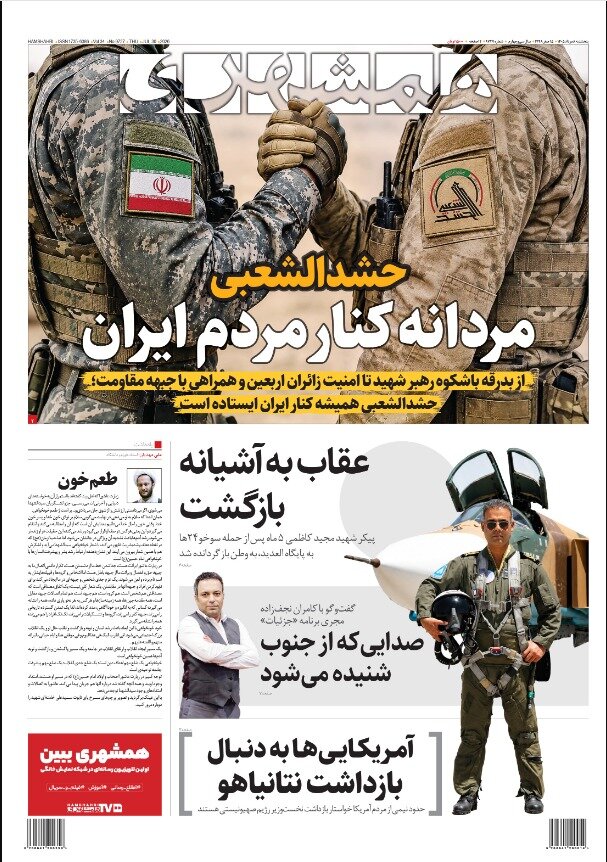
Hamshahri analyzed the current oil market and wrote: The oil market, during the recent US–Iran conflict, once again revealed an important reality: war itself does not determine oil prices.

What sustainably moves prices is real and lasting disruption in supply, transportation, and energy infrastructure. For Iran, these conditions are simultaneously an opportunity and a warning. The opportunity lies in the fact that the continued export of oil under pressure and maritime insecurity has shown that Iran’s export network and mechanisms for selling and transferring oil possess considerable flexibility. This capability can be one of the components of the country’s economic and geopolitical power. But the threat is also clear: no export route should ever be assumed risk‑free. In such an environment, energy diplomacy must stand alongside deterrent power and operational capability. Oil power is not only about production volume; the ability to deliver barrels to the market during crises is also part of that power.

Arman‑e-Melli: The US opposes regional security order

Arman‑e-Melli, in a commentary, referred to Netanyahu’s trip to the US. It noted that the importance of this meeting can even be demonstrated numerically: it was the first Oval Office meeting between Trump and Netanyahu after the Ramadan war, reflecting the unstable security situation in Israel and the region. That the Iran file was the main focus of the meeting, and expansion of the Abraham Accords was treated as a secondary issue, was not surprising. But the key point is that hours after the meeting, regional and international media reported joint Saudi–US strikes on Iraqi territory. The simultaneity of Netanyahu’s meeting with Trump and the Riyadh–Washington attacks suggests that Israel and the US are coordinating to disrupt Iran’s external environment, aiming to increase pressure on Tehran. Therefore, it is likely that in the coming days we will see greater activation of the Yemen front in Bab al‑Mandab and the Red Sea.

Jam‑e-Jam: Why did Brussels step in?

Jam‑e-Jam examined Ukraine’s drone attack on the Iranian commercial vessel Ana in the Caspian Sea and Europe’s fear of an Iranian response. After the attack, a wave of diplomatic contacts from Kyiv and Brussels to Tehran began—contacts that, according to political observers, reflect Ukraine and the EU’s concern about the political and security consequences of the incident more than any diplomatic initiative. The EU, while being Ukraine’s largest political and military supporter, is simultaneously worried about the expansion of the war into the Persian Gulf and threats to energy routes. From this perspective, Kallas’s call to Tehran can be seen as an attempt to prevent the Caspian crisis from spilling over into the sensitive dynamics of the Strait of Hormuz and the global energy market. Brussels knows well that any escalation between Iran and Ukraine could extend the confrontation beyond Eastern Europe—a scenario that would pressure Europe’s economy and energy security even more than the United States.

Donya‑e-Eqtesad: The major challenge is the economy

Donya‑e-Eqtesad assessed Iran’s current situation and its major economic challenge. It wrote that the result of several decades of US–Iran confrontation has been a form of costly equilibrium. The persistence of such a situation is less a sign of success and more evidence of a strategic rivalry that has become attritional. During this period, Iran has built significant deterrent capacities. Defensive strength, a privileged geopolitical position, regional influence, and a decisive role in Persian Gulf energy security have consolidated Iran’s place in regional equations. But the most important challenge facing Iran is economic rather than military. Therefore, the strategy that can bring Iran the greatest benefit is a form of smart realism in which deterrence supports diplomacy rather than replaces it. Such an approach requires avoiding actions that create broad global consensus against Iran.

Sazandegi: Why the Caspian Sea matters?

Sazandegi presented its view on Ukraine’s attack on the Iranian commercial vessel and the significance of the incident in the Caspian Sea. This attack is a sign of the expansion of the Ukraine war into a region that had so far remained distant from direct conflict. The importance of the attack stems from the Caspian Sea’s strategic role. In recent years—especially after intensified Western sanctions on Russia—the Caspian has become one of the most important transport corridors between Tehran and Moscow. The recent attack shows that Kyiv no longer considers the Caspian outside the battlefield and is ready to extend its operations to disrupt Russia’s supply chain. The incident carries a clear message: the Ukraine war is no longer confined to the front lines of Eastern Europe. If this trend continues, the Caspian—long considered a relatively safe region—may become one of the most sensitive points of geopolitical competition among regional and extra‑regional actors.